Author: gohugtheworld

  • Wedding Supplier Contracts: Crucial Advice for Massive Protection and Elite Peace of Mind

    Wedding Supplier Contracts: Crucial Advice for Massive Protection and Elite Peace of Mind

    Wedding Supplier Contracts are the only thing standing between your dream wedding and a logistical nightmare. When you are planning the most important day of your life, you aren't just buying flowers or booking a DJ; you are entering into a series of high-stakes legal agreements. Most couples sign these documents under a cloud of "wedding bliss," ignoring the fine print that leaves them vulnerable. At GHW-Digital, we see this lack of protection as a systemic failure in the industry. You need a shield, not just a handshake.

    The High Cost of Vague Agreements

    Vagueness is a vendor’s best friend and a couple’s worst enemy. If your contract says "photography services for eight hours," you are unprotected. What happens if the lead photographer gets sick? What is the turnaround time for the digital gallery? Without specific deliverables, you have no leverage.

    To ensure service delivery, every line item must be defined. If you aren't tracking the specifics, you are essentially handing over a blank check. We believe in total transparency, which is why we suggest looking at our innovation ideas for ways to systematize your planning process.

    Digital checklist on a tablet for identifying red flags in wedding supplier contracts.

    Identify Red Flags in Wedding Supplier Contracts

    Before you put pen to paper, you must hunt for red flags. Most contracts are written by vendors, for vendors. They are designed to protect their bottom line, not your deposit.

    Front-Loaded Payment Schedules

    If a vendor demands 90% of the total cost six months before the wedding, walk away. This is a massive red flag. A front-loaded payment schedule removes any incentive for the vendor to provide elite service as the date approaches. If they go out of business or simply fail to show up, your money is gone. Demand a balanced schedule where a significant portion is paid only after the service is rendered.

    One-Sided Cancellation Clauses

    Read the termination section carefully. A predatory contract allows the vendor to cancel for any reason while holding your deposit, but charges you a 100% "cancellation fee" if you need to move the date. True fairness means reciprocal penalties. If they cancel on you, they should be liable for more than just a refund: they should cover the cost of finding a replacement. Check out how we handle professional boundaries with Scope Sentry.

    The Absence of Force Majeure

    The last few years have taught us that the "unthinkable" happens. If your Wedding Supplier Contracts lack a robust Force Majeure clause, you are legally responsible for payments even if a government mandate shuts down your venue. You need a clause that defines exactly what happens in the event of an Act of God, ensuring you aren't the one left holding the bill for a party that couldn't happen.

    Locking in Performance: Ensuring Service Delivery

    Service delivery isn't guaranteed just because you paid a deposit. You need to "lock in" the performance of your vendors through specific contractual hooks. This is where the concept of the Vow Shield comes into play. You need a defensive posture that treats your wedding like a professional project.

    Action-Benefit: Detailed Scope Items – Eliminates Ambiguity
    Instead of "Catering," your contract should specify the number of servers, the exact menu, and the "trash out" policy. If it isn't on the page, it doesn't exist. We apply this same level of rigor to our app development scope, because moving goalposts kill budgets.

    Action-Benefit: Backup Provisions – Guarantees Continuity
    If your florist's van breaks down, what is the plan? Your contract must mandate a backup plan. Elite vendors will already have this in writing. If they don't, they are amateurs playing with your money. For more strategies on managing complex projects, visit our ideas page.

    Conceptual shield representing protection and service delivery in wedding supplier contracts.

    Protecting the Couple with Vow Shield Strategies

    At GHW-Digital, we developed Vow Guard Elite to bring professional-grade project management to the wedding industry. We call this the "Vow Shield" approach. It's about creating a perimeter around your wedding budget and your sanity.

    Wedding Supplier Contracts should be viewed as project milestones. If a vendor misses a check-in or fails to provide a required update, there should be clear, pre-defined consequences. This isn't about being "difficult"; it's about mutual respect. You are paying for a professional service, and you deserve professional accountability.

    The Danger of Verbal Promises

    "Don't worry, we'll take care of it" is the most dangerous sentence in the wedding industry. If a vendor makes a promise over coffee or in a DM, it must be ported into the contract. Verbal agreements are unenforceable and lead to "he said, she said" disputes that you will lose.

    Always send a follow-up email after every conversation and explicitly state: "Per our discussion, this will be added as an addendum to our contract." If they hesitate to put it in writing, they never intended to keep the promise. You can find more tips on professional communication and documentation at GHW-Digital Ideas.

    Secured stack of wedding supplier contracts with a digital seal and hourglass for time tracking.

    Liability and the Indemnification Trap

    Many vendors try to slip in clauses that make you liable for their mistakes. For example, if a guest trips over a photographer's tripod, some contracts try to shift the legal burden to the couple. This is unacceptable.

    You must ensure that your Wedding Supplier Contracts include an indemnification clause that protects you from the vendor's negligence. They are the professionals; they must carry the insurance and the risk for their own operations. For more information on how we handle professional liability, you can review our privacy and terms.

    How to Negotiate Like a Pro

    You have more power than you think. The wedding industry is competitive. Use that leverage to strip out unfair terms.

    1. Cross out "Non-Refundable": Negotiate this to "Non-refundable only if the date cannot be rebooked." This forces the vendor to mitigate their losses rather than just pocketing your cash.
    2. Add a "Right to Substitute": If you are hiring a specific person (like a photographer), the contract should state you have the right to approve any substitute if they cannot make it.
    3. Define "Satisfactory": For creative services, include a clause that final payment is contingent upon delivery of the product in accordance with the agreed-upon style guide or portfolio.

    For more technical insights on how to structure high-stakes agreements, check out The Knot's guide to contracts or Brides.com for legal red flags.

    Balanced scale symbolizing fair negotiation and professional wedding supplier contracts.

    Secure Your Big Day with Vow Guard Elite

    Don't let your wedding day be a lesson in contract law. By identifying red flags early and demanding specific service delivery terms in your Wedding Supplier Contracts, you protect your investment and your memories.

    The Vow Shield mindset is about shifting the power back to the couple. You deserve the same protection that a multi-million dollar corporation gets when they sign a service agreement. Whether you are looking for digital solutions or just need better ways to manage your project scope, GHW-Digital is here to act as your guardian.

    Stop gambling with your wedding budget. Demand clarity, enforce accountability, and lock in your service delivery today.


    Marblism Legal Shield Footer
    At GHW-Digital, we believe in blunt honesty. This blog post is for informational purposes and does not constitute legal advice. While we design software like Vow Guard Elite to help you track and manage obligations, you should always have a qualified attorney review your specific legal documents. We protect your data with the same intensity we protect your project scope. No tricks, no fluff: just ironclad alignment.

    Secure your competitive advantage and stop vendor scope creep now. Explore Vow Guard Elite.
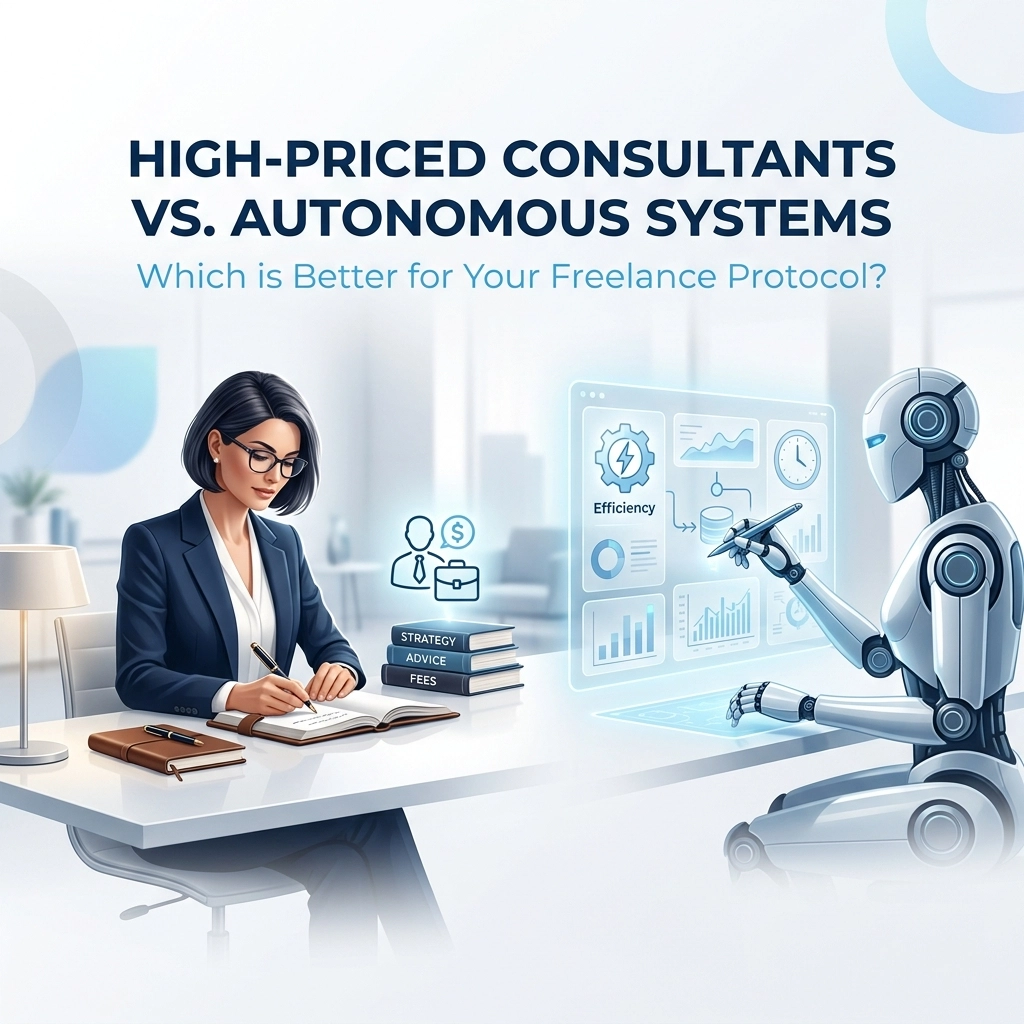
  • High-Priced Consultants Vs. Autonomous Systems: Which is Better for Your Freelance Protocol?

    High-Priced Consultants Vs. Autonomous Systems: Which is Better for Your Freelance Protocol?

    High-Priced Consultants Vs. Autonomous Systems is the fundamental debate currently reshaping the landscape of high-stakes freelance operations. For years, the default strategy for scaling a professional service was to hire more experts. You brought in consultants to manage your contracts, oversee your scope, and ensure that Professional Service Contracts were being executed to the letter. This model is now failing. It is slow, prone to human error, and prohibitively expensive.

    In the modern freelance protocol, the "human-first" approach is becoming a liability. When you rely on high-priced consultants, you are paying for their overhead, their coffee breaks, and their inevitable miscommunications. Autonomous systems, on the other hand, offer a ruthless level of precision that humans simply cannot match. If your goal is to protect your margins and scale without the friction of traditional management, the choice is clear.

    The Bleeding Budget: The Real Cost of Human Oversight

    The financial disparity between High-Priced Consultants Vs. Autonomous Systems is staggering. Research indicates that organizations transitioning from consultant-heavy models to autonomous systems see an immediate and drastic reduction in operational costs. A typical firm might spend $280,000 annually on a small team of developers and consultants. By pivoting to an elite autonomous setup: relying on one senior engineer and advanced AI licensing: that cost drops to approximately $190,000.

    This 32% reduction isn’t just a one-time saving; it’s a structural shift. High-priced consultants require coordination. They need meetings. They need onboarding. They need alignment. This "coordination overhead" is a silent killer of profitability. Autonomous AI agents, such as those discussed at ghw-digital.com/ideas.html, eliminate this waste. They don't need to be briefed on the company culture; they simply execute the protocol.

    Efficiency comparison of High-Priced Consultants Vs. Autonomous Systems in a professional freelance protocol.

    High-Priced Consultants Vs. Autonomous Systems in Professional Service Contracts

    When dealing with Professional Service Contracts, the margin for error is zero. A single missed clause or an unbilled change request can turn a profitable project into a deficit. High-priced consultants are often the ones tasked with monitoring these contracts, yet they are the most likely to miss the subtle "scope creep" that erodes your bottom line.

    Autonomous systems act as a Scope Sentry. They do not get tired. They do not have "off days." They monitor the delta between the agreed-upon contract and the actual work being performed in real-time. While a consultant might catch a deviation three weeks after it happened, an autonomous system flags it the second it occurs. This level of Scope Guard Elite protection is what separates elite freelancers from those who are constantly chasing their own tails.

    Action-Benefit: Why Systems Win Every Time

    To understand why the shift toward autonomous systems is inevitable, we must look at the specific functions where they outperform humans.

    • Continuous Monitoring: Unlike consultants who work 9-to-5, autonomous systems provide 24/7 surveillance of project deliverables.
    • Instant Verification: Validate work against contract requirements instantly, ensuring that every hour billed is an hour earned.
    • Zero Bias Decision Making: Systems don't "feel bad" about enforcing a late fee or flagging a breach of contract. They follow the logic of the code.
    • Predictable Scalability: You can clone a system in seconds; hiring a new consultant takes months.

    For more insights on how to build these repeatable workflows, visit ghw-digital.com/ideas.html.

    Autonomous systems scanning grid workflows to ensure precision in professional service contracts.

    Managing the Transition: The Role of the Senior Overseer

    Choosing High-Priced Consultants Vs. Autonomous Systems does not mean firing every human in your organization. It means shifting their roles. Instead of paying a consultant to do the "grunt work" of tracking hours and monitoring milestones, you employ a senior engineer to oversee the performance of the autonomous agents.

    According to research from Gartner, organizations using manual tools spend up to 70% of their budget on human resource allocation. Those who move to autonomous, Level 2+ solutions drop that spend to 30-40%. This allows you to reallocate those funds into research, development, and strategic growth. You are no longer paying for maintenance; you are paying for evolution. You can find more about this strategic shift at ghw-digital.com/ideas.html.

    Protecting the Perimeter with Elite Tools

    In the freelance world, your contract is your perimeter. If that perimeter is weak, you are vulnerable. High-Priced Consultants Vs. Autonomous Systems represents the difference between a wooden fence and an automated laser grid. Elite tools like Vow Guard Elite are designed to lock in the terms of your engagement and prevent any unauthorized movement of the goalposts.

    When you use autonomous systems, you are creating a "shield" for your time. These systems ensure that Professional Service Contracts are respected by all parties. If a client attempts to add a "small favor" that isn't in the original scope, the system identifies the discrepancy immediately. It removes the emotional burden of the "awkward conversation" from the freelancer and places it on the objective data provided by the software.

    A digital shield protecting professional service contracts within an elite autonomous system.

    High-Priced Consultants Vs. Autonomous Systems: The Speed Advantage

    In business, speed is a competitive advantage. High-priced consultants are inherently slow. They require consensus and communication. Autonomous systems operate at the speed of light. When an incident occurs or a contract milestone is reached, the system triggers the next phase of the protocol instantly.

    This rapid response time is crucial for maintaining trust in Professional Service Contracts. Clients appreciate the transparency and speed of a system that provides real-time updates and instant verification of work. To see how these systems are implemented in real-world scenarios, check out the resources at ghw-digital.com/ideas.html.

    The Strategic Choice for Your Freelance Protocol

    Deciding between High-Priced Consultants Vs. Autonomous Systems is ultimately a decision about how much control you want over your future. Relying on consultants is a gamble on human consistency. Relying on autonomous systems is a bet on mathematical certainty.

    For the modern freelancer, the goal is to build a protocol that works while they sleep. This requires moving away from the high-overhead model of the past and embracing the "lean and mean" autonomous model of the future. The systems are available, the data supports the transition, and the cost savings are undeniable.

    The speed advantage of High-Priced Consultants Vs. Autonomous Systems for lean freelance operations.

    Implementing the Autonomous Shield

    If you are ready to stop leaking revenue and start protecting your margins, the first step is to audit your current Professional Service Contracts. Identify where human intervention is causing delays or errors. Replace those points of friction with elite software tools.

    Visit ghw-digital.com/ideas.html daily to stay updated on the latest advancements in autonomous systems and freelance protocols. The gap between those using high-priced consultants and those using autonomous systems is widening. Ensure you are on the right side of that divide.


    Marblism Legal Shield

    GHW-Digital and its products, including Scope Guard Elite and Vow Guard Elite, provide technological tools for contract monitoring and project management. We do not provide legal advice. All Professional Service Contracts should be reviewed by qualified legal counsel to ensure compliance with local jurisdictions. Our systems are designed to assist in the enforcement of agreed-upon terms, not to replace the role of legal professionals in contract creation.


    Stop the bleed. Secure your protocol. Explore our Apps and take control of your professional future today.

  • The Ultimate Elite Guide to the GHW Digital Ideas Roadmap: Transform Massive Ideas Today

    The GHW Digital Ideas Roadmap is the definitive framework for anyone looking to transition from a vague concept to a scalable, high-performance application. Most entrepreneurs fail because they lack a structured path. They wander through the development process, bleeding cash and losing time. We built this roadmap to stop the bleeding. At GHW-Digital, we believe that great ideas deserve more than just a "code-and-see" approach. They deserve a strategy that builds Autonomous Digital Assets.

    In this guide, we will break down exactly how to navigate our process, why we prioritize the democratization of professional expertise, and how you can leverage our tools to secure your competitive advantage.

    Mastering the GHW Digital Ideas Roadmap

    The GHW Digital Ideas Roadmap isn't a suggestion; it’s a battle plan. It’s designed to take the guesswork out of app development. When you look at our Ideas page, you aren't just looking at a list of features. You are looking at the evolution of a digital empire.

    Most development cycles are plagued by ambiguity. Our roadmap eliminates that by categorizing every step of the journey. We focus on clarity, precision, and velocity. Whether you are in the ideation phase or looking to scale a massive platform, this roadmap serves as your North Star.

    A structured GHW Digital Ideas Roadmap showing clear milestones for app development success.
    Alt: A clear, structured visualization of the GHW Digital Ideas Roadmap for app development success.

    The Philosophy of Autonomous Digital Assets

    At the core of the GHW Digital Ideas Roadmap is a concept we call Autonomous Digital Assets. In the old world of tech, you built software to solve a single problem. In the new world, we build assets that work for you.

    An Autonomous Digital Asset is more than just an app. It is a self-sustaining system designed to capture value, protect your intellectual property, and scale without requiring constant manual intervention. By following our roadmap, you aren't just "getting an app developed." You are constructing a vehicle for long-term wealth and operational efficiency.

    Why Autonomy Matters:

    • Reduced Overhead: Minimize the need for constant human oversight.
    • Scalability: Systems designed to grow as your user base explodes.
    • Value Retention: Build assets that hold equity and market value.

    Democratizing Professional Expertise

    For too long, high-level technical expertise was locked behind the gates of massive corporations with seven-figure budgets. We are changing that. The GHW Digital Ideas Roadmap is part of our commitment to democratizing professional expertise.

    We take the same frameworks used by elite tech giants and make them accessible to entrepreneurs and growing businesses. By utilizing our tools, such as Scope Guard Elite, you gain access to institutional-grade project management and boundary setting. We believe that the size of your budget shouldn't dictate the quality of your strategy.

    An autonomous digital asset core representing expertise within the GHW Digital Ideas Roadmap.
    Alt: Empowering entrepreneurs through the GHW Digital Ideas Roadmap and democratized tech expertise.

    Action-Benefit: Lock in Your Scope Early

    One of the most critical sections of the GHW Digital Ideas Roadmap focuses on scope definition. Scope creep is the silent killer of digital projects. It starts with a small "what if" and ends with a bankrupt project and a missed launch date.

    Scope Definition: Use our roadmap to define the exact boundaries of your MVP (Minimum Viable Product). By doing this, you protect your margins and ensure that your developers are focused on what actually drives revenue.

    We recommend checking out Scope Sentry to help monitor these boundaries in real-time. Don't let your project drift. Lock it down.

    Why You Need the GHW Digital Ideas Roadmap Now

    The digital landscape is moving faster than ever. By the time you read this, a dozen competitors have likely started development on something similar to your idea. Speed is a weapon, but only if it’s directed.

    The GHW Digital Ideas Roadmap provides that direction. It allows you to:

    1. Identify Bottlenecks: See exactly where your project might stall before it actually happens.
    2. Allocate Resources: Know precisely where to put your capital for the highest ROI.
    3. Ensure Compliance: With tools like Vow Guard Elite, you can ensure that every promise made by your software is a promise kept.

    According to industry leaders at Gartner, digital transformation is no longer an option but a survival requirement. However, doing it without a roadmap is like flying a plane without a cockpit.

    Precision tools used to navigate digital transformation with the GHW Digital Ideas Roadmap.
    Alt: Using the GHW Digital Ideas Roadmap to navigate the complex landscape of digital transformation.

    The Mechanics of Success: Step-by-Step

    To succeed with the GHW Digital Ideas Roadmap, you must be disciplined. This isn't a "set it and forget it" process. It requires active engagement with the tools and the philosophy we provide.

    • Audit Your Concept: Be honest about what your app actually does. Is it a "nice to have" or a "must-have"?
    • Map the User Journey: Use the roadmap to visualize exactly how a user goes from discovery to conversion.
    • Deploy and Defend: Launch your product, but use GHW-Digital’s core tools to defend against feature bloat and technical debt.

    We often look at the Roadmap to 2030 (the digital health initiative) as a parallel example of how massive, global goals require structured, multi-stakeholder roadmaps to achieve universal impact. While your app might not be global health policy, the principle remains: without a roadmap, you have no destination.

    Securing Your Digital Future

    The ultimate goal of the GHW Digital Ideas Roadmap is to give you control. In a world of unpredictable markets and shifting consumer habits, control is the most valuable currency you have. By building Autonomous Digital Assets, you aren't just participating in the market; you are defining your corner of it.

    Don't let your vision become another forgotten folder on a hard drive. Use the roadmap to build something that lasts. We've made the path clear. All you have to do is take the first step.

    A clear navigation arrow guiding professional success through the GHW Digital Ideas Roadmap.
    Alt: A professional achieving success by following the GHW Digital Ideas Roadmap framework.

    Stop Guessing. Start Building.

    The GHW Digital Ideas Roadmap is more than a document. It is a commitment to excellence and a shield against mediocrity. We don't do "fluff." We don't do "maybe." We do results.

    If you are ready to stop talking about your idea and start owning an asset, visit our Roadmap page immediately. The time for hesitation is over. Secure your advantage, protect your scope, and democratize your expertise with GHW-Digital.

    Explore our full suite of services at ghw-digital.com and see how we can transform your vision into a dominant digital reality.


    Marblism Legal Shield

    This content is provided for informational purposes only. GHW-Digital and its affiliates do not provide legal, financial, or investment advice. The concept of "Autonomous Digital Assets" refers to software architecture and business strategy, not regulated financial instruments. Always consult with a qualified professional before making significant business decisions. Data privacy and security are governed by our Privacy Policy.

  • Are You Making These Common Wedding Vendor Agreement Mistakes? (The Couple’s Guide to Total Protection)

    Are You Making These Common Wedding Vendor Agreement Mistakes? (The Couple’s Guide to Total Protection)

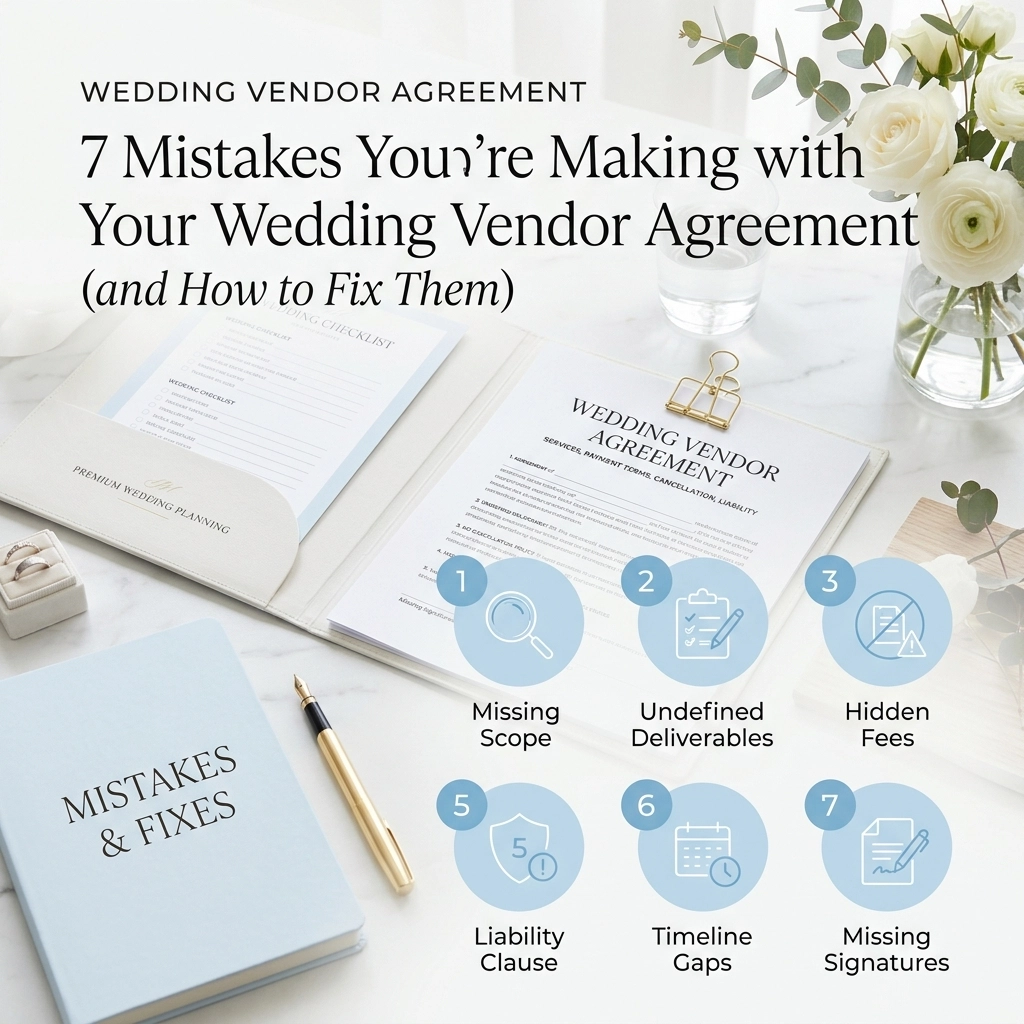
    Wedding Supplier Contracts are often the only thing standing between your dream wedding and a financial nightmare. When you are planning the most important day of your life, you aren't just buying flowers or booking a DJ; you are entering into a series of binding legal agreements. Most couples approach these documents with rose-tinted glasses, assuming the vendor is a partner who has their best interests at heart.

    The reality is different. Vendors write contracts to protect themselves, their time, and their profit margins. If you don't know how to navigate these agreements, you are leaving yourself exposed to lost deposits, vague service delivery, and "hidden" fees that can skyrocket your budget. At GHW-Digital, we believe in radical transparency and total protection for the couple. Whether you are looking for innovative planning ideas or solid legal footing, you need to understand the stakes.

    Stop Front-Loaded Payments: Protect Your Cash Flow

    One of the most dangerous mistakes couples make in Wedding Supplier Contracts is agreeing to front-loaded payment schedules. Many vendors demand 75% or even 90% of the total fee months before the event. From the vendor's perspective, this secures their revenue. From your perspective, it is a massive liability.

    If a vendor goes out of business or fails to show up, chasing a refund for a front-loaded contract is an uphill battle. We’ve seen couples lose thousands because they didn't have the leverage to demand a tiered payment structure.

    The Action-Benefit Strategy:

    • Negotiate a 50/40/10 split: Pay a deposit to secure the date, a middle payment closer to the event, and the final 10% after the service is delivered.
    • Avoid "100% Non-Refundable" clauses: Legitimate businesses should offer a sliding scale for refunds based on how far in advance a cancellation occurs.
    • Link payments to milestones: For vendors like photographers, ensure the final payment is tied to the delivery of the gallery, not just the end of the wedding day.

    A couple reviewing wedding supplier contracts on a desk to ensure financial safety and payment protection.
    Alt: A couple reviewing Wedding Supplier Contracts to ensure financial safety.

    Lock In Deliverables: Avoid Vague "Professional" Services

    Vague language is a vendor’s best friend and a couple's worst enemy. If your contract says "Professional DJ services for 5 hours," you are at risk. What does "professional" mean? Does it include lighting? Does it include a backup sound system? Does it include a specific DJ, or just whoever is available that day?

    Without specific details, the vendor can do the bare minimum and still claim they fulfilled the contract. You are paying for a specific result, and your Wedding Supplier Contracts must reflect that.

    Action-Benefit: Specificity Over Sentiment

    • Quantify everything: Don't accept "floral arrangements." Demand "10 centerpieces using white peonies and eucalyptus, as seen in the March 12th proposal."
    • Define timeframes: Arrival time, setup completion time, and exact departure time should be non-negotiable.
    • Identify the "Who": If you are booking a specific artist or lead photographer, ensure their name is in the contract. Don't get stuck with a junior assistant on your big day.

    For more ways to streamline your planning and ensure every detail is captured, check out our latest app development ideas.

    Secure Your Backup: Mandate Contingency Plans

    Life happens. Equipment fails, people get sick, and cars break down. A professional vendor should have a contingency plan, but if it isn't in the contract, it doesn't exist. You shouldn't be left scrambling for a new caterer 24 hours before your wedding because your original supplier "had an emergency" and didn't have a backup.

    In your Wedding Supplier Contracts, you must demand a clear "substitution clause." This clause should outline exactly what happens if the primary vendor cannot perform their duties.

    Key Contingency Requirements:

    • Pre-vetted backups: The vendor should name a specific backup person or agency of equal skill level.
    • Liability for costs: If the vendor fails to provide a backup and you have to book a last-minute replacement at a higher cost, the original vendor should be liable for the price difference.
    • Equipment redundancy: For DJs and videographers, the contract should explicitly state they carry backup gear on-site.

    Minimalist visual of a safety net representing contingency plans in secure wedding supplier contracts.
    Alt: Detailed Wedding Supplier Contracts showing contingency plans for couples.

    Neutralize the Force Majeure Clause

    The pandemic taught the wedding industry a hard lesson about "Acts of God." Many couples found themselves stuck in Wedding Supplier Contracts that allowed the vendor to keep the entire deposit even if the event was legally impossible to hold.

    A fair Force Majeure clause should protect both parties. It should define what constitutes an "unavoidable event" and outline a fair path forward, such as a credit toward a future date or a partial refund of non-expended costs.

    Action-Benefit: Balanced Protection

    • Mutual termination rights: If the event cannot go forward due to circumstances beyond anyone's control, both parties should be able to terminate without extreme penalties.
    • Refund of unspent funds: While a vendor can keep a small portion for work already performed (like admin or tastings), they should not profit from an event that didn't happen.
    • Rescheduling terms: Ensure the contract allows for at least one reschedule within a 12-month period without a total loss of the initial deposit.

    Identify Red Flags in Communication

    Communication is the pulse of your wedding planning. If a vendor is slow to respond before you sign the contract, they will be non-existent after they have your money. Professionalism starts at the first point of contact.

    We recommend looking for vendors who use organized systems to manage their workflows. This level of organization usually translates to the quality of their Wedding Supplier Contracts. If they are sending you a messy Word document with typos, expect the same level of care on your wedding day.

    Red Flags to Watch For:

    • Taking 48+ hours to reply to simple inquiries.
    • Reluctance to put verbal promises in writing.
    • Vague answers about their insurance or business license.
    • Pressure tactics to sign "before the price goes up tomorrow."

    Explore our resource gallery to see how we help businesses and couples stay organized through better tech.

    Organized checklist for spotting red flags and protecting couples in wedding vendor agreements.
    Alt: Spotting red flags in Wedding Supplier Contracts for total couple protection.

    The Ultimate Shield: Vow Shield by GHW-Digital

    At GHW-Digital, we’ve seen how traditional agreements often fail the very people they are supposed to serve. That’s why we’ve focused our expertise in app development and scope management on the wedding industry.

    Our Vow Shield framework, integrated into our Vow Guard Elite platform, is designed to be the couple's guardian. It doesn’t just store contracts; it analyzes them for risks, tracks service delivery in real-time, and ensures that you only pay when milestones are met. It’s about moving the goalposts back to a fair position where the couple is protected from vendor negligence or scope creep.

    Vow Shield Benefits:

    • Automatic Risk Detection: Flags vague language and front-loaded payment structures in your Wedding Supplier Contracts.
    • Milestone-Based Payments: Holds funds in a secure environment until the vendor confirms delivery, protecting your investment.
    • Centralized Communication: Records all changes and promises, turning verbal "he-said-she-said" into legally binding documentation.

    Vow Shield digital interface providing secure protection for couples signing wedding supplier contracts.
    Alt: Vow Shield interface protecting couples through better Wedding Supplier Contracts.

    Conclusion: Take Command of Your Contracts

    Your wedding day should be about celebration, not litigation. By identifying red flags, demanding specific language, and using tools like Vow Shield, you take the power back. Don't let a vendor's standard template dictate your financial security. You are the client; you have the right to demand a contract that protects you.

    For more insights on how to leverage technology to protect your interests and bring your vision to life, visit our ideas page frequently. We provide the tools you need to lock in success and keep your margins, and your sanity, intact.

    Secure your day. Protect your vision. Demand a better contract.


    Marblism Legal Shield

    This post is protected by Marblism Legal Shield. Unauthorized reproduction is strictly prohibited. GHW-Digital provides these insights to help couples navigate complex agreements; however, this is not a substitute for professional legal counsel. For specific legal advice regarding Wedding Supplier Contracts, please consult with a qualified attorney. For more information on our data practices, visit our privacy policy.

  • Superior Functional Clarity: Driving Absolute Professional Excellence

    Superior Functional Clarity: Driving Absolute Professional Excellence

    Superior Functional Clarity is the cornerstone of every digital tool we build at GHW-Digital. We believe that if a piece of software requires a manual, a three-day onboarding course, or a "help" chat bubble that never actually helps, it has failed its primary mission. In a world saturated with bloated applications and endless subscription models, clarity has become a rare commodity. We are here to change that.

    For most software companies, "more" is the default setting. More features, more buttons, more notifications, and more reasons to keep you logged in. At GHW-Digital, we take the opposite approach. We believe that design must serve function. If a design element does not make your job easier or your life clearer, it doesn't belong in our apps. This isn't just a stylistic choice; it is a fundamental respect for your time, your battery life, and your mental energy.

    The Philosophy of Superior Functional Clarity

    Superior Functional Clarity starts with the realization that most people are tired. You are likely navigating a complex professional landscape, managing a household, or trying to scale a small business in a high-inflation economy. The last thing you need is a "digital partner" that demands more of your attention than the problem you’re trying to solve.

    We build for humans who are overwhelmed by the modern digital landscape. When we talk about functional clarity, we are talking about the distance between a user opening an app and that user receiving an answer. In our manifesto, we call this the "In-and-Out" philosophy. We don't want you living inside our applications. We want you to get in, get the result, and get on with your day.

    Minimalist bridge representing superior functional clarity and a direct path to user goals.
    Alt: Superior Functional Clarity in minimalist software design

    This approach requires a radical level of discipline. It is much easier to add a feature than it is to refine a single function until it is flawless. Many developers use "feature creep" to justify high prices or recurring subscriptions. We refuse that path. We price based on the permanent problems we solve, not the number of menu items we can cram into a sidebar.

    Why Superior Functional Clarity Trumps Aesthetics

    Aesthetics matter deeply to us. We appreciate a well-kerned font and a balanced color palette as much as any design agency. However, we hold one truth above all others: absolute clarity and ease of use are non-negotiable. A beautiful app that hides its primary function behind three layers of navigation is a failure.

    According to the Nielsen Norman Group, usability is a quality attribute that assesses how easy user interfaces are to use. We take this further. To us, usability is a moral obligation. When a tool is confusing, it creates anxiety. When a tool is clear, it creates confidence.

    Superior Functional Clarity means that the interface is invisible. You shouldn't be thinking about the software; you should be thinking about your task. By stripping away the noise, we allow the function to shine. This is what we mean by Point 12 of our manifesto: Design must serve function. We aren't building digital art galleries; we are building digital hammers. They should feel good in the hand, but their only purpose is to drive the nail home perfectly every single time.

    Abolishing the Subscription Tax Through Simple Design

    The modern software industry is built on a "rent-seeking" model. Companies want you to pay every month for access to tools you’ve already mastered. This model incentivizes complexity. If an app stays simple, the developer fears you won't see the "value" in paying month after month. So, they add "updates" that you didn't ask for, changing the interface and breaking your workflow just to prove they are working.

    We hate this. Software should be a tool, not a tax. By focusing on Superior Functional Clarity, we create tools that are complete. When a tool does one thing flawlessly, it doesn't need a monthly update to justify its existence. You buy the result, and you own the peace of mind. No hidden fees, no ongoing drains on your bank account: just honest, upfront value.

    Precision tool on paper symbolizing superior functional clarity and honest, long-term software value.
    Alt: Superior Functional Clarity leads to honest pricing and user respect

    This lean approach to development also means our tools are incredibly fast. We don't collect massive amounts of personal or business data. We don't run heavy background scripts to track your every move. Our applications respect your device’s battery and your data limits. Because the design is functional and the code is simple, the performance is elite.

    Eliminating Dark Patterns and Psychological Trickery

    Have you ever tried to cancel a service only to be met with a labyrinth of "Are you sure?" pages and hidden buttons? Those are dark patterns. They are the antithesis of everything we stand for.

    Superior Functional Clarity requires honesty. We don't use psychological trickery to keep you engaged. We don't use confusing pricing tiers or hidden cancellation buttons. If our tool provides the answer you need in thirty seconds, we consider that a victory, even if it means you don't look at our brand again for a month.

    John Maeda, author of The Laws of Simplicity, suggests that "Simplicity is about subtracting the obvious and adding the meaningful." We live by this. We subtract the jargon, the clutter, and the baggage. We add the result, the speed, and the security.

    Transparent glass panes showing superior functional clarity by removing digital clutter and jargon.
    Alt: Professional user experiencing Superior Functional Clarity without digital clutter

    Building for Real Life and Real Work

    Our commitment to Superior Functional Clarity is rooted in empathy. Whether you are a freelancer in London or a small business owner in Manchester, you are dealing with real-life milestones that carry high stakes. These moments are stressful enough without having to battle an unintuitive interface.

    By providing immediate answers with zero baggage, we reduce that stress. We take the high-end digital logic usually reserved for giant corporations with massive IT budgets and we package it into a tool that an everyday person can use in seconds. This is technology as an equalizer. You don't need a computer science degree to get professional-grade results from GHW-Digital.

    Security Through Simplicity

    One of the most overlooked benefits of Superior Functional Clarity is security. Complex systems have a larger "attack surface." The more data a company collects and the more features an app has, the more opportunities there are for something to go wrong.

    Because we focus on doing one thing flawlessly and then getting out of the way, we don't need to hold your data hostage. We don't want your personal details. We want you to use the app, grab the information you need, and walk away. This simplicity is our greatest security feature. You get the result, and we forget you were here. There is nothing for bad actors to steal because we aren't interested in building a database of your life.

    Helping Us Shape the Future of GHW-Digital

    We are a British company, rooted in a tradition of quality and world-class craftsmanship. But we aren't building in a vacuum. Our manifesto is a promise to you, the user, that we will always prioritize your needs over corporate growth hacks.

    We know that the best ideas don't always come from a boardroom. They come from people facing real problems who can't find a tool that solves them simply. If you are tired of bloated software and "rent-seeking" subscriptions, we want to hear from you.

    Do you have an idea for a tool that should exist? Is there a complex task in your professional or personal life that could be solved by a focused, high-impact digital application?

    Visit our ideas area at https://ghw-digital.com/ideas.html. Tell us what you need. We are looking for problems that can be solved through the lens of Superior Functional Clarity. We are looking for ways to reduce your fatigue and increase your clarity.

    We can't guarantee we'll build it but we guarantee we'll read it!

    Glowing spark of inspiration in a vessel representing ideas for superior functional clarity tools.
    Alt: GHW-Digital ideas portal for Superior Functional Clarity suggestions

    The GHW-Digital Promise

    Reliability is a feature. Our tools are built to work exactly when you need them to. They don't require constant babysitting or "premium" upgrades to function. We speak in plain English and focus entirely on the relief our tools provide.

    Superior Functional Clarity isn't just a design philosophy; it’s our identity. We are here to provide professional-grade leverage to the people who need it most, without the jargon, without the subscriptions, and without the stress.

    We invite you to explore our current suite of applications and see the difference that functional design makes. No accounts to manage, no data held hostage: just results.

    Powered by GHW Digital (Company No: 16834250). This document is an automated draft for business organization purposes only. It does not constitute legal advice. GHW Digital accepts no liability for disputes, financial loss, or enforceability. Users must consult a qualified professional in their jurisdiction before signing.

  • Respecting User Autonomy: Reclaiming Your Vital Digital Freedom

    Respecting User Autonomy: Reclaiming Your Vital Digital Freedom

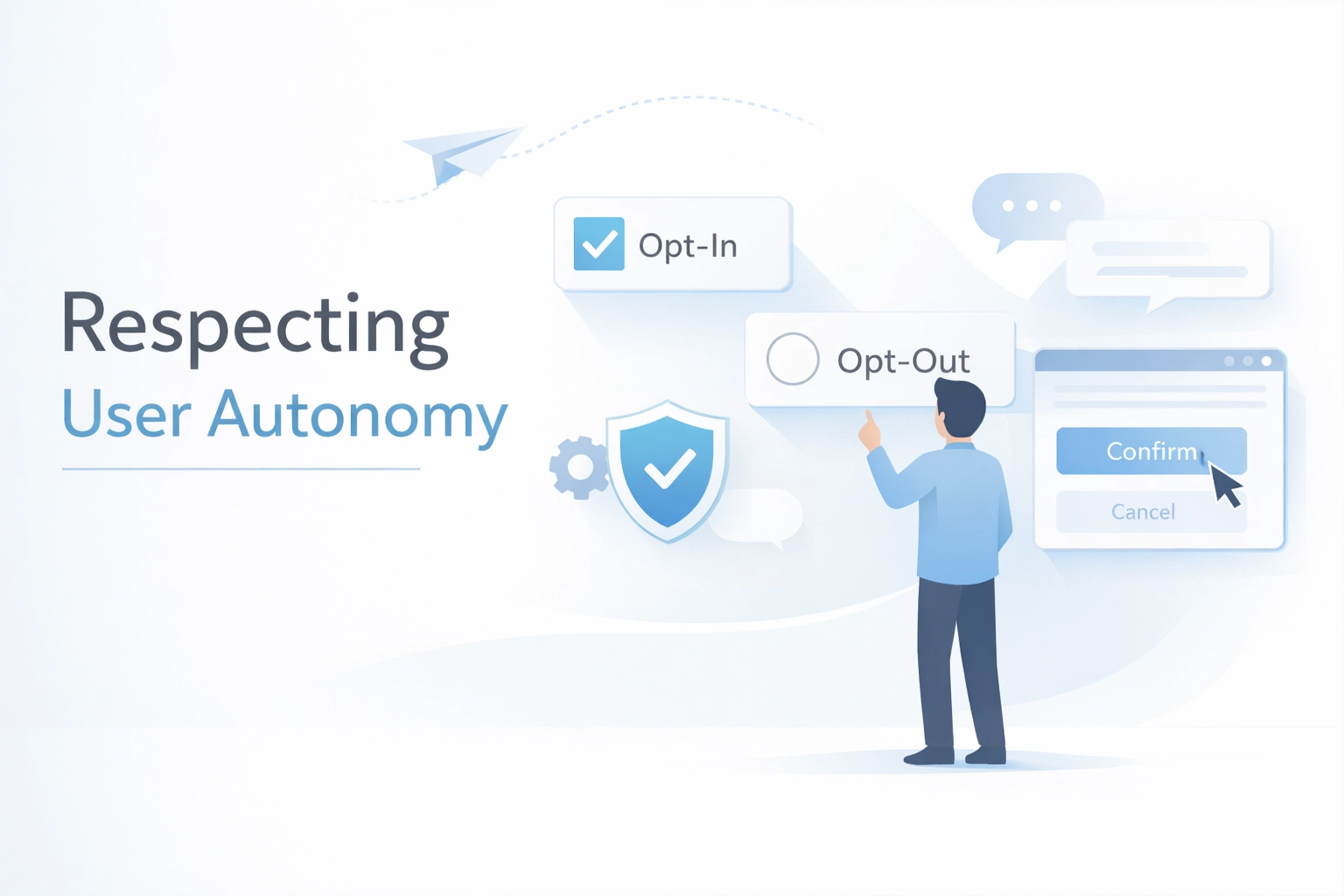
    Respecting User Autonomy is the foundational principle that dictates every line of code we write at GHW-Digital. In an era where the "attention economy" treats your time as a commodity to be harvested, we have chosen a different path. Most modern software is designed to be "sticky." Developers and stakeholders brag about high "time on site" and "daily active usage" metrics. They want you trapped in a loop of notifications, refreshes, and endless scrolling. At GHW-Digital, we believe that is a fundamental violation of your rights as a human being.

    We don't want you living inside our apps. We want you to solve your problem, get your answer, and get back to your real life. Whether you are navigating a major life milestone or managing a complex business task, the software you use should serve you, not the other way around. This isn't just a design choice; it is a moral stance against the digital clutter that defines the modern age.

    Reclaim Focus: The Ethics of Respecting User Autonomy

    When we talk about Respecting User Autonomy, we are talking about the right to self-determination in a digital world. Every time an app hides a "cancel" button or uses psychological trickery to keep you engaged, it is stripping away your autonomy. These are known as dark patterns, and they are the antithesis of everything we stand for.

    We believe that software should be a tool, not a tax on your mental health. By focusing on Point 6 of our manifesto, Respect the User’s Time, we ensure that our applications are built for speed and clarity. Good design means you spend less time on your screen. It means the interface is intuitive enough that you don't need a manual or a degree in computer science to find what you need. When we respect your autonomy, we give you the power to make informed decisions quickly, without the baggage of hidden agendas or confusing pricing tiers.

    Respecting user autonomy through an open door representing freedom from digital noise and clutter.

    Prioritize Outcomes: Why We Build for the "In-and-Out" Experience

    The philosophy of "In-and-Out" is central to our development process. We recognize that our users are often tired, overwhelmed, and fatigued by the digital landscape. They don't need another "platform" to manage. They need a result.

    By Respecting User Autonomy, we prioritize the outcome over the engagement. Our tools are built to execute their primary function flawlessly and then get out of your way. We don't collect massive amounts of your data because we don't need it to "personalize" ads or keep you hooked. We provide the information, you take it, and you walk away. This simplicity is a form of security. There is nothing for bad actors to steal because we don't hold your data hostage. You own the result, and you own your peace of mind.

    This approach is rooted in our identity as a British company. There is a specific kind of world-class quality that comes from focusing on reliability and function over flashiness. We deliver elite digital products that respect your device's battery, your data limits, and, most importantly, your patience.

    Eliminate Noise: The Psychological Impact of Respecting User Autonomy

    The constant bombardment of notifications and "feature bloat" has a tangible cost on human productivity and happiness. When an app adds fifty features you didn't ask for, it isn't "adding value"; it is adding cognitive load. It is forcing you to navigate a labyrinth just to find the one tool you actually need.

    Respecting User Autonomy means we have the discipline to say "no" to bloat. We build fewer features so that the features we do build have a higher impact. This minimalist aesthetic signals efficiency. It tells the user that we value their time as much as they do. When you use a GHW-Digital tool, you aren't fighting the interface. You are using a precision instrument designed for a specific purpose.

    Research into the Attention Economy shows that the more time we spend on screens, the less control we feel over our lives. By intentionally designing software that encourages users to leave, we are helping people reclaim that control. This is the "Digital Architect" vibe: we build the structure, you use it to achieve your goals, and then you step back into the world.

    A minimalist stopwatch illustrating how respecting user autonomy saves time with efficient app design.

    Direct Clarity: Designing for Human Realities

    Our manifesto is built for humans, not just "users." Humans have lives, families, and businesses to run. They have wedding contracts to review and agency deadlines to meet. In these high-stakes moments, the last thing anyone needs is jargon or a complex account creation process.

    Respecting User Autonomy means providing immediate answers with zero baggage. No accounts to manage, no "premium" tiers hidden behind a paywall, and no psychological trickery. We speak in plain English. We focus entirely on the relief and clarity our tools provide. If a tool doesn't reduce your stress, it has failed.

    This empathy-first approach is what separates GHW-Digital from the giant corporations. They build for the bottom line; we build for the human on the other side of the glass. We take the high-end technology usually reserved for massive enterprises and simplify it so that everyday people and freelancers can use it to equalize the playing field.

    Sustainable Solutions: Moving Beyond the Subscription Tax

    One of the most significant ways we practice Respecting User Autonomy is by refusing to charge "endless monthly rent" for digital access. The subscription model is a tax on your future. It creates a relationship of dependency where you never truly own the tools you use.

    We price our products based on the permanent problems they solve, not the number of days you've had an account open. This is radically fair pricing. You buy the result, and you own the peace of mind. By killing the subscription, we free you from the ongoing drain on your bank account and the mental load of managing yet another monthly bill. You are in control of your finances, just as you should be in control of your time.

    This commitment to sustainability ensures that we build tools that actually fix problems. We aren't interested in fleeting trends. We are interested in solid, reliable help that is there when you need it and invisible when you don't. Nielsen Norman Group has long advocated for scannability and user control in design, and we take those principles to their logical conclusion.

    A light blue cube on a white pedestal representing a permanent solution and respecting user autonomy.

    Collaborate with Us: The GHW Ideas Area

    We aren't a faceless corporation behind a curtain. We are a team of developers who believe in these principles, but we know we don't have all the answers. Our manifesto is a living document, and our roadmap is shaped by the real-world needs of people who are tired of the status quo.

    If you have an idea for a tool that follows our "In-and-Out" philosophy: something that solves a complex problem simply and respects the user's time: we want to hear from you. We have a dedicated space for this in our Ideas Area.

    Whether it's a tool for personal life milestones or a professional utility that eliminates confusion, your input helps us decide what to build next. We can't guarantee we'll build it but we guarantee we'll read it! We are looking for solutions that align with our core values: speed, simplicity, and absolute respect for the individual.

    The Future of Respecting User Autonomy

    The digital landscape is at a crossroads. One path leads to more immersion, more data collection, and more "stickiness." The other path: the one GHW-Digital is paving: leads to autonomy, privacy, and efficiency.

    Respecting User Autonomy is more than just a marketing slogan; it is our competitive advantage. We believe that as people become more fatigued by the modern digital landscape, they will seek out tools that treat them with dignity. They will choose the app that lets them get the job done in thirty seconds over the app that tries to keep them for thirty minutes.

    We are proud to be building these tools right here in Britain, rooted in a tradition of quality and common sense. We invite you to explore our current suite of applications at https://ghw-digital.com/apps.html and see the difference that respect makes. No jargon, no dark patterns, just honest tools for real life.

    Human hands holding a glowing light orb to show empathy-first design and respecting user autonomy.

    By choosing GHW-Digital, you are choosing to support a philosophy that puts you back in the driver's seat. You are choosing to value your time, protect your data, and own your results. Technology should be an equalizer, and by Respecting User Autonomy, we are handing the power back to you.

    Stop letting software dictate your schedule. Use the tool, get the answer, and get on with your day. That is the GHW promise.


    Powered by GHW Digital (Company No: 16834250). This document is an automated draft for business organization purposes only. It does not constitute legal advice. GHW Digital accepts no liability for disputes, financial loss, or enforceability. Users must consult a qualified professional in their jurisdiction before signing.

  • Marriage contract risks: The Powerful Urgent Defense

    Marriage contract risks: The Powerful Urgent Defense

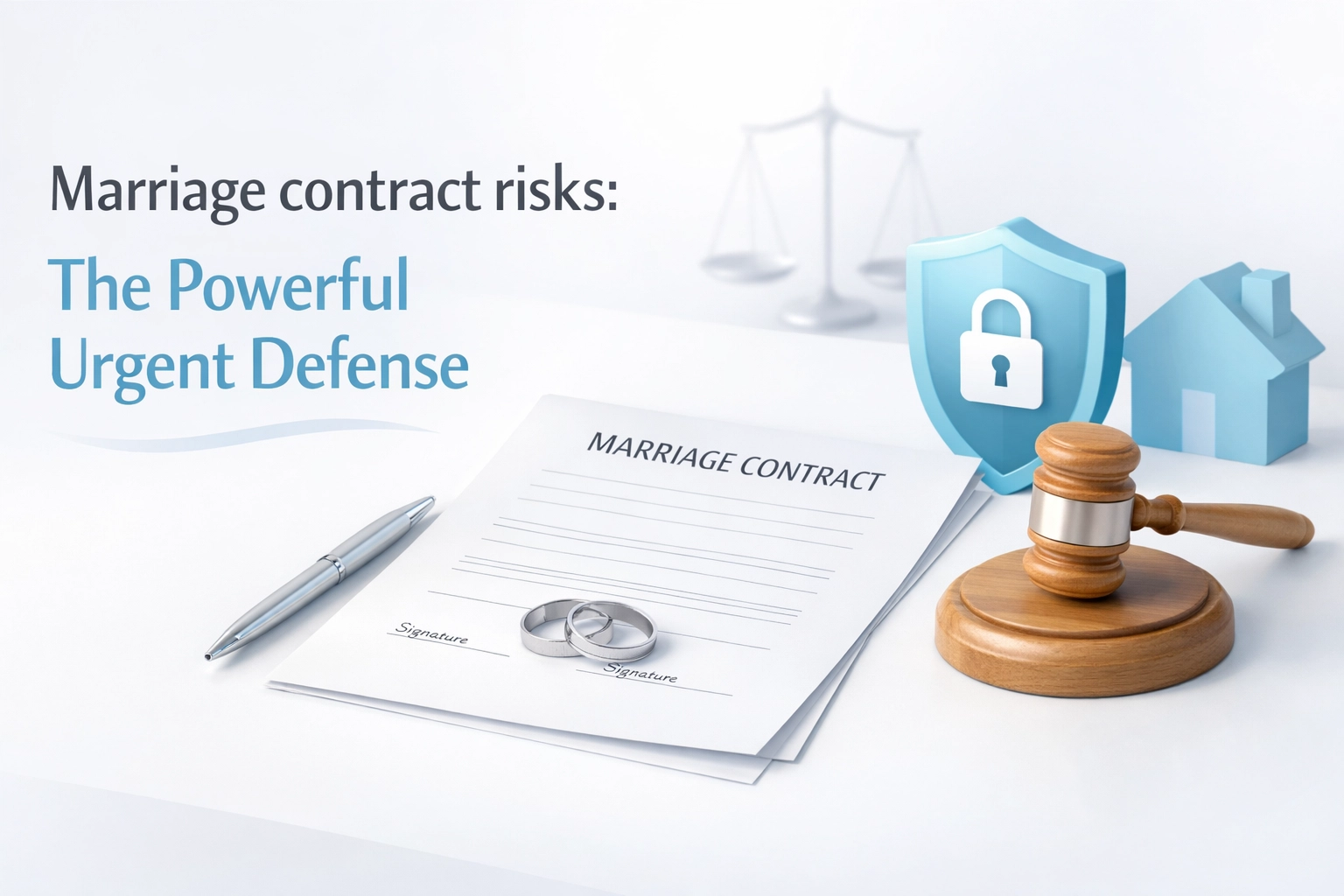
    Marriage contract risks represent a silent threat to one of the most significant personal and financial investments an individual will ever make. While most couples focus on the aesthetics of their ceremony, the legal framework governing their wedding suppliers and matrimonial agreements remains largely unvetted. This lack of scrutiny leaves the door open for financial leakage, liability exposure, and unenforceable clauses that can cause catastrophic fallout during a crisis.

    At GHW-Digital, we treat every contract as a blueprint for security. When the blueprint is flawed, the structure collapses. Vow Shield serves as the digital architect for your wedding agreements, providing a rigorous analysis of every clause to ensure your interests remain protected. This is not about being cynical; it is about being precise. It is about deploying a powerful urgent defense against the unexpected.

    Identify Marriage Contract Risks Before They Escalate

    The first step in securing any agreement is identifying the vulnerabilities. Marriage contract risks often hide in the fine print of vendor agreements and venue bookings. These documents are frequently drafted by the service provider to favor their own business interests, often at the expense of the couple. Without a professional eye or a specialized tool like Vow Shield, you are essentially signing a blank check for potential litigation.

    One of the most common risks involves inadequate financial disclosure. In any contract involving significant asset allocation or services, transparency is the primary shield. If a vendor fails to disclose all potential costs or if a pre-marital agreement lacks full financial clarity, the entire document becomes fragile. Courts frequently set aside agreements where honesty was not the baseline.

    A magnifying glass highlighting marriage contract risks on a legal document for security analysis.

    Neutralize Unconscionable Terms with Vow Shield

    An agreement that is severely one-sided is not just unfair; it is often legally void. Marriage contract risks frequently manifest as "unconscionable terms", clauses that leave one party with all the burden and none of the protection. For example, a wedding venue contract might include a clause that allows them to cancel your event with zero notice while retaining your entire deposit.

    Vow Shield is designed to flag these imbalances immediately. By uploading your contract to our applications, the system scans for language that deviates from standard legal protections. We look for:

    • Excessive Indemnity Clauses: Where you are held liable for things outside of your control.
    • Non-Refundable Deposits: Ensuring they meet legal definitions of "reasonable" rather than punitive.
    • Unilateral Termination Rights: Preventing suppliers from abandoning their obligations without recourse.

    The Critical Protocol of Independent Counsel

    Proceeding without independent review is a high-stakes gamble. Marriage contract risks are magnified when only one party’s interests are represented in the drafting phase. Legal history is filled with examples of agreements being overturned because one party claimed they did not understand what they were signing.

    To maximize enforceability, every agreement must be executed with clarity and professional oversight. While Vow Shield provides the automated defense and analysis, we always advocate for a structured review process. This ensures that every signature is witnessed and that both parties are operating from a position of informed strength. You can learn more about contract fundamentals at Cornell Law to understand why these protections are mandatory, not optional.

    A balanced scale showing the importance of fairness and protection against marriage contract risks.

    Eradicate Coercion Through Strategic Timing

    Timing is a weapon often used against couples. Presenting a vendor agreement or a matrimonial contract hours before the event creates a state of duress. Under these conditions, the "agreement" is rarely a product of free will, but rather a result of pressure. This is a massive marriage contract risk that can lead to the document being set aside by a court.

    Our protocol at GHW-Digital emphasizes early detection. By using Vow Shield weeks or months in advance, you remove the element of urgency that suppliers might use to force your hand. A contract signed under pressure is a liability, not an asset. True security requires a cooling-off period and the time to negotiate terms that actually serve your objectives. The American Bar Association provides extensive resources on why fair negotiation periods are essential for any family or matrimonial contract.

    Eliminate Ambiguity to Protect Your Assets

    Vague language is the enemy of enforcement. In many wedding supplier contracts, terms like "satisfactory service" or "reasonable timeframe" are used to hide a lack of commitment. These ambiguities are significant marriage contract risks because they are open to interpretation. When a dispute arises, the lack of specific metrics makes it nearly impossible to hold a supplier accountable.

    Vow Shield transforms these vague statements into concrete requirements. Our tool analyzes the language to ensure that every deliverable is defined, every deadline is fixed, and every penalty for non-performance is clearly outlined. We turn "we will try to deliver" into "delivery is guaranteed by 10:00 AM." This is the level of precision required for an elite defense.

    Elegant pens on a contract representing mutual agreement and the mitigation of marriage contract risks.

    Secure Your Future with a Definite Defense

    Your wedding day should be the start of a secure future, not the beginning of a legal nightmare. By identifying and mitigating marriage contract risks early, you ensure that your focus remains on the event itself rather than the fine print. GHW-Digital provides the tools necessary to lock in your security and protect your capital.

    Vow Shield is more than just an app; it is a guardian for your most important milestones. Do not leave your contracts to chance. Adopt a stance of professional skepticism and use the technology available to verify every word, every clause, and every signature. The cost of a review is negligible compared to the cost of a legal battle.

    A blue sand hourglass symbolizing the time required to properly assess marriage contract risks.

    Final Imperative: Deploy the Shield

    The complexity of modern agreements requires a modern solution. Whether you are dealing with a venue, a photographer, or a pre-marital agreement, the stakes are too high for guesswork. Address the marriage contract risks head-on with a platform built for precision and protection.

    Visit our home page to see our full suite of digital defense tools. Secure your wedding. Protect your assets. Stop the bleed before it starts.


    Mandatory Footer: Ethics and Transparency at GHW-Digital

    At GHW-Digital, we believe in blunt honesty. We are not lawyers, and the analysis provided by Vow Shield is a technical assessment based on established data patterns, not formal legal advice. Our goal is to empower you with information, not to replace a qualified attorney.

    Your Data, Your Control:
    We do not use marketing tricks. Your uploaded contracts are processed with the highest level of security. We do not sell your data to third-party vendors. Our revenue comes from providing elite tools, not from harvesting your personal information.

    Transparency Commitment:
    Every piece of software we build, from Scope Sentry to Vow Shield, is designed to bring transparency to the business-client relationship. We advocate for fairness, respect, and alignment. If a contract is unfair, we tell you. No fluff, no jargon, just the facts. We are here to ensure you get exactly what you pay for.

    For more information on how we handle your information, please review our Privacy Policy.

  • Systemic Protection: Why Elite Professionals Choose Crucial Code Over Costly Consultants

    Systemic Protection: Why Elite Professionals Choose Crucial Code Over Costly Consultants

    SEO Meta Description: Systemic Protection is changing how high-value industries operate. Learn why elite professionals are replacing expensive consultants with precise code for their Professional Service Contracts.

    URL Slug: /systemic-protection-professionals-code-consultants

    Systemic Protection Matters: Why High-Value Professionals Are Replacing Consultants with Code

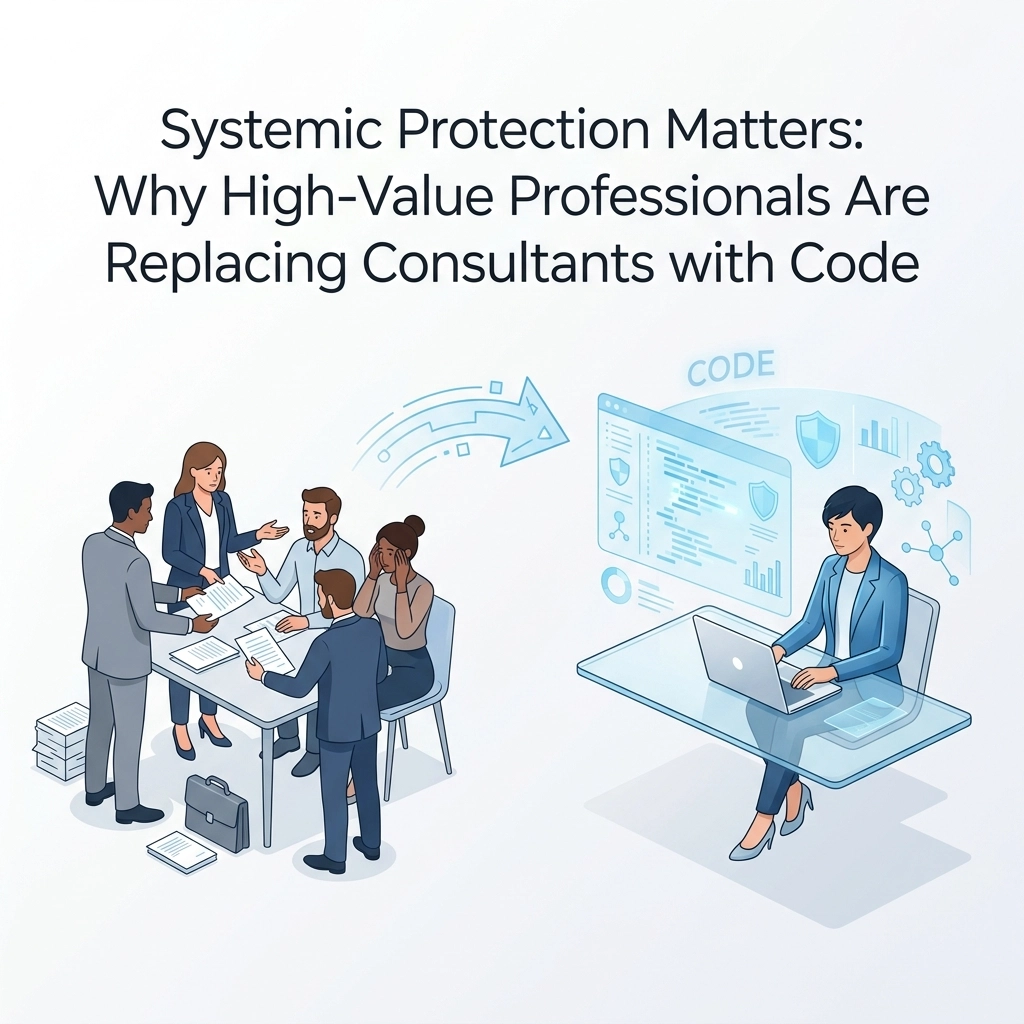
    Systemic Protection is the only barrier between a profitable firm and a failing one in 2026. For decades, the standard response to complexity was to hire more consultants. You had a problem with compliance? Hire a consultant. You had a problem with scope creep? Hire a consultant. This model is dead. It was slow, prone to human error, and prohibitively expensive. Today, high-value professionals, the architects, the engineers, the elite developers, are firing their consultants and replacing them with rigorous, automated code.

    The transition from human oversight to systemic protection isn't just a trend; it is a survival mechanism. When you rely on a human consultant to monitor your Professional Service Contracts, you are relying on someone who sleeps, forgets, and occasionally looks the other way. Code does none of those things. Code enforces boundaries with a mathematical coldness that humans simply cannot replicate.

    At GHW-Digital, we see this shift daily. Our clients are no longer asking for advice; they are asking for infrastructure. They want systems that don't just "suggest" best practices but "enforce" them. If you are still relying on a consultant’s monthly report to tell you that your project went off the rails three weeks ago, you have already lost.

    The Economics of Systemic Protection

    Consultants bill by the hour. This creates a fundamental misalignment of incentives. A consultant is rarely incentivized to solve a problem permanently because a permanent solution ends the billing cycle. Code, however, is a capital investment that pays dividends in perpetuity. By implementing systemic protection, you shift from an OpEx model of "buying time" to a CapEx model of "owning logic."

    The cost of a high-tier consultant can easily exceed $300 an hour. Over a year-long engagement, that is hundreds of thousands of dollars spent on subjective observation. Compare that to a specialized software solution that monitors your Professional Service Contracts 24/7. The software doesn't take vacations, doesn't require a benefits package, and, most importantly, it never misses a breach of scope.

    Balanced scale comparing heavy paper contracts with efficient systemic protection code.
    Alt: A data-driven comparison of consultant overhead versus systemic protection software costs.

    When you replace consultants with code, you are buying certainty. You are ensuring that every clause in your agreement is tracked and every deliverable is verified. This is why we focus so heavily on creating tools that act as a digital fortress for your business. For more insights on how these technologies are evolving, check our latest ideas on systemic defense.

    Why Professional Service Contracts Fail Without Systemic Protection

    Most Professional Service Contracts are written once and then buried in a digital folder. They are static documents meant to govern dynamic, messy relationships. This is where the "consultant gap" occurs. The consultant tries to bridge the distance between the contract and the reality of the work, but they often fail because they lack real-time data.

    Systemic protection turns the contract into a living entity. Imagine a contract that can:

    • Auto-halt work when a client requests an out-of-scope feature.
    • Trigger invoices the moment a milestone is digitally verified.
    • Flag liability risks before they become legal disputes.

    This is the power of replacing subjective oversight with objective logic. When your boundaries are hard-coded, there is no room for "moving goalposts." You aren't arguing about what was said in a meeting; you are looking at the system's log. This level of precision and control is what separates elite firms from the rest.

    Replacing Subjectivity with Algorithmic Certainty

    Human judgment is flawed. We are prone to "sunk cost" fallacies and the desire to please clients, often at the expense of our own margins. Systemic protection removes the emotional burden of saying "no."

    When a project experiences scope creep, a consultant might suggest a "diplomatic conversation." A system powered by code simply blocks the action or forces a change order before work can proceed. This isn't about being difficult; it's about being professional. Fairness is achieved when both parties adhere to the agreed-upon rules, and code is the ultimate arbiter of those rules.

    Protective digital dome shielding professional services from fluid shapes representing scope creep.
    Alt: Visualizing systemic protection as a shield between professional services and scope creep.

    High-value professionals use our Scope Guard Elite precisely because it offers this algorithmic certainty. It acts as the guardian that a human consultant can never be. It ensures that the integrity of the project remains intact, regardless of how much pressure a client exerts. For a deeper look at how we build these boundaries, visit our innovation page.

    The Elite Infrastructure of Systemic Protection

    To build a business that scales without breaking, you need a technical foundation that prioritizes protection. This isn't just about "productivity tools"; it's about "defensive architecture." In a world where margins are constantly under attack from inflation and global competition, your internal systems must be your first line of defense.

    According to research by Harvard Business Review, companies are increasingly moving away from traditional management consulting toward internal digital solutions that provide real-time visibility. This shift is driven by the need for speed. If you have to wait for a consultant's report to know your project is failing, you're already too late. Systemic protection gives you the data in milliseconds.

    Minimalist dashboard interface displaying real-time data for systemic protection and contract health.
    Alt: A modern dashboard showing real-time systemic protection alerts and contract health metrics.

    Key components of this infrastructure include:

    • Automated Verification: Using code to confirm that work meets the standards set in the Professional Service Contracts.
    • Leakage Detection: Identifying areas where time or resources are being spent without corresponding revenue.
    • Vow Management: Ensuring every promise made during the sales cycle is tracked and fulfilled via tools like Vow Guard Elite.

    Moving from Subjectivity to Algorithmic Certainty

    The era of the "expert generalist" consultant is ending. They are being replaced by "expert systems." These systems are built on the collective knowledge of thousands of successful projects, codified into rules that govern your business. When you adopt systemic protection, you aren't just buying software; you are buying the discipline that your organization might lack.

    Elite professionals understand that their time is their most valuable asset. Spending that time arguing over contract interpretations is a waste. By using code to manage the Professional Service Contracts, they free themselves to do the high-level work they are actually paid for.

    Digital laser blueprint cage over a laptop managing Professional Service Contracts automatically.
    Alt: A professional focusing on high-value tasks while systemic protection handles contract compliance in the background.

    We believe that every high-value professional deserves a system that works as hard as they do. That is why we provide a constant stream of new strategies and tools designed to lock in profit and lock out chaos.

    The Future: Code as the Ultimate Guardian

    As we look further into 2026, the divide between code-native firms and consultant-dependent firms will only widen. The firms that embrace systemic protection will be leaner, more profitable, and far more resilient. They will be the ones winning the biggest contracts because they can prove, with data, that they can deliver exactly what they promise.

    The message is clear: Stop paying for opinions and start investing in protection. Your contracts are only as good as the systems that enforce them. If you are ready to stop the leakage and start scaling with confidence, it's time to replace your consultants with code.

    Geometric glass bridge toward a bright horizon symbolizing the future of systemic protection.
    Alt: The GHW-Digital vision of a future where systemic protection is the standard for all elite professionals.

    Secure your competitive advantage now. Don't let scope creep or administrative overhead erode your excellence. Build the shield your business deserves. Explore our latest technical insights to stay ahead of the curve.


    Marblism Legal Shield
    This content and the underlying logic described are protected under the Marblism Legal Shield framework. All rights reserved regarding the systemic protection methodologies and automated contract enforcement protocols. GHW-Digital 2026. For privacy concerns, visit our Privacy Policy.

  • Future Protocols 101: A Professional’s Guide to Mastering Autonomous Assets

    Future Protocols 101: A Professional’s Guide to Mastering Autonomous Assets

    Autonomous Assets are no longer a theoretical concept in a whitepaper; they are the new frontline of digital commerce. In an era where manual processes bleed revenue and human error compromises scale, mastering the protocols that govern these self-sustaining resources is the only way to maintain a competitive edge. At GHW-Digital, we recognize that the shift from human-led management to AI-orchestrated execution is the most significant pivot for professionals since the dawn of the internet.

    Manual oversight is a bottleneck. It kills margins, stalls innovation, and tethers your growth to the physical limits of a human workforce. To move forward, you must understand the architecture of Autonomous Assets: digital tokens and resources managed by AI agents that operate with minimal human friction.

    The Paradigm Shift: From Speculation to Agentic Commerce

    The traditional blockchain era was defined by speculation. The next era is defined by utility. Agentic commerce represents the transition where AI agents act as economic participants. They don't just hold value; they spend, trade, and optimize it based on pre-defined logic and real-time data.

    Emerging protocols like OpenClaw and x402 are establishing the technical standards for this reality. These protocols allow AI entities to possess a legal and economic identity. By mastering these frameworks, professionals can deploy assets that work 24/7, reacting to market fluctuations in milliseconds while humans focus on high-level strategy.

    Crystalline spheres illustrating the transition to active, professional autonomous assets in a modern gallery.

    Action-Benefit: Implement Autonomous Assets to Lock In Efficiency

    1. Scalable Governance. Utilize decentralized frameworks to ensure your assets follow strict operational rules without needing a supervisor.
    2. Real-Time Execution. Deploy smart contracts that trigger actions based on live data, eliminating the "wait time" of manual approvals.
    3. Risk Mitigation. Use automated compliance metadata to ensure every transaction stays within regulatory boundaries.

    The Maturity Model: A Five-Phase Path to Autonomy

    You don’t flip a switch and become autonomous. Mastering Autonomous Assets requires a measured progression. Organizations that jump the gun often find themselves facing "black swan" events because they lacked the proper guardrails.

    Phase 1: Manual Exploration

    This is the baseline. Humans perform every action. AI is used merely as a search tool. It is slow, prone to error, and entirely unscalable.

    Phase 2: Human-in-the-Loop (HITL)

    By integrating the Model Context Protocol (MCP), you allow AI to interact with your infrastructure. However, every change requires a human to press "approve." This is where most modern firms sit: using AI as a high-powered assistant that still needs a leash.

    Phase 3: Human-on-the-Loop (HOTL)

    In this phase, you define the boundaries. Specialized agents operate autonomously within a specific sandbox. You don’t approve every action; you monitor the outcomes and intervene only when the agent approaches the "edge" of its authority. This is where GHW-Digital begins to see massive efficiency gains for our clients.

    Phase 4: Agent Orchestration

    This is the elite level of management. Multiple specialized agents: one for security, one for compliance, one for execution: collaborate under an orchestrator. If the security agent flags an anomaly, the compliance agent validates the fix before the execution agent deploys it.

    Phase 5: Full Autonomy

    The system is self-healing and self-optimizing. Humans shift from "operators" to "policy makers." You define the "why" and the "what," and the Autonomous Assets handle the "how."

    Minimalist staircase representing the professional maturity model for implementing autonomous assets.

    Governance Architectures: Managing the Machine

    To master Autonomous Assets, you must master the rules that govern them. Without governance, autonomy is just high-speed chaos.

    • Founder-Led Governance: Efficient but centralized. Best for early-stage protocol deployment.
    • Council-Based Governance: Power is distributed among elected experts. This balances the need for speed with the necessity of oversight.
    • Direct Stakeholder Voting: Fully decentralized. Platforms like Tezos and Polkadot use on-chain governance to allow stakeholders to vote on upgrades. This prevents "hard forks" and ensures the protocol evolves with its users.

    At GHW-Digital, we advocate for hybrid models. We use off-chain deliberation to handle complex nuance, combined with on-chain execution to ensure transparency and immutability. If you want to see how we apply this to custom builds, check out our App Development services.

    Action-Benefit: Secure Your Perimeter with Protocol Guardrails

    1. Multi-Signature Requirements. Ensure no single agent or human can move significant capital without verification.
    2. Timelocks. Implement a delay on governance changes to allow for human intervention if a malicious proposal is passed.
    3. Feasibility Studies. Use automated "dry runs" to test how a protocol change will affect your Autonomous Assets before going live.

    A protected blue core symbolizing secure protocol guardrails for managing autonomous assets.

    The Philosophy of Autonomous Digital Assets: Democratizing Expertise

    Why are we so obsessed with this? Because it democratizes professional expertise. In the past, high-level financial strategy or complex app management required a team of expensive consultants. By packaging that expertise into an Autonomous Asset, we make elite performance accessible to everyone.

    The philosophy is simple: Expertise should not be a gatekept resource. It should be a scalable digital asset. When we build Scope Guard Elite, we aren't just building a tool; we are building an autonomous agent that embodies years of project management wisdom to protect your profit margins.

    By turning professional knowledge into code, we allow business owners to "hire" the best minds in the industry for a fraction of the cost. This is the heart of what we do at GHW-Digital. If you have an idea for a protocol or an autonomous system, we want to hear it: visit our Ideas Portal to start the conversation.

    Compliance by Design: The Ethical Shield

    As we move toward a daily frequency of autonomous interactions, security cannot be an afterthought. You cannot "bolt on" security to an autonomous system; it must be part of the DNA.

    We integrate AML (Anti-Money Laundering) and KYC (Know Your Customer) metadata directly into the assets. Using frameworks like Chainlink’s CCIP, compliance attestations travel with the token. This ensures that as your Autonomous Assets move across different blockchains, they remain within the legal "shield" of their home jurisdiction.

    This blunt honesty is necessary: The regulatory landscape is a moving target. Professionals who ignore compliance in favor of "pure" autonomy will eventually find themselves facing massive legal liabilities. True mastery is the ability to innovate while remaining unassailable from a legal standpoint.

    A light blue path through digital gateways representing a compliant legal framework for autonomous assets.

    Conclusion: Securing Your Competitive Advantage

    The future belongs to those who can orchestrate machines. Autonomous Assets are the tools, and Future Protocols are the instruction manuals. If you continue to manage your digital resources with the manual processes of 2020, you are leaking revenue and inviting obsolescence.

    Stop playing defense. Start building the systems that protect your time and multiply your expertise. Whether you are looking to secure your project scope or launch a new decentralized protocol, the time to act is now.

    Secure your future. Democratize your expertise.

    Explore our latest project ideas and see how we can build your next autonomous advantage.


    Marblism Legal Shield

    This content is provided for informational purposes only. The deployment of autonomous digital assets and agentic commerce protocols involves significant technical, financial, and legal risks. GHW-Digital and its affiliates do not provide financial or legal advice. Users are responsible for ensuring that their use of autonomous protocols complies with all local and international regulations. Use at your own risk.

    Current date: Sunday, 12 of April 2026 (Europe/London)

  • 7 Mistakes You’re Making with Your Wedding Vendor Agreement (and How to Fix Them)

    7 Mistakes You’re Making with Your Wedding Vendor Agreement (and How to Fix Them)

    Wedding Supplier Contracts are the only thing standing between your dream wedding and a financial nightmare. Most couples approach their vendor agreements with a sense of excitement and trust, often skimming through the legal jargon to get to the "fun part" of planning. This is a massive mistake. A contract isn't a handshake; it is a shield. If that shield is full of holes, you are the one who gets hurt when things go wrong.

    At GHW-Digital, we’ve seen how poorly structured agreements can lead to lost deposits, service no-shows, and legal dead ends. Whether you are browsing fresh ideas for your ceremony or finalizing your venue, you need to treat every signature as a high-stakes business transaction.

    Here are the seven most dangerous mistakes couples make with their Wedding Supplier Contracts and the no-nonsense steps to fix them before it’s too late.

    1. Accepting Front-Loaded Payment Schedules

    The most common red flag in a vendor agreement is a payment schedule that demands 75% or more of the total fee months before the event. When you pay the majority of the balance upfront, you lose your leverage. If a vendor disappears or fails to deliver, your money is already gone.

    The Fix: Negotiate Milestone Payments.
    Never pay the full amount before the work is done. Structure your payments across specific deliverables. A standard, safe approach is a 25% deposit to save the date, 25% at a midway planning point, and the final 50% only after the service is rendered or on the day of the event. Protecting your capital is the first step in ensuring service delivery. You can find more strategies on managing project milestones at our ideas portal.

    Balanced scale showing fair payment milestones in wedding supplier contracts for couples.

    2. Ignoring One-Sided Cancellation Policies

    Many Wedding Supplier Contracts are written to protect the vendor, not the couple. We often see clauses where the vendor can cancel for any reason with minimal notice, while the couple is hit with a 100% cancellation fee if they need to postpone. This is not a partnership; it is a liability.

    The Fix: Demand Reciprocity.
    Ensure that the cancellation terms apply fairly to both parties. If you have to pay a fee for canceling, the vendor should be required to provide a comparable replacement or a full refund (plus a penalty) if they are the ones to bail. We recommend using tools like Vow Shield to audit these clauses. Alignment is key to a successful event, as we discuss in our business philosophy.

    3. Missing Force Majeure Protection

    The last few years have taught us that "acts of God" are very real. If your contract lacks a robust Force Majeure clause, you could be held financially responsible for a wedding that is legally impossible to hold due to pandemics, natural disasters, or government mandates.

    The Fix: Include Specific Emergency Language.
    Your Wedding Supplier Contracts must explicitly mention pandemics, civil unrest, and weather emergencies. This clause should outline a clear path for rescheduling without losing your initial deposit. Don't leave your investment to chance. Always consult a professional review service or check out our technical guides for ways to safeguard your projects.

    4. Allowing Vague Service Descriptions

    "Photography services for eight hours" is not a contract; it's a suggestion. Vague language allows vendors to underdeliver while technically meeting the terms of the agreement. If the contract doesn't specify how many edited photos you get, or exactly which lead singer will show up with the band, you have no recourse when a junior assistant arrives instead.

    The Fix: Itemize Every Deliverable.
    Treat your wedding like a professional project. Demand a "Scope of Work" that lists every detail: the number of staff, specific equipment brands, arrival times, and final delivery dates for all media. If you need help defining these boundaries, our resource page offers insights into scope management.

    Interlocking forms representing fair reciprocity within professional wedding supplier contracts.

    5. Signing Away Your Rights with Extreme Liability Waivers

    Some vendors attempt to bury "hold harmless" clauses in the fine print. These clauses claim that the client assumes all risk for any injury or damage that occurs during the event, even if it's caused by the vendor's own negligence. This leaves you vulnerable to massive lawsuits if a guest gets hurt or property is damaged.

    The Fix: Limit Your Exposure.
    Ensure that the vendor carries their own liability insurance and that the contract includes an "Indemnification" clause. This ensures that the vendor is responsible for their own actions and mistakes. Protecting your interests is non-negotiable. For more on protecting your digital and physical assets, visit GHW-Digital Ideas.

    6. Forgetting the Backup Plan

    Cameras fail. DJs get sick. Vehicles break down. If your Wedding Supplier Contracts do not specify exactly what happens in the event of equipment failure or staff illness, you are one flat tire away from a ruined wedding.

    The Fix: Enforce Contingency Requirements.
    Every contract should include a "Substitution" clause. This names a specific backup person of equal skill and outlines how backup equipment will be handled. If they can't provide a backup, they should be responsible for the cost of a last-minute replacement. We believe in the power of redundancy, a concept we apply to all our app development projects.

    Magnifying glass highlighting specific service details in transparent wedding supplier contracts.

    7. Overlooking the "Hidden" Fine Print

    Vendors often add small fees for travel, meals, "admin costs," or "service charges" that aren't mentioned in the initial quote. These can add thousands to your final bill. If you haven't read the fine print, you've essentially signed a blank check.

    The Fix: Request an "All-In" Price.
    Before signing, ask for a final invoice that includes every single potential fee. If it isn't in the contract, you shouldn't have to pay it. Transparency builds trust. For more tips on maintaining professional transparency, explore our latest articles.

    Use Technology to Secure Your Contract

    At GHW-Digital, we believe that "good enough" is never enough when it comes to protection. This is why we developed Vow Guard Elite, a solution designed to ensure your agreements are watertight and your service delivery is guaranteed. Just as you wouldn't launch an app without testing the code, you shouldn't launch a wedding without testing your contracts.

    Whether you are looking for Scope Guard Elite for your business or seeking to protect your personal milestones, the principles of clear boundaries and ironclad documentation remain the same.

    Why Your Contract Matters Today

    The wedding industry is shifting. With the rise of independent contractors and boutique agencies, the risk of "scope creep" and service failure has never been higher. Your Wedding Supplier Contracts are not just a formality: they are a vital defense mechanism. They ensure that the money you’ve worked hard to save is respected and that the services you’ve paid for are delivered exactly as promised.

    Don't let moving goalposts ruin your big day. Stop guessing and start securing your future. If you're looking for more ways to optimize your professional or personal projects, our ideas section is updated daily with expert advice.


    Lock in your peace of mind. Secure your event with the precision it deserves.

    Dual camera icons illustrating vendor backup and contingency plans in wedding supplier contracts.


    Marblism Legal Shield Footer:
    This blog post is for informational purposes only and does not constitute legal advice. While we strive for accuracy, the legal requirements for contracts vary by jurisdiction. GHW-Digital and the Vow Shield team recommend consulting with a qualified legal professional before signing any binding agreements. We prioritize data integrity and ethical business practices in all our software solutions.

    Stop being a victim of bad terms. Secure your agreement with Vow Guard Elite now.