Author: gohugtheworld

  • Professional Boundaries: The Ultimate Guide to Mastering Elite Project Agreements at Speed

    Professional Boundaries: The Ultimate Guide to Mastering Elite Project Agreements at Speed

    Professional boundaries are the structural load-bearing walls of your freelance career. Without them, the house collapses. If you’ve ever had a client "hop on a quick call" on a Sunday evening or ask for "just one tiny tweak" for the fifth time in a week, you’re experiencing structural failure.

    In the high-velocity world of app development and digital architecture, speed is often cited as the ultimate goal. But speed without control is just a crash waiting to happen. To move fast, you need hard lines. You need an environment where expectations are binary, not atmospheric.

    At GHW-Digital, we build apps, but we also build systems that protect the creators. This guide is about moving from a "yes-man" freelancer to a Digital Architect who commands respect through precision and Independent Contractor Agreements.

    The Architecture of a Solid Agreement

    Most freelancers view contracts as a legal hurdle. That’s a mistake. An agreement is a blueprint. You wouldn’t start pouring concrete for a foundation without a schematic, so why would you start writing code without defining where the project ends?

    Professional boundaries start with the very first document you send. Your Independent Contractor Agreements should not just be about payment terms; they should be about the physics of the relationship.

    • Fixed Scope: Define exactly what is being built. If it’s not in the doc, it doesn’t exist.
    • Response Windows: Set a 24-hour or 48-hour window for communications. This kills the "instant reply" anxiety.
    • Tool Autonomy: Explicitly state that you use your own equipment and software. This reinforces your status as an independent expert, not an "at-will" employee.

    Architectural blueprint symbolizing the structural clarity of independent contractor agreements.

    Scope Creep Management: Stopping the Leak

    Scope creep kills margins. It is a slow leak that eventually sinks the ship. It starts with a small request, a change in button color, an extra API integration, and ends with you working for below minimum wage.

    To master Scope Creep Management, you have to treat every change as a transaction. There is no such thing as a "small favor" in professional development. If the goalposts move, the budget and timeline must move in tandem.

    Action: Lock in the Baseline.
    Before a single line of code is written, use a tool like Scope Guard Elite to create a versioned snapshot of the project requirements. When the client asks for an extra feature, you don’t say "no", you say, "That’s a great addition for Version 2.0, or we can adjust the current Agreement to include it now for an additional fee."

    For more insights on how to handle shifting requirements, check out our latest ideas and strategies.

    The Digital Architect’s Communication Shield

    Communication is where boundaries are most frequently breached. If you are available on every platform, Slack, WhatsApp, Email, LinkedIn, you are effectively never off the clock.

    You need a shield. A shield isn't about being rude; it’s about being professional.

    1. Centralize Communications: Move all project-related talk to one platform.
    2. Define Office Hours: Just because you can work at 2 AM doesn't mean the client should know you're awake. Use scheduled sends for emails to maintain the illusion (and reality) of standard business hours.
    3. The "I" Statement: Use assertive, non-blaming language. "I require all change requests to be submitted via the portal to ensure they are tracked correctly," sounds much better than "You keep asking for too much stuff."

    Maintaining these professional boundaries ensures that you remain an expert advisor rather than a digital commodity. For a deeper dive into managing client relationships, explore the GHW-Digital Ideas page.

    Protective glass rings illustrating scope creep management and secure project perimeters.

    Using Technology as a Guardian

    You can’t stay on guard 24/7. You need systems that act as your proxy. In the same way we use automated testing for code, we use automated boundaries for project management.

    Tools like Scope Sentry and Vow Guard Elite are designed to monitor the health of your project agreements. They act as an early warning system. When a project starts to drift from its original intent, these systems flag the deviation before it becomes a financial disaster.

    Action: Automate the Enforcement.
    Don't be the "bad guy." Let the system be the enforcer. When a client tries to bypass a milestone, an automated notification from your project management suite is much more objective than a heated email. It keeps the relationship professional and focused on the deliverables.

    Protecting Your Independence

    The IRS and various international labor boards have strict definitions of what constitutes an independent contractor. If you start acting like an employee, taking orders on how to work rather than what to deliver, you risk your legal status.

    Professional boundaries protect your tax status as much as your sanity.

    • Use Your Own Stack: Don't let clients force you into their internal Slack or project management tools if it compromises your workflow.
    • Result-Oriented Billing: Whenever possible, bill by the milestone, not the hour. This shifts the focus from your time to your value.
    • Multiple Clients: Never let one client represent 100% of your income. The power to say "no" is directly proportional to your financial diversification.

    If you’re looking to scale your app development business while keeping these boundaries intact, see how we handle complex app builds at GHW-Digital.

    Modern digital sentinel symbolizing technology acting as a guardian for professional boundaries.

    Ethical Standards and Reputation

    Your reputation is your only real currency in the contractor world. Being firm on boundaries actually increases your value. Clients don't want a pushover; they want an expert who knows what they are doing.

    When you enforce Independent Contractor Agreements, you are signaling that you are a high-value professional who respects their own time. This naturally attracts higher-quality clients who also respect that time.

    • Be Transparent: If a deadline is going to be missed because of a technical hurdle, say it early.
    • Document Everything: Every call should be followed by a "per our conversation" email. This isn't paranoia; it's professional hygiene.
    • Know Your Limits: Don't overpromise. It's better to deliver a perfect MVP than a broken full-scale suite.

    For more resources on maintaining a high-level professional stance, visit our resource hub.

    The Final Blueprint

    Mastering professional boundaries isn't about building a wall to keep people out. It's about building a gate that controls the flow of work. It ensures that when you do work, you are focused, compensated fairly, and moving toward a clear goal.

    Without these boundaries, you aren't an independent contractor; you're a decentralized employee with no benefits. Take control of your Independent Contractor Agreements today. Use the right tools. Set the right tone. Protect your craft.

    If you're ready to see how professional-grade architecture can change your project outcomes, head over to our homepage or dive into our latest thoughts on development.


    Marblism Legal Shield

    This content is provided for informational purposes only and does not constitute legal, financial, or tax advice. GHW-Digital and Marblism are not law firms. While we strive for accuracy, the legal landscape for independent contractors varies by jurisdiction. We strongly recommend consulting with a qualified legal professional to review your Independent Contractor Agreements and ensure compliance with local labor laws. Your data privacy is important to us; for more information on how we handle information, please review our Privacy Policy.

    Stop the creep. Secure the bag. Build with GHW-Digital.

  • SEO Information

    SEO Information

    SEO Title: Scope Creep Management Mistakes: Elite Strategies for Massive Project Control
    SEO Meta Description: Stop losing profit to poorly defined projects. Learn how elite Scope Creep Management systems replace expensive consultants and secure your professional service contracts.
    URL Slug: scope-creep-management-mistakes-fix

    7 Mistakes You’re Making with Scope Creep Management (And How Systems Are the Fix)

    Scope Creep Management is the thin line between a high-margin success and a project that drains your company dry. In the world of app development and professional services, "just one more feature" is the silent killer of profitability. If you are still relying on manual spreadsheets or, worse, verbal agreements to manage project boundaries, you are leaving your revenue exposed.

    At GHW-Digital, we see it daily: brilliant founders and project managers losing ground because they lack a systematic defense. Professional Service Contracts are often treated as static documents that sit in a drawer, rather than living systems that govern every interaction. Elite software tools are now replacing the expensive, slow-moving consultants of the past, offering a digital shield that protects your time and your bottom line.

    Here are the seven critical mistakes you are likely making with your Scope Creep Management and the high-impact systems that will fix them.

    1. Using Vague Language in Professional Service Contracts

    Precision is your primary defense. Many project leads make the mistake of using "soft" language like "optimize the user interface" or "improve site performance." These phrases are subjective and invite endless revisions. Without a hard boundary, the client’s definition of "optimized" will always be three steps ahead of your current progress.

    The Fix: Automated Boundary Definitions
    Replace expensive legal consultants with elite software like Scope Guard Elite. These tools allow you to bake specific, quantifiable triggers into your contracts. Instead of "optimize," you specify "reduce page load time to under 2.1 seconds on mobile." When the goal is met, the system locks the task. This level of precision is essential for innovative app ideas that require strict technical guardrails.

    Digital caliper measuring precision boundaries for elite scope creep management in contracts.

    2. Allowing "Off-Channel" Feature Requests

    The moment a client sends a "quick favor" via a WhatsApp message or a casual mention during a Zoom call, your Scope Creep Management is compromised. These informal channels bypass the formal change control process, making it nearly impossible to track how much extra work is actually being performed.

    The Fix: The Centralized Request Portal
    You must enforce a "System of Record" for all changes. If it isn't in the portal, it doesn't exist. Tools like Scope Sentry act as a gatekeeper. By funneling all requests through a structured system, you force the stakeholder to define the requirement, the reason, and the priority before a single line of code is written. This protects your developers from the distraction of constant, unvetted changes.

    3. Treating Change Orders as Emotional Negotiations

    Many service providers feel guilty charging for small changes. They view the request through an emotional lens, wanting to please the client, rather than a financial one. This is a business-killing mistake. Every "small" change has a cumulative effect on the project's architecture and timeline.

    The Fix: Algorithmic Pricing Models
    Remove the human element from the negotiation. Elite systems automatically calculate the impact of a scope change on the delivery date and the total budget. When a client sees that adding a new login method shifts the launch date by four days and adds $1,200 to the bill, they often reconsider. This transparency builds respect and ensures that Professional Service Contracts remain profitable throughout the project lifecycle.

    4. Failing to Document the "Out of Scope" List

    Most people focus on what is in the project. Elite managers focus on what is out. If you don't explicitly list the features or services that are excluded, the client will assume they are included. This ambiguity is the primary breeding ground for scope creep.

    The Fix: Negative Scope Guardrails
    Within your Vow Guard Elite setup, maintain a visible "Out of Scope" column in every project dashboard. This serves as a constant, passive reminder of the project's limits. It’s not about being difficult; it’s about maintaining alignment and ensuring that the core objectives of your app development project are met without unnecessary distractions.

    A minimalist partition representing structured guardrails for app development project scope.

    5. Relying on Expensive Consultants for Simple Governance

    In the past, maintaining project integrity required hiring high-priced consultants to act as intermediaries. These consultants are often slow, prone to bias, and represent a significant overhead cost. Relying on them for daily Scope Creep Management is an outdated and inefficient model.

    The Fix: Elite Software Replacements
    Today’s software tools provide a level of oversight that no human consultant can match. They monitor project velocity in real-time, detect patterns that lead to creep, and send automated alerts before a budget overrun occurs. By shifting your budget from consultants to elite digital systems, you get 24/7 protection for a fraction of the cost. Check out our latest ideas on how automation is reshaping project governance.

    6. Ignoring the "Cost of Reversion"

    When a project drifts, most managers only look at the cost of the new work. They forget to calculate the cost of reverting or integrating that work back into the original plan if the change is later rejected. This "hidden" cost is what often pushes projects into the red.

    The Fix: Integrated Impact Analysis
    Before any change is approved, your Scope Creep Management system should run a simulation of the "reversion cost." If the new feature requires a fundamental change to the database schema, the system should flag the high risk and high cost of potentially undoing that work. This data-driven approach allows for better decision-making and ensures that professional service contracts are respected as the project evolves.

    Digital grid analyzing the impact of change requests for better scope creep management.

    7. Inconsistent Requirement Collection

    If your method for gathering requirements changes with every project, your scope will always be fluid. Disorganized intake processes lead to gaps in understanding, which the client will eventually fill with their own expanding expectations.

    The Fix: Standardized Intake Protocols
    At GHW-Digital, we advocate for a rigid, system-driven intake process. Every project must follow the same sequence of requirement gathering, documentation, and sign-off. This consistency ensures that nothing is missed during the initial phase, reducing the need for mid-project corrections. Explore our app development strategies to see how standardization leads to faster, more predictable results.

    Standardized intake channels ensuring predictable results in app development and project flow.

    The Systemic Solution: Software as Your Guardian

    The days of manual project oversight are over. To thrive in a competitive market, you need a defense mechanism that is as fast and dynamic as the projects you manage. Real Scope Creep Management isn't about saying "no" to every request; it’s about having a system that quantifies the "yes."

    By replacing expensive consultants with elite software tools, you lock in your margins and ensure that every hour worked is an hour billed. Your Professional Service Contracts should be the foundation of a digital ecosystem that protects your time, your staff, and your profit.

    Stop letting your projects bleed. Implement a system-first approach to Scope Creep Management and take back control of your business. For more insights on how to streamline your development process and protect your margins, visit our ideas page for daily updates.

    Elite software guardian system protecting project margins from unmanaged scope creep.

    Secure Your Future

    In an industry where margins are thin and timelines are tight, your ability to manage scope is your greatest competitive advantage. Don't leave it to chance. Use the right tools, enforce your contracts, and let the systems do the heavy lifting.


    Marblism Legal Shield
    The information provided in this blog post is for educational and informational purposes only. While GHW-Digital provides elite tools for project oversight, we do not provide legal advice. All professional service contracts should be reviewed by qualified legal counsel to ensure compliance with local regulations and specific business requirements. GHW-Digital is not liable for any losses incurred through the use of our software or strategies. We believe in blunt honesty: systems provide the framework, but your team must execute the discipline.

  • The Ultimate Guide to Future Protocols: How We Are Democratizing Expert Systems for the Freelance Community

    The Ultimate Guide to Future Protocols: How We Are Democratizing Expert Systems for the Freelance Community

    Future Protocols are the only way to stop the systemic erosion of freelance value in the modern economy. For decades, high-level expert systems, the kind of logic-based AI that solves complex problems, were the exclusive playground of Fortune 500 companies and elite tech conglomerates. The freelance community was left to fend for itself, armed with spreadsheets and hope. At GHW-Digital, led by Martin Hughes, we believe that is a recipe for professional failure. We are changing the narrative by democratizing professional expertise and transforming it into a shield for the independent worker.

    The current landscape is brutal. Scope creep, moving goalposts, and "favor" requests kill margins faster than any market downturn. If you aren't protecting your time with rigorous, automated logic, you are losing money. This guide explores how we are building the frameworks to turn your unique professional skills into Autonomous Digital Assets that defend your boundaries and scale your income.

    Future Protocols: Breaking the Corporate Monopoly on Logic

    The concept of an "Expert System" isn't new. In traditional computer science, these are AI programs designed to solve problems within a specialized domain by mimicking the decision-making ability of a human expert. Historically, these systems required massive knowledge bases and expensive inference engines to function. They were built to replace the consultant, not empower the freelancer.

    Future Protocols represent a shift in this architecture. Instead of gatekeeping elite logic, we are building tools that allow individual experts to encode their own "rules of engagement" into software. This is democratization in its purest form. It is the transition from selling your hours to selling a system that executes on your behalf.

    A hand interacting with a glowing expert system lattice to automate professional freelance workflows.

    When a freelancer uses a protocol-driven approach, they are no longer just a "vendor." They become a system operator. By utilizing tools like Scope Guard Elite, freelancers can deploy a defensive expert system that identifies and flags scope creep before it drains the project's profitability. This isn't just a convenience; it’s a survival mechanism in a world where "just one more thing" is the standard client request.

    How Democratizing Expert Systems Levels the Playing Field

    Democratizing expert systems is about more than just software; it is about power dynamics. In a traditional freelance relationship, the client holds the capital, and the freelancer holds the labor. This imbalance often leads to the freelancer being treated as a disposable resource.

    By implementing Future Protocols, the freelancer introduces a neutral, third-party logic, the system, into the relationship. This system acts as a guardian. It doesn’t get tired, it doesn’t feel guilty about saying "no," and it doesn’t forget the original terms of the contract. According to Britannica, expert systems are designed to provide authoritative advice. By bringing this authority to the freelance community, we provide the tools to demand fairness and respect.

    Consider the "Vow Guard." It isn't just a contract tracker; it is a manifestation of an expert system designed to maintain alignment between two parties. When the logic is transparent and automated, the friction of "policing" a client vanishes. The protocol does the dirty work so you can focus on the high-level creative or technical tasks you actually enjoy.

    Autonomous Digital Assets: Turning Expertise into a Shield

    At the heart of GHW-Digital’s philosophy is the concept of Autonomous Digital Assets (ADAs). We believe that your professional expertise should not die the moment you stop typing. Your knowledge of app development, design, or project management should be captured, refined, and deployed as a standalone asset.

    An Autonomous Digital Asset is a protocol that works while you sleep. It is a logic-based system that can handle client intake, vet requirements, or even manage project milestones autonomously. This is the ultimate goal of Future Protocols: to decouple your income from your presence.

    A digital shield protecting freelance expert systems and autonomous digital assets for security.

    When we talk about democratizing these systems, we mean making the creation of ADAs accessible. You shouldn't need a PhD in Machine Learning to build a system that protects your business. You need a platform that understands the "if-this-then-that" of professional services. This is why we encourage our community to share their visions at GHW-Digital Ideas. We are building a library of expertise that serves the many, not just the few.

    The Role of Future Protocols in Combating Scope Creep

    Scope creep is the silent killer of the freelance economy. Studies from organizations like Forbes show that a significant percentage of freelancers struggle with late payments and work that exceeds the original agreement. This is a failure of boundaries, and boundaries are exactly what Future Protocols are designed to enforce.

    Using an expert system to manage scope means that every change request is met with a logical calculation:

    • Does this align with the original Scope of Work (SOW)?
    • What is the impact on the timeline?
    • What is the required budget adjustment?

    When these questions are answered by a protocol like Scope Sentry, the response is no longer an emotional plea from the freelancer. It is a data-driven output from the system. This "Action-Benefit" structure ensures that for every action (a change request), there is a clearly defined benefit or cost (a budget increase). It removes the awkwardness of negotiation and replaces it with the precision of code.

    Democratizing Expert Systems: A Strategy for Scaling

    Most freelancers hit a ceiling because they only have 24 hours in a day. You can raise your rates, but you eventually hit the market limit. The only way to truly scale is through the democratization of your own expert logic.

    By adopting Future Protocols, you move from a "Doer" to an "Architect." You build the systems that do the work. This transition is essential for anyone who wants to move beyond the feast-or-famine cycle of gig work. Whether you are using our ready-made apps or building your own custom solutions, the goal is the same: leverage.

    A clean geometric staircase representing scaling and growth for the freelance community using protocols.

    Leverage comes from having a system that can handle the repetitive, high-stakes decisions that usually require your direct attention. If a protocol can handle the first three rounds of client feedback or the initial technical vetting of a project, you have successfully democratized a part of your own expertise. You have created an Autonomous Digital Asset.

    Why GHW-Digital is Leading the Charge

    GHW-Digital isn't just another app development company. We are a defense contractor for the freelance world. Our brand tone is professional because the stakes are high. Your livelihood depends on your ability to protect your margins and secure your time.

    We don't use marketing tricks or fluff. We provide tools that work as shields. Our commitment to Future Protocols is driven by a no-nonsense approach to business. We know that the freelance community is often exploited, and we provide the "Vow Guard" and "Scope Guard" to end that exploitation.

    We lead with high-stakes statements because your business is high-stakes. If you are not using an expert system to guard your profit, you are leaving your financial future to chance. That is not a strategy; that is a gamble.

    Take Action: Secure Your Future Protocols Today

    The democratization of expert systems is not a future possibility; it is a current reality. The freelance community must adapt or be left behind by those who leverage the power of Future Protocols to automate their boundaries and scale their expertise.

    A modern digital key representing how Future Protocols secure professional value and freelance margins.

    Stop letting "moving goalposts" ruin your weekends. Stop letting "leaking revenue" kill your business growth. It is time to lock in your professional value and protect your margins with the same rigor used by the world’s largest corporations.

    Visit GHW-Digital Ideas to join the movement of democratizing professional expertise. Share your challenges, contribute to new protocols, and help us build the ultimate defensive toolkit for the freelance community.

    Your expertise is your most valuable asset. Encode it. Protect it. Democratize it.


    Marblism Legal Shield
    The content provided in this blog post is for informational and educational purposes only. GHW-Digital and its representatives are not responsible for any financial loss or business disputes arising from the use of our protocols or software. While our tools are designed to assist in scope management and contract alignment, they do not constitute legal advice. Always consult with a qualified professional before making significant business or legal decisions. We maintain a strict policy of data integrity and ethical software development to ensure the highest standards of professional service.

  • Wedding Supplier Contracts: Essential Elite Protection Against Crucial Hidden Disasters

    Wedding Supplier Contracts are the only thing standing between your perfect day and a logistical nightmare. In the high-pressure world of wedding planning, service providers often use complex language to protect their own interests, leaving couples vulnerable to cancellations, hidden fees, and subpar service. At GHW-Digital, we believe in radical transparency and absolute protection. If you aren't scrutinizing your agreements, you aren't just planning a wedding; you’re gambling with your budget and your peace of mind.

    Most couples sign on the dotted line because they like a vendor’s portfolio or personality. That is a mistake. A portfolio doesn't show you how a vendor behaves when a crisis hits or how they justify "extra labor" fees on the final invoice. You need a shield. You need to understand exactly where the traps are hidden in your Wedding Supplier Contracts.

    Define Service Specs – Eliminate Ambiguity

    Vague language is the primary weapon used by underperforming vendors. When a contract lists "Photography Services" or "Floral Arrangements" without granular detail, they have given themselves permission to do the bare minimum.

    The Red Flag: If your agreement lacks specific quantities, hours, or names of staff members, it is a liability. "All-day coverage" is meaningless if the photographer defines a "day" as six hours while you expect twelve.

    How to Fix It: Demand a line-item breakdown. Every Wedding Supplier Contract should specify the exact number of hours, the specific model of equipment used (if relevant), and the exact number of deliverables. If you are hiring a specific lead photographer, their name must be in the document. Without this, they can send a junior assistant while you pay premium prices.

    Professional camera lens and orchid representing detailed service specs in Wedding Supplier Contracts.

    To find more strategies on managing vendor expectations, check out our resource hub at https://ghw-digital.com/ideas.html.

    Lockdown Force Majeure – Protect Your Investment

    The "Act of God" clause is standard, but it is often written entirely in favor of the vendor. A one-sided Force Majeure clause allows a supplier to cancel your event due to a "unforeseen circumstance" while keeping your deposit and offering no path to rescheduling.

    The Red Flag: Clauses that allow the vendor to retain 100% of funds in the event of a cancellation beyond your control, without providing a clear substitute or a refund path.

    How to Fix It: Ensure the clause is reciprocal. If the vendor cannot perform their duties, the contract must outline an immediate refund of all unearned fees or a guaranteed replacement of equal or greater value. We designed Vow Shield specifically to address these gaps, ensuring that the couple: not just the business: is protected when the unexpected happens. You can learn more about securing these boundaries at https://ghw-digital.com/ideas.html.

    Eradicate Hidden Fees – Lock In Your Pricing

    "Estimated costs" are a cancer to a wedding budget. Some vendors will lure you in with a low base price, only to hit you with delivery fees, setup charges, "peak season" surcharges, and gratuity mandates that weren't discussed during the initial meeting.

    The Red Flag: Any mention of "additional fees as required" or "market price adjustment" for services that should be fixed.

    How to Fix It: Request an "All-In" quote. Your Wedding Supplier Contracts should state that the price listed is the maximum amount you will pay, inclusive of taxes, travel, and labor. If the vendor insists on hourly rates for setup, demand a "Not-to-Exceed" cap. Transparency is not a request; it is a requirement for a professional partnership.

    According to legal standards for event contracts, clarity in pricing is the most litigated area of service agreements. Don't become a statistic. Secure your financial boundaries early.

    Secure Intellectual Property – Own Your Memories

    For photographers and videographers, the contract usually defaults to the creator owning the copyright. While this is standard, the "Usage Rights" granted to you can be dangerously restrictive.

    The Red Flag: Language that prevents you from printing your own photos, sharing them on social media without a specific tag, or requires you to pay "archival fees" to access your files three months after the wedding.

    How to Fix It: Ensure you have a "Personal Use License" that is perpetual and irrevocable. This should explicitly include the right to print, copy, and share your images without further compensation to the vendor. While the photographer may keep the copyright for their portfolio, your right to your own image must be protected. More advice on digital asset protection can be found at https://ghw-digital.com/ideas.html.

    Protective shield over digital frames for asset protection in Wedding Supplier Contracts.

    Neutralize Liability Clauses – Enforce Accountability

    Vendors often try to limit their total liability to the amount of the contract. This means if a decor company’s faulty lighting causes ten thousand dollars in fire damage, they believe they only owe you the two thousand dollars you paid them for the rental.

    The Red Flag: "Limitation of Liability" clauses that are capped at the contract price and "Indemnification" clauses that force you to pay for the vendor's legal mistakes.

    How to Fix It: This is a non-negotiable area. Vendors must carry their own liability insurance. Your Wedding Supplier Contracts should require proof of insurance (a COI) and state that the vendor is responsible for damages caused by their negligence. For a deep dive into risk mitigation, visit our insights page at https://ghw-digital.com/ideas.html.

    Audit Refund Policies – Prevent Sunk Costs

    Non-refundable deposits are standard, but they should not cover the entire balance of the contract months in advance.

    The Red Flag: Demands for 100% payment upfront or "non-refundable" status for the entire fee from the moment of signing.

    How to Fix It: Implement a staggered payment schedule. A professional Wedding Supplier Contract should have a sliding scale for refunds. If you cancel six months out, the vendor should only keep the initial deposit. If they cancel on you, they must refund 100% of all payments made, plus potentially cover the cost difference of a last-minute replacement. This is about fairness and alignment, not emotional pleading.

    Balanced scale illustrating fair payment schedules and refund policies in Wedding Supplier Contracts.

    Verify Market Value – Avoid "Too Good to Be True"

    When a vendor offers a price significantly lower than the market average, they are likely cutting corners on insurance, legal compliance, or staff training. Alternatively, they are desperate for cash flow and may not be in business by the time your wedding date arrives.

    The Red Flag: Extreme "pay-in-full" discounts (e.g., 30% off if you pay today). This often signals a business in financial distress.

    How to Fix It: Use Scope Guard Elite or Scope Sentry concepts to audit the work hours required for the service. If the math doesn't add up (i.e., the vendor is making less than minimum wage after expenses), walk away. You aren't getting a deal; you're buying a disaster. For more on identifying high-value partners, see our guide at https://ghw-digital.com/ideas.html.

    The GHW-Digital Defense Strategy

    At GHW-Digital, we specialize in high-stakes app development and scope management, but the principles of Wedding Supplier Contracts are the same as any high-value service agreement. You are protecting your resources, your time, and your results.

    Vow Shield was built on the premise that no couple should be at the mercy of a vendor's "fine print." By utilizing a "shield" mentality, you transform from a passive consumer into a protected client. We advocate for the use of rigorous tracking and clear boundaries in every professional interaction. If a vendor is offended by your request for clarity, that is the biggest red flag of all.

    Professionalism thrives under scrutiny. If you want to ensure your wedding is a success, stop reading the reviews and start reading the contracts.


    Marblism Legal Shield Footer
    The information provided in this blog post is for educational purposes only and does not constitute legal advice. While GHW-Digital and Vow Shield provide tools for contract management and service alignment, we recommend consulting with a qualified attorney to review specific legal documents. GHW-Digital assumes no liability for the actions of third-party vendors or the outcome of individual contract negotiations.


    Stop leaving your wedding to chance. Secure your service delivery and lock in your peace of mind today.

    Explore our full suite of protection tools and ideas at https://ghw-digital.com/ideas.html.

  • Stop Wasting Time on Unpaid Project Scope Shifts: Try These 7 Boundary-Setting Protocols

    Stop Wasting Time on Unpaid Project Scope Shifts: Try These 7 Boundary-Setting Protocols

    Scope Creep Management is the only thing standing between your profit and a slow death by a thousand revisions. As a Digital Architect, you don’t just build code or design interfaces; you construct systems. When a system lacks integrity, it collapses. When your project boundaries lack integrity, your revenue leaks.

    Unpaid project shifts are not an inevitable part of the "creative process." They are a failure of the framework. If you are tired of watching your hourly rate plummet as "just one small change" turns into a weekend of unpaid labor, you need a defensive perimeter. You need protocols that prioritize fairness, respect, and surgical precision.

    At GHW-Digital, we’ve seen how poorly defined boundaries can derail even the most promising app development cycles. The following seven protocols are designed to lock in your profit and protect your time.

    1. Deploy Ironclad Independent Contractor Agreements

    Your contract is your first line of defense. If your Independent Contractor Agreements don’t explicitly define what constitutes a "change," you are essentially working for free. A vague contract is an open invitation for a client to move the goalposts.

    Every agreement must include a detailed Scope of Work (SOW). This isn't just a list of features; it’s a boundary. If it isn't in the SOW, it doesn't exist for the current price point. You can find inspiration for structuring these high-level agreements at our ideas page.

    Action-Benefit: Define the work exactly. This stops "feature bleeding" before the first line of code is written.

    Minimalist fountain pen on grid paper symbolizing precise Independent Contractor Agreements to prevent scope creep.
    Alt: Scope Creep Management through ironclad Independent Contractor Agreements

    2. Institutionalize the Change Control Process

    In a professional environment, a "request" is not an "instruction." To maintain effective Scope Creep Management, every deviation from the initial plan must trigger a formal Change Control Process.

    When a client asks for a new feature, your response should be a standard protocol:

    1. Log the request.
    2. Evaluate the impact on the timeline and budget.
    3. Present a Change Order.

    By making the "cost of change" visible and formal, you force the client to weigh the value of their request against its price. This is where tools like Scope-Guard Elite become essential, acting as a digital barrier against unauthorized work.

    3. Utilize Detailed Scope Matrices

    Ambiguity is the enemy of the Digital Architect. A standard bulleted list is not enough. You need a Scope Matrix that outlines not just what you will do, but the iteration limits and submission formats for each deliverable.

    Action-Benefit: Limit revisions. By stating clearly that a deliverable includes "two rounds of revisions," you transform an infinite loop into a finite project.

    For more technical frameworks on how to structure these matrices for app development, explore the resources at GHW-Digital Ideas.

    4. Educate Clients on the Cost of Change Curve

    Most clients don't intentionally try to exploit freelancers. They simply don't understand that a change in the final week of development is 10x more expensive than a change in the first week. This is known as the "Cost of Change Curve."

    Part of your Scope Creep Management protocol should be an educational onboarding phase. Explain how your process works. Show them the curve. When clients understand the architectural implications of their requests, they become more strategic partners. You are shifting the relationship from "vendor and boss" to "architect and stakeholder."

    An ascending glass curve representing the rising cost of change and scope creep management over time.
    Alt: Visualizing the Cost of Change Curve for better Scope Creep Management

    5. Implement Weekly Pulse Tracking

    If you only check your budget at the end of the month, you’ve already lost. High-stakes projects require weekly tracking of work performed against the contracted scope.

    Monitor your hours by task. If you see a specific feature consuming more resources than allocated, flag it immediately. Silence is not consent; silence is a bill you will never get paid for. Effective Scope Creep Management requires real-time accountability. Check our Scope-Sentry for automated ways to keep these metrics in check.

    Action-Benefit: Identify patterns early. Stopping a project shift on Monday is significantly easier than trying to bill for it three weeks later.

    6. Secure Stakeholder Sign-Off on the Baseline

    A "handshake" is a liability. Before any work begins, you must have a documented sign-off on the scope baseline. This includes the Work Breakdown Structure (WBS) and the final scope statement.

    This baseline serves as your "Source of Truth." When a dispute arises, and in complex app development, they often do, you refer back to the signed baseline. This is the cornerstone of professional Independent Contractor Agreements. It removes emotion from the conversation and replaces it with logic. For a deep dive into legal safeguards, refer to the Vow-Guard Elite documentation.

    Professional handshake over a blue anchor representing project baseline sign-off and scope creep management.
    Alt: Securing the project baseline to ensure effective Scope Creep Management

    7. Document Assumptions Explicitly

    What you assume will happen is often where the most dangerous scope creep hides. You assume the client will provide assets on time. You assume the API documentation is accurate. You assume the stakeholder will attend the weekly sync.

    If these assumptions aren't in your Independent Contractor Agreements, their failure becomes your problem.

    • Assumption: "Client provides all copy by Day 5."
    • Protocol: If copy is provided on Day 10, the project timeline shifts, and a "rush fee" is triggered.

    Explicitly documenting assumptions protects you from the ripple effects of client delays. You can find more strategies for protecting your timeline at ghw-digital.com/ideas.html.

    The Architect’s Stance on Boundaries

    Effective Scope Creep Management is not about being "difficult." It is about being professional. When you allow unpaid project shifts, you are telling the client that your time has no value. You are also compromising the quality of the project by spreading resources too thin.

    Protecting your boundaries is an act of respect, for yourself, for your craft, and for the project’s ultimate success. Professionals use tools. Professionals use protocols. Professionals get paid for the value they deliver.

    According to industry standards set by organizations like the Project Management Institute (PMI), project success is directly correlated to the maturity of the scope management plan. Furthermore, maintaining clear legal standards in your contracts ensures that your business remains a fortress, not a charity.

    A protective geometric shield representing ironclad scope creep management and independent contractor agreements.
    Alt: Professional Scope Creep Management and Independent Contractor Agreements

    Stop the leak. Lock in your scope. Build with precision.


    Marblism Legal Shield

    The information provided in this blog post is for educational purposes only and does not constitute legal or financial advice. GHW-Digital and its affiliates are not law firms. We recommend consulting with a qualified legal professional to review your Independent Contractor Agreements and Scope Creep Management protocols to ensure compliance with local regulations and specific project requirements. Data privacy and ethical handling of client information are foundational to our operations; for more details, please visit our Privacy Policy.

    Ready to secure your next project? See how we build at GHW-Digital.

  • Do You Really Need a Consultant? The Truth About Creating a Watertight Wedding Contract Template

    Do You Really Need a Consultant? The Truth About Creating a Watertight Wedding Contract Template

    Watertight Wedding Contract Template implementation is the single most important step you can take to safeguard your event business against the chaos of the wedding industry. For years, the gatekeepers of professional service contracts, the high-priced consultants and attorneys, have convinced business owners that a custom, hand-drafted document is the only way to stay protected. They charge thousands of dollars for "bespoke" clauses that are often just variations of the same industry standard terms.

    At GHW-Digital, we believe in a different path. The era of the expensive middleman is over. Elite software tools are now replacing traditional consultants, providing the same level of legal rigor at a fraction of the cost. If you are still relying on a consultant to manage your basic agreements, you are leaking revenue and moving the goalposts on your own profitability. It is time to lock in your margins and secure your future with a strategy that prioritizes efficiency over expensive billable hours.

    The Consultant Myth: Why Professional Service Contracts Are Changing

    For decades, the standard advice for any wedding vendor was simple: "Call a lawyer." While legal counsel has its place for complex litigation, the day-to-day management of professional service contracts has evolved. Most consultants are simply selling you a template they’ve reused for twenty other clients. They aren't inventing new law; they are charging you for the prestige of their letterhead.

    In the modern marketplace, speed and precision are the new currency. You can find innovative strategies and better ways to manage your business operations at ghw-digital.com/ideas.html. The truth is that a Watertight Wedding Contract Template generated through elite software is often more comprehensive than one drafted by a generalist attorney. Software doesn't get tired, it doesn't overlook clauses, and it doesn't charge you $400 an hour to fix a typo.

    Digital software interface protecting a watertight wedding contract template from legal risks.

    Action-Benefit: Eliminate Ambiguity to Secure Your Time

    One of the greatest threats to your business is not a lawsuit; it’s scope creep. When your contract is vague, clients assume your time is infinite. A Watertight Wedding Contract Template acts as a hard boundary. It defines exactly where your services begin and where they end.

    • Define Deliverables: List every item, hour, and outcome expected. If it isn't in the template, it isn't in the budget.
    • Set Hard Deadlines: Use your contract to dictate when information is due from the client. This puts the responsibility back on them.
    • Establish Boundaries: Clearly state communication hours. You aren't a 24/7 concierge; you are a professional service provider.

    By utilizing resources found at ghw-digital.com/ideas.html, you can learn how to integrate these boundaries into your broader business workflow.

    The Anatomy of a Watertight Wedding Contract Template

    To truly replace a consultant, your template must be robust. It needs to address the "what ifs" that keep business owners awake at night. A professional Watertight Wedding Contract Template should include several non-negotiable sections that protect your bottom line.

    Lock in Revenue with Non-Refundable Retainers

    Your time is your inventory. When a client books a date, you are taking that inventory off the market. If they cancel, you lose the opportunity to book another client. Your Watertight Wedding Contract Template must clearly state that retainers are non-refundable and earned upon receipt. This isn't just a policy; it’s a defense mechanism for your cash flow.

    Neutralize the "Act of God" Clause

    The pandemic taught the industry a hard lesson about Force Majeure. An elite contract doesn't just mention "acts of God"; it defines exactly what happens to the money when they occur. Does the credit roll over? Is there a rescheduling fee? Using a Watertight Wedding Contract Template allows you to dictate these terms before emotions run high during a crisis.

    Protective dome shielding wedding rings symbolizing a secure and watertight wedding contract template.

    Action-Benefit: Automate Compliance to Reduce Liability

    Manually managing contracts is a recipe for disaster. Human error is the leading cause of contract disputes. By moving your agreements into a digital ecosystem, you ensure that every client sign-off is tracked and timestamped.

    Our specialized tools, like Vow-Guard Elite, are designed to handle the heavy lifting of professional service contracts. Instead of a static PDF, you get a dynamic system that ensures no signature is missed and no clause is altered without your knowledge. This is how you build a shield around your business. You can explore more about how we build these types of robust solutions at ghw-digital.com/apps.html.

    Why Software Beats the Consultant Every Time

    When you use a Watertight Wedding Contract Template powered by elite software, you aren't just getting a document; you're getting a system.

    1. Consistency: Every client gets the same high-standard agreement. No manual editing means no accidental omissions.
    2. Scalability: You can send ten contracts in the time it takes a consultant to return one phone call.
    3. Cost-Efficiency: One-time software setups or subscriptions are significantly cheaper than recurring legal fees.
    4. Updates: When laws change, elite software tools like Scope-Guard Elite can be updated globally, ensuring your Watertight Wedding Contract Template remains current without you having to lift a finger.

    For more insights on how to scale your business through tech, visit ghw-digital.com/ideas.html.

    Scalable digital service contracts representing the efficiency of a watertight wedding contract template.

    Protect Your Margins from Moving Goalposts

    "Can you just do this one extra thing?" That sentence is the sound of your profit leaking away. Without a Watertight Wedding Contract Template, you have no leverage to say "no" or to charge more. A professional service contract should include a clear "Change Order" process. If the scope changes, the price changes. Period.

    This "us vs. the problem" mentality is what separates successful entrepreneurs from those who get burned out. We treat scope creep as a breach of the original agreement’s spirit. By using a Watertight Wedding Contract Template, you signal to your clients that you respect your own time, which in turn forces them to respect it as well.

    Action-Benefit: Use Transparent Terms to Build Trust

    It might seem counterintuitive, but a strict, professional contract actually builds trust. Clients feel more secure knowing exactly what they are paying for and what happens if things go wrong. Vagueness creates anxiety. A Watertight Wedding Contract Template provides clarity, and clarity is the foundation of a good professional relationship.

    When you present a client with a professional, digitally-executed contract, you are positioning yourself as an elite provider. It shows you have invested in your infrastructure. For more examples of how professional infrastructure drives business success, check out the resources at ghw-digital.com/ideas.html.

    Digital signature being captured to finalize a secure and watertight wedding contract template.

    Finalizing Your Watertight Wedding Contract Template Strategy

    The transition from expensive consultants to elite software is not just a trend; it is a necessity for anyone serious about growing an app development or professional services business in 2026. Your Watertight Wedding Contract Template is your first line of defense. It protects your time, your money, and your sanity.

    Stop relying on outdated methods. Stop paying for hours that don't add value. Take control of your professional service contracts today. The tools are available, the strategy is clear, and the benefit to your bottom line is immediate. Visit ghw-digital.com to see how we can help you build the systems that protect your vision.


    Marblism Legal Shield

    This content is provided for informational purposes only and does not constitute legal advice. GHW-Digital and Marblism are not law firms. While our tools and templates are designed to meet high professional standards, we recommend that all users have their final documents reviewed by a qualified legal professional in their specific jurisdiction to ensure compliance with local regulations. Your data privacy is our priority; we employ industry-leading encryption to ensure your professional service contracts remain confidential and secure. We do not sell your data to third-party marketers. For more information, please visit our privacy policy.
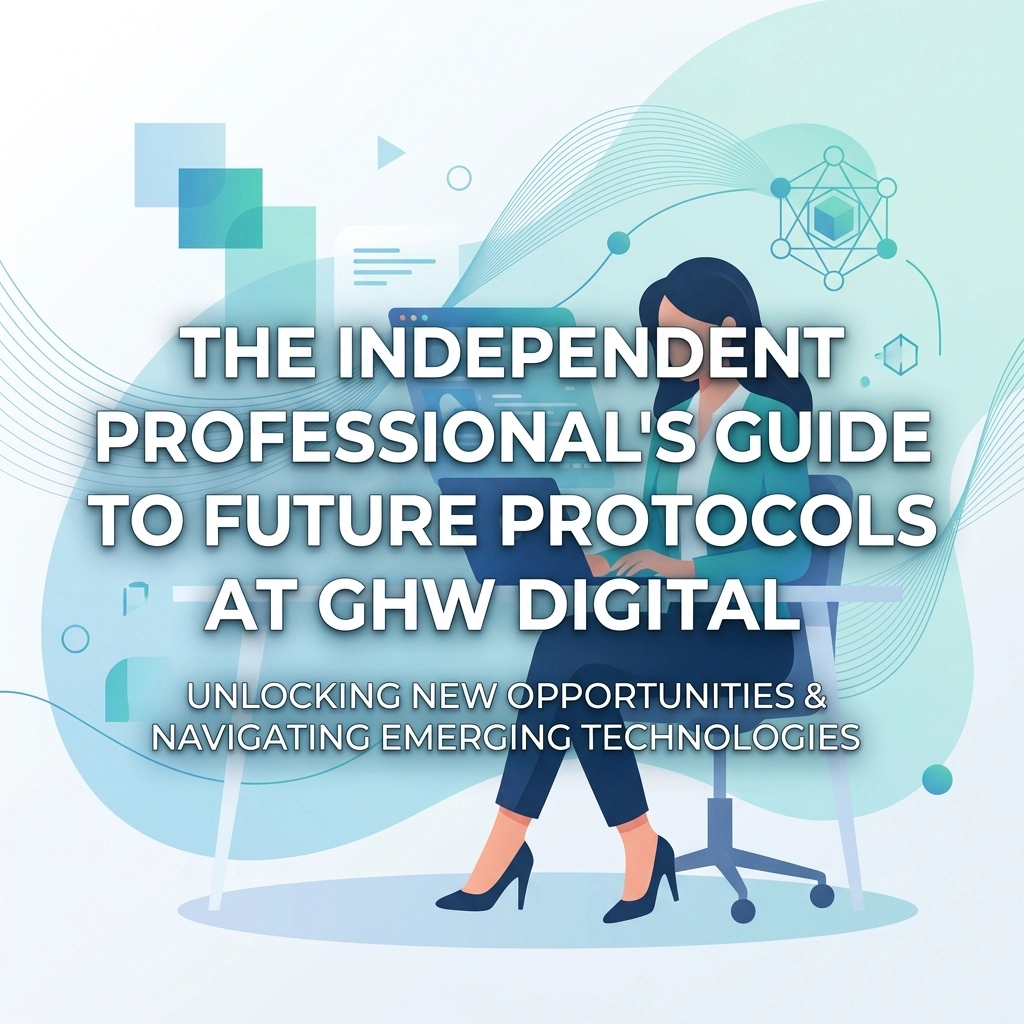
    Secure your business today. Don't let your revenue leak through the cracks of a weak agreement. Implement a Watertight Wedding Contract Template and reclaim your time.

  • Independent Professional’s Guide to Future Protocols: Crucial and Elite Standards for GHW Digital

    The Independent Professional’s Guide to Future Protocols is your survival kit for an era where traditional service models are failing. If you are still trading hours for dollars, you are participating in a dying economy. At GHW Digital, we believe the future doesn't belong to the most hardworking individual, but to the professional who owns their logic. We are shifting the paradigm toward what we call Autonomous Digital Assets.

    This isn't about "passive income" fluff. It is about the rigid, uncompromising democratization of professional expertise through code. Whether you are a consultant, a developer, or a specialist, your value is currently trapped inside your head. If you aren't working, you aren't earning. That is a systemic failure. This guide outlines how we use protocols to break that cycle and protect your most valuable resource: your time.

    The Professional Crisis: Why Status Quo Is Lethal

    The modern independent professional is under siege. Scope creep, client misalignment, and the constant pressure to devalue expertise have created a toxic environment. Most professionals spend 40% of their time on administrative friction rather than high-value output. This is where the Independent Professional’s Guide to Future Protocols becomes essential.

    We see it every day: a project starts with a clear boundary, and within three weeks, the "goalposts" have moved three miles down the road. Without a protocol-based defense, you are defenseless. You are essentially allowing your profit margins to bleed out through a thousand small concessions.

    Digital boundaries protecting professional expertise in the Independent Professional’s Guide to Future Protocols. A visual representation of digital boundaries and professional protocols protecting a central core of expertise.

    Autonomous Digital Assets: Owning Your Logic

    The core philosophy at GHW Digital is the creation of Autonomous Digital Assets. An asset is only "autonomous" when it can perform a function, deliver value, or enforce a boundary without your manual intervention.

    When we talk about democratizing professional expertise, we mean taking the complex workflows of a $500-an-hour consultant and baking them into a digital tool. This allows the expertise to scale infinitely. You are no longer the bottleneck; you are the architect. This transition is the heart of the Independent Professional’s Guide to Future Protocols.

    Action-Benefit: Automate the Mundane

    • Protocol Logic: Hard-code your business rules into your delivery system.
    • Result: You eliminate the need for "reminder emails" and "status check-ins," freeing up 15+ hours a week.

    Protecting the Perimeter with Elite Tools

    To survive as an independent professional, you need a shield. We’ve developed a suite of tools designed to act as your digital guardian. These aren't just "apps"; they are enforcement mechanisms for your professional boundaries.

    For instance, Scope Sentry is designed to ensure that what was agreed upon is what is delivered, nothing more, nothing less. When a client asks for "one small change," the protocol handles the friction, not you. It removes the emotional weight of saying "no" and replaces it with the objective reality of the contract.

    Similarly, Scope Guard Elite provides an even higher level of protection for high-stakes projects. It's about maintaining fairness. A professional relationship only stays healthy if both parties respect the original alignment. Once that alignment breaks, the project is doomed.

    Sleek dashboard tracking scope protection in the Independent Professional’s Guide to Future Protocols. A sleek, professional dashboard showing project boundaries and scope protection metrics.

    The Democratization of Expertise

    Why should high-level operational protocols be reserved for Fortune 500 companies? The Independent Professional’s Guide to Future Protocols is built on the belief that the solo practitioner should have access to the same "Elite" defensive tech.

    By democratizing expertise, we are leveling the playing field. We are giving the independent professional the "Legal Shield" and the "Operational Armor" required to stand their ground against massive corporations. This is a movement toward professional sovereignty. You can explore how we are implementing these radical concepts at our Idea Incubator.

    Action-Benefit: Deploy Vow Guard Elite

    • Protocol Logic: Utilize Vow Guard Elite to secure commitments and ensure milestone payments are locked to deliverables.
    • Result: You stop chasing invoices and start receiving automated compensation for your value.

    Why We Advocate for Daily Frequency

    The digital landscape moves too fast for monthly updates. At GHW Digital, we believe in a daily frequency of iteration and communication. The Independent Professional’s Guide to Future Protocols suggests that your business shouldn't be a static document; it should be a living system.

    Daily check-ins with your own protocols allow you to catch "leakage" before it becomes a flood. If a project is drifting off course, you need to know on Tuesday, not three weeks later during a post-mortem. According to Harvard Business Review, the most successful independent workers are those who treat their workflows with the same rigor as an engineering process.

    Professional protocol system gears from the Independent Professional’s Guide to Future Protocols. A series of interlocking gears representing a daily professional protocol system.

    Building Your Own Future Protocols

    How do you start? You start by identifying the "leak." Where is your time going? Where is your expertise being given away for free?

    1. Identify the Friction: Every time you have to explain a boundary to a client, that’s a failure of protocol.
    2. Codify the Solution: Take that boundary and turn it into a digital asset.
    3. Deploy the Shield: Use tools like those found at GHW-Digital to automate the enforcement.

    The Independent Professional’s Guide to Future Protocols isn't just a suggestion; it’s a roadmap for those who refuse to be commoditized. The world is full of "freelancers" who are essentially employees with no benefits. We are building a world of Independent Professionals who own their assets.

    Managing digital assets for sovereignty within the Independent Professional’s Guide to Future Protocols. A professional standing in front of a digital grid, representing control over their digital assets.

    The Ethical Imperative of Professional Boundaries

    There is a misconception that being "strict" with protocols is unfriendly. The opposite is true. Clear boundaries are the foundation of respect. When you use the Independent Professional’s Guide to Future Protocols, you are telling your clients that you value your work enough to protect it. This creates a higher level of trust.

    According to the World Wide Web Consortium (W3C), protocols are what allow different systems to work together without chaos. Your business is a system. Your client's business is a system. Without a protocol, you don't have collaboration; you have a collision.

    Action-Benefit: Lock in Alignment

    • Protocol Logic: Use standardized intake and offboarding protocols to bookend every engagement.
    • Result: You eliminate "zombie projects" that never quite end, ensuring your mental energy is always focused on the next high-value asset.

    Securing Your Competitive Advantage

    The final stage of the Independent Professional’s Guide to Future Protocols is the transition into full asset ownership. Once you have protected your time and codified your expertise, you have something that can be scaled, sold, or leveraged. You are no longer just a "service provider." You are a digital asset owner.

    Stop letting scope creep kill your margins. Stop allowing your expertise to be treated as a disposable commodity. It is time to implement a defense mechanism that works while you sleep. The tools are ready. The philosophy is clear.

    Secure your advantage now. Visit our Ideas Page to see the future of professional protocols in action. Don't wait for the market to devalue you, lock in your worth today.


    Marblism Legal Shield
    The content of this guide, including the 'Independent Professional’s Guide to Future Protocols' framework, is the intellectual property of GHW-Digital. All protocols, digital assets, and methodologies discussed are protected under international copyright and digital asset laws. For more information on our data handling and professional protections, please refer to our Privacy Policy and Sitemap.

  • Wedding Supplier Contracts: Crucial Red Flags to Protect Your Big Day Elite

    Wedding Supplier Contracts: Crucial Red Flags to Protect Your Big Day Elite

    7 Red Flags in Your Wedding Vendor Agreement (And How to Secure Your Big Day)

    Wedding supplier contracts are the only thing standing between your dream celebration and a logistical nightmare. When you are planning a wedding, the emotional stakes are sky-high, which makes it easy to skim past the fine print. However, in the world of high-end events, a contract isn't just a formality, it is your primary defense mechanism. At GHW-Digital, we believe in precision and accountability. Whether we are building enterprise-grade software or helping you navigate the complexities of event agreements, the goal remains the same: protecting your interests.

    If you are currently vetting vendors, you need to look past the beautiful portfolios and Instagram feeds. You need to look at the legal framework of the deal. If you want more insights on how to manage high-stakes projects, check out our resource ideas.

    1. Eliminate Vague Deliverables: The Specificity Trap

    Wedding supplier contracts often fail because they are built on "good vibes" rather than hard data. A red flag is any agreement that uses broad, sweeping terms like "Photography Services" or "Full Floral Package."

    In the tech world, we call this a lack of scope. If a vendor cannot define exactly what they are delivering, they are leaving the door open for disappointment. Your contract should specify:

    • Exact Hours: Not "the whole day," but "from 10:00 AM to 11:00 PM."
    • Staffing Numbers: How many photographers? How many servers?
    • Deliverable Format: Are you getting 400 high-res digital images or a physical album?
    • Materials: What types of flowers? What size is the cake?

    Vagueness is the enemy of execution. Without these details, you have no recourse when the "full package" turns out to be half-hearted.

    Professional pen on detailed wedding supplier contracts ensuring clear project scope and deliverables.

    2. Guard Your Budget: The Hidden Fee Hazard

    Moving goalposts kill margins and destroy wedding budgets. A major red flag in wedding supplier contracts is ambiguous pricing. If you see phrases like "plus expenses" or "additional fees may apply" without a capped limit or an itemized list, you are signing a blank check.

    Standard industry practice for reputable vendors involves a clear, line-item breakdown. You should know the cost of delivery, setup, taxes, and gratuity before you put down a deposit. If a vendor becomes defensive when you ask for a final, all-in price, they are likely hiding costs that will surface two weeks before the wedding.

    To stay ahead of your planning, keep an eye on our latest strategy ideas for managing complex budgets.

    3. Secure Your Deposit: The Non-Refundable Nightmare

    While deposits are standard to secure a date, a 100% non-refundable deposit with no sliding scale is a predatory practice. A fair contract recognizes that life happens.

    Look for a tiered refund policy. For example, if you cancel 12 months out, you might lose 25%. If you cancel 30 days out, losing 100% is more reasonable as the vendor cannot rebook the date. If the contract offers no path to recovery for the couple, it isn't a partnership; it’s a hostage situation.

    Furthermore, ensure the contract specifies what happens if the vendor cancels on you. If they can’t make it, you shouldn’t just get your money back, you should have a guaranteed backup plan or a penalty clause for the vendor to cover the cost of a last-minute replacement.

    4. Protect Your Peace: The Liability Gap

    Reputable wedding supplier contracts must include liability insurance provisions. If a vendor tells you "don't worry about it" or disclaims all liability for damages they might cause, walk away.

    Think of this as the "Scope Guard" for your wedding. If a caterer’s oven sparks a fire at your venue, you need to know their insurance is covering the damage, not your personal savings. Always request a Certificate of Insurance (COI). If they can't provide one, they aren't a professional; they are a hobbyist with an expensive camera or a kitchen.

    A blue shield representing liability protection and security within wedding vendor agreements.

    5. Identify Evasive Communication: The Pre-Signing Warning

    Communication is a leading indicator of performance. If a vendor takes four days to reply to an email when they are trying to win your business, imagine how long they will take once they have your money.

    Red flags include:

    • Avoiding direct answers to contract questions.
    • Refusing to hop on a quick call to clarify terms.
    • Lack of a professional email address or digital presence.

    At GHW-Digital, we treat communication as a core feature, not a bug. We suggest you apply that same standard to your wedding team. For more on professional alignment, visit our ideas page.

    6. Demand Contingency Plans: The Force Majeure Clause

    "Act of God" clauses (Force Majeure) became a hot topic during the pandemic. A red flag in wedding supplier contracts is a clause that is heavily weighted in favor of the vendor. If an unforeseen event happens, the contract should outline clear options for rescheduling or partial refunds.

    You need to know the "What If":

    • What if the lead singer loses their voice?
    • What if the florist's shipment is stuck at the border?
    • What if the venue is flooded?

    A professional vendor has a network of peers they can call on. A red-flag vendor has excuses. Ensure your contract mandates a qualified replacement if the primary service provider is unavailable.

    7. Lock in Verbal Promises: The Agreement of Silence

    If it isn't written down, it doesn't exist. This is the golden rule of any project, from app development to wedding planning. Vendors often make grand promises during the sales pitch: "Oh, we can definitely add extra lighting for free" or "I'll stay as late as you need."

    If those promises don't make it into the final version of the wedding supplier contracts, they are legally worthless. Do not rely on "we talked about this on the phone." Every verbal agreement must be followed by an amendment or an initialed note on the contract.

    A digital tablet for signing wedding supplier contracts with professional and legally binding terms.

    Securing Your Big Day with Vow Shield

    The complexity of these agreements is why we developed Vow Shield. Just as we use Scope Guard Elite and Scope Sentry to protect our technical projects, we believe couples need a digital guardian for their wedding contracts.

    Vow Shield is designed to scan, track, and secure your vendor agreements, ensuring that every promise is documented and every red flag is flagged before you sign. It’s about moving from a position of hope to a position of power.

    We apply the same rigor to vow-guard-elite.html as we do to our most complex enterprise apps. Because at the end of the day, a wedding is a high-stakes production that requires professional-grade management.

    Final Tactics for Success

    Before you sign on the dotted line, take these three final steps:

    1. Compare Contracts: Don't just look at the price. Compare the "What If" clauses of three different vendors.
    2. Check References: Go beyond the website testimonials. Ask for the contact info of a couple who had a "difficult" situation with the vendor to see how it was handled.
    3. Consult the Experts: If a contract feels off, it usually is. Don't be afraid to have a professional eye look it over.

    Protecting your wedding is about more than just flowers and music; it's about securing your financial and emotional well-being. Stop the cycle of "hope-based" planning and start using professional-grade tactics.

    For more strategic insights on securing your projects and your future, explore our full library at https://ghw-digital.com/ideas.html.


    Marblism Legal Shield

    This blog post is for informational purposes only and does not constitute legal advice. Wedding vendor laws vary by jurisdiction. Always consult with a qualified legal professional before signing binding agreements. GHW-Digital and its affiliates are not liable for any losses incurred through the use of third-party vendor services.

    Data Privacy Notice: We value your privacy. Any data shared with GHW-Digital is handled in strict accordance with our Privacy Policy. We do not sell your data to third-party wedding registries or marketing firms. Our goal is protection, not exploitation.

  • Wedding service agreement: The Essential Urgent Mechanism

    Wedding service agreement: The Essential Urgent Mechanism

    Wedding service agreement protocols are the primary defensive line between a successful celebration and a logistical catastrophe. In the high-stakes environment of event planning, ambiguity is the enemy. Without a rigid, legally sound wedding service agreement, couples expose themselves to significant financial leakage and operational failure. At GHW-Digital, we view these documents not as mere paperwork, but as the architectural blueprint for your peace of mind.

    The reality of the wedding industry is that "moving goalposts" are a standard risk. Vendors may overpromise during the emotional high of a consultation, only to under-deliver when the tactical execution begins. Vow Shield was engineered to solve this exact problem, acting as an elite protection mechanism that scans your contracts for hidden vulnerabilities. Protecting your assets starts with understanding the anatomy of a professional agreement.

    The Strategic Framework of Service Deliverables

    Precision is the only metric that matters when defining what a vendor will provide. A vague wedding service agreement is a liability. If a contract simply states "photography services," you have no recourse when the professional arrives without a backup shooter or fails to deliver edited files within a reasonable timeframe.

    To secure your event, the agreement must detail every specific output. For a catering protocol, this means documenting the exact number of staff, the precise menu items, and the service duration. For technical vendors, it requires a breakdown of equipment, setup times, and "strike" (cleanup) procedures. By locking in these details, you transform a passive document into an active defensive shield.

    A professional wedding service agreement document on a glass desk, symbolizing elite contractual protection.
    Alt text: A professional wedding service agreement resting on a glass desk, symbolizing elite contractual protection.

    Financial Security Through Structured Payment Protocols

    Capital management is a critical component of event defense. A professional wedding service agreement must include a transparent payment mechanism that prevents unauthorized cost escalations. We advocate for a tiered payment structure that aligns financial outlay with vendor performance.

    1. The Booking Retainer: This is your commitment to the protocol, typically a non-refundable percentage that secures the date.
    2. Interim Milestones: These payments should be tied to specific dates or planning phases, ensuring the vendor remains incentivized throughout the process.
    3. The Final Balance: This must be settled prior to the event, but never so early that you lose leverage.

    By defining these boundaries, you protect your budget from the "creep" of hidden fees and administrative surcharges. Vow Shield identifies these financial triggers, alerting you to any clauses that allow vendors to unilaterally increase prices after the ink has dried.

    The Force Majeure Override

    Unforeseen variables, weather, illness, or global disruptions, can compromise even the most meticulously planned event. The Force Majeure clause is the "kill switch" for your liability. In an urgent situation, this clause determines who bears the financial burden of a cancellation or postponement.

    A robust wedding service agreement must specify exactly what constitutes an "Act of God" or an emergency. It should outline the immediate protocols for rescheduling, the distribution of retained funds, and the timeline for notification. Without this mechanism, you are essentially self-insuring against a catastrophe, a risk no elite architect would ever accept.

    Vow Shield interface highlighting critical Force Majeure clauses within a digital wedding service agreement.
    Alt text: A digital interface of Vow Shield highlighting a Force Majeure clause in a wedding service agreement.

    Liability and Contingency Defense

    In any complex operation, failure is a statistical possibility. Your wedding service agreement must account for equipment failure, illness of key personnel, or accidental damage. You are not just buying a service; you are buying a guarantee of execution.

    The agreement must verify that the vendor carries professional liability insurance. This protects the venue, the guests, and your personal assets from the fallout of an on-site incident. Furthermore, the contract should dictate a "Backup Plan Protocol." If your lead photographer is incapacitated, who is the vetted replacement? If the floral shipment is delayed, what is the alternative? Vow Shield scans for these contingency gaps, ensuring you aren't left defenseless on the day of the merger.

    Why Vow Shield is the Ultimate Defensive Mechanism

    The traditional method of reviewing contracts is flawed. Human emotion and lack of legal expertise often lead to "blind spots" that vendors can exploit. Vow Shield utilizes advanced logic to assess your wedding service agreement against a database of industry standards and legal requirements.

    We don't believe in "best guesses." We believe in data-driven security. By uploading your vendor contracts to Vow Shield, you receive a high-impact risk assessment that flags dangerous clauses in real-time. Whether it’s an unfair cancellation policy or an ambiguous service scope, our technology ensures you have the information necessary to negotiate from a position of power.

    Scanning a wedding service agreement with a smartphone to identify risks and negotiate from a position of power.
    Alt text: A person using a smartphone to scan a wedding service agreement for hidden risks using Vow Shield.

    Terminating the Risk of Scope Creep

    While Vow Shield protects the matrimonial side of your life, the principles of contract defense apply to all business interactions. Much like the "moving goalposts" in a wedding, project scope in software development can leak revenue if not managed with precision. This is why we developed Scope Sentry, a mechanism designed to track and price changes in real-time, ensuring that every shift in requirements is met with a corresponding shift in compensation.

    Protecting your time and profit requires a relentless commitment to boundaries. Whether you are signing a wedding service agreement for your upcoming nuptials or managing a complex software build, the protocol remains the same: define the scope, lock in the price, and prepare for the unexpected.

    The Protocol for Absolute Peerless Defense

    As you navigate the complexities of wedding planning, remember that every vendor is a third-party risk. Your goal is to mitigate that risk through superior documentation. A comprehensive wedding service agreement is not a sign of distrust; it is a sign of professional alignment. It ensures that both parties understand the mission and the consequences of failure.

    Do not leave your most important day to chance. Utilize the tools available at GHW-Digital to secure your contracts and defend your assets. In the world of elite event planning, the only way to win is to ensure you are protected by the best mechanisms available.

    For more information on how to defend your projects and agreements, explore our sitemap or review our privacy protocols to understand how we protect your data with the same level of intensity we apply to your contracts.

    Action Required: Lock in launch savings. Use discount code BLOG20 for twenty percent off our upcoming Vow Shield tool. Valid until April 1, 2026.


    Mandatory Footer & Ethical Disclosure

    Data Integrity & Privacy Commitment: At GHW-Digital, we operate with blunt honesty. Your uploaded documents and contract data are processed through secure, encrypted channels. We do not sell your personal data to third-party marketing firms. Our business model is built on providing elite software defense mechanisms, not on the monetization of your private information. We believe in absolute transparency and the ethical application of AI technology. For a detailed breakdown of our security measures, please visit our Privacy Policy.

    Legal Disclaimer: Vow Shield and Scope Sentry are administrative tools designed to assist in the review and management of agreements. They do not constitute legal advice. While our algorithms are trained on high-level legal standards, we recommend consulting with a qualified legal professional for final contract approval. GHW-Digital assumes no liability for the ultimate performance or breach of third-party vendor contracts.

    Internal Reference Links:

    External Intelligence Resources:

    Powered by GHW Digital (Company No: 16834250). This document is an automated draft for business organization purposes only. It does not constitute legal advice. GHW Digital accepts no liability for disputes, financial loss, or enforceability. Users must consult a qualified professional in their jurisdiction before signing.

  • 7 Mistakes You’re Making with Scope Creep Management (and How to Fix Them)

    7 Mistakes You’re Making with Scope Creep Management (and How to Fix Them)

    Scope creep management is the difference between a profitable launch and a slow, agonizing project death. In the world of app development, boundaries aren't just suggestions; they are the structural beams holding your business together. When those beams fail, the roof caves in on your margins, your timeline, and your sanity.

    I’m Martin Hughes, and at GHW-Digital, we see it daily. Brilliant developers and digital architects lose thousands because they treat "small favors" as harmless. They aren't harmless. They are leaks. If you don't plug them, you sink.

    Effective scope creep management requires more than just saying "no." It requires a system. It requires a shield. Whether you are browsing for new project ideas or middle-deep in a complex build, you need to recognize where you are failing to hold the line.


    1. Vague Definitions: The Architect’s Greatest Sin

    The most common failure in scope creep management happens before the first line of code is ever written. If your project scope is "fuzzy," you’ve already lost. A vague scope is an open invitation for a client to move the goalposts.

    The Mistake: Using broad terms like "user-friendly interface" or "standard integration." To a client, "standard" might include features that take you forty hours to build. Without specific deliverables, you have no baseline to defend.

    The Fix: Build a "Digital Fortress" around your requirements. Every objective must be a SMART goal: Specific, Measurable, Attainable, Relevant, and Time-bound. If it isn't documented with granular detail, it doesn't exist. Before you start your next project, check out our latest app development ideas to see how we structure high-level requirements into actionable tasks.

    Minimalist grid structure illustrating clear project scope and defined requirements for developers.

    2. Neglecting Independent Contractor Agreements

    Your contract is your primary defense mechanism. If your Independent Contractor Agreements are weak, your scope creep management will be non-existent. Many freelancers rely on "handshake" emails, but when the budget runs dry, those emails won't protect your revenue.

    The Mistake: Viewing the contract as a formality rather than a functional tool. A weak agreement fails to define what happens when the scope changes. It leaves the financial burden of "extra work" on the contractor.

    The Fix: Weaponize your paperwork. Ensure your Independent Contractor Agreements specifically outline the "Change Order" process. This creates a legal and psychological barrier. When a client asks for a "quick addition," you point to the agreement. It isn't personal; it's the architecture of the deal. At GHW-Digital, we recommend tools like Vow Guard Elite to ensure your professional promises are backed by ironclad logic.

    3. The Absence of a Formal Change Control Process

    In scope creep management, "verbal approval" is a myth. If a change isn't tracked, evaluated, and signed off, it is a leak.

    The Mistake: Implementing "small" changes on the fly. You think you’re being helpful. You think you’re building "goodwill." What you’re actually doing is teaching the client that your time has no value. Unstructured changes bypass budget evaluations and resource planning.

    The Fix: Establish a hard gate. Every request for a modification must go through a formal review. Evaluate how the change impacts the timeline, the tech stack, and the total cost. Use a system like Scope Guard Elite to lock in these boundaries. Never touch the keyboard until the impact is documented and the price is adjusted. This keeps the project aligned with the original blueprint.

    4. Failing to Manage Stakeholder Expectations

    You are the expert. The client is paying for your vision and your execution. If you don't lead the conversation, they will.

    The Mistake: Staying silent until a problem occurs. If you aren't communicating the status of the scope regularly, the client assumes everything is "included." Communication gaps are where scope creep breeds.

    The Fix: High-frequency, low-friction reporting. Provide updates that explicitly reference the original scope baseline. Remind stakeholders what is currently being built and what is "out of scope" for the current phase. This isn't about being difficult; it's about transparency. By maintaining this professional distance, you protect the integrity of the app.

    Connected spheres representing stakeholder alignment and transparency in scope creep management.

    5. Rushing the Discovery and Planning Phase

    Speed is often the enemy of precision. In the rush to start a project, many skip the deep-dive planning required for effective scope creep management.

    The Mistake: Jumping straight into development without a Work Breakdown Structure (WBS). Without a visual map of every deliverable and sub-task, you cannot see the gaps. According to the Project Management Institute, a well-defined WBS is the foundation of project success.

    The Fix: Invest in the "Discovery" phase. Spend the time to break the project down into its smallest components. If you can’t visualize the task, you can’t price it. Use this time to align the project with proven app development strategies. This upfront investment prevents reactive measures later in the lifecycle.

    6. Lacking Real-Time Scope Monitoring

    You cannot manage what you do not measure. Many developers realize they are over-budget only when the project is 90% "done" but 50% over the original hours.

    The Mistake: Treating the scope as a static document that sits in a folder. Scope creep is often a cumulative effect of dozens of tiny deviations. If you aren't tracking your progress against the baseline daily, you are flying blind.

    The Fix: Implement active surveillance. Use monitoring tools to track KPIs and team progress. Systems like Scope Sentry are designed to provide that "Digital Architect" oversight. When the data shows you are drifting from the baseline, you can course-correct before the profit margin disappears. For more insights on how to stay on track, visit our main dashboard.

    Detailed digital blocks showing a Work Breakdown Structure for effective project planning.

    7. Underestimating the "Small" Change Request

    "It's just a button." "Can we just move this logo?" "It's a five-minute fix." These are the most dangerous words in development.

    The Mistake: Believing that individual small changes don't require scope creep management. Ten "five-minute" fixes is nearly an hour of work. Across a month, that's a full day of unpaid labor. Cumulatively, these requests derail timelines and introduce bugs into otherwise stable environments.

    The Fix: Apply the "Zero-Tolerance" policy. Every change, no matter how small, must be recorded. If you choose to do it for free as a gesture of goodwill, document it as a "100% discount" on an invoice. Show the client the value they are receiving. This maintains the "fairness" and "respect" balance required for a long-term partnership. Check our latest insights for more ways to value your expertise.


    Protecting the Digital Architect

    Your work as an independent contractor or agency owner is valuable. You are building the infrastructure of the future. Every time you allow scope creep to go unmanaged, you are devaluing the entire industry.

    Effective scope creep management is not about being "mean" to clients. It is about being professional. It is about ensuring that the project you promised is the project you deliver: on time and on budget.

    By reinforcing your Independent Contractor Agreements and utilizing professional-grade tools to monitor your boundaries, you transform from a "coder for hire" into a "Digital Architect." You move from reactive chaos to proactive control.

    Stop letting your margins leak. Lock in your scope. Protect your time. Secure your future.

    A glowing digital shield protecting project margins and scope creep management boundaries.


    Marblism Legal Shield
    The information provided on this blog does not, and is not intended to, constitute legal advice; instead, all information, content, and materials available on this site are for general informational purposes only. Information on this website may not constitute the most up-to-date legal or other information. Readers of this website should contact their attorney to obtain advice with respect to any particular legal matter. GHW-Digital and Marblism prioritize data integrity and ethical boundary setting. No marketing "tricks": just straight talk.

    Stop the bleed. Secure your next project with GHW-Digital.