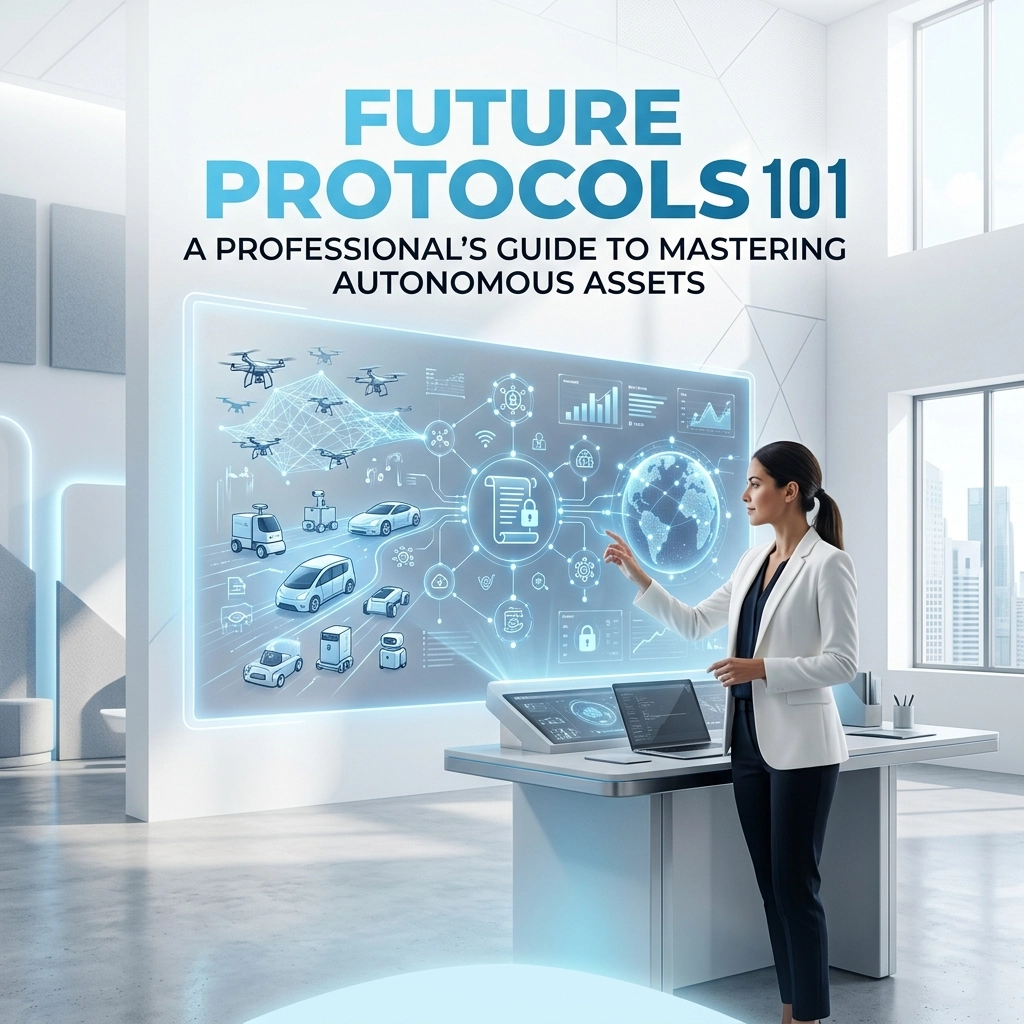
Autonomous Assets are no longer a theoretical concept in a whitepaper; they are the new frontline of digital commerce. In an era where manual processes bleed revenue and human error compromises scale, mastering the protocols that govern these self-sustaining resources is the only way to maintain a competitive edge. At GHW-Digital, we recognize that the shift from human-led management to AI-orchestrated execution is the most significant pivot for professionals since the dawn of the internet.
Manual oversight is a bottleneck. It kills margins, stalls innovation, and tethers your growth to the physical limits of a human workforce. To move forward, you must understand the architecture of Autonomous Assets: digital tokens and resources managed by AI agents that operate with minimal human friction.
The Paradigm Shift: From Speculation to Agentic Commerce
The traditional blockchain era was defined by speculation. The next era is defined by utility. Agentic commerce represents the transition where AI agents act as economic participants. They don't just hold value; they spend, trade, and optimize it based on pre-defined logic and real-time data.
Emerging protocols like OpenClaw and x402 are establishing the technical standards for this reality. These protocols allow AI entities to possess a legal and economic identity. By mastering these frameworks, professionals can deploy assets that work 24/7, reacting to market fluctuations in milliseconds while humans focus on high-level strategy.

Action-Benefit: Implement Autonomous Assets to Lock In Efficiency
1. Scalable Governance. Utilize decentralized frameworks to ensure your assets follow strict operational rules without needing a supervisor.
2. Real-Time Execution. Deploy smart contracts that trigger actions based on live data, eliminating the "wait time" of manual approvals.
3. Risk Mitigation. Use automated compliance metadata to ensure every transaction stays within regulatory boundaries.
The Maturity Model: A Five-Phase Path to Autonomy
You don’t flip a switch and become autonomous. Mastering Autonomous Assets requires a measured progression. Organizations that jump the gun often find themselves facing "black swan" events because they lacked the proper guardrails.
Phase 1: Manual Exploration
This is the baseline. Humans perform every action. AI is used merely as a search tool. It is slow, prone to error, and entirely unscalable.
Phase 2: Human-in-the-Loop (HITL)
By integrating the Model Context Protocol (MCP), you allow AI to interact with your infrastructure. However, every change requires a human to press "approve." This is where most modern firms sit: using AI as a high-powered assistant that still needs a leash.
Phase 3: Human-on-the-Loop (HOTL)
In this phase, you define the boundaries. Specialized agents operate autonomously within a specific sandbox. You don’t approve every action; you monitor the outcomes and intervene only when the agent approaches the "edge" of its authority. This is where GHW-Digital begins to see massive efficiency gains for our clients.
Phase 4: Agent Orchestration
This is the elite level of management. Multiple specialized agents: one for security, one for compliance, one for execution: collaborate under an orchestrator. If the security agent flags an anomaly, the compliance agent validates the fix before the execution agent deploys it.
Phase 5: Full Autonomy
The system is self-healing and self-optimizing. Humans shift from "operators" to "policy makers." You define the "why" and the "what," and the Autonomous Assets handle the "how."

Governance Architectures: Managing the Machine
To master Autonomous Assets, you must master the rules that govern them. Without governance, autonomy is just high-speed chaos.
- Founder-Led Governance: Efficient but centralized. Best for early-stage protocol deployment.
- Council-Based Governance: Power is distributed among elected experts. This balances the need for speed with the necessity of oversight.
- Direct Stakeholder Voting: Fully decentralized. Platforms like Tezos and Polkadot use on-chain governance to allow stakeholders to vote on upgrades. This prevents "hard forks" and ensures the protocol evolves with its users.
At GHW-Digital, we advocate for hybrid models. We use off-chain deliberation to handle complex nuance, combined with on-chain execution to ensure transparency and immutability. If you want to see how we apply this to custom builds, check out our App Development services.
Action-Benefit: Secure Your Perimeter with Protocol Guardrails
1. Multi-Signature Requirements. Ensure no single agent or human can move significant capital without verification.
2. Timelocks. Implement a delay on governance changes to allow for human intervention if a malicious proposal is passed.
3. Feasibility Studies. Use automated "dry runs" to test how a protocol change will affect your Autonomous Assets before going live.

The Philosophy of Autonomous Digital Assets: Democratizing Expertise
Why are we so obsessed with this? Because it democratizes professional expertise. In the past, high-level financial strategy or complex app management required a team of expensive consultants. By packaging that expertise into an Autonomous Asset, we make elite performance accessible to everyone.
The philosophy is simple: Expertise should not be a gatekept resource. It should be a scalable digital asset. When we build Scope Guard Elite, we aren't just building a tool; we are building an autonomous agent that embodies years of project management wisdom to protect your profit margins.
By turning professional knowledge into code, we allow business owners to "hire" the best minds in the industry for a fraction of the cost. This is the heart of what we do at GHW-Digital. If you have an idea for a protocol or an autonomous system, we want to hear it: visit our Ideas Portal to start the conversation.
Compliance by Design: The Ethical Shield
As we move toward a daily frequency of autonomous interactions, security cannot be an afterthought. You cannot "bolt on" security to an autonomous system; it must be part of the DNA.
We integrate AML (Anti-Money Laundering) and KYC (Know Your Customer) metadata directly into the assets. Using frameworks like Chainlink’s CCIP, compliance attestations travel with the token. This ensures that as your Autonomous Assets move across different blockchains, they remain within the legal "shield" of their home jurisdiction.
This blunt honesty is necessary: The regulatory landscape is a moving target. Professionals who ignore compliance in favor of "pure" autonomy will eventually find themselves facing massive legal liabilities. True mastery is the ability to innovate while remaining unassailable from a legal standpoint.

Conclusion: Securing Your Competitive Advantage
The future belongs to those who can orchestrate machines. Autonomous Assets are the tools, and Future Protocols are the instruction manuals. If you continue to manage your digital resources with the manual processes of 2020, you are leaking revenue and inviting obsolescence.
Stop playing defense. Start building the systems that protect your time and multiply your expertise. Whether you are looking to secure your project scope or launch a new decentralized protocol, the time to act is now.
Secure your future. Democratize your expertise.
Explore our latest project ideas and see how we can build your next autonomous advantage.
Marblism Legal Shield
This content is provided for informational purposes only. The deployment of autonomous digital assets and agentic commerce protocols involves significant technical, financial, and legal risks. GHW-Digital and its affiliates do not provide financial or legal advice. Users are responsible for ensuring that their use of autonomous protocols complies with all local and international regulations. Use at your own risk.
Current date: Sunday, 12 of April 2026 (Europe/London)
Leave a Reply