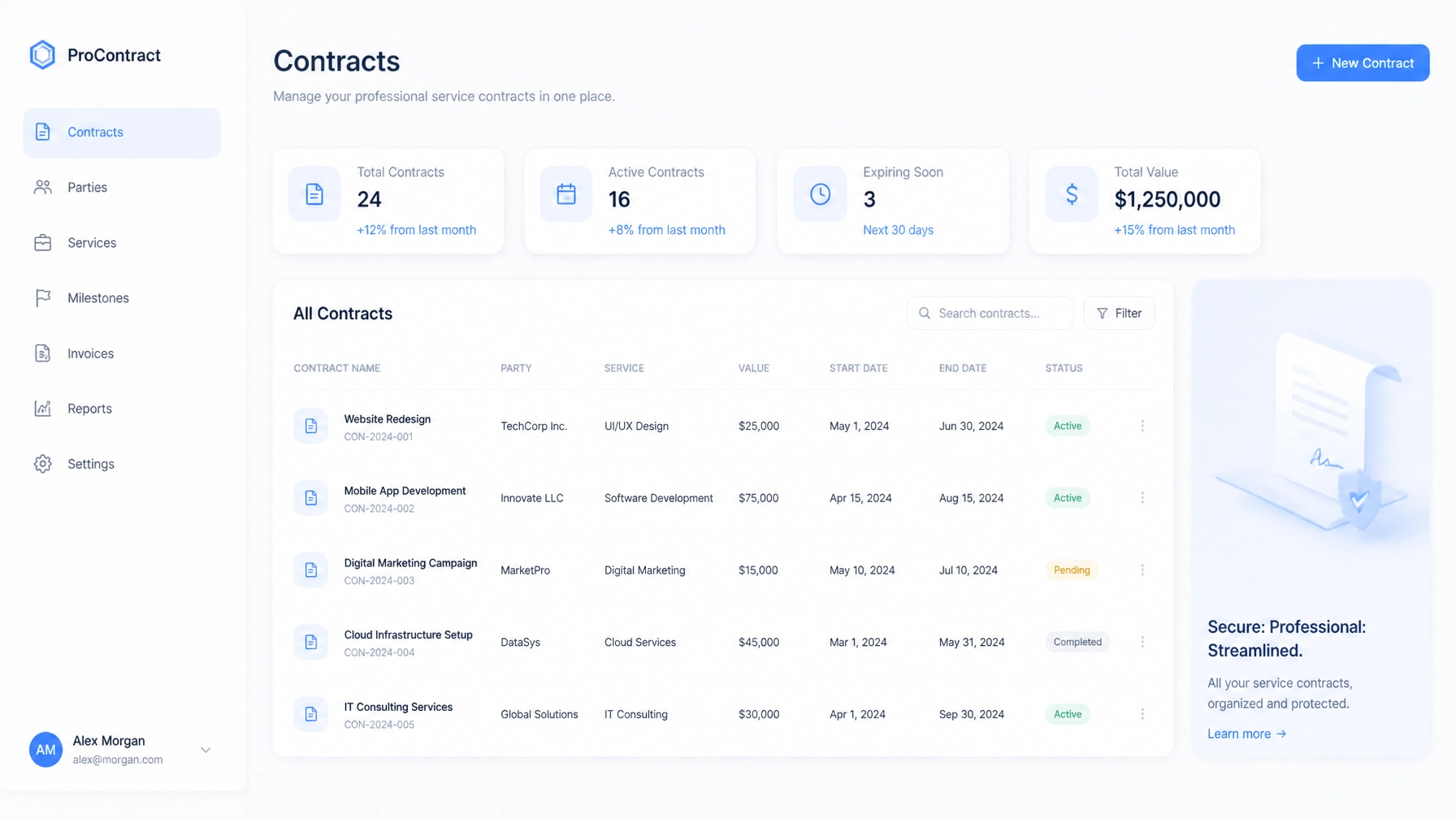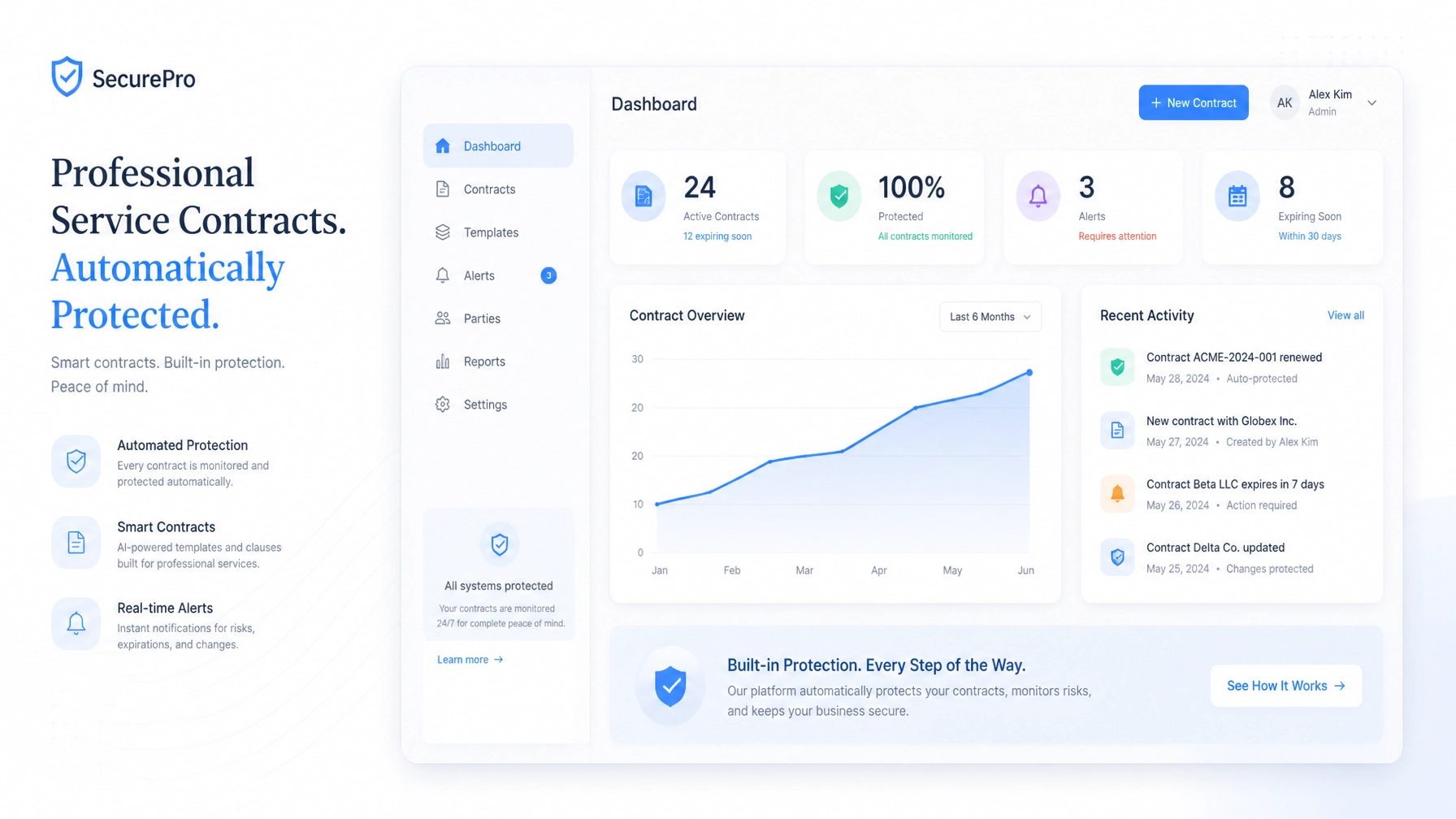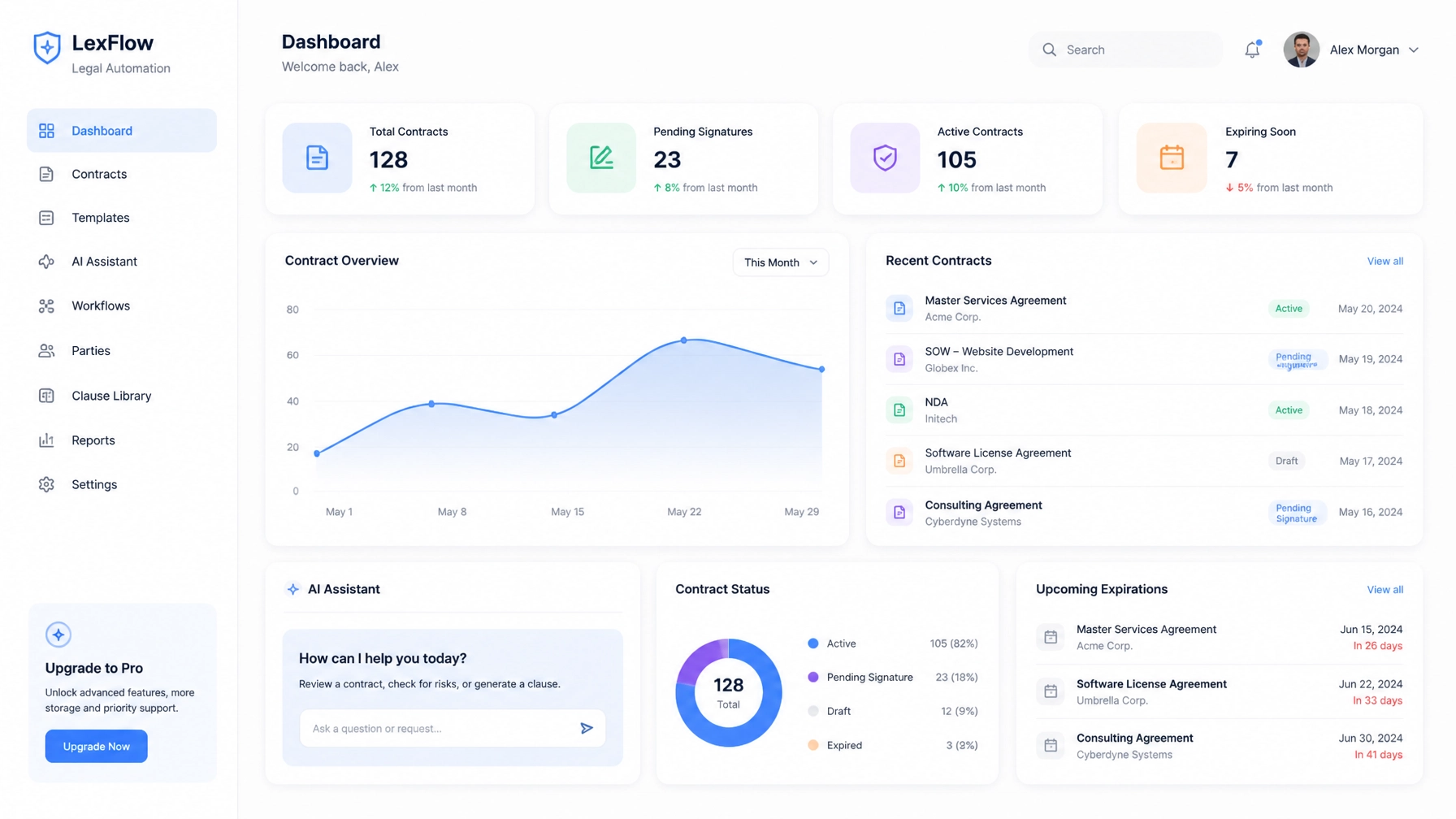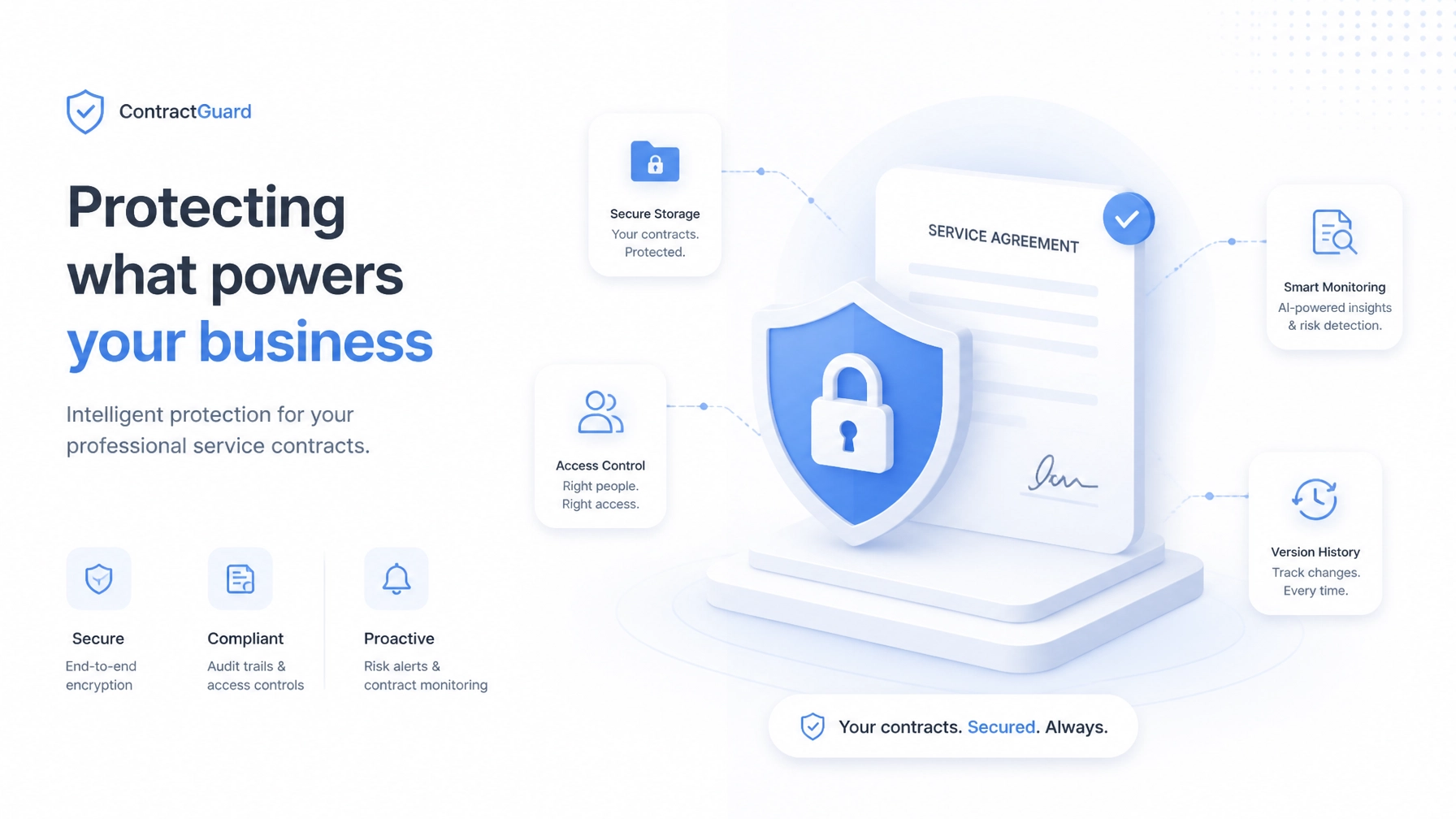
Professional Service Contracts form the bedrock of any independent professional's enterprise. Yet, for too long, independent experts, consultants, and agency owners have relied on archaic advisory models or expensive manual legal reviews to safeguard their operations. The modern freelance community operates at a pace that traditional consultants simply cannot match. When moving goalposts and scoping discrepancies threaten your bottom line, waiting weeks for billable-hour advice is a recipe for margin leakage.
The industry is undergoing a decisive shift. Elite software systems and autonomous digital assets are replacing sluggish human bottlenecks. By encoding rigorous risk management into instant, automated workflows, independent businesses can now secure their operations in minutes rather than days: without paying exorbitant retainer fees.
Professional Service Contracts Need Systems, Not Expensive Consultants

Traditional consultancy models are built on inefficiency. When you commission a lawyer or business consultant to draft custom agreements, you are paying for repetitive drafting, formatting, and administrative overhead. However, top-tier independent operators recognize that professional service contracts should function as repeatable, scalable protocols rather than bespoke artistic creations for every single client interaction.
Autonomous software tools act as active consultants. Instead of static templates that leave room for misinterpretation, modern digital assets interview the user, detect operational risks, and generate custom-engineered frameworks in real-time. This systems-first approach eliminates human error, standardizes protective clauses, and ensures that every engagement begins from a position of absolute strength.
To explore more innovative ways to optimize your freelance business and leverage autonomous tools, visit GHW Digital Ideas for cutting-edge digital frameworks.
How Automated Professional Service Contracts Eliminate Risk

Scope creep kills margins. Without watertight definitions of deliverables, timelines, and revision limits, even the most lucrative projects can devolve into unpaid labor. Automated professional service contracts lock in project boundaries before work commences, establishing clear triggers for additional billing and out-of-scope requests.
By leveraging automated compliance mechanisms, you protect your time and capital. According to insights from International Bar Association and World Wide Web Consortium regarding digital standards, structured electronic documentation significantly reduces contractual ambiguity and improves enforceability across jurisdictions.
Deploying standardized Professional Service Contracts through autonomous software allows you to:
- Lock in terms instantly with intelligent clause selection.
- Detect vulnerabilities in client briefs before signing.
- Streamline onboarding without bureaucratic delays.
- Protect profit margins through rigid scope definitions.
The Economics of Autonomous Digital Assets for Professional Service Contracts

When evaluating the cost of business protection, traditional legal fees can easily eclipse thousands of dollars per quarter. For solopreneurs and growing agencies, this financial burden stunts growth. Automated digital assets democratize elite professional protection, offering institutional-grade safeguards at a fraction of the cost.
Unlike human consultants who charge by the hour for every minor adjustment, software-driven architecture provides infinite scalability. You can generate, modify, and deploy precise agreements as your service offerings evolve. For further strategies on scaling your independent business without inflating administrative overhead, review the expert guides available at GHW Digital Ideas.
Securing Your Enterprise with Professional Service Contracts Protocols
Mastering Professional Service Contracts ensures your business remains insulated from bad actors and shifting client demands. The transition from human-dependent consulting to autonomous software is not merely a cost-saving measure; it is a strategic upgrade in operational velocity.
By taking control of your contractual architecture, you signal professionalism, authority, and uncompromising standards to every prospective client. Stop leaking revenue to slow-moving consultants and embrace the efficiency of intelligent digital systems.
Explore additional resources and deployment frameworks at GHW Digital Ideas to fortify your independent enterprise today.
Powered by GHW Digital (Company No: 16834250). This document is an automated draft for business organization purposes only. It does not constitute legal advice. GHW Digital accepts no liability for disputes, financial loss, or enforceability. Users must consult a qualified professional in their jurisdiction before signing.