Blog

  • Wedding Supplier Contracts: The Ultimate Guide to Elite Protection with Vow Shield

    Wedding Supplier Contracts: The Ultimate Guide to Elite Protection with Vow Shield

    Wedding supplier contracts are the only thing standing between your dream day and a logistical nightmare. When you are planning a wedding, you aren't just buying flowers or a cake; you are making a massive financial investment in a series of professional promises. Without a rock-solid contract, those promises are just expensive whispers. At GHW-Digital, we believe in using technology to lock in certainty, and that is exactly what Vow Shield is designed to do for the modern couple.

    Most couples focus on the "vibe" of their vendors. They care about the portfolio, the personality, and the price. But the most important part of the relationship is the fine print. If you don't understand your wedding supplier contracts, you are flying blind. You need to stop viewing these documents as formalities and start seeing them as your primary defense mechanism.

    Spotting the Red Flags in Your Agreements

    Before you sign anything, you need to identify the traps. Many vendors use "standard" agreements that are heavily weighted in their favor, leaving the couple with all the risk and none of the recourse.

    Vague Language is a Liability. If a contract uses phrases like "standard arrangements" or "reasonable number of photos," you are in trouble. "Reasonable" is subjective. To a photographer, forty photos might be reasonable. To you, it’s a disaster. Demand specific numbers.

    Missing Arrival and Teardown Times. A contract that only lists the date of the wedding is incomplete. You need specific load-in times, setup completion deadlines, and teardown windows. Without these, your venue might charge you overtime fees because your florist took too long to clear out.

    Non-Specific Personnel Clauses. You hired a specific lead singer or a specific photographer because you liked their work. If the contract allows the company to send "any qualified professional," you have no guarantee of quality. Ensure your wedding supplier contracts name the specific individuals who will be performing the service.

    Magnifying glass inspecting wedding supplier contracts to identify hidden red flags.

    Protecting the Couple: The Essential Clauses

    To truly protect the couple, a contract needs to be more than a receipt. It needs to be a roadmap for every possible "what if" scenario. At GHW-Digital, we analyze these risks through the lens of our innovative ideas, ensuring that technology like Vow Shield provides the safety net you actually need.

    Payment Schedules and Refund Policies

    Don't pay everything upfront. A standard, safe structure is a 25-30% deposit, a mid-way payment, and a final payment shortly before the event. More importantly, you need to define what happens to that money if things go wrong.

    The "Force Majeure" Trap. Most vendors include a clause that protects them if an "act of God" occurs. You need to ensure this clause also protects you. If the venue burns down, you shouldn't just lose your deposit; you should be entitled to a refund or a credit for a future date.

    Right of Refusal and Change Notifications

    You deserve to know if the plan changes. Include a "Right of Refusal" clause. This states that if the vendor has to change a major component of the service, like a menu change due to supply issues or a change in the lead coordinator, they must notify you immediately. You should have the right to approve the change or cancel the contract without penalty.

    Liability and Insurance

    If a guest trips over a DJ's cable, who is responsible? Your wedding supplier contracts must specify that the vendor carries their own liability insurance. Do not take their word for it. Request a copy of their insurance certificate. This isn't being difficult; it's being professional. Protecting your investment means ensuring you aren't held liable for a vendor’s equipment or negligence.

    Blue protective shield over wedding bands securing the couples financial investment.

    Securing Service Delivery with Vow Shield

    This is where the GHW-Digital mindset changes the game. We’ve seen how scope creep and missed deadlines destroy projects in the tech world, and weddings are no different. Vow Shield was created to bridge the gap between a paper contract and actual service delivery.

    Vow Shield acts as a digital vault and a performance tracker for your wedding supplier contracts. It doesn't just store the PDF; it extracts the key deliverables and sets automated reminders and "proof of work" checkpoints. For example, if your caterer is supposed to provide a final menu tasting sixty days before the wedding, Vow Shield alerts both parties.

    By using integrated tools from GHW-Digital, you move from a passive observer of your wedding to an active manager of your investment. You can find more about our approach to securing agreements on our ideas page.

    Action-Benefit: How to Negotiate Like a Pro

    Negotiating wedding supplier contracts isn't about being "bridezilla" or "groomzilla"; it's about mutual respect. A good vendor will appreciate a couple that knows what they want and wants it documented.

    • Specify Deliverables: Turn "photography services" into "8 hours of coverage, 2 shooters, 500+ high-res edited images, and a physical album."
    • Lock in Pricing: Ensure the contract states that the price is fixed. This prevents "inflation surcharges" or "fuel fees" from appearing on your final invoice.
    • Define "Success": What does a successful service look like? For a band, it might be a specific setlist and no breaks longer than 15 minutes. Put it in writing.

    Professional handshake confirming a successful negotiation of a wedding vendor agreement.

    Identifying and Neutralizing "Scope Creep"

    In app development, we call it scope creep, when a project slowly grows in size and cost without anyone noticing. In weddings, this looks like extra "service fees," "corkage fees," or "lighting upgrades" that weren't in the initial quote.

    Your wedding supplier contracts should have a "No Hidden Fees" clause. Any additional costs must be presented in a written "Change Order" and signed by you before the work is performed. This keeps your budget intact and prevents the end-of-night sticker shock that ruins so many honeymoons.

    For more strategies on managing complex projects and preventing budget leaks, check out our latest insights.

    Contingency Planning: When the Vendor Fails

    What happens if your florist gets sick? Or the limo breaks down? A professional contract must include a "Contingency and Substitution" clause.

    The Substitution Clause. The vendor should be responsible for finding a replacement of equal or greater skill at no additional cost to you. If they can’t find a replacement, the contract should stipulate an immediate full refund plus a penalty fee to cover the cost of you finding a last-minute replacement. This is how you truly protect the couple. It places the burden of performance on the professional, not the client.

    Digital safety net representing a robust contingency clause in wedding supplier contracts.

    Digital Management of Your Wedding Assets

    In 2026, managing your wedding through a binder is obsolete. You need a digital command center. Using apps developed by GHW-Digital, you can track every clause and every penny in real-time.

    Vow Shield integrates with your vendor communications to ensure that if a caterer says "Sure, we can add a vegan option for no charge" in an email, that promise is captured and linked to the primary wedding supplier contracts. Verbal or email promises are often forgotten in the heat of a busy wedding season. Vow Shield makes sure they are enforceable.

    The GHW-Digital Standard

    At GHW-Digital, led by Martin Hughes, we bring a "Scope Guard" mentality to everything we touch. Whether we are building high-end applications or helping couples secure their weddings, our goal is the same: eliminate ambiguity.

    Wedding supplier contracts are not just pieces of paper; they are the foundation of your wedding day’s success. By demanding specificity, identifying red flags, and using tools like Vow Shield, you ensure that your investment is protected and your focus stays on the celebration, not the litigation.

    High-tech tablet interface for managing wedding supplier contracts using Vow Shield.

    Summary Checklist for Wedding Supplier Contracts:

    • Full Contact Info: Names, addresses, and emergency phone numbers for all parties.
    • Specific Dates/Times: Arrival, setup, performance, and teardown.
    • Detailed Deliverables: Quantities, sizes, colors, and specific names of personnel.
    • Payment Schedule: Clear dates and amounts with receipt requirements.
    • Cancellation/Refund Policy: What happens in every "what if" scenario.
    • Insurance Proof: Verification of liability coverage.
    • Dispute Resolution: How disagreements will be handled (ideally through Vow Shield mediation).

    Don't leave your wedding day to chance. Treat your wedding supplier contracts with the same level of professional scrutiny you would a business merger. For more innovative ways to protect your projects and your peace of mind, visit our ideas section.


    Marblism Legal Shield Footer
    This blog post is for informational purposes only and does not constitute legal advice. While GHW-Digital and Vow Shield provide tools to manage and monitor agreements, we recommend consulting with a qualified legal professional to review any binding wedding supplier contracts. Data privacy and security are handled according to our Privacy Policy.

  • Abolish Subscription Chains

    Abolish Subscription Chains

    Abolish Subscription Chains. This isn't just a catchy phrase or a marketing gimmick; it is the cornerstone of how we believe technology should interact with human lives. At GHW-Digital, we have watched the digital landscape transform from a toolkit into a tax office. Everywhere you look, another "service" is demanding a monthly tribute for features that haven’t changed in years. We believe this model is fundamentally broken, exploitative, and exhausting for the people it claims to serve.

    When we founded GHW-Digital, we made a conscious choice to reject the industry standard of Monthly Recurring Revenue (MRR) in favor of something radical: honesty. Software should be a tool that solves a problem, not a recurring drain on your bank account that persists long after the problem is solved. We are here to build digital instruments, not digital landlords.

    The Psychological Weight of the Monthly Rent

    The decision to Abolish Subscription Chains stems from an understanding of "subscription fatigue." In the modern world, the average professional or household is juggling dozens of micro-transactions. It’s a death by a thousand cuts. You aren't just paying for the utility of the software; you are paying for the "right" to access your own data and your own workflows.

    A smartphone tethered by digital threads symbolizing the struggle to abolish subscription chains and monthly costs.

    This creates a psychological burden. When you sign up for a subscription, you aren't just buying a solution; you are adopting a new bill. You are tethered to a provider who has every incentive to keep you locked in and very little incentive to actually make the tool more efficient. If a tool works too well and you get your job done faster, the subscription model loses. They want you "engaged": which is often just a polite way of saying they want you stuck inside their interface for as long as possible.

    We believe in the "In-and-Out" philosophy. A digital tool should execute its primary function perfectly and then get out of your way. It should respect your time, your battery life, and your cognitive load. By removing the subscription, we remove the pressure to keep you "hooked." We can focus entirely on making the tool do its job so you can get back to your life.

    Software Should Be a Tool, Not a Tax

    When you buy a hammer, you own the hammer. You don't pay the hardware store a monthly fee to keep it in your toolbox. You don't lose access to the hammer if you decide to take a month off from DIY projects. Yet, in the software world, we have accepted a reality where we own nothing. We are perpetual renters of our own productivity.

    To Abolish Subscription Chains means to restore the concept of ownership. We price our products based on the permanent problems they solve. If a tool provides a premium result, we charge a fair, upfront price for that result. Once you’ve paid, the transaction is over. The value is delivered, and the tool is yours to use whenever the need arises. There are no hidden fees, no "pro" tiers that lock away the features you actually need, and no psychological trickery designed to prevent you from hitting a "cancel" button.

    This approach forces us, the developers, to be better. We cannot rely on the inertia of a recurring payment to keep our business afloat. We have to deliver elite, world-class quality from day one. If the tool isn't excellent, nobody buys it. It’s a radically fair system that puts the power back in the hands of the user.

    Why the Industry Resists This Change

    Most tech companies are terrified of the idea to Abolish Subscription Chains. Why? Because subscriptions provide predictable revenue that investors love. It allows companies to inflate their valuations based on "projected" earnings rather than current utility. This often leads to "feature bloat." To justify a monthly fee, developers feel forced to add unnecessary "updates" and "bells and whistles" that actually make the software harder to use.

    A minimalist master key on white stone representing permanent ownership and the move to abolish subscription chains.

    We see this as a betrayal of the user. According to research on subscription fatigue and consumer behavior, more people are becoming wary of the "forever cost" of digital goods. There is a growing movement toward digital ownership and rights, where users demand to actually own the tools they pay for. At GHW-Digital, we are leading that charge in the app development space.

    We don't build bloated apps. Every tool we create does exactly what it promises without the clutter. We focus on one thing flawlessly. This isn't just about code; it's about respect. We respect your device's storage, your data limits, and your patience.

    Abolish Subscription Chains to Empower the Individual

    Our mission is to take high-end digital capabilities and hand them directly to everyday people, freelancers, and small businesses without the "corporate tax" of a subscription. Whether you are a small agency or someone managing a complex personal milestone, you deserve tools that reduce your stress, not add to your monthly expenses.

    By choosing to Abolish Subscription Chains, we are able to focus on "Security Through Simplicity." We don't need to collect massive amounts of your personal data to "profile" you for better retention metrics. We don't need to track your every move to see how we can "monetize" your usage. You get the result, and we forget you were here. It is a clean, honest interaction.

    A sleek glass pillar contrasted with cluttered wires to show why we abolish subscription chains for simplicity.

    This philosophy also allows us to maintain incredibly fast and lightweight applications. Without the heavy tracking scripts and the complex account management systems required by subscription models, our tools remain rapid and reliable. They work exactly when you need them to, without requiring constant updates or babysitting.

    The GHW-Digital Commitment to Genuine Help

    We understand that the modern digital landscape is overwhelming. People are tired. They are fatigued by jargon, by "dark patterns" that make it impossible to leave a service, and by the constant drain on their finances. We want GHW-Digital to be a sanctuary from that noise.

    Our commitment to Abolish Subscription Chains is part of a larger manifesto of empathy. We build for humans. We build for the person who is working late at their desk or the parent trying to organize a family event on their phone. We speak in plain English and focus entirely on the relief and clarity our tools provide.

    We are not interested in fleeting trends or "disrupting" markets for the sake of venture capital. We are interested in building sustainable solutions that actually fix problems. When you buy a result from us, you are buying peace of mind. You are buying the certainty that the tool will be there, ready to work, without asking for another dime.

    ScopeGuard Elite — Lock Scope, Protect Margin

    If you’re serious about protecting your time and revenue, ScopeGuard Elite is built to help you lock in scope, track risk, and generate cleaner project terms without the subscription trap.

    For a limited time, use discount code BLOG20 for twenty percent off (valid until April 1, 2026).

    Help Us Build What Matters Next

    We are a small, dedicated team based in Britain, and we are deeply rooted in the idea of world-class quality. But we don't want to build in a vacuum. Part of being a genuine partner to our users means listening to what you actually need.

    Because we aren't chasing "retention metrics," we can afford to be picky about what we build. We want to solve real-life problems: the ones that cause you genuine anxiety or eat up your valuable time. We want to know which "subscriptions" you wish you could replace with a simple, honest, one-time-purchase tool.

    A protective glass shield over user data helping to abolish subscription chains through privacy and security.

    If you have an idea for a digital tool that would make your life easier: something fast, focused, and free of the subscription trap: we want to hear it. We are constantly looking for the next problem to solve with our "in-and-out" philosophy.

    We’ve set up a dedicated space for your thoughts: https://ghw-digital.com/ideas.html. We can't guarantee we'll build it but we guarantee we'll read it!

    Standing Firm Against the Status Quo

    To Abolish Subscription Chains is a long-term play. It’s about building a brand that people trust because we don't treat our customers like "users to be harvested." We treat them like people with work to do and lives to live.

    Every time you choose a one-time purchase over a recurring fee, you are sending a message to the tech industry. You are saying that your digital autonomy matters. You are saying that you value quality over quantity and function over "features."

    We are proud to stand on this side of the line. We will continue to build tools that are fast, secure, and radically fair. We will continue to ignore the jargon and focus on outcomes. And most importantly, we will continue to ensure that when you buy a solution from GHW-Digital, it is yours to keep. No chains attached.

    A glowing blue geometric spark on a pedestal representing the inspiration to abolish subscription chains.

    The future of software doesn't have to be a series of endless monthly payments. It can be a collection of powerful, reliable tools that you own and control. Join us in this shift. Let's make technology an equalizer again, rather than a tax.

    Check out our current range of tools at https://ghw-digital.com/apps.html and see what it feels like to own your digital toolkit again. We are here to help, to protect, and to simplify. That is the GHW-Digital promise.


    Powered by GHW Digital (Company No: 16834250).
    This document is an automated draft for business organization purposes only. It does not constitute legal advice. GHW Digital accepts no liability for disputes, financial loss, or enforceability. Users must consult a qualified professional in their jurisdiction before signing.

  • 5 Steps How to Master Scope Creep Management (Easy Guide for Modern Independents)

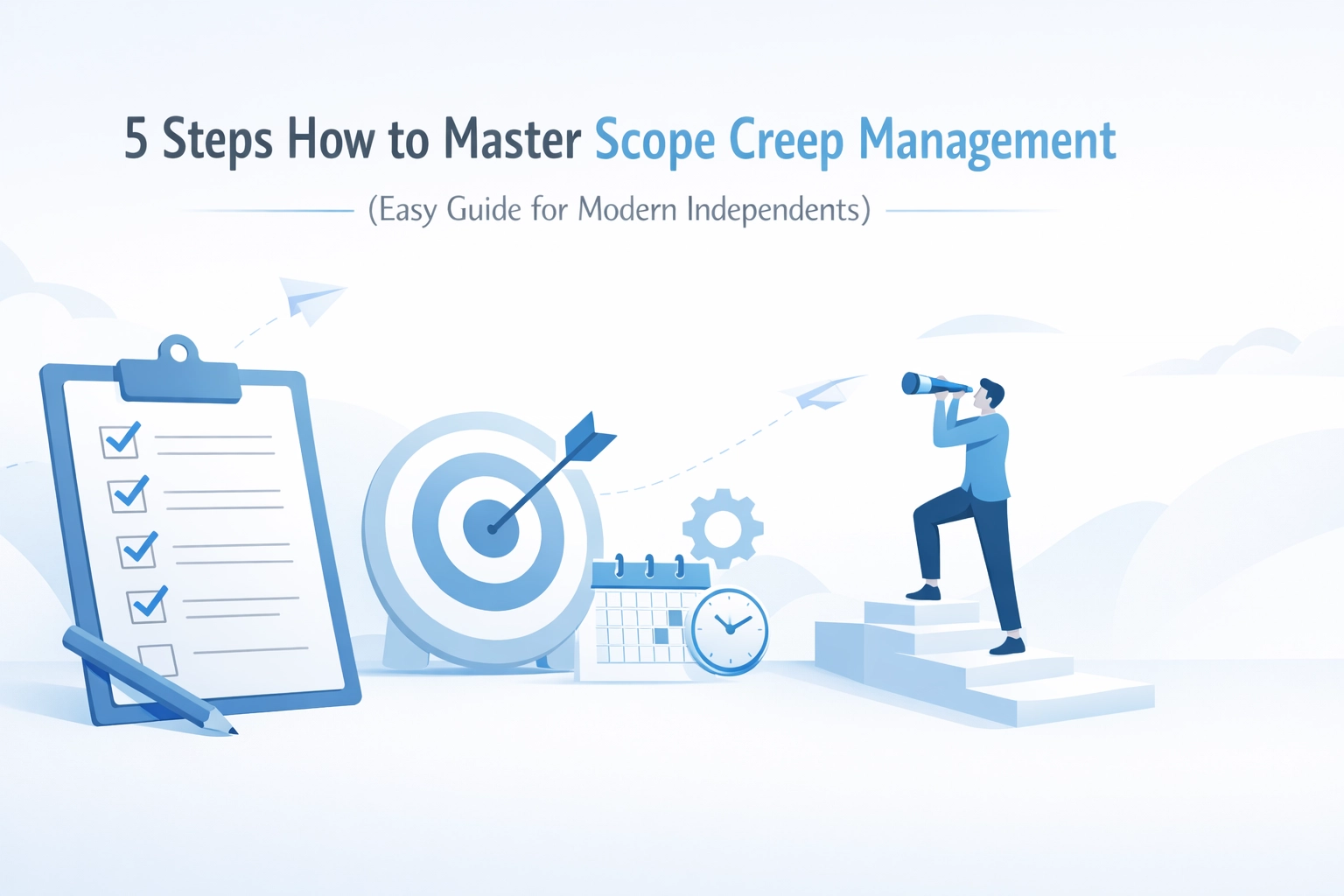
    5 Steps How to Master Scope Creep Management (Easy Guide for Modern Independents)

    Scope Creep Management is the difference between a profitable project and a slow-motion disaster. For independent contractors and digital architects, time isn't just money, it’s your only inventory. When a client asks for "just one small change" without a formal process, they aren't just adding a feature; they are stealing your margin.

    I’ve seen it happen a thousand times. You start with a clear vision, but three weeks later, the project looks like a Frankenstein monster of "quick fixes" and "additional thoughts." At GHW-Digital, we treat every project like a structural blueprint. If you move a load-bearing wall, the whole cost structure changes. This guide is your shield.

    1. Lockdown: Define Your Project Scope Statements

    The first step in effective Scope Creep Management is drawing a line in the sand that cannot be washed away. You need a scope statement that is so clear it leaves zero room for "I thought you meant…"

    Modern independents often fall into the trap of being too vague to sound "flexible." Flexibility is a trap. You need to use SMART goals, Specific, Measurable, Attainable, Relevant, and Time-bound. If a deliverable isn't explicitly listed in your Independent Contractor Agreements, it doesn't exist.

    When we architect apps at GHW-Digital Ideas, we list what is not included as clearly as what is. This "Negative Scope" is a powerful tool. It prevents the client from assuming that "building a login page" automatically means "integrating five different social SSO providers."

    A clean architectural blueprint representing a clear project scope statement for effective scope creep management.

    2. The Shield: Implement Independent Contractor Agreements

    Your contract is your primary defense mechanism. If you are operating without robust Independent Contractor Agreements, you are essentially working on a handshake in a hurricane. You need a "Change Control" clause that dictates exactly what happens when the goalposts move.

    A change control process shouldn't be a hurdle; it’s a professional standard. It mandates that any modification to the original plan must be:

    • Documented in writing.
    • Assessed for impact on the timeline.
    • Priced according to the new resource requirements.

    Think of it as a Vow Guard Elite for your professional boundaries. When a client sees that every "extra" has a documented process, they treat your time with more respect. They stop treating your dev cycle like an all-you-can-eat buffet and start treating it like a Michelin-starred kitchen where every ingredient is accounted for.

    3. Real-Time Radar: Scope Creep Management via Constant Communication

    Silence is where scope creep grows. If you aren't talking to your stakeholders regularly, they are dreaming up new features in the vacuum you've left behind. You need a "Radar" mentality.

    Effective Scope Creep Management requires you to engage clients at the start of every milestone. Don't just send a progress report; send a "Scope Alignment" update. Remind them what the current sprint covers and, more importantly, what it doesn't.

    According to the Project Management Institute (PMI), over 50% of projects experience scope creep. The majority of these failures stem from poor communication. We use tools like Scope Sentry to keep the feedback loop tight. If a client mentions a new idea in a casual Slack message, your immediate response should be: "That sounds like a great addition for Version 2.0. Should we stick to the current roadmap or pause to draft a Change Order for this?"

    A minimalist digital radar representing continuous communication for proactive scope creep management.

    4. The Delta: Monitor and Review Regularly

    You cannot manage what you do not measure. As a digital architect, you must conduct regular "Scope Audits." This isn't just about looking at your to-do list; it's about comparing the current state of the build against the initial blueprint found in your GHW-Digital Ideas documentation.

    Identify the "Delta", the difference between the plan and the reality. If the Delta is growing, you have a leak.

    • Track your hours vs. estimated hours per feature.
    • Audit client requests to see if one specific stakeholder is the source of the creep.
    • Use automated alerts.

    If you’re building complex apps, something like Scope Guard Elite can help visualize where the project is bloating. Catching a 5% deviation early is an easy fix. Catching a 40% deviation at the end of the month is a financial catastrophe.

    5. The Paper Trail: Document Everything Meticulously

    If it isn't documented, it didn't happen. In the world of Independent Contractor Agreements, the person with the best records wins the argument. Every approval, every change in color, every "minor" logic tweak must be logged.

    Meticulous documentation serves two purposes. First, it protects you legally if a project goes south. Second, it acts as a psychological deterrent for the client. When a client knows that every request is being logged into a formal system, they become more intentional with their feedback. They stop "thinking out loud" and start providing structured requirements.

    For every project we run at GHW-Digital, we maintain a centralized log of all "Out of Scope" discussions. This log is shared with the client. It’s transparent, it’s fair, and it keeps everyone aligned. It’s about maintaining "fairness" and "respect" for the craft.

    Organized digital documents providing a transparent paper trail for independent contractor agreements.

    Why Modern Independents Fail at Scope Management

    Most freelancers fail at Scope Creep Management because they are afraid of conflict. They think that saying "no" or "this will cost extra" will damage the relationship. In reality, the opposite is true.

    Clients respect experts who set boundaries. When you allow scope creep, you are telling the client that your time has no fixed value. You are telling them that your initial estimate was just a guess. By enforcing your Independent Contractor Agreements, you position yourself as a high-value professional: a Digital Architect: rather than just another pair of hands.

    Stop leaking revenue. Start locking in your projects. If you're looking for more ways to streamline your workflow and protect your creative output, check out our latest resources at GHW-Digital Ideas. We help you build better, faster, and with significantly less stress.

    The Bottom Line

    Scope creep isn't an accident; it's a lack of architecture. By defining your scope, utilizing solid agreements, communicating like a pro, monitoring the delta, and keeping a paper trail, you transform from a reactive freelancer into a proactive business owner.

    Don't let your next project drift into the red. Secure your margins today.


    Marblism Legal Shield & Privacy Commitment
    At GHW-Digital, we believe in radical transparency. Your data and project details are handled with a minimalist, high-security approach. We do not engage in "growth hacks" that compromise your privacy. Our Independent Contractor Agreements and software tools are designed with ethical boundaries at their core. We track only what is necessary to protect your profit and our mutual alignment. No tricks, just trust.

    Stop the bleed. Secure your next project with GHW-Digital.

  • The Proven Protocol for Scope Creep Prevention (Without the Hourly Professional Fees)

    The Proven Protocol for Scope Creep Prevention (Without the Hourly Professional Fees)

    Scope creep prevention is the only thing standing between your profit margin and total project collapse. In the app development world, "just one small change" is a lie. It is a leak in your revenue stream. If you aren't actively plugging those leaks, you are essentially working for free.

    At GHW-Digital, we’ve seen it all. We know that the traditional approach, hiring expensive legal consultants to draft massive, incomprehensible contracts, is a relic of the past. You don’t need an hourly professional fee to protect your time. You need a protocol. You need a shield. This is how you lock in your scope and protect your business using Professional Service Contracts and elite software tools.

    The Foundation: Scope Creep Prevention in Professional Service Contracts

    Scope creep prevention starts the second you send a proposal. If your documentation is vague, you are inviting the client to move the goalposts. Most disputes happen because of "implied" features. The client thinks a login page includes biometric authentication; you think it’s just a username and password. Without clarity, the client wins, and you lose.

    Professional Service Contracts must be surgically precise. You need a scope matrix that explicitly lists what is included and, more importantly, what is NOT included. If it isn't on the list, it doesn't exist. This level of detail isn't about being difficult; it's about mutual respect. When everyone knows the boundaries, the work flows faster.

    For more inspiration on how to structure these projects, check out our latest app ideas where we break down complex builds into manageable, scoped milestones.

    Digital shield protecting project boundaries for effective scope creep prevention in app development.
    Alt: A digital shield representing scope creep prevention for developers.

    Replacing Consultants with Elite Software Tools

    Why pay a consultant $400 an hour to tell you that your project is over budget? Software doesn't sleep, it doesn't charge by the hour, and it doesn't have "off" days. Elite software tools are now replacing the need for manual oversight.

    Tools like Scope-Guard Elite and Scope Sentry act as a digital perimeter. They track every request against the original Professional Service Contracts. When a client asks for a "tweak," the system flags it immediately. It calculates the impact on the timeline and the budget before a single line of code is written.

    This is the "Action-Benefit" model in full effect:

    • Automated Tracking: Lock in your original plan and visualize deviations in real-time.
    • Precision Calculation: Instantly see how a new feature affects your delivery date.
    • Automated Change Orders: Generate new billing documents the moment a scope change is approved.

    By using Scope Sentry, you move from a defensive posture to a position of control. You aren't arguing about money; you are simply following the protocol that the software enforces.

    The Ultimate Framework for Continuous Scope Creep Prevention

    Execution is where most projects fail. You start strong, but by week four, the boundaries begin to blur. To maintain scope creep prevention throughout the lifecycle, you need a structured change control system.

    According to research from the Project Management Institute, projects with formal change control are significantly more likely to meet their original goals. You should never accept a verbal request. If it isn’t in a ticket, it isn’t a task.

    Step 1: The Formal Request

    Every change must be documented. Use a standardized form that requires the client to describe the change and its perceived value. This forces the client to think about whether the request is actually necessary.

    Step 2: The Impact Analysis

    Before saying "yes" or "no," run the request through your Vow-Guard Elite system. How does this affect the database architecture? Does it require a new API integration? Quantify the technical debt.

    Step 3: The Decision Point

    Present the findings to the client. "We can add this feature, but it will cost $X and delay the launch by two weeks." This puts the power, and the responsibility, back on the client. Often, when faced with the actual cost, the "must-have" feature suddenly becomes "nice-to-have" for version 2.0.

    Minimalist dashboard interface tracking progress and scope creep prevention metrics for software projects.
    Alt: A dashboard showing scope creep prevention metrics and project health.

    Enforcing Boundaries Without Emotional Pleading

    Many agency owners struggle with saying "no." They fear it will damage the relationship. But "no" is a professional tool. In fact, saying "yes" to everything is what actually ruins relationships. It leads to missed deadlines, buggy code, and a stressed-out team.

    Scope creep prevention is about fairness. You agreed to do a specific amount of work for a specific price. Changing that agreement without adjusting the compensation is an act of bad faith. When you lead with data and Professional Service Contracts, the conversation stops being emotional. It becomes a business transaction.

    If you are looking for new ways to frame your services and maintain these boundaries, browse our project ideas page. We provide templates and concepts that are designed to be "scope-proof" from day one.

    The Cost of Change Curve

    The later a change is introduced, the more expensive it becomes. A change in the wireframe stage costs almost nothing. The same change in the production environment can cost thousands. Elite software tools help you visualize this "cost of change curve" for your clients.

    Ascending graphic showing the cost of change curve for scope creep prevention during development.
    Alt: A graph showing the rising cost of changes during the app development lifecycle.

    When clients see the exponential growth of costs as the project progresses, they become much more disciplined during the early phases. This is proactive education. It’s part of the GHW-Digital philosophy: inform the client, protect the project, and deliver excellence.

    Stop the Revenue Leak Today

    You don't need another meeting. You don't need a legal retainer. You need to implement a protocol that protects your time and your talent. Start by auditing your current Professional Service Contracts. Are they specific? Are they enforceable?

    Next, deploy the right technology. Whether it's Scope-Guard Elite or Vow-Guard Elite, get a system in place that monitors your scope 24/7. Stop being a victim of "feature creep" and start being the architect of your own profit.

    The goal is simple: deliver a world-class product without sacrificing your sanity or your bottom line. We do this every day at GHW-Digital. We build apps that stay on track because we respect the scope.

    If you are ready to stop the bleeding and take control of your development process, start by exploring our ideas library. We update it daily with strategies and concepts designed for the modern developer who values precision over professional fees.


    Marblism Legal Shield

    GHW-Digital is committed to transparency and data integrity. Our Marblism Legal Shield ensures that all contractual templates and software logic comply with the highest standards of professional service regulations. We believe in blunt honesty: our tools are designed to protect the service provider while ensuring the client receives exactly what was promised. No tricks, just alignment.

    Ready to secure your next project? View our full range of apps and find your shield.

  • The Modern Independent’s Guide to Professional Protocols at GHW Digital

    The Modern Independent’s Guide to Professional Protocols at GHW Digital

    Professional Protocols are the only thing standing between your profit and the chaos of unmanaged client demands. In the digital economy, the boundary between "working" and "being worked" is dangerously thin. If you are an independent expert, a freelancer, or a niche consultant, you know the feeling of the moving goalpost. You know the sting of a project that was supposed to take ten hours but somehow consumed thirty. At GHW Digital, we don’t just build apps; we build the frameworks that prevent these disasters.

    We believe that professional expertise should not be a vulnerable commodity. It should be a protected, scalable asset. This guide breaks down how we use specific protocols to guard time, lock in value, and shift the power dynamic back to the creator.

    Why Professional Protocols Prevent Scope Creep

    Scope creep kills margins. It is a silent thief that enters a project through vague language and "quick favors." Without strict Professional Protocols, you are essentially inviting your clients to rewrite your contract in real-time without paying for the privilege.

    At GHW Digital, we treat every project like a secure system. You wouldn't leave a server port open to the public; why would you leave your project requirements open to interpretation? By implementing rigorous protocols, you create a shield. You define exactly where your responsibility ends and where a "change request" begins. This isn't about being difficult; it's about being professional. It’s about respect: respect for your time and respect for the client’s budget.

    Digital shield protecting a clock and currency symbol, representing professional protocols for time management.
    Alt: A digital shield protecting a stylized clock and a dollar sign, representing the protection of time and profit through professional protocols.

    The Era of Autonomous Digital Assets

    The old way of working was simple: trade an hour of your life for a set amount of currency. That model is broken. It doesn’t scale, and it leads to burnout. We advocate for a shift toward Autonomous Digital Assets.

    An Autonomous Digital Asset is a piece of expertise that has been codified, packaged, and automated so that it can provide value without your direct, manual intervention. Whether it’s a specialized software tool, a proprietary workflow, or a digital application, these assets work while you sleep. They are the ultimate expression of Professional Protocols.

    When you turn your knowledge into an asset, you stop being a "hired gun" and start being a platform. You provide the result, not just the labor. This is the core philosophy we explore in depth at our ideas page, where we discuss how to transition from service provider to asset owner.

    Democratizing Professional Expertise

    For too long, the most powerful professional tools were locked behind the gates of enterprise-level pricing and complex legal teams. We are changing that. We believe in democratizing professional expertise. This means giving the modern independent the same defensive capabilities as a Fortune 500 company.

    Democratization isn’t just about making things cheaper; it’s about making them accessible and actionable. It’s about ensuring that a solo developer or a small design agency has access to a Scope Guard Elite or a Vow Guard Elite. These aren't just names; they are functional protocols designed to enforce boundaries.

    When expertise is democratized, the market becomes fairer. The best ideas win because they aren't suppressed by administrative overhead or the fear of being exploited by larger entities. We follow open standards like those defined by the W3C to ensure our digital assets remain interoperable and robust.

    Independent professionals backed by digital shields and gears, illustrating democratized professional protocols.
    Alt: A group of diverse independent professionals standing confidently, backed by glowing digital icons of shields and gears, illustrating the democratization of expertise through professional protocols.

    Lock In Your Value with Precise Tracking

    Precision is the enemy of the "leaky project." If you cannot track it, you cannot defend it. Most professionals lose 15-20% of their billable value because they fail to document the small deviations from the original plan. Professional Protocols require a "log everything" mentality.

    Using tools like Scope Sentry, you can monitor the health of a project in real-time. Think of it as a flight recorder for your business. If the project starts to veer off course, the protocol alerts you immediately. You don't wait until the end of the month to realize you've worked for free. You stop the leak the moment it happens.

    This level of precision builds immense trust with clients. They see that you are disciplined. They see that you value their investment enough to track it meticulously. It eliminates the "he-said, she-said" arguments that plague professional relationships.

    Action-Benefit: Implementing Protocols Today

    If you want to protect your business, you need to act now. Here is how you can start integrating Professional Protocols into your daily workflow:

    • Audit Your Boundaries: Identify the last three times a client asked for "just one more thing." If you did it for free, you have a protocol failure.
    • Codify Your Deliverables: Never use "etc." or "and more" in a contract. Be surgical. If it isn't listed, it isn't included.
    • Deploy Digital Guardians: Use software specifically designed to guard your scope. Visit our Scope Guard Elite page to see how we automate this.
    • Adopt Agile Thinking: Shift from static, rigid contracts to iterative, protocol-driven development. For more on this, look at the Agile Manifesto which prioritizes responding to change through structured processes.

    Minimalist dashboard with project metrics and a padlock icon showing professional protocols for value protection.
    Alt: A clean, minimalist dashboard showing project metrics and a "Locked" status, representing the implementation of professional protocols for value protection.

    The GHW-Digital Commitment to Fairness

    At GHW-Digital, we aren't interested in marketing tricks or emotional pleading. We deal in logic, efficiency, and alignment. We believe that when everyone knows the rules, everyone wins. Professional Protocols aren't weapons; they are the rules of engagement for a successful, high-trust relationship.

    Our commitment is to provide the "Digital Shield" for the modern workforce. We are building a future where your expertise is your most valuable asset, and that asset is never left unguarded. Whether you are browsing our main index or looking for specific privacy protocols, our goal is your professional security.

    Stop the Leakage, Secure the Margin

    Every day you operate without formal Professional Protocols is a day you leave money on the table. You are letting your time: your most finite resource: leak away into the cracks of "reasonable expectations" and "project fluff."

    Stop trading hours for pennies. Start building and protecting Autonomous Digital Assets. The transition from a vulnerable freelancer to a protected, professional asset-owner starts with a single decision: the decision to enforce your worth through systematic protocols.

    Explore our ideas page and see how we are rewriting the rules for the modern independent.

    A digital key entering a slot to secure a business asset through strict professional protocols.
    Alt: A close-up of a digital key locking into a slot, symbolizing the final step in securing a professional protocol for a business asset.


    Marblism Legal Shield & Privacy Commitment
    At GHW-Digital, we believe in blunt honesty. Your data is your property. We do not engage in "shadow tracking" or hidden data harvesting. Our tools are built to protect you, not exploit you. All protocols implemented through our platform adhere to strict ethical guidelines and local data protection regulations. We don't just protect your scope; we protect your digital footprint. For more details, view our Privacy Policy. All rights reserved. 2026.

  • The Couple’s Guide to Wedding Supplier Contracts: Secure Your Big Day

    The Couple’s Guide to Wedding Supplier Contracts: Secure Your Big Day

    Wedding Supplier Contracts are the only thing standing between your dream wedding and a logistical nightmare. When you are planning the biggest day of your life, emotions run high, but your business sense must remain sharp. You aren't just throwing a party; you are managing a high-stakes project with dozens of moving parts. Without a solid legal shield, you are vulnerable. At GHW-Digital, we understand that whether you are developing a custom app or planning a wedding, the contract is your primary defense against scope creep and missed deliverables.

    Wedding Supplier Contracts: Your Essential Defense

    A contract isn't a gesture of goodwill; it is a vital defense mechanism. Many couples treat vendor agreements as a formality, signing quickly to tick a box on their to-do list. This is a mistake that kills margins and ruins schedules. A vendor-biased contract is designed to protect the business, often leaving the couple with limited recourse when things go wrong.

    To protect your big day, you must flip the script. Your Wedding Supplier Contracts should serve as a guardian for your time, money, and sanity. If a vendor is hesitant to put their verbal promises into a written agreement, that is your first sign to walk away. Fairness and alignment only exist when they are documented. For more insights on how to structure complex agreements, check out our ideas page.

    A couple reviewing detailed Wedding Supplier Contracts at a marble table to ensure legal protection.
    Alt: A focused couple reviewing Wedding Supplier Contracts to ensure legal protection.

    Identify the Red Flags in Vendor Agreements

    Before you sign anything, you need to hunt for red flags. Vendors often hide unfavorable terms in the fine print, hoping you’re too distracted by cake tastings to notice.

    1. The "Vague Deliverables" Trap: If a photographer’s contract says "wedding photos" without specifying the number of hours, the number of edited shots, or the delivery timeline, you are leaking value.
    2. Non-Refundable Everything: While deposits are standard, a contract that allows a vendor to keep 100% of your money regardless of why they cancel is a massive red flag.
    3. The "Missing Liability" Clause: If the vendor doesn’t mention what happens if they fail to show up due to "unforeseen circumstances," you are the one bearing all the risk.

    We see this in software development all the time. If a project isn't defined, it fails. Use our Scope Guard Elite mindset: define the boundaries, lock in the requirements, and ensure there is a penalty for non-performance. You can find more strategies for defining project boundaries at ghw-digital.com/ideas.html.

    Locking In Service Delivery

    Service delivery isn't guaranteed by a handshake. It is guaranteed by specific, enforceable clauses. When reviewing your Wedding Supplier Contracts, look for "Action-Benefit" structures.

    • Payment Schedules: Do not pay the full amount upfront. Tie payments to specific milestones.
    • Contingency Plans: Who is the backup DJ? What happens if the florist's van breaks down? Your contract must name a replacement or define an immediate refund process.
    • Overtime Rates: Vendors love to add "hidden" fees for an extra 30 minutes. Lock these rates in now so there are no surprises at midnight.

    For those looking for ultimate peace of mind, we recommend integrating tools like Vow Shield. Vow Shield acts as a digital auditor for your wedding agreements, ensuring that every vendor is held to the highest standard of accountability. Just as we use Scope Sentry to monitor project health, Vow Shield monitors your wedding's contractual health.

    A digital dashboard tracking Wedding Supplier Contracts and project health on a modern tablet interface.
    Alt: A digital dashboard representing Vow Shield tracking Wedding Supplier Contracts.

    Why Vow Guard Elite is the New Standard

    At GHW-Digital, we specialize in high-precision tools. Our Vow Guard Elite platform is designed specifically for couples who demand professional-grade management of their wedding vendors. This isn't just a checklist; it's a command center.

    When you use Wedding Supplier Contracts in conjunction with Vow Guard Elite, you are:

    • Tracking every modification: No more "he said, she said" regarding changes to the floral arrangements.
    • Calculating risks: Automatically flagging vendors who haven't provided updated insurance certificates.
    • Securing a competitive advantage: Ensuring you get the best possible service because the vendor knows you are organized and protected.

    Managing a wedding is essentially managing a series of micro-contracts. Don't let the "moving goalposts" of a disorganized venue ruin your budget. Stay ahead by visiting our ideas section regularly for updates on contract management.

    Negotiation: Asserting Your Boundaries

    Negotiation isn't about being "difficult"; it's about establishing respect. A vendor who respects your boundaries is a vendor who will deliver. When you sit down to discuss Wedding Supplier Contracts, come prepared with your own list of requirements.

    According to legal experts at The Knot, a contract is only as strong as its specificity. If you want the "Elite" package, ensure every single item in that package is listed by name. If you are discussing catering, don't just agree to "a buffet." List the number of proteins, the dietary restrictions covered, and the exact serving times.

    A professional handshake over signed Wedding Supplier Contracts on a clean white desk, signifying agreement.
    Alt: Two professionals shaking hands over a signed Wedding Supplier Contract.

    Similarly, Brides.com emphasizes that "Force Majeure" clauses need to be clear. If a global event or a local emergency happens, you need to know exactly how your money is protected. This level of precision is exactly what we preach at GHW-Digital. Whether it's privacy policies or floral deliveries, the details are where the battle is won.

    Ensuring Alignment and Fairness

    The goal of a contract is alignment. You and your vendor should have a shared vision of success. Wedding Supplier Contracts provide the roadmap to that success.

    Stop thinking of your wedding as a series of "favors" from vendors. They are service providers, and you are the client. You provide the revenue; they provide the results. If the results are missing, the revenue should be protected. It’s that simple.

    We apply this no-nonsense approach to everything we do at GHW-Digital. From app development to strategic consulting, we believe that clarity is the ultimate luxury. If you are tired of vague promises and want to secure your big day with the same intensity you bring to your professional life, you need to prioritize your contracts.

    Action Plan for the Modern Couple

    1. Audit Your Current Agreements: Pull out every contract you’ve signed and check for the red flags mentioned above.
    2. Demand Addendums: If a contract is missing a backup plan or a specific deliverable, ask for an addendum. A professional vendor will not hesitate to provide one.
    3. Implement Vow Shield: Use technology to your advantage. Stop tracking your wedding in a messy notebook and start using a system designed for precision.
    4. Educate Yourself: Keep learning about how to protect your interests by browsing ghw-digital.com/ideas.html.

    A clean workspace with a laptop displaying GHW-Digital ideas for managing Wedding Supplier Contracts.
    Alt: A clean, modern workspace with a laptop showing GHW-Digital ideas for Wedding Supplier Contracts.

    Your wedding day is a significant investment of time, money, and emotion. Don't leave it to chance. Secure your legacy, protect your margins, and ensure that the only surprise on your wedding day is how smoothly everything runs.

    Stop letting vendors dictate the terms. Take control of your Wedding Supplier Contracts today and secure the big day you deserve.


    Marblism Legal Shield Footer
    The information provided in this blog post is for informational purposes only and does not constitute legal advice. While GHW-Digital and Marblism strive for accuracy, contract laws vary by jurisdiction. We strongly recommend consulting with a qualified legal professional before signing any binding agreements. Your data privacy is our priority; learn more at our privacy page. All business dealings are conducted with blunt honesty and zero marketing "tricks."

  • Wedding legal protection: The Potent Vital Asset

    Wedding legal protection: The Potent Vital Asset

    Wedding legal protection is the cornerstone of a secure matrimonial union, yet it remains the most overlooked element of the planning process. Most couples focus on the aesthetics of the venue or the flavor of the cake, leaving the legal infrastructure of their celebration completely exposed. At GHW-Digital, we view a wedding not just as a romantic milestone, but as a significant legal and financial merger. If you wouldn’t sign a high-value business contract without a thorough audit, you should not be signing wedding supplier agreements without a defensive shield.

    The reality of the wedding industry is that it operates on emotion. Suppliers often provide contracts that are heavily weighted in their favor, containing clauses that shift all liability to the couple and offer little to no protection in the event of a breach or failure to deliver. This is where the standard planning process fails. You need a mechanism that strips away the sentiment and evaluates the cold, hard facts of the legal agreement.

    The Vulnerability of the Modern Wedding

    When you enter into a contract with a photographer, a venue, or a catering company, you are entering into a binding legal obligation. Without proper wedding legal protection, you are essentially walking into a minefield. Many couples find themselves trapped in "force majeure" clauses that are too broad, or cancellation policies that are predatory. These are not just administrative hurdles; they are direct threats to your financial stability.

    The industry relies on your lack of legal expertise. Vague language regarding "service standards" or "estimated delivery dates" can leave you with no recourse when things go wrong. If a venue cancels three weeks before the date, or a caterer fails to show, the emotional toll is massive, but the financial toll can be ruinous if your contract doesn't have the right safeguards. You need to identify these risks before the ink is dry.

    Tablet app displaying a wedding vendor agreement audit to ensure wedding legal protection.
    Caption: Analyzing a wedding vendor agreement for hidden risks and unfavorable clauses.

    Wedding Legal Protection as a Defensive Protocol

    The introduction of Vow Shield by GHW-Digital changes the power dynamic between the couple and the supplier. By treating the wedding as a high-stakes project, we provide the tools to ensure your wedding legal protection is absolute. Vow Shield serves as a digital architect for your marriage contracts, scanning every line to ensure the terms are not just fair, but fully legal.

    This isn't about being difficult; it's about being prepared. A potent defense requires a clear understanding of what you are agreeing to. Our application assesses the risk profile of each contract, highlighting areas where the supplier has overreached or where the language is dangerously ambiguous. By using this protocol, you lock in your expectations and protect your investment. You can view our suite of defensive tools at ghw-digital.com/apps.html.

    Decoding Supplier Contracts with Vow Shield

    The complexity of a wedding supplier contract can be overwhelming. Most people scan for the price and the date, then skip to the signature line. This is a critical error. Vow Shield automates the audit process, focusing on several vital areas:

    • Liability Shifts: Identifying clauses that force the couple to take responsibility for things outside their control.
    • Refund Legality: Ensuring that "non-refundable deposits" actually comply with local consumer protection laws.
    • Scope Definition: Clearly outlining what is included so there is no "scope creep" during the event planning.
    • Risk Warnings: Immediate alerts when a contract contains language that deviates from industry standards or legal norms.

    By utilizing this technology, you are installing a guardian over your wedding budget. You transition from a vulnerable consumer to an informed principal in a legal transaction.

    A protective shield over wedding contracts representing secure wedding legal protection and risk assessment.
    Caption: The Vow Shield interface providing a risk assessment of a venue contract.

    The Vital Stakes of Matrimonial Mergers

    A wedding is more than a party; it is the beginning of a new legal status. According to legal frameworks established by institutions like Cornell Law School, marriage provides substantial legal protections regarding property, healthcare, and inheritance. These are high-level assets that deserve a secure foundation. If your wedding day is marred by legal disputes with suppliers, you are starting this "merger" on unstable ground.

    The legal protections afforded by marriage, such as "marital property" status and next-of-kin decision-making authority, are the ultimate goal. However, getting to that point requires navigating the pre-wedding contract landscape. If you lose thousands of dollars to a fraudulent or negligent supplier because of a weak contract, you are depleting the very assets you intend to build together. Protecting the wedding day via wedding legal protection is the first step in protecting the marriage itself.

    Establishing Peerless Event Defense

    To achieve a state of peerless defense, couples must adopt a professional mindset. This involves moving away from "handshake deals" and verbal promises. If it isn't in the contract, it doesn't exist. Vow Shield empowers you to demand clarity. When the application identifies a risk, it gives you the leverage to go back to the supplier and request an amendment.

    This level of scrutiny often deters sub-par suppliers. A professional vendor who stands by their work will have no issue with a fair, legal contract. A vendor who balks at your request for clarity is a vendor you shouldn't be hiring. In this way, wedding legal protection acts as a filter, ensuring only the most elite and reliable suppliers are part of your event.

    A couple using wedding legal protection tools to negotiate a fair agreement with a wedding vendor.
    Caption: A couple professionally negotiating terms with a wedding vendor based on a risk report.

    Why Sentiment is the Enemy of Security

    In the wedding world, "trust" is often used as a substitute for "terms." Suppliers will tell you to "trust them" because they’ve done hundreds of weddings. While experience is valuable, it is not a legal guarantee. Sentiment leads to skipped pages and ignored fine print. To ensure your union is protected, you must treat the preparation with the same rigor you would treat a business acquisition.

    GHW-Digital provides the "Scope Guard" mindset for every aspect of life. Just as our Scope Sentry manages professional boundaries, Vow Shield manages the boundaries of your personal celebrations. We remove the emotional fog and replace it with data-driven legal clarity.

    The Absolute Strategy for Marital Security

    Securing your wedding involves more than just reading the contract; it involves understanding the landscape of consumer rights. Most people are unaware of the protections they are legally entitled to, and suppliers often count on this ignorance. Your strategy must be proactive.

    1. Audit Every Document: Never assume a standard form is "safe."
    2. Verify Legality: Use Vow Shield to ensure clauses aren't just unfair, but actually illegal in your jurisdiction.
    3. Identify Risks: Know exactly where you are vulnerable before you pay a deposit.
    4. Enforce Boundaries: Use the generated reports to negotiate better terms.

    This is the potent mechanism required for modern wedding planning. It turns a stressful, opaque process into a transparent, controlled operation.

    Wedding rings under a protective dome symbolizing secure wedding legal protection and marital security.
    Caption: The peace of mind that comes from knowing your wedding contracts are legally sound.

    Conclusion: Securing the Future

    The wedding day is the launchpad for your future together. Don't let a poorly drafted contract jeopardize your financial or emotional well-being. By prioritizing wedding legal protection, you are making a vital investment in your peace of mind. Vow Shield isn't just an app; it is a guardian for your most important day.

    Stop leaving your protection to chance. Take control of your supplier relationships and ensure that your wedding contracts are as strong as your commitment to each other. Visit ghw-digital.com to learn how we are redefining contract security for the elite.

    Launch offer (ends April 1, 2026): Use discount code BLOG20 for 20% off our upcoming Vow Shield tool. Lock in protection early. Don’t sign exposed.


    Mandatory Ethics and Data Privacy Disclosure:
    At GHW-Digital, we believe in blunt honesty. Your data is your asset. We do not engage in marketing "tricks" or hidden data harvesting. Vow Shield and our associated applications are built on a foundation of transparency and ethical coding. We collect only the information necessary to provide our defensive services, and we never sell your personal details to third-party vendors. Our goal is to protect you, not to profit from your privacy. For more information, please review our protocol at ghw-digital.com/privacy.html. Secure your assets. Protect your boundaries. Trust the architect.

    Powered by GHW Digital (Company No: 16834250). This document is an automated draft for business organization purposes only. It does not constitute legal advice. GHW Digital accepts no liability for disputes, financial loss, or enforceability. Users must consult a qualified professional in their jurisdiction before signing.

  • Professional Boundaries: The Ultimate Guide to Mastering Elite Project Agreements at Speed

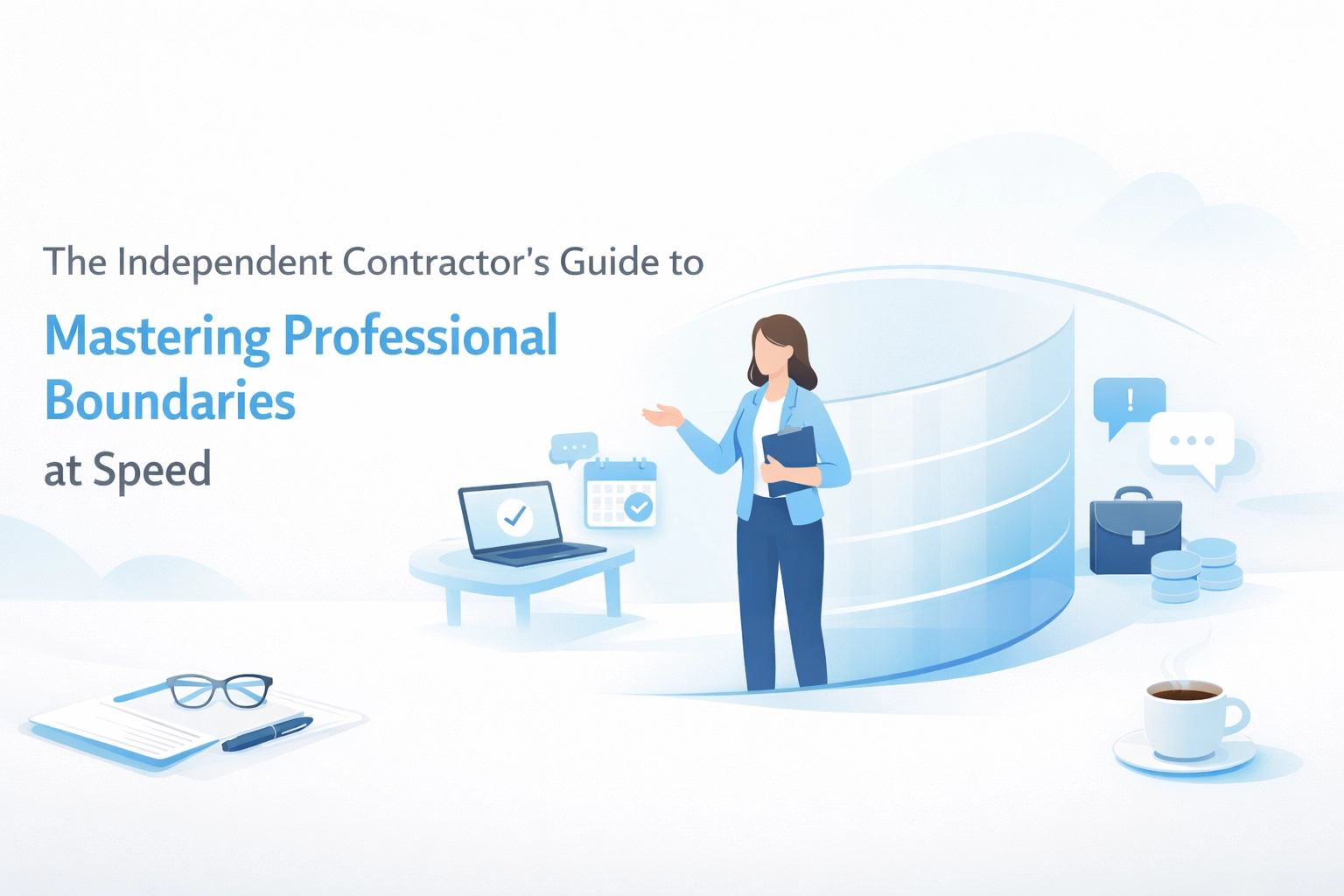
    Professional Boundaries: The Ultimate Guide to Mastering Elite Project Agreements at Speed

    Professional boundaries are the structural load-bearing walls of your freelance career. Without them, the house collapses. If you’ve ever had a client "hop on a quick call" on a Sunday evening or ask for "just one tiny tweak" for the fifth time in a week, you’re experiencing structural failure.

    In the high-velocity world of app development and digital architecture, speed is often cited as the ultimate goal. But speed without control is just a crash waiting to happen. To move fast, you need hard lines. You need an environment where expectations are binary, not atmospheric.

    At GHW-Digital, we build apps, but we also build systems that protect the creators. This guide is about moving from a "yes-man" freelancer to a Digital Architect who commands respect through precision and Independent Contractor Agreements.

    The Architecture of a Solid Agreement

    Most freelancers view contracts as a legal hurdle. That’s a mistake. An agreement is a blueprint. You wouldn’t start pouring concrete for a foundation without a schematic, so why would you start writing code without defining where the project ends?

    Professional boundaries start with the very first document you send. Your Independent Contractor Agreements should not just be about payment terms; they should be about the physics of the relationship.

    • Fixed Scope: Define exactly what is being built. If it’s not in the doc, it doesn’t exist.
    • Response Windows: Set a 24-hour or 48-hour window for communications. This kills the "instant reply" anxiety.
    • Tool Autonomy: Explicitly state that you use your own equipment and software. This reinforces your status as an independent expert, not an "at-will" employee.

    Architectural blueprint symbolizing the structural clarity of independent contractor agreements.

    Scope Creep Management: Stopping the Leak

    Scope creep kills margins. It is a slow leak that eventually sinks the ship. It starts with a small request, a change in button color, an extra API integration, and ends with you working for below minimum wage.

    To master Scope Creep Management, you have to treat every change as a transaction. There is no such thing as a "small favor" in professional development. If the goalposts move, the budget and timeline must move in tandem.

    Action: Lock in the Baseline.
    Before a single line of code is written, use a tool like Scope Guard Elite to create a versioned snapshot of the project requirements. When the client asks for an extra feature, you don’t say "no", you say, "That’s a great addition for Version 2.0, or we can adjust the current Agreement to include it now for an additional fee."

    For more insights on how to handle shifting requirements, check out our latest ideas and strategies.

    The Digital Architect’s Communication Shield

    Communication is where boundaries are most frequently breached. If you are available on every platform, Slack, WhatsApp, Email, LinkedIn, you are effectively never off the clock.

    You need a shield. A shield isn't about being rude; it’s about being professional.

    1. Centralize Communications: Move all project-related talk to one platform.
    2. Define Office Hours: Just because you can work at 2 AM doesn't mean the client should know you're awake. Use scheduled sends for emails to maintain the illusion (and reality) of standard business hours.
    3. The "I" Statement: Use assertive, non-blaming language. "I require all change requests to be submitted via the portal to ensure they are tracked correctly," sounds much better than "You keep asking for too much stuff."

    Maintaining these professional boundaries ensures that you remain an expert advisor rather than a digital commodity. For a deeper dive into managing client relationships, explore the GHW-Digital Ideas page.

    Protective glass rings illustrating scope creep management and secure project perimeters.

    Using Technology as a Guardian

    You can’t stay on guard 24/7. You need systems that act as your proxy. In the same way we use automated testing for code, we use automated boundaries for project management.

    Tools like Scope Sentry and Vow Guard Elite are designed to monitor the health of your project agreements. They act as an early warning system. When a project starts to drift from its original intent, these systems flag the deviation before it becomes a financial disaster.

    Action: Automate the Enforcement.
    Don't be the "bad guy." Let the system be the enforcer. When a client tries to bypass a milestone, an automated notification from your project management suite is much more objective than a heated email. It keeps the relationship professional and focused on the deliverables.

    Protecting Your Independence

    The IRS and various international labor boards have strict definitions of what constitutes an independent contractor. If you start acting like an employee, taking orders on how to work rather than what to deliver, you risk your legal status.

    Professional boundaries protect your tax status as much as your sanity.

    • Use Your Own Stack: Don't let clients force you into their internal Slack or project management tools if it compromises your workflow.
    • Result-Oriented Billing: Whenever possible, bill by the milestone, not the hour. This shifts the focus from your time to your value.
    • Multiple Clients: Never let one client represent 100% of your income. The power to say "no" is directly proportional to your financial diversification.

    If you’re looking to scale your app development business while keeping these boundaries intact, see how we handle complex app builds at GHW-Digital.

    Modern digital sentinel symbolizing technology acting as a guardian for professional boundaries.

    Ethical Standards and Reputation

    Your reputation is your only real currency in the contractor world. Being firm on boundaries actually increases your value. Clients don't want a pushover; they want an expert who knows what they are doing.

    When you enforce Independent Contractor Agreements, you are signaling that you are a high-value professional who respects their own time. This naturally attracts higher-quality clients who also respect that time.

    • Be Transparent: If a deadline is going to be missed because of a technical hurdle, say it early.
    • Document Everything: Every call should be followed by a "per our conversation" email. This isn't paranoia; it's professional hygiene.
    • Know Your Limits: Don't overpromise. It's better to deliver a perfect MVP than a broken full-scale suite.

    For more resources on maintaining a high-level professional stance, visit our resource hub.

    The Final Blueprint

    Mastering professional boundaries isn't about building a wall to keep people out. It's about building a gate that controls the flow of work. It ensures that when you do work, you are focused, compensated fairly, and moving toward a clear goal.

    Without these boundaries, you aren't an independent contractor; you're a decentralized employee with no benefits. Take control of your Independent Contractor Agreements today. Use the right tools. Set the right tone. Protect your craft.

    If you're ready to see how professional-grade architecture can change your project outcomes, head over to our homepage or dive into our latest thoughts on development.


    Marblism Legal Shield

    This content is provided for informational purposes only and does not constitute legal, financial, or tax advice. GHW-Digital and Marblism are not law firms. While we strive for accuracy, the legal landscape for independent contractors varies by jurisdiction. We strongly recommend consulting with a qualified legal professional to review your Independent Contractor Agreements and ensure compliance with local labor laws. Your data privacy is important to us; for more information on how we handle information, please review our Privacy Policy.

    Stop the creep. Secure the bag. Build with GHW-Digital.

  • SEO Information

    SEO Information

    SEO Title: Scope Creep Management Mistakes: Elite Strategies for Massive Project Control
    SEO Meta Description: Stop losing profit to poorly defined projects. Learn how elite Scope Creep Management systems replace expensive consultants and secure your professional service contracts.
    URL Slug: scope-creep-management-mistakes-fix

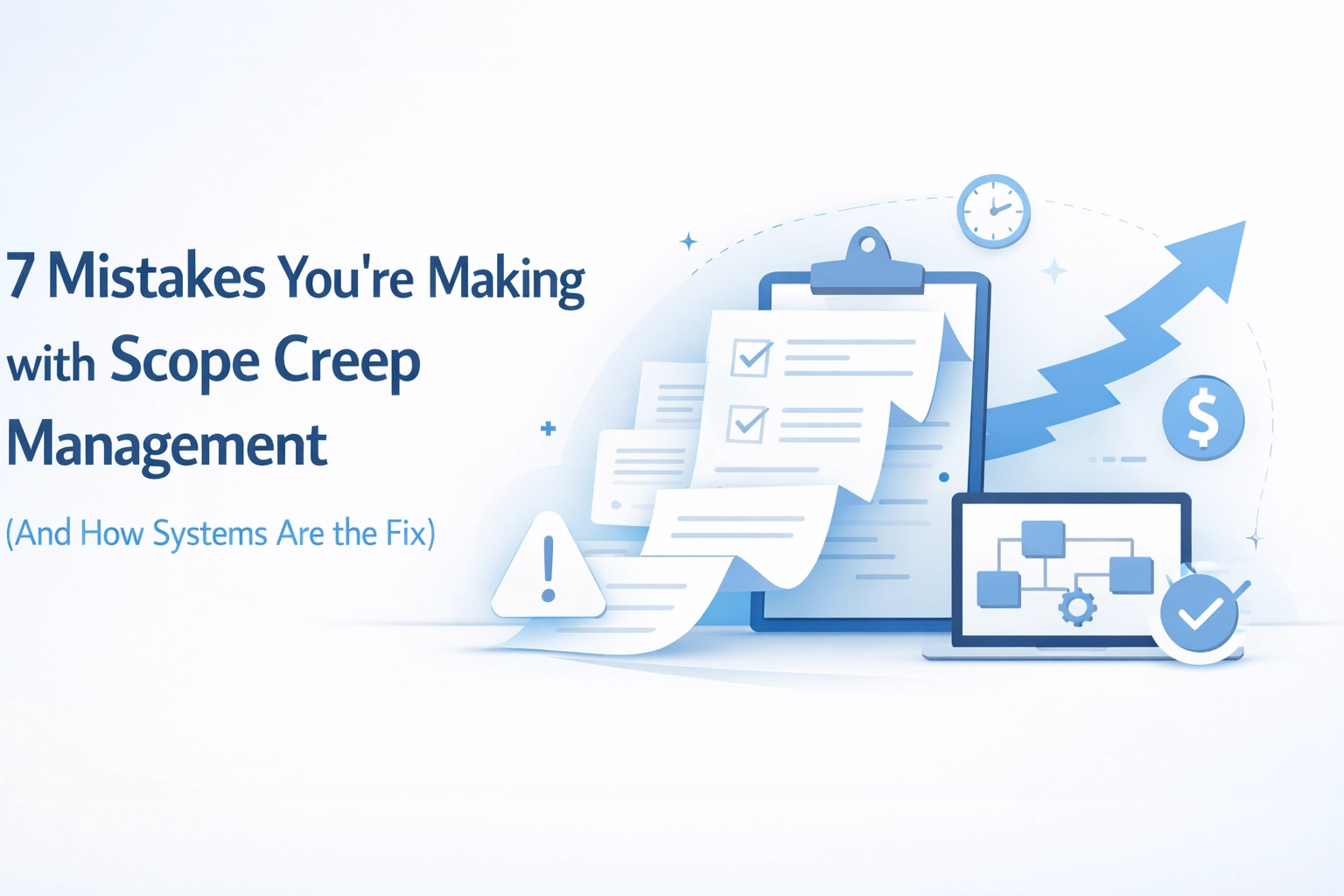
    7 Mistakes You’re Making with Scope Creep Management (And How Systems Are the Fix)

    Scope Creep Management is the thin line between a high-margin success and a project that drains your company dry. In the world of app development and professional services, "just one more feature" is the silent killer of profitability. If you are still relying on manual spreadsheets or, worse, verbal agreements to manage project boundaries, you are leaving your revenue exposed.

    At GHW-Digital, we see it daily: brilliant founders and project managers losing ground because they lack a systematic defense. Professional Service Contracts are often treated as static documents that sit in a drawer, rather than living systems that govern every interaction. Elite software tools are now replacing the expensive, slow-moving consultants of the past, offering a digital shield that protects your time and your bottom line.

    Here are the seven critical mistakes you are likely making with your Scope Creep Management and the high-impact systems that will fix them.

    1. Using Vague Language in Professional Service Contracts

    Precision is your primary defense. Many project leads make the mistake of using "soft" language like "optimize the user interface" or "improve site performance." These phrases are subjective and invite endless revisions. Without a hard boundary, the client’s definition of "optimized" will always be three steps ahead of your current progress.

    The Fix: Automated Boundary Definitions
    Replace expensive legal consultants with elite software like Scope Guard Elite. These tools allow you to bake specific, quantifiable triggers into your contracts. Instead of "optimize," you specify "reduce page load time to under 2.1 seconds on mobile." When the goal is met, the system locks the task. This level of precision is essential for innovative app ideas that require strict technical guardrails.

    Digital caliper measuring precision boundaries for elite scope creep management in contracts.

    2. Allowing "Off-Channel" Feature Requests

    The moment a client sends a "quick favor" via a WhatsApp message or a casual mention during a Zoom call, your Scope Creep Management is compromised. These informal channels bypass the formal change control process, making it nearly impossible to track how much extra work is actually being performed.

    The Fix: The Centralized Request Portal
    You must enforce a "System of Record" for all changes. If it isn't in the portal, it doesn't exist. Tools like Scope Sentry act as a gatekeeper. By funneling all requests through a structured system, you force the stakeholder to define the requirement, the reason, and the priority before a single line of code is written. This protects your developers from the distraction of constant, unvetted changes.

    3. Treating Change Orders as Emotional Negotiations

    Many service providers feel guilty charging for small changes. They view the request through an emotional lens, wanting to please the client, rather than a financial one. This is a business-killing mistake. Every "small" change has a cumulative effect on the project's architecture and timeline.

    The Fix: Algorithmic Pricing Models
    Remove the human element from the negotiation. Elite systems automatically calculate the impact of a scope change on the delivery date and the total budget. When a client sees that adding a new login method shifts the launch date by four days and adds $1,200 to the bill, they often reconsider. This transparency builds respect and ensures that Professional Service Contracts remain profitable throughout the project lifecycle.

    4. Failing to Document the "Out of Scope" List

    Most people focus on what is in the project. Elite managers focus on what is out. If you don't explicitly list the features or services that are excluded, the client will assume they are included. This ambiguity is the primary breeding ground for scope creep.

    The Fix: Negative Scope Guardrails
    Within your Vow Guard Elite setup, maintain a visible "Out of Scope" column in every project dashboard. This serves as a constant, passive reminder of the project's limits. It’s not about being difficult; it’s about maintaining alignment and ensuring that the core objectives of your app development project are met without unnecessary distractions.

    A minimalist partition representing structured guardrails for app development project scope.

    5. Relying on Expensive Consultants for Simple Governance

    In the past, maintaining project integrity required hiring high-priced consultants to act as intermediaries. These consultants are often slow, prone to bias, and represent a significant overhead cost. Relying on them for daily Scope Creep Management is an outdated and inefficient model.

    The Fix: Elite Software Replacements
    Today’s software tools provide a level of oversight that no human consultant can match. They monitor project velocity in real-time, detect patterns that lead to creep, and send automated alerts before a budget overrun occurs. By shifting your budget from consultants to elite digital systems, you get 24/7 protection for a fraction of the cost. Check out our latest ideas on how automation is reshaping project governance.

    6. Ignoring the "Cost of Reversion"

    When a project drifts, most managers only look at the cost of the new work. They forget to calculate the cost of reverting or integrating that work back into the original plan if the change is later rejected. This "hidden" cost is what often pushes projects into the red.

    The Fix: Integrated Impact Analysis
    Before any change is approved, your Scope Creep Management system should run a simulation of the "reversion cost." If the new feature requires a fundamental change to the database schema, the system should flag the high risk and high cost of potentially undoing that work. This data-driven approach allows for better decision-making and ensures that professional service contracts are respected as the project evolves.

    Digital grid analyzing the impact of change requests for better scope creep management.

    7. Inconsistent Requirement Collection

    If your method for gathering requirements changes with every project, your scope will always be fluid. Disorganized intake processes lead to gaps in understanding, which the client will eventually fill with their own expanding expectations.

    The Fix: Standardized Intake Protocols
    At GHW-Digital, we advocate for a rigid, system-driven intake process. Every project must follow the same sequence of requirement gathering, documentation, and sign-off. This consistency ensures that nothing is missed during the initial phase, reducing the need for mid-project corrections. Explore our app development strategies to see how standardization leads to faster, more predictable results.

    Standardized intake channels ensuring predictable results in app development and project flow.

    The Systemic Solution: Software as Your Guardian

    The days of manual project oversight are over. To thrive in a competitive market, you need a defense mechanism that is as fast and dynamic as the projects you manage. Real Scope Creep Management isn't about saying "no" to every request; it’s about having a system that quantifies the "yes."

    By replacing expensive consultants with elite software tools, you lock in your margins and ensure that every hour worked is an hour billed. Your Professional Service Contracts should be the foundation of a digital ecosystem that protects your time, your staff, and your profit.

    Stop letting your projects bleed. Implement a system-first approach to Scope Creep Management and take back control of your business. For more insights on how to streamline your development process and protect your margins, visit our ideas page for daily updates.

    Elite software guardian system protecting project margins from unmanaged scope creep.

    Secure Your Future

    In an industry where margins are thin and timelines are tight, your ability to manage scope is your greatest competitive advantage. Don't leave it to chance. Use the right tools, enforce your contracts, and let the systems do the heavy lifting.


    Marblism Legal Shield
    The information provided in this blog post is for educational and informational purposes only. While GHW-Digital provides elite tools for project oversight, we do not provide legal advice. All professional service contracts should be reviewed by qualified legal counsel to ensure compliance with local regulations and specific business requirements. GHW-Digital is not liable for any losses incurred through the use of our software or strategies. We believe in blunt honesty: systems provide the framework, but your team must execute the discipline.

  • The Ultimate Guide to Future Protocols: How We Are Democratizing Expert Systems for the Freelance Community

    The Ultimate Guide to Future Protocols: How We Are Democratizing Expert Systems for the Freelance Community

    Future Protocols are the only way to stop the systemic erosion of freelance value in the modern economy. For decades, high-level expert systems, the kind of logic-based AI that solves complex problems, were the exclusive playground of Fortune 500 companies and elite tech conglomerates. The freelance community was left to fend for itself, armed with spreadsheets and hope. At GHW-Digital, led by Martin Hughes, we believe that is a recipe for professional failure. We are changing the narrative by democratizing professional expertise and transforming it into a shield for the independent worker.

    The current landscape is brutal. Scope creep, moving goalposts, and "favor" requests kill margins faster than any market downturn. If you aren't protecting your time with rigorous, automated logic, you are losing money. This guide explores how we are building the frameworks to turn your unique professional skills into Autonomous Digital Assets that defend your boundaries and scale your income.

    Future Protocols: Breaking the Corporate Monopoly on Logic

    The concept of an "Expert System" isn't new. In traditional computer science, these are AI programs designed to solve problems within a specialized domain by mimicking the decision-making ability of a human expert. Historically, these systems required massive knowledge bases and expensive inference engines to function. They were built to replace the consultant, not empower the freelancer.

    Future Protocols represent a shift in this architecture. Instead of gatekeeping elite logic, we are building tools that allow individual experts to encode their own "rules of engagement" into software. This is democratization in its purest form. It is the transition from selling your hours to selling a system that executes on your behalf.

    A hand interacting with a glowing expert system lattice to automate professional freelance workflows.

    When a freelancer uses a protocol-driven approach, they are no longer just a "vendor." They become a system operator. By utilizing tools like Scope Guard Elite, freelancers can deploy a defensive expert system that identifies and flags scope creep before it drains the project's profitability. This isn't just a convenience; it’s a survival mechanism in a world where "just one more thing" is the standard client request.

    How Democratizing Expert Systems Levels the Playing Field

    Democratizing expert systems is about more than just software; it is about power dynamics. In a traditional freelance relationship, the client holds the capital, and the freelancer holds the labor. This imbalance often leads to the freelancer being treated as a disposable resource.

    By implementing Future Protocols, the freelancer introduces a neutral, third-party logic, the system, into the relationship. This system acts as a guardian. It doesn’t get tired, it doesn’t feel guilty about saying "no," and it doesn’t forget the original terms of the contract. According to Britannica, expert systems are designed to provide authoritative advice. By bringing this authority to the freelance community, we provide the tools to demand fairness and respect.

    Consider the "Vow Guard." It isn't just a contract tracker; it is a manifestation of an expert system designed to maintain alignment between two parties. When the logic is transparent and automated, the friction of "policing" a client vanishes. The protocol does the dirty work so you can focus on the high-level creative or technical tasks you actually enjoy.

    Autonomous Digital Assets: Turning Expertise into a Shield

    At the heart of GHW-Digital’s philosophy is the concept of Autonomous Digital Assets (ADAs). We believe that your professional expertise should not die the moment you stop typing. Your knowledge of app development, design, or project management should be captured, refined, and deployed as a standalone asset.

    An Autonomous Digital Asset is a protocol that works while you sleep. It is a logic-based system that can handle client intake, vet requirements, or even manage project milestones autonomously. This is the ultimate goal of Future Protocols: to decouple your income from your presence.

    A digital shield protecting freelance expert systems and autonomous digital assets for security.

    When we talk about democratizing these systems, we mean making the creation of ADAs accessible. You shouldn't need a PhD in Machine Learning to build a system that protects your business. You need a platform that understands the "if-this-then-that" of professional services. This is why we encourage our community to share their visions at GHW-Digital Ideas. We are building a library of expertise that serves the many, not just the few.

    The Role of Future Protocols in Combating Scope Creep

    Scope creep is the silent killer of the freelance economy. Studies from organizations like Forbes show that a significant percentage of freelancers struggle with late payments and work that exceeds the original agreement. This is a failure of boundaries, and boundaries are exactly what Future Protocols are designed to enforce.

    Using an expert system to manage scope means that every change request is met with a logical calculation:

    • Does this align with the original Scope of Work (SOW)?
    • What is the impact on the timeline?
    • What is the required budget adjustment?

    When these questions are answered by a protocol like Scope Sentry, the response is no longer an emotional plea from the freelancer. It is a data-driven output from the system. This "Action-Benefit" structure ensures that for every action (a change request), there is a clearly defined benefit or cost (a budget increase). It removes the awkwardness of negotiation and replaces it with the precision of code.

    Democratizing Expert Systems: A Strategy for Scaling

    Most freelancers hit a ceiling because they only have 24 hours in a day. You can raise your rates, but you eventually hit the market limit. The only way to truly scale is through the democratization of your own expert logic.

    By adopting Future Protocols, you move from a "Doer" to an "Architect." You build the systems that do the work. This transition is essential for anyone who wants to move beyond the feast-or-famine cycle of gig work. Whether you are using our ready-made apps or building your own custom solutions, the goal is the same: leverage.

    A clean geometric staircase representing scaling and growth for the freelance community using protocols.

    Leverage comes from having a system that can handle the repetitive, high-stakes decisions that usually require your direct attention. If a protocol can handle the first three rounds of client feedback or the initial technical vetting of a project, you have successfully democratized a part of your own expertise. You have created an Autonomous Digital Asset.

    Why GHW-Digital is Leading the Charge

    GHW-Digital isn't just another app development company. We are a defense contractor for the freelance world. Our brand tone is professional because the stakes are high. Your livelihood depends on your ability to protect your margins and secure your time.

    We don't use marketing tricks or fluff. We provide tools that work as shields. Our commitment to Future Protocols is driven by a no-nonsense approach to business. We know that the freelance community is often exploited, and we provide the "Vow Guard" and "Scope Guard" to end that exploitation.

    We lead with high-stakes statements because your business is high-stakes. If you are not using an expert system to guard your profit, you are leaving your financial future to chance. That is not a strategy; that is a gamble.

    Take Action: Secure Your Future Protocols Today

    The democratization of expert systems is not a future possibility; it is a current reality. The freelance community must adapt or be left behind by those who leverage the power of Future Protocols to automate their boundaries and scale their expertise.

    A modern digital key representing how Future Protocols secure professional value and freelance margins.

    Stop letting "moving goalposts" ruin your weekends. Stop letting "leaking revenue" kill your business growth. It is time to lock in your professional value and protect your margins with the same rigor used by the world’s largest corporations.

    Visit GHW-Digital Ideas to join the movement of democratizing professional expertise. Share your challenges, contribute to new protocols, and help us build the ultimate defensive toolkit for the freelance community.

    Your expertise is your most valuable asset. Encode it. Protect it. Democratize it.


    Marblism Legal Shield
    The content provided in this blog post is for informational and educational purposes only. GHW-Digital and its representatives are not responsible for any financial loss or business disputes arising from the use of our protocols or software. While our tools are designed to assist in scope management and contract alignment, they do not constitute legal advice. Always consult with a qualified professional before making significant business or legal decisions. We maintain a strict policy of data integrity and ethical software development to ensure the highest standards of professional service.