Blog

  • Consultants Vs. Systems: The Ultimate Choice For Your Elite Freelance Community Protocol

    Consultants Vs. Systems: The Ultimate Choice For Your Elite Freelance Community Protocol

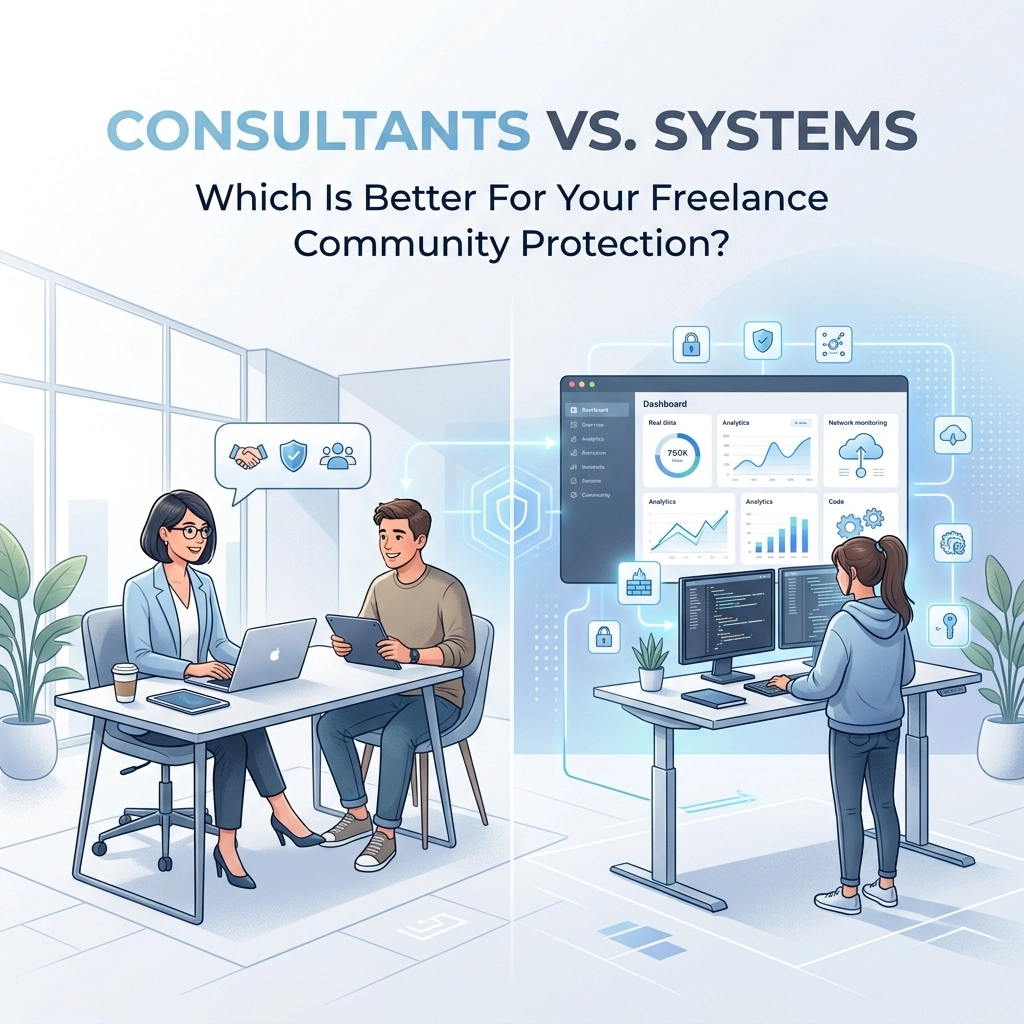
    Consultants Vs. Systems is the central debate for every agency owner tired of watching their margins evaporate. When your freelance community protocol relies on the shifting moods of high-priced consultants, you aren't building a business; you’re managing a revolving door of expensive opinions. At GHW-Digital, we’ve seen the same pattern repeat: a firm hires a consultant to "fix" their workflow, the consultant delivers a 50-page PDF, and six months later, the team is back to square one.

    The reality of the modern app development landscape is that human-led advice cannot scale at the speed of software. If you want to protect your time and your profit, you need to stop looking for a savior in a suit and start building an elite system. Professional service contracts are won or lost in the fine print and the execution, not in the boardroom.

    The Consultant Trap: High Costs and Variable Outcomes

    The traditional approach to scaling a freelance community involves hiring a consultant to draft your "Protocol." They charge five-figure retainers to tell you things you already suspect. The problem isn't their expertise; it's their lack of permanence. A consultant is a temporary patch. Once their contract ends, the discipline they brought usually leaves with them.

    In the world of Professional Service Contracts, ambiguity is the enemy. Consultants often thrive in ambiguity because it creates a need for more consulting. When you are trying to manage a decentralized network of freelancers, you don't need "nuanced perspectives." You need hard boundaries. You need a system that says "No" to scope creep before it even reaches your inbox.

    Blue dome protecting a fragile umbrella, showing a robust freelance community protocol shield.

    Hiring a consultant to manage your freelance protocol is like hiring a gardener to hold an umbrella over your plants whenever it rains. It works for a moment, but it’s an inefficient waste of resources. What you actually need is a greenhouse: a robust, automated structure that operates 24/7 without a billable hour in sight. Explore more on how to automate your creative workflow at GHW-Digital Ideas.

    Systems Architecture: The Protocol Advantage

    When we talk about "Systems," we aren't talking about a messy folder of Google Docs. We are talking about elite software tools that act as the digital skeletal structure of your agency. A system doesn't get tired. It doesn't forget to check a clause in a contract. It doesn't feel "awkward" when it has to tell a freelancer that their submission doesn't meet the agreed-upon criteria.

    A system-driven approach to your freelance community protocol ensures that every interaction is governed by logic. Whether you are using Scope Guard Elite to lock in project boundaries or Scope Sentry to monitor progress, you are replacing human error with algorithmic precision.

    According to research from Harvard Business Review, businesses that prioritize standardized processes over individual heroism are 40% more likely to scale successfully. This is the heart of the Consultants Vs. Systems debate. Systems provide the "Single Source of Truth" that consultants can only promise but rarely deliver.

    Eliminate Ambiguity – Secure Every Contract

    Professional service contracts are often leaking revenue through tiny holes. These holes are usually found in the "grey areas" of project delivery. A consultant might suggest you "improve communication," but a system like Vow Guard Elite forces that improvement by making contract milestones non-negotiable and transparent.

    Interconnected network grid representing an elite system for professional service contracts.

    Think about the time you spend chasing freelancers for updates or arguing with clients about what was "implied" in the initial brief. This is wasted energy. By implementing a strict system, you create a shield for your business. The system becomes the "bad guy" so you don't have to be. It enforces the protocol with a level of cold, hard efficiency that no human consultant could ever match. You can find daily updates on contract optimization at our Ideas page.

    Elite Software Tools: The New Consulting Tier

    The shift from Consultants Vs. Systems is already happening at the top tier of app development. Elite agencies are no longer buying hours; they are buying outcomes. They are investing in tools that provide:

    • Precision Tracking: Real-time visibility into every project phase.
    • Automated Enforcement: Instant alerts when scope boundaries are threatened.
    • Immutable Records: A digital paper trail that protects against legal disputes.
    • Scalable Protocols: The ability to add 10 or 100 freelancers without increasing management overhead.

    When you use a tool like Scope Sentry, you are essentially hiring a 24/7 consultant that costs a fraction of the price and never takes a holiday. These tools are the guardians of your margin. They ensure that the "Professional" in professional service contracts isn't just a label, but a functional reality.

    Sleek blue shield protecting blocks to prevent scope creep in a freelance community protocol.

    Standardize Excellence – Scaling Without the Salary

    The most significant advantage of systems over consultants is the ability to scale. If your protocol is locked inside a consultant’s head or a static document, it cannot grow with you. Every new freelancer you bring on creates more work for you.

    However, when the protocol is the system itself, scaling becomes a matter of bandwidth, not management. You can replicate your success across dozens of concurrent projects because the system handles the heavy lifting of compliance and oversight. This "automated discipline" is what separates the struggling boutique shop from the high-output development powerhouse.

    Industry leaders at Gartner have long advocated for the "democratization of expertise" through technology. By moving your freelance protocol into an elite software system, you are making that expertise accessible to every member of your team, at every moment.

    The Financial Reality: ROI of Systems

    Let's talk numbers. A top-tier consultant might charge you £20,000 for a three-month engagement to optimize your operations. At the end of it, you have a strategy.

    Conversely, investing that same capital into a suite of GHW-Digital tools gives you a permanent infrastructure. The system doesn't just tell you how to be efficient; it makes you efficient. It stops the "leaking revenue" that occurs when freelancers over-bill or when projects drift into uncharged territory. Over a 12-month period, the ROI on a system is exponentially higher than the ROI on a consultant’s report.

    Minimalist digital gauge indicating high ROI and efficiency for professional service systems.

    Every day you delay implementing a system is a day you are essentially paying a "chaos tax." This tax is paid in lost hours, frustrated clients, and diminished profits. You can break this cycle by visiting https://ghw-digital.com/ideas.html and seeing how others have made the switch from manual oversight to automated protocols.

    Final Verdict: Choose the Shield, Not the Story

    In the battle of Consultants Vs. Systems, the winner is clear for anyone focused on long-term sustainability. Consultants tell you stories about how your business could look; systems actually build it.

    Your freelance community protocol shouldn't be a suggestion. It should be an ironclad framework that protects your agency from the unpredictability of human nature. By choosing systems, you are choosing to defend your time, your profit, and your professional reputation.

    Stop the leak. Lock in your margins. Let the system be your guardian.


    Marblism Legal Shield: This content is for informational purposes only. GHW-Digital does not provide legal advice. All professional service contracts should be reviewed by qualified legal counsel to ensure compliance with local jurisdictions.

    Escalating blocks with a smooth flow representing scalable revenue in a freelance community.

    Ready to stop the scope creep? Secure your competitive advantage today. Visit GHW-Digital to explore our full suite of elite protection tools and turn your freelance community into a high-performance machine. Check out our latest insights at https://ghw-digital.com/ideas.html for daily strategies on scaling with precision.

  • Protocol Matters: Why the GHW Digital Ideas Roadmap is the Future of Freelance Protection

    Protocol Matters: Why the GHW Digital Ideas Roadmap is the Future of Freelance Protection

    Freelance protection is the primary barrier between a sustainable career and total burnout. In the current digital economy, professional expertise is often treated as a disposable commodity. Freelancers, consultants, and independent developers frequently find themselves in a vulnerable position where their ideas are harvested, their time is undervalued, and their intellectual property is left unprotected. At GHW-Digital, we believe this dynamic is fundamentally broken.

    The traditional freelance model relies on trust: a handshake, a poorly drafted contract, or the hope that a client respects your boundaries. Hope is not a strategy. Real security requires a protocol. This is why we have developed the GHW Digital Ideas Roadmap, a strategic framework designed to transform how independent professionals secure their work and reclaim their value.

    The High Stakes of Intellectual Vulnerability

    Scope creep kills margins. It is the silent assassin of the freelance world. You agree to a project, the goalposts move, and suddenly you are working double the hours for the same pay. Without a rigid protocol, your expertise is "leaking revenue" every single day.

    When we talk about freelance protection, we aren't just talking about getting paid on time. We are talking about the ownership of the thoughts, logic, and creative sparks that fuel the global app development industry. If you don't have a system to lock in your value, you are essentially giving away your most valuable assets for free.

    Protected crystalline core within a blue shield, showing the GHW Digital Ideas Roadmap securing digital assets.
    Alt: Freelance Protection and the GHW Digital Ideas Roadmap securing digital assets

    Introducing Autonomous Digital Assets

    The philosophy driving our roadmap is the concept of Autonomous Digital Assets. For too long, digital work has been viewed as a static file: a PDF, a block of code, or a design file. Once delivered, the freelancer loses all leverage.

    We are shifting the paradigm. An Autonomous Digital Asset is a piece of professional output that carries its own inherent rights, tracking, and protection protocols. By using the GHW Digital Ideas Roadmap, you are not just delivering a service; you are deploying an asset that remains tethered to your professional expertise.

    This approach ensures that your work cannot be repurposed or exploited without your explicit alignment. It is about creating a "digital shield" around your output. Whether you are building complex systems at GHW-Digital Index or consulting on niche projects, your assets should work for you, not against you.

    Why We Democratize Professional Expertise

    The "Elite" level of protection has historically been reserved for massive law firms and global agencies. Independent creators were left to fend for themselves with generic templates. GHW-Digital is changing that by democratizing professional expertise.

    We believe that every developer, designer, and strategist deserves access to the same high-level defensive protocols used by industry giants. By making these tools accessible through our Ideas Roadmap, we are leveling the playing field. This isn't just about software; it’s about a cultural shift toward fairness and respect for the individual creator.

    Rising pillars leveling the playing field and democratizing professional expertise for freelance protection.
    Alt: Democratizing professional expertise through the GHW Digital Ideas Roadmap

    The GHW Digital Ideas Roadmap: A New Era for Freelance Protection

    The roadmap is more than a list of features; it is a tactical guide to securing your professional future. It addresses the three pillars of modern freelance defense:

    1. Lock in Intellectual Property

    Your ideas are your currency. The roadmap provides clear steps to ensure that intellectual property is defined, tracked, and secured from the moment of inception. No more "borrowed" ideas that never result in a contract.

    2. Track Project Evolution

    Using tools like Scope Guard Elite, the roadmap allows you to monitor exactly how a project changes over time. When the client asks for "one small change," the protocol calculates the impact immediately. It stops the leak before it becomes a flood.

    3. Calculate Real Value

    Most freelancers undercharge because they cannot quantify the complexity of their work. Our protocol helps you calculate and track the true value of your contributions, ensuring that compensation is always aligned with the level of expertise provided.

    Action-Benefit: How the Protocol Works for You

    To understand why protocol matters, you have to look at the tangible results of a structured defense system.

    • Boundaries through Automation: Use Vow Guard Elite to automate the "hard conversations." Let the protocol enforce the contract so you can focus on the work.
    • Precision in Execution: By following a roadmap, you eliminate the guesswork. You know exactly where the project stands, what is owed, and what the next milestone is.
    • Strategic Alignment: The roadmap ensures that both the freelancer and the client are moving in the same direction. It eliminates the "he said, she said" of project management.

    Ascending glass steps illustrating precision and tracking within the GHW Digital Ideas Roadmap.
    Alt: Precision and freelance protection using GHW-Digital protocols

    Stop the Leak: Securing Your Competitive Advantage

    The freelance market is becoming increasingly crowded. To stand out, you need more than just talent; you need a professional infrastructure that signals authority. When you show a client that you operate under the GHW Digital Ideas Roadmap, you are signaling that you are an elite professional who values their time and their work.

    This isn't about being "difficult" to work with. It is about being "professional" to work with. Clients respect boundaries when they are presented as a standard operating procedure rather than an emotional plea. A protocol-driven approach builds trust because it provides transparency.

    If you are tired of moving goalposts and uncompensated labor, it is time to adopt a defensive posture. You can explore our full range of Apps to see how we integrate these protections into everyday workflows.

    The Future of Independent Work

    The future of freelance protection lies in the hands of the creators. We cannot wait for legislation to catch up to the speed of the digital economy. Organizations like the Freelancers Union do great work in advocacy, but on a day-to-day project level, you need a technical solution.

    By adhering to international standards and technical protocols, such as those discussed by the W3C, we ensure that our digital assets are future-proof. The GHW Digital Ideas Roadmap is our contribution to a more equitable digital landscape.

    A futuristic bridge across a void, representing the future of freelance protection and autonomous digital assets.
    Alt: The future of freelance protection and autonomous digital assets

    Final Thoughts: Secure Your Legacy

    Your career is built on a foundation of your best ideas. Don't let that foundation erode through poor management or a lack of protection. The GHW Digital Ideas Roadmap is the ultimate shield for the modern freelancer.

    It is time to stop the revenue leaks. It is time to lock in your value. It is time to treat your expertise with the respect it deserves.

    Visit the GHW Digital Ideas Roadmap today and start building your autonomous future. Secure your competitive advantage and stop working for free.


    Marblism Legal Shield Notice:
    GHW-Digital is committed to the ethical democratization of professional expertise. All protocols, roadmaps, and software tools provided are designed to protect the intellectual property and time of the user. We maintain a strict Privacy Policy and do not engage in the unauthorized harvesting of user data. Our goal is blunt honesty and total alignment with our community of creators. We provide the shield; you provide the brilliance.

  • Wedding Supplier Contracts: Massive Mistakes That Cause Crucial Financial Ruin

    Wedding Supplier Contracts: Massive Mistakes That Cause Crucial Financial Ruin

    Wedding Supplier Contracts are the only barrier between a seamless celebration and a logistical nightmare. In the high-stakes environment of wedding planning, many couples treat these documents as mere formalities. They aren't. They are legally binding shields designed to protect your investment: or, if poorly written, they are traps that leave you vulnerable to vendor negligence and ballooning costs.

    When you sign a contract, you are not just booking a service; you are entering a high-stakes agreement where the vendor often holds the upper hand. At GHW-Digital, we believe in aggressive protection and absolute clarity. If your contract is vague, your budget is leaking. If your terms are lopsided, your big day is at risk.

    Here are the critical mistakes you are making with your Wedding Supplier Contracts and the elite strategies to fix them before they kill your budget.

    1. Accepting Vague Service Descriptions – Secure Quality

    Vagueness is the enemy of execution. Accepting a contract that lists "Wedding Photography" or "Floral Arrangements" without granular detail is an invitation for mediocrity. Vendors often use ambiguous language to give themselves "wiggle room," which usually translates to doing the bare minimum while charging a premium.

    How to Fix It: Demand a comprehensive blueprint. Your Wedding Supplier Contracts must list exact deliverables. Do not settle for "Photography." Demand a line item stating: "Eight hours of continuous coverage by two lead photographers, 500+ high-resolution edited digital images, and one 20-page physical album." If you need creative inspiration on how to structure these requirements, check out our planning ideas.

    Detailed wedding cake blueprint representing specific deliverables in a Wedding Supplier Contract.

    2. Ignoring Hidden Fees – Enforce Price Transparency

    "Additional charges may apply" is a phrase that should trigger immediate alarm. Many couples sign Wedding Supplier Contracts only to find themselves hit with "service fees," "corkage fees," "setup surcharges," or "cleaning deposits" that weren't discussed upfront. These hidden leaks can drain thousands from your budget in the final weeks.

    How to Fix It: Demand an all-inclusive, line-item breakdown. Every Wedding Supplier Contract should explicitly state that the quoted price is the final price. Use a tool like Vow Guard Elite to track these commitments. Insist on a clause that prevents any "surprise" expenses from being added post-signing. For more ways to safeguard your spending, explore our latest ideas.

    3. Skipping the Expert Review – Eradicate Risk

    The excitement of booking your dream venue often leads to a dangerous rush. You skim the fine print, nod at the bold text, and sign. This is how vendors lock you into terms that favor them exclusively. A contract review isn't a suggestion; it's a necessity.

    How to Fix It: Never sign on the spot. Take the contract home and audit every clause. Look for red flags like "indemnification" clauses that force you to pay for the vendor’s mistakes. If the legal jargon feels overwhelming, seek professional help or consult a Marblism Legal Shield expert. We recommend referencing The Knot’s guide on legalities to understand standard industry protections.

    4. Accepting Restrictive Cancellation Policies – Guard Your Deposit

    Life happens. Whether it’s a global event or a personal emergency, you need an exit strategy. Many Wedding Supplier Contracts include "non-refundable" clauses that allow the vendor to keep 100% of your money even if you cancel a year in advance. This is lopsided and unfair.

    How to Fix It: Negotiate a tiered refund schedule. A fair Wedding Supplier Contract should allow for a sliding scale: a 75% refund if canceled six months out, 50% three months out, and so on. Ensure there is a "Force Majeure" clause that protects you in the event of circumstances beyond your control. You can find more templates for these negotiations at GHW-Digital Ideas.

    Protective blue shield over wedding rings for secure and fair Wedding Supplier Contracts.

    5. Failing to Hardwire Payment Schedules – Maintain Financial Control

    Ambiguous payment terms lead to late fees and tension. If your Wedding Supplier Contracts don't specify when and how payments are made, you lose control over your cash flow. Vendors may demand large final sums at inconvenient times, adding unnecessary stress to your wedding week.

    How to Fix It: Lock in a rigid payment timeline. Specify the deposit amount, the interim payment dates, and the final balance deadline (usually 14–30 days before the event). Ensure the contract states that payments are only due if the vendor remains in compliance with the agreed-upon milestones. Tracking these in an app like Vow Shield ensures you never miss a beat or pay early for a service not yet secured.

    6. Ignoring Liability and Insurance – Lock in Protection

    If a guest trips over a photographer’s tripod or a caterer’s oven starts a fire, who is responsible? Without proper liability clauses in your Wedding Supplier Contracts, that person could be you. Many vendors attempt to limit their liability to just the amount of the contract, which is insufficient if major damage occurs.

    How to Fix It: Demand proof of insurance. Reputable vendors should carry at least $1 million in general liability insurance. Ensure your Wedding Supplier Contracts include a clause stating the vendor is responsible for any damage or injury caused by their staff or equipment. For a deeper dive into protecting your event from physical and financial risk, visit our ideas page. You should also check WeddingWire's insurance recommendations to see what else you might need.

    Safety canopy over professional equipment illustrating vendor insurance in Wedding Supplier Contracts.

    7. Relying on Verbal Agreements – Document Every Change

    "Don't worry, we'll include the extra flowers for free" is a promise that disappears the moment there is a dispute. If it isn't in the Wedding Supplier Contracts, it doesn't exist. Relying on "gentleman's agreements" or informal emails is the fastest way to lose a legal battle.

    How to Fix It: Get everything in writing. If a vendor makes a verbal promise during a tour or a tasting, send a follow-up email immediately and ask them to confirm. Better yet, create a contract addendum. Any change to the original scope must be initialed by both parties. Use Vow Guard Elite to store digital copies of these amendments so they are accessible at any time.

    Protect Your Big Day with Vow Shield

    Wedding Supplier Contracts are the foundation of your wedding's success. They are not just paper; they are your defense mechanism. By identifying red flags: vague language, hidden fees, and one-sided cancellation policies: you take back control from the vendors.

    At GHW-Digital, we build tools like Vow Shield to help couples manage these complexities with professional-grade precision. Stop leaving your wedding to chance. Treat your wedding like the major investment it is. For more strategies on mastering your wedding logistics, explore our comprehensive resource hub at GHW-Digital Ideas.

    Digital tablet and white rose representing secure management of Wedding Supplier Contracts.

    Stop the Goalpost Shifting

    Don't let vendors dictate the terms of your happiness. Use these fixes to harden your contracts and ensure that the only thing you have to focus on on your wedding day is the celebration itself. Secure your contracts, protect your budget, and lock in your peace of mind today.


    Marblism Legal Shield Footer
    This blog post is for informational purposes only and does not constitute legal advice. While we strive for accuracy, GHW-Digital and Marblism are not law firms. We strongly recommend having all Wedding Supplier Contracts reviewed by a qualified legal professional in your jurisdiction to ensure full compliance with local laws and personal protection. Your data privacy and security are our priority; we never sell your contract details to third-party marketing firms.

  • 5 Steps to Neutralize a Project Scope Shift and Reclaim Your Time (Easy Guide for the Freelance Community)

    5 Steps to Neutralize a Project Scope Shift and Reclaim Your Time (Easy Guide for the Freelance Community)

    Scope creep management is the only thing standing between your profitable project and a slow, agonizing death by "just one more thing." If you are an independent contractor, you aren't just a builder; you are a digital architect. You design systems. You build structures. When a client moves a wall without checking the blueprints, the whole building risks collapse.

    Protecting your time isn't about being difficult. It is about maintaining the integrity of your work. Every unbilled hour spent on a "quick tweak" is revenue leaking out of your business. To stop the leak, you need a shield. You need a system that treats your time with the same respect you give your code.

    1. Lockdown Your Independent Contractor Agreements

    The first line of defense in scope creep management is the foundation. You cannot manage what you have not defined. Before a single line of code is written or a pixel is moved, you need an airtight agreement. This isn't just a formality; it is your structural blueprint.

    Your Independent Contractor Agreements should be granular. Don’t just say "App Development." Say "Development of a five-screen iOS application with Firebase integration." List the exclusions. If you aren't providing the copy, state it. If you aren't sourcing the images, write it down. Clarity is your greatest ally.

    When you leave gaps in your contract, you invite the client to fill them with their own assumptions. A well-defined scope ensures that everyone is looking at the same map before the journey begins. If you need inspiration on how to structure these projects, check out our latest ideas on minimalist project architecture.

    Minimalist architectural blueprint on a desk for independent contractor agreements and scope planning.

    2. Implement a Formal Change Approval Shield

    Project shifts happen. Markets change, and new ideas emerge. The goal of scope creep management isn't to prevent change, but to neutralize the chaos that change causes. You need a formal "Change Order" process.

    Stop accepting verbal requests during "quick syncs." If a client asks for a new feature, your response should be: "That sounds like a great addition. I’ll send over a Change Order to see how this impacts our timeline and budget." This immediate pivot signals that your time is a finite resource.

    By using tools like Scope Guard Elite, you can formalize these requests. It turns a casual "Can we also add a login via LinkedIn?" into a documented project adjustment. This protects the professional boundary and ensures you are compensated for the extra lift.

    3. Price Every Shift with Transparency

    Fairness is a two-way street. If you provide more value, you deserve more compensation. Scope creep management fails when the price of an "extra" is left for later. Later never comes, and if it does, it’s usually an argument.

    Establish a tiered pricing model for additions.

    • Minor Tweak: Small fee or deducted from a pre-allocated "buffer" of hours.
    • Feature Expansion: Fixed price based on development time.
    • Pivot: Full renegotiation of the project phase.

    When the client realizes that every "lightbulb moment" has a price tag, they become much more intentional about their requests. It forces them to prioritize their needs versus their wants. For more on how to streamline these digital assets, browse our apps section.

    Translucent glass shield representing scope creep management and formal change approval boundaries.

    4. Deploy Early Detection Systems

    You cannot neutralize a threat you don't see. Most scope shifts don't happen in a massive explosion; they happen through "feature erosion." A small request here, a tiny adjustment there, and suddenly you are two weeks behind.

    Use Scope Sentry to monitor your progress in real-time. Compare your actual hours against your original estimates daily. If a task that should take two hours is hitting four, ask why. Is it a technical hurdle, or did the requirements quietly expand?

    Detecting these shifts early allows you to have a "temperature check" conversation with the client before the relationship sours. It’s much easier to fix a small misalignment in week two than a total project failure in week ten. According to the Project Management Institute, unmanaged changes are the primary reason for project failure. Don't let your project be a statistic.

    Balanced scale showing fair value and scope creep management for freelance project shifts.

    5. Master the Art of Renegotiation

    When a major shift occurs: perhaps the client’s business model changed or they secured a new round of funding and want to scale: your original Independent Contractor Agreements may no longer be fit for purpose. This is where you reclaim your time by hitting the reset button.

    Reference your original proposal. Show the delta between what was agreed upon and what is now being requested. This isn't a confrontation; it's an alignment. You are helping the client understand the physics of development: you cannot add mass without adding energy (time and money).

    Using a framework like Vow Guard Elite ensures that these new promises are as binding as the first ones. It locks in the new timeline and protects your margins. Remember, a "No" to a free addition is a "Yes" to your business's health. For more strategies on maintaining project integrity, explore our resource hub.

    Digital interface pulse for early detection of scope creep management shifts in freelance projects.

    The Digital Architect's Mindset

    Effective scope creep management is about respect. Respect for your craft, respect for your client’s goals, and respect for your own boundaries. When you allow scope to shift without documentation or compensation, you are telling the client that your expertise is a commodity, not a professional service.

    Stop the "moving goalposts." Lock in your requirements. Track every hour. Price every change. By treating your freelance practice with the rigor of a large-scale engineering firm, you command higher rates and attract better clients.

    Projects will always evolve. That is the nature of app development. But with the right shields in place, those evolutions will fuel your growth rather than drain your spirit. Secure your competitive advantage by implementing these steps today.


    Marblism Legal Shield

    This content is provided for informational purposes only and does not constitute legal or professional advice. While we strive for accuracy, GHW-Digital and Marblism are not responsible for any project outcomes or legal disputes arising from the use of these strategies. Always consult with a qualified legal professional before finalizing Independent Contractor Agreements or significant project pivots. We value your privacy; for more information, see our Privacy Policy.

    Stop the bleed. Secure your project. Explore Scope Guard Elite Now.

  • Freelance scope management: The Powerful Urgent Asset

    Freelance scope management: The Powerful Urgent Asset

    Freelance scope management is the difference between a profitable operation and a failing hobby. In the modern gig economy, your time is your only inventory. When you allow that inventory to be stolen through uncompensated requests, you aren't just being "helpful", you are liquidating your business. Scope creep kills margins. It erodes trust. Most importantly, it creates a precedent that your boundaries are negotiable. They are not.

    Professional freedom requires a defensive perimeter. Without a rigid mechanism to identify and monetize shifts in project requirements, you are essentially working for free. This is why the integration of advanced tools like Scope Sentry has become a requirement for the elite freelancer. You need a system that removes the emotion from the negotiation and replaces it with cold, hard data.

    Establish the Perimeter with Freelance Scope Management

    Effective freelance scope management begins the moment a contract is signed. However, the contract is only a static document; the project itself is a living organism. As the project evolves, client needs will inevitably shift. The problem isn't that projects change, the problem is that most freelancers lack the infrastructure to track those changes in real-time.

    A Scope of Work (SOW) serves as your primary defense protocol. It outlines the boundaries of what is and is not included. But a document in a folder does nothing when a client sends a "quick" Friday afternoon request that actually requires four hours of coding. You need an active guardian. You need a system that allows you to upload your original agreement and instantly compare it against new requests to determine if they are within the agreed-upon perimeter.

    Freelance scope management analysis comparing original contracts to new client requests for precise project control.
    Alt: Freelance scope management analysis comparing original contracts to new client requests

    The Invisible Profit Killer: Identifying Scope Creep

    Scope creep is a silent predator. It rarely arrives as a massive overhaul; it arrives as a series of tiny, seemingly insignificant additions. One extra revision. A small design tweak. A brief consultation call that wasn't scheduled. Individually, these are minor. Collectively, they represent a massive leak in your revenue stream.

    By utilizing freelance scope management best practices, you treat every request as a transaction. If it isn't in the original SOW, it has a price. According to industry analysis by the Harvard Business Review, failing to manage these shifts is one of the leading causes of project failure and professional burnout. When you stop guessing and start measuring, you reclaim your authority.

    Analyze Requests – Protect Your Margins

    The core functionality of a professional's toolkit must include the ability to analyze new data against existing obligations. When a customer sends a request, the immediate reaction for many is to say "yes" to maintain the relationship. This is a strategic error.

    With Scope Sentry, you don't have to guess if a request is "too much." You upload the contract and the new request, and the system provides an objective verdict: In-Scope or Out-of-Scope. This objectivity is vital. It shifts the conversation from "I feel like this is extra work" to "The system has identified this as a scope shift based on our legal agreement." It removes the personal friction and replaces it with professional standards.

    Scope Sentry interface providing automated freelance scope management and accurate contract analysis for professionals.
    Alt: Scope Sentry interface for automated freelance scope management and contract analysis

    Automate Pricing – Secure Your Revenue

    Determining that a request is out of scope is only half the battle. The next hurdle is determining what to charge for it. Many freelancers struggle with this, often undercharging because they fear losing the client or because they haven't updated their pricing models to reflect the urgency of the new request.

    A robust freelance scope management protocol should include an automated pricing mechanism. When a shift is detected, the system should suggest applicable pricing based on the complexity and the resources required. This ensures that you are always compensated at market rates, or higher, for work that falls outside the initial deal. You are no longer "fitting it in"; you are expanding the project scope at a premium.

    Standardize Communication – Eliminate Friction

    The most difficult part of freelance scope management is the conversation. Telling a client that their request will cost more money is an anxiety-inducing task for many. This is where the "human element" often leads to revenue loss.

    Scope Sentry solves this by providing a series of email templates in different voice tones. Whether you need to be direct and firm, or collaborative and soft, the system generates the communication for you. This allows you to maintain the client relationship while standing your ground. It frames the conversation around the "shift" rather than a "conflict." By using standardized, professional communication, you demonstrate that your business is a high-level operation that respects its own protocols.

    Effective freelance scope management achieved through professional, frictionless client communication and elite protocols.
    Alt: Effective freelance scope management results through professional client communication

    The Vital Protocol for Elite Client Defense

    To survive in App Development or any high-stakes freelance field, you must view yourself as a Digital Architect. Architects do not allow contractors to move walls without a change order. Neither should you.

    Implementing a strict freelance scope management strategy is about more than just money; it is about respect. Clients respect freelancers who have clear boundaries and professional systems. It signals that you are in high demand and that your time is a finite, valuable asset. When you use a tool like Scope Sentry, you are signaling to your client that you are an elite provider who operates with precision and legal clarity.

    Leverage the Strategy of Absolute Certainty

    The freelance market is becoming increasingly crowded. To stand out, you must be more than just a skilled technician; you must be a disciplined business owner. This means having a "Scope Guard" mindset at all times. Every email, every Slack message, and every "quick call" must be filtered through your scope management protocol.

    If you are not using an automated system to track these shifts, you are leaving your business open to exploitation. You can find more about how we build these defensive tools at GHW-Digital. We specialize in creating the assets that protect your assets.

    Secure Your Future Performance

    The goal of every project should be a successful delivery that stays within the budget and timeline. Scope creep is the primary obstacle to that goal. By mastering freelance scope management, you aren't just protecting your current project; you are building a reputation for reliability.

    According to the Freelancers Union, clear contracts and scope definitions are the top ways to ensure timely payment. When the scope is clear, the deliverables are clear, and the path to payment is unobstructed.

    Don't let your hard work be diluted by unmanaged requests. Take control of your perimeter. Deploy the right tools. Ensure that every minute you spend working is a minute you are getting paid for. That is the only way to build a sustainable, elite freelance career.

    Stop the leak. Lock in your profit. Secure your boundaries today.

    Special Offer: Lock In Your Perimeter for Less

    If you're serious about freelance scope management, you need a system that enforces your perimeter without emotion.

    Use code BLOG20 for twenty percent off ScopeGuard Pro. Valid until April 1, 2026. Deploy it now, before the window closes.


    Mandatory Footer:
    At GHW-Digital, we prioritize absolute transparency. Your data is your intellectual property. We do not sell user information to third parties or engage in predatory marketing. Our tools are built to protect your business, and our privacy policy reflects that commitment to your security. For more information, please review our Privacy Policy.

    Powered by GHW Digital (Company No: 16834250). This document is an automated draft for business organization purposes only. It does not constitute legal advice. GHW Digital accepts no liability for disputes, financial loss, or enforceability. Users must consult a qualified professional in their jurisdiction before signing.

  • Professional Service Contracts: The Ultimate Truth About Crucial Automation

    Professional Service Contracts: The Ultimate Truth About Crucial Automation

    Professional Service Contracts are the silent foundation of your business, yet they are often the biggest source of financial leakage and administrative friction. For decades, the standard response to contract management was simple: hire an expensive legal consultant. You paid for their time, their prestige, and their manual oversight. But the landscape has shifted. In 2026, the question isn't whether you need legal protection: it's whether you are still paying a human "tax" for work that elite software tools perform with more precision and at a fraction of the cost.

    At GHW-Digital, we see the carnage caused by poorly managed agreements every day. Scope creep, missed milestones, and "vague" terms are not just annoyances; they are margin killers. You don't need a consultant to sit in a mahogany office and draft the same clause for the hundredth time. You need a shield. You need a system that locks in your profit and guards your time without the hourly billable rate.

    The Hidden Tax of Legal Consultants

    Traditional legal consulting is built on a model of inefficiency. When you engage a consultant to draft your Professional Service Contracts, you are often paying for their overhead, not just their expertise. Much of the work involved in standard service agreements is routine. It involves templating, risk flagging, and ensuring compliance with standard regulations.

    When you rely solely on human consultants for these routine tasks, you introduce two major risks: human error and extreme delay. A consultant might miss a non-standard clause because they are tired or juggling twenty other clients. They might take three days to return a redlined document that your business needed yesterday. In the fast-paced world of app development, these delays are unacceptable. If you’re looking for faster ways to iterate, check our latest ideas for rapid deployment.

    Deploying Professional Service Contracts to Guard Your Time

    Automation isn't just about speed; it's about creating a fortress around your productivity. Elite software tools allow you to generate Professional Service Contracts that are battle-tested and consistent. Instead of starting from a blank page or a dusty Word template, you deploy a system that understands the specific nuances of your industry.

    Automate Drafting – Secure Your Margins
    Manual drafting is where the "moving goalposts" problem begins. By using automated systems, you ensure that every contract includes the necessary protections for your intellectual property and payment terms. You aren't "writing" a contract; you are configuring a defensive perimeter. For those looking to see how this fits into a broader strategy, our ideas page is updated daily with fresh insights on operational efficiency.

    A protective blue shield representing automated security for your Professional Service Contracts.
    Alt: Professional Service Contracts being generated by an automated software shield to protect business margins.

    Standardize Terms – Eliminate Human Error
    Consistency is the enemy of litigation. When your contracts vary wildly from client to client because they were "hand-crafted" by different consultants, you create legal blind spots. Automation forces a standardized logic. It ensures that your Vow Guard Elite protections are applied across the board, leaving no room for "creative" interpretations by the other party.

    Action-Benefit: Why Automation Outperforms Humans

    To understand why the shift to automated Professional Service Contracts is inevitable, we must look at the specific functions these elite tools perform. We aren't just talking about "e-signatures." We are talking about active, intelligent management of your legal obligations.

    • Protect Your Intellectual Property: Automated tools can automatically insert ironclad IP clauses that have been vetted against current standards like those found in the Electronic Frontier Foundation guidelines.
    • Lock In Scope: Tools like Scope Guard Elite serve as a digital sentry. They don't just draft the contract; they monitor the work against the contract to ensure you aren't doing "freebies" for the client.
    • Track Obligations: Humans forget. Software doesn't. An automated system tracks every milestone and notification requirement, ensuring you are never in breach of your own Professional Service Contracts.
    • Calculate Risk: Modern AI-driven platforms can scan a contract and provide a risk score based on thousands of similar agreements, providing a level of data-driven insight that no single consultant could match.

    The Truth About "Complex" Matters

    A common argument from the legal industry is that automation cannot handle "complexity." This is a half-truth designed to protect high fees. While it is true that a multi-billion dollar merger requires a high-level strategic consultant, the vast majority of Professional Service Contracts in the tech and service sectors do not.

    In fact, research from Harvard Business Review suggests that a significant percentage of legal work is ripe for automation because it relies on pattern recognition and standardized logic. Elite software tools are actually better at this than humans. They can scan 500 pages of documentation in seconds to find a single conflicting clause that a consultant might miss on page 412.

    Precise digital scan of document layers for risk detection in Professional Service Contracts.
    Alt: A data-driven dashboard showing risk assessment for Professional Service Contracts.

    Stop the Revenue Leaks

    Every time you "wait for legal" to get back to you, you are leaking revenue. Every time you sign a contract with a vague "out of scope" clause, you are leaking revenue. Professional Service Contracts should be a tool for growth, not a bottleneck.

    By integrating these contracts directly into your workflow via GHW-Digital's apps, you turn your legal department from a "Cost Center" into a "Guard Center." You move from a reactive posture: waiting for things to go wrong: to a proactive one where your interests are secured from the moment of the first handshake. For more on how to streamline these processes, our ideas section provides daily tactical advice.

    The Marblism Legal Shield Philosophy

    We believe in radical transparency and absolute control. Your Professional Service Contracts should not be a mystery solved only by someone with a law degree and a high hourly rate. They should be a clear, precise map of exactly what is being delivered, when, and for how much.

    Using tools like Scope Sentry allows you to maintain that map in real-time. When a client asks for "one small change," the system identifies it as a deviation from the Professional Service Contracts and prompts for a change order. This isn't being "difficult": it's being professional. It's about maintaining alignment and respect between both parties.

    A blue light connecting two blocks representing professional alignment in Professional Service Contracts.
    Alt: A digital shield icon representing the protection of Professional Service Contracts against scope creep.

    Professional Service Contracts: The Elite Advantage

    The businesses that will dominate the next decade are those that automate the mundane to focus on the monumental. If your leadership team is spending hours reviewing basic service agreements, you are losing. You are playing defense when you should be playing offense.

    Elite software tools for Professional Service Contracts provide:

    1. Immediate Turnaround: Close deals in minutes, not weeks.
    2. Ironclad Consistency: Every client is held to the same high standards of engagement.
    3. Cost Certainty: Replace unpredictable legal bills with a predictable software subscription.
    4. Strategic Focus: Use your human consultants for the 5% of deals that actually require creative legal strategy, while the software handles the other 95%.

    If you want to stay ahead of the curve, you need to be checking our ideas page every day. We post daily updates on how to leverage these tools to crush your competition and protect your bottom line.

    Conclusion: Take Control of Your Agreements

    The "truth" about automated service contracts is that they have already won. The only question is how long you will continue to pay the "consultant tax" before you upgrade your defenses. Professional Service Contracts are too important to be left to the whims of human scheduling and manual error.

    Stop letting scope creep kill your margins. Stop waiting for the legal department to clear their inbox. Deploy an elite digital shield today.

    Secure your business. Lock in your profit. Guard your time.


    Marblism Legal Shield: This software and its generated content do not constitute legal advice. While our tools provide elite protection and alignment, always consult with a qualified professional for high-risk, non-standard legal maneuvers. We prioritize your privacy and data integrity above all else.

    Ready to stop the leaks? Explore our full suite of development tools or dive into our daily strategy ideas to start building your defensive perimeter right now.

  • The Modern Independent Professional’s Guide to Scaling with GHW Digital’s Ideas Roadmap

    The Modern Independent Professional’s Guide to Scaling with GHW Digital’s Ideas Roadmap

    Ideas Roadmap is the starting point for every professional who is tired of the "time-for-money" trap. In the current economy, being an expert isn't enough. If your income is strictly tied to the hours you spend sitting at a desk or on a Zoom call, you aren't running a business; you're managing a job that you can't quit. To scale, you need leverage. At GHW-Digital, we believe that leverage comes from transforming your specialized knowledge into Autonomous Digital Assets.

    The traditional model of professional consulting is broken. It’s linear, exhausting, and ultimately capped by the biological reality that you only have 24 hours in a day. The Ideas Roadmap is our answer to this stagnation. It is a systematic framework designed to extract your unique expertise and crystallize it into digital tools that work, sell, and deliver value without requiring your constant presence.

    Why the Ideas Roadmap Is Your Crucial Tool for Expansion

    Scaling a professional service requires a shift from "doing" to "architecting." Most independent professionals: be they lawyers, engineers, consultants, or creatives: struggle to scale because their value is trapped inside their heads. Every client engagement requires a manual download of that information. This is inefficient. It creates a bottleneck that prevents growth and leads to burnout.

    The Ideas Roadmap serves as the elite blueprint for breaking this cycle. We don't just build apps; we build engines of growth. By following a structured roadmap, you stop guessing what your market needs and start building what they will pay for. This process is about precision. It’s about identifying the most painful problem your clients face and solving it through a digital interface.

    Digital wireframe on a tablet illustrating GHW Digital’s Ideas Roadmap for business scaling.

    When you use a roadmap, you eliminate the "moving goalposts" that plague most development projects. You define the scope, you identify the core value proposition, and you lock in the path to execution. This is not just about technology; it is about business survival. In an era where AI is rapidly commoditizing basic tasks, your unique professional insights are your only remaining moat. The Ideas Roadmap helps you fortify that moat by turning it into a tangible product.

    Turning Expertise into Autonomous Digital Assets

    What exactly is an Autonomous Digital Asset? It is a piece of software, a platform, or a tool that embodies your professional methodology. Think of it as a "digital clone" of your best advice. While you are sleeping, your asset is helping a client solve a problem, processing data, or providing a critical service.

    The philosophy at GHW-Digital is centered on the democratization of this technology. Historically, only massive corporations had the capital to build proprietary software. Today, we are leveling the playing field. We believe that an independent professional with a decade of experience should have the same technological firepower as a Fortune 500 firm.

    Building these assets requires a "no-nonsense" approach to development. You cannot afford to waste six months on a "maybe." You need to move from idea to asset with clinical efficiency. This is where our framework excels. We focus on:

    • Extraction: Pulling the high-value logic out of your workflow.
    • Validation: Ensuring the market actually wants the digital version of your expertise.
    • Conversion: Translating professional logic into functional code.
    • Protection: Ensuring your intellectual property is shielded through tools like Scope Guard Elite.

    By creating these assets, you shift your revenue model from "hours worked" to "value delivered." This is the only path to true professional freedom.

    Democratizing Success via the Ideas Roadmap

    The democratization of professional expertise is not just a catchphrase; it is a necessity for the modern economy. We are seeing a massive shift toward independent work. According to research on the freelance economy, more professionals are choosing autonomy over corporate security. But autonomy without leverage is just another form of precariousness.

    Our Ideas Roadmap is designed to give these independent professionals the tools to compete at scale. When we democratize access to high-end app development, we empower the subject matter experts to become the tech founders of tomorrow. You don't need to be a "techie" to own a digital asset. You just need to be an expert in your field with a clear vision of how to help people.

    Independent professional viewing a digital network built using GHW Digital’s Ideas Roadmap.

    By using the Ideas Roadmap, you are essentially skipping the "learning the hard way" phase of software development. You are leaning on our professional framework to ensure that your digital transition is profitable, not just possible. This democratization means that the best ideas win, not just the ones with the largest venture capital backing.

    Inventory Your Intellect: Identifying Scalable Knowledge

    The first step in any successful roadmap is an honest assessment of your current intellectual inventory. Not every part of your job should be an app. Some things still require the human touch. However, most professionals underestimate how much of their daily routine is actually a repeatable algorithm.

    Ask yourself:

    • What questions do I answer ten times a week?
    • What calculations do I perform for every client?
    • What "checklist" do I follow to ensure a project is successful?

    These are the seeds of an Autonomous Digital Asset. The Ideas Roadmap helps you isolate these high-impact variables and prepare them for development. We help you cut the fluff and focus on the "Action-Benefit" functions that will drive user adoption. If a feature doesn't directly solve a client's problem or protect your time, it doesn't belong in the first version of your asset.

    Lock In Your Profit with Precise Execution

    One of the biggest killers of digital transformation is scope creep. It is the "leak" in your revenue that happens when projects drift away from their original purpose. At GHW-Digital, we treat scope creep as a threat to your business. We advocate for a "guard and defend" mentality when it comes to your development resources.

    A digital shield protecting a core business idea from scope creep within an Ideas Roadmap.

    Using our roadmap ensures that every line of code written is a line of code that contributes to your bottom line. We use strict boundary-setting and clear alignment to ensure that the project stays on track. This direct, no-nonsense approach is why independent professionals trust us. We aren't here to build "cool" things; we are here to build things that work and scale.

    By the time you reach the end of the Ideas Roadmap process, you should have a clear understanding of your product's architecture, its market positioning, and the timeline for its release. This level of precision is what separates successful digital entrepreneurs from those who simply "have an idea for an app."

    Secure Your Competitive Advantage Now

    The window for establishing yourself as a digital leader in your niche is closing. As more professionals realize the power of Autonomous Digital Assets, the market will become more crowded. Those who act now: those who follow a proven Ideas Roadmap: will be the ones who set the standards for their industry.

    Don't let your expertise be a depreciating asset. Don't let your income be tied to your physical presence forever. It is time to protect your time and maximize your profit.

    The path to scaling isn't through working harder; it's through working smarter via digital leverage. Your expertise is valuable. Your time is finite. Let us help you bridge that gap.

    Stop selling your life by the hour. Start building assets that scale.

    Explore the GHW Digital Ideas Roadmap and take the first step toward democratizing your own expertise.


    Marblism Legal Shield

    This website and its content, including the proprietary "Ideas Roadmap" framework and the concept of "Autonomous Digital Assets," are protected by the Marblism Legal Shield. Any unauthorized reproduction, redistribution, or commercial use of our methodologies, text, or branding without express written consent from GHW-Digital is strictly prohibited. We actively monitor the digital landscape and will pursue rigorous legal action against any entities found to be infringing upon our intellectual property. We believe in fairness, respect, and the protection of professional boundaries; for ourselves and for our clients. All rights reserved 2026.

  • Wedding Supplier Contracts: The Ultimate Crucial Guide to Protecting Your Big Day

    Wedding Supplier Contracts: The Ultimate Crucial Guide to Protecting Your Big Day

    Wedding Supplier Contracts are the foundation of a stress-free wedding. When you are planning the most important day of your life, you aren't just hiring vendors; you are entering into high-stakes legal agreements. Without a robust contract, your "Big Day" is vulnerable to shifting timelines, disappearing deposits, and subpar service. At GHW-Digital, we understand that whether you are developing a high-end application or planning a gala, the principle is the same: alignment is the only defense against chaos.

    The Shield for Your Big Day: Why Wedding Supplier Contracts Matter

    Wedding Supplier Contracts act as a guardian for your vision and your budget. Many couples make the mistake of relying on verbal agreements or friendly emails, but in the eyes of the law, if it isn't in writing, it doesn’t exist. These contracts establish clear terms and expectations, ensuring that both you and your vendors are aligned on every detail from the floral arrangements to the final dance.

    In the world of app development, we call this "Scope of Work." In weddings, it’s your peace of mind. Without a defined scope, you are open to "service creep," where costs escalate and quality diminishes. By securing a comprehensive contract, you lock in the value and protect your investment. If you are looking for more innovative ideas on managing complex projects, our resources can help you apply professional management styles to your personal milestones.

    A glass shield and fountain pen representing protection provided by Wedding Supplier Contracts.

    Spotting Red Flags in Wedding Supplier Contracts

    Not all contracts are created equal. Some are designed to protect the vendor at the expense of the couple. You must approach every document with a critical eye, looking for clauses that strip away your rights or leave you high and dry.

    1. Vague Descriptions of Services
    If a contract says "Photography services for 8 hours" without specifying the number of photographers, the deliverables (digital vs. print), or the editing style, you are in danger. Every line item should be granular.

    2. The "Non-Refundable" Trap
    While deposits are standard, a contract that claims all payments are non-refundable regardless of the vendor's performance is a massive red flag. There must be a path for recourse if the service is not delivered.

    3. Missing Liability Insurance
    Professional vendors should carry liability insurance. If the contract doesn't mention it, or if they refuse to provide proof, they are not a professional operation. This puts the burden of any accidents on you and your venue.

    4. No "Force Majeure" Clarity
    The last few years have taught us that the unexpected happens. Your Wedding Supplier Contracts must include a fair "Force Majeure" clause that outlines what happens in the event of a global crisis, extreme weather, or illness. If the language only benefits the vendor, do not sign.

    For more tips on vetting professional partners, check out our latest insights at GHW-Digital.

    Essential Clauses for Maximum Protection

    To ensure your wedding goes off without a hitch, your contracts need to be more than just a list of prices. They need to be a tactical roadmap.

    Scope of Services: Lock In the Details

    The "Scope of Work" section is where you win or lose. For a caterer, this means detailing the exact menu, the number of servers, the attire of the staff, and the cleanup process. For a band, it’s the specific setlist, the equipment provided, and the arrival time for soundchecks. Precision is your best friend.

    Payment Schedules: Control Your Cash Flow

    Never pay 100% upfront. A fair contract involves a deposit (usually 25-50%) and a structured payment schedule. The final payment should ideally be due a week or two before the wedding: or even after delivery for products like wedding videos. This keeps the vendor motivated and accountable. You can find more strategic planning ideas on our corporate blog to help organize these financial milestones.

    Service Delivery and Timelines: Ensure Accountability

    Timelines are the heartbeat of a wedding. Your contract should specify exactly when a vendor arrives, when they set up, and when they depart. For photographers, it should specify the "turnaround time" for your photos. Without a hard date in the contract, you could be waiting six months for your wedding album with no legal way to hurry them up.

    A magnifying glass over a document to identify red flags in Wedding Supplier Contracts.

    Vow Shield: The New Standard in Wedding Protection

    At GHW-Digital, we believe in using technology to safeguard your most important moments. This is why we advocate for tools like Vow Shield. Vow Shield is designed to act as an additional layer of security, ensuring that the terms laid out in your Wedding Supplier Contracts are not just words on a page, but a commitment that is tracked and verified.

    Just as we use Scope Guard Elite to protect our technical projects, Vow Shield provides couples with the digital infrastructure to monitor vendor commitments and flag potential issues before they become disasters. It’s about moving from a reactive "hope for the best" strategy to a proactive "secured by design" approach.

    How to Negotiate for Fairness

    Many couples feel they have no power when a vendor hands them a standard contract. This is a myth. You have the right to request changes. If a clause feels one-sided, ask for it to be mutual. For example, if there is a clause about you paying interest on late payments, there should be a clause about the vendor providing a discount if they are late to the event.

    Negotiation is about alignment, not conflict. Professional vendors appreciate couples who take their contracts seriously because it shows they are also committed to a successful event. If you need inspiration on how to lead these professional conversations, our ideas page is full of communication strategies.

    A blue pulse timeline marking key milestones defined in Wedding Supplier Contracts.

    Finalizing the Agreement: The Checklist

    Before you put pen to paper (or digital signature to PDF), run through this final checklist to ensure your Wedding Supplier Contracts are airtight:

    • Identity: Are the legal names of the business and the individuals correct?
    • Date and Venue: Is the exact date and location of both the ceremony and reception listed?
    • Deliverables: Is every single item you discussed listed explicitly?
    • Cancellation Policy: Is there a clear, fair path to cancel or reschedule?
    • Substitution Clause: What happens if the specific lead photographer or DJ is sick? Who is the backup?
    • Dispute Resolution: If something goes wrong, how is it handled? (e.g., arbitration vs. small claims court).

    Effective management of these contracts is similar to managing a complex software rollout. You can learn more about our methodologies here.

    A digital tablet showing a checkmark to signify finalizing Wedding Supplier Contracts.

    Secure Your Future Today

    Your wedding is a significant emotional and financial investment. Treating your Wedding Supplier Contracts with the same rigor you would a business deal isn't "unromantic": it’s responsible. It ensures that when the music starts, you are focused on the moment, not on whether the caterer is going to show up.

    Protect your big day. Demand clarity. Use the right tools. Whether you are building an app or building a life together, the contract is your shield. For more professional guidance on project management and protection, visit GHW-Digital Ideas.


    Marblism Legal Shield

    This blog post is for informational purposes only and does not constitute legal advice. While we strive to provide accurate information regarding Wedding Supplier Contracts, laws vary by jurisdiction. Always consult with a qualified legal professional before signing any binding agreements. GHW-Digital and Marblism are not liable for any losses or disputes arising from vendor relationships or contract negotiations. Protect your data, protect your day.

    Stop leaving your wedding to chance. Secure your vendors with a professional contract strategy now.

  • Scope Creep Management: The Ultimate Crucial Strategy to Protect Your Professional Autonomy

    Scope Creep Management: The Ultimate Crucial Strategy to Protect Your Professional Autonomy

    Scope Creep Management is the difference between a thriving app development business and a slow, agonizing burnout. In the world of high-stakes software engineering and design, the "quick favor" is a silent killer. It starts as a minor color change and ends as a complete overhaul of the database architecture. If you don’t control the boundary, the boundary controls you.

    At GHW-Digital, we approach every project as Digital Architects. We don’t just build apps; we design systems. When you build a skyscraper, you don’t decide to add an extra ten floors halfway through without renegotiating the foundation. Software is no different. Protecting your professional autonomy requires a rigid adherence to the original blueprint. This guide is your tactical manual for identifying, confronting, and neutralizing out-of-scope requests before they bleed your margins dry.

    The Architecture of Scope Creep Management

    Every independent contractor has felt that sinking feeling when an email arrives with the phrase, "While you're at it…" This is the first crack in the dam. Without active Scope Creep Management, your project’s profitability will leak until there’s nothing left but resentment.

    Managing scope creep by carefully adding new features to a professional app development project model.

    Scope creep occurs when the requirements of a project expand beyond the initial agreement without a corresponding increase in budget or time. It is a failure of communication and a failure of documentation. To combat this, you must treat your Independent Contractor Agreements as living documents that serve as a shield. If a request isn't in the agreement, it doesn't exist in the current reality of the project.

    Identify the Shift – Recognize the Puncture

    Before you can manage a request, you must categorize it. Not all requests are equal. Some are genuine pivots, while others are "feature bloat" disguised as necessity.

    • Internal Expansions: These are small additions to existing features that seem harmless but accumulate quickly.
    • External Disruptions: These are entirely new features or integrations that were never mentioned in the discovery phase.
    • Strategic Pivots: These happen when a client realizes their original idea won't work and wants to change direction entirely.

    Identifying these shifts early is the first step in effective Scope Creep Management. You can find more strategies for identifying project shifts at GHW-Digital Ideas.

    Use Change Orders – Calculate Real Costs

    The moment a request falls outside the lines, the conversation must shift from "can we do this" to "how does this affect the resources." A change order is not an act of aggression; it is an act of clarity. It identifies the new request, calculates the impact on the timeline, and adjusts the budget accordingly.

    Calculate the Impact – Secure the Timeline
    Every hour spent on an out-of-scope feature is an hour stolen from the original delivery date. Use tools like Scope Sentry to visualize these shifts for your clients. When they see the launch date moving in real-time, they often reconsider the necessity of the "extra" feature.

    Track the Resources – Protect the Margin
    Profitability relies on a fixed ratio of labor to capital. When labor increases without capital, the project enters a death spiral. Scope Creep Management ensures that every hour of work is accounted for and billed. You are not a charity; you are a professional providing a high-value service.

    Visual representation of a project timeline shifting due to ineffective Scope Creep Management.

    Draft Solid Agreements – Protect Your Time

    Your defense starts long before the first line of code is written. Your Independent Contractor Agreements must be airtight. A minimalist agreement that lacks detail is an invitation for trouble. You need to specify exactly what is included and, more importantly, what is excluded.

    • Deliverables: List them with granular detail. Instead of "Mobile App," write "User authentication, profile management, and payment integration."
    • Revisions: Define the number of allowed revisions. Anything beyond that is a billable event.
    • Communication: State how and when you will communicate. Constant Slack messages at 11 PM are out of scope.

    We recommend checking out the latest industry standards on GHW-Digital Ideas for drafting modern, minimalist contracts that prioritize speed and clarity.

    Mastering Scope Creep Management Through Communication

    Handling a client who wants more for less requires a stern but professional stance. You don't need to be emotional; you need to be factual. Use "Action-Benefit" statements to explain why boundaries are necessary.

    Frame the Boundary – Ensure Quality
    Instead of saying "I won't do that," say "To maintain the quality and security of the core features we agreed upon, we need to treat this new request as a separate phase or a change order." This positions you as the guardian of their project's success, not an obstacle.

    Ask Clarifying Questions – Expose the Scope
    When a client asks for something extra, ask: "How does this align with the primary objective we set in the initial scope?" This forces the client to justify the request and often leads them to realize it's unnecessary.

    For more templates on professional communication, visit our resource hub at GHW-Digital Ideas.

    Minimalist protective shield guarding project deliverables, symbolizing active Scope Creep Management.

    The Digital Architect’s Toolbox

    To maintain a minimalist and efficient workflow, you need the right tools. We’ve developed a suite of products at GHW-Digital specifically designed for Scope Creep Management.

    • Scope Guard Elite: This is your primary defense mechanism. It allows you to lock in project parameters and automatically flags requests that deviate from the plan. Check it out here: Scope Guard Elite.
    • Scope Sentry: A monitoring tool that tracks project velocity and alerts you when "minor" changes start to snowball into major delays.
    • Vow Guard Elite: Ensuring that your contracts are signed and stored with cryptographic integrity, making the original scope indisputable.

    Using these tools signals to your clients that you are serious about your professional boundaries. It creates an environment of mutual respect and alignment. According to Forbes, professional boundaries are the foundation of long-term business relationships.

    Independent Contractor Agreements as a Foundation

    Your agreement is the blueprint. If the blueprint is vague, the house will be crooked. Effective Scope Creep Management begins with a contract that respects both parties. It should include a specific section on "Change Management." This section should outline exactly how out-of-scope requests will be handled, the hourly rate for extra work, and the approval process for timeline extensions.

    Don't leave room for "interpretation." Interpretation is where profits go to die. Be the architect who knows every measurement. You can find more minimalist contract templates and ideas at GHW-Digital Ideas.

    Professional digital architect workspace displaying an app blueprint and Independent Contractor Agreements.

    The Cost of Saying Yes

    Every time you agree to an out-of-scope request for free, you are training your client to disrespect your time. You are setting a precedent that your boundaries are negotiable. In the long run, this devalues your expertise and the entire app development category.

    Protect Your Reputation – Deliver on Promise
    By sticking to the scope, you ensure that the original project is delivered on time and at the highest quality. A project that is "feature-rich" but three months late and over budget is a failure. Scope Creep Management is about delivering on your promises.

    Lock In Your Success – Stop the Leak
    Use the tools at your disposal. Whether it’s Scope Guard Elite or a simple, well-drafted change order, take control of your project’s trajectory.

    For more insights on how to scale your freelance business without losing your mind, keep an eye on GHW-Digital Ideas. We post daily updates for the modern Digital Architect.


    Marblism Legal Shield Disclosure
    The information provided in this blog post does not, and is not intended to, constitute legal advice; instead, all information, content, and materials available in this post are for general informational purposes only. Readers should contact their attorney to obtain advice with respect to any particular legal matter, including the drafting of Independent Contractor Agreements.

    Stop the leak. Protect your profit. Secure your autonomy now.
    Explore GHW-Digital Solutions

  • Agency scope protocol: The Powerful Urgent Asset

    Agency scope protocol: The Powerful Urgent Asset

    Agency scope protocol is the most powerful and urgent asset an organization can possess in a market defined by volatile client demands. Every unbilled hour is a direct hit to your bottom line. Every "quick adjustment" that bypasses your contract is a crack in your firm's foundation. Without a rigid mechanism to identify and monetize these shifts, your agency isn't growing; it is eroding.

    Scope creep does not happen in a vacuum. It is the result of poorly defined boundaries and the absence of a defensive shield. At GHW-Digital, we recognize that the difference between a high-margin project and a break-even disaster is the speed and precision with which you manage the perimeter of your work. This is why a standardized protocol is no longer optional. It is a survival requirement.

    The Agency scope protocol as a defensive weapon

    The primary function of an agency scope protocol is to act as a barrier against unauthorized labor. When a client requests an "urgent tweak," the typical agency response is to comply immediately to maintain the relationship. This is a mistake. Compliance without assessment devalues your expertise and trains the client to expect free labor.

    A robust protocol transforms a vague request into a structured data point. It forces a comparison between the original Project Scope and the new demand. By treating every request as a potential contract amendment, you signal to your clients that your time has a fixed, premium value. This isn't about being difficult; it is about maintaining a professional standard that ensures project health and team morale.

    Minimalist workstation protected by a glass barrier illustrating an agency scope protocol for project security.
    Alt text: Implementing an agency scope protocol to protect professional boundaries and project margins.

    Integrating your Agency scope protocol with Scope Sentry

    The manual process of checking a contract every time an email arrives is tedious and prone to human error. This is where Scope Sentry becomes your most potent ally. Scope Sentry is designed to be the operational heart of your agency scope protocol, automating the detection of "out of bounds" requests before they consume your resources.

    When a request enters your ecosystem, the process is clear:

    • Upload the Baseline: Your original contract is the law. Scope Sentry holds this law as the ultimate reference point.
    • Analyze the Shift: The new request is cross-referenced against your agreed-upon deliverables.
    • Determine Status: The system provides an immediate verdict: In Scope or Out of Scope.
    • Calculate the Value: If the request is out of scope, the system suggests a pricing shift based on the complexity and resource requirements of the new task.

    This level of precision removes the emotion from the negotiation. You are no longer "charging extra"; you are simply following the established protocol for a project expansion.

    Why the Agency scope protocol prevents revenue leaks

    Revenue leaks are the silent killers of the app development industry. They are the cumulative result of five-minute tasks that aggregate into dozens of unbilled hours per month. An agency scope protocol ensures that every minute of labor is accounted for and tied to a specific contractual obligation.

    By using a tool like Scope Sentry, you effectively lock in your margins. The system tracks the evolution of the project, ensuring that the "moving goalposts" phenomenon is captured in real-time. This transparency is beneficial for both parties. Clients receive a clear understanding of why costs are changing, and agencies secure the compensation they deserve for their specialized skills.

    Digital grid with light beam tracking changes to maintain an agency scope protocol and prevent revenue leaks.
    Alt text: Visualizing revenue protection through a standardized agency scope protocol and Scope Sentry integration.

    Mastering client communication through protocol

    The most difficult part of scope management is the conversation. Telling a long-term partner that their request will cost more can feel adversarial. However, an agency scope protocol provides a neutral framework for these discussions.

    Scope Sentry elevates this by providing a series of email templates in different voice tones. Whether you need a firm, "Elite Protection" stance or a more collaborative, "Partner Growth" approach, the tool generates the right words to back up the data. This ensures that your communication remains professional, consistent, and focused on the legal reality of the contract.

    Actionable Communication Strategies:

    • The Immediate Response: Acknowledge the request and state that it is being processed through the scope protocol.
    • The Transparency Report: Share the findings of the "In vs. Out" assessment directly with the client.
    • The Pricing Proposal: Provide a clear, data-backed quote for the additional work, ensuring the project remains profitable.

    Strategic growth through operational precision

    Scale is impossible without systems. If your ability to manage scope relies on the individual memory or "gut feeling" of a project manager, your agency is at risk. A centralized agency scope protocol allows you to standardize excellence across your entire portfolio. It ensures that whether you are managing one project or one hundred, the defensive perimeter remains unbreached.

    GHW-Digital builds tools for the Digital Architect: the professional who understands that precision is the path to power. By adopting Scope Sentry, you are not just buying software; you are installing a high-level security system for your intellectual property and your time.

    Protected asset stack representing strategic business growth through a rigorous agency scope protocol.
    Alt text: Strategic agency growth facilitated by a rigorous agency scope protocol and automated contract analysis.

    Standardizing the perimeter for every project

    Every project you undertake is an asset. To protect that asset, you must define its limits. The agency scope protocol is the definitive document that outlines these limits. It covers:

    • Deliverable Frequency: How often are you providing updates or builds?
    • Variation Complexity: What constitutes a minor change versus a structural overhaul?
    • Approval Hierarchies: Who has the authority to request a change, and who has the authority to approve the associated costs?

    When these variables are locked into a system like Scope Sentry, the "gray areas" that lead to disputes are eliminated. You move from a reactive state of "putting out fires" to a proactive state of "managing assets." This is the hallmark of an elite agency.

    The Urgent mandate for scope protection

    The time to implement an agency scope protocol is before the next "urgent" request hits your inbox. Waiting until a project is over budget to address scope creep is a recipe for conflict. By establishing the protocol now, you set the tone for all future interactions. You demonstrate that your agency is a professional entity that respects its own processes as much as it respects the client's vision.

    Stop the leakage. Protect your experts. Secure your profit. Scope Sentry is the mechanism that turns your contract from a passive PDF into an active guardian of your business interests. Explore how we are redefining App Development protection through automated scope management.

    Modern white pillars rising toward the future using an agency scope protocol to maximize business efficiency.
    Alt text: Digital architect using an agency scope protocol to secure project boundaries and maximize efficiency.


    Mandatory Ethics & Data Protocol
    At GHW-Digital, we operate with radical transparency. Your data is your property. When you upload contracts to Scope Sentry or any of our platforms, we utilize industry-standard encryption to ensure your intellectual property remains private. We do not sell, trade, or "mine" your contract data for third-party insights. Our tools are built to provide you with a defensive advantage, not to harvest your business intelligence. Respect for your privacy and the integrity of your legal documents is our baseline protocol. We believe in tools that empower the user, underpinned by blunt honesty and ethical engineering.


    ScopeGuard Elite Note (Limited-Time Protection Upgrade)
    If you want the same perimeter discipline baked into your contracts—not just your workflows—ScopeGuard Elite is our contract drafting engine for the Modern Independent Professional. It interviews you, detects risk, and generates a custom-engineered agreement designed to reduce scope creep, payment delay, and misaligned expectations before the first deliverable ships. For a limited time, use discount code BLOG20 for 20% off (valid until April 1, 2026). Explore the full Ideas Area here: https://ghw-digital.com/ideas.html


    Secure Your Perimeter
    Stop allowing scope creep to cannibalize your agency's growth. Implement a powerful agency scope protocol today and take command of your project margins. Get started with Scope Sentry and turn your contracts into your most effective defensive weapon.

    Powered by GHW Digital (Company No: 16834250). This document is an automated draft for business organization purposes only. It does not constitute legal advice. GHW Digital accepts no liability for disputes, financial loss, or enforceability. Users must consult a qualified professional in their jurisdiction before signing.