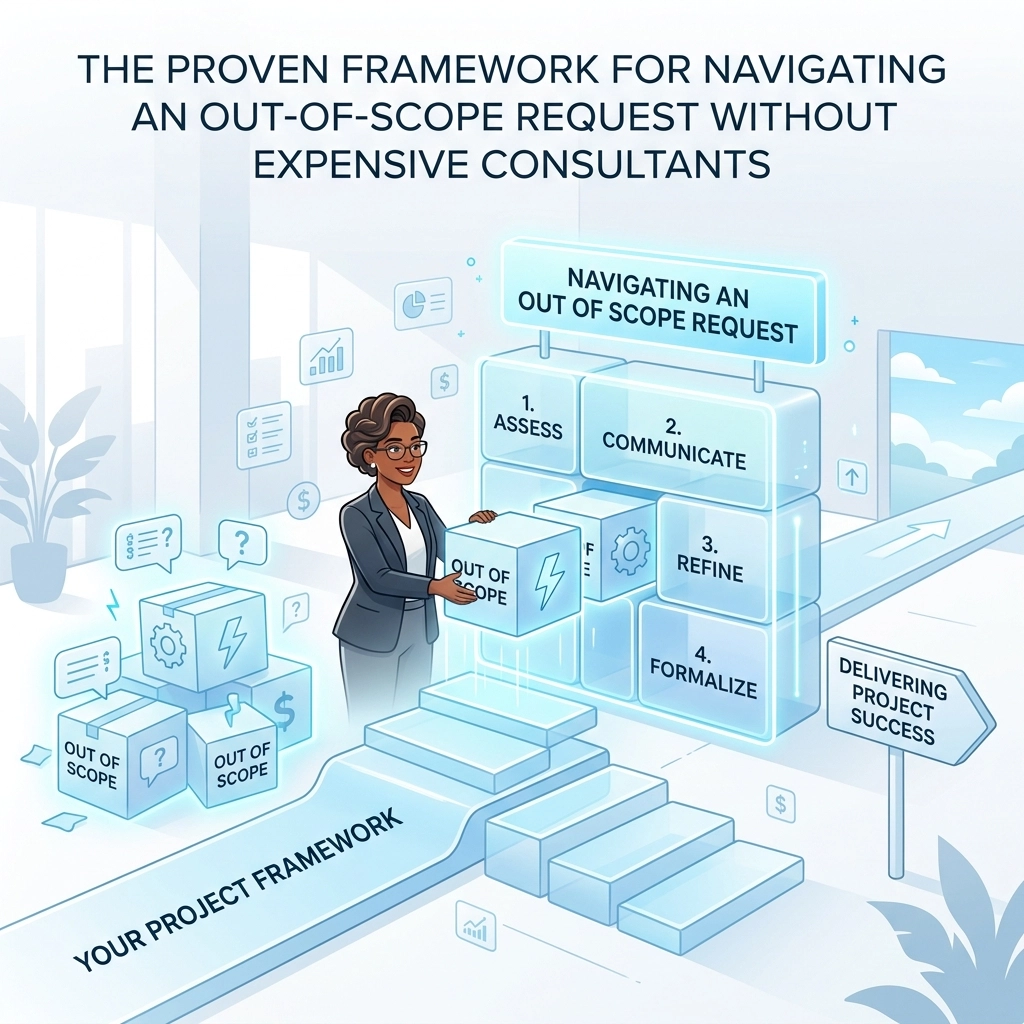
Navigating an out of scope request is the ultimate test of a firm’s operational maturity. Scope creep is not a minor annoyance; it is a silent profit killer that erodes margins, exhausts talent, and destroys project timelines. In the world of Professional Service Contracts, the ability to draw a line in the sand without alienating the client is an elite skill. Traditionally, companies have spent thousands on expensive management consultants to build "governance frameworks" that gather dust in a drawer.
At GHW-Digital, we believe software should be your guardian. You don't need a $300-an-hour consultant to tell you that moving goalposts cost money. You need an elite system that automates the friction and locks in your revenue.
Professional Service Contracts: The Shield Against Margin Erosion
The foundation of every successful project is a rigorous contract. When you are navigating an out of scope request, your first line of defense is the Statement of Work (SOW). Most agencies fail because their SOWs are vague "agreements of intent" rather than technical specifications. An elite contract defines not just what you will do, but explicitly what you will not do.
Elite software tools now replace the need for manual oversight. By using platforms like Scope Guard Elite, you transform a static document into a dynamic shield. These tools allow you to track every requirement against the original baseline in real-time. If a client asks for "just one more small feature," the system flags it immediately. It’s not personal; it’s the data.

Acknowledge the Request to Maintain Alignment
The first step in navigating an out of scope request is acknowledgment. Never lead with a "No." A "No" creates a wall; an acknowledgment creates a bridge. When a client makes a request that sits outside the original professional service contract, they are often expressing a newly discovered business need.
Acknowledge with Precision. Confirm that you have received the request and that you understand the goal they are trying to achieve. This validates the client’s vision while maintaining your professional boundaries. By using a tool like Scope Sentry, you can log these requests into a centralized repository, ensuring that "casual mentions" in Slack don't turn into undocumented labor.
Schedule a Discovery Meeting to Uncover True Costs
Once the request is acknowledged, do not begin work. Do not "look into it" for more than ten minutes. Instead, schedule a focused meeting. The goal of this meeting is to quantify the impact. Navigating an out of scope request requires a cold, hard look at resources, timelines, and dependencies.
During this session, you must determine:
- Technical Impact: Does this change the core architecture?
- Timeline Impact: Which existing milestones will be pushed back?
- Opportunity Cost: What other features are being sacrificed to make room for this?
This is where many firms fail. They try to "absorb" the cost to stay "nice." But in professional services, "nice" is another word for "bankrupt." Use this meeting to move the conversation from "can you do this?" to "what are we willing to trade for this?"

Draft a Change Order to Lock in Revenue
A change order is the only way to legally and financially protect your business when navigating an out of scope request. If it isn't signed, it doesn't exist. This document must be a formal amendment to your professional service contract.
An elite change order should include:
- A Clear Description: Detailed specs of the new work.
- The Price Tag: The additional cost, billed upfront or upon milestone completion.
- The Revised Timeline: New delivery dates for all affected components.
- The Signature Block: Binding approval from the client.
Instead of paying a consultant to draft these, elite software tools can generate them automatically based on your project data. Check out our daily insights on how to automate project documentation to see how we handle this at scale.
Deploy Elite Software Tools to Replace Expensive Consultants
Why pay a consultant to monitor your team when software can do it with 100% accuracy? The modern app development landscape moves too fast for manual audits. When navigating an out of scope request, you need a "single source of truth."
Tools like Vow Guard Elite ensure that every promise made during the sales cycle is tracked through to execution. When the client claims, "Your salesperson said this was included," you can refer back to the digital audit trail. This level of precision eliminates the "he-said, she-said" games that drain energy and profit. According to the Project Management Institute (PMI), poor requirement management is a leading cause of project failure, software is the only way to solve this at scale.

The Zero-Invoice Strategy for Strategic Flexibility
Sometimes, navigating an out of scope request requires a soft touch. If the request is truly tiny (e.g., changing a hex code or a button label), you might choose to do it for free. However, never do it "off the books."
The Zero-Invoice Method:
- Perform the work.
- Generate an invoice for the actual value of the work.
- Apply a 100% discount.
- Send it to the client.
This demonstrates the value you are providing while setting the precedent that your time has a specific dollar amount. It prevents the client from feeling entitled to future freebies. It’s about fairness and respect for the craft. As noted in Harvard Business Review, managing client expectations is more about consistent communication than constant compliance.
Secure Client Approval Before the First Line of Code
Never start work on a change until the digital ink is dry. In the heat of a project, it’s tempting to "just get started" to maintain momentum. Resist this urge. Navigating an out of scope request requires the discipline to stop production until the new terms are accepted.
By enforcing this boundary, you signal to the client that your team is a professional organization, not a commodity shop. This builds long-term respect and ensures that your Professional Service Contracts actually mean something.
Stopping the Profit Leak
Scope creep is a choice. You either choose to manage it, or you choose to let it manage you. By following this framework, Acknowledge, Schedule, Draft, and Approve, you take back control of your time and your margins. You don't need a room full of consultants to fix your business; you need the right framework and the elite tools to enforce it.
Stop letting the goalposts move. Start protecting your vision. For more daily strategies on high-performance app development and project management, visit our Ideas page.
Marblism Legal Shield
This blog post is provided by GHW-Digital for informational purposes only. The strategies discussed regarding professional service contracts and navigating an out of scope request do not constitute legal or financial advice. GHW-Digital is not a law firm. We recommend consulting with a qualified legal professional to review your specific contracts and business practices. Our software tools are designed to assist in project management and documentation but do not guarantee legal protection or project success. Data privacy and ethical handling of client information are at the core of our values; please review our Privacy Policy for more information.
Ready to lock in your project scope? Explore Scope Guard Elite today and stop the revenue leak.
Leave a Reply