Blog

  • 7 Mistakes You’re Making with Wedding Vendor Agreements (and How to Fix Them)

    7 Mistakes You’re Making with Wedding Vendor Agreements (and How to Fix Them)

    Wedding Supplier Contracts are the only barrier between a seamless celebration and a logistical nightmare. In the high-stakes environment of wedding planning, many couples treat these documents as formalities or "standard paperwork." This is a critical error. Most vendor-provided templates are designed to protect the professional, not you. When you sign without scrutinizing the fine print, you are effectively signing away your leverage.

    To ensure your big day remains a success, you must treat every agreement as a defensive shield. At GHW-Digital, we specialize in high-precision tools like Vow Guard Elite to help couples maintain control. If you want to explore more strategies for project management and planning, check out our latest ideas.

    Here are the seven most common mistakes couples make with Wedding Supplier Contracts and the urgent fixes required to protect your investment.

    1. Relying on Verbal Promises and Handshake Deals

    The most dangerous phrase in wedding planning is "Don't worry, we'll take care of it." If a promise isn't etched into the contract, it doesn't exist. Vendors often make grand claims during the sales process: extra hours of coverage, specific floral varieties, or premium lighting packages: that never make it into the final document.

    The Fix: Get Every Detail in Writing
    Demand that every verbal commitment be added as an addendum. If a photographer says they will stay until the last dance, that specific time must be reflected in the "Hours of Service" section. For more insights on how to document requirements effectively, visit our ideas page.

    A professional handshake finalizing a secure wedding supplier contract for legal protection.

    2. Ignoring the "Bait-and-Switch" Substitution Clause

    Many Wedding Supplier Contracts contain a "Substitution Clause" that allows the vendor to swap out key personnel or products without your consent. You might book a specific lead photographer because you love their style, only to have a junior associate show up on the day because the contract allowed for "equivalent personnel."

    The Fix: Lock in Named Professionals
    Specifically name the individuals who will be performing the service. If you are hiring a specific DJ or lead planner, ensure their name is written in the agreement. If substitutions are unavoidable due to emergencies, the contract should specify your right to a partial refund or the right to vet the replacement in advance. You can find more about securing your professional boundaries at GHW-Digital Ideas.

    3. Accepting Vague "Day-Of" Deliverables

    Vagueness is a vendor’s best friend and a couple’s worst enemy. A contract that simply states "floral arrangements" or "catering services" provides zero protection if the flowers are wilted or the food is cold. Without specific metrics, you have no grounds for a dispute.

    The Fix: Define the Scope Precisely
    Your Wedding Supplier Contracts should include a detailed manifest. For catering, this means the exact menu, service style, and staff-to-guest ratio. For decor, include a mood board or specific inventory list as an exhibit. To prevent scope creep or service shrinkage, consider using a framework like Scope Guard Elite to define your expectations before you sign.

    Digital tablet displaying detailed floral scope and terms within wedding vendor agreements.

    4. Overlooking One-Sided Cancellation Policies

    Most contracts are heavily weighted to protect the vendor’s revenue. They often include non-refundable retainers and strict cancellation windows that leave the couple with zero recourse, even if the vendor is the one who defaults.

    The Fix: Establish Proportionality
    Ensure that cancellation fees are tiered based on how close the date is to the event. More importantly, ensure there is a "Vendor Default" clause. If the supplier fails to show or cancels on you, the contract must stipulate an immediate full refund plus a penalty fee to cover the cost of finding a last-minute replacement. Protecting your budget is a core part of our philosophy at GHW-Digital; learn more about financial safeguards on our ideas page.

    5. Failing to Address "Force Majeure" Realities

    Post-2020, the "Acts of God" clause is no longer a legal technicality; it is a vital necessity. Many couples found themselves stuck in legal limbo during the pandemic because their Wedding Supplier Contracts did not clearly define what happens during a government-mandated shutdown or a natural disaster.

    The Fix: Define Rescheduling Protocols
    Don't just accept a standard Force Majeure clause. Ensure it explicitly covers pandemics, venue closures, and travel restrictions. The clause should outline a clear path for rescheduling without losing your initial deposit. For comprehensive guides on handling unexpected shifts, check our resources at https://ghw-digital.com/ideas.html.

    Symbolic protective shield securing wedding supplier contracts against cancellation and hidden fees.

    6. Allowing Uncapped Additional Expenses

    "Hidden fees" are the silent killers of wedding budgets. From "corkage fees" and "power distribution charges" to "travel stipends" for vendors who live locally, these costs can add thousands to your final bill if they aren't capped in the initial agreement.

    The Fix: Demand an All-Inclusive Quote
    Your Wedding Supplier Contracts should state that the "Total Contract Price" includes all taxes, gratuities, travel expenses, and administrative fees. Any additional costs must be approved in writing via a formal change order. We recommend using a system like Scope Sentry to monitor these potential leaks in your planning budget.

    7. Neglecting the Service Delivery Enforcement

    The biggest mistake is thinking the contract ends once it’s signed. A contract is a living document that must be enforced. If a vendor arrives late or fails to deliver a specific item, most couples wait until after the honeymoon to complain: at which point their leverage is gone.

    The Fix: Implement Vow Shield Monitoring
    You need a mechanism to track deliverables in real-time. This is where Vow Shield technology becomes essential. By using automated check-ins and delivery verification, you can identify a breach of contract before the reception starts, giving you the power to demand a fix on the spot. Learn more about protecting your event at vow-guard-elite.html.

    Mobile app dashboard enforcing service delivery and tracking wedding vendor agreements.

    Identifying Red Flags in Seconds

    When reviewing Wedding Supplier Contracts, look for these immediate warning signs:

    • The "Final Say" Clause: Any language that gives the vendor the "sole discretion" to determine the quality of service.
    • The "No-Review" Clause: Attempts to prevent you from posting honest reviews about their performance. According to the Consumer Review Fairness Act, these are often unenforceable and a sign of a bad actor.
    • Missing Insurance Information: Every professional vendor must carry liability insurance. If they won't provide a Certificate of Insurance (COI), do not sign.

    Secure Your Peace of Mind

    Your wedding is likely the most significant financial investment you will make this year. Treating Wedding Supplier Contracts as a casual agreement is a recipe for disaster. You must be proactive, authoritative, and precise.

    For more information on how to build a tech-forward defense for your big day, or to explore our suite of management apps, visit our homepage or dive deep into our business ideas. If you need to understand how we protect your data during these processes, our privacy policy is always available for review.

    Stop letting vendors dictate the terms of your happiness. Lock in your protection, enforce your boundaries, and ensure your wedding is exactly what you paid for.


    Marblism Legal Shield Footer
    This blog post is provided for informational purposes only and does not constitute legal advice. GHW-Digital and the Marblism Legal Shield framework are designed to assist in service management and project oversight. We recommend consulting with a qualified legal professional to review any binding Wedding Supplier Contracts. We prioritize your data integrity and transparency in all digital interactions.

  • Protocol vs. Paperwork: The Future of Professional Protection

    Protocol vs. Paperwork: The Future of Professional Protection

    SEO Title: Protocol vs. Paperwork: The Ultimate Shield for Elite Professional Protection
    SEO Meta Description: Protocol vs. Paperwork represents the critical shift from static documents to autonomous digital protection. Learn how GHW-Digital secures your assets and eliminates scope creep.
    URL Slug: protocol-vs-paperwork-professional-protection

    Protocol vs. Paperwork is the line in the sand between those who thrive in the digital economy and those who are buried by it. In the world of high-stakes app development and digital architecture, a signed piece of paper is a relic. It is a passive observer of its own violation. When a project begins to bleed resources or a client pushes for "just one more feature," a contract doesn't stop the clock. It doesn't lock the code. It doesn't protect your margin.

    Paperwork is a post-mortem tool. Protocol is a living shield. At GHW-Digital, we have moved past the era of the filing cabinet and into the era of the autonomous digital asset. We don't just write agreements; we build systems that enforce them.

    The Death of the Filing Cabinet

    The traditional approach to professional protection is reactive. You spend weeks negotiating a contract, both parties sign, and then the document is filed away, never to be seen again until a dispute arises. By the time you are pulling that PDF out of a folder to prove a point, you have already lost. The relationship is strained, the budget is blown, and the "protection" you thought you had is merely a ticket to an expensive legal battle.

    Paperwork is static. It is a snapshot of an intention taken at a single point in time. In the fast-moving world of app development, an intention from three months ago is useless. You need a mechanism that evolves with the project. You need a protocol.

    Protocol vs. Paperwork visualized as a sheet of paper evolving into digital data architecture.

    Protocol vs. Paperwork: Defining the Shift

    To understand the future, we have to define what we mean by a protocol. In computing, a protocol is a set of rules governing the exchange or transmission of data between devices. It is self-executing. If the data doesn't meet the protocol standards, the transmission fails. There is no argument, no "well, I thought you meant this," and no scope creep.

    When we apply this to professional protection, Protocol vs. Paperwork becomes a choice between automated enforcement and manual pleading.

    • Paperwork: Requires a human to notice a breach, a human to point it out, and a human to enforce a penalty.
    • Protocol: Detects the breach in real-time and prevents it from happening or triggers an immediate, pre-agreed response.

    This shift moves the burden of protection from your legal team to your infrastructure. It transforms your professional boundaries from a set of suggestions into a hard-coded reality.

    Autonomous Digital Assets: The Logic Gate of Business

    The core of this new protection is the autonomous digital asset. Imagine a project scope that isn't just a list in a document, but a logic gate in a project management system. This is what we call Scope Sentry.

    When a digital asset is autonomous, it carries its own rules of engagement. It knows who can touch it, how it can be modified, and what the cost of that modification is. If a client attempts to move a goalpost, the protocol calculates the impact immediately. The system doesn't wait for a month-end invoice to surprise the client; it updates the "Vow" in real-time.

    Digital logic gate illustrating how protocol vs. paperwork enforces real-time project boundaries.

    Protect Time: The Architect’s Only Currency

    As digital architects, our only real currency is time. Paperwork leaks time. It leaks it through administrative overhead, through "clarification" meetings, and through the friction of enforcement. A protocol-driven approach plugs these leaks.

    Lock In Your Boundaries: Use tools that act as a Scope Guard Elite. When your boundaries are hard-coded, you don't have to be the "bad guy." The system is the arbiter. This maintains the professional relationship by removing the emotional weight of saying "no." The "no" was agreed upon the moment the protocol was initiated.

    Calculate Value in Real-Time: In the old model, you’d work an extra 10 hours and try to bill for it later. In the new model, the protocol identifies the extra work and adjusts the project parameters before a single line of code is written. According to research on project management overhead, administrative friction accounts for up to 20% of project loss. Protocols eliminate that friction.

    The Shield Mentality: Us vs. The Problem

    We view our software not as a productivity tool, but as a defensive mechanism. Every feature we build at GHW-Digital is designed to be a shield for your profit and a guardian for your focus.

    The industry problem is clear: scope creep kills margins. The solution isn't better paperwork; it's better protocols. We believe in a minimalist approach to professional protection. You don't need a 50-page contract. You need five solid protocols that are impossible to bypass.

    Protocol vs. Paperwork shield protecting core digital assets with a secure hexagonal structure.

    Action-Benefit: How Protocols Transform Work

    1. Automated Alignment: Pair specific functions with tangible results. Instead of "checking in" on a project, use a protocol that provides a live dashboard of "Contract vs. Reality."
    2. Triggered Alerts: When a project reaches 80% of its allocated resources, the protocol should trigger a mandatory review, not just an email notification.
    3. Smart Vows: Use Vow Guard Elite to ensure that every promise made is a promise tracked. This isn't about micromanagement; it's about alignment.

    Why Paperwork Fails the Modern Professional

    Paperwork relies on memory and good faith. In a high-pressure environment, memory fails and good faith is tested by budget constraints. Protocol vs. Paperwork is the difference between a fence and a sign that says "Please don't walk on the grass."

    One is an obstacle; the other is a request. In business, requests are ignored. Obstacles are respected. By turning your professional agreements into protocols, you are building a fence around your business that protects both you and your client from the chaos of ambiguity.

    A clear digital boundary representing the protocol vs. paperwork shift in professional services.

    The Digital Architect's Perspective

    From where I sit at GHW-Digital, the future is clear. We are moving toward a "Code as Law" environment in professional services. This doesn't mean we don't trust our clients; it means we respect the project enough to give it a rigid structure.

    An autonomous digital asset is a secure asset. It is an asset that cannot be devalued by mission creep or administrative negligence. This is the ultimate form of professional protection. It is precise, it is tireless, and it is absolute.

    Securing the Competitive Advantage

    In the next few years, the market will split. On one side, you will have firms still chasing signatures and arguing over "what was meant" in clause 4.2. On the other side, you will have elite professionals whose work is governed by autonomous protocols. These professionals will have higher margins, lower stress, and better client relationships because expectations are managed by code, not by conversations.

    Stop relying on the "gentleman's agreement." Stop hoping that the paperwork will hold up when the pressure is on. It won't.

    Secure Your Future Now

    The transition from paperwork to protocol is not a luxury; it is a necessity for survival in a digital-first economy. You need to lock in your margins and protect your time with the same intensity that you bring to your craft.

    Stop the leakage. Secure your boundaries. Embrace the protocol.

    Explore how we are building the future of professional protection at GHW-Digital.

    Powered by GHW Digital (Company No: 16834250). This document is an automated draft for business organization purposes only. It does not constitute legal advice. GHW Digital accepts no liability for disputes, financial loss, or enforceability. Users must consult a qualified professional in their jurisdiction before signing.

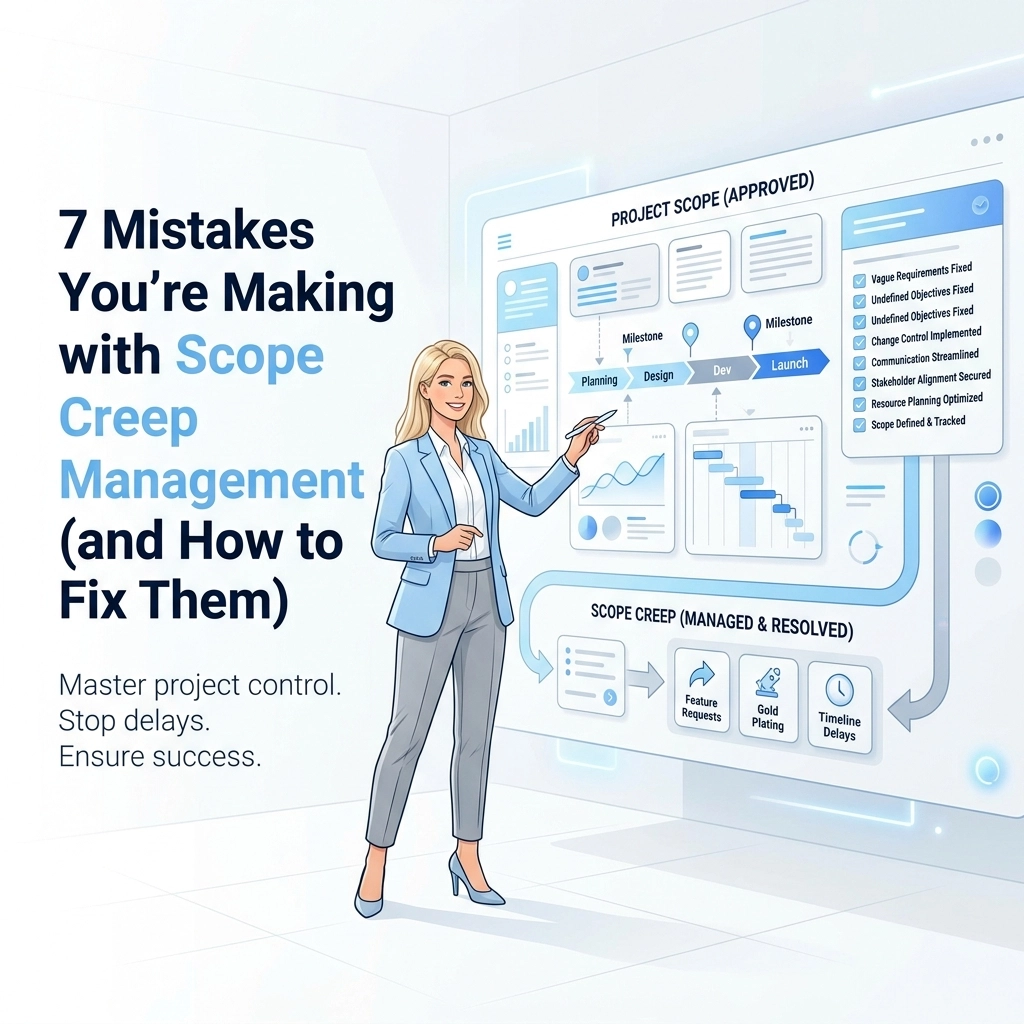
  • 7 Mistakes You’re Making with Scope Creep Management (and How to Fix Them)

    7 Mistakes You’re Making with Scope Creep Management (and How to Fix Them)

    Scope creep management is the thin line between a thriving digital agency and a burnt-out team facing bankruptcy. In the world of high-stakes app development, the "extra" button, the "minor" tweak, and the "quick" revision are the silent killers of Professional Service Contracts. Every hour spent on undocumented work is revenue leaking out of your business.

    At GHW-Digital, we see it daily: brilliant founders and project managers losing their margins because they treat project boundaries as suggestions rather than hard limits. If you aren't guarding your project scope with the ferocity of a sentry, you aren't running a business; you’re running a charity.

    The era of hiring expensive consultants to "fix" your workflow is over. Elite software tools have replaced the need for high-priced advisors by embedding the logic of protection directly into your operations.

    Here are the seven fatal mistakes you’re making with your scope creep management and the aggressive fixes required to stop the bleeding.

    1. Vague Contracts – The "Friendship" Trap

    The most common failure in scope creep management starts before the first line of code is written. Many agencies rely on "handshake" styles or vague Professional Service Contracts that use words like "standard features" or "reasonable revisions."

    When you leave terms open to interpretation, you invite the client to colonize your time. They aren't being malicious; they are simply operating within the vacuum you created. A vague contract is an invitation for a client to move the goalposts until the game is unrecognizable.

    The Fix: Hard-Coded Documentation.
    You must define exactly what is in, and more importantly, exactly what is out. Use a Scope Guard Elite approach. Every deliverable should be mapped to a specific timeline and resource allocation. If it’s not in the Statement of Work (SOW), it doesn’t exist. For high-velocity teams, checking new project ideas against your core capacity daily is the only way to ensure alignment.

    Digital contract tablet defining clear project boundaries for scope creep management.

    2. Operating Without an Elite Management Plan

    Many project managers mistake a "to-do list" for a scope creep management strategy. If you don't have a standardized, repeatable plan for how scope is defined, validated, and controlled, you are flying blind. According to the Project Management Institute, projects without a formal management plan are 50% more likely to experience uncontrolled expansion.

    Expensive consultants will spend weeks interviewing your team to tell you this. Elite software tools do it in seconds by enforcing a hierarchy of approvals.

    The Fix: Implement a Scope Sentry.
    Your management plan should outline exactly who has the authority to request changes and who has the power to approve them. Use Scope Sentry to automate the validation process. This shifts the burden of "saying no" from a person to a process, removing the emotional friction that leads to scope bloat.

    3. Ad-Hoc Change Requests – The "Just One More Thing" Plague

    Scope creep management fails when changes are accepted via Slack, email, or casual Zoom calls. These "micro-requests" seem harmless in isolation, but they compound into a catastrophic delay. Accepting ad-hoc changes bypasses your financial and temporal safeguards.

    The Fix: The Iron-Clad Change Control Process.
    Every request, no matter how small, must go through a formal impact analysis. If a client wants a new feature, they must see the cost: "We can add this, but it will delay the launch by four days and cost an additional $1,200."

    When you frame requests through the lens of project constraints, clients often realize the "must-have" feature is actually a "nice-to-have." You need to track these ideas in a central repository, ensuring that every deviation is documented and billed.

    Visualizing change control and boundary protection for effective scope creep management.

    4. The Communication Black Hole

    Poor stakeholder communication is a primary driver of scope creep management issues. When clients feel they aren't being heard or updated, they start "throwing things at the wall" to see what sticks. They demand more features because they lack confidence in the progress of the existing ones.

    Elite software replaces the "status update" meeting with real-time transparency. If the client can see the progress, they are less likely to disrupt it.

    The Fix: Radical Transparency.
    Establish a cadence of daily or weekly feedback loops. Don’t just show what was built; show how it compares to the original baseline. Use tools like Vow Guard Elite to keep your promises visible. When the original scope is always front and center, deviations become glaringly obvious to all parties.

    5. The "Yes" Man Syndrome

    The inability to say "no" is the fastest way to kill a project. Project managers often feel that saying yes builds a better relationship. The opposite is true. Over-promising and under-delivering destroys trust faster than a firm "no" ever could.

    Effective scope creep management requires a stern but professional stance regarding boundaries. You aren't being difficult; you are being a professional.

    The Fix: Data-Driven Rejections.
    Don’t make it personal. Use your Work Breakdown Structure (WBS) to show the client why a request is impossible within the current constraints. "The data shows our current sprint is at 100% capacity; adding this requires us to remove a primary deliverable. Which one should we cut?" This forces the client to take responsibility for the trade-offs. Check out our latest insights for tips on how to frame these difficult conversations.

    Data-driven defense and firm boundaries to optimize your scope creep management strategy.

    6. Abandoning the Baseline

    You cannot manage what you do not measure. A common mistake in scope creep management is failing to establish a baseline, a frozen version of the project plan, and comparing it to actual progress. Without a baseline, you are wandering in the woods without a map.

    The Fix: Continuous Re-Baselining.
    Every time a change is formally approved via your change control process, you must re-baseline. This ensures your reporting is always accurate. If you are still using spreadsheets for this, you are vulnerable to human error. Elite software tools track these shifts automatically, providing a digital audit trail that protects you during final billing disputes.

    7. Manual Tracking – The Human Error Factor

    If your scope creep management relies on human memory or manual logs, you have already lost. People forget things. They want to be helpful. They overlook a "small" request because they are busy. Manual tracking is the "analog" way to manage a "digital" problem. Research from Harvard Business Review suggests that IT projects exceed their budgets by an average of 27% due to poor tracking.

    The Fix: Automated Guardrails.
    Stop relying on your team to "remember" to document changes. Use software that locks in the scope and requires a digital signature for any alteration. This creates a "legal shield" around your work. It’s not just about tracking time; it’s about tracking intent and approval.

    Why Elite Software Beats Expensive Consultants

    Consultants are a recurring expense that provides temporary relief. Elite software is a permanent asset that enforces discipline. While a consultant might give you a PDF of "best practices," a tool like Scope Guard Elite actually stops the developer from working on an unapproved task. It replaces subjective judgment with objective enforcement.

    In the competitive world of app development, your survival depends on your ability to deliver what you promised, when you promised it, for the price you quoted. Any deviation from that is a threat to your reputation and your bottom line.

    Secure Your Competitive Advantage

    Scope creep is not an inevitable part of the creative process; it is a symptom of poor management. By fixing these seven mistakes, you transform your agency from a reactive service provider into a proactive powerhouse.

    Stop the leakage. Protect your margins. Lock in your scope. If you’re ready to stop the "just one more thing" cycle, it’s time to look at the ideas that are shaping the future of project defense.


    Marblism Legal Shield
    This content is provided for informational purposes only. While GHW-Digital strives for accuracy, the software tools and strategies mentioned should be implemented in accordance with your specific jurisdictional requirements and professional service contracts. Your data privacy is our priority; for details on how we handle information, please review our Privacy Policy. All rights reserved 2026.

  • 7 Mistakes You’re Making with Your Wedding Supplier Contract (and How to Fix Them)

    7 Mistakes You’re Making with Your Wedding Supplier Contract (and How to Fix Them)

    Wedding Supplier Contracts: Crucial Elite Strategies to Protect Your Big Day

    Wedding Supplier Contracts are your only line of defense against a ruined event and a drained bank account. In the high-stakes world of wedding planning, hope is not a strategy. You are not just hiring a florist or a DJ; you are entering into a legally binding agreement that dictates how your hard-earned money is spent and how your vision is protected. Most couples sign these documents with a smile, assuming "everything will be fine."

    Professionalism demands a harder look. At GHW-Digital, we see the fallout when digital and physical agreements fail. If you aren't scrutinizing your agreements, you are leaving your wedding day up to chance. Whether you are browsing fresh concepts for your ceremony or finalizing your venue, your contract must be a shield, not a trap.

    1. Accepting Vague Scope of Service

    The most common mistake in Wedding Supplier Contracts is the lack of specificity. If your contract simply states "Photography Services," you have zero protection. Does that mean one photographer or two? Does it include eight hours or four? Does it include high-resolution files or just a web gallery?

    Vague language is the breeding ground for scope creep and disappointment. To fix this, you must demand a line-item breakdown of every deliverable. If it isn't written, it doesn't exist. You wouldn't accept an app build without a Scope Guard Elite mindset, and you shouldn't accept a wedding service without the same precision. Ensure your contract lists exact start times, end times, and tangible outcomes.

    Close-up of a Wedding Supplier Contract on marble highlighting detailed service line items.
    Alt-text: A close-up of a detailed Wedding Supplier Contract highlighting specific line items.

    2. Ignoring One-Sided Cancellation Policies

    Most vendor agreements are written by vendors, for vendors. This means the cancellation clauses often protect their revenue while leaving your deposit in the dust. A "non-refundable deposit" is a standard industry term, but it shouldn't be a blank check for the vendor to walk away without consequence.

    You need to ensure there is a reciprocal clause. If the vendor cancels on you, what is the remedy? A full refund is the bare minimum, but you should also negotiate for help finding a replacement. Protecting the couple means ensuring that if the vendor fails to show, you aren't just left with an apology and a hole in your budget. Reviewing our latest ideas can help you understand the market standard for these protections.

    3. Overlooking the "Vow Shield" for Service Delivery

    In the digital age, service delivery should be tracked and guaranteed. This is where Vow Shield protocols come into play. Many couples fail to include a clause that addresses what happens if the specific individual they hired (like a lead photographer or a specific DJ) is unavailable.

    A "Substitution Clause" is a major red flag if it allows the vendor to send "any qualified professional." You didn't hire a generic professional; you hired a specific style. Your contract should specify that any substitute must be approved by you in writing or must meet a pre-defined standard of quality. Using tools like Vow Guard Elite can help bridge the gap between expectation and reality.

    4. Missing Liability and Insurance Clauses

    If a guest trips over a DJ’s cable or a florist’s installation collapses, who is responsible? Without clear liability clauses in your Wedding Supplier Contracts, that person could be you. You are essentially acting as a project manager for a major event; you must delegate risk.

    Ensure every vendor has their own liability insurance and ask for a "Certificate of Insurance" (COI). The contract should state that the vendor is responsible for any damage or injury caused by their equipment or staff. Don't let a vendor's mistake become your legal nightmare. For more on how to manage these risks, check out the resources on our ideas page.

    Professional couple reviewing digital Wedding Supplier Contracts on a tablet for legal protection.
    Alt-text: A professional couple reviewing legal documents for their Wedding Supplier Contracts.

    5. Failing to Audit Force Majeure Clauses

    "Acts of God" used to be a footnote. Post-2020, they are the main event. A poorly worded Force Majeure clause can allow a vendor to keep your money even if the event cannot legally take place.

    Mistake five is accepting a clause that only protects the vendor. You need to fix this by ensuring the language covers "frustration of purpose." If the government bans large gatherings, or if the venue is destroyed, the contract should outline a clear path for rescheduling without massive penalties. This is about fairness and alignment, not emotional pleading.

    6. Payment Schedules Without Milestones

    Paying 100% of the fee months before the wedding is a tactical error. It removes all leverage for the couple. If the vendor has all your money, your influence over the final delivery drops to zero.

    The fix is a milestone-based payment structure. Use a system similar to how we manage app development. Pay a booking fee to secure the date, a mid-term payment once certain details are finalized, and a final balance shortly before or even on the day of the event. This keeps the vendor engaged and ensures they are motivated to provide the elite service you paid for. You can find more strategic planning tips here.

    A digital milestone tracker for Wedding Supplier Contracts showing secure payment schedules.
    Alt-text: A digital dashboard showing payment milestones for Wedding Supplier Contracts.

    7. Neglecting the Dispute Resolution Process

    Disagreements are inevitable in high-pressure environments. If you haven't defined how to resolve a conflict, your only option is an expensive court battle. Most couples ignore this because it feels "unromantic" to talk about fighting during wedding prep.

    Authoritative contracts include a "Dispute Resolution" section. This usually involves mandatory mediation before litigation. It saves time, money, and stress. It’s a shield for your peace of mind. By establishing these boundaries early, you respect the professional nature of the relationship.

    The Vow Shield Advantage

    Protecting your wedding isn't just about the physical event; it's about the contractual integrity of the entire process. At GHW-Digital, we believe in the power of "Scope Sentry" logic. If you don't track it, you can't manage it. Your wedding is one of the most significant financial investments you will ever make. Treat it with the same professional rigor you would a business merger.

    Whether you are looking for new ideas for your big day or trying to secure your vendors, remember that the contract is your ultimate guardian.

    For more information on how we apply high-level development logic to safeguard projects, visit our homepage.


    Marblism Legal Shield

    This blog post is provided for informational purposes only and does not constitute legal advice. While we strive for accuracy, GHW-Digital and Marblism are not law firms. Wedding laws and contract requirements vary by jurisdiction. Always consult with a qualified legal professional in your area before signing any binding agreements. GHW-Digital is not responsible for any losses incurred through the use of this information. We prioritize data transparency and ethical business practices in all our digital solutions.

    Stop being a victim of "fine print." Secure your wedding today.

  • Systems Vs Consultants: Which Is Better For Your Independent Contractor Agreement?

    Systems Vs Consultants: Which Is Better For Your Independent Contractor Agreement?

    Independent contractor agreement structures are currently undergoing a radical transformation. For decades, the standard approach to managing Professional Service Contracts was to hire expensive legal consultants or high-priced project managers to oversee compliance. This human-centric model is failing. It is slow, prone to bias, and creates massive overhead that eats into your margins. In the modern app development landscape, relying solely on a person to manage your Independent Contractor Agreement is a liability.

    The alternative is a systemized approach. Elite software tools are no longer just administrative aids; they are replacing the need for bloated consultancy tiers by providing automated, objective, and ironclad enforcement of contract terms. At GHW-Digital, we see the shift happening daily. Companies that prioritize systems over consultants aren't just saving money, they are protecting their intellectual property and securing their project timelines with mathematical precision.

    The Professional Service Contracts Trap: Why Consultants Fail

    Traditional consulting for Professional Service Contracts is inherently flawed. Consultants are humans. They get tired, they miss details, and they often lack the technical depth to understand the nuances of a complex app development roadmap. When you rely on a consultant to manage your Independent Contractor Agreement, you are paying for an expensive middleman who adds a layer of subjective interpretation between you and your contractor.

    Digital interface system analyzing a complex Independent Contractor Agreement for accuracy.
    Alt text: A visual representation of a complex Independent Contractor Agreement being analyzed by an elite software system.

    Scope creep is the silent killer of profitability. A consultant might notice a shift in project requirements three weeks too late. By then, the budget is blown, and the timeline is ruined. A system, however, operates in real-time. It doesn't "feel" bad about flagging a violation; it simply prevents the deviation from occurring. If you want to see how we handle these high-stakes transitions, check out our ideas page for a deeper dive into modern project architecture.

    Lockdown Scope: Eliminate Moving Goalposts

    Moving goalposts are a project’s death sentence. Without a rigid Independent Contractor Agreement backed by an automated system, you are essentially signing a blank check. Consultants often try to "manage" scope through meetings and negotiations. This is reactive.

    Systems provide a proactive shield. By integrating tools like Scope Guard Elite, you define the boundaries of the Professional Service Contracts before the first line of code is written.

    • Automated Boundaries: Systems flag unauthorized additions to the project scope instantly.
    • Immutable Records: Unlike a consultant’s notes, a systemized audit trail cannot be disputed.
    • Precision Tracking: Calculate exactly how much every change request will impact your bottom line before you approve it.

    When you remove the "human element" from scope enforcement, you gain a level of control that no consultant can provide. You stop being a victim of circumstance and start being a master of your budget.

    Protect Margins: Stop Leaking Revenue

    Every hour spent "aligning" expectations with a contractor is revenue leaking from your company. In any Professional Service Contracts engagement, time is the most valuable asset. Consultants often contribute to this time-drain by requiring more meetings to justify their fees.

    Protective glass dome shielding financial margins within Professional Service Contracts.
    Alt text: A dashboard showing financial protection within an Independent Contractor Agreement.

    An Independent Contractor Agreement managed by a software system focuses on output, not activity. Our approach at GHW-Digital is to replace manual oversight with digital sentries. For instance, Scope Sentry acts as a constant monitor for your project’s health. It doesn't need a lunch break, and it doesn't charge $300 an hour.

    By shifting your investment from consultants to systems, you turn a variable, unpredictable expense into a fixed, scalable asset. This is how elite firms protect their margins. They don't hire more people to fix a process; they build a better process that requires fewer people. Explore more innovative strategies to see how we’ve helped others plug their revenue leaks.

    Enforce Accountability: The Power of the "Digital Vow"

    Accountability is the bedrock of any successful Independent Contractor Agreement. Consultants often struggle to hold contractors accountable because of personal relationships or the desire to avoid conflict. Software doesn't care about being liked.

    Interlocking loops symbolizing a secure digital Independent Contractor Agreement and accountability.
    Alt text: A symbolic representation of a digital Independent Contractor Agreement shield.

    Using tools like Vow Guard Elite ensures that the promises made at the start of the contract are the results delivered at the end. In Professional Service Contracts, "almost done" is the same as "not started." Systems provide a binary reality: the milestone is either met, or it isn't.

    Action-Benefit: Why Systems Win

    • Constraint-Driven Development: Force contractors to work within the agreed parameters.
    • Instant Verification: Validate deliverables against contract requirements without waiting for a consultant’s report.
    • Conflict De-escalation: Because the system is objective, disputes are resolved by data, not ego.

    According to a study by the Harvard Business Review, over-reliance on external consultants often leads to a loss of internal institutional knowledge. By embedding your Independent Contractor Agreement logic into a system, you keep that knowledge, and that power, within your organization.

    The Elite Choice: Scalability Through Automation

    If you plan to scale your operations, you cannot scale with consultants. Hiring 10 consultants to manage 50 contracts is an exponential increase in cost. However, a single robust system can manage 500 contracts as easily as it manages five.

    Professional Service Contracts require a level of scrutiny that grows more difficult as complexity increases. Humans scale poorly; code scales perfectly. When your Independent Contractor Agreement is part of a digital ecosystem, it becomes a competitive advantage. You can move faster, hire more talent, and execute more complex projects because your "legal shield" is automated.

    An expansive digital grid representing the scalability of automated Professional Service Contracts.
    Alt text: A futuristic city representing the scale of professional service contracts managed by AI systems.

    We advocate for a minimalist but authoritative approach to contract management. Don't add more fluff. Don't add more layers of management. Use the latest ideas in app development to automate the boring, expensive, and error-prone parts of your business.

    Fair Play, Not Emotional Pleading

    A common mistake in managing an Independent Contractor Agreement is trying to use "relationships" to fix technical or contractual failures. This is the consultant's way. It involves "circling back," "touching base," and "finding synergy." It’s a waste of breath.

    Systems promote fairness through transparency. When both parties are governed by an objective system, there is no need for emotional pleading. The Professional Service Contracts are clear, the expectations are set, and the rewards are distributed upon success. This creates a culture of respect and alignment. Contractors prefer working with systems because they know exactly what they need to do to get paid. You prefer it because you know exactly what you’re getting for your money.

    For more insights into creating professional boundaries that work, visit our apps section to see how we build software that respects your time and profit.

    Final Verdict: Systematize or Suffer

    The choice is clear. You can continue to pay high-priced consultants to manually oversee your Independent Contractor Agreement, or you can join the elite organizations that use systems as a primary defense mechanism.

    Relying on consultants for Professional Service Contracts is a legacy mindset that belongs in the last decade. It’s slow, expensive, and dangerously subjective. Systems offer precision, scalability, and an unshakeable guardian for your revenue.

    Stop the bleed. Stop the "moving goalposts." Secure your advantage by investing in software that works as hard as you do. The future of app development isn't found in more meetings, it’s found in better systems.


    Marblism Legal Shield & Ethics Footer
    At GHW-Digital, we believe in radical transparency. Your data is your own. We do not use "dark patterns" or marketing tricks to keep you locked into our ecosystem. Our tools are designed to provide objective, data-driven protection for your professional service contracts. We operate under a strict ethical code that prioritizes your project’s integrity above all else. For full details on our data practices, please visit our Privacy Policy.

    Ready to lock in your project's success? Explore our ideas and stop letting scope creep kill your margins.

  • 7 Mistakes You’re Making with Your Wedding Supplier Contract (and How to Fix Them)

    7 Mistakes You’re Making with Your Wedding Supplier Contract (and How to Fix Them)

    Wedding Supplier Contracts are the only thing standing between your dream day and a legal nightmare. In the high-stakes world of event planning, your excitement is a liability that vendors often exploit with vague language and one-sided clauses. At GHW-Digital, we see these "leaking revenues" and "moving goalposts" in every industry, but in the wedding world, the stakes aren't just financial, they're emotional.

    If you treat these documents as "standard paperwork," you are leaving yourself wide open to service failures and lost deposits. You need a shield. You need to stop viewing these agreements as a formality and start viewing them as a tactical defense.

    1. Accepting Vague "Scope of Service" Clauses

    The Mistake: Many couples sign Wedding Supplier Contracts that list services in broad, sweeping terms like "Full Day Photography" or "Reception Catering." This is a trap. Without granular detail, a vendor can arrive late, leave early, or cut corners on quality while technically fulfilling the "letter" of the contract.

    The Fix: Lock In Every Minute. Demand a minute-by-minute breakdown of the vendor’s presence and a specific list of deliverables. If it’s a photographer, how many edited shots? If it’s a florist, what specific species of rose? If the scope isn't documented, it doesn't exist. For more inspiration on how to structure digital-era agreements, check out our ideas page.

    Detailed wedding supplier contracts paperwork with a white rose and professional pen on a desk.

    2. Ignoring the "Substitution" Trap in Wedding Supplier Contracts

    The Mistake: You hired a specific lead singer or a famous chef, but the fine print says: "The company reserves the right to substitute personnel of equal talent." This is a classic red flag. You are paying for a specific talent, not a generic replacement.

    The Fix: Eliminate Personal Substitutions. Your Wedding Supplier Contracts should specify that the lead talent is non-negotiable unless a "Force Majeure" event occurs. If they must substitute, you should have the right to review the replacement or cancel with a full refund. Protection is about securing your competitive advantage, even on your wedding day.

    3. Failure to Define "Force Majeure" for the Couple

    The Mistake: Most vendor templates define "Acts of God" in a way that protects the vendor's inability to show up, but does nothing for the couple if the venue burns down or a global pandemic hits. You are left holding the bill for a party that cannot happen.

    The Fix: Demand Mutual Protection. Ensure your Wedding Supplier Contracts include a clause that allows for rescheduling or termination if the event cannot legally or safely proceed. This isn't just about fairness; it's about alignment. We discuss similar protections in our Scope Guard Elite framework.

    4. Signing Away Your Right to Dispute Negligence

    The Mistake: Vendors often slip in "Indemnity" or "Limitation of Liability" clauses that cap their total responsibility at the amount you paid them. If their faulty equipment causes a fire that destroys the venue, you don't want to be the one on the hook for millions because you signed a bad contract.

    The Fix: Audit Liability Clauses. Never sign a liability waiver for vendor negligence. Vendors must carry their own professional insurance. If they refuse to take responsibility for their own mistakes, they are not a professional partner, they are a liability. Use Vow Shield logic to vet these risks before they become disasters.

    Protective glass shield guarding a wedding cake representing secure wedding supplier contracts.

    5. Overlooking the Payment and Refund Disconnect

    The Mistake: Using a payment structure that is heavily front-loaded. If you pay 90% of the fee six months before the wedding, the vendor has zero incentive to prioritize your event. Furthermore, many Wedding Supplier Contracts label all deposits as "non-refundable," which is often legally unenforceable but still a massive headache to fight.

    The Fix: Tiered Payments Based on Milestones. Structure your payments so the final 30-40% is paid after the service is successfully delivered. This keeps the vendor's skin in the game. If you need a way to track these milestones, our apps often focus on this type of transparency. You can find more tactical advice on managing high-cost projects at ghw-digital.com/ideas.html.

    6. Not Including a Dispute Resolution Process

    The Mistake: When a vendor fails to deliver the promised flowers, many couples think their only option is to "sue them." This is a slow, expensive, and soul-crushing process. Without a pre-defined dispute resolution clause, you are entering a legal vacuum.

    The Fix: Mandate Mediation. Your Wedding Supplier Contracts should specify a fast-track mediation process. This keeps the goalposts from moving and ensures that "fairness" is adjudicated by a neutral third party without the need for a three-year court case. We apply this same "Guard" mentality in our Scope Sentry software to prevent project drift.

    Sleek geometric arcs forming a circle symbolizing dispute resolution in wedding supplier contracts.

    7. Neglecting Professional Legal and Digital Review

    The Mistake: Treating a contract as a "static" PDF. In 2026, contracts should be dynamic, tracked, and vetted against current industry standards. Signing a document your vendor printed from a 2012 template is asking for trouble.

    The Fix: Use Modern Defense Tools. Use tools like Vow Shield to ensure your agreements are up to date. Don't just read the words; understand the mechanics. If a vendor is hesitant to use a transparent digital contract, that is the biggest red flag of all. Check out our latest research on contract transparency at https://ghw-digital.com/ideas.html.

    Red Flags to Watch For in Wedding Supplier Contracts:

    • The "Unilateral" Clause: Any sentence starting with "Vendor may change…" without adding "…with the Couple's written consent."
    • The Missing Timeline: If there is no specific date and time for delivery, the contract is essentially a suggestion.
    • Oral Agreements: "Don't worry, we'll take care of it" is a phrase that has cost couples millions. If it's not in the Wedding Supplier Contracts, it doesn't exist.

    Action-Benefit Summary

    Action Tangible Result
    Audit Scope Stops service "creep" and ensures you get what you paid for.
    Strike "Substitutions" Protects the quality of the talent you specifically hired.
    Review Liability Shields you from financial ruin due to vendor negligence.
    Deploy Vow Shield Locks in the agreement and provides a digital audit trail.

    Wedding Supplier Contracts are not about "trusting" your vendor. They are about establishing a professional boundary that protects your investment. When you treat your wedding with the same rigor we apply to app development, you eliminate the variables that cause failure.

    Stop leaving your wedding to chance. Secure your contracts, define your boundaries, and ensure that your only focus on your wedding day is the celebration, not the fine print.


    Marblism Legal Shield

    This content is provided for informational purposes only and does not constitute legal advice. While GHW-Digital and Vow Shield provide tools to assist in contract management, we are not a law firm. We strongly recommend having all final legal documents reviewed by a qualified attorney in your jurisdiction to ensure full compliance with local laws. We prioritize your data integrity and transparency above all else. For more information, please review our Privacy Policy.

    Ready to stop the revenue leaks in your planning? Explore our latest ideas and take control of your Wedding Supplier Contracts today.

  • The Wedding Industry is Broken: Crucial Systems for Ultimate Vendor Protection

    The Wedding Industry is Broken: Crucial Systems for Ultimate Vendor Protection

    The Wedding Industry is Broken. Let’s stop pretending it’s just "seasonal fluctuations" or a "shift in taste." It’s a systemic collapse of the middle market. Established professionals are being squeezed between high-overhead realities and a flood of newcomers undercutting prices as a side hustle. When high-profile venues like Oheka Castle file for Chapter 11 and industry giants like David’s Bridal face massive layoffs, the message is clear: the old way of doing business is a liability.

    I’m Martin Hughes, and at GHW-Digital, we see this through a different lens. We aren't just developers; we are digital architects. We build the scaffolding that keeps businesses upright when the ground starts shaking. Right now, the wedding sector isn't just shaking, it’s cracking. Vendors are losing sleep over "ghosting" clients, scope creep that eats margins for breakfast, and contracts that offer as much protection as a wet paper towel.

    If you want to survive the current vendor crisis, you need to stop acting like a creative and start acting like a fortress. You need systems.

    Why the Wedding Industry is Broken Right Now

    The data doesn't lie. Demand is down, and the race to the bottom is on. Newcomers enter the market every weekend, offering "budget" packages because they don't have the overhead of a decade-long reputation. This forces experienced vendors to either lower their prices to a point of non-viability or watch their booking calendars stay empty.

    But the price war isn't the only problem. The real crisis is the lack of structural integrity in how business is conducted. Most vendors are operating on "handshake" energy in a "litigation" world. They use generic contract templates they found online five years ago. They allow clients to change the scope of work via WhatsApp messages. They have no mechanism to track changes, lock in revenue, or protect their time.

    Blue digital beams stabilizing a fragile structure to show how systems fix the vendor crisis.

    Lock in Agreements: Stop the Revenue Leak

    When we say The Wedding Industry is Broken, we’re specifically talking about the lack of professional boundaries. Every time a client asks for "just one more thing" and you say yes without a formal change order, you are leaking revenue. It’s like trying to fill a bucket with a hole in the bottom.

    Systems fix this. By implementing a tool like Vow Guard Elite, you move from a defensive posture to an offensive one. You aren't "being difficult" about changes; you are following a system.

    Automated Guardrails: Systems don't have emotions. They don't feel "bad" for the bride. They simply enforce the terms you set at the start. When a request falls outside the original scope, the system flags it. It requires an electronic signature and a price adjustment before the work proceeds. This isn't just about money; it's about respect for your craft.

    Standardize the Chaos: The Power of Scope Management

    The wedding crisis is fueled by uncertainty. Clients are stressed, and stressed people move goalposts. They change the floral palette three weeks before the date. They add two more hours to the photography package on the day of the event.

    Without a system, you are at the mercy of their chaos. With Scope Sentry, you define the boundaries of your service before the first deposit is even paid.

    • Protect Your Time: Every hour you spend on unbilled revisions is an hour you aren't booking a new client.
    • Track Every Change: Digital paper trails are your best defense against "I don't remember agreeing to that" conversations.
    • Secure Your Margin: Professionalism is profitable. When you show a client that your business is managed by high-end software, you justify your premium pricing.

    Organizing wedding vendor chaos into structured lines to protect business margins and manage scope.

    The Bankruptcy Shield: Protecting Your Business from Market Volatility

    We've seen the headlines. Venues closing their doors overnight, leaving photographers, caterers, and planners in the lurch. If your business model relies on the stability of other vendors, you are at risk. The Wedding Industry is Broken because it is a house of cards. When one vendor falls, they often take others with them.

    A systemic approach to contracts ensures that your payment schedule is front-loaded and your liability is capped. You shouldn't be a bank for your clients. You shouldn't be an insurance policy for other vendors' failures. Your contract tool needs to be more than just a PDF; it needs to be a dynamic agreement that accounts for the volatility of 2026.

    Using a dedicated platform like Scope Guard Elite allows you to manage these risks with surgical precision. It’s about building a digital perimeter around your business. If a venue goes bust, your system ensures you've already been paid for the work performed and that your legal obligations are clearly terminated.

    Digital Architecture: Framing Your Business for Growth

    Most wedding vendors think they need more leads. They don't. They need better operations. A business that handles five weddings a year with 40% margins and zero stress is better than one that handles twenty weddings with 10% margins and constant fires to put out.

    The Wedding Industry is Broken because it prioritizes the "magic" over the "machine." We believe the machine makes the magic possible. When your admin is automated, when your contracts are bulletproof, and when your scope is locked down, you actually have the mental space to be creative.

    • Eliminate Friction: Make it easy for clients to pay and sign. If your onboarding process is a mess of emails and attachments, you are losing the high-end clients who value efficiency.
    • Professional Alignment: Use tools that reflect your brand. A professional interface on ghw-digital.com tells the client you are a serious entity, not a hobbyist.
    • Fairness Through Logic: Systems ensure that both parties are treated fairly. There is no ambiguity. Alignment is achieved through data, not intuition.

    A minimalist digital fortress showing how structural systems provide vendor protection in a broken industry.

    Stop the Bleeding: A Call to Action

    The vendor crisis isn't going to fix itself. The market will continue to be volatile, and clients will continue to be demanding. You can either stay on the treadmill of "hope and pray," or you can install the systems that make your business unshakeable.

    The Wedding Industry is Broken, but your business doesn't have to be. It’s time to stop letting revenue leak through the cracks of poor communication and weak agreements. You’ve spent years building your reputation; don’t let a lack of systems tear it down.

    Protect your time. Protect your profit. Protect your peace of mind.

    If you’re ready to stop the "moving goalposts" and start securing your advantage, it’s time to look at how Vow Guard Elite can revolutionize your workflow. This isn't just about software; it's about survival.

    Visit our apps page to see how we are rebuilding the industry, one system at a time. The crisis is real, but so is the solution. Don't wait for the next bankruptcy headline to realize your business was vulnerable. Build your fortress today.


    Powered by GHW Digital (Company No: 16834250). This document is an automated draft for business organization purposes only. It does not constitute legal advice. GHW Digital accepts no liability for disputes, financial loss, or enforceability. Users must consult a qualified professional in their jurisdiction before signing.

  • $300/Hour Consultants Vs. Automated Systems: Why Independent Professionals are Switching

    $300/Hour Consultants Vs. Automated Systems: Why Independent Professionals are Switching

    Independent Professionals Switching to automated systems is a movement born from a simple realization: human consultants are often a bottleneck to profit. For decades, the $300/hour consultant was the gold standard of business intelligence. They arrived with spreadsheets, stayed for six-week cycles, and left behind a mountain of paperwork. Today, that model is collapsing. High-performing agencies and solo practitioners are realizing that Professional Service Contracts require more than just human intuition: they require the precision of elite software tools.

    The shift is not about cutting corners; it is about securing margins. When you pay a consultant $300 an hour, you are paying for their learning curve, their coffee breaks, and their administrative overhead. Independent Professionals Switching to automated systems are choosing to pay for outcomes instead of hours. By leveraging innovative ideas for automation, businesses are replacing expensive advisory fees with ironclad, automated logic.

    The Death of the Hourly Advisory Model

    The traditional consulting model is built on inefficiency. If a consultant solves your problem in ten minutes, they can’t bill you for the week. This creates a fundamental misalignment of interests. Independent Professionals Switching to automated systems have found that software doesn't have an ego or a timesheet to pad.

    Elite software tools now handle the heavy lifting of strategy, risk assessment, and contract management. Where a human consultant might miss a clause in a stack of Professional Service Contracts, an automated system identifies the risk in milliseconds. This isn't just a trend; it's a defensive maneuver against rising operational costs. To stay competitive, you must look at your current business ideas and identify where human intervention is actually a liability.

    Independent Professionals Switching to automated logic to replace the ticking clock of expensive hourly billing.

    Professional Service Contracts: The New Front Line

    The core of any high-stakes business relationship is the contract. Traditionally, drafting and managing these was the domain of high-priced legal consultants. However, Independent Professionals Switching to automated logic are now using tools like Vow Guard Elite to ensure their agreements are bulletproof without the $300/hour price tag.

    Lock In Terms: Automated systems ensure that every Professional Service Contract follows a pre-approved, high-performance template.
    Eliminate Ambiguity: Software doesn't use "gray area" language. It defines parameters with mathematical precision.
    Ensure Compliance: Automated triggers alert you to breaches before they become legal nightmares.

    By standardizing these contracts, independent professionals are protecting themselves from the "moving goalposts" syndrome that often plagues long-term engagements. They are using new digital strategies to replace the subjective judgment of a consultant with the objective enforcement of a system.

    Action-Benefit: Protect Your Time with Scope Management

    Scope creep is the silent killer of the independent professional. A consultant will often suggest "expanding the engagement": which is just code for more billable hours. Independent Professionals Switching to automated guardrails are using technology to stop this leakage.

    Tools like Scope Guard Elite act as a digital shield. They track every requirement against the initial Professional Service Contracts. If the project drifts, the system flags it immediately. You don't need a $300/hour project manager to tell you that you're doing extra work for free; you need a system that prevents the work from happening until the contract is updated. This level of strategic automation is what separates elite practitioners from those who are constantly chasing their tails.

    A digital shield symbolizing strategic automation protecting Independent Professionals Switching to system-driven models.

    The Economic Reality: $300/Hour vs. Subscriptions

    Let’s look at the math. A senior consultant working 20 hours a week on your strategy costs $6,000 per week. That is $24,000 a month for "expert advice." In contrast, an suite of automated systems and custom-built apps provides 24/7 monitoring, instant reporting, and zero-error execution for a fraction of that cost.

    Independent Professionals Switching to this model are reinvesting that $24,000 back into their own growth. They are moving away from being "consultant-dependent" to being "system-dependent." According to recent industry reports on AI disruption in consulting, the ability to automate routine advisory tasks is the single biggest predictor of agency profitability in 2026.

    High-Speed Execution: Systems don't need "six-week discovery phases." They integrate with your data instantly.
    Scalable Wisdom: An automated system can handle 100 Professional Service Contracts as easily as it handles one.
    Permanent Knowledge: When a consultant leaves, their expertise goes with them. When you build a system at GHW-Digital, the intelligence stays in your business.

    Action-Benefit: Eliminate Human Error in Risk Assessment

    Humans are prone to fatigue, bias, and oversight. When managing Professional Service Contracts worth six or seven figures, a single missed detail can be catastrophic. Independent Professionals Switching to automated risk assessment are removing the "human factor" from their defense strategy.

    By implementing Scope Sentry, professionals can monitor project health in real-time. The system calculates risk based on hard data, not "gut feelings." It identifies when a project is veering off-course long before a human consultant would even notice the trend. This is why modern business ideas focus so heavily on data-driven decision-making.

    Precise neon grid for automated risk assessment in high-stakes Professional Service Contracts.

    Why the "Expert" Tag is Losing Its Value

    The term "expert" has been used to justify exorbitant hourly rates for far too long. In reality, most $300/hour consultants are simply using standard frameworks and industry benchmarks that are now easily accessible via AI and specialized software. Independent Professionals Switching to automated systems recognize that "expertise" is now a commodity.

    What isn't a commodity is the system that applies that expertise to your specific Professional Service Contracts. By building your own automated infrastructure, you are creating a proprietary asset. You are no longer renting a consultant’s brain; you are owning the logic that runs your business. This transition is crucial for anyone looking to exit their business or scale without adding massive headcount. Research into professional service automation shows that firms using these tools see a significant increase in billable utilization and project margins.

    Action-Benefit: Secure Your Boundaries with Logic

    If you don't set boundaries, your clients will set them for you. A consultant might try to "smooth things over" with a difficult client, often at the expense of your profit. Independent Professionals Switching to automated enforcement let the system be the "bad guy."

    When the Professional Service Contracts are managed by an elite tool, the boundaries are non-negotiable. The system simply does not allow for unauthorized scope expansion. This creates a culture of respect and alignment. Clients understand that the parameters are fixed, and professionals know their time is protected. Explore more ideas on boundary protection to see how this can transform your client relationships.

    Blue glass pillars representing firm boundary protection in Professional Service Contracts managed by automated systems.

    The Final Verdict: Join the Switch

    The era of the bloated consulting engagement is over. The future belongs to the lean, automated, and system-driven professional. Independent Professionals Switching to automated systems are not just saving money; they are building more resilient, more profitable, and more scalable businesses.

    Stop leaking revenue to "expert" hours that don't deliver a clear ROI. It is time to lock in your profits and protect your time with the same precision you bring to your craft. Whether it's through refined Professional Service Contracts or advanced scope management, the tools are ready. The question is: are you ready to stop paying for the clock and start paying for the result?

    Secure your competitive advantage now. Stop the bleed and start the switch.


    Marblism Legal Shield

    This content is provided for informational purposes only and does not constitute legal or financial advice. GHW-Digital and Marblism do not guarantee specific financial outcomes from the use of automated systems. Professional Service Contracts should always be reviewed by qualified legal counsel to ensure compliance with local jurisdictions. All data processing and automation features described are subject to our Privacy Policy.

  • Wedding Supplier Contracts: Essential Shield Against Disastrous Mistakes and Massive Stress

    Wedding Supplier Contracts: Essential Shield Against Disastrous Mistakes and Massive Stress

    Wedding Supplier Contracts are not just pieces of paper; they are the ironclad barriers between your dream wedding and a financial nightmare. In the high-stakes world of event planning, your excitement is a vulnerability. Vendors know this. They often present agreements designed to protect their bottom line, not your big day. If you aren't scrutinizing every clause, you are essentially handing over your bank account and your peace of mind to a stranger.

    At GHW-Digital, we understand that "moving goalposts" and "leaking revenue" aren't just issues in software development: they are the exact risks you face when booking a photographer, a caterer, or a venue. You need a guardian for your investment. You need to identify the red flags before they become expensive regrets.

    Front-Loaded Payments – Protect Your Liquid Capital

    One of the most dangerous mistakes couples make is agreeing to an aggressive, front-loaded payment schedule. If a vendor demands 75% or 100% of the total cost upfront, they have zero incentive to provide elite service. Once the money is in their pocket, your leverage disappears.

    The fix is simple: negotiate a balanced payment structure. A standard, safe approach involves a 25-50% deposit to secure the date, with the remainder paid only as milestones are met or shortly before the event. Never pay the final balance until you are certain the service will be delivered. This keeps the vendor accountable and protects your cash flow. If a vendor refuses to budge on a 100% upfront policy, consider it a massive red flag and walk away.

    Magnifying glass auditing payment terms in Wedding Supplier Contracts to spot red flags.
    Alt: A magnifying glass over a Wedding Supplier Contracts document highlighting payment terms.

    Enforce Reciprocity – Neutralize Unfair Cancellation

    Many Wedding Supplier Contracts are heavily skewed in favor of the vendor when it comes to cancellations. You might see a clause stating that if you cancel, you lose 100% of your money, but if the vendor cancels, they simply return your deposit. This is not a partnership; it is a lopsided risk.

    To fix this, you must demand reciprocal terms. If the vendor expects a high penalty from you for a late cancellation, they should face an equal penalty if they bail on you. Ensure your contract states that if the vendor fails to perform, they are responsible for finding a replacement of equal quality or covering the cost difference of an emergency booking. You can find more strategies on managing complex agreements at GHW-Digital Ideas.

    Close the Force Majeure Gap – Defend Against the Unforeseeable

    The pandemic taught the world a hard lesson about "Acts of God." Many couples found themselves legally bound to pay for weddings that couldn't legally happen because their Wedding Supplier Contracts lacked a robust Force Majeure clause.

    A vague clause is as useless as no clause at all. You need specific language that covers pandemics, government restrictions, and natural disasters. The goal is to ensure that if the event cannot move forward due to circumstances beyond anyone's control, you are entitled to a refund or a penalty-free postponement. Don't leave your future to chance; lock in protections that actually mean something.

    Define Deliverables – Lock In Quality and Scope

    "Photography services" is a phrase that means nothing. Does it mean one photographer or two? Does it include eight hours of coverage or four? Does it include a digital gallery or just raw files? Vague service descriptions are the primary cause of "scope creep" in the wedding industry. Vendors may try to charge you extra on the day for things you assumed were included.

    You must specify every single deliverable in writing. List the number of edited images, the exact hours of service, the specific equipment to be used, and the deadline for delivery. This precision creates alignment and prevents the vendor from under-delivering. For those looking to apply this level of precision to their own business ventures, our Scope Guard Elite provides a template for similar professional protection.

    A clear checklist for Wedding Supplier Contracts ensuring all service deliverables are met.
    Alt: A detailed checklist for Wedding Supplier Contracts to ensure service delivery.

    Eliminate Blanket Liability – Stop Assuming Vendor Risks

    It is common to find "indemnification" or "liability waiver" clauses that essentially say the vendor is not responsible for anything, even if they are negligent. If a DJ’s speaker falls and injures a guest, or a caterer’s equipment starts a fire, you do not want to be the one holding the bill for their mistakes.

    Never sign a blanket waiver. A fair contract states that each party is responsible for their own negligence. The vendor should carry their own liability insurance: ask for the certificate. By ensuring the vendor retains their own risk, you protect yourself from catastrophic legal bills. If you're overwhelmed by the technicalities of these protections, reviewing our Privacy Policy can give you an idea of how we handle professional data and responsibility.

    Secure Your Contingency – Eliminate the No-Show Risk

    What happens if your photographer gets sick? Or if the florist has a family emergency? Most couples assume the vendor has a "Plan B," but if it isn't in the Wedding Supplier Contracts, it doesn't exist. You are paying for a result, not an excuse.

    Your contract must outline a specific backup plan. It should name the associate or partner who will step in if the primary vendor is unavailable. It should also specify that the replacement must have a similar style and level of experience. Without this, you could be left scrambling 24 hours before your ceremony, paying triple the price for an emergency replacement. This is where a tool like Vow Guard Elite becomes your most valuable asset, providing a shield for these exact scenarios.

    A protective shield over a wedding cake representing secure Wedding Supplier Contracts.
    Alt: A visual representation of a shield protecting a wedding cake, symbolizing Wedding Supplier Contracts.

    Audit for Hidden Charges – Stop Revenue Leaks

    The "too good to be true" price is often a trap. Some vendors offer a low base rate but bury "service fees," "corkage fees," "setup charges," or "travel expenses" in the fine print. These hidden costs can easily add 20-30% to your final bill, blowing your budget and creating unnecessary friction.

    Ask for an "all-in" price. Require that any additional costs not explicitly listed in the contract must be approved by you in writing before they are incurred. This level of transparency is essential for maintaining control over your finances. For more insights on maintaining budget integrity and project scope, visit GHW-Digital Ideas for daily updates.

    Deploying the Vow Shield

    Navigating Wedding Supplier Contracts shouldn't be a solo mission. The stakes are too high to rely on gut feelings or verbal promises. This is why we advocate for the use of Vow Shield: a methodology designed to protect the couple, not the vendor. By applying a systematic review to every agreement, you ensure that your wedding day is defined by celebration, not litigation.

    Vow Shield focuses on:

    • Verification: Confirming all verbal promises are in writing.
    • Outcome-Based Milestones: Aligning payments with tangible results.
    • Warning Indicators: Identifying "red flag" language that signals a high-risk vendor.

    If you are serious about protecting your wedding, you need to treat these contracts with the same rigor we apply to App Development. Precision leads to peace of mind.

    A professional expert carefully reviewing Wedding Supplier Contracts for legal precision.
    Alt: A professional woman reviewing Wedding Supplier Contracts with a focused expression.

    Finalizing Your Defense

    Your wedding is likely the largest financial investment you will make this year. Treat it as such. Wedding Supplier Contracts are the only way to ensure that the vision you’ve paid for is the one that actually happens on the day. Do not be afraid to ask for changes. Do not be afraid to walk away from a vendor who refuses to offer fair, reciprocal terms.

    Stop letting vendors dictate the rules of your engagement. Use the tools available to you, stay informed through GHW-Digital Ideas, and ensure every signature you provide is a step toward a secured and successful event.

    If you're looking for more ways to protect your professional or personal projects from scope creep and unexpected costs, check out Scope Sentry to see how we maintain alignment and excellence in every project we touch at GHW-Digital.


    Marblism Legal Shield

    This content is provided for informational purposes only and does not constitute legal advice. GHW-Digital and Marblism are not law firms. Always consult with a qualified legal professional before signing binding agreements. Our focus is on providing the digital tools and frameworks to help you manage your projects and agreements with precision and clarity.

  • How to Secure Elite Project Protection Without the Consultant Price Tag

    How to Secure Elite Project Protection Without the Consultant Price Tag

    Elite Project Protection is the only thing standing between a profitable venture and a catastrophic drain on company resources. For decades, the standard response to project risk was to hire high-priced consultants. These experts would sit in boardrooms, draft lengthy reports, and charge thousands of dollars for "strategic oversight." But times have changed. The era of the bloated consulting budget is over. Today, software tools and robust Professional Service Contracts provide a superior shield for your margins at a fraction of the cost.

    At GHW-Digital, we see it every day: projects failing not due to a lack of talent, but due to a lack of structure. Consultants offer opinions; software offers data and enforcement. If you are looking for the next evolution in delivery, you need to explore our latest development ideas to see how automation is replacing manual oversight.

    The Consultant Trap: Why Expertise Doesn’t Scale

    Consultants thrive on ambiguity. The more complex a project seems, the more hours they can bill. While their expertise is real, their presence often creates a dependency that scales poorly. Every time a requirement changes, you need a meeting. Every time a deadline shifts, you need a revised strategy document. This is not protection; it is a tax on progress.

    True Elite Project Protection comes from shifting the "brain power" of the consultant into the "logic power" of a system. When you codify your requirements and expectations into digital workflows, you remove the human element of error and the financial element of hourly billing. You move from a reactive state of "asking for advice" to a proactive state of "enforcing standards."

    Transition from traditional consulting to Elite Project Protection through digital Professional Service Contracts.

    Professional Service Contracts: The Digital Backbone

    The foundation of any secure project is the agreement that governs it. Professional Service Contracts have evolved. They are no longer just legal documents gathering dust in a drawer; they are the architectural blueprints for software-led enforcement. By integrating these contracts with tools like Scope Guard Elite, you transform static words into active guardrails.

    When your contract is integrated with your project management ecosystem, the software knows the boundaries better than any human manager could. It tracks every change request, every hour logged, and every milestone reached against the original agreement. This is the core of Elite Project Protection. It is about ensuring that what was promised is what is delivered, without the need for a $300-an-hour consultant to verify it.

    Lock In Boundaries: How Software Kills Scope Creep

    Scope creep is a silent killer. It starts with a small "can we just add this?" and ends with a project that is six months behind and 40% over budget. Research from the Project Management Institute suggests that uncontrolled scope creep is one of the leading causes of project failure.

    Elite Project Protection requires a zero-tolerance policy for undocumented changes. Software tools act as the "Scope Sentry," flagging any deviation from the initial Professional Service Contracts before they become expensive problems.

    Standardize Your Boundaries: Eliminate Manual Verification.
    By using digital tools, you automate the validation process. Every new request must pass through a logic gate that checks it against the budget and timeline. If it doesn't fit, the system flags it. This takes the "bad guy" role away from your team and puts it on the software, maintaining professional relationships while protecting the bottom line.

    Software-led guardrails and Elite Project Protection shielding project margins from scope creep.

    Action-Benefit: Precise Tracking, Massive Savings

    The shift from manual oversight to automated Elite Project Protection offers immediate, tangible benefits.

    • Real-Time Monitoring: Instead of waiting for a monthly report from a consultant, you get a live dashboard of project health.
    • Automated Compliance: Ensure all work adheres to the Professional Service Contracts automatically, reducing legal risks.
    • Predictable Budgeting: Stop the "surprise" invoices. Software doesn't bill for lunch; it bills for performance.

    To see how these principles apply to specific app categories, browse our innovation ideas and discover the difference between "guessing" and "knowing."

    Elite Project Protection Through Algorithmic Oversight

    We are entering the age of algorithmic project management. This isn't just about task lists; it's about using data to predict where a project might fail before it happens. Traditional consultants look at the past to explain the present. Software tools like Vow Guard Elite look at current trends to secure the future.

    When you implement Elite Project Protection through the GHW-Digital ecosystem, you are deploying a shield that operates 24/7. Whether it's tracking deliverable velocity or ensuring intellectual property clauses are being met, the software is always on. This level of vigilance is impossible for a human consultant to match, regardless of their hourly rate.

    Digital backbone of Professional Service Contracts providing automated Elite Project Protection.

    The Shift From Opinion to Data

    Management is often treated as an art, but in the world of high-stakes app development, it must be a science. Consultants often rely on "best practices" which are essentially educated opinions. While valuable, opinions are subjective. According to the Harvard Business Review, the most effective consulting is moving toward facilitating hard results rather than just providing advice.

    Software provides the hard results. It doesn't tell you what "might" happen; it shows you what is happening. This data-driven approach is the hallmark of Elite Project Protection. It allows stakeholders to make decisions based on facts rather than persuasive presentations. By checking our concept list, you can see how we build this level of data-integrity into every project we touch.

    Integrating GHW-Digital Solutions

    Our suite of tools is designed to replace the expensive, slow-moving parts of the traditional project cycle.

    1. Scope Sentry: Monitors project boundaries against the Professional Service Contracts.
    2. Vow Guard Elite: Ensures that every commitment made by either party is tracked and verified.
    3. Scope Guard Elite: The ultimate firewall against margin-eroding changes.

    By leveraging these tools, you are not just saving money; you are increasing the quality of your output. Elite Project Protection is about excellence as much as it is about safety. When the boundaries are clear and the rules are enforced, talent can focus on building rather than bickering over contract terms.

    Actionable data wave symbolizing Elite Project Protection and efficient project management.

    Securing Your Competitive Advantage

    In a competitive market, efficiency is the only sustainable advantage. Companies that spend 20% of their project budget on consulting fees are at a direct disadvantage to those who use that 20% to build more features or market their product. Elite Project Protection via software allows you to reallocate those funds back into growth.

    The goal is simple: total control. You want to know that your project is safe, your budget is secure, and your timeline is realistic. You don't need a consultant to tell you that; you need a system to ensure it. Explore our latest project ideas to find out how you can start implementing these protections today.

    Stop leaking revenue to unnecessary oversight. Lock in your margins, secure your deliverables, and embrace the future of project management. The "Elite" in Elite Project Protection doesn't refer to the price tag: it refers to the performance.


    Marblism Legal Shield

    This content is provided for informational purposes only and does not constitute legal advice. GHW-Digital and its associated tools (Scope Guard Elite, Vow Guard Elite, Scope Sentry) provide technical enforcement and project management frameworks. Always consult with a qualified legal professional when drafting Professional Service Contracts to ensure compliance with local regulations and specific industry requirements. Data handled by our systems is managed with the highest standards of transparency and ethical security. No marketing tricks, just blunt honesty in data protection.

    Ready to stop the bleed? Secure your project now.