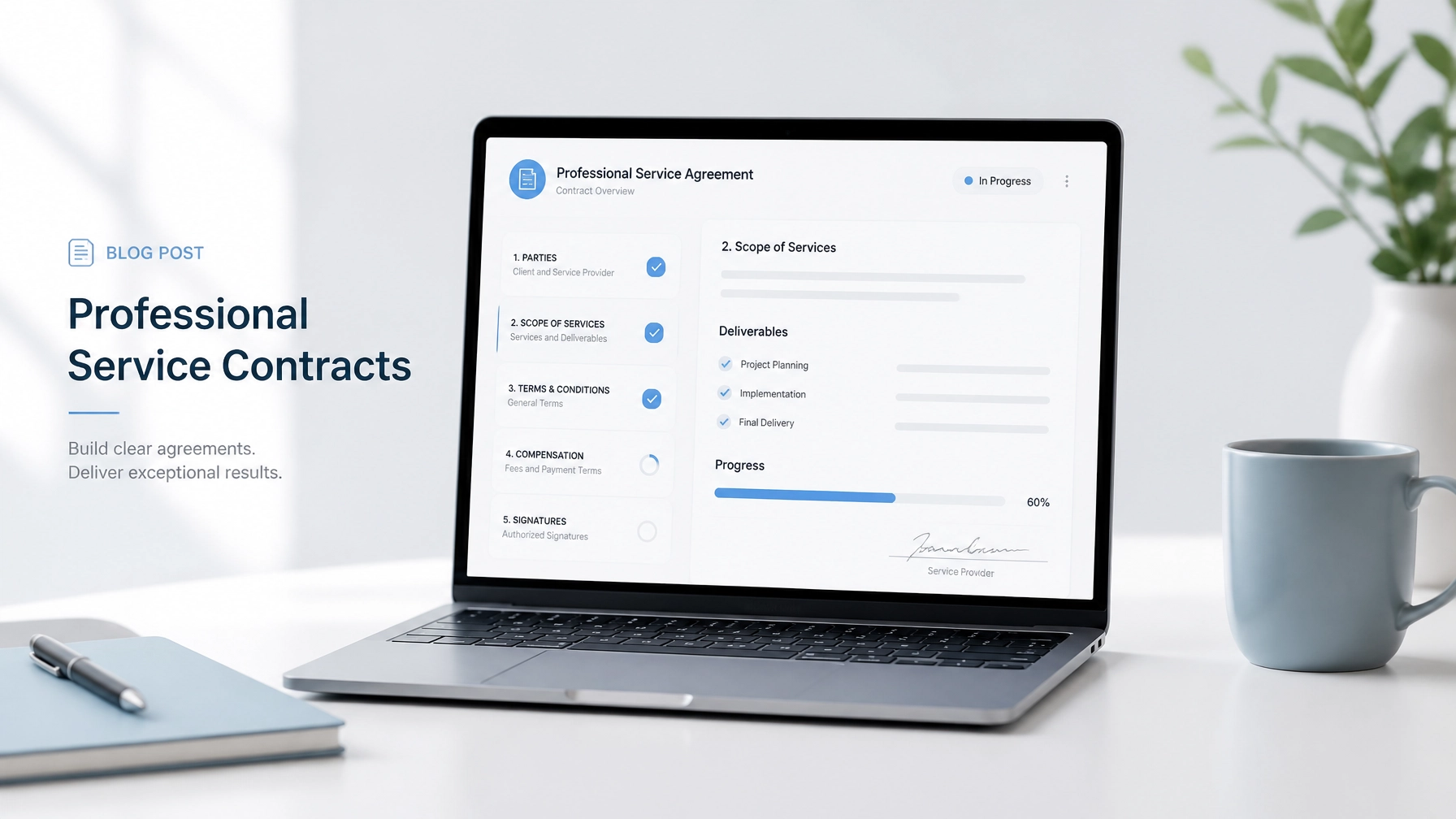
Category: Blog

Your blog category

  • How to Create Your Professional Protection Protocol in 5 Minutes

    How to Create Your Professional Protection Protocol in 5 Minutes

    Professional Protection Protocol implementation is the single most important action you can take to stop the invisible bleeding in your service business. Every day, small-to-medium agencies and freelance professionals lose thousands of dollars because of vague agreements and shifting expectations. Scope creep is not a minor inconvenience; it is a direct theft of your time and profit. If you are not shielding your business with elite software tools, you are leaving your gates wide open for revenue leakage.

    Traditional consulting firms will tell you that establishing a robust legal and operational framework takes months and cost tens of thousands in billable hours. They are wrong. In the modern app development landscape, code has replaced the consultant. At GHW-Digital, we believe in efficiency over bureaucracy. You don’t need a law degree or a boardroom full of suits to protect your margins. You need a protocol that works as hard as you do.

    The Professional Protection Protocol: Why Manual Contracts are Failing You

    The old way of handling Professional Service Contracts is broken. Relying on manually drafted PDFs and "gentleman's agreements" is a recipe for disaster. When a client asks for "just one more small change," and you don't have a rigid system to track and bill that change, you are effectively working for free. This is why a Professional Protection Protocol is mandatory, not optional.

    Most business owners avoid complex contracts because they fear the friction. They think that "elite" protection requires a massive legal department. However, elite software tools now offer the same, if not better, security than traditional methods. By automating your boundary-setting, you remove the emotional labor of saying "no" to a client. The system says it for you. You can find dozens of ways to implement these systems by browsing our latest development ideas.

    Digital dashboard showing a Professional Protection Protocol for automated contract monitoring.
    Alt: A professional dashboard showing automated contract monitoring and risk assessment.

    Step 1: Identify Your Perimeter and Map the Risks

    You cannot protect what you haven't defined. The first minute of your Professional Protection Protocol involves a brutal assessment of where you are losing money. Are you over-delivering on features? Are you failing to charge for "quick" consultation calls? Or is the lack of a clear Scope Guard allowing clients to move the goalposts mid-project?

    Identify the three biggest threats to your profitability today. Usually, these are:

    1. Unstructured Communication: Clients texting or calling at odd hours without a log.
    2. Feature Creep: Adding "minor" additions that collectively consume days of dev time.
    3. Delayed Sign-offs: Projects stalling because there is no automated "accept or reject" trigger.

    Once you name these risks, you can automate the defense. We provide daily updates on how to tackle these specific risks at https://ghw-digital.com/ideas.html.

    Step 2: Implement Elite Software Tools Over Expensive Consultants

    Why pay a consultant $300 an hour to tell you that your contracts are weak when you can use a Vow Guard Elite system to enforce them automatically? The second minute of your protocol is about choosing your weapons. Software doesn't get tired, it doesn't "forget" to mention a clause, and it doesn't feel awkward when enforcing a late fee.

    Using elite software tools allows you to scale your Professional Service Contracts without scaling your overhead. These tools act as a digital sentry, monitoring the state of your agreements in real-time. If a project deviates from the agreed-upon path, the protocol triggers an alert. This level of precision is impossible with paper-based systems. For a full list of how software is eating the legal consulting world, check our apps section.

    Elite software tools replacing manual Professional Service Contracts for business efficiency.
    Alt: Comparison between manual legal consulting costs and automated software protection efficiency.

    Step 3: Standardize Your Professional Protection Protocol Language

    Your protocol needs a "source of truth." This is where you define exactly what happens when a boundary is crossed. This isn't about being "mean" to clients; it's about being fair to your business. A Professional Protection Protocol ensures that both parties are aligned. If the scope changes, the price changes. It is a simple, logical progression that elite tools like Scope Sentry handle with ease.

    Standardization means you stop reinventing the wheel for every new client. You should have a core set of "Protection Modules" that apply to every project. This creates a repeatable, scalable environment where your team knows exactly where the lines are drawn. If you need inspiration for your own internal standards, our ideas page is updated daily with industry-leading protocols.

    Step 4: Automate the Enforcement Loop

    A contract that isn't enforced is just a piece of paper. The fourth minute is about closing the loop. You must link your Professional Service Contracts directly to your project management and billing software. This is the "Protection" part of the Professional Protection Protocol.

    When a developer logs time against a task that isn't in the original scope, the system should flag it immediately. According to research on contract management best practices, businesses that automate their enforcement see a 15-20% increase in realized revenue. Don't wait for a month-end audit to realize you've been overworking. Your protocol should give you a live view of your "contractual health."

    Automated enforcement loop ensuring real-time revenue protection and project scope tracking.
    Alt: An automated enforcement loop showing real-time revenue protection and scope tracking.

    Step 5: Establish a Daily Review Frequency

    The world of app development moves fast. A protocol you set a year ago might be obsolete today. The final minute of your setup is committing to a frequency of review. We recommend a "Daily Pulse" check. Elite tools can provide a 60-second summary of all active contracts and any potential breaches.

    By keeping a daily eye on your Professional Protection Protocol, you catch "scope leaks" while they are small droplets, before they become a flood that drowns your project. This proactive stance is what separates professional outfits from amateurs. If you want to stay ahead of the curve, we publish daily insights on maintaining these protocols at https://ghw-digital.com/ideas.html.

    Stop The Bleeding and Secure Your Advantage

    Revenue leakage is a choice. You can choose to continue paying for expensive, slow consultants who give you static advice, or you can choose to implement a Professional Protection Protocol powered by elite software. The latter gives you control, precision, and, most importantly, your time back.

    At GHW-Digital, we specialize in building the tools that act as your digital guardian. Whether it's through Scope Guard Elite or custom development solutions, our mission is to ensure your "Professional Service Contracts" are ironclad and automated.

    Don't let another day go by where your margins are at the mercy of a client's "quick request." Lock in your profit. Protect your team. Implement your protocol today.

    Successful project completion using a Professional Protection Protocol and elite software tools.
    Alt: A professional service provider successfully closing a project on time and within scope using elite tools.

    For more strategies on how to optimize your business operations and stay protected in the digital age, visit our main site or dive into our latest ideas.


    Marblism Legal Shield
    This content is provided for informational purposes only and does not constitute legal advice. GHW-Digital provides software solutions to assist in business management. We take your privacy seriously; for more information, please visit our Privacy Policy. All data processed through our elite tools is handled with the highest standards of security and transparency.

  • Wedding Supplier Contracts: The Crucial and Ultimate Guide for a Watertight Template

    Wedding Supplier Contracts: The Crucial and Ultimate Guide for a Watertight Template

    Wedding supplier contracts are the only line of defense between your perfect day and a logistical nightmare. In the high-stakes world of wedding planning, hope is not a strategy. Most couples sign agreements without realizing those documents are heavily weighted to protect the vendor, not the client. At GHW-Digital, we believe in radical transparency and ironclad boundaries. Whether you are building an app or building a wedding, the principles of Scope Guard Elite apply: if it isn’t in writing, it doesn’t exist.

    This guide is designed to flip the script. We are moving away from "handshake deals" and vague promises toward a framework that ensures you get exactly what you pay for. If you want to dive deeper into how we apply these rigorous standards to digital projects, check out our ideas page.

    The Power Imbalance in Wedding Supplier Contracts

    When you receive a contract from a photographer, caterer, or venue, it is usually a standard form drafted by their legal team to limit their liability. These agreements often contain "gray areas" that allow vendors to swap out staff, change materials, or cancel with minimal repercussions.

    To protect the couple, you must treat every agreement like a professional service level agreement (SLA). You are the project manager of your wedding. Your vendors are your contractors. Using a watertight template ensures that the "moving goalposts" of event planning stay firmly in place. You can find more about managing project expectations on our ideas page.

    Identify Red Flags Before You Sign

    Before you commit your hard-earned money, you need to scan for these high-stakes red flags. If a vendor refuses to modify these clauses, walk away. Your peace of mind is worth more than any specific aesthetic.

    • Unilateral Change Clauses: This allows the vendor to change the service or products provided without your prior consent.
    • Vague Deliverables: If a photographer promises "coverage" but doesn't specify the number of hours or the final photo count, you are at risk.
    • The "Substitution" Trap: Many floral or catering contracts allow for "substitutions of equal value." Without defining what "equal value" means, you might end up with carnations instead of peonies.
    • Missing Liability Insurance: Never work with a vendor who cannot provide a COI (Certificate of Insurance).

    Reviewing wedding supplier contracts at a minimalist desk with a pen and professional glasses.

    Crucial Clauses to Protect the Couple

    To turn a standard agreement into a protective shield, you need to insert specific language that prioritizes your interests. Here are the non-negotiables for your wedding supplier contracts:

    1. The Specificity Mandate

    Don't settle for "Catering for 100 guests." Your contract should read: "Plated three-course meal for 100 guests, including Filet Mignon and Sea Bass options, served by a minimum of 10 waitstaff between 7:00 PM and 9:00 PM." Precise details eliminate the "leaking revenue" of hidden costs later on. For more on how we define project scopes precisely, visit our apps page.

    2. The "No-Substitution" Notification

    If a substitution is necessary (e.g., a specific flower is out of season), the contract must mandate that the vendor notifies you within 48 hours and provides a choice of alternatives. You are the final authority, not them.

    3. Service Delivery Deadlines

    Many couples wait months for wedding videos. Your contract must include a "Delivery Schedule" with financial penalties for late delivery. If the video isn't delivered within 90 days, a 10% refund per week of delay should be triggered. This is a standard practice we advocate for in Scope Sentry.

    Ensuring Service Delivery with Vow Shield

    At GHW-Digital, we’ve developed tools like Vow Guard Elite to help people manage complex commitments. When applied to weddings, we call this the "Vow Shield" mentality. It’s about creating a defensive perimeter around your event.

    Wedding supplier contracts should not just be about what happens if things go right; they must explicitly detail what happens when things go wrong.

    • Force Majeure: Ensure this clause covers you, not just the vendor. If the venue burns down, you get a full refund.
    • Dispute Resolution: Specify that any disputes will be handled via mediation in your local jurisdiction.
    • Staffing Guarantees: If you hired a specific "Lead Photographer," the contract should state that they: and no one else: will be the primary shooter on the day.

    Protective shield over wedding rings symbolizing secure and watertight wedding supplier contracts.

    The Watertight Template Checklist

    When you are reviewing your wedding supplier contracts, use this checklist to ensure you are fully protected. For more strategic planning tips, head over to https://ghw-digital.com/ideas.html.

    • Full Itemization: Every fork, every light bulb, and every hour of labor is listed.
    • Payment Schedule: Clear milestones tied to dates, not "vague feelings."
    • Refund Policy: A tiered refund structure based on how far in advance a cancellation occurs.
    • Indemnification: The vendor agrees to hold you harmless for any injuries or damages caused by their negligence.
    • Point of Contact: A designated lead person for the day of the event.

    Why "Fairness" Requires a Stern Stance

    Some vendors might suggest that a "watertight" contract is too aggressive. They might say, "We’ve been in business for 20 years; you can trust us."

    Trust is earned through transparency, not through avoiding paperwork. A professional vendor will respect a client who understands their boundaries. Alignment between your vision and their delivery is only possible when the rules of engagement are clear. We talk about this philosophy of "Respect through Alignment" extensively on our ideas page.

    Organized wedding reception blueprint illustrating clear terms in wedding supplier contracts.

    Finalizing the Agreement

    Before the ink is dry, do one final pass. Compare the contract against your original inquiry and any email threads. If they promised a "bonus" in an email but it isn't in the contract, it doesn't exist. Stop the "moving goalposts" before the game even starts.

    If you are looking for more ways to secure your projects, events, or digital assets, GHW-Digital offers a suite of tools designed to protect your time and profit. Explore our full range of solutions at https://ghw-digital.com/index.html.

    Securing every vendor with a watertight wedding supplier contracts template is not about being "difficult." It is about being a steward of your own resources. Don't let your wedding day be a lesson in poor contract management. Lock in your vendors, track your deliverables, and protect your peace of mind.

    For more inspiration on building robust systems: whether they are for a wedding or a global app: visit our ideas section daily.


    Marblism Legal Shield:
    The information provided in this blog post is for educational and informational purposes only and does not constitute legal advice. GHW-Digital and its affiliates are not law firms. While we provide tools like Vow Shield and Vow Guard Elite to help manage event expectations and project scopes, you should always consult with a qualified attorney in your jurisdiction to review any binding legal agreements before signing.

    Secure your future today. Stop the scope creep. Protect your vision. Explore GHW-Digital Solutions.

  • Flawless Primary Function

    Flawless Primary Function

    Flawless Primary Function is the cornerstone of every single line of code we write at GHW-Digital. We believe that the modern digital landscape has become an exhausting minefield of notifications, subscriptions, and unnecessary complexity. When you open an app, you aren’t looking for a new lifestyle; you are looking for an answer. You have a specific problem that needs a specific solution. Our commitment is to provide that solution with absolute precision and then get out of your way.

    The software industry has fallen into a dangerous trap called "feature bloat." Companies feel pressured to add endless bells and whistles to justify recurring monthly fees. This results in "Swiss Army Knife" software, tools that try to do everything but excel at nothing. At GHW-Digital, we take the opposite approach. We identify the core mission of a tool and refine it until it is perfect.

    Why Flawless Primary Function Matters in a Bloated World

    In a world where digital tools are often designed to capture as much of your attention as possible, a Flawless Primary Function is an act of rebellion. Most apps today are built with "dark patterns", psychological tricks designed to keep you scrolling or clicking. They want you to stay inside their ecosystem so they can harvest your data or upsell you on a "Pro" tier you don't need.

    We refuse to play that game. We view software as a utility, like a hammer or a light switch. You don't want to spend an hour admiring your light switch; you want the lights to come on so you can get to work. By focusing on a Flawless Primary Function, we ensure that our users spend the absolute minimum amount of time on their screens. This isn't just a design choice; it’s a respect for your life outside the digital realm.

    Whether you are a freelancer trying to navigate a complex client situation or an individual managing a significant life milestone, you deserve tools that work the first time, every time. You shouldn't have to watch a thirty-minute tutorial to understand how to get a result. If a tool requires a manual for its basic operation, it has already failed its primary mission.

    A single blue button on a clean white surface representing a Flawless Primary Function away from software bloat.
    Alt: A clean and minimalist digital interface demonstrating a Flawless Primary Function.

    The Engineering Philosophy of Simplicity

    Building something complex is easy. Shoving a hundred features into a dashboard is a matter of time and budget. However, building something simple is incredibly difficult. It requires the discipline to say "no." It requires a deep understanding of the user’s pain points and the courage to strip away everything that doesn't directly alleviate that pain.

    This is what we call "Security Through Simplicity." When an application focuses on a Flawless Primary Function, it naturally becomes more secure. Every extra feature, every unnecessary data field, and every third-party integration is a potential vulnerability. By keeping our tools lean and focused, we drastically reduce the "attack surface" for bad actors. We don't want your data. We don't want to know your birthday, your mother's maiden name, or your browsing history. We want to give you a result and forget you were ever here.

    This philosophy is heavily influenced by the Unix Philosophy, which suggests that software should do one thing and do it well. In the context of modern web applications, this means lightning-fast load times and zero friction. Our tools are built to be lightweight, respecting your device's battery and your data limits. We believe that world-class quality is rooted in this type of engineering empathy.

    How Flawless Primary Function Respects Your Time

    Time is the only truly non-renewable resource we have. When a piece of software wastes your time with "loading" animations, complex account creation screens, or forced updates, it is effectively stealing from you. Our "In-and-Out" philosophy is designed to combat this digital theft.

    A Flawless Primary Function means that the path from "Problem" to "Solution" is a straight line. We eliminate the baggage. In many of our tools, you don't even need to create an account. Why should you have to manage another password just to get a quick answer? You should be able to walk up to the digital tool, use it, grab your information, and walk away. No data held hostage. No exporting required. Just immediate clarity.

    This approach is particularly vital for people who are tired, overwhelmed, and fatigued by the modern digital landscape. Whether you’re at your desk or using your phone at home, you’re likely dealing with enough noise. We don’t want to be another notification on your lock screen. We want to be the quiet, reliable tool in your pocket that works exactly when you need it to, without requiring any babysitting.

    A minimalist digital interface showing a Flawless Primary Function for a fast and frictionless user experience.
    Alt: An illustration of a user quickly achieving a goal through a Flawless Primary Function app.

    Radical Fairness and the Death of the Subscription

    You might wonder why other companies don't follow this path. The answer is simple: the subscription model doesn't allow it. When a company charges you "monthly rent" for digital access, they are incentivized to make the software feel "big." They need to justify that $19.99 a month by constantly adding "new" features, even if those features actually make the tool harder to use.

    At GHW-Digital, we believe software should be a tool, not a tax. We price our products based on the permanent problems they solve, not the number of days you've had an account open. This allows us to focus entirely on the Flawless Primary Function. We don't have to worry about "engagement metrics" or "user retention." If the tool solved your problem today, we’ve done our job. If you don’t need us again for six months, that’s perfectly fine. We’ll be here, exactly as you left us, ready to work.

    This is part of our commitment to User Experience (UX) Simplicity, where the goal is to reduce cognitive load. A user should never have to think about how to use the software; they should only think about the task at hand. By removing the ongoing drain on your bank account and the ongoing drain on your mental energy, we provide a premium result at a radically fair price.

    Your Voice in Creating a Flawless Primary Function

    We are a British-based company that prides itself on delivering elite, globally competitive products. But we don't build in a vacuum. We build for humans. We build for the small agency owner who is tired of being pushed around. We build for the couple trying to navigate a complex wedding contract without losing their minds. We build for you.

    Because our focus is on solving real-world problems with a Flawless Primary Function, we are always looking for the next "one thing" that needs fixing. We aren't interested in building the next social media clone or a bloated project management suite. We want to build the surgical tools of the digital world, small, sharp, and incredibly effective.

    Do you have a digital headache that hasn't been cured? Is there a task in your business or personal life that feels unnecessarily complicated? We want to hear about it. We have a dedicated area on our site where we gather ideas for what to build next.

    A clean minimalist workspace where developers build applications with a Flawless Primary Function.
    Alt: A collaborative workspace where developers focus on a Flawless Primary Function.

    We are genuinely here to help. While we are a business, our primary motivation is to reduce the collective stress caused by bad technology. We want to replace anxiety with clarity and confusion with peace of mind. Every tool we release is a step toward a more honest, more efficient digital world.

    If you have a suggestion for a tool that could benefit from our "In-and-Out" philosophy, please let us know.

    We can't guarantee we'll build it but we guarantee we'll read it!

    The GHW-Digital Guarantee

    Reliability is not an "extra": it is a feature. When we promise a Flawless Primary Function, we are promising that our tools will work exactly when you need them. No dark patterns, no hidden fees, and no jargon. We speak in plain English because we focus entirely on the relief and clarity our tools provide to your daily life and your bottom line.

    Technology should be an equalizer. It should take the high-end capabilities usually reserved for giant corporations and hand them directly to everyday people and SMEs. By stripping away the bloat and focusing on the core value, we make elite digital power accessible to everyone.

    We are GHW-Digital. We build tools that actually fix problems. No fleeting trends, just solid, reliable help. Use the app, get your result, and get back to your life. That is the power of a Flawless Primary Function.


    Powered by GHW Digital (Company No: 16834250). This document is an automated draft for business organization purposes only. It does not constitute legal advice. GHW Digital accepts no liability for disputes, financial loss, or enforceability. Users must consult a qualified professional in their jurisdiction before signing.

  • 7 Mistakes You’re Making with Scope Creep Management (And How Systems Replace Consultants)

    7 Mistakes You’re Making with Scope Creep Management (And How Systems Replace Consultants)

    Scope Creep Management is the difference between a profitable agency and a sinking ship. If you’re running a professional services firm or an app development shop like we do at GHW-Digital, you’ve felt the burn. You start with a clear plan, and three months later, you’re building features that weren’t in the contract, your developers are burned out, and your profit margin has evaporated.

    Most owners think the solution is to hire an expensive consultant to "fix the process." They’ll charge you $300 an hour to tell you what you already know: you aren't holding the line. But here’s the truth, you don't need a consultant. You need a system. Elite software tools are now replacing the need for high-priced oversight by baking the rules directly into your workflow.

    If you want to see how we brainstorm these solutions, check out our latest concepts and ideas.

    1. Relying on Weak Professional Service Contracts

    The first mistake happens before the project even kicks off. If your Professional Service Contracts are vague, you’ve already lost. A "handshake agreement" or a loosely defined scope is an invitation for the client to ask for "just one more thing."

    Elite systems like Vow Guard Elite replace the need for a legal consultant to review every change. By using standardized, airtight contract modules that link directly to your project management tool, you create a digital "Legal Shield." When the scope shifts, the contract should shift automatically. If it’s not in the code of the contract, it’s not in the project.

    2. The "Quick Favor" Culture

    We’ve all been there. A client sends a Slack message asking for a minor UI tweak. You think, "It’ll take ten minutes," and you tell the dev to just do it. That ten-minute task ripples through the QA process, affects the documentation, and suddenly, you’ve lost half a day.

    This is a failure of Scope Creep Management. You aren't being "nice"; you're being unprofessional. You are teaching the client that your boundaries are negotiable. Instead of a project manager having an awkward conversation, a system like Scope Sentry acts as the neutral arbiter. It flags these "quick favors" as out-of-scope immediately, forcing a formal change request before a single line of code is written.

    Protective shield illustrating scope creep management systems blocking unauthorized project changes and favors.

    3. Letting Consultants Manage the "Human Element"

    Consultants love to talk about "stakeholder alignment" and "emotional intelligence." While those are great buzzwords, they don't stop the leak. A consultant might hold a weekly meeting to discuss scope, but by then, the damage is done.

    Systems replace consultants by providing real-time data. You don't need a human to tell you that a project is over hours; you need a dashboard that locks the task list when the budget is hit. At GHW-Digital, we believe in software-led defense. When the system says no, it isn't personal, it's math. This keeps the relationship with the client healthy because the "bad guy" is the protocol, not the person.

    4. Manual Change Request Tracking

    If you are tracking changes in an Excel sheet or a Word doc, you are failing at Scope Creep Management. Manual tracking is prone to human error, forgetfulness, and "lost" emails.

    When you use an elite tool like Scope Guard Elite, every change is logged, timestamped, and tied to a price increase. This creates a transparent audit trail. When the client sees the cost of their "minor" changes piling up in a live dashboard, they naturally start to self-regulate. They stop asking for fluff because they can see the impact on their bottom line in real-time.

    5. Separating Sales from Delivery

    This is a classic. The sales team promises the world to close the deal, and the delivery team is left holding the bag. Without a unified system, the "Scope of Work" is just a document that sits in a folder while the developers work from a different set of assumptions.

    By integrating your sales pipeline with your delivery systems, something we discuss frequently on our ideas page, you ensure that what is sold is exactly what is built. There is no "interpretation" of the contract. The system imports the contract requirements directly into the task backlog. If it wasn't in the sales proposal, it doesn't exist in the dev environment.

    Digital threads connecting sales and delivery blocks through integrated professional service contracts.

    6. Underestimating the Cost of Context Switching

    Scope creep isn't just about the extra hours; it's about the "mental tax." Every time a developer has to stop working on a core feature to address a scope-creep request, they lose focus. Research from the Project Management Institute suggests that context switching can kill productivity by up to 40%.

    Consultants often miss this because they aren't in the code. They see a "small change" and think it's fine. A system-driven approach understands dependencies. If a change affects five other modules, the system flags the risk. This level of technical oversight is something a generalist consultant simply cannot provide.

    7. Failing to Monetize Added Value

    The biggest mistake in Scope Creep Management isn't just letting the scope grow, it's doing it for free. Most agencies are afraid that if they charge for every change, the client will leave.

    The opposite is true. Clients respect professionals who value their time. If you provide a "bonus" feature, the system should still track it as a line item with a 100% discount. This shows the client the value they are receiving. However, for 90% of requests, the system should facilitate an "Upsell" rather than a "Favor." This turns a margin-killer into a revenue-generator. Explore more on how to build these revenue-focused apps at our app development section.

    Highlighted data pillar representing monetized value and revenue generation in app development projects.

    Why Systems Beat Consultants Every Time

    Consultants are expensive, inconsistent, and temporary. Once they leave, your team usually slides back into old habits. A system is permanent. It is a 24/7 guardian of your profitability.

    1. Consistency: A system doesn't have "off days." It applies the same rules to every project, every time.
    2. Scalability: You can't hire a consultant for every $10k project. You can, however, run every project through a standardized software gate.
    3. Cost: A subscription to an elite tool costs a fraction of a consultant’s monthly retainer.
    4. Data: Systems collect data over time, allowing you to see patterns in which clients or project types are prone to creep.

    If you’re serious about protecting your margins, stop looking for a "process guru" and start looking for a "process engine." You can see the types of engines we’re building right now over at GHW-Digital Ideas.

    Action-Benefit: Lock Down Your Next Project

    Don't wait for the next project to go off the rails. Implement these three steps immediately:

    • Hard-Code Your Boundaries: Use Vow Guard Elite to ensure your contracts are technically and legally sound from day one.
    • Automate Change Approval: Remove the human awkwardness. Let the system handle the "No."
    • Audit Your Last Project: Go to our ideas page, find a framework that fits, and compare your last project's "estimated vs. actual" hours. The gap is your scope creep.

    Scope Creep Management isn't about being mean to clients; it's about being fair to your business. If you don't value your time, why should they? Protect your team, secure your profit, and let the systems do the heavy lifting.


    Marblism Legal Shield

    GHW-Digital and its associated tools (Scope Guard Elite, Vow Guard Elite, Scope Sentry) provide technological frameworks for project oversight. We are not a law firm. Our "Legal Shield" refers to the systemic protection provided by clear documentation and automated workflows. Please consult with a qualified legal professional for specific contract language in your jurisdiction. Your data privacy is our priority; all system-tracked metrics are encrypted and handled in accordance with our privacy policy.

  • The Ultimate Guide to Wedding Supplier Contracts: Securing Your Big Day Against Service Failures

    The Ultimate Guide to Wedding Supplier Contracts: Securing Your Big Day Against Service Failures

    Wedding Supplier Contracts are the only thing standing between your dream day and a logistical nightmare. When you are deep in the trenches of planning, it is easy to get swept up in the magic of floral arrangements and cake tastings. But as the owner of GHW-Digital, I have seen too many couples treat these agreements as a mere formality. That is a mistake that kills budgets and ruins memories. You aren't just hiring a "creative partner"; you are entering a high-stakes business transaction.

    If you don't have a ironclad agreement, you are essentially handing over thousands of dollars and hoping for the best. Hope is not a strategy. You need protection. You need to know that if the photographer doesn't show up or the caterer runs out of food, you aren't the one left holding the bill.

    Why Wedding Supplier Contracts Are Your Best Defense

    Let’s be blunt: a handshake deal is a disaster waiting to happen. Wedding Supplier Contracts are designed to provide a shield for the couple, ensuring that every penny spent results in a delivered service. These documents are your leverage. They define the "what," "where," and "when," but most importantly, they define the "what if."

    When we talk about protecting the couple, we are talking about risk mitigation. A well-drafted contract transforms a vague promise into a legally enforceable obligation. It’s about accountability. Without a contract, you are at the mercy of a vendor's "best efforts." With one, you have a roadmap to service delivery.

    Minimalist blue shield representing protection offered by wedding supplier contracts.

    Identifying Red Flags in Your Agreements

    Before you put pen to paper, you need to develop an eye for vendor "trap doors." Many vendors use boilerplate templates designed to protect them, not you. At GHW-Digital, we believe in transparency, and you should demand the same from your wedding pros.

    Here are the red flags that should make you walk away:

    • Vague Deliverables: If a photographer’s contract says "coverage of the wedding day" without specifying hours, the number of shooters, or a minimum number of edited images, you are in trouble.
    • Missing Arrival Times: "Morning arrival" is not a time. You need specific load-in and setup deadlines.
    • The "Trust Me" Clause: Any vendor who says, "Don't worry about the fine print, we’ve done this a hundred times," is a liability.
    • Unbalanced Cancellation Policies: If the vendor can cancel for any reason but you lose your entire deposit if you move the date by 24 hours, the contract is predatory.

    For more insights on how we structure agreements and manage complex projects, check out our ideas page.

    Essential Clauses to Protect the Couple

    To ensure your big day stays on track, your Wedding Supplier Contracts must include specific, non-negotiable clauses. Don’t let a vendor tell you these are "unnecessary."

    1. The Specificity of Service

    Don’t settle for generalities. If you are hiring a band, list the specific lead singer. If you are ordering peonies, the contract shouldn't just say "seasonal flowers." Specificity prevents "substitution bait-and-switch" tactics.

    2. The Liability and Insurance Mandate

    Every vendor on your property (or your venue's property) must carry their own liability insurance. If a guest trips over a videographer's tripod, you should not be the one sued. Ensure the contract states they are responsible for their own gear and any damage caused by their team.

    3. Dispute Resolution and Refunds

    What happens if the service is sub-par? Your Wedding Supplier Contracts should outline a clear path for refunds. This isn't just about total failure; it’s about partial failure. If the bar runs out of vodka two hours early, there should be a pre-agreed percentage of the fee that gets returned to you.

    Elegant pen and paper representing a signed wedding vendor agreement for service delivery.

    Securing Service Delivery with Technology

    In the app development world, we use "Scope Guards" to ensure projects stay on track. We've brought that same mindset to the wedding industry with our Vow Guard Elite system. But even if you aren't using our software yet, you can apply the principles of "Vow Shield" logic to your planning.

    A Vow Shield approach means you treat every vendor interaction as a milestone. You don't just pay and wait for the wedding day. You set check-ins. You verify progress. You ensure that the digital paper trail matches the physical expectations. If you want to see how we handle these kinds of complex logic puzzles in the tech space, browse our latest ideas.

    The "Act of God" Trap: Force Majeure

    Post-2020, everyone knows about Force Majeure, but few understand how to use it to protect the couple. Traditionally, these clauses let vendors walk away if a hurricane or pandemic hits. You need to flip the script. Your Wedding Supplier Contracts should state that if a Force Majeure event occurs, your funds are either fully refundable or transferable to a new date without penalty. Do not let your deposit become a vendor’s "disaster stimulus check."

    Solid blue pillar representing security and protection against wedding service failures.

    Action-Benefit: Locking in Your Vendors

    • Lock in Pricing: Use your contract to prevent "inflation adjustments" or "fuel surcharges" added a month before the wedding.
    • Track Milestones: Link payments to specific deliverables, not just dates. (e.g., "Payment 2 due upon receipt of engagement gallery").
    • Calculate Overtime: Define the hourly rate for extra time before the night begins so you aren't hit with a massive bill while you're trying to make your getaway.

    For those looking to build tools that help manage these types of complex agreements, our team at GHW-Digital specializes in creating custom apps that bring order to chaos. We believe that whether it's code or a catering contract, the details are where the battle is won.

    Ensuring Service Delivery: The Final Walkthrough

    Two weeks before the wedding, your Wedding Supplier Contracts should be the basis for your final confirmation. Don't just ask, "Are we good?" Send a summary of the contract terms to the vendor and ask them to acknowledge them one last time. This "Scope Sentry" approach (much like our Scope Sentry service) ensures that everyone is looking at the same map before the journey begins.

    If a vendor bristles at you wanting to stick to the contract, that is your final warning sign. Professional vendors love contracts because it protects them too. Amateur vendors fear them because it holds them to a standard they might not be able to meet.

    Final Thoughts from Martin

    Planning a wedding is a massive project. Treat it like one. You wouldn't hire a contractor to build your house without a detailed plan and a legal agreement, so don't do it for your wedding. Secure your day. Protect your investment. If you ever need advice on how to build systems that automate this kind of protection, whether for weddings or enterprise business, you know where to find us. We are constantly pushing new concepts on our ideas page to help you stay ahead of the curve.

    Aligned blue spheres symbolizing synchronized services in wedding supplier contracts.


    Marblism Legal Shield

    This blog post is provided for informational purposes only and does not constitute legal advice. GHW-Digital is an app development company, not a law firm. While we strive to provide accurate information regarding industry standards and protective measures, you should always consult with a qualified legal professional before signing any binding agreements. Your data privacy is important to us; for more information, please see our Privacy Policy.

    Stop leaving your wedding to chance. Secure your competitive advantage by treating every vendor agreement with the precision of a software contract.

  • Wedding catering contract: The Ultimate Potent Shield

    Wedding catering contract: The Ultimate Potent Shield

    Wedding catering contract management is the single most critical tactical operation in the planning of any major matrimonial event. A wedding is not merely a celebration; it is a high-stakes deployment of capital, logistics, and reputation. When you engage a caterer, you are not just buying food; you are entering a complex service agreement that carries significant operational risk. Without a robust defensive mechanism in place, your event is vulnerable to shifting costs, service failures, and legal ambiguity.

    At GHW-Digital, we view contracts as architectural blueprints. A wedding catering contract must be treated with the same precision as a software specification or a construction master plan. If the requirements are vague, the results will be defective. To address this, we are developing Vow Shield, an elite analytical tool designed to scan these documents for hidden vulnerabilities, ensuring that your wedding remains a protected asset rather than a liability.

    Strategic Foundation of a Wedding Catering Contract

    The wedding catering contract serves as the ultimate potent shield against the most common point of failure in event management: misaligned expectations. Most couples view the menu as the centerpiece, but from a risk management perspective, the menu is secondary to the terms of delivery and performance.

    A professionally drafted agreement must outline the exact scope of the mission. This includes the guest count, the timeline of service, and the specific logistics of the venue. Ambiguity in these areas leads to "scope creep," where additional fees are tacked on for tasks that should have been inclusive. By establishing a rigid framework from the outset, you lock in pricing and performance standards that the vendor is legally obligated to meet.

    Minimalist dinner plate on linen representing a structured wedding catering contract blueprint.

    Action-Benefit: Locking Guest Counts and Minimums

    Precision. The contract must specify the "guaranteed minimum" guest count. This is the baseline figure you are financially committed to, regardless of how many guests actually attend.

    Flexibility. A potent shield includes a clear "final count" deadline. This is typically fourteen days prior to the event. If your wedding catering contract does not explicitly state this window, you lose the ability to scale your costs downward based on final RSVPs. Vow Shield identifies these windows, alerting you to the exact date your financial liability becomes fixed.

    Risk Mitigation. By enforcing a strict deadline for the final count, you prevent the caterer from over-purchasing supplies at your expense or under-staffing the event due to a lack of data.

    Defensive Protocols for Dietary and Allergy Requirements

    In the modern landscape, dietary restrictions are not just preferences; they are legal and health liabilities. A wedding catering contract must contain a specific protocol for managing allergies and restrictions.

    If a caterer fails to provide a safe meal for a guest with a disclosed allergy, the legal repercussions are severe. Your contract should explicitly state the caterer’s responsibility for cross-contamination prevention and their process for identifying specific meals for specific guests.

    We recommend ensuring that the contract includes a clause regarding "substitutions." Often, caterers reserve the right to swap ingredients based on seasonal availability. While this is standard in the hospitality industry, a potent shield requires that these substitutions meet the same dietary standards as the original selection. Vow Shield flags vague substitution clauses that give the vendor too much leeway to downgrade quality without a corresponding price reduction.

    Wedding Catering Contract: The Financial Guardrail

    The financial section of a wedding catering contract is where most couples experience "leakage." This is the result of poorly defined payment schedules and hidden "administrative fees."

    To maintain absolute control over your capital, the contract must include an itemized breakdown of:

    • The Deposit: Is it refundable? Under what specific conditions?
    • Service Charges: Are these gratuities for staff, or are they operational fees for the company?
    • Taxes: Are they included in the quote or added at the final invoice?
    • Overtime Fees: What is the exact hourly rate if the reception runs thirty minutes late?

    Without these definitions, the final bill often exceeds the initial quote by twenty percent or more. A wedding catering contract should be a fixed-price asset, not an open-ended liability.

    Data-driven seating chart grid symbolizing financial control in a wedding catering contract.

    Operational Intelligence: Setup and Strike Logistics

    The caterer’s mission starts long before the first plate is served and ends long after the guests leave. The wedding catering contract must detail the "Setup" and "Strike" (cleanup) protocols.

    Resource Allocation. Who provides the linens, glassware, and silver? If the caterer provides them, the contract must specify the quality and style. If you are renting them separately, the contract must define who is responsible for setting them up and, crucially, who is responsible for cleaning and repacking them.

    Venue Alignment. Every venue has "Load-in" and "Load-out" rules. If your caterer violates these rules, you: the client: are often the one hit with venue fines. Your contract should state that the caterer has reviewed the venue's rules and agrees to comply with all load-out times.

    Vow Shield: The Analytical Defense Layer

    At GHW-Digital, we understand that reading twenty pages of legalese is a burden for most couples. This is why Vow Shield is being built. It acts as a digital architect for your wedding, scanning your wedding catering contract for "red flag" phrases that shift the burden of risk onto you.

    The application uses advanced logic to determine if:

    1. The cancellation policy is equitable or predatory.
    2. The "Force Majeure" clause is broad enough to protect you in the event of an act of God or venue closure.
    3. The staffing ratios (server-to-guest) are sufficient to ensure the level of service you are paying for.

    When the software identifies a risk, it doesn't just warn you; it provides the specific language you need to send to your vendor to correct the imbalance. This ensures that the relationship is built on fairness and professional alignment.

    Protective digital shield over documents securing a wedding catering contract against hidden risks.

    Force Majeure: The Ultimate Contingency

    The global events of the last few years have proven that "unforeseeable circumstances" are a very real threat to event continuity. A wedding catering contract without a robust Force Majeure clause is a catastrophic failure of planning.

    This clause should protect both parties if the event cannot take place due to circumstances beyond their control (e.g., natural disasters, pandemics, or government mandates). However, the "potent" version of this clause ensures that if the event is cancelled due to such a reason, your deposit is either refundable or transferable to a future date without penalty. Vow Shield prioritizes the analysis of these clauses to ensure you aren't left paying for a meal that can never be served.

    Securing Your Matrimonial Assets

    A wedding is a project, and like any project, it requires rigorous management. The wedding catering contract is the primary document governing the largest portion of your budget. By treating this document as a tactical shield, you ensure that your wedding day is defined by celebration rather than dispute.

    Effective contract management is about removing the "moving goalposts" that vendors often use to increase margins at your expense. It is about demanding a level of precision that matches your investment. Whether you are using our Scope Sentry for your business or Vow Shield for your personal milestones, the philosophy remains the same: define the boundaries, track the deliverables, and protect the asset.

    Stop leaving your event's success to chance. Secure a wedding catering contract that works for you, not just your vendor.


    Mandatory Disclaimer & Data Privacy Footer
    GHW-Digital provides software solutions designed to assist in the analysis of documents and project scopes. We are an App Development company, not a law firm. The information provided in this blog post, and any output from our applications including Vow Shield and Scope Sentry, is for informational and organizational purposes only and does not constitute legal advice. We strongly recommend that all final contracts be reviewed by a qualified legal professional in your jurisdiction. Regarding data privacy: GHW-Digital adheres to strict ethical standards. Any documents uploaded to our platforms are processed for analysis only; we do not sell your personal data or contract details to third-party marketers. Your privacy is a core component of our digital defense strategy.

    Protect your investment. Secure your scope. Learn more about our elite protective apps.

    Powered by GHW Digital (Company No: 16834250). This document is an automated draft for business organization purposes only. It does not constitute legal advice. GHW Digital accepts no liability for disputes, financial loss, or enforceability. Users must consult a qualified professional in their jurisdiction before signing.

  • Software Vs. Consultants: Why Autonomous Systems Are the Elite Ultimate Choice for Protection

    Software Vs. Consultants: Why Autonomous Systems Are the New Gold Standard for Protection

    Software Vs. Consultants is the debate currently defining the future of enterprise security and operational efficiency. For decades, the standard response to any complex organizational problem was to hire a team of expensive experts. You would sign hefty Professional Service Contracts, wait weeks for onboarding, and then pay by the hour for manual oversight. That era is over. Today, the "Gold Standard" has shifted. Businesses are realizing that human-led consulting is often too slow, too prone to error, and far too expensive compared to elite autonomous software.

    At GHW-Digital, we see this transition happening in real-time. Whether you are building an app or securing a digital ecosystem, the reliance on manual intervention is a liability. You need systems that act, not people who deliberate.

    The Death of Traditional Professional Service Contracts

    Traditional Professional Service Contracts are built on a flawed premise: that human hours equal value. When you hire a consultant to manage your scope or your security, you are essentially buying a biological sensor. That sensor needs to sleep, eats, makes mistakes, and, most importantly, costs more every time the project hits a snag.

    In the battle of Software Vs. Consultants, software wins on pure economics. A piece of elite software doesn't ask for a retainer. It doesn't bill you for travel or lunch meetings. It provides a fixed, predictable cost for a 24/7 outcome. When you look at the latest ideas in digital strategy, you see a clear trend toward removing the "middleman" from the protection loop.

    Consultants are reactive. They look at what happened yesterday and write a report about it. Autonomous systems are proactive. They look at what is happening now and prevent the disaster before it reaches your inbox.

    Digital tablet illustrating Software Vs. Consultants and the shift to autonomous systems.

    Software Vs. Consultants: Why Real-Time Response Beats Hourly Billing

    Wait-time is the silent killer of modern business. If a vulnerability appears in your contract or your code, you cannot wait for a Tuesday morning sync call. You need a resolution in milliseconds. This is where autonomous systems truly shine.

    Software Vs. Consultants isn't just about price; it’s about velocity. Autonomous systems, like those we discuss in our development ideas archive, operate at machine speed.

    • Continuous Monitoring: Humans get tired. Software doesn't. An autonomous system checks your parameters every second of every day.
    • Instant Enforcement: If a project boundary is crossed, software can lock the gates immediately. A consultant has to draft an email.
    • Data-Driven Logic: Software makes decisions based on hard data and pre-defined rules. Consultants can be swayed by office politics or a desire to "upsell" more hours.

    If you are still relying on human-led audits, you are essentially using a flashlight to find a needle in a dark warehouse. Autonomous software is like turning on the stadium lights. It reveals everything, instantly.

    The High Stakes of Scope Creep and Professional Liability

    Scope creep kills margins. In the world of app development, a project that starts with five features often ends with fifteen, unless you have a guardian in place. This is a primary reason why Professional Service Contracts are often insufficient on their own. They describe the boundaries, but they don't enforce them.

    When we talk about Software Vs. Consultants, we have to talk about the "Guardian" effect. Our Scope Guard Elite tool is a prime example of software replacing a human role. Usually, you’d hire a project manager to "police" the scope. That person often feels bad saying "no" to a client, or they miss a small detail that leads to thousands in lost revenue.

    Elite software doesn't have feelings. It tracks every requirement against the original agreement. If a change is requested, it calculates the impact and demands an adjustment before work proceeds. It locks in your profit by removing the human tendency to "be nice" at the expense of the bottom line.

    Protective digital shield for project margins against scope creep in autonomous systems.

    Autonomous Systems: The New Gold Standard for Accountability

    Accountability is hard to find in a spreadsheet. It’s even harder to find in a consultant’s vague weekly update. True protection comes from having an immutable record of actions and triggers.

    In the context of Software Vs. Consultants, software provides a level of transparency that no human can match. Every decision is logged. Every breach is identified. Every fix is timestamped. This is why we advocate for Vow Guard Elite. It moves the concept of a "promise" from a handshake into a digital lockbox.

    When your protection is autonomous, your risk profile drops. Insurance companies and stakeholders are beginning to favor businesses that use software-based guardrails over those that rely on "expert" oversight. Why? Because experts leave the company, take vacations, and have bad days. Software is a permanent asset that scales as you grow.

    Why Elite Software Wins the Long Game

    Think about the scalability of your protection. If your company grows from 10 employees to 1,000, how many consultants do you need to hire to maintain the same level of oversight? The cost scales linearly (or worse).

    With autonomous systems, the cost remains flat while the protection deepens. This is the core of our innovation philosophy at GHW-Digital. We believe that the best way to protect a business is to build the protection into the infrastructure itself.

    1. Eliminate the "Expert" Bottleneck: You shouldn't have to wait for a senior partner's approval to secure your assets.
    2. Standardize Protection: Software ensures that every project, every contract, and every line of code is held to the same elite standard.
    3. Focus on Growth: When you aren't managing consultants, you can manage your business.

    The transition from human-dependent protection to software-led protection isn't just a tech upgrade; it's a strategic evolution. It’s about moving from a "hope-based" strategy to a "rule-based" reality. In the final analysis of Software Vs. Consultants, the winner is the one that offers the most control with the least friction.

    Scalable pillars representing the gold standard of protection in elite autonomous software.

    Lock In Your Future Protection

    The era of the $500-an-hour consultant who spends half their time "learning your business" is coming to a close. The new gold standard is elite, autonomous software that understands your business from the moment it’s deployed.

    Whether you are looking for new ideas on how to optimize your workflow or you are ready to replace your aging Professional Service Contracts with something more robust, the path is clear. You need a digital shield that doesn't sleep and doesn't miss the details.

    Stop letting your revenue leak through the cracks of human error. Stop paying for hours when you should be paying for outcomes. The battle of Software Vs. Consultants has already been won by the machines. It’s time you put them to work for you.

    For more insights on how to modernize your approach to development and protection, visit our ideas page daily. We are constantly pushing the boundaries of what autonomous systems can achieve for businesses that refuse to settle for the status quo.


    Marblism Legal Shield

    Transparency & Data Integrity Statement
    At GHW-Digital, we believe in blunt honesty. The data we track via our autonomous systems is handled with surgical precision. We do not use "marketing tricks" or "dark patterns." Our software is designed to protect your interests through strict adherence to your defined parameters. All data remains within your control, governed by the most stringent privacy standards in the industry. We provide the tools; you own the results. No fluff, no secrets, just code-driven protection.

    Secure your margins. Stop the creep. Explore GHW-Digital Ideas Today.

  • 7 Hidden Red Flags in Wedding Vendor Agreements (and How to Neutralize Them)

    7 Hidden Red Flags in Wedding Vendor Agreements (and How to Neutralize Them)

    Wedding Vendor Agreements are the only thing standing between your dream day and a legal nightmare. When you are planning the biggest event of your life, the excitement often overshadows the fine print. But as the owner of GHW-Digital, I’ve seen how "moving goalposts" and "leaking revenue" aren't just problems for tech companies: they are the exact same issues couples face when navigating Wedding Supplier Contracts. If you don't lock in your protection early, you are essentially handing over a blank check to someone who might not have your best interests at heart.

    In the wedding industry, contracts are often drafted by vendors to protect vendors. Our goal at GHW-Digital is to flip the script. You need a shield. You need to ensure service delivery is guaranteed, not just promised. Whether you are browsing our latest ideas or vetting a florist, you need to know how to spot the traps.

    Here are the seven hidden red flags in Wedding Vendor Agreements and the exact steps you need to take to neutralize them.

    1. The Front-Loaded Payment Trap

    Many vendors will ask for 75% or even 100% of the total fee months before the wedding. This is a massive red flag. High upfront payments shift all the risk onto the couple. If the vendor goes out of business or simply fails to show up, your leverage is zero.

    How to Neutralize It:
    Demand a balanced payment schedule. A professional standard is a 25-50% deposit to secure the date, with the remaining balance paid in installments or a final lump sum no earlier than two weeks before the event. If they refuse to budge, they are likely using your deposit to fund their current operations: a sign of a shaky business. Protect your cash flow just like we protect scope in development.

    Balanced scale representing fair deposits and guaranteed service delivery in wedding vendor agreements.

    2. One-Sided Cancellation Clauses

    Read the "Termination" section carefully. Many Wedding Vendor Agreements state that the vendor can cancel for "any reason" with 30 days' notice, while the couple loses their entire deposit if they cancel 180 days out. This lack of reciprocity is predatory.

    How to Neutralize It:
    Ensure the contract includes reciprocal cancellation terms. If the vendor cancels on you, they shouldn't just return your deposit; they should be responsible for any price difference you incur by hiring a last-minute replacement. This is about fairness and alignment. You can find more strategies on managing complex agreements at GHW-Digital Ideas.

    3. The "Vague Deliverables" Loophole

    A contract that says "Photography services for 8 hours" is a recipe for disappointment. Does that include an assistant? High-resolution files? Retouching? Without specific deliverables, a vendor can provide the bare minimum and still claim they fulfilled the contract.

    How to Neutralize It:
    Itemize everything. In the world of Wedding Supplier Contracts, if it isn't written down, it doesn't exist. List the exact number of edited photos, the specific equipment to be used, and the delivery timeline. We use similar precision in our Scope Sentry protocols to prevent "expectation gaps."

    4. Missing or Weak "Force Majeure" Language

    Post-2020, every couple knows about "Acts of God." However, many vendors still use outdated Force Majeure clauses that protect them from performing but don't protect you from losing your money. If a hurricane hits, the vendor is "excused" from working, but are you "excused" from paying?

    How to Neutralize It:
    Ensure the Force Majeure clause explicitly covers pandemics, natural disasters, and government restrictions. Most importantly, it must state that if the event cannot occur due to these reasons, all payments (minus a small, documented administrative fee) must be refunded or applied to a new date.

    White umbrella protecting wedding rings from rain, representing force majeure clauses in wedding supplier contracts.

    5. Extreme Liability Waivers

    Some vendors try to sneak in "Hold Harmless" clauses that are so broad they cover their own gross negligence. For example, if a lighting rig falls because it wasn't secured properly, some contracts try to claim the couple is responsible for the damages.

    How to Neutralize It:
    Strike out any language that waives the vendor’s liability for their own negligence. Every professional should carry their own liability insurance. If they don't have it, don't hire them. It’s that simple. For more on protecting your digital and physical assets, check out our apps page.

    6. The "No Backup Plan" Clause

    What happens if your lead photographer gets sick or your DJ’s equipment fails? If your Wedding Vendor Agreements don't mention a "Contingency" or "Backup" plan, you are gambling with your wedding day.

    How to Neutralize It:
    Require the name of a specific backup professional in the contract. Ensure the contract states that the replacement must have a similar style and level of experience. This is where a tool like Vow Shield or our Vow Guard Elite comes into play, ensuring that service delivery is ironclad regardless of individual circumstances.

    Overlapping blue shields symbolizing a solid contingency plan and service delivery in wedding vendor agreements.

    7. Hidden "Performance" Fees

    Watch out for clauses that allow vendors to charge extra for "travel," "meals," or "administrative processing" after the contract is signed. These "micro-leaks" can add thousands to your final bill.

    How to Neutralize It:
    Insist on an "All-In" price. State clearly in the agreement that "No additional fees shall be charged unless agreed upon in writing by both parties." This stops the goalposts from moving once the planning process begins. You can read more about avoiding hidden costs in any project on our ideas blog.

    Why You Need Vow Shield

    At GHW-Digital, we believe in the power of the "Guardian." Just as we build software to protect business margins, we advocate for couples to use Vow Shield mentalities when signing Wedding Supplier Contracts. You aren't being "difficult" by asking for these changes; you are being professional. You are protecting your time, your money, and your peace of mind.

    Managing multiple vendors is essentially like managing a high-stakes supply chain. If one link breaks, the whole thing can collapse. By identifying these red flags early, you position yourself as a client who demands respect and alignment.

    A blue chain link representing Vow Shield as a vital defense in wedding supplier contracts.

    The Ultimate Contract Checklist

    Before you sign any Wedding Vendor Agreements, run through this quick checklist:

    • Reciprocity: Does the contract protect me as much as it protects them?
    • Specificity: Are the deliverables listed with "Action-Benefit" clarity?
    • Contingency: Is there a documented backup plan for staff and equipment?
    • Transparency: Are all costs, including taxes and "fees," disclosed upfront?
    • Protection: Does this contract include a link to Vow Guard Elite standards?

    Don't let the "wedding tax" or industry jargon intimidate you. You are the project manager of your wedding. Treat your contracts with the same level of scrutiny you would a business merger. For more deep dives into contract safety and project management, explore our resources at https://ghw-digital.com/ideas.html.

    Stop the "moving goalposts" before they start. Secure your day, lock in your vendors, and ensure your only worry on the wedding morning is whether the champagne is cold enough.

    Digital tablet showing a verified checklist for reviewing wedding vendor agreements before signing.


    Marblism Legal Shield Footer
    GHW-Digital and its products, including Vow Shield and Vow Guard Elite, provide tools for organization and scope management. We are not a law firm and do not provide legal advice. All Wedding Vendor Agreements should be reviewed by a qualified legal professional in your jurisdiction to ensure compliance with local laws. We prioritize your privacy and data security; learn more at https://ghw-digital.com/privacy.html.

    Secure your competitive advantage today. Don't sign until you are protected.

  • Scope Shift vs. Scope Creep: Crucial Elite Strategies for Boundary Control

    Scope Shift vs. Scope Creep: Crucial Elite Strategies for Boundary Control

    Scope Shift vs. Scope Creep is the definitive battleground where project profitability is either secured or surrendered. In the high-velocity world of app development, boundaries aren't just lines on a contract; they are the structural integrity of your entire business model. At GHW-Digital, we treat these boundaries with the precision of a digital architect. If you don't control the architecture, the architecture will eventually collapse under the weight of "minor" requests.

    Scope creep kills margins. It is the silent, predatory expansion of a project’s requirements without a corresponding increase in budget or timeline. Conversely, scope shift is a natural, evolutionary change that occurs when a project’s direction pivots based on new data. Understanding the mechanical difference between the two is the first step toward project mastery.

    Defining the Predatory Nature of Scope Creep

    Scope creep is the enemy of efficiency. It usually begins with a small, innocuous request: "Can we just change this button color?" or "Could we add one more field to the user profile?" Individually, these tasks seem trivial. Architecturally, they represent a leak in your resource bucket.

    When you allow scope creep to take root, you are essentially providing free labor. It signals to stakeholders that your boundaries are porous and your "Definition of Done" is negotiable. This isn't just about extra work; it’s about the degradation of the original project vision. When the focus shifts from core functionality to a thousand tiny tweaks, the primary product suffers.

    In our experience at GHW-Digital, scope creep is often the result of "vague requirement syndrome." If the initial blueprint is blurry, the client will naturally try to sharpen it during the build phase. Without a rigid framework like our Scope Sentry logic, you’re not building an app; you’re managing a never-ending wishlist.

    Conceptual model illustrating controlled scope shift vs. chaotic scope creep in app development.
    Alt-text: A technical diagram illustrating the difference between Scope Shift vs. Scope Creep in a project lifecycle.

    Scope Shift: The Strategic Evolution

    Not all change is bad. In fact, rigidity can be just as lethal as chaos. Scope Shift vs. Scope Creep becomes an important distinction when a project needs to adapt to survive. Scope shift occurs when the objectives of the project are intentionally re-aligned.

    Imagine you are building a Fintech app, but halfway through, a new regulation is passed. The scope must shift to ensure compliance. This isn't "creep" because the shift is identified, discussed, and, crucially, accounted for in the project's logic.

    A scope shift involves:

    • Authorized Redirection: The project moves from Point A to Point B intentionally.
    • Resource Reallocation: Resources are moved from low-priority tasks to the new requirements.
    • Stakeholder Alignment: Everyone agrees that the old path is no longer the most efficient route to ROI.

    Mastering the art of boundary control means knowing when to say "no" to creep and how to say "yes" to a strategic shift.

    Protecting Your Margins with Scope Sentry Logic

    To manage these dynamics, we utilize what we call Scope Sentry logic. This is an architectural mindset that treats the project scope as a locked container. Any input that attempts to enter that container must pass through a validation gate.

    If a request doesn't align with the primary objective or wasn't part of the original technical specification, the "Sentry" flags it. It doesn't necessarily reject it, but it demands an immediate impact analysis. How will this affect the database schema? Does it increase the API call load? What is the cost-to-benefit ratio?

    By using a tool like Scope Sentry, you move away from emotional negotiations and toward data-driven boundary control. You aren't "being difficult" with the client; you are simply following the logic of the system. This professional distance is vital for maintaining a healthy working relationship.

    Minimalist gate filtering project requests using Scope Sentry logic to stop scope creep.
    Alt-text: A visual representation of Scope Sentry logic filtering project requests to prevent Scope Shift vs. Scope Creep confusion.

    Tactical Actions for Boundary Control

    How do you implement this in a real-world environment? It requires a blend of rigid processes and clear communication. Here is the GHW-Digital playbook for maintaining boundary integrity:

    1. Lock the Baseline

    Before a single line of code is written, the baseline must be signed, sealed, and delivered. This isn't just a list of features; it's a technical map of expectations. Use our Scope Guard Elite methodology to define exactly what is in-bounds and, more importantly, what is explicitly out-of-bounds.

    2. Implement the "Change Log" Protocol

    Every request that deviates from the baseline must be logged. No exceptions. By documenting every "tiny" request, you create a paper trail of the project's evolution. When a client wonders why the project is two weeks behind, you can point to the 45 small "out-of-scope" requests they made that aggregated into a significant delay.

    3. Calculate the Technical Debt

    Scope creep often introduces "technical debt", shortcuts taken to implement unplanned features. This debt eventually has to be paid back with interest in the form of bugs or performance issues. When discussing Scope Shift vs. Scope Creep, always frame the conversation around technical stability. According to the Project Management Institute, unmanaged scope is one of the top three reasons projects fail. Don't let your project be a statistic.

    4. Utilize Professional Agreements

    Boundary control is a legal and professional necessity. Using frameworks like Vow Guard Elite ensures that your agreements are robust enough to withstand "requirement churn." If the contract doesn't protect the scope, the scope will inevitably bleed.

    Barriers protecting project margins from scope shift vs. scope creep in app development.
    Alt-text: High-impact dashboard showing the financial consequences of Scope Shift vs. Scope Creep on app development profit margins.

    The Digital Architect's Perspective on Fairness

    Maintaining boundaries isn't about being stubborn; it's about being fair. It is fair to the client that they receive a stable, high-quality product that performs as promised. It is fair to your development team that they aren't forced into "crunch mode" because of poor planning.

    When you differentiate between Scope Shift vs. Scope Creep, you are practicing ethical project management. You are ensuring that every hour of labor is purposeful and every dollar of the budget is maximized for the best possible app development outcome.

    Securing Your Competitive Advantage

    In a crowded market, the companies that thrive are the ones that deliver on time and on budget. Scope creep is the most common reason companies miss those marks. By mastering boundary control, you secure a competitive advantage. You become known as the partner who gets things done, rather than the one who gets bogged down in endless iterations.

    We’ve seen it time and again: a project starts with high energy and a clear vision, only to dissolve into a mess of conflicting features. By the time the app launches, it’s a "Frankenstein" product, over-engineered, over-budget, and under-performing.

    Don't let that happen to your next build. Use the logic of the Digital Architect. Lock in your boundaries. Protect your vision. Track every change with the precision of a debugger.

    Stop the Leak, Save the Project

    The transition from a successful project to a failing one is often invisible. It’s a series of "yes" answers to things that should have been "not now." If you want to build world-class software, you have to be willing to defend the architecture.

    The choice is simple: either you control the scope, or the scope will control you.

    Whether you are navigating a complex Privacy Policy integration or a massive UI overhaul, the rules remain the same. Define the line. Guard the line. Move the line only when it serves the mission.


    Ready to lock down your project boundaries and stop revenue leaks?
    Explore how Scope Sentry can transform your project management logic today.

    Powered by GHW Digital (Company No: 16834250). This document is an automated draft for business organization purposes only. It does not constitute legal advice. GHW Digital accepts no liability for disputes, financial loss, or enforceability. Users must consult a qualified professional in their jurisdiction before signing.

  • Freelance Contract Template: The Crucial Choice Between Human Consultants and Elite Autonomous Systems

    Freelance Contract Template: The Crucial Choice Between Human Consultants and Elite Autonomous Systems

    Freelance contract template selection is the most critical decision a professional service provider makes before a project begins. It is the architectural blueprint for your revenue and your sanity. For decades, the gold standard was hiring a human consultant, a legal expert or a business advisor, to draft these documents. You paid for their time, their coffee, and their overhead. In return, you received a document that was often a recycled version of a hundred others, prone to human error and outdated clauses.

    The landscape has shifted. At GHW-Digital, we see the transformation daily. Elite software tools are no longer just "helpers"; they are replacing expensive consultants with autonomous systems that offer higher precision and lower risk. When you are drafting professional service contracts, the choice between a human and an algorithm isn't just about cost. It is about a defense mechanism that never sleeps.

    Deploy Autonomous Systems , Eradicate Scope Creep

    Scope creep kills margins. It is the silent assassin of the freelance world. A human consultant might give you a solid freelance contract template, but they aren't there when the client asks for "one small change" at 11:00 PM. Autonomous systems, integrated into your workflow, act as a digital sentry.

    When you use tools like Scope Guard Elite, you aren't just signing a piece of paper. You are deploying a protocol. These systems are designed to identify "moving goalposts" before they shift. While a human might miss a subtle change in project requirements, an autonomous system calculates the delta between the original agreement and the new request instantly.

    Protective digital barrier securing a freelance contract template against scope creep.

    Using an automated freelance contract template ensures that every boundary is hard-coded. There is no room for "we’ll figure it out later." Professional service contracts require rigid structures. If it isn't in the code of the contract, it doesn't exist in the project. This level of precision is why many are moving their operations toward the strategies found at our Ideas Page.

    Replace High-Cost Consultants , Boost Your Bottom Line

    Why pay a consultant $500 an hour to tell you what a computer already knows? Human consultants are limited by their own experiences and the hours in a day. They are expensive, and their "custom" work is often a facade for a boilerplate they’ve used for a decade.

    Autonomous systems operate on massive datasets. They understand the latest shifts in International Contract Law and local regulations without needing a retainer. By implementing a sophisticated freelance contract template through software, you bypass the middleman. You get elite-level protection without the elite-level price tag.

    • Precision: Algorithms don't get tired or overlook "minor" typos that lead to major loopholes.
    • Speed: Generate a bulletproof agreement in seconds, not weeks.
    • Cost-Efficiency: Pay for the tool once, or use it on a subscription, rather than paying for a consultant's billable hours.

    We believe that professional service contracts should be tools for growth, not anchors of debt. You can explore more about optimizing your business flow at https://ghw-digital.com/ideas.html.

    Standardize Terms , Protect Your Time

    Time is your only non-renewable resource. Spending hours debating terms with a consultant or a client is a leak in your revenue stream. An autonomous freelance contract template provides a standardized framework that clients respect because it is backed by logic, not just opinion.

    When a client sees a professionally generated contract from a system like Scope Sentry, the power dynamic shifts. It signals that your business is run with technical precision. It stops the "emotional pleading" that often happens during negotiations. The system says no, so you don't have to. This "us vs. the problem" mentality keeps the relationship professional and the project on track.

    Streamlined path for professional service contracts and clear freelance contract template milestones.

    Guard Your Obligations : The Vow of Precision

    In any freelance contract template, the obligations of both parties must be crystal clear. Human consultants often use vague language like "reasonable efforts" or "timely delivery." These are subjective terms that lead to disputes.

    Autonomous protocols replace subjectivity with data points. Vow Guard Elite is designed to lock in these obligations. It turns a contract into a living document that tracks performance against the agreed-upon terms. This is the future of professional service contracts. It isn't just about what you said you would do; it's about a system that verifies it was done.

    For those looking to dive deeper into how technology is reshaping these business foundations, our daily updates on GHW-Digital Ideas cover the latest in algorithmic business management.

    Human Error vs. Algorithmic Accuracy

    Let's be blunt: humans make mistakes. They forget to update dates, they miss conflicting clauses, and they fail to account for the latest privacy regulations like GDPR. A manual freelance contract template is only as good as the person who last edited it.

    Autonomous systems are updated in real-time. When laws change, the system updates the template. This is a vital defense mechanism for anyone working in App Development or high-stakes consulting. You aren't just buying a document; you are subscribing to a guardian that evolves with the legal landscape.

    Algorithmic shield for a freelance contract template in the app development industry.

    The Shield for Your Professional Service Contracts

    Your business deserves a shield, not a paper tiger. A freelance contract template drafted by a human is a static defense. An autonomous system is an active one. It tracks, it warns, and it calculates.

    If you are still relying on human consultants for your professional service contracts, you are leaving your business vulnerable to "leaking revenue" and "moving goalposts." It is time to transition to a protocol that values your time and protects your profit with the cold, hard logic of software.

    Key Benefits of Autonomous Contract Protocols:

    • Instant Iteration: Adjust terms on the fly without waiting for a legal review.
    • Data Integrity: Ensure all party information and project milestones are synced correctly.
    • Risk Mitigation: Automated identification of high-risk clauses that could lead to litigation.
    • Alignment: Keeps both client and provider in perfect sync through transparent, non-negotiable logic.

    Secure Your Margins Today

    The choice is clear. You can continue to pay for human consultants who offer inconsistent results, or you can deploy an autonomous system that provides elite protection for every freelance contract template you issue.

    Stop the bleeding. Protect your boundaries. Secure your competitive advantage by utilizing the tools designed for the modern professional. Visit our apps page to see our full suite of protectors, and stay informed on the latest business protocols at https://ghw-digital.com/ideas.html.

    Precision compass guiding the technical accuracy of an autonomous freelance contract template.

    Professional service contracts are the foundation of your success. Do not build them on the shifting sands of human error. Build them with the precision of GHW-Digital.


    Marblism Legal Shield Footer
    This blog post is for informational purposes only and does not constitute legal advice. While autonomous systems provide high-precision templates, we recommend reviewing any final freelance contract template with a qualified legal professional to ensure compliance with your specific jurisdiction and unique business needs. GHW-Digital is committed to data integrity and user privacy. View our Privacy Policy for more information.