Category: Blog

Your blog category

  • Wedding Supplier Contracts: Crucial Red Flags for Elite Protection

    Wedding Supplier Contracts: Crucial Red Flags for Elite Protection

    Wedding Supplier Contracts are often the only thing standing between a dream celebration and a legal nightmare. When you are planning the most expensive event of your life, you aren't just buying flowers or booking a venue; you are investing in a series of high-stakes service deliveries. Most couples approach these agreements with optimism, but the industry is rife with "standard" terms that leave the couple completely vulnerable while the vendor holds all the cards.

    At GHW Digital, we view a contract not as a formality, but as a systemic shield. If your agreement doesn't lock in performance and protect your capital, it isn't a contract: it's a liability.

    To ensure your big day remains an asset rather than a risk, here are the crucial red flags you must identify in your wedding vendor agreements.

    1. Ghostly Service Descriptions

    Vague Scope: If a contract says "Photography services for 8 hours" without detailing the number of shooters, the minimum number of edited images, or the specific equipment used, you have a problem.
    The Risk: Without a granular breakdown, the vendor can do the bare minimum and still claim they fulfilled the contract. You are paying for a specific outcome, not a vague presence.
    Action-Benefit: Demand a detailed line-item scope. This locks in the exact quality and quantity of service you expect, preventing "delivery drift" on the wedding day.

    2. One-Way Force Majeure Clauses

    Unbalanced Termination: Many Wedding Supplier Contracts include a "Force Majeure" clause that allows the vendor to cancel due to "unforeseen circumstances" while keeping your non-refundable retainer.
    The Risk: In a post-pandemic world, some vendors use broad language to exit obligations without returning funds. If the clause protects them but offers you no path to a refund or rescheduling, it is a predatory term.
    Action-Benefit: Equalize the clause. Ensure that if a vendor invokes Force Majeure, you are entitled to a pro-rata refund or a guaranteed new date at no additional cost.

    Minimalist digital shield icon representing systemic reliability for Wedding Supplier Contracts.

    3. Predatory Payment Milestones

    Front-Loaded Risk: A vendor demanding 100% of the fee six months before the wedding is a massive red flag.
    The Risk: Once you have paid in full, your leverage evaporates. If the vendor goes out of business or fails to perform, recovering a total prepayment is statistically improbable. Standard industry practice, according to resources like The Knot, usually suggests a 25-50% retainer with the balance due closer to the event.
    Action-Benefit: Tie payments to milestones. Use a structured schedule that keeps a significant portion of the fee (at least 20%) payable only after the final delivery is completed.

    4. The "Floating" Price Trap

    Hidden Escalation: Watch out for clauses that allow the vendor to increase prices at their discretion due to "market fluctuations" or "inflation" without a cap.
    The Risk: A caterer might suddenly add a "surcharge" a month before the wedding, knowing you are too committed to switch.
    Action-Benefit: Lock in fixed pricing. If a price adjustment clause is necessary, insist on a percentage cap (e.g., no more than 5%) and require written proof of increased costs from the vendor’s side.

    5. Unlimited Substitution Rights

    The Bait-and-Switch: You book a specific photographer because of their portfolio, but the contract allows the company to send "any qualified professional" on the day.
    The Risk: You end up with a junior associate instead of the expert you paid for.
    Action-Benefit: Name the lead. Wedding Supplier Contracts should explicitly name the primary service provider and state that substitutions are only allowed in cases of documented emergencies, with your prior written approval.

    6. One-Sided Liability Shields

    Total Indemnity: If the contract states the vendor is "not liable for any damages, delays, or failures to perform," you are essentially signing away your consumer rights.
    The Risk: This creates a culture of zero accountability. If they fail to show up, their only penalty might be returning your fee, while you are left with a five-figure loss for a non-functioning event.
    Action-Benefit: Ensure mutual liability. The vendor must be responsible for the direct results of their negligence or non-performance.

    Abstract representation of an autonomous digital asset for managing Wedding Supplier Contracts.

    7. Intellectual Property Hostages

    Usage Restrictions: For photo and video, ensure you aren't just "renting" your memories. Some contracts prevent you from printing photos or sharing them on social media without a specific license fee.
    The Risk: You lose control over your own image. You should check your rights carefully on sites like Citizens Advice to understand baseline consumer protections for digital goods.
    Action-Benefit: Secure a personal use license. Ensure the contract explicitly grants you the right to print, share, and copy the media for personal, non-commercial use forever.

    8. Invisible Insurance Provisions

    Zero Coverage: Professional vendors carry public liability insurance. If they don't, and a guest trips over their equipment, you could be the one held liable.
    The Risk: You become the de facto insurer for a professional's business risks.
    Action-Benefit: Require proof of insurance. Add a clause that the vendor must maintain a minimum level of liability coverage and provide a certificate of insurance upon request. This is a hallmark of Elite Professional Protection.

    9. The "Verbal Agreement" Mirage

    Integration Clauses: Many Wedding Supplier Contracts contain an "Entire Agreement" clause. This means anything the vendor promised you via email, Zoom, or over coffee doesn't exist unless it's in the final PDF.
    The Risk: Promises of "free upgrades" or "extra hours" disappear the moment you sign.
    Action-Benefit: Document everything. If it isn't in the written contract, it isn't real. Attach your email chain as an addendum if necessary to ensure all promises are legally binding.

    10. Lack of Performance Benchmarks

    No Delivery Timeline: A contract that doesn't state when you get your products is a ticking time bomb.
    The Risk: We have seen couples waiting 18 months for wedding videos because the contract didn't specify a delivery date.
    Action-Benefit: Set hard deadlines. Define a delivery schedule (e.g., 6 weeks for photos, 12 weeks for video) with penalties for late delivery, such as a percentage refund for every week delayed.

    A minimalist checklist representing the key points of elite Wedding Supplier Contracts.

    Secure Your Sanity with Vow Shield

    The "Modern Independent Professional" often struggles to draft these complex documents, and couples struggle to read them. This friction creates the vulnerability that leads to disputes.

    At GHW Digital, we believe in Autonomous Digital Assets. We have developed Vow Shield, an intelligent software tool that replaces the "guesswork" of wedding planning. Vow Shield interviews you about your vendors, detects the red flags mentioned above, and generates custom-engineered solutions in real-time. It’s not a template; it’s an active consultant designed to protect your time and profit.

    Whether you are a freelancer looking to provide a professional experience or a couple seeking to lock in your protection, our suite of tools is designed to democratize access to elite professional protection. You can explore more of our "Self-Help Tools" on our Apps page or see how we are rethinking the future of professional services at GHW Digital Ideas.

    Stop pleading for fairness and start enforcing it through systemic precision. Use Vow Shield to build a watertight foundation for your event.

    Powered by GHW Digital (Company No: 16834250). This document is an automated draft for business organization purposes only. It does not constitute legal advice. GHW Digital accepts no liability for disputes, financial loss, or enforceability. Users must consult a qualified professional in their jurisdiction before signing.

  • 7 Mistakes You’re Making with Professional Service Contracts (And How Systemic Leverage Fixes Them)

    7 Mistakes You’re Making with Professional Service Contracts (And How Systemic Leverage Fixes Them)

    Professional Service Contracts are the bedrock of any high-value independent business, yet most freelancers and agency owners treat them as an afterthought. They are not just paperwork; they are your primary defense mechanism against revenue leaks, scope creep, and administrative chaos. In the modern freelance community, relying on "handshake deals" or poorly drafted templates is a strategy for failure.

    At GHW Digital, we don't believe in manual labor or expensive consultants. We believe in building Autonomous Digital Assets that provide systemic leverage. If your contract isn't working as hard as you are, you’re leaving yourself vulnerable. Below, we break down the most critical errors professional service providers make and how to replace vulnerability with ironclad protocols.

    1. The Vague Deliverable: Why Professional Service Contracts Fail at Scope

    The most common profit killer is the "Open-Ended Deliverable." When you use Professional Service Contracts that define work with vague phrases like "website redesign" or "social media support," you are inviting your client to move the goalposts.

    Abstract representation of scope creep and moving goalposts

    Mistake: Not explicitly listing what is excluded from the project.
    Systemic Fix: Your contract must act as a boundary-setting engine. Every deliverable should be tied to a specific quantity, a defined number of revisions, and a clear "out-of-scope" rate. By using tools like ScopeGuard Elite, you can automate the generation of these boundaries, ensuring that every project is locked in before the first pixel is moved.

    2. Premature Ownership: Protecting Your Professional Service Contracts

    Many independent professionals hand over the "keys to the kingdom" before the final invoice is settled. If your Professional Service Contracts grant full Intellectual Property (IP) transfer upon delivery rather than upon full payment, you have zero leverage if the client disappears.

    Mistake: Granting IP rights before the cash is in the bank.
    Systemic Fix: Implement a "Conditional Transfer" protocol. The work belongs to you until the final cent is paid. This transforms your contract from a request for payment into a legal lockbox. To explore more ways to automate these legal safeguards, visit our ideas page.

    3. The Lack of a "Kill Fee" in Professional Service Contracts

    Projects die. Priorities change. Without a termination clause that includes a "Kill Fee," a client can walk away after you’ve cleared your schedule for them, leaving you with zero compensation for your opportunity cost.

    Mistake: Assuming every project will reach the finish line.
    Systemic Fix: Professional Service Contracts must include a mandatory notice period and a percentage-based kill fee. This ensures that even if the client pivots, your time is respected and your revenue is protected. Standard industry practice, as often highlighted by experts at Forbes Business, suggests that a 25-50% kill fee is standard for mid-project cancellations.

    4. Weak Payment Protocols within Professional Service Contracts

    Waiting 30 days for payment is a choice, not a law. If your Professional Service Contracts don't dictate strict payment milestones: such as a 50% upfront deposit: you are effectively acting as a bank for your clients, interest-free.

    Minimalist icon of a digital shield protecting professional service contracts

    Mistake: Working for free while waiting for a "check in the mail."
    Systemic Fix: Automation is the answer. Your contracts should trigger automatic invoices at every milestone. If a payment is missed, the work stops. This isn't being "difficult"; it’s being systemic. You can see how we integrate these workflows into our Autonomous Digital Assets.

    5. Ignoring Client Delay Penalties in Professional Service Contracts

    When a client takes three weeks to give feedback, they aren't just delaying that project; they are blocking your ability to take on new work. Most Professional Service Contracts fail to account for the "bottleneck effect."

    Mistake: Letting client delays dictate your production schedule.
    Systemic Fix: Add a "Reactivation Fee" or an "Auto-Extension" clause. If the client is unresponsive for more than 10 days, the project is paused, and a fee is required to re-start. This forces the client to respect your time and keeps your pipeline moving. For more systemic leverage strategies, check out GHW Digital Ideas.

    6. The "Handshake" Hallucination: Formalizing Professional Service Contracts

    In the heat of a project, it's easy to agree to "one quick change" over a Slack message. Without a formal change-order process baked into your Professional Service Contracts, these small favors aggregate into massive, unpaid labor.

    Mistake: Relying on informal messages to modify project scope.
    Systemic Fix: Your contract should state that any change to the scope requires a written addendum and a price adjustment. Tools like Scope Sentry act as digital guardians, tracking these changes so you don't have to play detective at the end of the month.

    7. Manual Drafting vs. Systemic Leverage in Professional Service Contracts

    The biggest mistake of all is spending hours drafting every contract from scratch or, worse, paying a lawyer $300/hour to do it for you. In a world of Autonomous Digital Assets, manual drafting is a relic of the past.

    Minimalist architectural blueprint of a digital workflow for contracts

    Mistake: Thinking you need a human consultant for standard professional protection.
    Systemic Fix: Leverage software that acts as an active consultant. Elite tools don't just give you a template; they interview you, detect risks, and generate custom-engineered solutions in real-time. This is the core of what we do at GHW Digital: democratizing access to high-level professional protection without the high-level price tag.

    Summary of Systemic Protection

    Feature The Manual Way (Vulnerable) The GHW Digital Way (Protected)
    Scope Definition "Whatever the client needs" Hard-coded deliverables and exclusions
    IP Transfer Upon delivery (Risk of non-payment) Upon full payment (Ironclad leverage)
    Payment Invoiced after work Milestone-based with automatic pauses
    Delays Absorbed by the freelancer Reactivation fees and timeline shifts
    Updates Handshake agreements Automated change-orders

    Stop Being Vulnerable. Start Being Systemic.

    The goal is not to have a "nice" relationship with your client; the goal is to have a fair relationship based on mutual respect and clearly defined boundaries. Professional Service Contracts are the tools that build that fairness. If you are still using outdated Word documents and crossing your fingers, you aren't running a business: you're running a risk.

    Hand interacting with a holographic professional service contract interface

    It is time to replace expensive, slow-moving consultants with fast, intelligent software. Stop leaking revenue and start locking in your profit.

    Take Control Now:
    Explore our full suite of tools and innovative business ideas to see how we can help you build your own Autonomous Digital Assets. For a specialized deep dive into contract drafting, visit ScopeGuard Elite.


    Powered by GHW Digital (Company No: 16834250). This document is an automated draft for business organization purposes only. It does not constitute legal advice. GHW Digital accepts no liability for disputes, financial loss, or enforceability. Users must consult a qualified professional in their jurisdiction before signing.

  • Wedding Supplier Contracts: Ultimate Protection Against Crucial Legal Failures

    Wedding Supplier Contracts are the only barrier standing between your dream celebration and a logistical nightmare. Most couples approach their wedding planning with emotion, focusing on the aesthetic of the flowers or the taste of the cake. Professional vendors, however, approach it with a business mindset. They use agreements designed to protect their time and their bottom line, often leaving the couple exposed to significant financial and emotional risk.

    If you treat these documents as "standard paperwork," you are making a massive mistake. A contract is not a gesture of trust; it is a protocol for when things go wrong. Without a rigorous, couple-centric agreement, you are essentially handing over a blank check and hoping for the best. At GHW Digital, we build Autonomous Digital Assets like Vow Shield to replace hope with hard-coded protection.

    Here are the seven critical mistakes you are likely making with your wedding agreements and the elite strategies required to fix them.

    1. Relying on Handshake Agreements and DM Promises

    The most dangerous mistake is the absence of a formal document. Many independent professionals in the wedding industry prefer "informal" arrangements: DMs, WhatsApp threads, or verbal promises made over coffee. These are legally fragile.

    If a vendor claims they "don't do contracts" because they "value the relationship," they are signaling a lack of professional infrastructure. Without Wedding Supplier Contracts, you have no leverage when the photographer fails to show up or the florist delivers wilted lilies.

    The Fix: Never exchange funds without a signed, digital agreement. Every promise made in a conversation must be mirrored in the final document. If it isn't written down, it doesn't exist. Use tools like Vow Shield to ensure every verbal commitment is locked into a binding protocol.

    2. Accepting Vague Service Scopes and Moving Goalposts

    A common industry failure is the "Bare-Bones" contract. This is an agreement that lists "Photography Services" or "Catering" without defining the parameters. Vague language is a breeding ground for scope creep and service degradation.

    When the scope is undefined, the vendor can decide on the day that "8 hours of coverage" actually includes their travel time, leaving you without a photographer for your first dance. This is how margins are killed and stress is manufactured.

    A minimalist checklist on a white digital tablet with a magnifying glass hovering over one item, highlighting clean lines and light blue checkmarks.

    The Fix: Demand a granular Scope of Work (SOW). Your Wedding Supplier Contracts must specify:

    • Exact start and end times (including setup/teardown).
    • Quantity of deliverables (e.g., number of edited photos, number of floral arrangements).
    • Specific personnel (who exactly is showing up?).
    • Equipment lists (what technology or tools are being utilized?).

    3. Ignoring the Force Majeure Imbalance

    The "Act of God" clause: or Force Majeure: is often the most one-sided section of any agreement. Standard vendor-provided contracts often state that if a disaster occurs, the vendor is released from all obligations and gets to keep your deposit.

    This is not a fair exchange; it is a transfer of all risk to the couple. While vendors need protection against circumstances beyond their control, the couple deserves a protocol for recovery or refund.

    The Fix: Ensure your Wedding Supplier Contracts include a balanced Force Majeure clause. It should mandate a refund of unearned fees or a guaranteed credit toward a future date. Do not sign away your right to financial recovery just because a storm hits. According to industry standards at The Knot, a balanced contract should protect both parties' interests during unforeseen events.

    4. Failing to Secure a Contingency Protocol

    What happens if your lead singer loses their voice or your planner is hospitalized the morning of the wedding? Most couples assume the vendor "will figure it out." In reality, many solo operators have no written backup plan.

    If your agreement doesn't specify a replacement protocol, you are one flu season away from a silent reception. A professional is only as good as their backup system.

    A minimalist digital calendar showing a red cross on a date with a blue shield icon appearing next to it, symbolizing protection against cancellation.

    The Fix: Every one of your Wedding Supplier Contracts must include a "Substitution Clause." This clause should mandate that the vendor provides a professional of equal skill and experience if they cannot attend. It should also specify that you have the right to approve the replacement or receive a full refund to hire someone else.

    5. Permitting Uncapped "Extra Fees" and Hidden Costs

    The "Leaking Revenue" problem doesn't just apply to businesses; it applies to your wedding budget. Many vendors include clauses that allow them to charge for "additional expenses" or "travel costs" without a cap. These are essentially blank checks.

    Waitstaff overtime, cake cutting fees, and "delivery surcharges" can easily add thousands to your final bill if they aren't locked in upfront.

    The Fix: Use Wedding Supplier Contracts that feature itemized, transparent pricing. Any potential additional fee must be listed with a specific price point or a pre-approved cap. If it isn't in the itemized list, you aren't paying for it. For more ideas on how to structure your professional assets and agreements, visit our ideas vault.

    6. Accepting Total Liability for Third-Party Actions

    Many venues and caterers include "Indemnification" clauses that make the couple responsible for any damage caused by anyone at the wedding. If a guest trips over a loose rug or a drunken relative breaks a chair, the vendor wants you to pay for it and defend them in court.

    This is an unreasonable burden. You are a customer, not an insurance provider for the vendor's premises.

    A minimalist set of scales balanced perfectly, rendered in a clean white and light blue aesthetic, symbolizing fair and aligned legal terms.

    The Fix: Limit your liability to "intentional acts of the couple" only. Ensure the vendor carries their own professional liability insurance. You can find comprehensive advice on protecting your rights as a consumer through resources like the Federal Trade Commission (FTC) regarding fair business practices.

    7. Neglecting the "Entire Agreement" Clause

    You might have a dozen emails where the vendor promised you "unlimited revisions" or "premium lighting." However, most Wedding Supplier Contracts contain an "Entire Agreement" or "Merger" clause. This clause states that the written contract is the only agreement that matters.

    If those email promises aren't in the physical contract, the "Entire Agreement" clause effectively deletes them. The vendor is no longer legally bound to provide those extras.

    The Fix: Perform a final audit. Copy and paste every specific promise from your email threads into the "Notes" or "Additional Terms" section of the contract before signing.

    Secure Your Autonomy with Vow Shield

    The traditional way to fix these mistakes is to hire a lawyer for $300 an hour to review every floral and catering agreement. For most couples, this is neither practical nor affordable.

    At GHW Digital, we believe in democratizing elite professional protection. We don't just provide templates; we build "Autonomous Digital Assets." Our tool, Vow Shield, acts as your digital architect. It interviews you about your specific needs, detects risks in your vendor's proposal, and generates custom-engineered Wedding Supplier Contracts that prioritize your protection.

    Stop acting as a passive participant in your own wedding's legal structure. Take control, lock in your margins, and ensure that your big day is protected by a system, not just a promise.

    A minimalist digital interface showing a green checkmark on a white document titled 'Secure Agreement', with subtle blue accents and a professional feel.

    Powered by GHW Digital (Company No: 16834250). This document is an automated draft for business organization purposes only. It does not constitute legal advice. GHW Digital accepts no liability for disputes, financial loss, or enforceability. Users must consult a qualified professional in their jurisdiction before signing.

  • Professional Service Contracts: The Elite Systems That Crush Massive Consultant Fees

    Professional Service Contracts: The Elite Systems That Crush Massive Consultant Fees

    Professional Service Contracts are the thin line between a profitable project and a total financial disaster. In the freelance community, your expertise is your asset, but without a systemic shield, that asset is vulnerable. For too long, independent professionals have been forced to choose between two undesirable extremes: paying massive fees for traditional legal consultants or rolling the dice with "free" templates that offer the protection of a paper umbrella in a hurricane.

    The era of the $300-per-hour consultant for routine paperwork is over. We have entered the age of the Autonomous Digital Asset: systems that don't just "draft" but actively defend.

    Why Professional Service Contracts are Your Shield

    Scope creep kills margins. It starts with a "quick favor" and ends with a month of unpaid labor. This is the primary reason why Professional Service Contracts must be more than static documents; they must be rigid protocols that lock in value and block unauthorized work.

    When you rely on a system rather than a human consultant, you eliminate the friction of "checking in." A system doesn't get tired, it doesn't overlook details, and it doesn't charge you for every minute of its time. It provides a consistent, high-value barrier that keeps your projects within the bounds of fairness and alignment.

    You can see how we are mapping out the future of these systems on our Ideas Roadmap. We believe that protection should be a standard utility, not a luxury.

    The Consultant Trap: High Costs, Low Speed

    Traditional consultants are built on an old-world model: billable hours. This model creates a perverse incentive. The more complex the problem, the more they earn. This is why a simple agreement can turn into a weeks-long back-and-forth that drains your momentum.

    For the modern independent professional, speed is a competitive advantage. If you have to wait three days for a lawyer to review a statement of work, you’ve already lost the client’s excitement. Systems like ScopeGuard Elite are designed to replace this bottleneck. They act as active consultants, interviewing you to detect risks before they manifest as disputes.

    A minimalist desk representing the precision of Professional Service Contracts

    Systemic Protection: Professional Service Contracts at Scale

    If you plan to scale your agency or freelance practice, you cannot be the bottleneck. You need a protocol that works whether you are in the room or not. This is where Professional Service Contracts transition from a "task" to an "asset."

    By automating your contracting process, you achieve:

    • Asset Leverage: Your contracts become a repeatable system that protects your time.
    • Risk Detection: Automated tools can identify high-risk clauses that a tired human might miss.
    • Operational Consistency: Every client receives the same elite level of protection, ensuring your business remains watertight.

    Industry leaders at Forbes have noted that automation is not just about saving money; it's about increasing the baseline of legal security across the entire industry.

    Eliminating Friction in Professional Service Contracts

    The goal of any high-end professional service is to reach a "win-win" scenario as fast as possible. Friction in the contracting phase is a signal of poor systemic organization. When you use an automated engine, you signal to your client that you are a high-value professional who respects both their time and your own.

    Our Scope Sentry tool is a prime example of how we use technology to monitor boundaries in real-time. It’s not just about what is signed at the beginning; it’s about what happens during the project. You need systems that track obligations and flag deviations instantly. This is the difference between a static template and an Autonomous Digital Asset.

    A blueprint of a system designed for Professional Service Contracts

    Building Your Asset with Professional Service Contracts

    Every time you refine your system, you are building an asset. In the world of GHW Digital, we don't just build "apps"; we build protocols for professional survival. The "moving goalposts" of a project are the enemy of profit. Your Professional Service Contracts are the ground on which those goalposts are bolted down.

    As highlighted by the Harvard Business Review, the future of professional services lies in the "productization" of expertise. We are taking the elite knowledge of top-tier consultants and baking it into software that you can use for free or at a fraction of the cost.

    The Action-Benefit Protocol

    • Standardize: Turn your best practices into a repeatable workflow.
    • Automate: Use tools to generate custom-engineered solutions in minutes.
    • Protect: Lock in your margins and eliminate unpaid scope creep.

    We invite you to contribute your own needs to our development process. If there is a specific friction point in your business, check our Ideas page and see if we are already building the shield you need.

    A high-end professional dashboard for managing Professional Service Contracts

    Stop Leaking Revenue

    Every project that ends without a watertight agreement is a missed opportunity for leverage. You are not just a service provider; you are an architect of your own career. Architects do not build on sand. They build on systems.

    Ditch the expensive consultants who profit from your confusion. Adopt the systems that profit from your clarity. It is time to stop playing defense and start building your fortress.

    Powered by GHW Digital (Company No: 16834250). This document is an automated draft for business organization purposes only. It does not constitute legal advice. GHW Digital accepts no liability for disputes, financial loss, or enforceability. Users must consult a qualified professional in their jurisdiction before signing.
  • Wedding Supplier Contracts: The Ultimate Guide to Crucial Protection for Your Big Day

    Wedding Supplier Contracts: The Ultimate Guide to Crucial Protection for Your Big Day

    Wedding Supplier Contracts are the only barrier between your financial security and the chaos of an unregulated industry. For most couples, a wedding is the single largest investment of their lives, yet they often treat the legal paperwork with less scrutiny than a coffee shop loyalty card. This systemic vulnerability is where margins are lost and memories are compromised. If you do not lock in your protections today, you are essentially providing a zero-interest loan to vendors who hold all the leverage.

    At GHW Digital, we view your wedding not just as an event, but as a high-value project that requires a robust defensive architecture. You aren't just "booking a florist"; you are acquiring a service asset that must perform to a specific standard. Without a watertight agreement, you are exposed to scope creep, hidden fees, and the devastating risk of non-delivery.

    The Illusion of Protection: Identifying Red Flags

    The greatest threat to your investment is the "vague agreement." Many vendors provide a one-page invoice and call it a contract. This is a primary red flag. A professional partnership requires a systemic breakdown of obligations. If a vendor is reluctant to provide a detailed document, they are signaling that their process is unrefined or, worse, that they wish to remain unaccountable.

    One-Sided Cancellation Protocols

    Most standard Wedding Supplier Contracts contain heavily biased cancellation terms. You may find clauses stating that "all deposits are non-refundable under any circumstances." Industry practice suggests that this is often legally unenforceable. In many jurisdictions, such as the UK, the Consumer Rights Act 2015 dictates that a business can only retain a "reasonable" amount to cover costs already incurred. If your contract allows the vendor to walk away with 100% of your money six months before the event, the agreement is fundamentally broken.

    The "Substitution" Trap

    Creative vendors: photographers, DJs, and planners: often include a clause allowing them to substitute staff at their discretion. While some flexibility is needed for emergencies, "unlimited substitution" is a leak in your asset's value. You are paying for a specific talent and a specific brand of expertise. Ensure your agreement defines that any substitute must have equivalent experience and requires your written approval.

    Red Flags in Wedding Supplier Contracts

    Vow Shield: The Ultimate Protocol for Autonomous Protection

    In an era of automated precision, manual contract review is a liability. This is why we developed Vow Shield. Part of the GHW Digital Elite Asset Library, Vow Shield is an autonomous digital tool designed to act as your personal "Digital Architect" for wedding planning. It doesn't just draft documents; it interviews you to detect specific risks in your vendor list and generates custom-engineered solutions.

    Vow Shield addresses the power imbalance by ensuring that the couple, not the vendor, dictates the terms of service delivery. By utilizing the logic found in our other high-value assets like ScopeGuard Elite, Vow Shield ensures that every payment is tied to a milestone and every deliverable is defined with surgical accuracy.

    Action-Benefit: How Vow Shield Protects You

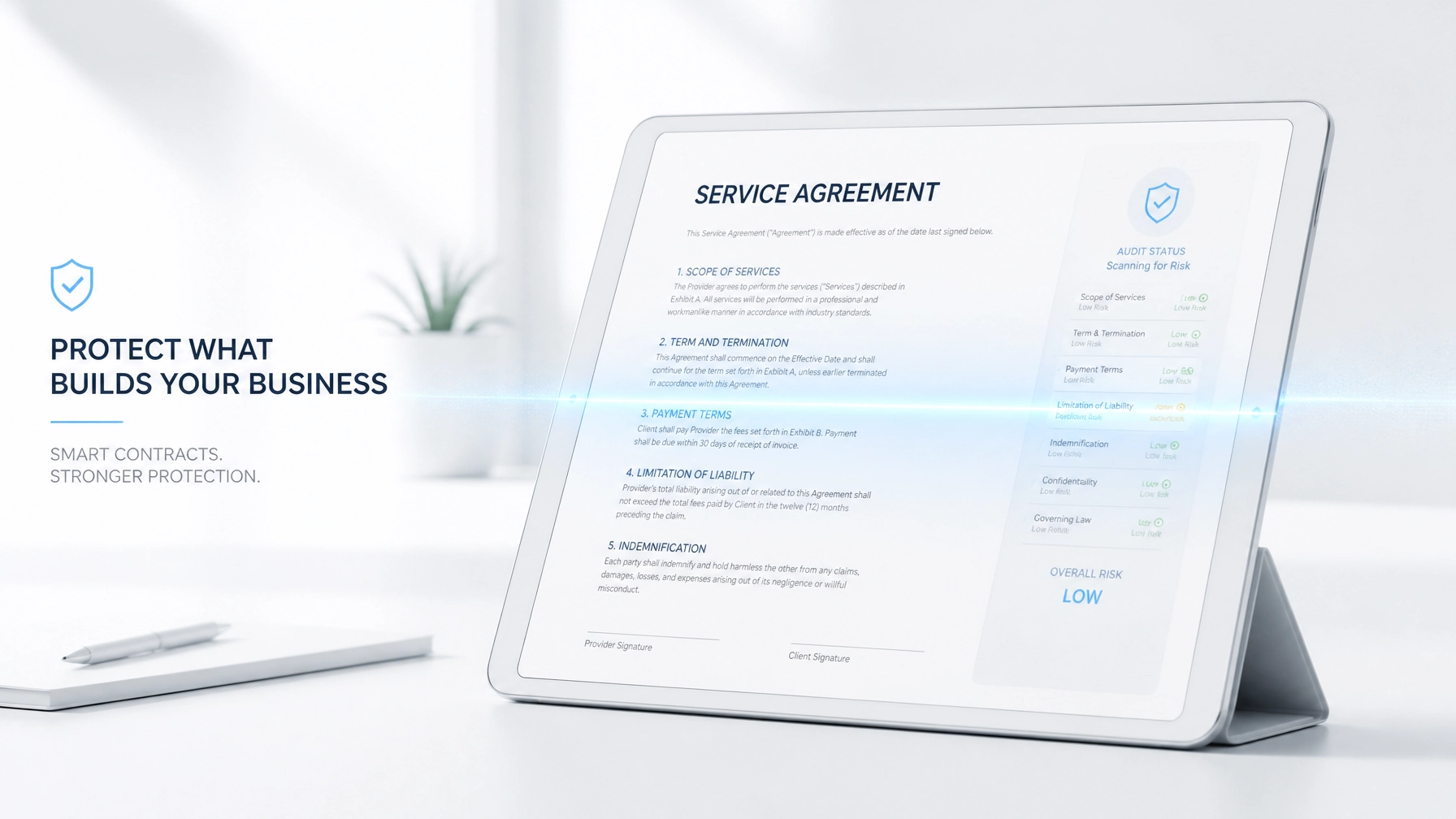
    • Audit Contracts: Upload a vendor's draft and let Vow Shield identify the "hidden traps" like vague force majeure clauses.
    • Lock in Delivery: Generate addendums that specify equipment backups and exact delivery timelines (e.g., "Edited photos delivered within 30 days or a 10% refund applies").
    • Track Milestones: Automate your payment schedule so you are never paying 100% upfront for a service that hasn't started.

    Securing Service Delivery Through Systemic Accountability

    A contract is only as good as its enforcement. To ensure your Wedding Supplier Contracts actually result in the services you paid for, you must insist on "Performance Milestones."

    Establish Clear Deliverables. Do not accept "Photography services for 8 hours." Insist on "One lead photographer, one assistant, 500+ high-resolution edited images, and a password-protected online gallery delivered by [Date]."

    Define the Force Majeure. Many vendors use "Acts of God" as a blanket excuse to cancel without refunds. Your protocol should specify that if the vendor cannot perform due to an external event, your payments (minus demonstrable unrecoverable costs) must be returned or applied to a future date at no additional fee. The Competition & Markets Authority (CMA) has been clear: a vendor cannot keep money for a service they did not provide.

    Vow Shield Digital Interface

    Advanced Defensive Strategies for the Independent Professional

    The "Modern Independent Professional" understands that business is built on protocols, and your wedding is no different. You must approach your Wedding Supplier Contracts with the same rigor you apply to your agency or freelance work.

    The "Cash Only" Red Flag

    If a supplier insists on cash payments without a formal invoice, you are surrendering your paper trail. Traceable payments via bank transfer or credit card provide a layer of protection through Section 75 or chargeback rights. A vendor who avoids the system is a vendor who cannot be tracked when things go wrong.

    Insurance Alignment

    Verify that your vendors carry public liability insurance. If a guest is injured by a fallen floral installation or a DJ’s equipment, and the vendor isn't covered, the financial burden may fall back on the venue: or you. A "Pro-Couple" contract demands proof of insurance as a condition of the first payment.

    Redundant Staffing and Backups

    For critical assets like catering or music, your Wedding Supplier Contracts must outline a contingency plan. What happens if the lead singer loses their voice? What happens if the photographer’s hard drive fails? A watertight contract requires vendors to confirm they use redundant storage (dual SD cards) and have a pre-vetted network of emergency covers.

    Digital Signature and Protection

    Why You Need a Digital Architect

    The wedding industry thrives on emotion, which is why it is so easy for vendors to slip unfair terms past distracted couples. By using Wedding Supplier Contracts generated through an autonomous system like Vow Shield, you remove the emotion and replace it with precision. You aren't being "difficult"; you are being professional. You are protecting a massive financial outlay and ensuring that your wedding day remains a celebration rather than a legal dispute.

    Our goal at GHW Digital is to democratize this elite level of protection. We believe that every couple deserves the same "Marbalism" level of defense usually reserved for corporate mergers. By moving away from static templates and toward intelligent software tools, you can secure your wedding investment in minutes.

    Final Checklist for Contract Success

    • Read the Small Print: Identify every "non-refundable" clause.
    • Verify Identity: Ensure the contract is with a registered company, not just an individual.
    • Confirm Timelines: Define exactly when you will see the final product.
    • Deploy Vow Shield: Use our ideas roadmap to find the latest autonomous tools for your protection.

    Conclusion: Take Command of Your Wedding Investment

    Do not let "Scope Creep" or "Admin Chaos" ruin your wedding. Treat your Wedding Supplier Contracts as the primary defense mechanism of your event. If a vendor refuses to align with your need for clarity and fairness, they are not a partner; they are a liability.

    Secure your day. Lock in your vendors. Protect your investment with the same intensity you used to earn it.

    Powered by GHW Digital (Company No: 16834250). This document is an automated draft for business organization purposes only. It does not constitute legal advice. GHW Digital accepts no liability for disputes, financial loss, or enforceability. Users must consult a qualified professional in their jurisdiction before signing.

  • The Modern Freelancer’s Guide to Elite Protection: Why Systems Outperform Consultants at Scale

    The Modern Freelancer’s Guide to Elite Protection: Why Systems Outperform Consultants at Scale

    Professional Service Contracts are the only line of defense between a profitable project and a total administrative collapse. For the modern independent professional: the developer, the designer, the agency owner: your craft is your leverage. But without a systemic protocol to protect that leverage, you aren't a business owner; you’re a high-stakes gambler.

    In the freelance community, we see the same pattern repeat: an expert delivers world-class work only to be bled dry by scope creep, delayed payments, and vague "favors" that weren't part of the deal. Traditional advice suggests hiring a consultant or a high-priced lawyer to draft your agreements. However, at the speed of modern business, manual consultants are a bottleneck. They are expensive, slow, and often detached from the operational reality of digital work.

    To achieve true autonomy, you don't need more advice; you need better systems. You need a digital architect to build your shield.

    The Consultant Trap: Why Manual Drafting Fails

    Hiring a consultant to build your Professional Service Contracts sounds like a safe bet. In reality, it often creates a "leaking revenue" scenario. Consultants typically charge by the hour, creating a financial friction point every time you need to update your terms for a new service or client.

    Minimalist illustration of a leaking pipe symbolizing revenue loss from poor contract systems

    Standard industry practice suggests that manual drafting leads to three critical failure points:

    1. Operational Misalignment: A lawyer might give you "legal" protection but fail to define how many revision rounds are included or what constitutes a "change request." They understand the law; they don't necessarily understand your workflow.
    2. The Enforceability Gap: If a contract is written in dense, intimidating legalese that you don't feel comfortable explaining to a client, you won't enforce it. A shield you're afraid to lift is useless.
    3. Scaling Friction: As your business grows, you cannot wait three days for a consultant to "review" a standard agreement. Speed is a competitive advantage.

    Elite software tools are now replacing these slow human intermediaries by codifying expert logic into "Autonomous Digital Assets." Instead of paying for a consultant’s time, you leverage a system’s intelligence.

    Professional Service Contracts as Autonomous Assets

    At GHW Digital, we don't believe in static templates. A template is a dead document. An "Autonomous Digital Asset" is a living system. When you use a tool like ScopeGuard Elite, you aren't just filling in blanks. You are being interviewed by a system designed to detect risks you haven't even considered.

    Effective Professional Service Contracts must function as an operations manual. They should dictate exactly how the project starts, how it changes, and how it ends. By moving from manual consultants to automated systems, you ensure every contract you send is a "waterlight" result in minutes, not days.

    You can explore our full roadmap of upcoming tools and systemic solutions at our Ideas Portal, where we are constantly refining the protocols for independent professionals.

    Action-Benefit: How Systems Secure Your Business

    To maintain a professional stance, you must view your boundaries as non-negotiable. Systems allow you to do this without the emotional baggage of "confronting" a client.

    • Lock In Profit: Automated systems calculate risk and define limits (revisions, deliverables, calls) before a single hour is billed. This prevents the "moving goalposts" that kill margins.
    • Kill Scope Creep: By using a system to generate Professional Service Contracts, you ensure a clear "change order" process is baked into every deal. When a client asks for more, the system: not you: is the one pointing to the protocol.
    • Track Obligations: Modern platforms provide a centralized dashboard for all your active agreements, ensuring you never miss a renewal or a milestone payment.

    A minimalist digital dashboard showing organized project milestones and contract status

    The Digital Architect Persona: Building Your Protocol

    The difference between a "gig worker" and an "Elite Professional" is the systems they employ. An elite professional acts as a Digital Architect. They don't just "do work"; they build a fortress around their time and expertise.

    When you deploy Professional Service Contracts through an automated engine, you are signaling to your client that you operate with precision. This builds respect and alignment from day one. You aren't "negotiating" a contract; you are presenting a protocol for a successful partnership.

    This systemic approach is the core of our philosophy at GHW Digital. We are democratizing access to elite-level protection by building tools that act as active consultants. You can see how we are expanding this ecosystem by checking out our latest development ideas.

    Why Professional Service Contracts Require Real-Time Intelligence

    The market changes too fast for static legal advice. A contract drafted two years ago might not protect you from the latest trends in AI-generated assets or remote-work data privacy regulations.

    Automation allows for real-time updates. When a new risk is detected in the industry, an automated system can update the logic across all future Professional Service Contracts instantly. This is a level of agility that no human consultant can match at scale.

    According to research from the Harvard Business Review, AI and automated systems are significantly reducing the "contracting cycle time," allowing businesses to move faster while actually increasing compliance. Similarly, professional bodies like The Freelancers Union emphasize that the primary cause of non-payment isn't malice: it's vague agreements.

    Minimalist blueprint of a digital system representing automated legal protection

    Your Path to Elite Autonomy

    Stop being vulnerable. The "Modern Freelancer" doesn't have the luxury of administrative chaos. You need to protect your revenue, your time, and your sanity.

    The move away from traditional consultants toward Professional Service Contracts generated by intelligent software is not just a trend; it's a survival strategy. By leveraging the tools at GHW Digital, you are choosing to replace expensive, slow advice with fast, watertight systems.

    Visit our Ideas Roadmap to see the next generation of "Autonomous Digital Assets" we are building to protect the freelance community. We are building the future of independent work: one protocol at a time.

    Stop leaking revenue. Secure your competitive advantage today.

    Powered by GHW Digital (Company No: 16834250). This document is an automated draft for business organization purposes only. It does not constitute legal advice. GHW Digital accepts no liability for disputes, financial loss, or enforceability. Users must consult a qualified professional in their jurisdiction before signing.

  • Wedding Supplier Contracts: Elite Crucial Guide to Spotting Devastating Red Flags

    Wedding Supplier Contracts: Elite Crucial Guide to Spotting Devastating Red Flags

    Wedding Supplier Contracts are the only barrier standing between your dream celebration and a logistical nightmare. In the high-pressure environment of event planning, couples often sign agreements under the duress of losing a date, failing to realize they are signing away their protection. If a contract is designed solely to protect the vendor's bottom line, you are not just a client; you are a liability waiting to happen.

    At GHW Digital, we view every agreement as an Asset. For the modern independent professional, a wedding is one of the largest personal financial investments you will ever make. Approaching your Wedding Supplier Contracts with the same systemic rigor you apply to your business is not just smart: it is a mandatory survival protocol. You must learn to identify the "moving goalposts" and "leaking revenue" that can occur when service delivery is not locked in with precision.

    The Ghosting Risk: Vague Deliverables and Deadlines

    One of the most dangerous red flags in any agreement is the absence of concrete specifics. A contract that merely states "Photography Services" without defining the hours of coverage, the number of shooters, or a hard deadline for the digital gallery is a recipe for disaster.

    • Define the Scope: Ensure your Wedding Supplier Contracts list exact start and end times. "All day coverage" is subjective; "10:00 AM to 10:00 PM" is a protocol.
    • Quantify the Output: For photographers and videographers, specify the minimum number of edited images or the exact length of the feature film.
    • Hard Deadlines: Use "Action-Benefit" headers in your mind: Delivery by Week 8 : Tangible Peace of Mind. If the contract says "as soon as possible," you have no leverage when the vendor goes silent for six months.

    When you leverage modern tools to build your own protections, you ensure that "Scope Creep" doesn't just happen to freelancers: it happens to couples who let vendors dictate the terms of engagement.

    Magnifying glass over a document representing red flag identification

    The "Act of God" Trap: Unfair Force Majeure

    The pandemic taught the industry a brutal lesson about the "Force Majeure" clause. Many couples found that their Wedding Supplier Contracts allowed vendors to cancel due to "unforeseen circumstances" while keeping 100% of the deposit. This is not a professional partnership; it is an extraction.

    Standard industry practice suggests that a Force Majeure clause should be a mutual shield, not a vendor's escape hatch. If the vendor cannot perform due to an act of God, the protocol should mandate a full or partial refund of any unearned fees. Watch for "business hardship" or "staffing issues" hidden within these clauses. These are internal management failures, not acts of God. You are paying for a result, not to subsidize their operational risks.

    The Bait and Switch: Substitution Clauses

    You fell in love with a specific lead singer or a particular photographer’s portfolio. However, many Wedding Supplier Contracts contain a clause that allows the company to substitute staff at their "sole discretion."

    • Lock in the Talent: If you are hiring a specific individual, the contract must name them.
    • Establish Standards: If substitution is allowed, it must be for a professional of equal or greater experience, subject to your written approval.

    Without these protections, you risk paying "Elite" prices for a junior-level replacement. This is why we advocate for autonomous digital assets that enforce standards automatically, rather than relying on emotional pleading after the fact.

    Interlocking rings symbolizing secure service delivery protection

    Cancellation and Refund Protocols: Protecting the Couple

    Most vendors will ask for a "Non-Refundable Retainer." While common, this term is often used incorrectly. In many jurisdictions, a fee must correspond to actual work performed or costs incurred to be legally "non-refundable."

    When reviewing your Wedding Supplier Contracts, look for a tiered cancellation schedule. For example:

    1. Cancellation > 6 months: 75% refund of the total balance.
    2. Cancellation 3–6 months: 50% refund.
    3. Cancellation < 30 days: No refund.

    This creates a "fairness" alignment. It respects the vendor’s need to fill the date while protecting the couple from total financial loss due to unforeseen life events. If a contract demands 100% payment upfront with no recourse, you are walking into a high-risk zone without a helmet. According to resources like The Knot and Brides, a balanced contract is the cornerstone of a successful vendor relationship.

    Introducing Vow Shield: Your Autonomous Defense Mechanism

    At GHW Digital, we don't believe in manual chaos. We build systems that solve problems. Our Vow Guard Elite (often referred to as the Vow Shield protocol) is designed to act as your digital architect during the contract phase.

    Instead of navigating the complexities of Wedding Supplier Contracts alone, our tools interview you to detect hidden risks in your vendor agreements. We take the "Moving Goalposts" out of the equation by generating counter-proposals that prioritize service delivery and financial protection.

    • Track Deliverables: Automate the follow-up process.
    • Calculate Risk: Identify which vendors have the most exposure.
    • Secure Advantage: Use professionally engineered language that vendors respect.

    By using Scope Sentry logic, you can apply the same rigorous boundary-setting to your personal life that top-tier agency owners use to protect their margins.

    Minimalist Vow Shield digital icon

    Checklist: Crucial Elements for Every Agreement

    Before you sign any Wedding Supplier Contracts, ensure the following "Action-Benefit" items are present:

    • Detailed Timeline: Arrival, setup, performance, and breakdown times are locked in.
    • Specific Deliverables: Exactly what you get, in what format, and by what date.
    • Substitution Rights: You approve the replacement or receive a refund.
    • Insurance Proof: The vendor must carry professional liability insurance to protect your venue.
    • Dispute Resolution: A clear path for fixing issues without immediately resorting to expensive litigation.

    The goal is not to be "difficult." The goal is to be Systemic. A professional vendor will appreciate a client who values clear boundaries and documented expectations. It signals that you are a high-value client who respects the professional nature of the engagement.

    Stop the Leaking Revenue

    Every vague clause in your Wedding Supplier Contracts is a potential leak in your wedding budget. If a vendor is unwilling to clarify their terms, they are not the right partner for your "Asset." You deserve the same level of elite protection in your personal life that we provide to the Freelance Community every day.

    Don't sign away your autonomy. Use the protocols, deploy the shield, and ensure your wedding day is a celebration of your union, not a post-mortem of your finances.

    Powered by GHW Digital (Company No: 16834250). This document is an automated draft for business organization purposes only. It does not constitute legal advice. GHW Digital accepts no liability for disputes, financial loss, or enforceability. Users must consult a qualified professional in their jurisdiction before signing.

  • Professional Service Contracts: Why Elite Systems Crush Crucial Consultant Costs

    Professional Service Contracts are the thin line between a profitable freelance career and an administrative nightmare. For decades, the independent professional had two choices: pay a consultant $400 an hour to draft a bespoke agreement or roll the dice with a generic template that offers the legal protection of a wet paper towel. Both options are failures. One drains your capital before the project starts; the other leaves you exposed when a client decides "out of scope" doesn't exist.

    At GHW Digital, we don’t believe in "templates." We believe in systems. The modern independent professional: the developer, the designer, the agency owner: requires a defense mechanism that is as agile as their workflow. You don't need a lawyer to hold your hand through a standard agreement; you need an elite system that knows the risks better than you do.

    The Consultant Trap: High Friction, Low Speed

    Traditional consultants are a legacy solution to a modern speed problem. In the freelance community, deals are won or lost in the span of an afternoon. If you have to wait three days for a consultant to review a statement of work, the momentum is dead. Worse, the "bespoke" advice you’re paying for is often just a recycled document from their own internal library.

    Consultants sell hours. Systems sell results. When you rely on a human consultant for your Professional Service Contracts, you are subsidizing their overhead. You are paying for their office, their paralegal, and their time spent on other clients. For the solopreneur, this is a massive drain on leverage. You need to protect your margins, not dilute them.

    The Digital Architect: Systems as a Shield

    Autonomous Digital Assets are changing the hierarchy of professional protection. Instead of a static PDF, these tools act as active guardians. They don't just "fill in the blanks"; they interview the user, detect structural weaknesses in the project scope, and engineer a solution in real-time.

    Take, for instance, the way we approach contractual innovation at GHW Digital. We aren't building "forms." We are building protocols. When a system generates your Professional Service Contracts, it applies a consistent logic that a tired human consultant might overlook. It ensures that every late payment fee, every IP transfer clause, and every limitation of liability is locked in according to elite industry standards.

    A clean minimalist interface showing a digital contract being automatically generated with blue highlights on key protective clauses, minimalist aesthetic, light blue and white palette

    Action-Benefit: Why Systems Win Every Time

    To understand why autonomous systems are the superior choice for your Professional Service Contracts, we have to look at the tangible mechanics of protection.

    • Eliminate Scope Creep: A consultant might draft a generic "change order" clause. An elite system like ScopeGuard Elite forces a granular breakdown of deliverables, making it mathematically impossible for a client to move the goalposts without triggering a price adjustment.
    • Instant Execution: Speed is a competitive advantage. Generating a watertight agreement in three minutes allows you to close the deal while the client’s intent is at its peak.
    • Cost-Neutral Protection: While a consultant is a recurring expense, a digital asset is a high-leverage tool. You pay for the system, and it works for you indefinitely, protecting every single project without an additional hourly bill.
    • Systemic Consistency: Humans make mistakes. They forget clauses. They misinterpret local regulations. A protocol-driven system follows the same rigorous safety checks every single time.

    Professional Service Contracts: The Real-World Stakes

    If you are operating without a systemic approach to your Professional Service Contracts, you are leaking revenue. Every hour spent arguing about what was "included" in the initial price is an hour you aren't billing. This is the "hidden tax" of the freelance world.

    According to industry data on freelance payment disputes, a staggering number of independent professionals lose money simply because their contracts were too vague. This isn't a legal problem; it's a systems problem. You don't need "advice" on how to be clear; you need a system that enforces clarity.

    Visual representation of scope creep as an expanding grey shadow being stopped by a glowing blue digital wall, minimalist style, 4:5 aspect ratio

    Comparison: The Elite System vs. The Expensive Consultant

    Feature The Human Consultant Autonomous Digital Asset
    Availability 9-5 (Maybe) 24/7/365
    Speed 2-5 Business Days 3 Minutes
    Cost $250 – $600 / Hour Free or Low Cost
    Focus Managing multiple clients Managing your specific risk
    Adaptability Manual updates required Instant algorithmic updates

    For the modern professional, the choice is clear. The "Consultant" model is built for the 20th century. The "System" model is built for the digital architect. By leveraging tools found on the GHW Ideas Roadmap, you aren't just saving money: you are installing a permanent defense layer into your business.

    Locking In Your Boundaries

    Respect in a professional relationship is earned through clear boundaries. When you present a client with a professionally engineered contract, you are signaling that you are not a "gig worker." You are an elite service provider with established protocols. This positioning is crucial. It stops disputes before they start because the client realizes that your business is governed by a system, not by your emotions or your willingness to be "nice."

    Using Professional Service Contracts generated by autonomous tools ensures that the "alignment" between you and your client is objective. There is no room for interpretation. There is only the protocol. If the project changes, the system handles the shift. If the payment is late, the system triggers the penalty.

    The Future of Independent Protection

    We are moving toward a world where elite professional protection is democratized. The "gatekeepers" of legal and business advice: the consultants who charge massive fees for standard tasks: are being replaced by intelligent software. This is a win for the freelance community. It lowers the barrier to entry for high-value work and ensures that even the smallest agency has access to the same level of protection as a Fortune 500 firm.

    As we continue to develop new assets on our GHW Digital ideas page, our goal remains the same: to replace expensive human friction with efficient digital leverage. Your Professional Service Contracts should be an asset, not an administrative burden.

    Minimalist stack of digital documents glowing with blue light, representing a library of autonomous digital assets, clean white background, soft shadows

    Stop Leaking Revenue Today

    The most dangerous thing you can do for your business is to "wait and see." Every project you start without a rigorous system behind your Professional Service Contracts is a gamble. You are gambling your time, your profit, and your reputation.

    Switching to a systems-based approach isn't just about saving money on legal fees. It's about taking control. It's about ensuring that your business operates with the precision of a machine rather than the unpredictability of a human.

    Visit our latest asset developments and see how we are building the future of professional autonomy. Stop paying for hours. Start investing in systems.

    Powered by GHW Digital (Company No: 16834250). This document is an automated draft for business organization purposes only. It does not constitute legal advice. GHW Digital accepts no liability for disputes, financial loss, or enforceability. Users must consult a qualified professional in their jurisdiction before signing.

  • Wedding Supplier Contracts: The Elite Shield Against Massive Planning Risks

    Wedding Supplier Contracts are the only thing standing between a seamless celebration and a financial catastrophe. Most couples approach their wedding as a romantic milestone, but in reality, you are managing a high-value temporary project with dozens of moving parts. Without the right protocols in place, you aren't just planning a party; you are opening yourself up to professional-grade liability.

    At GHW Digital, we view every agreement as an asset that needs to be secured. When you sign a vendor agreement, you are often signing a document drafted by their legal team to protect their bottom line, not yours. To regain control, you must treat these documents with the same scrutiny as a corporate merger.

    Here are the critical failures couples make when navigating Wedding Supplier Contracts and the systemic fixes required to protect your investment.

    Failure to Define Specific Wedding Supplier Contracts Deliverables

    The most common mistake is accepting vague language. A contract that simply states "Photography Services" or "Full-Service Catering" is a liability. It allows the vendor to deliver the bare minimum while technically fulfilling the agreement.

    Action-Benefit: Lock in the Details. Ensure every deliverable is quantified. How many hours? How many edited images? What is the exact menu? If it isn't in writing, it doesn't exist. You must transform these vague promises into a rigid schedule of assets. For more strategic insights on automating these protections, explore our ideas lab.

    Neglecting Unilateral Cancellation in Wedding Supplier Contracts

    Many vendor-drafted agreements include "Termination for Convenience" clauses that allow them to walk away with minimal notice, while leaving the couple with massive non-refundable deposits. This creates a power imbalance that leaves you vulnerable weeks before the event.

    Action-Benefit: Balance the Risk. Insist on reciprocal cancellation terms. If the vendor cancels, they should not only refund 100% of your money but also potentially cover the price difference for a last-minute replacement. You are paying for a result, not just a promise.

    Minimalist blue shield icon protecting a set of wedding rings on a clean white background with soft shadows

    Ignoring the Substitution Clause in Wedding Supplier Contracts

    You hire a specific photographer or DJ because of their unique portfolio or style. However, many Wedding Supplier Contracts contain a clause allowing them to send "an equally qualified associate." This is often a way for agencies to bait-and-switch high-tier talent for lower-cost labor.

    Action-Benefit: Secure Your Talent. Mandate that the primary professional you interviewed is the one who will perform. If a substitution is necessary due to an emergency, you must have the right to review and approve the replacement or terminate the contract with a full refund.

    Hidden Fees and Overtime in Wedding Supplier Contracts

    Scope creep is a margin killer in wedding planning. Many couples are blindsided by "service charges," "travel fees," or "overtime rates" that were buried in the fine print. These hidden costs can easily balloon your budget by 15-20% in the final week.

    Action-Benefit: Capping the Cost. Every cost must be transparent and capped. Use an all-in pricing model where possible. If overtime is required, the rate must be pre-negotiated and included in the main body of the contract. Avoid any agreement that uses the phrase "plus expenses" without a strictly defined budget. For tools that help manage these complexities, check out our asset development concepts.

    Weak Force Majeure Language in Wedding Supplier Contracts

    The last few years have taught us that "Acts of God" are not just theoretical risks. Many Wedding Supplier Contracts have force majeure clauses that only protect the vendor, allowing them to keep deposits even if they cannot perform due to government mandates or natural disasters.

    Action-Benefit: Implement the Vow Shield Protocol. You need a modern force majeure clause that addresses rescheduling and refunds clearly. We recommend using tools like Vow Shield (part of the Vow Guard Elite suite) to generate contracts that prioritize the couple's liquidity in the event of a global or local crisis. According to industry standards at The Knot, a balanced contract is the most effective form of wedding insurance.

    A sleek minimalist tablet showing a digital dashboard for Vow Shield with a status indicator reading

    Intellectual Property Gaps in Wedding Supplier Contracts

    If you are hiring a photographer or videographer, you are creating an asset. Many couples don't realize they may not own the copyright to their own wedding photos. This can lead to issues if you want to print them elsewhere or use them for any personal promotional purposes.

    Action-Benefit: Claim Your Assets. Ensure the contract grants you a broad usage license at a minimum, or ideally, an assignment of rights for personal use. You should not have to pay "release fees" for files you already paid to have captured.

    Lack of Dispute Resolution in Wedding Supplier Contracts

    When a vendor fails to deliver, most couples realize too late that their contract forces them into expensive arbitration in a jurisdiction miles away. Without a clear path for recourse, the vendor has little incentive to fix mistakes after the final payment is made.

    Action-Benefit: Enforce Accountability. Include a clear dispute resolution process. Small claims court or local mediation is often more effective for the independent professional than high-stakes legal battles. For a deeper dive into how GHW Digital is revolutionizing professional protection, visit our main hub. According to LegalZoom, clear jurisdiction clauses are vital for contract enforceability.

    Leveraging Technology for Total Protection

    The era of "signing and hoping" is over. Modern couples are using Vow Shield to audit their agreements before a single dollar changes hands. This isn't just about being cautious; it’s about establishing a professional boundary that commands respect from your suppliers.

    When a vendor sees a high-tier, custom-engineered contract, they understand that you are not a "gig" to be managed, but a client with a protocol. This changes the dynamic from a one-sided demand to a mutual partnership.

    Stop leaving your wedding day to chance. Use the Vow Guard Elite tools to lock in your vision and protect your profit.

    Minimalist red alert icon next to a thick stack of papers on a white surface, representing the detection of red flags in contracts

    Powered by GHW Digital (Company No: 16834250). This document is an automated draft for business organization purposes only. It does not constitute legal advice. GHW Digital accepts no liability for disputes, financial loss, or enforceability. Users must consult a qualified professional in their jurisdiction before signing.

  • Professional Service Contracts: The Ultimate Elite Shield for Modern Professionals

    Professional Service Contracts are the difference between a thriving agency and a bankrupt freelance career. Every day, independent experts lose thousands of dollars: not because they lack skill, but because they lack a defense. Scope creep, unpaid invoices, and "infinite" revisions are not just inconveniences; they are systemic leaks that drain your revenue.

    For years, the only way to plug these leaks was to hire a consultant or a lawyer at $300 an hour. That era is over. The modern professional doesn't need an advisor; they need an asset. They need a protocol that locks in boundaries and secures payment without the friction of a middleman.

    The Brutal Reality of Missing Professional Service Contracts

    Without a rigorous document, you are at the mercy of the "moving goalposts." Clients don't mean to be predatory, but without a clear framework, expectations naturally drift. What starts as a simple logo design turns into a brand identity overhaul. What begins as a 5-page website becomes a full-stack e-commerce build: all for the same price.

    Professional Service Contracts act as a digital architect's blueprint. They define exactly where the work ends and where the extra billing begins. If you aren't using one, you aren't running a business; you're running a charity.

    Minimalist abstract representation of professional boundaries. Straight blue lines being pushed by grey arrows, but held firm by a thick digital wall. Clean, professional, white space.

    Why Expensive Consultants Are a Liability

    Traditional legal consulting is slow. It takes days to schedule a call, hours to explain your business, and weeks to receive a draft. In the fast-moving freelance community, speed is a competitive advantage. If you can't close a client and send a contract within minutes, you risk losing the lead to someone faster.

    Furthermore, consultants often over-complicate. They bill by the hour, which incentivizes complexity. You don't need a 40-page document for a $5,000 project. You need a Professional Service Contract that is watertight, punchy, and enforceable. Leveraging Autonomous Digital Assets allows you to bypass the "expert tax" and use software that is pre-engineered for your specific industry.

    Crucial Elements of Professional Service Contracts

    To be truly watertight, your agreement must address the high-stakes friction points common in professional services. Industry standard practice suggests that a document is only as strong as its most vague clause.

    Precision Scope Definition

    Lock in your deliverables. Vague terms like "marketing support" are a death trap. Instead, use specific metrics: "3 Social Media Posts per week" or "5 UI screens for a mobile application." Anything not listed is, by default, out of scope.

    The Revision Protocol

    Track the iterations. Every project should have a hard limit on revisions. A common protection strategy is to include two rounds of minor edits. Beyond that, the clock starts ticking at an additional hourly rate. This ensures the client respects your time and provides consolidated feedback.

    Automatic Late Fees

    Secure your cash flow. Waiting for payments is the number one cause of business failure for solopreneurs. Your contract should stipulate that late payments trigger an immediate, non-negotiable fee. This isn't about being "mean"; it's about professional alignment.

    IP Ownership Leverage

    Protect your assets. Standard practice suggests that Intellectual Property only transfers to the client after the final invoice is paid in full. This provides you with the ultimate leverage: they don't own the work until you have the money.

    A minimalist clock icon merging into a digital shield. Soft blue gradients, white background, sleek and professional design.

    The 5-Minute Solution: ScopeGuard Elite

    At GHW Digital, we don't believe in templates. Templates are static; they don't understand your project. We build intelligent software that acts as an active consultant. Our ScopeGuard Elite tool interviews you, detects high-risk areas in your project, and generates custom-engineered Professional Service Contracts in real-time.

    Instead of staring at a blank page or paying a lawyer $1,000, you spend 300 seconds answering targeted questions. The system then outputs a document that is tailored to your jurisdiction and your specific professional risk profile. This is how the elite independent professional operates: with speed, precision, and total autonomy.

    Strategic Benefits of Automation

    Using autonomous systems to generate Professional Service Contracts provides more than just legal protection; it provides a psychological edge.

    1. Professionalism: When you send a polished, comprehensive agreement minutes after a discovery call, you signal that you are a high-value asset, not a "gig" worker.
    2. Zero-Emotional Negotiation: It is easier to say "the system requires these terms" than to argue for them personally. The software becomes your "bad cop," allowing you to remain the creative partner.
    3. Revenue Recovery: By clearly defining out-of-scope work, these tools essentially pay for themselves within the first project. You stop leaving money on the table for "quick favors" that actually take three hours.

    A single stylized figure standing in a vast white space, surrounded by a subtle blue protective aura. Minimalist and sophisticated style.

    The Evolution of Professional Autonomy

    The landscape of work has shifted. The rise of the independent expert means that we are all our own legal department, our own accounting team, and our own project managers. You cannot afford to be slow in any of these areas.

    Websites like Forbes often highlight the importance of "legal hygiene" for small businesses, but they rarely give you the tools to implement it instantly. Similarly, resources from Entrepreneur emphasize scaling, yet you cannot scale a business that has leaking revenue due to poor contracts.

    By implementing Professional Service Contracts via automated assets, you are choosing to work at the highest possible level of efficiency. You are replacing expensive, slow-moving humans with fast, precise software. You are becoming a digital architect of your own success.

    Immediate Call to Action

    Stop risking your profit on a handshake or a vague email thread. Secure your business, protect your time, and lock in your project boundaries right now. Explore our full library of Autonomous Digital Assets and deploy your first elite contract today.

    Don't wait for a dispute to realize you were unprotected. The elite professional prepares for the storm while the sun is still shining.

    Powered by GHW Digital (Company No: 16834250). This document is an automated draft for business organization purposes only. It does not constitute legal advice. GHW Digital accepts no liability for disputes, financial loss, or enforceability. Users must consult a qualified professional in their jurisdiction before signing.