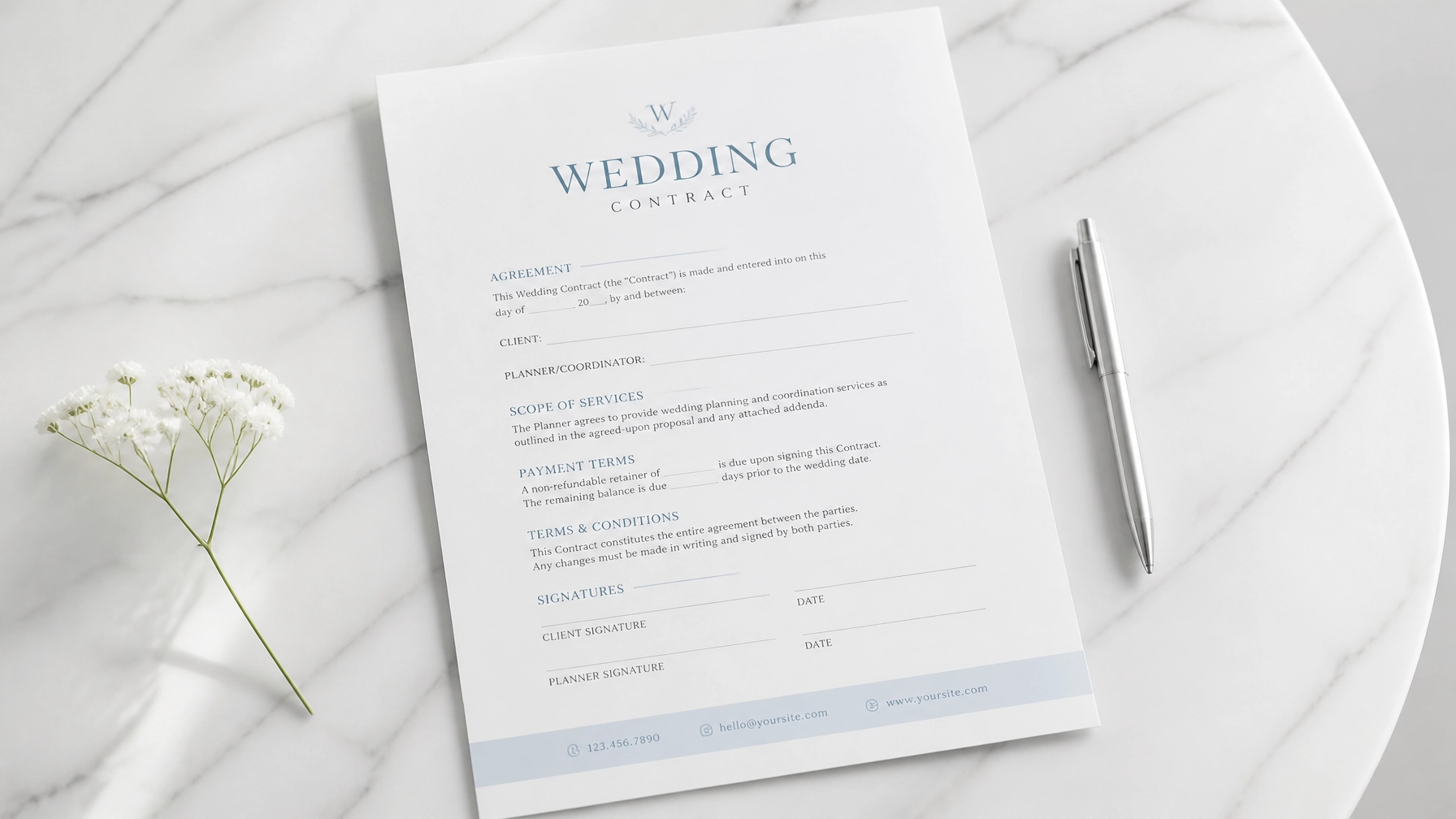
A wedding supplier contract is the only barrier standing between your dream celebration and a logistical disaster. In the high-stakes world of wedding planning, hope is not a strategy. Every year, thousands of couples suffer staggering financial losses: averaging between $2,500 and $7,000: simply because they relied on a "handshake" or a vague, one-page invoice. Professionalism in the wedding industry is often masked by aesthetics; however, the true measure of a vendor’s reliability is the protocol they use to protect your investment.
At GHW Digital, we build Autonomous Digital Assets designed to shield professionals and individuals from systemic risks. We believe that access to elite protection should not be gated by expensive legal fees. Whether you are dealing with a florist, a photographer, or a venue, your primary objective is to lock in performance and mitigate exposure. This guide dismantles the common pitfalls of vendor agreements and provides a blueprint for securing your day using professional-grade tools like Vow Shield.
Identifying Red Flags in Your Wedding Supplier Contract
Before you sign any document or transfer a deposit, you must conduct a rigorous risk assessment. A substandard wedding supplier contract often contains "leaks" that allow vendors to under-deliver without consequence. If a vendor is hesitant to provide a detailed agreement, they are effectively asking you to shoulder 100% of the risk.
Watch for these critical red flags:
- Vague Service Descriptions: Phrases like "Standard Photography Package" or "Event Decor" are unacceptable. Without specific quantities, hours of coverage, and delivery timelines, you have no leverage when the results fall short.
- Excessive Upfront Payments: Demand-heavy payment structures: such as requiring 75% or more of the total fee months in advance: leave you vulnerable if the vendor disappears or goes out of business.
- One-Sided Cancellation Rights: If the contract allows the vendor to cancel at their "discretion" while holding your deposit, the agreement is a liability, not a shield.
- Missing Backup Protocols: Every professional must have a contingency plan for illness, equipment failure, or staffing shortages. If the contract is silent on these points, you are one flu season away from a vendor no-show.

Action-Benefit: Locking in Deliverables for Flawless Execution
The primary function of a wedding supplier contract is to define the "What," "When," and "How" of service delivery. By converting vague promises into precise protocols, you ensure that every dollar spent translates into a tangible result. We recommend visiting our ideas page to see how we automate these types of professional boundaries.
Define the Scope:
Specify the exact number of staff members, the specific hours of arrival and departure, and the precise list of deliverables. For a photographer, this means listing the minimum number of edited photos and the exact deadline for the digital gallery. For catering, it means locking in the menu, the serving style, and the cleanup requirements.
Quantify the Performance:
Use metrics wherever possible. If you are hiring a band, define the number of sets and the duration of each. If you are hiring a florist, specify the types of flowers and the number of arrangements. Precision eliminates the "moving goalposts" that often lead to disappointment on the day of the event.
Ensure Service Accountability:
A robust wedding supplier contract includes a clear "Failure to Perform" clause. This ensures that if a vendor fails to meet the agreed-upon standards, there is a pre-defined financial remedy. This isn't about being litigious; it's about establishing a professional baseline for respect and alignment.
Action-Benefit: Protecting Deposits from Hidden Vulnerabilities
Financial exposure is the most immediate risk in any vendor relationship. A wedding supplier contract should function as a financial protocol that tracks and protects every transaction. To stay ahead of these risks, many couples are turning to automated solutions like Vow Shield, an autonomous asset that helps draft and review agreements to ensure they meet elite professional standards.
Balanced Payment Milestones:
Instead of a massive upfront payment, structure your agreement around milestones. A modest initial deposit to secure the date, followed by progress payments as planning markers are met, keeps the vendor motivated and reduces your total exposure.
Force Majeure and Postponement:
The world is unpredictable. Your wedding supplier contract must include a clear Force Majeure clause that covers "Acts of God," pandemics, and government restrictions. Ensure there is a fair protocol for rescheduling that doesn't involve losing your entire investment. Expert resources like The Knot often highlight how vital these clauses have become in recent years.
Refund Transparency:
Ensure the contract explicitly states which portions of your payment are refundable and under what specific conditions. A "Non-Refundable Deposit" should only be used to cover the vendor's actual costs and the loss of the date: it should not be a windfall for the vendor if you need to cancel with significant notice.

The Vow Shield Protocol: Your Autonomous Defense
At GHW Digital, we don't just advocate for better contracts; we build the tools that create them. Vow Shield is an Autonomous Digital Asset designed specifically for the modern independent professional and the couples they serve. It acts as a digital architect, interviewing you about your specific needs and generating a watertight wedding supplier contract in minutes.
Unlike static templates found on the internet, Vow Shield:
- Detects Risk: It identifies one-sided clauses and flags missing protections.
- Generates Custom Solutions: It tailors every document to the specific jurisdiction and service type.
- Eliminates Complexity: It replaces expensive legal consultations with a streamlined, automated workflow.
By leveraging automated assets, you move from a position of vulnerability to a position of leverage. You aren't just "hiring a vendor"; you are integrating a professional partner into a controlled, systemic framework.
Securing the Perimeter: Final Verification Steps
Before the ink dries on your wedding supplier contract, you must verify the vendor's professional standing. High-stakes events require high-stakes vetting.
- Verify Insurance and Licenses: Ensure the vendor holds valid liability insurance and any necessary permits (especially for catering or bar services). Industry bodies like the Association of Bridal Consultants emphasize that professional credentials are non-negotiable.
- Review the Substitution Clause: If your primary contact is unavailable, who is the replacement? The contract should specify that any substitute must have comparable experience and require your written approval.
- Document All Addenda: Any changes made after the initial signing must be captured in a written addendum. Verbal agreements are ghosts; they will not help you in a dispute.

Stop Leaking Revenue and Start Locking in Results
The peace of mind you seek for your wedding day is built on the foundation of a rigorous wedding supplier contract. You do not need to be a legal expert to protect your interests; you simply need the right protocols.
Whether you are a solopreneur looking to protect your time or a couple securing your biggest life event, the mission remains the same: Replace administrative chaos with automated precision. Explore our full suite of tools and asset ideas to see how GHW Digital is democratizing elite professional protection.
Stop crossing your fingers. Start securing your future.
Powered by GHW Digital (Company No: 16834250). This document is an automated draft for business organization purposes only. It does not constitute legal advice. GHW Digital accepts no liability for disputes, financial loss, or enforceability. Users must consult a qualified professional in their jurisdiction before signing.
Leave a Reply