
Blog

  • The Ultimate Guide to Wedding Contract Templates: How Vow Shield Secures Your Ceremony

    The Ultimate Guide to Wedding Contract Templates: How Vow Shield Secures Your Ceremony

    Wedding Contract Templates are the only thing standing between your dream day and a logistical nightmare. When you are planning a wedding, you aren't just picking out flowers and tasting cakes; you are entering into a series of high-stakes legal agreements with multiple vendors. Most couples make the mistake of trusting a vendor’s "standard" agreement, only to find out too late that those documents are designed to protect the vendor, not the couple. At GHW-Digital, we believe that your ceremony deserves a professional-grade defense.

    The wedding industry is notorious for vague promises and hidden "moving goalposts." A photographer might promise "full coverage" but fail to define how many hours that actually entails. A caterer might list a menu but leave out the service staff requirements. Without robust Wedding Contract Templates, you are essentially handing over your budget and your peace of mind to a stranger's goodwill. Goodwill doesn't stand up in court, but a well-structured contract does. You need a shield. You need Vow Shield.

    The Fragility of the "Handshake" Agreement

    In the world of app development and digital security at GHW-Digital, we know that ambiguity is the enemy of execution. The same applies to your wedding. Many vendors operate on "gentleman's agreements" or poorly drafted PDF forms they found online ten years ago. These documents often lack the specific protections a couple needs to ensure service delivery. If a vendor fails to show up or delivers a subpar experience, a weak contract leaves you with zero leverage for a refund or damages.

    Protective shield over wedding contract templates securing a couple's ceremony from vendor risks.
    Alt: Wedding Contract Templates protection for the couple

    Relying on a vendor's contract is like letting an opposing legal team draft your will. To protect your investment, you must utilize Wedding Contract Templates that prioritize the couple’s rights. This isn't about being "difficult"; it’s about establishing alignment and fairness. If you are looking for creative ways to structure your vendor relationships, check out our ideas page for more professional insights.

    Identifying Red Flags in Wedding Contract Templates

    Before you sign anything, you must be able to spot the traps. Most vendor-provided agreements are riddled with "red flags" that serve as escape hatches for the service provider. If you see any of the following in your Wedding Contract Templates, it is time to renegotiate or walk away:

    1. Vague "Force Majeure" Clauses: If the clause allows a vendor to cancel for any "unforeseen circumstance" without returning your deposit, you are at a massive disadvantage.
    2. Lack of Specific Deliverables: "Photography services" is not a deliverable. "Eight hours of continuous coverage by a lead photographer and one assistant, resulting in 500 high-resolution edited images delivered via digital gallery within 30 days" is a deliverable.
    3. Non-Refundable Everything: While deposits are standard, a contract that claims all payments are non-refundable regardless of the reason for cancellation (even if the vendor cancels) is predatory.
    4. No Liability Insurance Mention: If a vendor doesn't explicitly state they carry liability insurance, you could be on the hook for accidents that happen on-site.

    Securing your ceremony requires more than just reading the fine print; it requires a proactive approach to risk management. You can find more strategies for protecting your projects and events at GHW-Digital Ideas.

    How Vow Shield Secures Your Ceremony

    At GHW-Digital, we developed Vow Shield (part of our Vow Guard Elite suite) to solve the problem of lopsided agreements. Vow Shield isn't just a static document; it’s a framework designed to lock in vendor commitments. When you use our Wedding Contract Templates, you are implementing a guardian for your ceremony.

    A magnifying glass identifying red flags in wedding contract templates to ensure a secure ceremony.
    Alt: Reviewing Wedding Contract Templates for red flags with Vow Shield

    Vow Shield focuses on "Action-Benefit" structures. It ensures that every dollar spent is tied to a specific, measurable result. If the vendor misses a milestone or fails to meet a quality standard, the contract provides an immediate, pre-negotiated path to resolution. This eliminates the emotional pleading and "leaking revenue" that occurs when couples try to fix problems on the fly.

    Key Clauses Every Couple Needs to Lock In

    To ensure your Wedding Contract Templates are actually working for you, certain clauses are non-negotiable. These are the defensive walls of your wedding shield:

    1. The Performance Guarantee

    This clause stipulates that if the vendor cannot perform the services personally (e.g., a specific lead singer or photographer), the replacement must be of equal or greater skill level, subject to your approval. This prevents the "bait and switch" where you pay for a veteran but get an intern.

    2. The Dispute Resolution Clause

    Don't get dragged into expensive litigation. Ensure your Wedding Contract Templates include a clause requiring mandatory mediation or arbitration in a location convenient to you. This lowers the barrier to seeking justice if things go wrong. For more on structuring professional agreements, visit ghw-digital.com/ideas.html.

    3. The Cancellation and Refund Schedule

    Life happens. Your contract should have a clear, tiered refund schedule. If you cancel six months out, you should get a certain percentage back. If the vendor cancels, they should owe you your full refund plus any costs incurred in finding a last-minute replacement.

    Interlocking rings over a digital grid representing secure wedding contract templates and service delivery.
    Alt: Vow Shield Wedding Contract Templates ensuring service delivery

    Leveraging GHW-Digital for Event Security

    While GHW-Digital is a leader in app development, our core philosophy is about creating systems that protect interests and maximize output. Whether we are building a Scope Guard Elite system for a corporate client or providing guidance on Wedding Contract Templates, the goal is the same: eliminate scope creep and ensure delivery.

    A wedding is essentially a one-day, high-budget production. Treating it with the same rigor as a software launch is the best way to ensure success. We recommend checking the American Bar Association for standard legal definitions or consulting industry experts like The Knot for vendor benchmarks, but always filter that information through your own protective shield.

    The Vow Shield Advantage: Why Professionals Choose Us

    Professionals don't leave things to chance. They use tools that calculate risk and track performance. Vow Shield brings this level of sophistication to the wedding world. By using our Wedding Contract Templates, you aren't just "getting a contract"; you are installing a system of accountability.

    Digital wedding contract templates on a sleek tablet providing a system of accountability for couples.
    Alt: Digital Wedding Contract Templates for modern couples

    Our templates are designed to be clear, concise, and devoid of fluff. We focus on "protecting the couple" because we know that in the power dynamic of the wedding industry, the consumer is often the most vulnerable. By utilizing our resources at https://ghw-digital.com/ideas.html, you can stay ahead of industry trends and ensure your wedding day remains a celebration, not a court case.

    Stop the Revenue Leak: Secure Your Date Now

    Every day you wait to solidify your vendor agreements is a day you are exposed to risk. The "moving goalposts" of the wedding industry won't stop unless you force them to. Use professional Wedding Contract Templates to lock in your prices, secure your dates, and guarantee your service delivery.

    Your ceremony is a once-in-a-lifetime event. Don't let a poorly drafted document ruin it. Take control, implement a shield, and ensure that the only thing you have to worry about on your wedding day is saying "I do." Explore our full range of protective digital tools at GHW-Digital and start building your defense today.


    Marblism Legal Shield

    This blog post provides general information and does not constitute legal advice. While GHW-Digital and Vow Shield provide tools for contract management, we recommend consulting with a qualified legal professional to review any specific agreements before signing. All data and privacy are handled with blunt honesty; we do not use tracking tricks, and your information remains your own. Fairness, respect, and alignment are our guiding principles.

    Secure your ceremony today. Get started with our ideas and templates.

  • 10 Reasons Your Scope Creep Management Protocol Isn’t Working (And How to Fix It)

    10 Reasons Your Scope Creep Management Protocol Isn’t Working (And How to Fix It)

    Scope Creep Management is the thin line between a profitable project and a digital disaster. In the world of app development and freelance contracting, we often talk about "the dream" of building something great. But the reality is often found in the "just one more button" or "can we just change this color" requests that slowly bleed your margins dry.

    As a digital architect, your job isn't just to build; it’s to protect the structure. If your current protocol feels like it’s leaking, it’s likely because you’ve focused on the software instead of the boundaries. Scope creep isn't a technical error, it's a communication failure. Whether you are managing complex Independent Contractor Agreements or building the next big platform, you need a shield.

    Here is why your Scope Creep Management is failing and how to rebuild it from the ground up.

    1. Your Independent Contractor Agreements Are Too Soft

    The foundation of every project is the contract. If your Independent Contractor Agreements don't explicitly define what is not included, you are inviting chaos. A vague agreement is an open invitation for a client to treat your time like an all-you-can-eat buffet.

    The Fix: Hard-code your boundaries. Use specific language that outlines the exact deliverables. Anything outside that list requires a new agreement or a formal change order. If you need inspiration on how to structure these boundaries, check out our latest ideas on project architecture.

    2. Lack of Clear Scope Definition at Genesis

    If you don't know where the walls are, you can't tell when someone is moving them. Research shows that 37% of project failures are caused by a lack of clearly defined objectives. In Scope Creep Management, clarity is your strongest weapon.

    The Fix: Before a single line of code is written, document the "Definition of Done." Involve the client in this process so they can't claim ignorance later. We recommend visiting GHW-Digital Ideas to see how we visualize project boundaries.

    Digital app schematic showing clear project boundaries for Scope Creep Management.

    3. The "Yes" Reflex: Over-Service Kills Profit

    We all want to be the hero. We want the client to love us. But saying "yes" to every minor request without assessing the impact is a slow-motion car crash for your schedule. This "yes" reflex undermines your entire Scope Creep Management protocol because it signals that your boundaries are negotiable.

    The Fix: Replace "Yes" with "Yes, and here is the cost." Every change has a price, either in time, money, or quality. Using a tool like Scope-Sentry can help you visualize these impacts for the client.

    4. Communication Silos Between Stakeholders

    When the developer hears one thing and the project manager says another, the client finds the gap. Misalignment among stakeholders is a breeding ground for unauthorized features. Without a unified front, your Scope Creep Management protocol will crumble under the weight of conflicting expectations.

    The Fix: Establish a single source of truth. Every request must go through a centralized channel. For more on streamlining your internal communications, dive into the resources at https://ghw-digital.com/ideas.html.

    5. Non-Existent Change Control Processes

    A change control process isn't just bureaucracy; it’s a filter. If you allow "quick fixes" to bypass the protocol, you aren't managing a project, you're managing a hobby. Effective Scope Creep Management requires a formal gatekeeper.

    The Fix: Implement a mandatory Change Request Form. No form, no work. This forces the client to pause and consider if the request is actually worth the extra time and budget. This keeps your Independent Contractor Agreements intact and your sanity protected.

    A filtering mechanism representing a strict change control process for freelance projects.

    6. Underestimating the "Unknown Unknowns"

    Many protocols fail because they only account for the work we know. But software development is a voyage into the unknown. When unexpected technical debt or integration issues arise, teams often "absorb" the extra scope to stay on track, which is a recipe for burnout.

    The Fix: Build a "Discovery Buffer" into your initial planning. Treat it as a sacred space for the unexpected. You can find more strategies for managing project risks at GHW-Digital.

    7. The Absence of Periodic Client Check-ins

    If you only show the client the finished product, you are asking for a "That’s not what I imagined" moment. This leads to massive rework, the most expensive form of scope creep. Proactive Scope Creep Management relies on frequent, small adjustments rather than one massive course correction at the end.

    The Fix: Iterative demos are essential. Show the work in progress every week. This ensures the client stays aligned with the original vision and catches misunderstandings early.

    8. Failing to Prioritize the MVP

    Trying to build the "perfect" version in v1.0 is a trap. When you don't prioritize, every feature feels essential, leading to a bloated project that never launches. Elite Scope Creep Management is about knowing what to cut.

    The Fix: Adopt a "Kill Your Darlings" mentality. If a feature isn't core to the app's survival, it goes to the "Phase 2" list. For examples of lean app architecture, browse our ideas page.

    MVP prioritization model removing non-essential features to maintain project scope.

    9. Lack of Data-Driven Decision Making

    If you can't measure the creep, you can't manage it. Many freelancers and agencies rely on "gut feelings" to determine if a project is getting out of hand. By the time the feeling becomes a reality, the budget is already gone.

    The Fix: Track your time and deliverables with surgical precision. Use data to show the client exactly how many hours that "small tweak" actually consumed. This is where professional tools like Scope Guard Elite become invaluable for Independent Contractor Agreements.

    10. Neglecting the User Experience Early On

    Scope creep often happens because users weren't involved in the early stages. When a product finally hits the hands of real users, they find gaps that developers missed. The resulting scramble to add features is a failure of initial Scope Creep Management.

    The Fix: User-centric design is a defense mechanism. By testing prototypes early, you ensure the scope is built on reality, not assumptions. Learn more about user-first development at https://ghw-digital.com/ideas.html.

    User testing a mobile app interface to align requirements and prevent scope creep.

    The Architecture of Protection

    Managing a project is an exercise in boundary-setting. Your Scope Creep Management protocol isn't there to restrict creativity; it’s there to ensure that the project actually reaches completion. Without these guardrails, you are simply donating your time to someone else's lack of planning.

    As a Digital Architect, your value lies in your ability to deliver results. Results require focus. Focus requires the word "No."

    Stop the bleed. Lock in your scope. Protect your margins.

    If you're ready to upgrade your project defense, explore our full suite of development ideas and see how GHW-Digital can help you build with precision.


    Action-Benefit Summary

    Feature Tangible Result
    Rigid Contracts Protect your profit margins from "favor" requests.
    Formal Change Logs Create a paper trail that justifies extra billing.
    Weekly Demos Eliminate the "Surprise Factor" at project handover.
    Resource Tracking Prove the impact of changes with hard data.

    Sturdy architectural pillars representing a locked-in scope and project security.

    Marblism Legal Shield
    This content is provided by GHW-Digital for informational purposes. We believe in blunt honesty and the protection of digital professionals. Your data is your own; we don't play marketing games. Our protocols are designed for those who value efficiency over fluff. Build smart. Build safe.


    Ready to secure your next project? Visit GHW-Digital and take control of your scope today.

  • Empathetic Human Design Delivers Vital and Elite Relief

    Empathetic Human Design Delivers Vital and Elite Relief

    Empathetic Human Design is not merely a buzzword at GHW-Digital; it is the fundamental architecture of our existence. In an era where technology often feels like a predatory force designed to harvest attention and drain bank accounts, we have chosen a different path. We recognize that the person on the other side of the screen is often tired, overwhelmed, and fatigued by the modern digital landscape. Whether you are sitting at a corporate desk or managing your life from a kitchen table, the tools you use should serve you, not the other way around.

    The Human Reality of Digital Fatigue

    The modern professional doesn't just work; they navigate a minefield of notifications, complex interfaces, and "software as a service" models that feel more like a permanent tax than a helpful tool. This constant bombardment leads to cognitive overload. When software is built without a soul, it treats the user as a data point to be optimized. At GHW-Digital, we reject this clinical, cold approach to development.

    Our philosophy is rooted in Manifesto Point 15: Empathy First. We build for humans who are at their limit. We understand that by the time you open one of our applications, you might have already spent eight hours fighting with spreadsheets, uncooperative emails, and bloated project management platforms. You don't need another puzzle to solve. You need a solution that understands your stress and actively seeks to reduce it.

    A calming light blue sphere clearing digital clutter from a white desk, representing Empathetic Human Design.

    Implementing Empathetic Human Design in Every Interaction

    When we speak about Empathetic Human Design, we are referring to a commitment to clarity over complexity. Many developers believe that more features equal more value. We believe the opposite. Every unnecessary button, every redundant menu option, and every pop-up notification is a tax on your mental energy.

    We apply a rigorous "In-and-Out" philosophy. A digital tool should execute its primary function perfectly and then get out of your way. This is a sign of deep respect for the user's time. We don't want you living inside our apps. We want you to get your answer, feel a sense of relief, and get back to your life or your business. If we can save you three minutes of confusion, we have succeeded.

    The Psychology of Software Respect

    True empathy in design requires a deep understanding of human psychology and the emotional state of the user. According to principles found in Nielsen Norman Group's research on user experience, visibility of system status and a match between the system and the real world are crucial. However, we go further.

    We look at the "emotional load" of an interface. Does this color palette cause eye strain? Does this font choice require extra squinting? Is the language we use filled with jargon that makes the user feel "less than" because they don't know a specific technical term? Empathetic Human Design demands that we speak in plain English and focus entirely on the relief and clarity our tools provide.

    A bird flying through an open door toward a blue horizon, illustrating clarity and relief in digital tools.

    Security as a Form of Compassion

    It might seem strange to link data security with empathy, but they are inextricably linked. There is a profound anxiety that comes with the modern digital world: the fear of data breaches, identity theft, and the misuse of personal information.

    Our approach to security is through simplicity. By refusing to collect massive amounts of personal or business data, we eliminate the source of that anxiety. In an Empathetic Human Design framework, the safest data is the data we never asked for in the first place. You get the result you need, and we forget you were here. This "Zero Baggage" policy is our way of protecting your peace of mind. We don't hold your data hostage, and we don't require you to manage yet another account that you’ll eventually forget the password for.

    Why We Kill the Subscription Tax

    Software should be a tool, not a recurring drain on your resources. One of the greatest stressors in the modern gig economy and small business world is "subscription fatigue." The feeling of being "rented" your own productivity tools is a significant emotional burden.

    By offering radically fair, upfront pricing, we remove the "ongoing drain" from your bank account. This is empathy in action. It acknowledges the financial reality of freelancers and SMEs who need premium results without the weight of endless monthly fees. You buy the result, and you own the peace of mind.

    Balanced white and blue spheres in a zen stack, symbolizing peace of mind and reliable software solutions.

    The British Craftsmanship of Reliable Tools

    Rooted in the UK, GHW-Digital focuses on world-class quality that serves as a reliable anchor in your professional life. Reliability is a feature, not an afterthought. There is nothing more frustrating than a tool that requires constant "babysitting" or updates right when you are in the middle of a high-stakes task.

    Our tools are built to work exactly when you need them to. They are lightweight, fast, and respect your device’s battery and your patience. This commitment to performance is a core pillar of Empathetic Human Design. We understand that your hardware is an investment, and our software should not be a burden on that investment.

    Technology as an Equalizer

    We believe that high-end digital power shouldn't be reserved for giant corporations with massive IT budgets. Empathetic Human Design means taking complex processes and making them accessible to everyday people. We take the high-end logic usually hidden behind enterprise paywalls and hand it directly to the individual.

    Whether you are navigating a major life milestone or managing a small agency, you deserve tools that offer elite-level clarity. We actively work to reduce the "asymmetry of information" that often leaves individuals at a disadvantage when dealing with larger entities.

    A glowing blue crystal shield representing elite clarity and security for individuals and small businesses.

    Building for the Tired and the Overwhelmed

    When we sit down to code, we aren't thinking about "users": we are thinking about people. We're thinking about the parent trying to organize a complex event after the kids have finally gone to sleep. We're thinking about the freelancer who just finished a ten-hour shift and needs to handle one last piece of business before they can rest.

    This focus on the "tired and overwhelmed" human dictates everything from our UI layout to our error messages. You won't find "Error Code 404X-99" in our world. You’ll find clear directions on how to get back on track. We aim to be the calmest part of your digital day.

    Join Us in Building Better Tools

    We are a small, dedicated team, and our manifesto is our promise to you. But we also know that the best ideas for how to help people come from the people themselves. We aren't interested in building bloated apps to justify a price tag; we want to build things that actually fix problems.

    If there is a digital friction point in your life: something that causes you stress, wastes your time, or makes you feel overwhelmed: we want to hear about it. We are constantly looking for new ways to apply Empathetic Human Design to real-world problems.

    You can share your thoughts with us directly at our Ideas Page. We can't guarantee we'll build it but we guarantee we'll read it!

    Final Thoughts on Digital Empathy

    The future of technology shouldn't be about more immersion; it should be about more freedom. By focusing on Empathetic Human Design, GHW-Digital is attempting to carve out a space where technology serves as a silent, efficient guardian of your time and energy. We want to eliminate the jargon, kill the subscriptions, and provide you with tools that offer immediate answers with zero baggage.

    We believe in sustainable solutions that offer solid, reliable help. No fleeting trends, no psychological trickery, and no "dark patterns" designed to trap you. Just honest, upfront value from a company that remembers there is a human being behind every click.

    Synchronized white and blue gears interlocking perfectly to represent reliable help and quality craftsmanship.

    For more information on our philosophy and the tools we build, feel free to explore our Apps Page or learn more about our commitment to Privacy. We are here to help you get in, get your result, and get on with your day.


    Powered by GHW Digital (Company No: 16834250). This document is an automated draft for business organization purposes only. It does not constitute legal advice. GHW Digital accepts no liability for disputes, financial loss, or enforceability. Users must consult a qualified professional in their jurisdiction before signing.

  • Professional Service Contracts: Ultimate Elite Automated Systems Comparison

    Professional Service Contracts are the foundation of your revenue, yet they are often the leak in your profit bucket. For years, businesses have relied on expensive legal consultants to draft, review, and manage these documents. This manual approach is slow, prone to human error, and incredibly costly. In an era where speed is a competitive advantage, waiting two weeks for a consultant to redline a standard agreement is a liability. Elite software tools are no longer just an alternative; they are a superior replacement that offers precision, speed, and ironclad protection for your margins.

    At GHW-Digital, we see the damage caused by poorly managed agreements every day. Scope creep, missed renewal windows, and vague deliverables kill firms. By transitioning to an automated system, you aren't just saving on legal fees: you are installing a digital guardian over your business operations.

    The High Cost of Human Error in Professional Service Contracts

    Manual contract management is a gamble. When you rely on consultants or junior staff to manage your Professional Service Contracts, you invite inconsistency. One consultant might use an outdated template, while another might overlook a crucial liability clause. This lack of standardization creates "leakage": revenue that disappears because the contract wasn't tight enough to prevent scope creep.

    Consultants are expensive. They charge by the hour to perform tasks that a well-configured AI can handle in seconds. By moving these workflows into an elite automated system, you reclaim that capital and reinvest it into growth. You move from a reactive posture: fixing problems after they arise: to a proactive defense.

    Automated system for Professional Service Contracts replacing manual legal drafting and consultants.

    Replace Expensive Consultants with Elite Automation

    The shift toward automation is about more than just cost-cutting; it is about "Scope Guarding." An automated system doesn't get tired, it doesn't miss deadlines, and it follows your business logic perfectly every single time. Whether you are using Scope Guard Elite or a dedicated Contract Lifecycle Management (CLM) tool, the goal is the same: eliminate the middleman and lock in your terms.

    When you automate, you gain:

    • Instant Drafting: Generate complex agreements based on pre-approved playbooks.
    • Algorithmic Review: Use AI to flag non-standard clauses that increase your risk.
    • Centralized Control: Stop searching through email threads for the "final_final_v2.pdf" version of a contract.

    If you are looking for new ways to streamline your delivery, explore our latest ideas on app-driven business efficiency.

    Key Decision Factors: Choosing Your System

    Not all automated systems are created equal. To choose the best one for your Professional Service Contracts, you must evaluate based on three critical pillars: team size, compliance complexity, and integration capabilities.

    1. Scaling with Team Size

    Small teams (fewer than 20 contractors) need simplicity. You don't need a million-dollar enterprise suite; you need a tool that handles templates and signatures without friction. However, as you scale toward 100+ contractors, the complexity grows exponentially. At this stage, you need systems like Vow Guard Elite or Deel that can manage localized compliance across dozens of jurisdictions.

    2. The Full Lifecycle Scope

    A basic tool might just handle e-signatures. An elite system handles the entire lifecycle:

    • Drafting: Pulling from a library of elite templates.
    • Onboarding: Automatically triggering hardware or software access upon signature.
    • Payments: Linking contract milestones directly to your invoicing system.
    • Offboarding: Ensuring data access is revoked the moment a contract ends.

    3. Compliance and Localization

    If you operate globally, your Professional Service Contracts must be valid in the local jurisdiction. Managing this through consultants requires a global network of law firms. Using a platform like Deel allows you to tap into localized legal expertise that is built directly into the software code.

    Scaling business growth using an elite automated system for Professional Service Contracts.

    Top Platforms Compared: Finding Your Shield

    Your Priority Recommended Platform Why It Wins
    Global Compliance Deel Manages localized contracts in 150+ countries. It is the gold standard for distributed teams.
    Speed and Searchability ContractSafe Offers AI-powered search across your entire library. Find any clause in seconds.
    AI Negotiation Aline Features advanced redlining playbooks that act like a digital lawyer.
    Enterprise Workflow Ironclad Highly configurable for massive organizations with complex internal approval chains.

    While these platforms provide the "where" of contract storage, GHW-Digital focuses on the "how": ensuring your service delivery matches your contractual promises. We believe that a contract is only as good as the software that enforces its boundaries. Check out our innovative concepts for more on boundary enforcement.

    Action-Benefit: How to Transition Today

    Moving away from expensive consultants to an automated system doesn't have to be a multi-month project. You can start protecting your margins today by following these high-impact steps.

    Audit Your Current Templates
    Stop using the Frankenstein contracts you’ve cobbled together over the last five years. Upload your best agreements into an AI tool to identify inconsistencies. This is the first step in building an elite library for your Professional Service Contracts.

    Eliminate Signature Friction
    Every day a contract sits unsigned is a day of lost revenue. Implement automated reminders. If a client hasn't signed within 48 hours, the system should ping them. It isn't "annoying": it's professional alignment.

    Lock in Scope Boundaries
    Use tools like Scope Sentry to ensure that what was signed is what is being built. If the work deviates from the contract, the system should flag it immediately. This prevents the "moving goalposts" phenomenon that kills profitability.

    Digital signature on Professional Service Contracts using elite automated software for precision.

    The Professional Stance: No More Leaking Revenue

    We operate in a world where "close enough" isn't good enough. Professional Service Contracts are the only thing standing between you and a catastrophic dispute or massive scope creep. Relying on manual oversight is like using a paper shield in a digital war.

    Elite software provides a level of precision that no human consultant can match. It tracks every change, logs every signature, and calculates every deadline with 100% accuracy. When you automate, you aren't just buying software; you are buying peace of mind and securing your competitive advantage.

    For more insights on how to build elite systems that protect your time and profit, visit our ideas page. We update it daily with strategies to help you stop the leak and start scaling.

    Why GHW-Digital Advocates for Automation

    We aren't just app developers; we are advocates for business efficiency. Our suite of tools, from Scope Guard Elite to specialized App Development services, is designed with one goal: to protect the provider.

    The relationship between a service provider and a client should be based on fairness and respect. That respect is built on a foundation of clear, enforceable contracts. When the boundaries are clear, both parties win. When the boundaries are blurry, the provider usually loses. Automation ensures those boundaries remain ironclad.

    Elite shield representing ironclad Professional Service Contracts secured by automated systems.

    Stop Guessing. Start Protecting.

    The era of the "standard legal retainer" for basic contract work is over. You have the tools available to manage your Professional Service Contracts with more precision than any traditional firm could offer. Choose a system that fits your scale, automate your workflows, and stop the revenue leakage today.

    If you are ready to see how custom software can further shield your business from inefficiency, look at our latest projects. The future of professional services isn't just about doing the work: it's about protecting the work you do.


    Marblism Legal Shield

    This content is provided for informational purposes only and does not constitute legal advice. While we believe elite automation is the superior way to manage Professional Service Contracts, you should always verify specific local legal requirements. Your data privacy is our priority; we do not sell your information to third-party "legal lead" generators. For more details, view our Privacy Policy.

  • The GHW Digital Roadmap: Elite Protocol for Professional Protection

    The GHW Digital Roadmap: Elite Protocol for Professional Protection

    The GHW Digital Roadmap is the only thing standing between your profit and the relentless tide of scope creep. In a world where service providers are constantly pressured to do "just one more thing" for free, professional boundaries are not just a luxury: they are a survival mechanism. At GHW-Digital, we don't just build apps; we build shields.

    For too long, the barrier to high-level professional protection has been reserved for those with massive legal budgets. We are changing that. By democratizing professional expertise through technology, we ensure that every consultant, developer, and creative can lock in their margins and protect their most valuable asset: time.

    The GHW Digital Roadmap: Turning Expertise into Autonomous Assets

    The core philosophy driving the GHW Digital Roadmap is the concept of Autonomous Digital Assets. Most professionals sell their time. When you sell time, you are the bottleneck. If you stop working, the revenue stops. Worse, if a client disputes your work or expands the project scope without a budget increase, you are the one who pays the price in unpaid labor.

    An Autonomous Digital Asset is different. It is a piece of technology that codifies your expertise, enforces your boundaries, and works on your behalf without requiring your constant manual intervention. Our roadmap is designed to transition your business from a "service-for-hire" model to an "asset-protected" model.

    Crystalline digital asset representing professional protection and the GHW Digital Roadmap.

    Why We Democratize Professional Expertise

    Elite corporations have "Scope Guards" in the form of massive legal teams and contract administrators. Small to medium-sized businesses usually have a PDF and a prayer. We believe that fairness and respect in professional relationships should not be gated by the size of your bank account.

    The GHW Digital Roadmap focuses on creating tools that act as an automated intermediary. By using software to track, verify, and lock in project scopes, we remove the emotional friction of "asking for more money." The software becomes the objective truth. It aligns both parties, ensuring that the client gets exactly what they paid for and the provider is compensated for every ounce of effort.

    Three Minutes to Clarity: The Core Protocol

    To understand the GHW Digital Roadmap, you only need to understand three specific phases of protection. These are not just features; they are functional barriers against revenue leakage.

    1. The Identification Protocol (Scope Sentry)

    Before you can protect your profit, you must identify where it is leaking. Scope creep doesn't happen all at once; it happens in small, invisible increments. A "quick call" here, a "small tweak" there.

    • Identify: Real-time monitoring of project requests against the original agreement.
    • Flag: Immediate notification when a request falls outside the pre-defined boundaries.
    • Analyze: Deep insights into which clients or projects are the most "expensive" in terms of unbilled time.

    2. The Enforcement Protocol (Scope Guard Elite)

    Identification is useless without enforcement. This is where the GHW Digital Roadmap turns proactive. Instead of having a difficult conversation three weeks after the work is done, you address the deviation at the moment of impact.

    • Lock In: Automated workflows that require client approval for out-of-scope work before the task can be initiated.
    • Protect: Digital barriers that prevent team members from over-delivering on non-contracted items.
    • Calculate: Automatic adjustment of invoices based on real-time scope changes.

    3. The Verification Protocol (Vow Guard Elite)

    Trust is built through transparency. This final phase of the GHW Digital Roadmap ensures that both parties are operating from the same dataset. It eliminates "he-said, she-said" disputes that kill professional relationships.

    • Track: A chronological, immutable record of all scope changes and approvals.
    • Verify: Checksums of work delivered versus work promised.
    • Align: Ensuring that every stakeholder is looking at the same project trajectory at all times.

    Digital barrier representing a Scope Guard protocol for enforcing project boundaries.

    Stopping the Bleeding: Relocating the Goalposts

    In many industries, "moving the goalposts" is seen as a standard part of doing business. It shouldn't be. When the goalposts move, your profitability dies. According to industry insights from Harvard Business Review, poorly managed scope is one of the leading causes of project failure across all sectors.

    The GHW Digital Roadmap is designed to weld the goalposts to the ground. When a client wants to move them, our protocol ensures that the cost of that move is calculated, presented, and accepted instantly. This isn't about being "difficult"; it's about being professional. It's about maintaining a standard of fair exchange that allows your business to thrive rather than just survive.

    The Future of Autonomous Professionalism

    We are not stopping at project management. The GHW Digital Roadmap is constantly expanding into new territories of professional protection. We are looking at how AI can further automate the detection of "intent" in client communications to stop scope creep before it even becomes a formal request.

    We invite you to explore our future concepts and contribute to the evolution of these tools. You can view our upcoming projects and share your own needs at https://ghw-digital.com/ideas.html. We are building this for you, the expert who is tired of being undervalued and over-worked.

    Balanced scale showing time and value alignment provided by the GHW Digital Roadmap.

    Action-Benefit: What the Roadmap Delivers

    When you implement the strategies outlined in the GHW Digital Roadmap, the results are immediate and tangible:

    • Reclaim Time: Stop spending hours on "favors" and start spending them on high-value billable work.
    • Increase Margins: Ensure that every hour worked is an hour paid.
    • Improve Client Relationships: Paradoxically, clear boundaries lead to higher client satisfaction. Clients respect professionals who respect their own time.
    • Reduce Stress: Eliminate the anxiety of "scope creep" by delegating enforcement to a digital asset.

    As noted in recent tech trend reports by Wired, the shift toward automated professional safeguards is the next frontier of the creator and service economy. Those who adopt these protocols early will have a massive competitive advantage.

    Secure Your Competitive Advantage

    The GHW Digital Roadmap is not a suggestion; it is a necessity for anyone serious about scaling a professional service or development business in 2026. You cannot manually guard your time against a world that is designed to consume it. You need a protocol. You need a shield.

    Stop letting your profit leak through the cracks of "good intentions." It is time to lock in your value and protect your future.

    Explore our current suite of protection tools:

    The goal is simple: total alignment, total protection, and total autonomy.


    Marblism Legal Shield & Ethics Footer
    At GHW-Digital, we believe in radical transparency. Our tools are designed to facilitate fair exchange, not to "trap" clients. All data handled by our protocols is encrypted and managed in accordance with our Privacy Policy. We do not use dark patterns or marketing tricks. We provide objective software for professional boundary enforcement. Use of the GHW Digital Roadmap and associated tools implies an agreement to act in good faith and professional honesty. Protect your work. Respect your worth.

  • 7 Mistakes You’re Making with Wedding Supplier Contracts (and How to Fix Them)

    7 Mistakes You’re Making with Wedding Supplier Contracts (and How to Fix Them)

    Wedding supplier contracts are the only thing standing between your dream day and a financial nightmare. When you are deep in the trenches of planning, it is easy to view these documents as mere formalities: standard paperwork that everyone signs. That is a dangerous assumption. In the wedding industry, a contract is rarely designed to protect the couple; it is built to protect the vendor's bottom line.

    If you don't treat these agreements with the same scrutiny you would a business merger, you are leaving yourself exposed. At GHW-Digital, we believe in technical precision and ironclad boundaries. Whether we are developing high-end apps or helping you navigate the complexities of service agreements, the goal is the same: total protection of your interests.

    Here are the seven most common mistakes couples make with wedding supplier contracts and the no-nonsense steps you must take to fix them.

    1. Accepting Front-Loaded Payment Schedules

    One of the most common red flags in wedding supplier contracts is a payment schedule that demands the vast majority of the fee months before the event. If a vendor asks for 75% or 100% of the payment upfront, they have removed any incentive to provide elite service.

    The Danger: If a vendor goes out of business or simply disappears, your leverage is gone. Couples frequently lose thousands of dollars because they paid for a service that was never delivered.

    The Fix: Balanced Milestones. Negotiate a schedule where payments are tied to specific deliverables. A deposit to secure the date is standard, but the bulk of the payment should remain in your pocket until the service is rendered. For more strategies on managing your wedding tech and budget, explore our planning ideas.

    Metallic pen resting on wedding supplier contracts to ensure secure and balanced payment terms.
    Alt: A close-up of a pen signing one of many wedding supplier contracts on a wooden desk.

    2. Ignoring One-Sided Cancellation Policies

    Most wedding supplier contracts include a cancellation clause. The problem? They are almost always written in favor of the vendor. You might be required to pay 100% of the fee if you cancel three months out, but the vendor might be allowed to cancel on you with nothing more than a "sorry" and a refund of your deposit.

    The Danger: If your vendor cancels last minute, a simple refund doesn't cover the massive cost of finding a replacement at the eleventh hour.

    The Fix: Mutuality. Demand that cancellation terms are equitable. If you have to pay a penalty for cancelling, the vendor should be liable for a similar penalty if they fail to show up. This ensures both parties are equally invested in the agreement.

    3. The Absence of Force Majeure Protection

    "Acts of God" aren't just for movies. Pandemics, fires, and natural disasters can derail your wedding in an instant. Without a robust Force Majeure clause in your wedding supplier contracts, you could be legally obligated to pay for a wedding that is physically impossible to hold.

    The Danger: Without this clause, you are the one carrying 100% of the financial risk for events that no one can control.

    The Fix: Explicit Language. Ensure your contract includes specific Force Majeure language that protects you from liability if the event cannot proceed due to unforeseeable circumstances. This isn't just about "bad weather"; it’s about legal impossibility.

    4. Vague Service Descriptions and Deliverables

    "Photography services" is not a deliverable. "DJ for four hours" is not a deliverable. Vague language is the enemy of accountability. When wedding supplier contracts lack detail, vendors can do the bare minimum and still claim they fulfilled the contract.

    The Danger: You expect 500 edited photos, but the contract only said "photos." You receive 50 unedited shots, and legally, the vendor has "met" their obligation.

    The Fix: Granular Detail. Every contract should define measurable outcomes. Specify the number of hours, the exact names of the staff members attending, the specific equipment being used, and the exact timeline for delivery. If it isn't in writing, it doesn't exist. For more on how to structure your event requirements, check out our Scope Guard Elite concepts.

    Magnifying glass highlighting specific service deliverables and details in wedding supplier contracts.
    Alt: A detailed checklist comparing wedding supplier contracts to ensure all service deliverables are met.

    5. Signing Away Your Rights with Extreme Liability Waivers

    Many vendors attempt to include clauses that absolve them of all liability, even if their own negligence causes damage or injury. While some risk-sharing is normal, signing an extreme waiver is a massive mistake.

    The Danger: If a vendor's equipment causes a fire at your venue, or a guest is injured due to their negligence, an extreme waiver could leave you footing the entire bill.

    The Fix: Reasonable Liability. Ensure that the vendor maintains responsibility for their own professional negligence. They should have their own liability insurance, and your contract should reflect that they are responsible for their actions on-site.

    6. Failing to Require Documented Backup Plans

    What happens if your photographer gets the flu? What happens if the florist's van breaks down? If your wedding supplier contracts don't mention contingencies, you are essentially gambling on the vendor’s health and luck.

    The Danger: A vendor's personal emergency becomes your wedding disaster. Without a contractually mandated backup, you are left scrambling.

    The Fix: Written Contingencies. Require a detailed backup plan in the contract. This should include the names of associate vendors who will step in, how equipment failures will be handled, and the timeline for notifying you of any changes. We recommend looking into Vow Shield for advanced protection against these exact scenarios.

    7. The "Skim and Sign" Error

    The biggest mistake is the most simple: not reading the document. Wedding planning is exhausting, and by the time you reach the contract stage with your tenth vendor, "contract fatigue" sets in. You trust the vendor, so you sign.

    The Danger: Verbal promises mean nothing in court. If a vendor promised you a specific lead singer but the contract says "subject to availability," you have no recourse when a trainee shows up instead.

    The Fix: The Deep Dive. Read every single line. If a verbal promise was made, find where it is in the contract. If it’s not there, add it as an addendum. Never sign under pressure. A professional vendor will respect your diligence; a shady one will push you to sign quickly.

    A professional desk setup featuring wedding supplier contracts prepared for careful review and signing.
    Alt: A frustrated couple reviewing multiple wedding supplier contracts with a highlighter and laptop.

    Securing Your Big Day with GHW-Digital Logic

    At GHW-Digital, we treat every project with a "Scope Sentry" mindset. Whether we are building bespoke mobile applications or advising on digital transformation, we know that the details are where the battle is won or lost. Your wedding is no different. It is a high-stakes project that requires a shield of protection.

    By identifying these red flags in your wedding supplier contracts, you aren't being "difficult": you are being a professional. You are protecting your investment, your guests, and your peace of mind.

    If you want to stay ahead of the curve and find more ways to optimize your life and business through smart tech and strategy, visit our latest ideas and insights. We post daily to ensure you have the elite tools you need to succeed in any venture.

    Final Checklist for Your Wedding Supplier Contracts:

    • Milestone Payments: Are they tied to dates or deliverables?
    • Mutual Cancellation: Do you get a penalty fee if they bail?
    • Force Majeure: Are you protected from the "unforeseeable"?
    • Specific Deliverables: Is the "what" and "when" clearly defined?
    • Backup Plans: Who is the "Plan B" and is it in writing?

    Stop leaving your wedding to chance. Lock in your vendors, track your deliverables, and calculate your risks. Use the same precision in your personal life as we do at GHW-Digital.


    Marblism Legal Shield Footer
    This blog post is for informational purposes only and does not constitute legal advice. GHW-Digital and Marblism are not law firms. Wedding supplier contracts are legally binding documents; always consult with a qualified legal professional in your jurisdiction before signing any agreement. GHW-Digital prioritizes data integrity and transparency in all digital interactions.

  • How to Avoid the Biggest Project Scope Shift Pitfalls Without Losing the Client

    How to Avoid the Biggest Project Scope Shift Pitfalls Without Losing the Client

    Scope Creep Management is the difference between a thriving agency and a burnt-out freelancer. If you’ve ever finished a project only to realize you worked twice the hours for half the pay, you’ve felt the sting of a scope shift. It’s subtle. It’s a "quick favor" here and a "minor tweak" there. Before you know it, the project is a different beast entirely, and your profit margin has evaporated.

    As a Digital Architect at GHW-Digital, I see this daily. We build complex systems, and we know that without boundaries, projects don’t just expand, they explode. You need a system that acts as a shield for your time. You need to stop emotional pleading and start implementing precision-engineered boundaries.

    Build the Foundation with Independent Contractor Agreements

    Your first line of defense isn't your personality; it's your paperwork. Independent Contractor Agreements are the blueprints of your professional relationship. If the blueprint is blurry, the house will be crooked.

    A solid agreement doesn't just list what you will do; it defines what you won't do. It sets the stage for mutual respect. When a client asks for something outside the initial plan, you shouldn't feel guilty. You should feel protected by the document you both signed. If you're looking for inspiration on how to structure these high-level agreements, check out our latest ideas on project architecture.

    Architectural tools and model representing precise project foundations and Independent Contractor Agreements.

    Lock in Specificity: The "No-Fluff" Deliverables List

    Vague terms like "website optimization" or "app development" are invitations for disaster. Use sharp, declarative statements. Instead of "SEO support," use "Optimization of 5 primary landing pages for three specific keywords."

    Action-Benefit: Define the Fence

    • Clear Boundaries: Prevents the "while you're at it" syndrome.
    • Defined Exclusions: Explicitly state what is not included (e.g., "Content writing not included").
    • Signature of Alignment: Ensures both parties are looking at the same map.

    Implement a Scope Creep Management Change Control Process

    When a project shifts, and it will, you need a protocol. You don’t say "no" immediately, and you certainly don’t say "yes" without thinking. You assess. You calculate. You protect.

    A formal change control process is your guardian. It turns a potentially awkward confrontation into a standard professional procedure. It signals to the client that your time is a finite, valuable resource. We utilize tools like Scope Guard Elite to ensure every shift is tracked and accounted for.

    The Four-Step Shift Protocol

    1. Receive the Request: Acknowledge it without committing.
    2. Analyze the Impact: How does this change the timeline? The budget? The resource allocation?
    3. Present the Change Order: Document the impact clearly. Use a minimalist format.
    4. Secure Approval: Nothing moves forward until the client signs off on the new terms.

    A structured checkpoint path for Scope Creep Management and project change order approvals.

    Communicate Early to Stop the Bleeding

    Leaking revenue starts with silence. If you notice a project drifting and you don't speak up, you are consenting to the loss. Scope Creep Management requires you to be the most honest person in the room.

    Early communication isn't about complaining; it's about alignment. If a client’s request pushes the project 10% over the agreed limit, tell them at 2%. This keeps the stakes low and the trust high. For more strategies on maintaining this balance, browse our innovation hub.

    Action-Benefit: Weekly Check-ins

    • Visual Progress: Show the client where they are on the roadmap using tools like Scope Sentry.
    • Immediate Identification: Catch scope shifts before they become "the new normal."
    • Professional Transparency: Build a reputation as a Digital Architect who values precision.

    Leverage Independent Contractor Agreements for Flexibility

    Your Independent Contractor Agreements should not be a cage; they should be a framework. A good agreement allows for growth while protecting the baseline. Think of it as a version-controlled document for your business relationship.

    If a client wants to pivot, your agreement should outline exactly how that pivot occurs financially. This removes the emotion from the conversation. It’s not about you being "difficult"; it’s about the contract being "followed." This is why we focus so heavily on robust contract logic at GHW-Digital.

    Interlocking blocks showing flexible contract logic within stable Independent Contractor Agreements.

    Offer Strategic Alternatives Instead of Rejection

    Digital Architects don't just say "no." They offer better paths. If a client wants a feature that will derail the current sprint, suggest a "Phase 2."

    This approach preserves the relationship while maintaining the project's integrity. It shows you care about their vision, but you care more about the project's success. Packing extra requests into a future project is a classic way to ensure long-term revenue without sacrificing current margins.

    Action-Benefit: The Phase 2 Vault

    • Capture Ideas: Don't let good ideas die; just move them to a different timeline.
    • Protect the Launch: Ensure the current project hits its deadline without bloat.
    • Future Revenue: Build an immediate pipeline of work for when the current contract ends.

    Track Every Movement with Precision

    You cannot manage what you do not measure. If you aren't tracking your hours and deliverables against your Independent Contractor Agreements, you are flying blind. Revenue leaks through the cracks of unrecorded work.

    Use automated systems to monitor progress. When the data shows you are approaching the edge of the agreed scope, the system should trigger a conversation. This is how high-level app development firms stay profitable. We don't guess; we calculate.

    Precision graph tracking project metrics for effective Scope Creep Management in app development.

    Finalizing the Scope Creep Management Strategy

    To survive in the digital space, you must stop being a "yes-man" and start being an architect. Scope Creep Management is about respect, respect for your expertise, your time, and your client’s ultimate goal. A project that finishes on time and on budget is better for everyone, even if it means saying "no" to a few bells and whistles along the way.

    Review your current Independent Contractor Agreements today. Are they vague? Do they leave you exposed? If so, it’s time to rebuild your defense. Visit our main dashboard to see how we structure our workflows for maximum efficiency.

    Essential Safeguard Headers

    • Protect Your Time: Treat your hours like currency.
    • Lock In Profit: Don't let shifts eat your margins.
    • Track Everything: Data is the only objective truth in project management.
    • Calculate Impact: Know the cost of a "quick tweak" before you say yes.

    MARBLISM LEGAL SHIELD: The content provided on this blog is for informational purposes only and does not constitute legal, financial, or professional advice. GHW-Digital and its affiliates are not liable for any actions taken based on this information. We are Digital Architects, not attorneys. Always consult with a qualified legal professional before entering into binding Independent Contractor Agreements or making significant project management decisions. We value blunt honesty over marketing tricks: protect your business by doing your own due diligence.

    Stop the revenue leaks now. Secure your competitive advantage by mastering your project boundaries today.

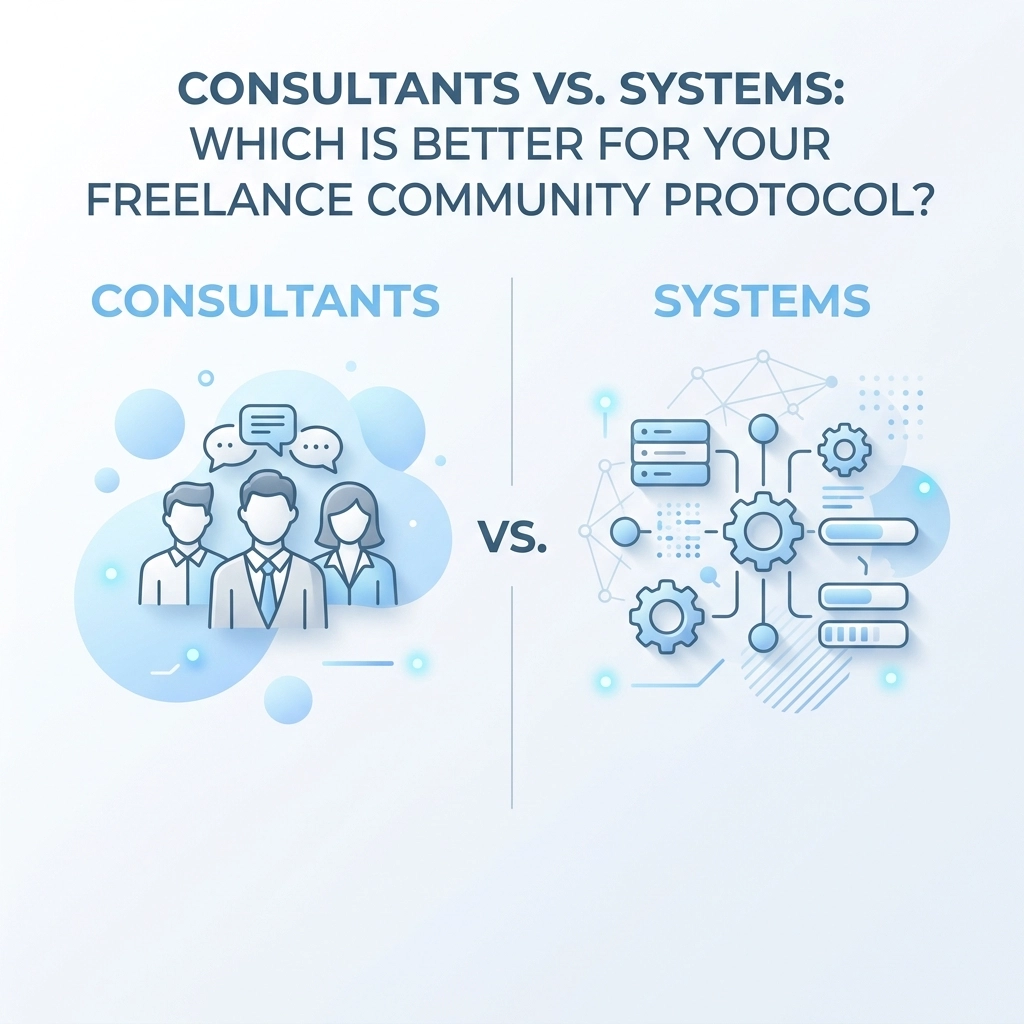
  • Consultants Vs. Systems: The Ultimate Choice For Your Elite Freelance Community Protocol

    Consultants Vs. Systems: The Ultimate Choice For Your Elite Freelance Community Protocol

    Consultants Vs. Systems is the central debate for every agency owner tired of watching their margins evaporate. When your freelance community protocol relies on the shifting moods of high-priced consultants, you aren't building a business; you’re managing a revolving door of expensive opinions. At GHW-Digital, we’ve seen the same pattern repeat: a firm hires a consultant to "fix" their workflow, the consultant delivers a 50-page PDF, and six months later, the team is back to square one.

    The reality of the modern app development landscape is that human-led advice cannot scale at the speed of software. If you want to protect your time and your profit, you need to stop looking for a savior in a suit and start building an elite system. Professional service contracts are won or lost in the fine print and the execution, not in the boardroom.

    The Consultant Trap: High Costs and Variable Outcomes

    The traditional approach to scaling a freelance community involves hiring a consultant to draft your "Protocol." They charge five-figure retainers to tell you things you already suspect. The problem isn't their expertise; it's their lack of permanence. A consultant is a temporary patch. Once their contract ends, the discipline they brought usually leaves with them.

    In the world of Professional Service Contracts, ambiguity is the enemy. Consultants often thrive in ambiguity because it creates a need for more consulting. When you are trying to manage a decentralized network of freelancers, you don't need "nuanced perspectives." You need hard boundaries. You need a system that says "No" to scope creep before it even reaches your inbox.

    Blue dome protecting a fragile umbrella, showing a robust freelance community protocol shield.

    Hiring a consultant to manage your freelance protocol is like hiring a gardener to hold an umbrella over your plants whenever it rains. It works for a moment, but it’s an inefficient waste of resources. What you actually need is a greenhouse: a robust, automated structure that operates 24/7 without a billable hour in sight. Explore more on how to automate your creative workflow at GHW-Digital Ideas.

    Systems Architecture: The Protocol Advantage

    When we talk about "Systems," we aren't talking about a messy folder of Google Docs. We are talking about elite software tools that act as the digital skeletal structure of your agency. A system doesn't get tired. It doesn't forget to check a clause in a contract. It doesn't feel "awkward" when it has to tell a freelancer that their submission doesn't meet the agreed-upon criteria.

    A system-driven approach to your freelance community protocol ensures that every interaction is governed by logic. Whether you are using Scope Guard Elite to lock in project boundaries or Scope Sentry to monitor progress, you are replacing human error with algorithmic precision.

    According to research from Harvard Business Review, businesses that prioritize standardized processes over individual heroism are 40% more likely to scale successfully. This is the heart of the Consultants Vs. Systems debate. Systems provide the "Single Source of Truth" that consultants can only promise but rarely deliver.

    Eliminate Ambiguity – Secure Every Contract

    Professional service contracts are often leaking revenue through tiny holes. These holes are usually found in the "grey areas" of project delivery. A consultant might suggest you "improve communication," but a system like Vow Guard Elite forces that improvement by making contract milestones non-negotiable and transparent.

    Interconnected network grid representing an elite system for professional service contracts.

    Think about the time you spend chasing freelancers for updates or arguing with clients about what was "implied" in the initial brief. This is wasted energy. By implementing a strict system, you create a shield for your business. The system becomes the "bad guy" so you don't have to be. It enforces the protocol with a level of cold, hard efficiency that no human consultant could ever match. You can find daily updates on contract optimization at our Ideas page.

    Elite Software Tools: The New Consulting Tier

    The shift from Consultants Vs. Systems is already happening at the top tier of app development. Elite agencies are no longer buying hours; they are buying outcomes. They are investing in tools that provide:

    • Precision Tracking: Real-time visibility into every project phase.
    • Automated Enforcement: Instant alerts when scope boundaries are threatened.
    • Immutable Records: A digital paper trail that protects against legal disputes.
    • Scalable Protocols: The ability to add 10 or 100 freelancers without increasing management overhead.

    When you use a tool like Scope Sentry, you are essentially hiring a 24/7 consultant that costs a fraction of the price and never takes a holiday. These tools are the guardians of your margin. They ensure that the "Professional" in professional service contracts isn't just a label, but a functional reality.

    Sleek blue shield protecting blocks to prevent scope creep in a freelance community protocol.

    Standardize Excellence – Scaling Without the Salary

    The most significant advantage of systems over consultants is the ability to scale. If your protocol is locked inside a consultant’s head or a static document, it cannot grow with you. Every new freelancer you bring on creates more work for you.

    However, when the protocol is the system itself, scaling becomes a matter of bandwidth, not management. You can replicate your success across dozens of concurrent projects because the system handles the heavy lifting of compliance and oversight. This "automated discipline" is what separates the struggling boutique shop from the high-output development powerhouse.

    Industry leaders at Gartner have long advocated for the "democratization of expertise" through technology. By moving your freelance protocol into an elite software system, you are making that expertise accessible to every member of your team, at every moment.

    The Financial Reality: ROI of Systems

    Let's talk numbers. A top-tier consultant might charge you £20,000 for a three-month engagement to optimize your operations. At the end of it, you have a strategy.

    Conversely, investing that same capital into a suite of GHW-Digital tools gives you a permanent infrastructure. The system doesn't just tell you how to be efficient; it makes you efficient. It stops the "leaking revenue" that occurs when freelancers over-bill or when projects drift into uncharged territory. Over a 12-month period, the ROI on a system is exponentially higher than the ROI on a consultant’s report.

    Minimalist digital gauge indicating high ROI and efficiency for professional service systems.

    Every day you delay implementing a system is a day you are essentially paying a "chaos tax." This tax is paid in lost hours, frustrated clients, and diminished profits. You can break this cycle by visiting https://ghw-digital.com/ideas.html and seeing how others have made the switch from manual oversight to automated protocols.

    Final Verdict: Choose the Shield, Not the Story

    In the battle of Consultants Vs. Systems, the winner is clear for anyone focused on long-term sustainability. Consultants tell you stories about how your business could look; systems actually build it.

    Your freelance community protocol shouldn't be a suggestion. It should be an ironclad framework that protects your agency from the unpredictability of human nature. By choosing systems, you are choosing to defend your time, your profit, and your professional reputation.

    Stop the leak. Lock in your margins. Let the system be your guardian.


    Marblism Legal Shield: This content is for informational purposes only. GHW-Digital does not provide legal advice. All professional service contracts should be reviewed by qualified legal counsel to ensure compliance with local jurisdictions.

    Escalating blocks with a smooth flow representing scalable revenue in a freelance community.

    Ready to stop the scope creep? Secure your competitive advantage today. Visit GHW-Digital to explore our full suite of elite protection tools and turn your freelance community into a high-performance machine. Check out our latest insights at https://ghw-digital.com/ideas.html for daily strategies on scaling with precision.

  • Protocol Matters: Why the GHW Digital Ideas Roadmap is the Future of Freelance Protection

    Protocol Matters: Why the GHW Digital Ideas Roadmap is the Future of Freelance Protection

    Freelance protection is the primary barrier between a sustainable career and total burnout. In the current digital economy, professional expertise is often treated as a disposable commodity. Freelancers, consultants, and independent developers frequently find themselves in a vulnerable position where their ideas are harvested, their time is undervalued, and their intellectual property is left unprotected. At GHW-Digital, we believe this dynamic is fundamentally broken.

    The traditional freelance model relies on trust: a handshake, a poorly drafted contract, or the hope that a client respects your boundaries. Hope is not a strategy. Real security requires a protocol. This is why we have developed the GHW Digital Ideas Roadmap, a strategic framework designed to transform how independent professionals secure their work and reclaim their value.

    The High Stakes of Intellectual Vulnerability

    Scope creep kills margins. It is the silent assassin of the freelance world. You agree to a project, the goalposts move, and suddenly you are working double the hours for the same pay. Without a rigid protocol, your expertise is "leaking revenue" every single day.

    When we talk about freelance protection, we aren't just talking about getting paid on time. We are talking about the ownership of the thoughts, logic, and creative sparks that fuel the global app development industry. If you don't have a system to lock in your value, you are essentially giving away your most valuable assets for free.

    Protected crystalline core within a blue shield, showing the GHW Digital Ideas Roadmap securing digital assets.
    Alt: Freelance Protection and the GHW Digital Ideas Roadmap securing digital assets

    Introducing Autonomous Digital Assets

    The philosophy driving our roadmap is the concept of Autonomous Digital Assets. For too long, digital work has been viewed as a static file: a PDF, a block of code, or a design file. Once delivered, the freelancer loses all leverage.

    We are shifting the paradigm. An Autonomous Digital Asset is a piece of professional output that carries its own inherent rights, tracking, and protection protocols. By using the GHW Digital Ideas Roadmap, you are not just delivering a service; you are deploying an asset that remains tethered to your professional expertise.

    This approach ensures that your work cannot be repurposed or exploited without your explicit alignment. It is about creating a "digital shield" around your output. Whether you are building complex systems at GHW-Digital Index or consulting on niche projects, your assets should work for you, not against you.

    Why We Democratize Professional Expertise

    The "Elite" level of protection has historically been reserved for massive law firms and global agencies. Independent creators were left to fend for themselves with generic templates. GHW-Digital is changing that by democratizing professional expertise.
    We believe that every developer, designer, and strategist deserves access to the same high-level defensive protocols used by industry giants. By making these tools accessible through our Ideas Roadmap, we are leveling the playing field. This isn't just about software; it’s about a cultural shift toward fairness and respect for the individual creator.

    Rising pillars leveling the playing field and democratizing professional expertise for freelance protection.
    Alt: Democratizing professional expertise through the GHW Digital Ideas Roadmap

    The GHW Digital Ideas Roadmap: A New Era for Freelance Protection

    The roadmap is more than a list of features; it is a tactical guide to securing your professional future. It addresses the three pillars of modern freelance defense:

    1. Lock in Intellectual Property

    Your ideas are your currency. The roadmap provides clear steps to ensure that intellectual property is defined, tracked, and secured from the moment of inception. No more "borrowed" ideas that never result in a contract.

    2. Track Project Evolution

    Using tools like Scope Guard Elite, the roadmap allows you to monitor exactly how a project changes over time. When the client asks for "one small change," the protocol calculates the impact immediately. It stops the leak before it becomes a flood.

    3. Calculate Real Value

    Most freelancers undercharge because they cannot quantify the complexity of their work. Our protocol helps you calculate and track the true value of your contributions, ensuring that compensation is always aligned with the level of expertise provided.

    Action-Benefit: How the Protocol Works for You

    To understand why protocol matters, you have to look at the tangible results of a structured defense system.

    • Boundaries through Automation: Use Vow Guard Elite to automate the "hard conversations." Let the protocol enforce the contract so you can focus on the work.
    • Precision in Execution: By following a roadmap, you eliminate the guesswork. You know exactly where the project stands, what is owed, and what the next milestone is.
    • Strategic Alignment: The roadmap ensures that both the freelancer and the client are moving in the same direction. It eliminates the "he said, she said" of project management.

    Ascending glass steps illustrating precision and tracking within the GHW Digital Ideas Roadmap.
    Alt: Precision and freelance protection using GHW-Digital protocols

    Stop the Leak: Securing Your Competitive Advantage

    The freelance market is becoming increasingly crowded. To stand out, you need more than just talent; you need a professional infrastructure that signals authority. When you show a client that you operate under the GHW Digital Ideas Roadmap, you are signaling that you are an elite professional who values their time and their work.

    This isn't about being "difficult" to work with. It is about being "professional" to work with. Clients respect boundaries when they are presented as a standard operating procedure rather than an emotional plea. A protocol-driven approach builds trust because it provides transparency.

    If you are tired of moving goalposts and uncompensated labor, it is time to adopt a defensive posture. You can explore our full range of Apps to see how we integrate these protections into everyday workflows.

    The Future of Independent Work

    The future of freelance protection lies in the hands of the creators. We cannot wait for legislation to catch up to the speed of the digital economy. Organizations like the Freelancers Union do great work in advocacy, but on a day-to-day project level, you need a technical solution.

    By adhering to international standards and technical protocols, such as those discussed by the W3C, we ensure that our digital assets are future-proof. The GHW Digital Ideas Roadmap is our contribution to a more equitable digital landscape.

    A futuristic bridge across a void, representing the future of freelance protection and autonomous digital assets.
    Alt: The future of freelance protection and autonomous digital assets

    Final Thoughts: Secure Your Legacy

    Your career is built on a foundation of your best ideas. Don't let that foundation erode through poor management or a lack of protection. The GHW Digital Ideas Roadmap is the ultimate shield for the modern freelancer.

    It is time to stop the revenue leaks. It is time to lock in your value. It is time to treat your expertise with the respect it deserves.

    Visit the GHW Digital Ideas Roadmap today and start building your autonomous future. Secure your competitive advantage and stop working for free.


    Marblism Legal Shield Notice:
    GHW-Digital is committed to the ethical democratization of professional expertise. All protocols, roadmaps, and software tools provided are designed to protect the intellectual property and time of the user. We maintain a strict Privacy Policy and do not engage in the unauthorized harvesting of user data. Our goal is blunt honesty and total alignment with our community of creators. We provide the shield; you provide the brilliance.

  • Wedding Supplier Contracts: Massive Mistakes That Cause Crucial Financial Ruin

    Wedding Supplier Contracts: Massive Mistakes That Cause Crucial Financial Ruin

    Wedding Supplier Contracts are the only barrier between a seamless celebration and a logistical nightmare. In the high-stakes environment of wedding planning, many couples treat these documents as mere formalities. They aren't. They are legally binding shields designed to protect your investment: or, if poorly written, they are traps that leave you vulnerable to vendor negligence and ballooning costs.

    When you sign a contract, you are not just booking a service; you are entering a high-stakes agreement where the vendor often holds the upper hand. At GHW-Digital, we believe in aggressive protection and absolute clarity. If your contract is vague, your budget is leaking. If your terms are lopsided, your big day is at risk.

    Here are the critical mistakes you are making with your Wedding Supplier Contracts and the elite strategies to fix them before they kill your budget.

    1. Accepting Vague Service Descriptions – Secure Quality

    Vagueness is the enemy of execution. Accepting a contract that lists "Wedding Photography" or "Floral Arrangements" without granular detail is an invitation for mediocrity. Vendors often use ambiguous language to give themselves "wiggle room," which usually translates to doing the bare minimum while charging a premium.

    How to Fix It: Demand a comprehensive blueprint. Your Wedding Supplier Contracts must list exact deliverables. Do not settle for "Photography." Demand a line item stating: "Eight hours of continuous coverage by two lead photographers, 500+ high-resolution edited digital images, and one 20-page physical album." If you need creative inspiration on how to structure these requirements, check out our planning ideas.

    Detailed wedding cake blueprint representing specific deliverables in a Wedding Supplier Contract.

    2. Ignoring Hidden Fees – Enforce Price Transparency

    "Additional charges may apply" is a phrase that should trigger immediate alarm. Many couples sign Wedding Supplier Contracts only to find themselves hit with "service fees," "corkage fees," "setup surcharges," or "cleaning deposits" that weren't discussed upfront. These hidden leaks can drain thousands from your budget in the final weeks.

    How to Fix It: Demand an all-inclusive, line-item breakdown. Every Wedding Supplier Contract should explicitly state that the quoted price is the final price. Use a tool like Vow Guard Elite to track these commitments. Insist on a clause that prevents any "surprise" expenses from being added post-signing. For more ways to safeguard your spending, explore our latest ideas.

    3. Skipping the Expert Review – Eradicate Risk

    The excitement of booking your dream venue often leads to a dangerous rush. You skim the fine print, nod at the bold text, and sign. This is how vendors lock you into terms that favor them exclusively. A contract review isn't a suggestion; it's a necessity.

    How to Fix It: Never sign on the spot. Take the contract home and audit every clause. Look for red flags like "indemnification" clauses that force you to pay for the vendor’s mistakes. If the legal jargon feels overwhelming, seek professional help or consult a Marblism Legal Shield expert. We recommend referencing The Knot’s guide on legalities to understand standard industry protections.

    4. Accepting Restrictive Cancellation Policies – Guard Your Deposit

    Life happens. Whether it’s a global event or a personal emergency, you need an exit strategy. Many Wedding Supplier Contracts include "non-refundable" clauses that allow the vendor to keep 100% of your money even if you cancel a year in advance. This is lopsided and unfair.

    How to Fix It: Negotiate a tiered refund schedule. A fair Wedding Supplier Contract should allow for a sliding scale: a 75% refund if canceled six months out, 50% three months out, and so on. Ensure there is a "Force Majeure" clause that protects you in the event of circumstances beyond your control. You can find more templates for these negotiations at GHW-Digital Ideas.

    Protective blue shield over wedding rings for secure and fair Wedding Supplier Contracts.

    5. Failing to Hardwire Payment Schedules – Maintain Financial Control

    Ambiguous payment terms lead to late fees and tension. If your Wedding Supplier Contracts don't specify when and how payments are made, you lose control over your cash flow. Vendors may demand large final sums at inconvenient times, adding unnecessary stress to your wedding week.

    How to Fix It: Lock in a rigid payment timeline. Specify the deposit amount, the interim payment dates, and the final balance deadline (usually 14–30 days before the event). Ensure the contract states that payments are only due if the vendor remains in compliance with the agreed-upon milestones. Tracking these in an app like Vow Shield ensures you never miss a beat or pay early for a service not yet secured.

    6. Ignoring Liability and Insurance – Lock in Protection

    If a guest trips over a photographer’s tripod or a caterer’s oven starts a fire, who is responsible? Without proper liability clauses in your Wedding Supplier Contracts, that person could be you. Many vendors attempt to limit their liability to just the amount of the contract, which is insufficient if major damage occurs.

    How to Fix It: Demand proof of insurance. Reputable vendors should carry at least $1 million in general liability insurance. Ensure your Wedding Supplier Contracts include a clause stating the vendor is responsible for any damage or injury caused by their staff or equipment. For a deeper dive into protecting your event from physical and financial risk, visit our ideas page. You should also check WeddingWire's insurance recommendations to see what else you might need.

    Safety canopy over professional equipment illustrating vendor insurance in Wedding Supplier Contracts.

    7. Relying on Verbal Agreements – Document Every Change

    "Don't worry, we'll include the extra flowers for free" is a promise that disappears the moment there is a dispute. If it isn't in the Wedding Supplier Contracts, it doesn't exist. Relying on "gentleman's agreements" or informal emails is the fastest way to lose a legal battle.

    How to Fix It: Get everything in writing. If a vendor makes a verbal promise during a tour or a tasting, send a follow-up email immediately and ask them to confirm. Better yet, create a contract addendum. Any change to the original scope must be initialed by both parties. Use Vow Guard Elite to store digital copies of these amendments so they are accessible at any time.

    Protect Your Big Day with Vow Shield

    Wedding Supplier Contracts are the foundation of your wedding's success. They are not just paper; they are your defense mechanism. By identifying red flags: vague language, hidden fees, and one-sided cancellation policies: you take back control from the vendors.

    At GHW-Digital, we build tools like Vow Shield to help couples manage these complexities with professional-grade precision. Stop leaving your wedding to chance. Treat your wedding like the major investment it is. For more strategies on mastering your wedding logistics, explore our comprehensive resource hub at GHW-Digital Ideas.

    Digital tablet and white rose representing secure management of Wedding Supplier Contracts.

    Stop the Goalpost Shifting

    Don't let vendors dictate the terms of your happiness. Use these fixes to harden your contracts and ensure that the only thing you have to focus on on your wedding day is the celebration itself. Secure your contracts, protect your budget, and lock in your peace of mind today.


    Marblism Legal Shield Footer
    This blog post is for informational purposes only and does not constitute legal advice. While we strive for accuracy, GHW-Digital and Marblism are not law firms. We strongly recommend having all Wedding Supplier Contracts reviewed by a qualified legal professional in your jurisdiction to ensure full compliance with local laws and personal protection. Your data privacy and security are our priority; we never sell your contract details to third-party marketing firms.