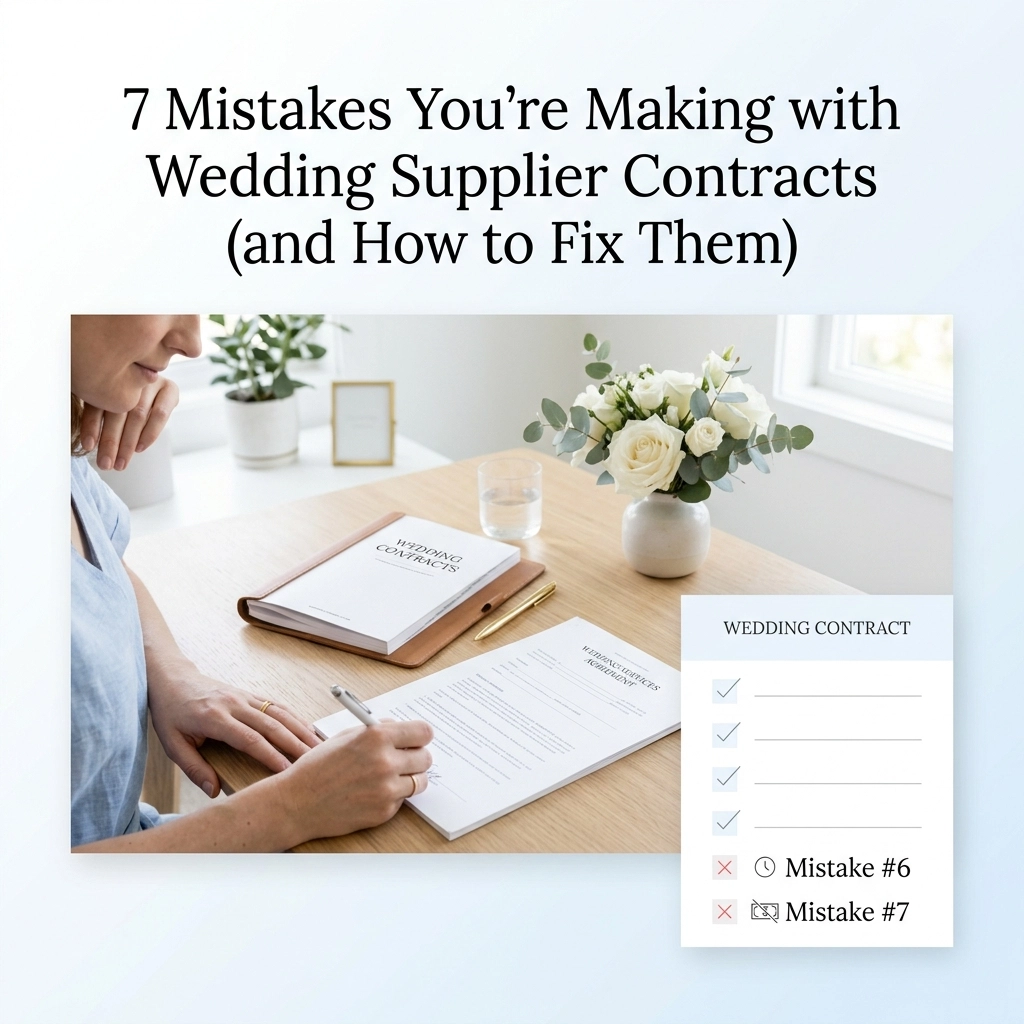
Wedding supplier contracts are the only thing standing between your dream day and a financial nightmare. When you are deep in the trenches of planning, it is easy to view these documents as mere formalities: standard paperwork that everyone signs. That is a dangerous assumption. In the wedding industry, a contract is rarely designed to protect the couple; it is built to protect the vendor's bottom line.
If you don't treat these agreements with the same scrutiny you would a business merger, you are leaving yourself exposed. At GHW-Digital, we believe in technical precision and ironclad boundaries. Whether we are developing high-end apps or helping you navigate the complexities of service agreements, the goal is the same: total protection of your interests.
Here are the seven most common mistakes couples make with wedding supplier contracts and the no-nonsense steps you must take to fix them.
1. Accepting Front-Loaded Payment Schedules
One of the most common red flags in wedding supplier contracts is a payment schedule that demands the vast majority of the fee months before the event. If a vendor asks for 75% or 100% of the payment upfront, they have removed any incentive to provide elite service.
The Danger: If a vendor goes out of business or simply disappears, your leverage is gone. Couples frequently lose thousands of dollars because they paid for a service that was never delivered.
The Fix: Balanced Milestones. Negotiate a schedule where payments are tied to specific deliverables. A deposit to secure the date is standard, but the bulk of the payment should remain in your pocket until the service is rendered. For more strategies on managing your wedding tech and budget, explore our planning ideas.

Alt: A close-up of a pen signing one of many wedding supplier contracts on a wooden desk.
2. Ignoring One-Sided Cancellation Policies
Most wedding supplier contracts include a cancellation clause. The problem? They are almost always written in favor of the vendor. You might be required to pay 100% of the fee if you cancel three months out, but the vendor might be allowed to cancel on you with nothing more than a "sorry" and a refund of your deposit.
The Danger: If your vendor cancels last minute, a simple refund doesn't cover the massive cost of finding a replacement at the eleventh hour.
The Fix: Mutuality. Demand that cancellation terms are equitable. If you have to pay a penalty for cancelling, the vendor should be liable for a similar penalty if they fail to show up. This ensures both parties are equally invested in the agreement.
3. The Absence of Force Majeure Protection
"Acts of God" aren't just for movies. Pandemics, fires, and natural disasters can derail your wedding in an instant. Without a robust Force Majeure clause in your wedding supplier contracts, you could be legally obligated to pay for a wedding that is physically impossible to hold.
The Danger: Without this clause, you are the one carrying 100% of the financial risk for events that no one can control.
The Fix: Explicit Language. Ensure your contract includes specific Force Majeure language that protects you from liability if the event cannot proceed due to unforeseeable circumstances. This isn't just about "bad weather"; it’s about legal impossibility.
4. Vague Service Descriptions and Deliverables
"Photography services" is not a deliverable. "DJ for four hours" is not a deliverable. Vague language is the enemy of accountability. When wedding supplier contracts lack detail, vendors can do the bare minimum and still claim they fulfilled the contract.
The Danger: You expect 500 edited photos, but the contract only said "photos." You receive 50 unedited shots, and legally, the vendor has "met" their obligation.
The Fix: Granular Detail. Every contract should define measurable outcomes. Specify the number of hours, the exact names of the staff members attending, the specific equipment being used, and the exact timeline for delivery. If it isn't in writing, it doesn't exist. For more on how to structure your event requirements, check out our Scope Guard Elite concepts.

Alt: A detailed checklist comparing wedding supplier contracts to ensure all service deliverables are met.
5. Signing Away Your Rights with Extreme Liability Waivers
Many vendors attempt to include clauses that absolve them of all liability, even if their own negligence causes damage or injury. While some risk-sharing is normal, signing an extreme waiver is a massive mistake.
The Danger: If a vendor's equipment causes a fire at your venue, or a guest is injured due to their negligence, an extreme waiver could leave you footing the entire bill.
The Fix: Reasonable Liability. Ensure that the vendor maintains responsibility for their own professional negligence. They should have their own liability insurance, and your contract should reflect that they are responsible for their actions on-site.
6. Failing to Require Documented Backup Plans
What happens if your photographer gets the flu? What happens if the florist's van breaks down? If your wedding supplier contracts don't mention contingencies, you are essentially gambling on the vendor’s health and luck.
The Danger: A vendor's personal emergency becomes your wedding disaster. Without a contractually mandated backup, you are left scrambling.
The Fix: Written Contingencies. Require a detailed backup plan in the contract. This should include the names of associate vendors who will step in, how equipment failures will be handled, and the timeline for notifying you of any changes. We recommend looking into Vow Shield for advanced protection against these exact scenarios.
7. The "Skim and Sign" Error
The biggest mistake is the most simple: not reading the document. Wedding planning is exhausting, and by the time you reach the contract stage with your tenth vendor, "contract fatigue" sets in. You trust the vendor, so you sign.
The Danger: Verbal promises mean nothing in court. If a vendor promised you a specific lead singer but the contract says "subject to availability," you have no recourse when a trainee shows up instead.
The Fix: The Deep Dive. Read every single line. If a verbal promise was made, find where it is in the contract. If it’s not there, add it as an addendum. Never sign under pressure. A professional vendor will respect your diligence; a shady one will push you to sign quickly.

Alt: A frustrated couple reviewing multiple wedding supplier contracts with a highlighter and laptop.
Securing Your Big Day with GHW-Digital Logic
At GHW-Digital, we treat every project with a "Scope Sentry" mindset. Whether we are building bespoke mobile applications or advising on digital transformation, we know that the details are where the battle is won or lost. Your wedding is no different. It is a high-stakes project that requires a shield of protection.
By identifying these red flags in your wedding supplier contracts, you aren't being "difficult": you are being a professional. You are protecting your investment, your guests, and your peace of mind.
If you want to stay ahead of the curve and find more ways to optimize your life and business through smart tech and strategy, visit our latest ideas and insights. We post daily to ensure you have the elite tools you need to succeed in any venture.
Final Checklist for Your Wedding Supplier Contracts:
- Milestone Payments: Are they tied to dates or deliverables?
- Mutual Cancellation: Do you get a penalty fee if they bail?
- Force Majeure: Are you protected from the "unforeseeable"?
- Specific Deliverables: Is the "what" and "when" clearly defined?
- Backup Plans: Who is the "Plan B" and is it in writing?
Stop leaving your wedding to chance. Lock in your vendors, track your deliverables, and calculate your risks. Use the same precision in your personal life as we do at GHW-Digital.
Marblism Legal Shield Footer
This blog post is for informational purposes only and does not constitute legal advice. GHW-Digital and Marblism are not law firms. Wedding supplier contracts are legally binding documents; always consult with a qualified legal professional in your jurisdiction before signing any agreement. GHW-Digital prioritizes data integrity and transparency in all digital interactions.
Leave a Reply