Category: Blog

Your blog category

  • 5 Steps to Neutralize a Project Scope Shift and Reclaim Your Time (Easy Guide for the Freelance Community)

    5 Steps to Neutralize a Project Scope Shift and Reclaim Your Time (Easy Guide for the Freelance Community)

    Scope creep management is the only thing standing between your profitable project and a slow, agonizing death by "just one more thing." If you are an independent contractor, you aren't just a builder; you are a digital architect. You design systems. You build structures. When a client moves a wall without checking the blueprints, the whole building risks collapse.

    Protecting your time isn't about being difficult. It is about maintaining the integrity of your work. Every unbilled hour spent on a "quick tweak" is revenue leaking out of your business. To stop the leak, you need a shield. You need a system that treats your time with the same respect you give your code.

    1. Lockdown Your Independent Contractor Agreements

    The first line of defense in scope creep management is the foundation. You cannot manage what you have not defined. Before a single line of code is written or a pixel is moved, you need an airtight agreement. This isn't just a formality; it is your structural blueprint.

    Your Independent Contractor Agreements should be granular. Don’t just say "App Development." Say "Development of a five-screen iOS application with Firebase integration." List the exclusions. If you aren't providing the copy, state it. If you aren't sourcing the images, write it down. Clarity is your greatest ally.

    When you leave gaps in your contract, you invite the client to fill them with their own assumptions. A well-defined scope ensures that everyone is looking at the same map before the journey begins. If you need inspiration on how to structure these projects, check out our latest ideas on minimalist project architecture.

    Minimalist architectural blueprint on a desk for independent contractor agreements and scope planning.

    2. Implement a Formal Change Approval Shield

    Project shifts happen. Markets change, and new ideas emerge. The goal of scope creep management isn't to prevent change, but to neutralize the chaos that change causes. You need a formal "Change Order" process.

    Stop accepting verbal requests during "quick syncs." If a client asks for a new feature, your response should be: "That sounds like a great addition. I’ll send over a Change Order to see how this impacts our timeline and budget." This immediate pivot signals that your time is a finite resource.

    By using tools like Scope Guard Elite, you can formalize these requests. It turns a casual "Can we also add a login via LinkedIn?" into a documented project adjustment. This protects the professional boundary and ensures you are compensated for the extra lift.

    3. Price Every Shift with Transparency

    Fairness is a two-way street. If you provide more value, you deserve more compensation. Scope creep management fails when the price of an "extra" is left for later. Later never comes, and if it does, it’s usually an argument.

    Establish a tiered pricing model for additions.

    • Minor Tweak: Small fee or deducted from a pre-allocated "buffer" of hours.
    • Feature Expansion: Fixed price based on development time.
    • Pivot: Full renegotiation of the project phase.

    When the client realizes that every "lightbulb moment" has a price tag, they become much more intentional about their requests. It forces them to prioritize their needs versus their wants. For more on how to streamline these digital assets, browse our apps section.

    Translucent glass shield representing scope creep management and formal change approval boundaries.

    4. Deploy Early Detection Systems

    You cannot neutralize a threat you don't see. Most scope shifts don't happen in a massive explosion; they happen through "feature erosion." A small request here, a tiny adjustment there, and suddenly you are two weeks behind.

    Use Scope Sentry to monitor your progress in real-time. Compare your actual hours against your original estimates daily. If a task that should take two hours is hitting four, ask why. Is it a technical hurdle, or did the requirements quietly expand?

    Detecting these shifts early allows you to have a "temperature check" conversation with the client before the relationship sours. It’s much easier to fix a small misalignment in week two than a total project failure in week ten. According to the Project Management Institute, unmanaged changes are the primary reason for project failure. Don't let your project be a statistic.

    Balanced scale showing fair value and scope creep management for freelance project shifts.

    5. Master the Art of Renegotiation

    When a major shift occurs: perhaps the client’s business model changed or they secured a new round of funding and want to scale: your original Independent Contractor Agreements may no longer be fit for purpose. This is where you reclaim your time by hitting the reset button.

    Reference your original proposal. Show the delta between what was agreed upon and what is now being requested. This isn't a confrontation; it's an alignment. You are helping the client understand the physics of development: you cannot add mass without adding energy (time and money).

    Using a framework like Vow Guard Elite ensures that these new promises are as binding as the first ones. It locks in the new timeline and protects your margins. Remember, a "No" to a free addition is a "Yes" to your business's health. For more strategies on maintaining project integrity, explore our resource hub.

    Digital interface pulse for early detection of scope creep management shifts in freelance projects.

    The Digital Architect's Mindset

    Effective scope creep management is about respect. Respect for your craft, respect for your client’s goals, and respect for your own boundaries. When you allow scope to shift without documentation or compensation, you are telling the client that your expertise is a commodity, not a professional service.

    Stop the "moving goalposts." Lock in your requirements. Track every hour. Price every change. By treating your freelance practice with the rigor of a large-scale engineering firm, you command higher rates and attract better clients.

    Projects will always evolve. That is the nature of app development. But with the right shields in place, those evolutions will fuel your growth rather than drain your spirit. Secure your competitive advantage by implementing these steps today.


    Marblism Legal Shield

    This content is provided for informational purposes only and does not constitute legal or professional advice. While we strive for accuracy, GHW-Digital and Marblism are not responsible for any project outcomes or legal disputes arising from the use of these strategies. Always consult with a qualified legal professional before finalizing Independent Contractor Agreements or significant project pivots. We value your privacy; for more information, see our Privacy Policy.

    Stop the bleed. Secure your project. Explore Scope Guard Elite Now.

  • Freelance scope management: The Powerful Urgent Asset

    Freelance scope management: The Powerful Urgent Asset

    Freelance scope management is the difference between a profitable operation and a failing hobby. In the modern gig economy, your time is your only inventory. When you allow that inventory to be stolen through uncompensated requests, you aren't just being "helpful", you are liquidating your business. Scope creep kills margins. It erodes trust. Most importantly, it creates a precedent that your boundaries are negotiable. They are not.

    Professional freedom requires a defensive perimeter. Without a rigid mechanism to identify and monetize shifts in project requirements, you are essentially working for free. This is why the integration of advanced tools like Scope Sentry has become a requirement for the elite freelancer. You need a system that removes the emotion from the negotiation and replaces it with cold, hard data.

    Establish the Perimeter with Freelance Scope Management

    Effective freelance scope management begins the moment a contract is signed. However, the contract is only a static document; the project itself is a living organism. As the project evolves, client needs will inevitably shift. The problem isn't that projects change, the problem is that most freelancers lack the infrastructure to track those changes in real-time.

    A Scope of Work (SOW) serves as your primary defense protocol. It outlines the boundaries of what is and is not included. But a document in a folder does nothing when a client sends a "quick" Friday afternoon request that actually requires four hours of coding. You need an active guardian. You need a system that allows you to upload your original agreement and instantly compare it against new requests to determine if they are within the agreed-upon perimeter.

    Freelance scope management analysis comparing original contracts to new client requests for precise project control.
    Alt: Freelance scope management analysis comparing original contracts to new client requests

    The Invisible Profit Killer: Identifying Scope Creep

    Scope creep is a silent predator. It rarely arrives as a massive overhaul; it arrives as a series of tiny, seemingly insignificant additions. One extra revision. A small design tweak. A brief consultation call that wasn't scheduled. Individually, these are minor. Collectively, they represent a massive leak in your revenue stream.

    By utilizing freelance scope management best practices, you treat every request as a transaction. If it isn't in the original SOW, it has a price. According to industry analysis by the Harvard Business Review, failing to manage these shifts is one of the leading causes of project failure and professional burnout. When you stop guessing and start measuring, you reclaim your authority.

    Analyze Requests – Protect Your Margins

    The core functionality of a professional's toolkit must include the ability to analyze new data against existing obligations. When a customer sends a request, the immediate reaction for many is to say "yes" to maintain the relationship. This is a strategic error.

    With Scope Sentry, you don't have to guess if a request is "too much." You upload the contract and the new request, and the system provides an objective verdict: In-Scope or Out-of-Scope. This objectivity is vital. It shifts the conversation from "I feel like this is extra work" to "The system has identified this as a scope shift based on our legal agreement." It removes the personal friction and replaces it with professional standards.

    Scope Sentry interface providing automated freelance scope management and accurate contract analysis for professionals.
    Alt: Scope Sentry interface for automated freelance scope management and contract analysis

    Automate Pricing – Secure Your Revenue

    Determining that a request is out of scope is only half the battle. The next hurdle is determining what to charge for it. Many freelancers struggle with this, often undercharging because they fear losing the client or because they haven't updated their pricing models to reflect the urgency of the new request.

    A robust freelance scope management protocol should include an automated pricing mechanism. When a shift is detected, the system should suggest applicable pricing based on the complexity and the resources required. This ensures that you are always compensated at market rates, or higher, for work that falls outside the initial deal. You are no longer "fitting it in"; you are expanding the project scope at a premium.

    Standardize Communication – Eliminate Friction

    The most difficult part of freelance scope management is the conversation. Telling a client that their request will cost more money is an anxiety-inducing task for many. This is where the "human element" often leads to revenue loss.

    Scope Sentry solves this by providing a series of email templates in different voice tones. Whether you need to be direct and firm, or collaborative and soft, the system generates the communication for you. This allows you to maintain the client relationship while standing your ground. It frames the conversation around the "shift" rather than a "conflict." By using standardized, professional communication, you demonstrate that your business is a high-level operation that respects its own protocols.

    Effective freelance scope management achieved through professional, frictionless client communication and elite protocols.
    Alt: Effective freelance scope management results through professional client communication

    The Vital Protocol for Elite Client Defense

    To survive in App Development or any high-stakes freelance field, you must view yourself as a Digital Architect. Architects do not allow contractors to move walls without a change order. Neither should you.

    Implementing a strict freelance scope management strategy is about more than just money; it is about respect. Clients respect freelancers who have clear boundaries and professional systems. It signals that you are in high demand and that your time is a finite, valuable asset. When you use a tool like Scope Sentry, you are signaling to your client that you are an elite provider who operates with precision and legal clarity.

    Leverage the Strategy of Absolute Certainty

    The freelance market is becoming increasingly crowded. To stand out, you must be more than just a skilled technician; you must be a disciplined business owner. This means having a "Scope Guard" mindset at all times. Every email, every Slack message, and every "quick call" must be filtered through your scope management protocol.

    If you are not using an automated system to track these shifts, you are leaving your business open to exploitation. You can find more about how we build these defensive tools at GHW-Digital. We specialize in creating the assets that protect your assets.

    Secure Your Future Performance

    The goal of every project should be a successful delivery that stays within the budget and timeline. Scope creep is the primary obstacle to that goal. By mastering freelance scope management, you aren't just protecting your current project; you are building a reputation for reliability.

    According to the Freelancers Union, clear contracts and scope definitions are the top ways to ensure timely payment. When the scope is clear, the deliverables are clear, and the path to payment is unobstructed.

    Don't let your hard work be diluted by unmanaged requests. Take control of your perimeter. Deploy the right tools. Ensure that every minute you spend working is a minute you are getting paid for. That is the only way to build a sustainable, elite freelance career.

    Stop the leak. Lock in your profit. Secure your boundaries today.

    Special Offer: Lock In Your Perimeter for Less

    If you're serious about freelance scope management, you need a system that enforces your perimeter without emotion.

    Use code BLOG20 for twenty percent off ScopeGuard Pro. Valid until April 1, 2026. Deploy it now, before the window closes.


    Mandatory Footer:
    At GHW-Digital, we prioritize absolute transparency. Your data is your intellectual property. We do not sell user information to third parties or engage in predatory marketing. Our tools are built to protect your business, and our privacy policy reflects that commitment to your security. For more information, please review our Privacy Policy.

    Powered by GHW Digital (Company No: 16834250). This document is an automated draft for business organization purposes only. It does not constitute legal advice. GHW Digital accepts no liability for disputes, financial loss, or enforceability. Users must consult a qualified professional in their jurisdiction before signing.

  • Professional Service Contracts: The Ultimate Truth About Crucial Automation

    Professional Service Contracts: The Ultimate Truth About Crucial Automation

    Professional Service Contracts are the silent foundation of your business, yet they are often the biggest source of financial leakage and administrative friction. For decades, the standard response to contract management was simple: hire an expensive legal consultant. You paid for their time, their prestige, and their manual oversight. But the landscape has shifted. In 2026, the question isn't whether you need legal protection: it's whether you are still paying a human "tax" for work that elite software tools perform with more precision and at a fraction of the cost.

    At GHW-Digital, we see the carnage caused by poorly managed agreements every day. Scope creep, missed milestones, and "vague" terms are not just annoyances; they are margin killers. You don't need a consultant to sit in a mahogany office and draft the same clause for the hundredth time. You need a shield. You need a system that locks in your profit and guards your time without the hourly billable rate.

    The Hidden Tax of Legal Consultants

    Traditional legal consulting is built on a model of inefficiency. When you engage a consultant to draft your Professional Service Contracts, you are often paying for their overhead, not just their expertise. Much of the work involved in standard service agreements is routine. It involves templating, risk flagging, and ensuring compliance with standard regulations.

    When you rely solely on human consultants for these routine tasks, you introduce two major risks: human error and extreme delay. A consultant might miss a non-standard clause because they are tired or juggling twenty other clients. They might take three days to return a redlined document that your business needed yesterday. In the fast-paced world of app development, these delays are unacceptable. If you’re looking for faster ways to iterate, check our latest ideas for rapid deployment.

    Deploying Professional Service Contracts to Guard Your Time

    Automation isn't just about speed; it's about creating a fortress around your productivity. Elite software tools allow you to generate Professional Service Contracts that are battle-tested and consistent. Instead of starting from a blank page or a dusty Word template, you deploy a system that understands the specific nuances of your industry.

    Automate Drafting – Secure Your Margins
    Manual drafting is where the "moving goalposts" problem begins. By using automated systems, you ensure that every contract includes the necessary protections for your intellectual property and payment terms. You aren't "writing" a contract; you are configuring a defensive perimeter. For those looking to see how this fits into a broader strategy, our ideas page is updated daily with fresh insights on operational efficiency.

    A protective blue shield representing automated security for your Professional Service Contracts.
    Alt: Professional Service Contracts being generated by an automated software shield to protect business margins.

    Standardize Terms – Eliminate Human Error
    Consistency is the enemy of litigation. When your contracts vary wildly from client to client because they were "hand-crafted" by different consultants, you create legal blind spots. Automation forces a standardized logic. It ensures that your Vow Guard Elite protections are applied across the board, leaving no room for "creative" interpretations by the other party.

    Action-Benefit: Why Automation Outperforms Humans

    To understand why the shift to automated Professional Service Contracts is inevitable, we must look at the specific functions these elite tools perform. We aren't just talking about "e-signatures." We are talking about active, intelligent management of your legal obligations.

    • Protect Your Intellectual Property: Automated tools can automatically insert ironclad IP clauses that have been vetted against current standards like those found in the Electronic Frontier Foundation guidelines.
    • Lock In Scope: Tools like Scope Guard Elite serve as a digital sentry. They don't just draft the contract; they monitor the work against the contract to ensure you aren't doing "freebies" for the client.
    • Track Obligations: Humans forget. Software doesn't. An automated system tracks every milestone and notification requirement, ensuring you are never in breach of your own Professional Service Contracts.
    • Calculate Risk: Modern AI-driven platforms can scan a contract and provide a risk score based on thousands of similar agreements, providing a level of data-driven insight that no single consultant could match.

    The Truth About "Complex" Matters

    A common argument from the legal industry is that automation cannot handle "complexity." This is a half-truth designed to protect high fees. While it is true that a multi-billion dollar merger requires a high-level strategic consultant, the vast majority of Professional Service Contracts in the tech and service sectors do not.

    In fact, research from Harvard Business Review suggests that a significant percentage of legal work is ripe for automation because it relies on pattern recognition and standardized logic. Elite software tools are actually better at this than humans. They can scan 500 pages of documentation in seconds to find a single conflicting clause that a consultant might miss on page 412.

    Precise digital scan of document layers for risk detection in Professional Service Contracts.
    Alt: A data-driven dashboard showing risk assessment for Professional Service Contracts.

    Stop the Revenue Leaks

    Every time you "wait for legal" to get back to you, you are leaking revenue. Every time you sign a contract with a vague "out of scope" clause, you are leaking revenue. Professional Service Contracts should be a tool for growth, not a bottleneck.

    By integrating these contracts directly into your workflow via GHW-Digital's apps, you turn your legal department from a "Cost Center" into a "Guard Center." You move from a reactive posture: waiting for things to go wrong: to a proactive one where your interests are secured from the moment of the first handshake. For more on how to streamline these processes, our ideas section provides daily tactical advice.

    The Marblism Legal Shield Philosophy

    We believe in radical transparency and absolute control. Your Professional Service Contracts should not be a mystery solved only by someone with a law degree and a high hourly rate. They should be a clear, precise map of exactly what is being delivered, when, and for how much.

    Using tools like Scope Sentry allows you to maintain that map in real-time. When a client asks for "one small change," the system identifies it as a deviation from the Professional Service Contracts and prompts for a change order. This isn't being "difficult": it's being professional. It's about maintaining alignment and respect between both parties.

    A blue light connecting two blocks representing professional alignment in Professional Service Contracts.
    Alt: A digital shield icon representing the protection of Professional Service Contracts against scope creep.

    Professional Service Contracts: The Elite Advantage

    The businesses that will dominate the next decade are those that automate the mundane to focus on the monumental. If your leadership team is spending hours reviewing basic service agreements, you are losing. You are playing defense when you should be playing offense.

    Elite software tools for Professional Service Contracts provide:

    1. Immediate Turnaround: Close deals in minutes, not weeks.
    2. Ironclad Consistency: Every client is held to the same high standards of engagement.
    3. Cost Certainty: Replace unpredictable legal bills with a predictable software subscription.
    4. Strategic Focus: Use your human consultants for the 5% of deals that actually require creative legal strategy, while the software handles the other 95%.

    If you want to stay ahead of the curve, you need to be checking our ideas page every day. We post daily updates on how to leverage these tools to crush your competition and protect your bottom line.

    Conclusion: Take Control of Your Agreements

    The "truth" about automated service contracts is that they have already won. The only question is how long you will continue to pay the "consultant tax" before you upgrade your defenses. Professional Service Contracts are too important to be left to the whims of human scheduling and manual error.

    Stop letting scope creep kill your margins. Stop waiting for the legal department to clear their inbox. Deploy an elite digital shield today.

    Secure your business. Lock in your profit. Guard your time.


    Marblism Legal Shield: This software and its generated content do not constitute legal advice. While our tools provide elite protection and alignment, always consult with a qualified professional for high-risk, non-standard legal maneuvers. We prioritize your privacy and data integrity above all else.

    Ready to stop the leaks? Explore our full suite of development tools or dive into our daily strategy ideas to start building your defensive perimeter right now.

  • The Modern Independent Professional’s Guide to Scaling with GHW Digital’s Ideas Roadmap

    The Modern Independent Professional’s Guide to Scaling with GHW Digital’s Ideas Roadmap

    Ideas Roadmap is the starting point for every professional who is tired of the "time-for-money" trap. In the current economy, being an expert isn't enough. If your income is strictly tied to the hours you spend sitting at a desk or on a Zoom call, you aren't running a business; you're managing a job that you can't quit. To scale, you need leverage. At GHW-Digital, we believe that leverage comes from transforming your specialized knowledge into Autonomous Digital Assets.

    The traditional model of professional consulting is broken. It’s linear, exhausting, and ultimately capped by the biological reality that you only have 24 hours in a day. The Ideas Roadmap is our answer to this stagnation. It is a systematic framework designed to extract your unique expertise and crystallize it into digital tools that work, sell, and deliver value without requiring your constant presence.

    Why the Ideas Roadmap Is Your Crucial Tool for Expansion

    Scaling a professional service requires a shift from "doing" to "architecting." Most independent professionals: be they lawyers, engineers, consultants, or creatives: struggle to scale because their value is trapped inside their heads. Every client engagement requires a manual download of that information. This is inefficient. It creates a bottleneck that prevents growth and leads to burnout.

    The Ideas Roadmap serves as the elite blueprint for breaking this cycle. We don't just build apps; we build engines of growth. By following a structured roadmap, you stop guessing what your market needs and start building what they will pay for. This process is about precision. It’s about identifying the most painful problem your clients face and solving it through a digital interface.

    Digital wireframe on a tablet illustrating GHW Digital’s Ideas Roadmap for business scaling.

    When you use a roadmap, you eliminate the "moving goalposts" that plague most development projects. You define the scope, you identify the core value proposition, and you lock in the path to execution. This is not just about technology; it is about business survival. In an era where AI is rapidly commoditizing basic tasks, your unique professional insights are your only remaining moat. The Ideas Roadmap helps you fortify that moat by turning it into a tangible product.

    Turning Expertise into Autonomous Digital Assets

    What exactly is an Autonomous Digital Asset? It is a piece of software, a platform, or a tool that embodies your professional methodology. Think of it as a "digital clone" of your best advice. While you are sleeping, your asset is helping a client solve a problem, processing data, or providing a critical service.

    The philosophy at GHW-Digital is centered on the democratization of this technology. Historically, only massive corporations had the capital to build proprietary software. Today, we are leveling the playing field. We believe that an independent professional with a decade of experience should have the same technological firepower as a Fortune 500 firm.

    Building these assets requires a "no-nonsense" approach to development. You cannot afford to waste six months on a "maybe." You need to move from idea to asset with clinical efficiency. This is where our framework excels. We focus on:

    • Extraction: Pulling the high-value logic out of your workflow.
    • Validation: Ensuring the market actually wants the digital version of your expertise.
    • Conversion: Translating professional logic into functional code.
    • Protection: Ensuring your intellectual property is shielded through tools like Scope Guard Elite.

    By creating these assets, you shift your revenue model from "hours worked" to "value delivered." This is the only path to true professional freedom.

    Democratizing Success via the Ideas Roadmap

    The democratization of professional expertise is not just a catchphrase; it is a necessity for the modern economy. We are seeing a massive shift toward independent work. According to research on the freelance economy, more professionals are choosing autonomy over corporate security. But autonomy without leverage is just another form of precariousness.

    Our Ideas Roadmap is designed to give these independent professionals the tools to compete at scale. When we democratize access to high-end app development, we empower the subject matter experts to become the tech founders of tomorrow. You don't need to be a "techie" to own a digital asset. You just need to be an expert in your field with a clear vision of how to help people.

    Independent professional viewing a digital network built using GHW Digital’s Ideas Roadmap.

    By using the Ideas Roadmap, you are essentially skipping the "learning the hard way" phase of software development. You are leaning on our professional framework to ensure that your digital transition is profitable, not just possible. This democratization means that the best ideas win, not just the ones with the largest venture capital backing.

    Inventory Your Intellect: Identifying Scalable Knowledge

    The first step in any successful roadmap is an honest assessment of your current intellectual inventory. Not every part of your job should be an app. Some things still require the human touch. However, most professionals underestimate how much of their daily routine is actually a repeatable algorithm.

    Ask yourself:

    • What questions do I answer ten times a week?
    • What calculations do I perform for every client?
    • What "checklist" do I follow to ensure a project is successful?

    These are the seeds of an Autonomous Digital Asset. The Ideas Roadmap helps you isolate these high-impact variables and prepare them for development. We help you cut the fluff and focus on the "Action-Benefit" functions that will drive user adoption. If a feature doesn't directly solve a client's problem or protect your time, it doesn't belong in the first version of your asset.

    Lock In Your Profit with Precise Execution

    One of the biggest killers of digital transformation is scope creep. It is the "leak" in your revenue that happens when projects drift away from their original purpose. At GHW-Digital, we treat scope creep as a threat to your business. We advocate for a "guard and defend" mentality when it comes to your development resources.

    A digital shield protecting a core business idea from scope creep within an Ideas Roadmap.

    Using our roadmap ensures that every line of code written is a line of code that contributes to your bottom line. We use strict boundary-setting and clear alignment to ensure that the project stays on track. This direct, no-nonsense approach is why independent professionals trust us. We aren't here to build "cool" things; we are here to build things that work and scale.

    By the time you reach the end of the Ideas Roadmap process, you should have a clear understanding of your product's architecture, its market positioning, and the timeline for its release. This level of precision is what separates successful digital entrepreneurs from those who simply "have an idea for an app."

    Secure Your Competitive Advantage Now

    The window for establishing yourself as a digital leader in your niche is closing. As more professionals realize the power of Autonomous Digital Assets, the market will become more crowded. Those who act now: those who follow a proven Ideas Roadmap: will be the ones who set the standards for their industry.

    Don't let your expertise be a depreciating asset. Don't let your income be tied to your physical presence forever. It is time to protect your time and maximize your profit.

    The path to scaling isn't through working harder; it's through working smarter via digital leverage. Your expertise is valuable. Your time is finite. Let us help you bridge that gap.

    Stop selling your life by the hour. Start building assets that scale.

    Explore the GHW Digital Ideas Roadmap and take the first step toward democratizing your own expertise.


    Marblism Legal Shield

    This website and its content, including the proprietary "Ideas Roadmap" framework and the concept of "Autonomous Digital Assets," are protected by the Marblism Legal Shield. Any unauthorized reproduction, redistribution, or commercial use of our methodologies, text, or branding without express written consent from GHW-Digital is strictly prohibited. We actively monitor the digital landscape and will pursue rigorous legal action against any entities found to be infringing upon our intellectual property. We believe in fairness, respect, and the protection of professional boundaries; for ourselves and for our clients. All rights reserved 2026.

  • Wedding Supplier Contracts: The Ultimate Crucial Guide to Protecting Your Big Day

    Wedding Supplier Contracts: The Ultimate Crucial Guide to Protecting Your Big Day

    Wedding Supplier Contracts are the foundation of a stress-free wedding. When you are planning the most important day of your life, you aren't just hiring vendors; you are entering into high-stakes legal agreements. Without a robust contract, your "Big Day" is vulnerable to shifting timelines, disappearing deposits, and subpar service. At GHW-Digital, we understand that whether you are developing a high-end application or planning a gala, the principle is the same: alignment is the only defense against chaos.

    The Shield for Your Big Day: Why Wedding Supplier Contracts Matter

    Wedding Supplier Contracts act as a guardian for your vision and your budget. Many couples make the mistake of relying on verbal agreements or friendly emails, but in the eyes of the law, if it isn't in writing, it doesn’t exist. These contracts establish clear terms and expectations, ensuring that both you and your vendors are aligned on every detail from the floral arrangements to the final dance.

    In the world of app development, we call this "Scope of Work." In weddings, it’s your peace of mind. Without a defined scope, you are open to "service creep," where costs escalate and quality diminishes. By securing a comprehensive contract, you lock in the value and protect your investment. If you are looking for more innovative ideas on managing complex projects, our resources can help you apply professional management styles to your personal milestones.

    A glass shield and fountain pen representing protection provided by Wedding Supplier Contracts.

    Spotting Red Flags in Wedding Supplier Contracts

    Not all contracts are created equal. Some are designed to protect the vendor at the expense of the couple. You must approach every document with a critical eye, looking for clauses that strip away your rights or leave you high and dry.

    1. Vague Descriptions of Services
    If a contract says "Photography services for 8 hours" without specifying the number of photographers, the deliverables (digital vs. print), or the editing style, you are in danger. Every line item should be granular.

    2. The "Non-Refundable" Trap
    While deposits are standard, a contract that claims all payments are non-refundable regardless of the vendor's performance is a massive red flag. There must be a path for recourse if the service is not delivered.

    3. Missing Liability Insurance
    Professional vendors should carry liability insurance. If the contract doesn't mention it, or if they refuse to provide proof, they are not a professional operation. This puts the burden of any accidents on you and your venue.

    4. No "Force Majeure" Clarity
    The last few years have taught us that the unexpected happens. Your Wedding Supplier Contracts must include a fair "Force Majeure" clause that outlines what happens in the event of a global crisis, extreme weather, or illness. If the language only benefits the vendor, do not sign.

    For more tips on vetting professional partners, check out our latest insights at GHW-Digital.

    Essential Clauses for Maximum Protection

    To ensure your wedding goes off without a hitch, your contracts need to be more than just a list of prices. They need to be a tactical roadmap.

    Scope of Services: Lock In the Details

    The "Scope of Work" section is where you win or lose. For a caterer, this means detailing the exact menu, the number of servers, the attire of the staff, and the cleanup process. For a band, it’s the specific setlist, the equipment provided, and the arrival time for soundchecks. Precision is your best friend.

    Payment Schedules: Control Your Cash Flow

    Never pay 100% upfront. A fair contract involves a deposit (usually 25-50%) and a structured payment schedule. The final payment should ideally be due a week or two before the wedding: or even after delivery for products like wedding videos. This keeps the vendor motivated and accountable. You can find more strategic planning ideas on our corporate blog to help organize these financial milestones.

    Service Delivery and Timelines: Ensure Accountability

    Timelines are the heartbeat of a wedding. Your contract should specify exactly when a vendor arrives, when they set up, and when they depart. For photographers, it should specify the "turnaround time" for your photos. Without a hard date in the contract, you could be waiting six months for your wedding album with no legal way to hurry them up.

    A magnifying glass over a document to identify red flags in Wedding Supplier Contracts.

    Vow Shield: The New Standard in Wedding Protection

    At GHW-Digital, we believe in using technology to safeguard your most important moments. This is why we advocate for tools like Vow Shield. Vow Shield is designed to act as an additional layer of security, ensuring that the terms laid out in your Wedding Supplier Contracts are not just words on a page, but a commitment that is tracked and verified.

    Just as we use Scope Guard Elite to protect our technical projects, Vow Shield provides couples with the digital infrastructure to monitor vendor commitments and flag potential issues before they become disasters. It’s about moving from a reactive "hope for the best" strategy to a proactive "secured by design" approach.

    How to Negotiate for Fairness

    Many couples feel they have no power when a vendor hands them a standard contract. This is a myth. You have the right to request changes. If a clause feels one-sided, ask for it to be mutual. For example, if there is a clause about you paying interest on late payments, there should be a clause about the vendor providing a discount if they are late to the event.

    Negotiation is about alignment, not conflict. Professional vendors appreciate couples who take their contracts seriously because it shows they are also committed to a successful event. If you need inspiration on how to lead these professional conversations, our ideas page is full of communication strategies.

    A blue pulse timeline marking key milestones defined in Wedding Supplier Contracts.

    Finalizing the Agreement: The Checklist

    Before you put pen to paper (or digital signature to PDF), run through this final checklist to ensure your Wedding Supplier Contracts are airtight:

    • Identity: Are the legal names of the business and the individuals correct?
    • Date and Venue: Is the exact date and location of both the ceremony and reception listed?
    • Deliverables: Is every single item you discussed listed explicitly?
    • Cancellation Policy: Is there a clear, fair path to cancel or reschedule?
    • Substitution Clause: What happens if the specific lead photographer or DJ is sick? Who is the backup?
    • Dispute Resolution: If something goes wrong, how is it handled? (e.g., arbitration vs. small claims court).

    Effective management of these contracts is similar to managing a complex software rollout. You can learn more about our methodologies here.

    A digital tablet showing a checkmark to signify finalizing Wedding Supplier Contracts.

    Secure Your Future Today

    Your wedding is a significant emotional and financial investment. Treating your Wedding Supplier Contracts with the same rigor you would a business deal isn't "unromantic": it’s responsible. It ensures that when the music starts, you are focused on the moment, not on whether the caterer is going to show up.

    Protect your big day. Demand clarity. Use the right tools. Whether you are building an app or building a life together, the contract is your shield. For more professional guidance on project management and protection, visit GHW-Digital Ideas.


    Marblism Legal Shield

    This blog post is for informational purposes only and does not constitute legal advice. While we strive to provide accurate information regarding Wedding Supplier Contracts, laws vary by jurisdiction. Always consult with a qualified legal professional before signing any binding agreements. GHW-Digital and Marblism are not liable for any losses or disputes arising from vendor relationships or contract negotiations. Protect your data, protect your day.

    Stop leaving your wedding to chance. Secure your vendors with a professional contract strategy now.

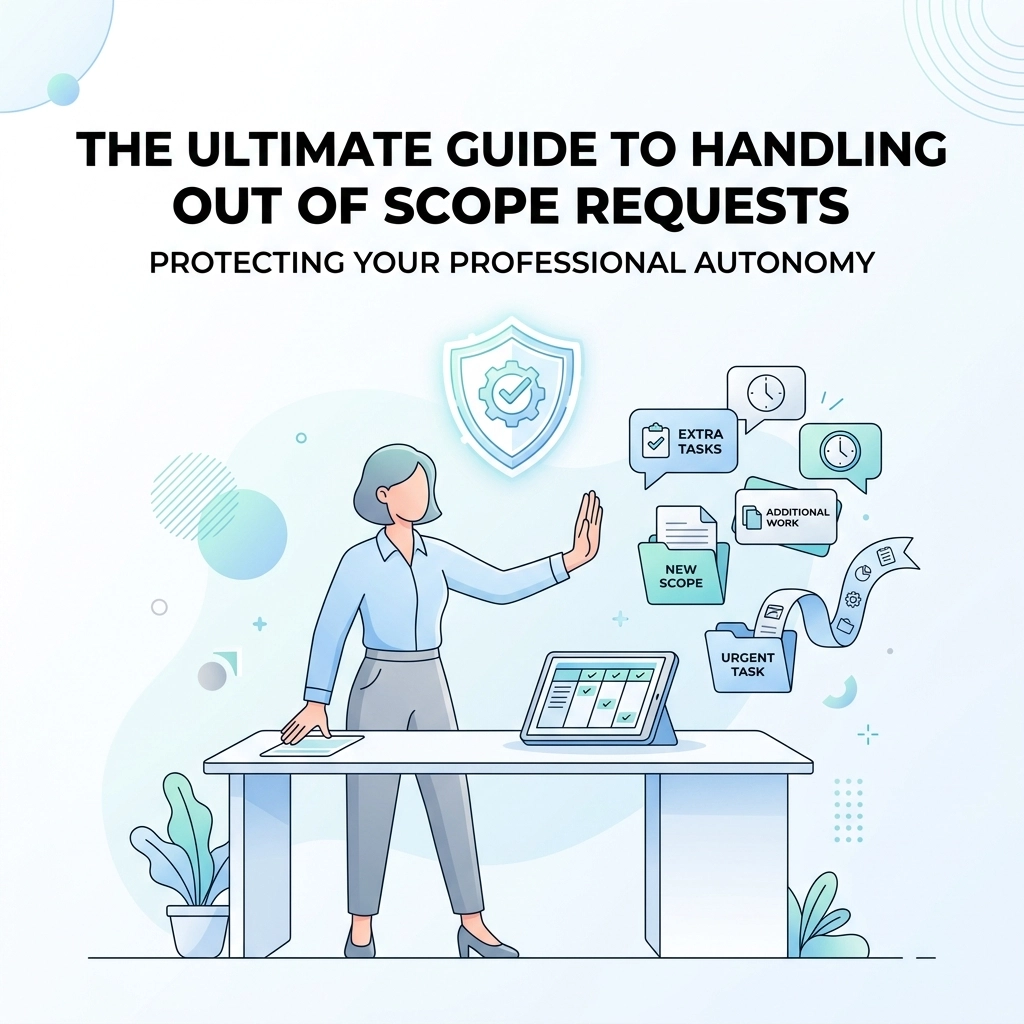
  • Scope Creep Management: The Ultimate Crucial Strategy to Protect Your Professional Autonomy

    Scope Creep Management: The Ultimate Crucial Strategy to Protect Your Professional Autonomy

    Scope Creep Management is the difference between a thriving app development business and a slow, agonizing burnout. In the world of high-stakes software engineering and design, the "quick favor" is a silent killer. It starts as a minor color change and ends as a complete overhaul of the database architecture. If you don’t control the boundary, the boundary controls you.

    At GHW-Digital, we approach every project as Digital Architects. We don’t just build apps; we design systems. When you build a skyscraper, you don’t decide to add an extra ten floors halfway through without renegotiating the foundation. Software is no different. Protecting your professional autonomy requires a rigid adherence to the original blueprint. This guide is your tactical manual for identifying, confronting, and neutralizing out-of-scope requests before they bleed your margins dry.

    The Architecture of Scope Creep Management

    Every independent contractor has felt that sinking feeling when an email arrives with the phrase, "While you're at it…" This is the first crack in the dam. Without active Scope Creep Management, your project’s profitability will leak until there’s nothing left but resentment.

    Managing scope creep by carefully adding new features to a professional app development project model.

    Scope creep occurs when the requirements of a project expand beyond the initial agreement without a corresponding increase in budget or time. It is a failure of communication and a failure of documentation. To combat this, you must treat your Independent Contractor Agreements as living documents that serve as a shield. If a request isn't in the agreement, it doesn't exist in the current reality of the project.

    Identify the Shift – Recognize the Puncture

    Before you can manage a request, you must categorize it. Not all requests are equal. Some are genuine pivots, while others are "feature bloat" disguised as necessity.

    • Internal Expansions: These are small additions to existing features that seem harmless but accumulate quickly.
    • External Disruptions: These are entirely new features or integrations that were never mentioned in the discovery phase.
    • Strategic Pivots: These happen when a client realizes their original idea won't work and wants to change direction entirely.

    Identifying these shifts early is the first step in effective Scope Creep Management. You can find more strategies for identifying project shifts at GHW-Digital Ideas.

    Use Change Orders – Calculate Real Costs

    The moment a request falls outside the lines, the conversation must shift from "can we do this" to "how does this affect the resources." A change order is not an act of aggression; it is an act of clarity. It identifies the new request, calculates the impact on the timeline, and adjusts the budget accordingly.

    Calculate the Impact – Secure the Timeline
    Every hour spent on an out-of-scope feature is an hour stolen from the original delivery date. Use tools like Scope Sentry to visualize these shifts for your clients. When they see the launch date moving in real-time, they often reconsider the necessity of the "extra" feature.

    Track the Resources – Protect the Margin
    Profitability relies on a fixed ratio of labor to capital. When labor increases without capital, the project enters a death spiral. Scope Creep Management ensures that every hour of work is accounted for and billed. You are not a charity; you are a professional providing a high-value service.

    Visual representation of a project timeline shifting due to ineffective Scope Creep Management.

    Draft Solid Agreements – Protect Your Time

    Your defense starts long before the first line of code is written. Your Independent Contractor Agreements must be airtight. A minimalist agreement that lacks detail is an invitation for trouble. You need to specify exactly what is included and, more importantly, what is excluded.

    • Deliverables: List them with granular detail. Instead of "Mobile App," write "User authentication, profile management, and payment integration."
    • Revisions: Define the number of allowed revisions. Anything beyond that is a billable event.
    • Communication: State how and when you will communicate. Constant Slack messages at 11 PM are out of scope.

    We recommend checking out the latest industry standards on GHW-Digital Ideas for drafting modern, minimalist contracts that prioritize speed and clarity.

    Mastering Scope Creep Management Through Communication

    Handling a client who wants more for less requires a stern but professional stance. You don't need to be emotional; you need to be factual. Use "Action-Benefit" statements to explain why boundaries are necessary.

    Frame the Boundary – Ensure Quality
    Instead of saying "I won't do that," say "To maintain the quality and security of the core features we agreed upon, we need to treat this new request as a separate phase or a change order." This positions you as the guardian of their project's success, not an obstacle.

    Ask Clarifying Questions – Expose the Scope
    When a client asks for something extra, ask: "How does this align with the primary objective we set in the initial scope?" This forces the client to justify the request and often leads them to realize it's unnecessary.

    For more templates on professional communication, visit our resource hub at GHW-Digital Ideas.

    Minimalist protective shield guarding project deliverables, symbolizing active Scope Creep Management.

    The Digital Architect’s Toolbox

    To maintain a minimalist and efficient workflow, you need the right tools. We’ve developed a suite of products at GHW-Digital specifically designed for Scope Creep Management.

    • Scope Guard Elite: This is your primary defense mechanism. It allows you to lock in project parameters and automatically flags requests that deviate from the plan. Check it out here: Scope Guard Elite.
    • Scope Sentry: A monitoring tool that tracks project velocity and alerts you when "minor" changes start to snowball into major delays.
    • Vow Guard Elite: Ensuring that your contracts are signed and stored with cryptographic integrity, making the original scope indisputable.

    Using these tools signals to your clients that you are serious about your professional boundaries. It creates an environment of mutual respect and alignment. According to Forbes, professional boundaries are the foundation of long-term business relationships.

    Independent Contractor Agreements as a Foundation

    Your agreement is the blueprint. If the blueprint is vague, the house will be crooked. Effective Scope Creep Management begins with a contract that respects both parties. It should include a specific section on "Change Management." This section should outline exactly how out-of-scope requests will be handled, the hourly rate for extra work, and the approval process for timeline extensions.

    Don't leave room for "interpretation." Interpretation is where profits go to die. Be the architect who knows every measurement. You can find more minimalist contract templates and ideas at GHW-Digital Ideas.

    Professional digital architect workspace displaying an app blueprint and Independent Contractor Agreements.

    The Cost of Saying Yes

    Every time you agree to an out-of-scope request for free, you are training your client to disrespect your time. You are setting a precedent that your boundaries are negotiable. In the long run, this devalues your expertise and the entire app development category.

    Protect Your Reputation – Deliver on Promise
    By sticking to the scope, you ensure that the original project is delivered on time and at the highest quality. A project that is "feature-rich" but three months late and over budget is a failure. Scope Creep Management is about delivering on your promises.

    Lock In Your Success – Stop the Leak
    Use the tools at your disposal. Whether it’s Scope Guard Elite or a simple, well-drafted change order, take control of your project’s trajectory.

    For more insights on how to scale your freelance business without losing your mind, keep an eye on GHW-Digital Ideas. We post daily updates for the modern Digital Architect.


    Marblism Legal Shield Disclosure
    The information provided in this blog post does not, and is not intended to, constitute legal advice; instead, all information, content, and materials available in this post are for general informational purposes only. Readers should contact their attorney to obtain advice with respect to any particular legal matter, including the drafting of Independent Contractor Agreements.

    Stop the leak. Protect your profit. Secure your autonomy now.
    Explore GHW-Digital Solutions

  • Agency scope protocol: The Powerful Urgent Asset

    Agency scope protocol: The Powerful Urgent Asset

    Agency scope protocol is the most powerful and urgent asset an organization can possess in a market defined by volatile client demands. Every unbilled hour is a direct hit to your bottom line. Every "quick adjustment" that bypasses your contract is a crack in your firm's foundation. Without a rigid mechanism to identify and monetize these shifts, your agency isn't growing; it is eroding.

    Scope creep does not happen in a vacuum. It is the result of poorly defined boundaries and the absence of a defensive shield. At GHW-Digital, we recognize that the difference between a high-margin project and a break-even disaster is the speed and precision with which you manage the perimeter of your work. This is why a standardized protocol is no longer optional. It is a survival requirement.

    The Agency scope protocol as a defensive weapon

    The primary function of an agency scope protocol is to act as a barrier against unauthorized labor. When a client requests an "urgent tweak," the typical agency response is to comply immediately to maintain the relationship. This is a mistake. Compliance without assessment devalues your expertise and trains the client to expect free labor.

    A robust protocol transforms a vague request into a structured data point. It forces a comparison between the original Project Scope and the new demand. By treating every request as a potential contract amendment, you signal to your clients that your time has a fixed, premium value. This isn't about being difficult; it is about maintaining a professional standard that ensures project health and team morale.

    Minimalist workstation protected by a glass barrier illustrating an agency scope protocol for project security.
    Alt text: Implementing an agency scope protocol to protect professional boundaries and project margins.

    Integrating your Agency scope protocol with Scope Sentry

    The manual process of checking a contract every time an email arrives is tedious and prone to human error. This is where Scope Sentry becomes your most potent ally. Scope Sentry is designed to be the operational heart of your agency scope protocol, automating the detection of "out of bounds" requests before they consume your resources.

    When a request enters your ecosystem, the process is clear:

    • Upload the Baseline: Your original contract is the law. Scope Sentry holds this law as the ultimate reference point.
    • Analyze the Shift: The new request is cross-referenced against your agreed-upon deliverables.
    • Determine Status: The system provides an immediate verdict: In Scope or Out of Scope.
    • Calculate the Value: If the request is out of scope, the system suggests a pricing shift based on the complexity and resource requirements of the new task.

    This level of precision removes the emotion from the negotiation. You are no longer "charging extra"; you are simply following the established protocol for a project expansion.

    Why the Agency scope protocol prevents revenue leaks

    Revenue leaks are the silent killers of the app development industry. They are the cumulative result of five-minute tasks that aggregate into dozens of unbilled hours per month. An agency scope protocol ensures that every minute of labor is accounted for and tied to a specific contractual obligation.

    By using a tool like Scope Sentry, you effectively lock in your margins. The system tracks the evolution of the project, ensuring that the "moving goalposts" phenomenon is captured in real-time. This transparency is beneficial for both parties. Clients receive a clear understanding of why costs are changing, and agencies secure the compensation they deserve for their specialized skills.

    Digital grid with light beam tracking changes to maintain an agency scope protocol and prevent revenue leaks.
    Alt text: Visualizing revenue protection through a standardized agency scope protocol and Scope Sentry integration.

    Mastering client communication through protocol

    The most difficult part of scope management is the conversation. Telling a long-term partner that their request will cost more can feel adversarial. However, an agency scope protocol provides a neutral framework for these discussions.

    Scope Sentry elevates this by providing a series of email templates in different voice tones. Whether you need a firm, "Elite Protection" stance or a more collaborative, "Partner Growth" approach, the tool generates the right words to back up the data. This ensures that your communication remains professional, consistent, and focused on the legal reality of the contract.

    Actionable Communication Strategies:

    • The Immediate Response: Acknowledge the request and state that it is being processed through the scope protocol.
    • The Transparency Report: Share the findings of the "In vs. Out" assessment directly with the client.
    • The Pricing Proposal: Provide a clear, data-backed quote for the additional work, ensuring the project remains profitable.

    Strategic growth through operational precision

    Scale is impossible without systems. If your ability to manage scope relies on the individual memory or "gut feeling" of a project manager, your agency is at risk. A centralized agency scope protocol allows you to standardize excellence across your entire portfolio. It ensures that whether you are managing one project or one hundred, the defensive perimeter remains unbreached.

    GHW-Digital builds tools for the Digital Architect: the professional who understands that precision is the path to power. By adopting Scope Sentry, you are not just buying software; you are installing a high-level security system for your intellectual property and your time.

    Protected asset stack representing strategic business growth through a rigorous agency scope protocol.
    Alt text: Strategic agency growth facilitated by a rigorous agency scope protocol and automated contract analysis.

    Standardizing the perimeter for every project

    Every project you undertake is an asset. To protect that asset, you must define its limits. The agency scope protocol is the definitive document that outlines these limits. It covers:

    • Deliverable Frequency: How often are you providing updates or builds?
    • Variation Complexity: What constitutes a minor change versus a structural overhaul?
    • Approval Hierarchies: Who has the authority to request a change, and who has the authority to approve the associated costs?

    When these variables are locked into a system like Scope Sentry, the "gray areas" that lead to disputes are eliminated. You move from a reactive state of "putting out fires" to a proactive state of "managing assets." This is the hallmark of an elite agency.

    The Urgent mandate for scope protection

    The time to implement an agency scope protocol is before the next "urgent" request hits your inbox. Waiting until a project is over budget to address scope creep is a recipe for conflict. By establishing the protocol now, you set the tone for all future interactions. You demonstrate that your agency is a professional entity that respects its own processes as much as it respects the client's vision.

    Stop the leakage. Protect your experts. Secure your profit. Scope Sentry is the mechanism that turns your contract from a passive PDF into an active guardian of your business interests. Explore how we are redefining App Development protection through automated scope management.

    Modern white pillars rising toward the future using an agency scope protocol to maximize business efficiency.
    Alt text: Digital architect using an agency scope protocol to secure project boundaries and maximize efficiency.


    Mandatory Ethics & Data Protocol
    At GHW-Digital, we operate with radical transparency. Your data is your property. When you upload contracts to Scope Sentry or any of our platforms, we utilize industry-standard encryption to ensure your intellectual property remains private. We do not sell, trade, or "mine" your contract data for third-party insights. Our tools are built to provide you with a defensive advantage, not to harvest your business intelligence. Respect for your privacy and the integrity of your legal documents is our baseline protocol. We believe in tools that empower the user, underpinned by blunt honesty and ethical engineering.


    ScopeGuard Elite Note (Limited-Time Protection Upgrade)
    If you want the same perimeter discipline baked into your contracts—not just your workflows—ScopeGuard Elite is our contract drafting engine for the Modern Independent Professional. It interviews you, detects risk, and generates a custom-engineered agreement designed to reduce scope creep, payment delay, and misaligned expectations before the first deliverable ships. For a limited time, use discount code BLOG20 for 20% off (valid until April 1, 2026). Explore the full Ideas Area here: https://ghw-digital.com/ideas.html


    Secure Your Perimeter
    Stop allowing scope creep to cannibalize your agency's growth. Implement a powerful agency scope protocol today and take command of your project margins. Get started with Scope Sentry and turn your contracts into your most effective defensive weapon.

    Powered by GHW Digital (Company No: 16834250). This document is an automated draft for business organization purposes only. It does not constitute legal advice. GHW Digital accepts no liability for disputes, financial loss, or enforceability. Users must consult a qualified professional in their jurisdiction before signing.

  • Do You Really Need a $300/Hour Consultant? The Truth About Autonomous Protection Assets

    Do You Really Need a $300/Hour Consultant? The Truth About Autonomous Protection Assets

    Autonomous Protection Assets are the only thing standing between your profit margin and a $300-an-hour consultant who talks more than they deliver. If you’re running a business in 2026, you’ve likely felt the sting of a Professional Service Contract that went sideways. You hire an expert to "oversee" your projects, only to realize their main expertise is billing you for meetings about meetings.

    I’m Martin Hughes, Owner of GHW-Digital, and I’ve seen this movie before. The traditional way of protecting your business interests: hiring high-priced human intermediaries: is dying. It’s slow, it’s prone to bias, and it’s staggeringly expensive. The "Truth" is simple: why pay for a human brain to monitor a contract when an elite software asset can do it with 100% precision and zero ego?

    The High Cost of Human "Guardians"

    When people think about securing their Professional Service Contracts, they often default to the "Safe" option: a senior consultant. They think the high hourly rate buys them security. In reality, it often buys them complexity. Humans are expensive, they sleep, and they sometimes miss the fine print when scope creep starts to leak revenue.

    The modern solution involves moving away from manual oversight and toward Autonomous Protection Assets. These are digital systems: like those we develop at GHW-Digital: that act as an invisible, indestructible layer of logic between your budget and your service providers.

    A digital shield representing Autonomous Protection Assets for securing a Professional Service Contract.

    Why Professional Service Contracts Fail Without Automation

    Professional Service Contracts fail for one primary reason: lack of objective enforcement. When a project begins to drift, a human consultant might "wait and see" or try to "manage the relationship." Meanwhile, your margins are bleeding.

    1. Vague Boundaries: Humans interpret language; software executes code.
    2. Inconsistent Monitoring: A consultant checks in once a week. An autonomous asset monitors every milestone in real-time.
    3. The "Nice Guy" Tax: It’s hard for humans to be blunt about contract violations. Software doesn't have that problem.

    According to a study by the Project Management Institute, poor requirement management is a leading cause of project failure, costing companies millions annually. This is exactly where elite software tools replace the need for an army of consultants.

    Autonomous Protection Assets: The Elite Strategy for Modern Business

    What exactly do we mean by Autonomous Protection Assets? We are talking about specialized software tools designed to lock in project parameters and ensure that every dollar spent is a dollar earned. At GHW-Digital, we’ve focused on building these "digital guardians" to help businesses regain control.

    If you want to see how these concepts are being applied to real-world problems, you should check out our ideas page where we break down the logic of digital defense.

    Lock in Scope: Eliminate the Moving Goalposts

    Scope creep is a silent killer. It starts with a "small favor" and ends with a project that is six months behind and 40% over budget. An autonomous asset like Scope Guard Elite acts as a hard barrier. It ensures that any deviation from the original Professional Service Contract is immediately flagged, calculated, and approved before a single line of work is added.

    This isn't just "tracking"; it’s active defense. You don't need a consultant to tell you that the project has grown too large; the system simply won't let it happen without your explicit, data-backed consent.

    Track Progress: Real-Time Precision over Weekly Reports

    Waiting for a Friday status report is a recipe for disaster. By the time you read that things are behind schedule, the damage is done. Autonomous Protection Assets provide a live heartbeat of your project. They track deliverables against the contract in real-time.

    When you use tools like Scope Sentry, you aren't just looking at a dashboard; you are looking at the literal pulse of your investment. This level of transparency makes the $300/hour consultant obsolete. Why pay for a summary when you have the source of truth?

    Autonomous Protection Assets tracking project milestones with real-time precision and transparency.

    Calculate Margins: The Math of Certainty

    One of the biggest leaks in any service-based business is the "hidden" cost of manual work. Consultants are notorious for adding layers of administrative overhead that they then bill back to you. Autonomous Protection Assets remove the middleman.

    By automating the verification of milestones, these assets ensure that payments are only triggered when the work actually meets the "Professional Service Contracts" standard. No more "guessing" if a milestone is 80% or 90% done. It’s either done, or it isn’t.

    For more innovative ways to automate these checks, browse our latest concepts at ghw-digital.com/ideas.html. We are constantly pushing the boundaries of what a "contract" can do when it is powered by elite software.

    The Financial Reality: Tools vs. People

    Let’s look at the numbers. A mid-level consultant at $300/hour, working just 10 hours a week on your account, costs you $12,000 a month. That’s $144,000 a year for someone to basically keep an eye on things.

    In contrast, deploying Autonomous Protection Assets through a partner like GHW-Digital costs a fraction of that and provides 24/7 coverage.

    • Zero Downtime: Software doesn't take vacations.
    • Objective Data: Software doesn't have "off days" where it misses a detail.
    • Scalability: You can apply the same asset to ten projects for the same cost as one.

    The return on investment (ROI) for autonomous systems is mathematically superior to human-led consulting for contract enforcement. We discuss these cost-saving architectures frequently on our ideas repository.

    Action-Benefit: How to Implement Digital Guardians

    • Audit Your Contracts: Look at your current Professional Service Contracts. Where are the "gray areas"?
    • Deploy a Shield: Use Vow Guard Elite to turn those gray areas into hard, coded logic.
    • Automate Verification: Stop relying on verbal "all clears." Use digital triggers to verify work.
    • Review the Ideas: Visit ghw-digital.com/ideas.html daily to see how others are removing human friction from their business models.

    A digital lock representing how Autonomous Protection Assets secure elite Professional Service Contracts.

    Professional Service Contracts: A New Standard of Alignment

    The goal of any contract should be alignment. You want the service provider to succeed, and they want to get paid. Friction occurs when there is a lack of clarity. Autonomous Protection Assets provide that clarity by serving as the "Single Source of Truth."

    When both parties know that an objective, autonomous system is monitoring the progress, the behavior changes. Providers become more disciplined. Clients become more decisive. The "fairness" is baked into the code. This isn't about being "mean" or "distrustful": it's about being professional.

    As noted by Harvard Business Review, automation in contract management isn't just about speed; it's about reducing the risk of "human-borne" errors that lead to litigation. By removing the $300/hour consultant and replacing them with a system, you are actually building a more respectful, transparent relationship with your vendors.

    Stop the Bleeding Today

    If you are tired of watching your budget evaporate into "consulting fees" that don't produce tangible assets, it’s time to pivot. Autonomous Protection Assets are the future of business defense. They are faster, cheaper, and infinitely more reliable than the old way of doing things.

    Don't let your next project be another victim of scope creep or vague contract enforcement. Secure your competitive advantage by shifting your budget from "people who talk" to "software that acts."

    Ready to see what's possible? Check out our full suite of apps or dive deep into our strategy at ghw-digital.com/ideas.html. We publish new insights daily to help you stay ahead of the curve.


    Marblism Legal Shield
    This blog post is for informational purposes only. While GHW-Digital provides elite software tools, we do not provide legal advice. "Autonomous Protection Assets" refers to software-based contract management and scope-locking technologies. Always consult with a qualified legal professional regarding the specifics of your Professional Service Contracts. Your data and privacy are handled with blunt honesty: we track what’s necessary to protect your interests, nothing more. See our Privacy Policy for details.

  • The Independent Professional’s Guide to Future Protocols at GHW Digital

    The Independent Professional’s Guide to Future Protocols at GHW Digital

    Future Protocols represent the final frontier for the independent professional who is tired of being treated like a disposable resource. If you are an independent expert, you already know the struggle: you trade your hours for dollars, you fight against scope creep, and you watch as your intellectual property is absorbed by clients without a second thought. At GHW Digital, we have decided that the old way of working is dead. We are building a new framework that treats professional expertise as a scalable asset rather than a taxable hour.

    The current landscape of the "gig economy" is a race to the bottom. It is a system designed to extract maximum value from the individual while providing minimum security. To survive in 2026 and beyond, you need more than just a skillset; you need a system of defense. You need Future Protocols.

    Why Future Protocols Matter for Your Bottom Line

    Most professionals fail because they lack boundaries. They enter into agreements with "gentlemen’s handshakes" and vague emails, only to find themselves three months deep into a project that has doubled in complexity but stayed flat in compensation. This is where Future Protocols step in as your digital guardian.

    A protocol is more than a process; it is a rigid, enforceable standard. By implementing these protocols, you shift the power dynamic. You stop being a "helper" and start being a provider of high-value systems. At GHW Digital, we emphasize the use of tools like Scope Guard Elite to ensure that the work you agreed to is the only work you perform.

    A digital shield symbolizing Future Protocols and professional boundaries to prevent scope creep.

    Protecting Your Margins with Precision

    Scope creep is a silent killer. It doesn't happen all at once; it happens in "quick questions" and "minor tweaks." Future Protocols require you to treat your time like a finite, precious commodity. When you use our Scope Sentry system, you are essentially installing a radar for your business. It identifies where the goalposts are being moved before the project even kicks off.

    In a recent study by the Project Management Institute, it was found that nearly 50% of projects experience scope creep, leading to massive revenue leaks. For a large corporation, that’s a rounding error. For an independent professional, that’s the difference between a profitable quarter and a total loss.

    The Philosophy of Autonomous Digital Assets

    At the heart of GHW Digital is the belief in Autonomous Digital Assets. What does this mean for you? It means turning your knowledge into something that can work while you sleep. Most experts are trapped in a delivery cycle. You consult, you bill, you repeat. If you stop, the money stops.

    Autonomous Digital Assets are the manifestation of your expertise in a digital format that requires zero manual intervention from you. By leveraging our app development expertise, we help professionals package their unique methodologies into proprietary software.

    This is the ultimate evolution of the independent professional. You are no longer selling "you"; you are selling a "result" powered by a digital asset. This transition is the only way to achieve true scale without burning out.

    Democratizing Professional Expertise

    For too long, the most powerful digital tools were reserved for companies with seven-figure R&D budgets. GHW Digital is changing that. We are democratizing expertise by providing the infrastructure for individuals to launch their own high-value products.

    Whether you are a lawyer, a consultant, or a specialized engineer, your "secret sauce" can be codified. By using Future Protocols, we ensure that this codification is secure, scalable, and, most importantly, profitable. We invite you to share your vision at ghw-digital.com/ideas.html so we can help you build your own autonomous future.

    Organized modules showing the transition of expertise into autonomous assets using Future Protocols.

    Implementing Future Protocols in Your Workflow

    Adopting these standards isn't just about software; it's about a mindset shift. You have to be willing to walk away from "messy" money. You have to value your own structure more than a client's convenience. Here is how you start:

    1. Lock In Commitments: Use Vow Guard Elite to ensure that every agreement is backed by a protocol that tracks and enforces milestones.
    2. Calculate the Delta: Stop guessing your profitability. Every hour spent outside of your core protocol is a loss.
    3. Standardize the Intake: Never start a project without a predefined scope that is verified by a digital shield.

    By following these Future Protocols, you create a barrier between your talent and the chaos of the market. You aren't just a freelancer; you are the CEO of your own digital enterprise.

    The GHW Digital Advantage

    We don't do fluff. We don't do corporate jargon. Our goal is to build lean, high-value products that solve real problems. We believe that the future belongs to those who own their data and their tools. That is why our privacy policy is written in plain English, and why we avoid hidden lock-ins.

    Independent professionals are the backbone of the modern economy, yet they are the most underserved. We are here to provide the weaponry you need to fight back against unfair expectations and moving goalposts.

    Balanced glass rings representing digital sovereignty and the Future Protocols infrastructure.

    Scalability Through Digital Sovereignty

    The concept of digital sovereignty is central to Future Protocols. It means that you, and only you, own the logic and the assets that generate your income. When you build with GHW Digital, you aren't renting a platform; you are building an empire.

    Consider the "State of the Independent Workforce" report by MBO Partners, which highlights that the most successful independents are those who leverage technology to create specialized, high-margin niches. These are the people who have already adopted the early versions of what we now call Future Protocols.

    Action-Benefit: Why You Need to Move Now

    • Protect Your Time: By using Scope Guard Elite, you eliminate unpaid work immediately.
    • Secure Your Revenue: Lockdown project terms before a single line of code is written or a single hour is billed.
    • Scale Your Expertise: Turn your manual consulting into an Autonomous Digital Asset that earns 24/7.
    • Fairness and Respect: Align your client's expectations with your delivery capabilities through transparent protocols.

    The market doesn't reward hard work; it rewards efficient systems. If you are still relying on manual tracking and "trust," you are leaving your business open to attack. Future Protocols are the armor you’ve been missing.

    The Next Step for Your Professional Future

    The era of the "all-you-can-eat" professional service is over. Clients who respect your expertise will respect your protocols. Those who don't weren't worth having in the first place. It is time to stop playing defense and start building your digital fortress.

    Visit our ideas page today. Let’s talk about how to take your professional expertise and turn it into a powerhouse of Autonomous Digital Assets. The tools are here. The protocols are ready. The only question is: are you ready to take control?

    Stop leaking revenue. Start locking in your value.


    Marblism Legal Shield
    All digital assets, protocols, and methodologies discussed are protected under the Marblism Legal Shield framework. We believe in blunt honesty: your data is yours, your work is yours, and our tools are here to keep it that way. No marketing tricks, no hidden clauses, just professional alignment and mutual respect. For more details on how we handle your information, please visit our Privacy Page.


    Secure your competitive advantage today. Don't let your expertise be a commodity( make it a protocol.)

  • 7 Red Flags in Your Wedding Vendor Agreement (And How to Fix Them)

    7 Red Flags in Your Wedding Vendor Agreement (And How to Fix Them)

    Wedding Supplier Contracts are the only thing standing between your dream day and a logistical nightmare. In the high-stakes world of event planning, a handshake deal is a death sentence for your budget and your peace of mind. At GHW-Digital, we specialize in building robust digital frameworks, and we know that whether you are developing an app or planning a wedding, the documentation is the foundation of success.

    If you don't audit your agreements, you are essentially signing a blank check for disappointment. Your vendors might be talented artists, but your contract needs to be a shield. Protecting the couple is our priority, and that starts with identifying the traps hidden in the fine print.

    Here are the seven red flags you must identify in your Wedding Supplier Contracts to ensure your service delivery is guaranteed.

    1. Vague Deliverables: The Ghost of Services Past

    The most common failure in Wedding Supplier Contracts is ambiguity. A line item that simply reads "Photography Services" or "Florals" is a liability. Without specific quantities, hours, and descriptions, the vendor can do the bare minimum and still claim they fulfilled the contract.

    The Fix: Define the Scope.
    You need a blueprint. Demand that the contract specifies the exact number of hours the vendor will be on-site, the number of staff members provided, and a detailed inventory of items (e.g., "50 white hydrangeas" instead of "wedding flowers"). In our experience at GHW-Digital, precision is the only way to prevent scope creep. You can find more strategic ideas here on how to structure your expectations.

    Detailed wedding floral blueprint on a clipboard to prevent scope creep in wedding supplier contracts.

    2. Hidden Pricing and "TBA" Fees

    If a vendor provides a quote that feels like a "rough estimate," run. Unclear pricing in Wedding Supplier Contracts often hides delivery fees, setup charges, cleaning costs, or "overtime" rates that kick in before the party even starts. This is how a $5,000 catering bill turns into $7,500 by the time the cake is cut.

    The Fix: Insist on All-Inclusive Line Items.
    Ask the hard question: "Is this the final price, including taxes, permits, and labor?" Every single cent must be accounted for in writing. If they mention a fee that isn't in the document, it doesn't exist. We advocate for the same transparency in our development ideas; clarity is the cornerstone of trust.

    3. The "Pay in Full" Pressure Play

    A vendor who demands 100% of the payment months in advance is a massive red flag. While deposits are standard, paying in full upfront removes your leverage. If the vendor fails to show up or delivers a subpar service, you have no financial recourse to hold them accountable.

    The Fix: Implement a Tiered Payment Schedule.
    Structure your Wedding Supplier Contracts with a clear payment roadmap: a reasonable deposit to save the date, a mid-term payment, and a final balance due no earlier than 14 days before the event. This keeps the vendor motivated and protects your capital.

    4. One-Sided Cancellation Clauses

    Many Wedding Supplier Contracts are heavily weighted in favor of the vendor. They might include clauses that allow them to cancel for "any reason" while retaining your entire deposit, yet offer you no path for a refund if you need to reschedule. This isn't a partnership; it’s a ransom.

    The Fix: Demand Reciprocity.
    Ensure the cancellation policy is tiered. If you cancel six months out, you should lose less than if you cancel six days out. More importantly, ensure there is a clause stating what happens if they cancel. They should be responsible for finding a comparable replacement or providing a full refund plus a penalty fee for the breach. This is how we protect the couple from vendor instability.

    Balanced scale with wedding rings and a protective shield for fair wedding supplier contracts.

    5. Missing Backup Plans and Force Majeure

    What happens if your photographer gets COVID-19? What if the florist’s shop floods? If your Wedding Supplier Contracts don’t mention "Force Majeure" or contingency plans, you are one bad break away from having a wedding with no photos and no flowers.

    The Fix: Standardize the Contingency.
    Require the vendor to list their "Plan B." This should include the name of a specific backup professional or agency they partner with in case of emergency. Using tools like Vow Shield can help automate this oversight, ensuring that every contract you sign has a built-in safety net. For more advice on building resilient systems, check out our latest insights.

    6. Evasive Communication and Unwritten Promises

    "Don't worry, we'll take care of that" is the most dangerous sentence in wedding planning. If it’s not in the Wedding Supplier Contracts, it didn't happen. Vendors who are slow to reply or avoid putting specific promises in writing are often overbooked or disorganized.

    The Fix: The "Initial Everything" Rule.
    If you discuss a change or a special request via phone or email, it must be added as an addendum to the contract and initialed by both parties. Never rely on "vibes" or "trust" when thousands of dollars are on the line. At GHW-Digital, we believe that if it isn't documented, it isn't done. See how we handle complex project requirements for inspiration on staying organized.

    7. Lack of Licensing and Liability Insurance

    If a guest slips on a spilled drink or a vendor’s equipment starts a fire, you could be held liable if your vendor isn't properly insured. A vendor who refuses to provide proof of insurance or relevant licenses (like liquor licenses for caterers) is a ticking time bomb for your wedding day.

    The Fix: Verification is Mandatory.
    Include a clause in your Wedding Supplier Contracts that requires the vendor to maintain a specific level of liability insurance. Ask for the COI (Certificate of Insurance) before you sign. This is a non-negotiable step to protect the couple from catastrophic financial loss.

    A pen signing a secure wedding supplier contract document to protect the couple from financial loss.

    Why Protect the Couple with Vow Shield?

    At GHW-Digital, we understand that managing multiple Wedding Supplier Contracts is an administrative nightmare. That’s why we’ve seen the rise of dedicated protection tools. Vow Shield acts as a digital guardian for your wedding day, ensuring that every agreement is audited for the red flags mentioned above.

    Just as we build Scope Guard Elite to protect businesses from project failures, the wedding industry needs a standard for defense. You wouldn't launch an app without a security audit; don't launch your marriage without a contract audit.

    Final Thoughts: Secure Your Big Day

    Your wedding should be a celebration of your union, not a lesson in contract law. By identifying these seven red flags early, you shift the power balance back in your favor. Remember:

    • Be Skeptical: If a deal looks too good to be true, it is.
    • Be Precise: Vague language is the enemy of quality.
    • Be Protected: Use tools and templates that prioritize your safety.

    For more information on how to manage complex service agreements and protect your investments, explore our full range of ideas. Don't let a bad contract ruin the best day of your life.

    Stop settling for "standard" agreements that leave you vulnerable. Secure your wedding, lock in your vendors, and protect your peace of mind.


    Marblism Legal Shield Footer:
    This blog post is for informational purposes only and does not constitute legal advice. GHW-Digital and Marblism are not law firms. Always consult with a qualified legal professional before signing any binding agreements or Wedding Supplier Contracts. We prioritize your data privacy; for more information, please visit our Privacy Policy.