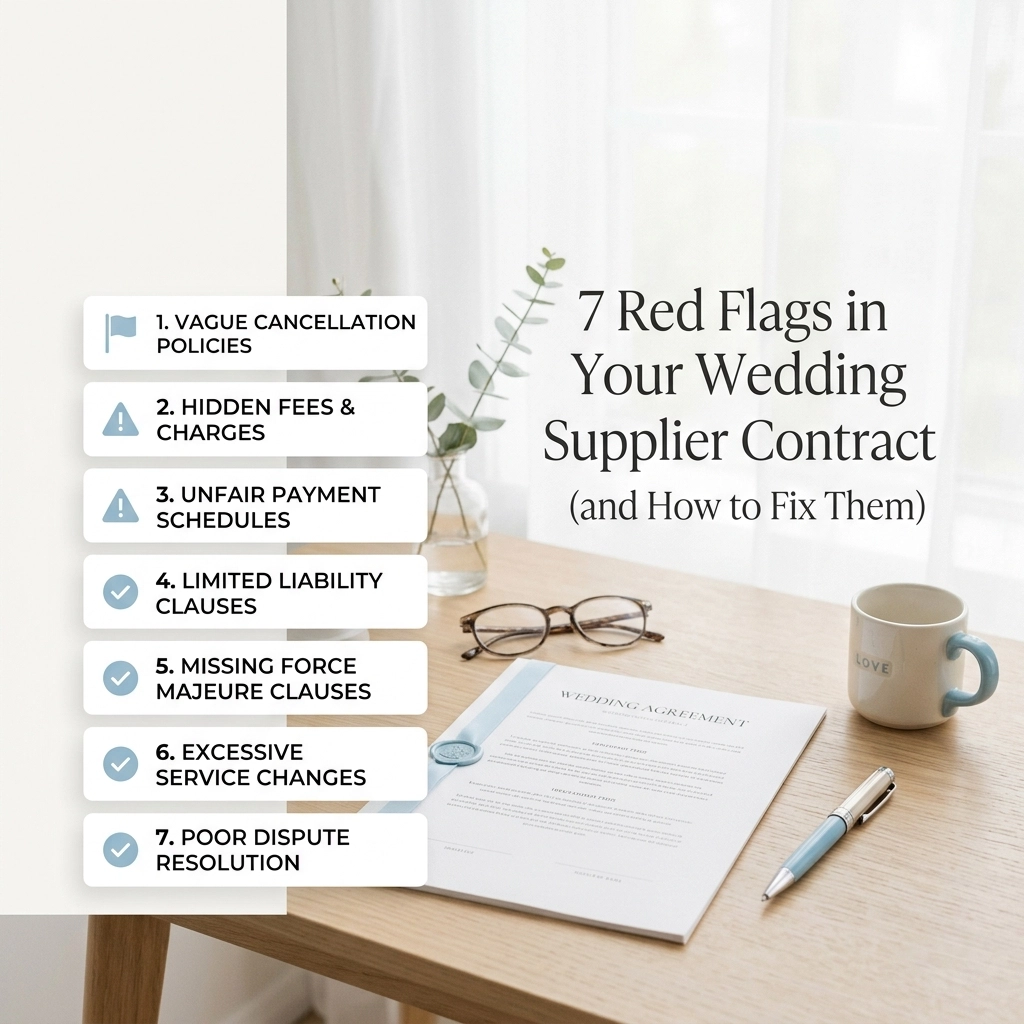
Wedding Supplier Contracts are the only line of defense between you and a logistical nightmare on your wedding day. When you are planning the most important event of your life, you aren't just buying flowers or booking a DJ; you are investing in a promise of performance. At GHW-Digital, we believe that clarity is the foundation of any successful project, whether it’s building a high-end application or planning a wedding.
Most couples sign vendor agreements under a cloud of "wedding bliss," assuming that "standard" means "safe." It doesn’t. Vendors often use templates designed to protect their time and their bottom line, sometimes at the expense of your peace of mind. To ensure your day goes exactly as planned, you need to treat these agreements with the same rigor we use for technical scope documentation.
Here are the seven red flags you must identify in your Wedding Supplier Contracts to protect your investment and ensure your wedding is a success.
1. Vague or Missing Service Deliverables
The most dangerous phrase in a contract is "standard package." In the world of Wedding Supplier Contracts, "standard" is a subjective term that provides zero legal protection. If your photography contract mentions "wedding coverage" without specifying the number of hours, the number of shooters, or the exact format of the final images, you are essentially handing over a blank check.
Vague language leads to "scope creep" in reverse: where the vendor does the absolute minimum because the contract doesn't demand more. For instance, a florist might promise "reception decor," but without a line-item breakdown of the number of centerpieces, flower types, and setup times, you could end up with a few bud vases when you expected lush arrangements.
How to Fix It: Demand a comprehensive blueprint. Your contract should include:
- Exact start and end times for the service.
- Quantities, colors, and sizes for physical products.
- Specific staff members assigned to your event.
- Delivery dates for final products (e.g., "Full digital gallery within 45 days").
For more strategy on how to define project boundaries, check out our latest ideas on scope management.

2. The "Hidden Fee" Trap: Unclear Pricing Structures
Budget leaks kill the joy of planning. We see this often in development: if the pricing isn't transparent from day one, costs spiral. Many Wedding Supplier Contracts include "piecemeal" pricing. You get a quote for the venue, but later discover that service charges, taxes, delivery fees, and "mandatory gratuities" weren't included.
Watch out for clauses that state "additional charges may apply" without defining what triggers them. This is a massive red flag. Whether it’s an overtime fee for the band or a "cake cutting fee" from the caterer, these costs should be locked in before you sign.
How to Fix It: Request a written, line-item quote that specifies the "Final Total." If a fee isn't listed in the contract, it shouldn't exist. Ask for a "guaranteed price" clause to prevent mid-year price hikes due to inflation or supply chain issues. This is how we handle app development costs at GHW-Digital: transparency is non-negotiable.
3. Overly Broad Force Majeure Clauses
A "Force Majeure" or "Act of God" clause is standard in Wedding Supplier Contracts, but it shouldn't be a "get out of jail free" card for the vendor. If a vendor can cancel for any minor disruption without providing a refund or a backup, you are the one left holding the bill.
Many contracts post-2020 have become increasingly aggressive, allowing vendors to keep 100% of the deposit even if they are the ones unable to perform. This is inherently unfair. A balanced contract protects both parties, not just the one providing the service.
How to Fix It: Ensure there is a tiered refund policy. If the vendor cancels due to a force majeure event, you should receive a refund of all unearned fees. If you need to postpone, the contract should outline clear terms for rescheduling. Protect yourself with tools like Vow Shield, which helps automate and secure these agreements.
4. Non-Refundable Deposits Without Performance Guarantees
Vendors love "non-refundable" deposits because it secures their cash flow. However, if that deposit isn't tied to specific milestones or deliverables, you are essentially financing their business for free.
If a vendor demands 50% down but won't show you a design board or a production schedule until a month before the wedding, your financial exposure is too high. In any high-stakes agreement, payments should be linked to progress.
How to Fix It: Negotiate a payment schedule that reflects the work performed. For example, 25% at signing, 25% upon completion of a design trial, and the remainder 30 days before the event. If they insist on a large non-refundable deposit, ensure the contract explicitly states that this deposit secures the specific date and specific staff members. You can find more about securing your project investments on our ideas page.

5. Evasive Communication and Lack of Documentation
A vendor who is slow to respond during the sales process will be a ghost after they have your deposit. Poor communication is a leading indicator of a failing project. If a vendor refuses to provide proof of insurance or licensing, or if they are "too busy" to clarify a contract clause, walk away.
In Wedding Supplier Contracts, silence is a red flag. Professionalism is measured by responsiveness and the willingness to document every detail. If it isn’t in writing, it doesn’t exist.
How to Fix It: Establish communication expectations within the contract itself. Specify a 24-48 hour response time during business days. Ensure all verbal promises made during the tour or the tasting are added as an addendum to the contract. Documentation is your best friend. For tips on managing communication in complex projects, visit GHW-Digital Ideas.
6. No Contingency or Backup Plans
What happens if your photographer gets sick? What if the florist’s delivery van breaks down? If your Wedding Supplier Contracts don't mention a backup plan, the risk is entirely on you. "Trust us, we'll figure it out" is not a legal strategy.
A vendor who lacks a contingency plan is a single point of failure for your wedding day. You need to know exactly who will show up in their place and that the replacement meets the same quality standards as the original hire.
How to Fix It: Require a "substitution clause." This clause should state that if the primary vendor is unavailable, a suitable replacement of equal experience will be provided, or a full refund will be issued. According to legal resources like Rocket Lawyer, having a clear substitution clause is vital for service-based agreements.
7. Ambiguous Timelines and Intellectual Property Issues
For creative vendors like photographers and videographers, the contract must define who owns the work and when you will see it. We see many couples wait six months or longer for their wedding video because the contract didn't specify a delivery date.
Furthermore, "usage rights" are a common point of contention. Does the vendor have the right to use your face in their advertisements? Do you have the right to print your own photos? These should be clearly defined to avoid legal headaches later.
How to Fix It: Set hard deadlines for all deliverables. If the photos are late, there should be a penalty or a partial refund. Ensure you have "personal use" rights to all media created. Clarity on timelines is a core principle of our Scope Sentry philosophy: applying that same rigor to your wedding is just smart business.

Protecting Your Big Day with Vow Shield
The complexity of Wedding Supplier Contracts can be overwhelming, but you don't have to navigate it alone. Just as we protect businesses from project failure with our Scope Guard Elite services, we believe couples deserve a defense mechanism for their wedding planning.
Vow Shield is designed to be that guardian. It’s about more than just a piece of paper; it’s about creating alignment between you and your vendors so that everyone knows exactly what is expected. Don't leave your wedding to chance or "good vibes." Lock in your details, track your deliverables, and ensure your investment is protected.
For more insights on how to manage high-stakes projects and contracts, explore our full library of resources. Your wedding day should be about celebration, not contract disputes. Take control of your agreements today.
Marblism Legal Shield: Ethical Data & Privacy Disclosure
At GHW-Digital, we value blunt honesty. This content is provided for informational purposes and does not constitute formal legal advice. While we design tools to help you manage scope and contracts, we always recommend having a qualified attorney review significant legal agreements. We do not use "marketing tricks" or "dark patterns": our goal is to provide you with the control and precision needed to succeed.
Stop letting vague contracts put your wedding at risk. Secure your service delivery with GHW-Digital's advanced tools now.
Leave a Reply