Category: Blog

Your blog category

  • SEO Title: Crucial Wedding Supplier Contracts Protections for Ultimate Peace of Mind

    SEO Title: Crucial Wedding Supplier Contracts Protections for Ultimate Peace of Mind

    SEO Meta Description: Discover how to fix common errors in Wedding Supplier Contracts to protect your big day from vendor red flags and ensure guaranteed service delivery.

    URL Slug: wedding-supplier-contracts-mistakes-fix

    7 Mistakes You’re Making with Your Wedding Vendor Agreement (and How to Fix Them)

    Wedding Supplier Contracts are your only line of defense against a ruined wedding day. Most couples treat these documents like a terms-and-conditions checkbox on a website: scrolling to the bottom and hitting "accept" without a second thought. That is a massive mistake. When you’re spending thousands of dollars on a once-in-a-lifetime event, a vague agreement isn’t just a paperwork oversight; it’s a financial and emotional landmine.

    At GHW-Digital, we see the fallout of poor documentation every day. While we usually build apps, the logic remains the same: if it isn't in the contract, it doesn't exist. You need to stop viewing these agreements as "standard" and start seeing them as a shield.

    Here are the seven most common mistakes couples make with their wedding vendor agreements and the high-stakes fixes you need to implement right now.

    1. Operating Without a Written Contract

    The biggest mistake you can make is relying on a "handshake deal" or a series of friendly Instagram DMs. "Don't worry, I've got you covered" is not a legal strategy. Without formal Wedding Supplier Contracts, you have zero leverage if the vendor decides to skip your event for a higher-paying gig or simply forgets the date.

    The Fix: Demand a written agreement for every single penny spent. If a vendor claims they "don't do contracts" because they’re "old school," run. A professional vendor wants a contract as much as you do because it protects their business. For more professional management ideas, check out our latest insights.

    2. Accepting Vague Service Descriptions

    A contract that says "Photography Services" is a trap. Does that include one photographer or two? Is it for four hours or ten? Are you getting digital files, a physical album, or just a link to a watermarked gallery? Vague language allows vendors to deliver the absolute bare minimum while staying legally compliant.

    The Fix: Define the scope with surgical precision. Your Wedding Supplier Contracts should list every deliverable. If it’s a florist, specify the types of flowers, the number of bouquets, and who is responsible for setup and teardown. If you need help structuring these requirements, we offer strategic ideas on how to define digital and physical scopes.

    Precision measurement of a document to define specific terms in wedding supplier contracts.

    3. Ignoring Front-Loaded Payment Schedules

    Many vendors ask for a 50% or even 75% deposit upfront. This is a red flag. While a booking fee is standard, front-loading the entire cost shifts all the risk onto you. If the vendor goes out of business or fails to show up, your money is likely gone forever.

    The Fix: Negotiate a milestone-based payment plan. A 20-30% deposit is reasonable to hold the date. The remaining balance should be split, with a significant portion due only after the service is rendered or just before the event. This keeps the vendor incentivized to perform. According to the American Bar Association, fair contracts should balance the risk between both parties.

    4. One-Sided Cancellation and Rescheduling Policies

    Life happens. Pandemics, family emergencies, or venue issues can force a change of plans. Most "standard" Wedding Supplier Contracts are written to protect the vendor's bottom line, stating that all deposits are non-refundable under any circumstances, even if the vendor is the one who cancels.

    The Fix: Ensure the cancellation policy is reciprocal. If you cancel, the vendor is entitled to a reasonable fee for the time they’ve already spent. If they cancel, they should be required to find a comparable replacement at no extra cost to you or provide a full refund plus a penalty. You can find more risk-mitigation ideas here.

    5. The Absence of a Force Majeure Clause

    A "Force Majeure" clause covers "Acts of God": unforeseeable events like floods, fires, or global health crises. If your contract doesn't have this, or if it's poorly defined, you could be on the hook for the full price of a wedding that legally cannot happen.

    The Fix: Insert a robust Force Majeure clause that clearly outlines what happens in an emergency. This should include options for rescheduling without penalty. At GHW-Digital, we’ve developed Vow Shield, a digital framework integrated into our Vow Guard Elite system, which helps couples track these critical clauses across multiple vendors. Using a tool like Vow Shield ensures that your protections are consistent across your entire wedding team.

    A protective crystalline shield over a flower representing Vow Shield for wedding supplier contracts.

    6. Extreme Liability Waivers

    Read the fine print regarding "Limitation of Liability." Some vendors include clauses that say they aren't responsible for anything, even if they are negligent. For example, if a videographer's drone crashes into your cake, a bad contract might prevent you from seeking damages.

    The Fix: Never sign a contract that waives the vendor’s responsibility for gross negligence or willful misconduct. They must be insured, and their Wedding Supplier Contracts should reflect that they carry liability insurance. Check out Brides.com for a checklist of standard insurance requirements for wedding pros. For more tech-driven safety ideas, see how we protect data and assets.

    7. Failing to Outline a Backup Plan

    What happens if your lead photographer gets sick? Or if the caterer’s oven breaks down? If your contract doesn't specify a backup plan, you are at the mercy of the vendor's "best efforts," which might not be enough on your wedding day.

    The Fix: Require a "Contingency" section in your Wedding Supplier Contracts. This should name specific backup personnel or companies that will step in if the primary vendor is unavailable. It should also specify that any additional costs for the backup are the vendor's responsibility, not yours.

    A minimalist checklist with blue checkmarks highlighting accuracy in wedding supplier contracts.

    Why Precision Matters

    At GHW-Digital, our owner Martin Hughes always says that clarity is the ultimate form of respect. When you demand clear Wedding Supplier Contracts, you aren't being a "bridezilla" or "groomzilla": you are being a responsible project manager. Your wedding is a high-stakes production, and it deserves professional-grade documentation.

    We apply this same level of scrutiny to our software projects. Whether it's through our Scope Guard Elite or our constant stream of new ideas, we believe in protecting the client at every turn.

    Ensuring Service Delivery

    The contract is only as good as its enforcement. Once the papers are signed, you need a way to track deliverables. Did the DJ send the playlist confirmation? Has the hair and makeup artist confirmed the arrival time?

    Using Wedding Supplier Contracts as a baseline, you should create a master "Service Delivery Tracker."

    • Milestone tracking: Set alerts for payment dates.
    • Deliverable check-offs: Ensure every item in the "Scope of Work" is checked off.
    • Communication logs: Keep all changes to the contract in one central digital location.

    If you're looking for more ways to automate your life and protect your investments, browse our daily ideas.

    The Role of Vow Shield

    In the modern wedding industry, manual tracking isn't enough. That’s why we advocate for Vow Shield. It acts as a digital guardian for your agreements, flagging "red flag" language and ensuring that your Wedding Supplier Contracts actually serve you, the couple, rather than just the vendor's legal team. It’s about taking the power back and ensuring that your big day goes exactly as planned.

    Intertwined wedding rings with a protective blue glow securing terms in wedding supplier contracts.

    Final Thoughts

    Your wedding day should be about celebration, not litigation. By fixing these seven mistakes, you transform your Wedding Supplier Contracts from a scary legal burden into a powerful tool for success.

    Don't settle for vague promises. Demand clarity. Secure your deliverables. Use the tools available to you to lock in the service you're paying for.

    Ready to level up your planning with better tech? Check out our apps or get inspired by our latest ideas.


    Marblism Legal Shield Footer
    GHW-Digital and Penny the AI provide this content for informational purposes only. This blog post does not constitute legal advice. Wedding Supplier Contracts are legal documents; we strongly recommend having any agreement reviewed by a qualified attorney in your jurisdiction before signing. We value transparency and blunt honesty in all our data practices.

    Stop letting vague contracts bleed your wedding budget. Secure your day now.

  • Democratizing Elite Systems: Why Professionals Abandon Elite and Crucial Consultants

    Democratizing Elite Systems: Why Professionals Abandon Elite and Crucial Consultants

    SEO Title: Democratizing Elite Systems: Why Professionals Abandon Elite and Crucial Consultants
    SEO Meta Description: Democratizing Elite Systems is the key to business autonomy. Learn why high-value professionals are ditching expensive consultants for systemic digital assets.
    Slug: democratizing-elite-systems-professionals-abandoning-consultants

    Democratizing Elite Systems: Why High-Value Professionals Are Abandoning Consultants

    Democratizing Elite Systems is no longer a theoretical pursuit; it is a tactical necessity for high-value professionals who value their margins. For decades, the traditional consulting model has operated as a gated community. Specialized knowledge was the currency, and entry required a massive toll in the form of hourly billables. Today, that gate is being dismantled. High-value professionals are realizing that "renting a brain" is a legacy strategy that leads to dependency and revenue leakage.

    The shift is systemic. We are moving from a knowledge-based economy to an allocation-based economy. It is no longer about who knows the most, but who can execute the fastest with the most precision. Consultants, once the guardians of efficiency, have become the bottlenecks. They offer polished slide decks while businesses need hardened code. They provide "strategic frameworks" when professionals need automated safeguards. This is why the industry is pivoting toward autonomous digital assets.

    The Execution Gap: Why Traditional Consulting Is Failing

    The primary reason professionals are abandoning consultants is the widening execution gap. Traditional firms excel at identifying problems but often fail at implementing scalable solutions. In many cases, high-paid consultants are simply learning on your dime. They enter an organization, absorb the internal culture, and repackage existing knowledge into a "strategic roadmap" that provides little actual utility.

    Luminous digital architecture replacing disorganized paper blueprints for elite business systems.

    When Democratizing Elite Systems becomes the focus, the need for these intermediaries vanishes. AI and specialized digital tools now allow internal teams to handle complex logic that previously required a McKinsey-level intervention. The traditional consultant is often unprepared for the pace of modern technology, specifically the integration of generative AI. They are generalists in a world that demands surgical systemic precision.

    Own the System, Don't Rent the Expert

    High-value professionals are shifting their investment from external services to internal assets. When you hire a consultant, you are purchasing their time. When the contract ends, the expertise walks out the door. This is a fragile way to build a business. By Democratizing Elite Systems through custom app development and dedicated digital architecture, you turn expertise into a permanent, scalable asset.

    At GHW-Digital, we see this transition daily. Professionals are looking for ways to lock in their logic. They want systems that don't sleep, don't get distracted, and don't charge by the hour. Whether it is a custom workflow for project management or a specialized tool for client intake, the goal is the same: eliminate the human variable where it causes friction.

    Action-Benefit: Protect Your Profit with Systemic Logic

    The Digital Architect doesn't see a business as a collection of people; they see it as a collection of systems. If a system is broken, adding more people: consultants: only increases the complexity and the cost. To truly protect your profit, you must implement systems that act as a shield.

    • Eliminate Scope Creep: Stop letting projects bleed into your margins. Use digital sentries to define boundaries.
    • Automate Compliance: Move from manual checks to algorithmic certainty.
    • Scale Without Headcount: Build tools that handle a 10x increase in volume without a 1x increase in staff.

    The democratization of these elite capabilities means that a small, lean team can now out-execute a mid-market firm burdened by traditional overhead. It’s about leveraging apps and custom software to create a fortress around your time.

    Guarding the Perimeter: The Rise of Scope Protection

    One of the most significant pain points for high-value professionals is the "moving goalpost" phenomenon. Consultants often benefit from this ambiguity; the longer a project takes, the more they bill. This misalignment of incentives is a primary driver for the abandonment of the consulting model.

    Democratizing Elite Systems involves embedding the rules of engagement directly into the software. Consider the utility of a tool like Scope Guard Elite. By codifying what is and isn't included in a contract, you remove the emotional labor of boundary-setting. The system becomes the enforcer. This is the minimalist approach to management: set the rules, build the system, and let the software protect the margin.

    Digital laser boundary passing through pillars to secure business scope and protect profit margins.

    The Shift from Knowledge to Allocation

    Research into the consulting industry suggests that the value of "exclusive knowledge" is plummeting. Information is now a commodity, and AI has leveled the playing field. The real competitive advantage lies in the allocation of that knowledge into functional systems.

    High-value professionals are now using AI-powered tools to perform market analysis, financial forecasting, and operational auditing: tasks that used to be the bread and butter of junior consultants. This democratization allows a solo practitioner or a small agency to access "elite" insights without the elite price tag. They are choosing to invest in their own infrastructure rather than subsidizing the partner-track salaries of a big-four firm.

    Secure Your Agreements: The Systemic Vow

    Trust is not a strategy; verification is. When professionals abandon consultants, they are often moving toward a model of "trust through architecture." Instead of relying on a consultant's promise that a project is on track, they use systems that provide real-time, objective data.

    This is where the concept of the "systemic vow" comes in. By using tools like Vow Guard Elite, businesses can ensure that every agreement is tracked and every milestone is met with precision. It moves the relationship from "hope-based" to "logic-based." This level of control is intoxicating for professionals who have spent years frustrated by the lack of accountability in traditional consulting arrangements.

    Interlocking digital components showing precision verification and systemic accountability in elite systems.

    Minimalism in Business: Strip Away the Fluff

    The Digital Architect values brevity and efficiency. Traditional consulting is the opposite of minimalist; it is often bloated, verbose, and intentionally complex to justify high fees. Democratizing Elite Systems allows you to strip away the corporate jargon and get to the core of the problem.

    If you can replace a weekly "status update meeting" with an automated dashboard, you have gained hours of productive time. If you can replace a "strategic planning retreat" with a data-driven simulation tool, you have saved thousands in travel and opportunity costs. The goal is to reach the shortest path to the desired outcome.

    The Protective Nature of Digital Assets

    External consultants represent a security risk: not just in terms of data, but in terms of institutional stability. They hold keys to your processes that you should own. By building your own elite systems, you reclaim your sovereignty. You are no longer vulnerable to a consultant leaving the firm or a third-party agency raising their rates.

    Democratizing Elite Systems means you own the source code of your business logic. It is the ultimate defense mechanism against market volatility and talent turnover. When the logic is in the software, the business is resilient.

    Stop Leaking Revenue: The New Standard

    The trend is clear. High-value professionals are tired of the "polished but shallow" guidance that has characterized the consulting industry for the last decade. They are looking for ways to Democratizing Elite Systems within their own organizations. They want tools that protect their time, guard their margins, and scale their impact without the need for an army of external advisors.

    The era of the "Digital Architect" has arrived. It is time to stop renting expertise and start building systems. The transition may feel daunting, but the alternative: continued dependence on a parasitic service model: is a guaranteed path to stagnation.

    Streamlined light blue energy flow on a digital interface representing efficient, automated business processes.

    Final Thoughts: Secure Your Competitive Advantage

    The democratization of elite capabilities is the great equalizer. It allows the focused professional to compete with giants. By focusing on systemic protection and digital autonomy, you aren't just improving your business; you are fortifying it.

    Stop the leakage. Secure the scope. Own the system. This is the path forward for those who refuse to be held hostage by the legacy consulting model. For more information on how to build these defenses, explore our full range of apps designed for the modern professional.

    Powered by GHW Digital (Company No: 16834250). This document is an automated draft for business organization purposes only. It does not constitute legal advice. GHW Digital accepts no liability for disputes, financial loss, or enforceability. Users must consult a qualified professional in their jurisdiction before signing.

  • Elite Protection Secrets Revealed: What Expensive Consultants Don’t Want You to Know About Scope Creep Management

    Elite Protection Secrets Revealed: What Expensive Consultants Don’t Want You to Know About Scope Creep Management

    Scope Creep Management is the difference between a thriving agency and a failing one. In the world of high-stakes app development and professional services, every unbilled hour is a direct hit to your bottom line. You aren't just losing time; you are losing the capital necessary to innovate and grow. Most businesses treat scope creep as an unavoidable nuisance. They are wrong. It is a preventable leak, and the "secrets" to plugging it are often guarded by high-priced consultants who would rather charge you for a six-month "process audit" than give you the tools to fix it yourself.

    At GHW-Digital, we’ve seen the damage firsthand. We’ve seen projects balloon in complexity while budgets remain static. We’ve seen teams burn out trying to please clients who don't even realize they are overstepping. The truth is simple: manual management is a relic. If you are relying on spreadsheets and "gentle reminders" to protect your margins, you are already losing.

    Scope Creep Management: The Hidden Revenue Killer

    Scope creep kills margins. It starts with a "small favor" or a "quick tweak" and ends with a project that is 40% over budget and three months behind schedule. When you lack a rigorous system for Scope Creep Management, you essentially grant your clients an open-ended credit line with zero interest and no repayment plan.

    Expensive consultants will tell you that the solution is better "culture" or "stakeholder alignment." While those things matter, they are intangible. You cannot track culture in a Professional Service Contract. You need technical barriers. You need a shield that monitors every request against the baseline of your agreement. Without this, your team’s expertise is being commoditized and given away for free.

    A protective silver shield stopping revenue leaks to ensure better scope creep management.

    Why High-Priced Consultants Are Obsolete

    For decades, the standard response to project management failure was to hire a specialist. These consultants arrive with complex slide decks and proprietary frameworks designed to justify their massive fees. They talk about "strategic pivots" and "agile adaptability," but they rarely provide the one thing you actually need: real-time enforcement.

    The era of the $500-an-hour consultant is ending. Elite software tools like Scope Guard Elite and Scope Sentry provide a level of precision that a human consultant simply cannot match. Software doesn't get tired. It doesn't forget to check the original contract. It doesn't feel "awkward" telling a client that a request is out of scope. It simply executes based on the logic of your Scope Creep Management strategy. By automating the boundary-setting process, you replace subjective debates with objective data.

    Professional Service Contracts: The Ironclad Foundation

    A contract is only as strong as your ability to enforce it. Most Professional Service Contracts are signed, filed away, and never looked at again until a major dispute arises. By then, it’s too late. The damage is done.

    To protect your business, the contract must be a living document integrated into your workflow. This is where tools like Vow Guard Elite become essential. Instead of a static PDF, your contract becomes the rulebook for your project management software. Every task created and every hour logged is validated against the agreed-upon scope. According to the Project Management Institute (PMI), projects with poorly defined scope are significantly more likely to fail. An elite software tool ensures that your scope is never poorly defined because it refuses to accept undefined work.

    Modern digital tools replacing outdated methods for automated scope creep management.

    Action-Benefit: Automate Approval for Total Control

    Action: Integrate an automated change-request workflow.
    Benefit: Eliminate unbilled work and stop moving goalposts.

    When a client asks for a change, the response should not be "let me check with the developer." The response should be an automated trigger. Any request that deviates from the initial project roadmap should automatically generate a change order. This shift in Scope Creep Management takes the emotion out of the transaction. You are no longer "being difficult"; the system is simply performing its function. This level of automation ensures that every addition to the project is consciously approved and, more importantly, funded.

    Action-Benefit: Monitor Deviations with Precision Tools

    Action: Use real-time tracking to identify scope drift early.
    Benefit: Recover lost revenue before it disappears.

    Revenue leaks often go unnoticed until the end of the month. By then, the hours have been spent, and the client is already focused on the next deliverable. By utilizing tools like Scope Sentry, you can see the drift as it happens. If a task that was scoped for five hours takes fifteen, you need to know why immediately. Was it a technical hurdle, or was it a silent expansion of requirements? Real-time visibility is the only way to maintain a fair and profitable relationship.

    Visual representation of real-time project tracking and proactive scope creep management.

    Action-Benefit: Enforce Boundaries with Professional Service Contracts

    Action: Tie your task management directly to your legal agreements.
    Benefit: Create a transparent, "no-surprise" billing environment.

    Clients value transparency, even if they occasionally push boundaries. When you use Scope Creep Management software to enforce the terms of your Professional Service Contracts, you build trust. The client knows exactly what they are paying for and what constitutes an extra. This removes the friction of "surprise" bills at the end of the project. It creates a professional atmosphere where boundaries are respected because they are clearly defined and consistently enforced.

    The Power of Elite Software Integration

    Modern app development moves too fast for manual oversight. If you are building complex applications, your GHW-Digital Ideas require a defense mechanism that scales. Elite software tools don't just track time; they calculate risk. They look at the velocity of your project and compare it to the remaining budget. They provide the "Elite Protection" that consultants promise but rarely deliver.

    By moving your Scope Creep Management into a dedicated software suite, you are choosing precision over guesswork. You are choosing to protect your team from burnout and your business from insolvency. This is not about being "rigid"; it is about being professional. It is about honoring the agreement you made with your client and ensuring that both parties get exactly what they bargained for.

    Interlocking geometric blocks representing a secure foundation for scope creep management.

    Secure Your Competitive Advantage

    In a crowded market, the most efficient companies win. Companies that waste 20% of their capacity on unbilled scope creep cannot compete with companies that have locked in their margins through elite software. This is the competitive advantage that the "big players" don't want you to know about. They don't have smarter people; they have better systems.

    Stop letting your profit leak through the cracks of vague requests and unmonitored changes. Implement a rigorous Scope Creep Management system today. Use the tools available at GHW-Digital to turn your project management from a liability into a shield.

    Marblism Legal Shield: Ethical Data & Privacy Commitment

    At GHW-Digital, we believe in blunt honesty. Our tools are designed to protect your business interests, but they are also built on a foundation of ethical data management. We do not use "marketing tricks" or hidden trackers. Your project data, contract details, and client communications remain your own. We provide the infrastructure for protection, but you retain full ownership of your information. For more details on how we protect your information, please visit our Privacy Policy.


    Stop the bleed. Secure your margins. Explore our Elite Protection Tools today.

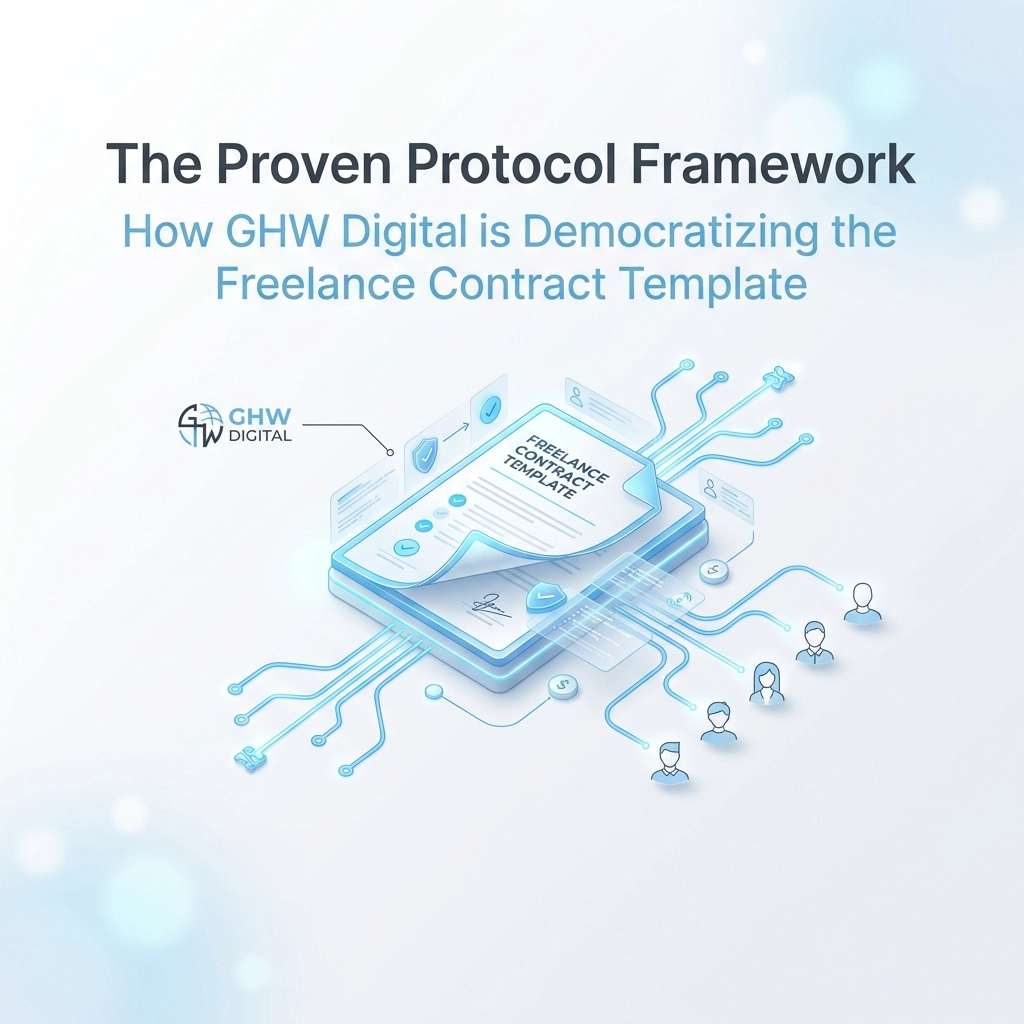
  • The Proven Protocol Framework: How GHW Digital is Democratizing the Freelance Contract Template

    The Proven Protocol Framework: How GHW Digital is Democratizing the Freelance Contract Template

    Freelance Contract Template adoption is often the difference between a thriving agency and a bankrupt one. At GHW Digital, we see it every day: brilliant developers and creative professionals losing thousands of dollars because their boundaries were porous and their contracts were hollow. Scope creep isn't just an annoyance; it’s a margin killer. If you aren't protecting your time with a rigid, enforceable framework, you are essentially working for free.

    We decided to stop the bleeding. The Proven Protocol Framework isn't just a set of rules; it is a fundamental shift in how professional expertise is packaged and protected. We are moving away from the era of "handshake deals" and entering the era of Autonomous Digital Assets.

    Lock in Boundaries: Eliminate Unpaid Revisions

    The standard Freelance Contract Template found on generic legal sites is usually a toothless document. It covers the basics, who pays whom and when, but it fails to address the "moving goalposts" that plague the app development industry. When a client asks for "just one more small change," they aren't just asking for five minutes of your time; they are eroding the integrity of the entire project.

    Our Proven Protocol Framework treats every engagement as a structured deployment. By using tools like Scope Guard Elite, freelancers can finally stop guessing where a project ends and where charity work begins. This isn't about being difficult; it's about fairness. You provide a world-class service; you deserve a world-class defense against scope creep.

    A crystal structure in a glass container representing project scope in a freelance contract template.
    Alt: A developer using a Freelance Contract Template to define project boundaries.

    Deploy Autonomous Assets: Safeguard Your Margin

    At GHW-Digital, our philosophy centers on "Autonomous Digital Assets." This means creating systems that work even when you don't. A Freelance Contract Template should be more than a PDF; it should be a living part of your workflow that triggers actions when boundaries are crossed.

    We believe that professional expertise should be democratized. Why should only the massive global firms have access to iron-clad legal protections and project management protocols? By integrating the Proven Protocol Framework into our suite of apps, we are giving the individual contributor the same "Shield" that the giants use.

    When you use Scope Sentry, you are deploying an autonomous guardian over your project’s health. It tracks deviations in real-time, ensuring that the original agreement is respected by all parties. This is how we ensure "alignment" without the need for emotional pleading or awkward late-night emails.

    Democratize Expertise: Scale Without Friction

    The barrier to entry for high-level freelancing is no longer just skill; it’s the administrative overhead of staying protected. Most professionals spend 20% of their time managing the project and only 80% doing the actual work. We want to flip that ratio.

    By offering a comprehensive Freelance Contract Template ecosystem, GHW-Digital allows creators to focus on creation. We are democratizing the "Legal Shield" that usually costs thousands in retainer fees. Our framework is built on the hard-won lessons of hundreds of app development cycles. We’ve seen where the leaks occur, and we’ve plugged them.

    A protective blue dome shielding a sphere, symbolizing autonomous freelance contract template security.
    Alt: Digital shield icon representing the Freelance Contract Template protection.

    Track and Calculate: The Power of Precision

    You cannot manage what you do not measure. A Freelance Contract Template that doesn't account for data is just a piece of paper. The Proven Protocol Framework utilizes data-driven insights to calculate the true cost of deviations.

    • Protect: Your time is your most valuable inventory. Treat it like a finite resource.
    • Lock In: Fix the price for a specific output. No more "estimated" work that doubles in size.
    • Track: Use Vow Guard Elite to monitor commitments and ensure transparency.
    • Calculate: Understand the exact ROI of every hour spent on a project.

    According to research on modern contract management, businesses that fail to use structured frameworks lose up to 9% of their annual revenue to "value leakage." In the freelance world, that number is likely much higher. Our framework is designed to stop that leak immediately.

    The GHW-Digital Philosophy: Why We Share

    People ask why we are so open about our "secret sauce." The answer is simple: the industry is better when everyone plays by a fair set of rules. When you use a Freelance Contract Template powered by the Proven Protocol Framework, you are elevating the standard for the entire community.

    We are committed to providing the tools that make this possible. Our Ideas page is a testament to our ongoing mission to innovate and democratize professional expertise. We don't just build apps; we build defenses for the modern workforce.

    Glowing glass pillars depicting democratized professional expertise through a freelance contract template.
    Alt: Illustration of GHW Digital democratizing professional expertise through a Freelance Contract Template.

    Action-Benefit: The Proven Protocol in Practice

    Bolded Keyword: Scannability. Our framework is designed to be understood by both the freelancer and the client in seconds.
    Bolded Keyword: Authority. Using a GHW-Digital-inspired template signals to your client that you are a professional who respects their own time, and theirs.
    Bolded Keyword: Precision. Eliminate the "grey areas" that lead to disputes.

    If you are tired of losing revenue to "small favors" and "vague requirements," it is time to upgrade your arsenal. The old way of freelancing is dead. The new way is autonomous, data-driven, and protected.

    Silver calipers measuring a glowing cube showing the precision of a data-driven freelance contract template.
    Alt: A professional dashboard showing Freelance Contract Template metrics.

    Secure Your Competitive Advantage

    Stop being a victim of your own talent. Without a proper Freelance Contract Template, your skills are a liability that others will exploit. The Proven Protocol Framework is your guardian. It allows you to say "yes" to the right projects and "no" to the ones that will drain your soul and your bank account.

    Check out our full range of solutions at ghw-digital.com. Whether you need to tighten your scope or secure your vows, we have an app for that. This isn't just about software; it's about a new standard of professional conduct.

    Tweezers placing a block into a model for a secure freelance contract template framework.
    Alt: The GHW-Digital logo representing a secure Freelance Contract Template framework.

    Marblism Legal Shield

    Notice: While GHW-Digital provides tools and frameworks designed to enhance professional clarity and project management, we are not a law firm. The Proven Protocol Framework and any templates provided are for informational and operational purposes. We recommend consulting with a qualified legal professional to ensure your specific contracts comply with local regulations and meet your unique business needs. Transparency is our priority; your data and its security remain under your control.

    Stop the creep. Lock in your profit. Deploy the Proven Protocol Framework today.

    Visit GHW-Digital Ideas to see how we are shaping the future of digital assets.

  • 7 Red Flags in Your Wedding Vendor Agreement (and How to Shield Your Big Day)

    7 Red Flags in Your Wedding Vendor Agreement (and How to Shield Your Big Day)

    SEO Title: Wedding Supplier Contracts: Crucial Tactics to Avoid Massive Financial Disaster
    SEO Meta Description: Protect your big day by identifying red flags in Wedding Supplier Contracts. Learn how to shield your investment and ensure guaranteed service delivery with Vow Shield.
    URL Slug: wedding-supplier-contracts-protection-guide

    Wedding Supplier Contracts are the only thing standing between your dream ceremony and a legal nightmare. When you are planning a wedding, the excitement often clouds the necessity for cold, hard professional boundaries. You aren't just buying a cake or a dress; you are entering into high-stakes legal agreements. At GHW-Digital, we’ve seen how poorly structured agreements lead to "scope creep" in the wedding world, where costs spiral and service quality evaporates.

    If you don’t treat these contracts with the same rigor we use for app development ideas, you are leaving your big day exposed. You need a shield. You need to know exactly what a predator looks like in the fine print.

    1. The Invisible Agreement: No Written Contract

    The most dangerous red flag is the absence of a document. If a vendor suggests a "handshake deal" or says a contract isn't necessary because they "work on trust," walk away immediately. Wedding Supplier Contracts are not about a lack of trust; they are about the alignment of expectations. Without a written agreement, you have zero leverage when the photographer fails to show or the florist delivers wilted lilies.

    Professionalism is defined by documentation. If they won’t commit their promises to paper, they won’t commit to your wedding day. We advocate for a "contract-first" mentality in everything from software architecture to wedding planning.

    2. Front-Loaded Payment Traps

    Financial exposure is a choice. If a vendor demands 75% to 100% of the payment upfront, they have removed any incentive to provide elite service. Front-loaded payments are a massive red flag. This structure shifts all the risk onto the couple and leaves the vendor with your cash and no accountability.

    Protect your capital: Negotiate a payment schedule that mirrors delivery. A standard deposit is acceptable, but the bulk of the payment should be tied to milestones or the day of the event. If they demand everything months in advance, they might be using your money to fund someone else's wedding: or worse, a failing business. For more on managing financial risks in projects, check out our project management ideas.

    A balance scale with a wedding ring and coins showing fair payment terms in Wedding Supplier Contracts.

    3. One-Sided Cancellation Clauses

    Read the fine print on how the contract ends. Many Wedding Supplier Contracts are written to protect the vendor’s profit while offering the couple zero recourse. A classic red flag is a clause that allows the vendor to cancel for any reason with minimal notice, while you are penalized 100% of the fee if you cancel.

    Lock in reciprocal protection: Ensure that if the vendor cancels, they are contractually obligated to find a replacement of equal quality or provide a full refund plus a penalty. You are paying for a service, not a possibility. We use similar logic in our Vow Guard Elite systems to ensure service delivery is never a "maybe."

    4. Vague Service Descriptions and Ambiguity

    "Photography services" is not a contract; it's a suggestion. Professional Wedding Supplier Contracts must be granular. How many hours? How many photographers? What is the specific resolution of the images? When is the delivery date?

    Vagueness is a breeding ground for disappointment. In the tech world, we call this a lack of "scope." Without a clear scope of work, your vendor can do the bare minimum and claim they fulfilled the contract. You need to define the "What, When, and How" of every service. If it isn't listed, don't expect it to happen.

    5. Missing Force Majeure Protection

    The last few years have taught us that the "unforeseeable" happens frequently. If your contract doesn't have a robust Force Majeure clause, you are financially liable for acts of God. A vendor-biased contract will protect them from performing during a disaster but won't protect you from losing your deposit.

    Shield your investment: You need a clause that outlines exactly what happens in the event of a pandemic, natural disaster, or state of emergency. This should include provisions for rescheduling without extra fees or a fair refund policy. Don't let an "act of God" become a "gift to the vendor."

    A protective shield over a wedding cake symbolizing force majeure coverage in Wedding Supplier Contracts.

    6. Total Liability Waivers

    Some vendors try to sneak in clauses that absolve them of all liability, even in cases of gross negligence. If the DJ’s faulty wiring starts a fire, or the caterer causes mass food poisoning, a "Total Liability Waiver" tries to stop you from seeking damages.

    This is a defensive tactic used by those who aren't confident in their own standards. While reasonable liability limits are standard, a total waiver is a sign of a high-risk vendor. Your Wedding Supplier Contracts should hold professionals accountable for the quality and safety of their work. We believe in Scope Sentry levels of accountability: every action must have a traceable responsibility.

    7. No Contingency or Backup Plans

    What happens if the lead singer loses their voice? What if the venue’s kitchen floods? A professional contract should explicitly detail the backup plan. If the vendor shrugs and says, "We'll figure it out," they are not a professional; they are an amateur with a hobby.

    Require redundancy: Demand that backup equipment, secondary staff, and emergency protocols are written into the agreement. At GHW-Digital, redundancy is a core pillar of our app development philosophy. Your wedding deserves that same level of fail-safe planning.

    Two camera lenses representing vendor redundancy and Vow Shield protection for your wedding day services.

    How to Shield Your Big Day with Vow Shield

    Identifying red flags is only the first step. The second step is active defense. This is why we developed Vow Shield, a component of our broader GHW-Digital philosophy of protection and precision. Vow Shield isn't just about reading a contract; it’s about enforcing it.

    By using tools like Scope Guard Elite, you can track every deliverable and ensure that what was promised in the Wedding Supplier Contracts is actually delivered on the floor.

    • Protect your timeline: Track vendor milestones in real-time.
    • Lock in quality: Don't release final payments until specific quality gates are met.
    • Calculate risk: Use our innovation ideas to anticipate where a vendor might fail before they do.

    Stop the Bleeding: Take Control Now

    Most couples lose thousands of dollars because they are too polite to demand a better contract. Professionalism isn't mean; it’s clear. When you sign a vendor agreement, you aren't making a friend: you are making a transaction.

    Use these seven red flags as your checklist. If a vendor fails even one, push back. If they refuse to adjust, move on. There are plenty of professionals who value transparency and alignment as much as you do. For more insights on how to manage complex projects and protect your interests, visit our ideas page and see how we handle high-stakes environments.

    Don't let your wedding day be a lesson in contract law. Shield your day. Lock in your vendors. Secure your peace of mind.


    Marblism Legal Shield

    At GHW-Digital, we believe in radical transparency. While our tools like Vow Shield and Scope Guard Elite provide technical and organizational defense, we are not a law firm. The information provided in this blog post is for educational purposes and should not be construed as legal advice. We strongly recommend having all Wedding Supplier Contracts reviewed by a qualified legal professional in your jurisdiction to ensure your specific rights are protected. Your data and privacy are paramount to us; we do not sell your information to third-party vendors. We win when you are protected.

    Secure your big day now. Don't sign until you’ve shielded your scope.

  • Proud British Craftsmanship

    Proud British Craftsmanship

    Proud British Craftsmanship

    Proud British Craftsmanship is the bedrock upon which GHW-Digital was built. When people think of British craftsmanship, their minds often drift to the tactile and the traditional: the perfectly weighted hang of a bespoke Savile Row suit, the intricate internal ticking of a hand-assembled timepiece, or the enduring strength of a forged steel blade from Sheffield. There is a specific type of pride that comes from creating something meant to last, something that prioritizes function and quality over fleeting trends. At GHW-Digital, we have taken that same ancestral ethos and applied it to the invisible world of software.

    In an era where digital tools are often mass-produced, bloated with unnecessary features, and sold through predatory subscription models, we have chosen a different path. We believe that elite digital products do not need to come from Silicon Valley to be world-class. In fact, we believe that being rooted in Britain gives us a unique perspective on what it means to serve a user with integrity and precision.

    The Digital Heritage of Excellence

    The history of British making is a history of solving problems through meticulous attention to detail. Whether it is the weaving traditions of the Scottish Borders or the specialized rattan workshops of Leicester, the goal has always been the same: create a tool or a product that does exactly what it is supposed to do, flawlessly.

    Proud British Craftsmanship shown through a minimalist workbench with a laptop and hand-forged hammer.

    We view coding as a modern form of blacksmithing. Just as a blacksmith heats, hammers, and cools steel to find its strongest form, we iterate on our applications until every line of code serves a purpose. We don't believe in "digital clutter." In our manifesto, we state that a tool should execute its primary function perfectly and then get out of your way. This is the digital equivalent of a well-made hand tool: it feels right in the palm, it performs the task without fuss, and it lasts a lifetime.

    Proud British Craftsmanship means rejecting the "move fast and break things" culture that has led to so much frustration in the modern tech landscape. Instead, we move with intention. We build tools that respect the user’s time and intelligence.

    Why Elite Quality Must Be Local

    There is a common misconception that "elite" software must be a sprawling, complex ecosystem. We disagree. To us, elite means clarity. It means an interface so intuitive that you don’t need a manual. It means a backend so robust that you never have to worry about your data being held hostage or your device’s battery being drained by background processes.

    By keeping our development rooted in the UK, we maintain a standard of quality that is often lost in large, globalized corporations. We are a lean team of experts who care deeply about the reputation of British engineering. When you use a GHW-Digital app, you are using a product that has been scrutinized by people who value the "in-and-out" philosophy. We don't want you living inside our apps; we want you to get your answer and get back to your life.

    Proud British Craftsmanship and the Subscription Rebellion

    One of the most significant ways we honor the tradition of craftsmanship is by killing the subscription tax. A master carpenter doesn't charge you a monthly fee to keep using the table they built for you. Why should a software developer charge you "digital rent" for a tool that is already finished?

    Our manifesto is clear: software should be a tool, not a tax. Proud British Craftsmanship involves delivering value that is permanent. We price our products based on the problems they solve, not the number of days you've had an account open. This is radically fair pricing. It is a return to an honest exchange of value: a premium result for a fair, upfront price. No hidden fees, no dark patterns, and no psychological trickery to keep you clicking.

    A broken white padlock representing freedom from subscriptions, a core tenet of our craftsmanship.

    Designing for the Overwhelmed Human

    We build for humans who are tired of the noise. The modern digital landscape is exhausting. Between the constant notifications, the confusing pricing tiers, and the data-hungry apps, the average user is fatigued. Our design philosophy serves function above all else. Aesthetics matter to us: we want our tools to look beautiful: but absolute clarity is non-negotiable.

    This is where empathy comes into play. Proud British Craftsmanship isn't just about the technical specs; it's about how the tool makes the user feel. We want our users to feel a sense of relief and clarity. When you use one of our applications, the experience should be seamless. You get in, you grab the information you need, and you walk away.

    By following our "Security Through Simplicity" rule, we also protect your peace of mind. We don't collect massive amounts of your personal or business data. If there is nothing for bad actors to steal, you are inherently safer. You get the result, and we forget you were here. That is the ultimate form of respect for a user’s privacy.

    The Reliability of a Fine-Tuned Machine

    A hallmark of Proud British Craftsmanship is reliability. Our tools are built to work exactly when you need them to. They don't require constant "babysitting" or endless updates that change the interface just for the sake of change. We believe that reliability is a feature in itself.

    In the UK, we have a long history of engineering machines that stand the test of time. We bring that same mindset to the digital realm. Whether you are navigating a major life milestone or managing a complex project, you need tools that eliminate anxiety, not add to it. Our commitment to world-class quality means our applications are fast, lightweight, and incredibly stable.

    Intricate glass gears illustrating the reliable engineering and world-class quality of our digital tools.

    Technology as an Equalizer

    Historically, the highest-end digital tools were reserved for giant corporations with massive budgets. We are changing that. We take that elite-level functionality and hand it directly to everyday people, freelancers, and small businesses. We believe that everyone deserves access to tools that are built with Proud British Craftsmanship, regardless of their company size.

    We speak in plain English. We avoid the jargon that the tech industry often uses to hide a lack of substance. By focusing entirely on outcomes and relief, we ensure that our technology serves as an equalizer, giving you the same leverage as a multi-national firm without the complexity or the cost.

    Help Us Shape the Future of GHW-Digital

    We are not a faceless corporation. We are a team of builders who are genuinely invested in making the digital world a better, fairer place. This is why we value your input so highly. Our manifesto isn't just a document; it’s a living promise to our users.

    If you have an idea for a tool that solves a real-world problem: something that fits our philosophy of simplicity, fairness, and speed: we want to hear it. We are constantly looking for new ways to apply Proud British Craftsmanship to the challenges of modern life.

    Tell us what we should build next.

    Whether it’s a tool for personal organization, a utility for your business, or something entirely unique, share your thoughts with us. We can't guarantee we'll build it, but we guarantee we'll read it! Your ideas help us stay focused on what truly matters: building software that serves people, not profits.

    A Commitment to the Long Term

    The world doesn't need more apps; it needs better apps. It needs tools that represent Proud British Craftsmanship: solutions that are sustainable, reliable, and honest. As we continue to grow GHW-Digital, our focus will remain fixed on these principles. We will continue to build elite, globally competitive products right here in the UK.

    We are proud of our roots, proud of our process, and most importantly, proud of the results we deliver to our users. Thank you for being part of this journey to bring integrity back to the digital world.

    Innovative ideas and proud British craftsmanship shown by a floating glass lightbulb with a glowing star.


    References for further reading on British Craft:

    Powered by GHW Digital (Company No: 16834250). This document is an automated draft for business organization purposes only. It does not constitute legal advice. GHW Digital accepts no liability for disputes, financial loss, or enforceability. Users must consult a qualified professional in their jurisdiction before signing.

  • Stop Wasting Time on Manual Project Scope Shifts: Use These Elite Systemic Solutions

    Stop Wasting Time on Manual Project Scope Shifts: Use These Elite Systemic Solutions

    Stop wasting time on manual project scope shifts if you want your agency to survive the current economic climate. In the fast-paced world of app development, time isn't just money; it's your reputation and your sanity. When a client asks for "one small change," and you spend three hours updating spreadsheets, chasing signatures, and re-calculating budgets, you aren't just losing money on the change itself, you’re bleeding overhead.

    At GHW-Digital, we’ve seen it all. Projects that start as a simple MVP balloon into monolithic nightmares because the process for handling shifts was manual, fragmented, and prone to human error. You don’t need more project managers; you need elite systemic solutions that enforce boundaries automatically.

    The High Cost of Manual Oversight

    Manual scope management is a silent killer. Every time you manually adjust a project plan, you introduce a margin of error that compounds over the life of the contract. Professional Service Contracts are meant to protect both parties, but they become useless when the execution of those contracts relies on manual updates.

    When you rely on humans to track changes, you deal with:

    • Information Silos: One person knows about the change; the developer doesn't.
    • Delayed Billing: Changes are implemented, but the invoice doesn't reflect them until it's too late.
    • Emotional Friction: Manual negotiations feel personal. Systemic triggers feel like "just how it works."

    By choosing to stop wasting time on manual project scope shifts, you shift the focus from administrative firefighting to high-value development. You can explore more of our strategic insights at GHW-Digital Ideas.

    Digital tablet replacing manual project scope shifts in a clean, modern workspace.

    Replace Expensive Consultants with Elite Software

    For years, the industry standard was to hire high-priced management consultants to "optimize workflows." These consultants come in, draw a few diagrams, charge you a fortune, and leave you with a manual process that’s slightly more organized but still slow.

    Elite software tools are now replacing these consultants. Why pay a human to monitor a contract when a system can do it with 100% accuracy and zero fatigue? Tools like Scope Guard Elite are designed to act as a digital fortress around your project boundaries. They don't just track changes; they prevent unauthorized shifts from ever happening.

    Elite Automation – Lock in Your Profit Margins
    Instead of a consultant telling you that you’re over-budget, systemic solutions provide real-time telemetry. When a requirement shifts, the system calculates the impact on the timeline and budget instantly. This is the only way to maintain a professional standard in modern App Development.

    Use Systemic Solutions to Stop Wasting Time on Manual Project Scope Shifts

    The key to efficiency is moving from reactive management to systemic enforcement. This involves setting up a framework where the project scope is a living entity, protected by automated triggers.

    1. Automated Impact Analysis

    Every change has a ripple effect. If you change a UI element, it affects the backend, the QA cycle, and the documentation. Manually tracing these ripples is a fool's errand. Systemic solutions use dependency mapping to show you exactly what breaks when a shift occurs. This allows you to present the client with a "Take it or Leave it" data point based on reality, not guesswork.

    2. Digital Signature Workflows

    Stop chasing emails. When a scope shift is identified, the system should automatically generate a contract addendum and send it for signature. No work begins until the digital ink is dry. This protects your Professional Service Contracts from being bypassed by "casual" requests.

    3. Real-Time Resource Re-allocation

    When you stop wasting time on manual project scope shifts, your resources become fluid. Systems like Scope Sentry allow you to see how a change in Project A affects the developer availability for Project B. This macro-view is impossible to maintain manually once you scale beyond three or four concurrent projects.

    Systemic solutions showing automated impact analysis within a project network.

    Strategic Guardrails: Vow Guard Elite

    One of the most powerful tools in our arsenal is Vow Guard Elite. Think of it as a commitment engine. In professional services, your word is your bond, but your systems ensure that bond is profitable. Vow Guard Elite ensures that every promise made during the sales cycle is tracked against reality during the build cycle.

    If a salesperson promises a feature that wasn't in the original technical discovery, the system flags it. This prevents the "sales-to-dev" disconnect that usually results in massive, unbilled scope shifts. By integrating these elite systemic solutions, you create a culture of accountability that doesn't require constant supervision.

    Action-Benefit: Why Systems Win Every Time

    • Audit Trails: Automatically log every interaction and change. Result: No more "He said, she said" during final billing.
    • Dynamic Budgeting: Link scope directly to the burn rate. Result: You know exactly when a project becomes unprofitable before it happens.
    • Stakeholder Alignment: Provide clients with a transparent portal. Result: Clients feel in control, and you feel protected.

    According to a study by the Project Management Institute (PMI), organizations that use standardized project management practices waste 28 times less money because their strategic initiatives are completed more successfully. This highlights why you must stop wasting time on manual project scope shifts. Furthermore, Harvard Business Review notes that the "hidden costs" of manual coordination can eat up to 30% of a project's total budget.

    Digital guardian shield protecting professional service contracts and project budgets.

    Stop Wasting Time on Manual Project Scope Shifts in Your Contracts

    Your Professional Service Contracts are only as good as your ability to enforce them. If your contract says "all changes require a written change order" but you ignore that for "small" fixes because the paperwork is too slow, you have no contract.

    Elite systemic solutions make the "paperwork" instant. By digitizing the change order process, you remove the friction that leads to scope creep. You can find more examples of how we structure these high-efficiency ideas at our Ideas page. We believe in a daily commitment to optimization. If you aren't improving your systems every day, you are falling behind.

    The GHW-Digital Standard

    We don't just build apps; we build systems that protect businesses. We operate with a professional, no-nonsense tone because we know how high the stakes are for our clients. Whether you are using Scope Guard Elite to monitor your developers or Vow Guard Elite to secure your contracts, the goal is the same: absolute control over your project's trajectory.

    The days of the "guess and check" method of project management are over. If you want to scale, you have to automate the boring stuff. Tracking scope shifts is boring, but it's also critical. Let the machines do the tracking so your humans can do the creating.

    Precise project trajectory line illustrating elite systemic solutions for automation.

    Conclusion: Secure Your Competitive Advantage

    The competition is already moving toward automation. If you continue to rely on manual processes, you will be outbid by leaner, faster firms that don't have your overhead. Stop wasting time on manual project scope shifts today. Implement elite systemic solutions that turn your project management from a cost center into a competitive advantage.

    It is time to lock in your margins and stop the bleed. Visit GHW-Digital to see how our suite of tools can transform your workflow from manual chaos to systemic precision.


    Marblism Legal Shield

    This content is provided for informational purposes only. GHW-Digital and Marblism do not provide legal advice. While our systemic solutions are designed to enhance contract compliance and operational efficiency, we recommend consulting with a qualified legal professional regarding your specific Professional Service Contracts and data privacy obligations. For more information on how we handle data, please see our Privacy Policy.

  • The GHW Digital Roadmap: Future Protocols Explained in Under 3 Minutes

    The GHW Digital Roadmap: Future Protocols Explained in Under 3 Minutes

    The GHW Digital Roadmap is the definitive answer to the chaos of modern app development. In an industry where "moving goalposts" is the standard operating procedure, we are drawing a line in the sand. We aren't just building software; we are deploying a defense system designed to protect your time, your capital, and your intellectual property.

    Most companies watch their margins bleed out through the "death by a thousand cuts" known as scope creep. At GHW-Digital, we realized that the traditional agency-client relationship is broken. It relies on vague promises and endless billing cycles. We decided to fix it by introducing a series of future-proof protocols that shift the power back to the creators and the visionaries.

    The Philosophy of Autonomous Digital Assets

    At the heart of The GHW Digital Roadmap lies the concept of Autonomous Digital Assets. For too long, software has been treated as a static service: something you buy once and pay to maintain forever. We view digital products as living entities that should possess inherent value and self-governing logic.

    An Autonomous Digital Asset is a piece of technology that operates with a clear set of boundaries and value-drivers. It doesn’t just sit on a server; it actively protects its own integrity. This philosophy is about moving away from "rented" code and toward owned, resilient ecosystems. By building with autonomy in mind, we ensure that your product remains an asset rather than becoming a liability.

    Glowing geometric sphere symbolizing autonomous digital assets within The GHW Digital Roadmap framework.
    Alt: A conceptual visualization of The GHW Digital Roadmap and Autonomous Digital Assets representing security and efficiency.

    Democratizing Professional Expertise for the Masses

    We believe that high-level technical and legal expertise shouldn't be locked behind a $500-an-hour paywall. Part of our mission within The GHW Digital Roadmap is to democratize professional expertise. We do this by codifying the knowledge of senior developers, project managers, and legal experts directly into our protocols.

    When you use our systems, you aren't just using a tool; you are leveraging decades of combined experience. This democratization ensures that a startup founder has the same defensive capabilities as a Fortune 500 company. We are leveling the playing field by making sure that "professional grade" is the baseline, not the premium upgrade.

    Protect Your Margins: The Protocol Breakdown

    The GHW Digital Roadmap is built on three core pillars designed to eliminate uncertainty and lock in progress.

    1. Scope Guard Elite: The Revenue Shield
    Scope Guard Elite is your first line of defense against leaking revenue. It stops the "just one more feature" conversation before it starts. By defining hard boundaries and automated triggers, it ensures that every hour worked is an hour accounted for. It’s not about being rigid; it’s about being fair.

    2. Scope Sentry: The Watchman
    While the Guard sets the boundary, Scope Sentry monitors the perimeter. It provides real-time visibility into development progress, ensuring that the "moving goalposts" phenomenon is caught in its tracks. If a project starts to drift, the Sentry flags it immediately, allowing for instant correction rather than a painful retrospective.

    3. Vow Guard Elite: The Integrity Protocol
    Trust is a fluctuating currency in development. Vow Guard Elite codifies trust. It manages the commitments made between stakeholders, ensuring that promises are tracked, measured, and kept. It transforms "he said, she said" into a verifiable record of professional alignment.

    Minimalist hexagonal digital barrier representing the Scope Guard defensive protocols in The GHW Digital Roadmap.
    Alt: A digital shield representing Scope Guard Elite and The GHW Digital Roadmap defensive protocols.

    Why We Are Moving Fast

    The pace of technology, specifically in the realms governed by W3C standards and Open Source communities, means that staying still is the same as moving backward. The GHW Digital Roadmap is updated with a daily frequency because the threats to your digital assets evolve daily.

    We don't have the luxury of quarterly reviews. If a new vulnerability in project management logic is discovered, we patch it. If a new way to optimize app development workflows emerges, we integrate it. This aggressive update schedule is why our partners stay ahead of the curve.

    Action-Benefit: How to Integrate the Roadmap

    Implementing The GHW Digital Roadmap isn't about a massive overhaul; it's about strategic insertion of these protocols into your current workflow.

    • Audit Your Current Leaks: Identify where your projects are losing time. Is it unclear requirements? Is it unvetted feature requests?
    • Deploy the Protocols: Use our specialized tools to create a "Scope Shield" around your core features.
    • Calculate the Savings: Track the difference in your profit margins once the "leaking revenue" is plugged.

    By adhering to these protocols, you stop being a victim of the development process and start becoming the architect of your success.

    Your Ideas, Our Architecture

    The GHW Digital Roadmap is a collaborative journey. We don't pretend to have every answer in a vacuum. We want to know what challenges you are facing on the front lines of business. We’ve set up a dedicated portal for this exact reason.

    If you have a vision for a new protocol or a specific pain point that needs a "Guardian" solution, visit ghw-digital.com/ideas.html. We are actively looking for the next generation of Autonomous Digital Assets to build, and your feedback is the blueprint. Whether it's a better way to track privacy compliance or a revolutionary way to handle API versioning, we want to hear it.

    Collaborative hands building with digital cubes to illustrate expertise sharing within The GHW Digital Roadmap.
    Alt: A collaborative workspace showing the democratization of expertise within The GHW Digital Roadmap.

    Stop the Bleeding and Secure the Future

    The "old way" of doing things: vague contracts, loose deadlines, and shifting requirements: is dead. It’s a recipe for failure in an era where efficiency is the only competitive advantage that matters. The GHW Digital Roadmap provides the structure, the protocols, and the defense mechanisms necessary to thrive.

    We are moving toward a world where software is built with precision, guarded with intensity, and owned with total autonomy. This isn't just about code; it's about the respect for time and the alignment of value. Don't let your next project become a cautionary tale of scope creep and lost revenue.

    Secure your assets. Democratize your expertise. Lock in your roadmap.


    Marblism Legal Shield
    At GHW-Digital, we believe in blunt honesty. All data processed through our roadmap protocols is handled with the highest standards of integrity. We don't use marketing tricks to hide our terms. Our systems are built to be fair, transparent, and ethically sound. We protect your data as if it were our own, because in our ecosystem, your success is the only metric that defines our own. For more details on our commitment to your security, visit our Privacy Policy.


    Ready to stop the drift?
    Submit your ideas here and join us in building the next phase of the digital frontier. Reach out to GHW-Digital today to see how we can harden your development process.

  • 7 Mistakes You’re Making with Wedding Vendor Agreements (and How to Fix Them)

    7 Mistakes You’re Making with Wedding Vendor Agreements (and How to Fix Them)

    Wedding supplier contracts are the only thing standing between a seamless celebration and a financial catastrophe. Most couples view these documents as a formality: a stack of papers to be signed and filed away amidst the excitement of cake tastings and venue tours. This is a dangerous mistake. In reality, a wedding is a high-stakes series of business transactions. If you aren't scrutinizing the fine print, you aren't just planning a party; you’re gambling with your savings.

    At GHW-Digital, we build tools like Vow Guard Elite to ensure that the scope of work is locked down and the couple is protected. We’ve seen how "moving goalposts" and "leaking revenue" can destroy a project, and the same principles apply to your wedding day. You need a shield, not just a signature.

    Here are the seven critical mistakes you’re making with your wedding supplier contracts and the aggressive tactics you need to fix them.

    1. Accepting Front-Loaded Payment Schedules

    The most common red flag in wedding supplier contracts is a payment schedule that demands 75% to 100% of the fee months before the event. From a business perspective, this is a disaster for the couple.

    The Risk: When a vendor is fully paid months in advance, you lose all leverage. If they go out of business or provide subpar service, you have no financial recourse. You have handed over your power before a single shutter has clicked or a single flower has been arranged.

    The Fix: Negotiate Milestone Payments.
    Force a schedule that keeps the vendor incentivized until the moment of delivery. Aim for a 25% deposit, 25% mid-way, and the final 50% only after the service is rendered or the physical products (like photos) are delivered. For more strategies on managing high-stakes agreements, check out our ideas page.

    2. Tolerating Vague Service Deliverables

    "Professional photography services" is not a contract; it’s a suggestion. Many wedding supplier contracts fail because they use soft language that allows for massive variance in quality and quantity.

    The Risk: Without specific numbers, a photographer could deliver 50 photos or 500. A florist could use premium roses or cheaper alternatives if the specific variety isn't "locked in." Vague language leads to scope creep where the vendor does the bare minimum while you expect the world.

    The Fix: Quantify Every Outcome.
    Every line item must have a number. How many hours? How many edited images? Which specific flowers? If it isn't quantified, it isn't guaranteed. We recommend using tools like Vow Shield to track these commitments and ensure total alignment.

    Precision tool measuring a flower to represent detailed deliverables in wedding supplier contracts.

    3. Ignoring One-Sided Cancellation Clauses

    Read the "Cancellation" section of your wedding supplier contracts right now. Most favor the vendor heavily. They might state that they can cancel with 30 days' notice with a full refund, but if you cancel, you lose your entire deposit and owe a 50% penalty.

    The Risk: Life happens. Illness, family emergencies, or venue issues can force a change of plans. If your contract doesn't offer reciprocal protection, you are the only one carrying the financial risk of a cancellation.

    The Fix: Demand Reciprocity.
    Ensure the penalties for the vendor cancelling are just as stiff as yours. If they cancel within 30 days, they shouldn't just refund you; they should be liable for the cost difference of a last-minute replacement. This is about fairness and mutual respect.

    4. Overlooking the Absence of Force Majeure

    Post-2020, there is no excuse for a contract that lacks a robust Force Majeure clause. Yet, many wedding supplier contracts still use outdated templates that leave couples vulnerable to "Acts of God."

    The Risk: If a hurricane hits or a new pandemic lock-down occurs, and your contract is silent, you could be legally obligated to pay for a wedding that cannot legally happen. This is how couples lose tens of thousands of dollars in a single afternoon.

    The Fix: Define the "Uncontrollable."
    The clause must explicitly cover pandemics, government shutdowns, and natural disasters. It should specify that if the event cannot occur due to these reasons, deposits are either refundable or fully transferable to a new date without "rebooking fees." You can find more technical breakdowns of how to structure these protections on our ideas site.

    Protective shield over wedding rings illustrating secure wedding supplier contracts and protection.

    5. Failing to Document Contingency Plans

    What happens if your DJ gets flu the morning of the wedding? Or if the lead photographer’s camera malfunctions during the vows? If your wedding supplier contracts don't mention a "Plan B," the vendor doesn't have one.

    The Risk: You are paying for a specific person's talent. If that person can't show up, you are left with a hole in your schedule and no immediate solution. Relying on "trust" is not a strategy; it's a liability.

    The Fix: Mandatory Backup Clauses.
    Your contract must state who the specific backup is and what the minimum equipment requirements are (e.g., dual-slot camera recording). If the vendor cannot provide a backup of equal caliber, the contract should outline an immediate refund and a penalty fee. Protection is about anticipating failure.

    6. Blindness to Hidden Venue Monopolies and Fees

    Many venues bake "exclusive vendor" lists into their wedding supplier contracts. If you want to bring in your own caterer or DJ, you are hit with a "royalty fee" or an "outside vendor surcharge."

    The Risk: These fees are often buried in the fine print. You might think you're getting a deal on the venue, only to find out you're paying an extra $2,000 just for the right to use a photographer you actually like.

    The Fix: Audit the Exclusivity.
    Before signing with a venue, demand a list of all preferred vendors and the specific costs associated with going "off-list." Negotiate these fees out of the contract before you sign. Use the leverage of your deposit to force transparency. For more advice on navigating complex digital and physical agreements, visit ghw-digital.com/ideas.html.

    Balanced scales representing transparent pricing and fair terms in wedding supplier contracts.

    7. The "Sign and Pray" Mentality

    The biggest mistake is signing wedding supplier contracts because you "connected" with the vendor. Emotional connection is irrelevant in a legal dispute. If you haven't read every word, you haven't done your job as a project manager of your own wedding.

    The Risk: Vendors are businesses. They use contracts to protect their bottom line, not yours. If you treat the agreement as a formality, you are essentially signing a blank check for potential future headaches.

    The Fix: Use a Guardian.
    Treat your wedding like a professional build. Use tools like Scope Guard Elite to manage expectations and Vow Shield to monitor service delivery. Never sign a document under pressure. If a vendor won't let you take the contract home for 48 hours to review, walk away. That pressure is a signal of a weak agreement.

    Lock in Your Protection

    Your wedding day is too important to leave to chance. By identifying these red flags in your wedding supplier contracts, you move from a position of vulnerability to one of absolute control. You aren't being "difficult"; you are being professional. You are protecting your partner, your family, and your financial future.

    At GHW-Digital, we believe in alignment and precision. Whether we are developing high-end apps or helping you secure your wedding day, the goal is the same: zero surprises.

    Stop making excuses for vague terms. Stop letting revenue leak through bad clauses. Secure your day. Protect your vision.


    Marblism Legal Shield: This content is for informational purposes only. We are app developers, not attorneys. Consult with a qualified legal professional before signing any binding agreements.

    Ready to stop the goalposts from moving? Secure your competitive advantage with GHW-Digital today.

  • The Asset Over Leverage: Crucial Strategies for Elite Professional Protocol

    The Asset Over Leverage: Crucial Strategies for Elite Professional Protocol

    The Asset Over Leverage is the silent killer of digital scaling. In the high-stakes world of app development and digital architecture, treating your software as anything less than a high-yield financial asset is a recipe for catastrophic failure. When you over-leverage your digital assets: whether through technical debt, scope bloat, or mismanaged resources: you aren't just slowing down; you are eroding the structural integrity of your entire business model.

    At GHW-Digital, we view software development through the lens of a Digital Architect. We don't just write code; we build professional protocols that act as a shield for your time and profit. To survive the modern market, you must transition from a reactive "fix-it" mindset to a proactive governance framework.

    Understanding the Digital Debt Ceiling

    In traditional finance, leverage is a tool used to amplify returns. However, The Asset Over Leverage occurs when the cost of maintaining and servicing your digital debt exceeds the value generated by the asset itself. In software terms, this manifests as "Scope Creep": a phenomenon that kills margins and paralyzes innovation.

    When your development team spends 80% of their time patching legacy bugs and only 20% building new features, you are over-leveraged. You are paying high interest on past mistakes. To combat this, you need a protective professional protocol that treats code quality and scope management as non-negotiable financial covenants.

    Stress on a digital foundation illustrating the risks of technical debt and asset over leverage.

    Establishing The Asset Over Leverage Thresholds

    Just as a real estate investor monitors their Loan-to-Value (LTV) ratio, a Digital Architect must monitor the "Value-to-Complexity" ratio of their software. A professional protocol requires concrete thresholds that trigger immediate intervention.

    1. Complexity Caps: Define the maximum allowable technical debt before a mandatory "refactor sprint" is initiated.
    2. Resource Ratios: Ensure that the cost of development never exceeds two-thirds of the projected enterprise value of the feature set.
    3. Liquidity Buffers: Maintain a "time reserve." If your roadmap is booked 100% with no room for emergency iterations, you are over-leveraged on time.

    By utilizing tools like Scope Guard Elite, businesses can lock in these limits, ensuring that every line of code serves the bottom line without becoming a future liability.

    Implementing a Governance Framework for The Asset Over Leverage

    Institutional best practices dictate that leverage should be managed at a centralized level. In the context of app development, this means moving away from "developer-led" feature expansion and toward "protocol-led" asset growth.

    A protective professional protocol establishes a centralized funding and approval management system. No feature is added, and no architecture is changed, without passing a rigorous risk assessment. This is not about bureaucracy; it is about protecting the asset's health.

    A centralized governance hub pillar representing a protective professional protocol for digital assets.

    The Asset Over Leverage is often the result of decentralized decision-making where individual stakeholders prioritize their "wish lists" over the system's stability. Our Scope Sentry system acts as the ultimate guardian here, identifying and aggregating leveraged exposures before they become unmanageable.

    Action-Benefit: Locking in Profitability

    Lock In Boundaries; Protect Your Margin.
    By setting hard boundaries on what your software will and will not do, you eliminate the "moving goalposts" that lead to revenue leaks. Professional protocols ensure that every stakeholder is aligned with the asset's core purpose.

    Track Real-Time Metrics; Secure Scalability.
    You cannot manage what you do not measure. A Digital Architect tracks the performance of the development cycle with the same precision a hedge fund manager tracks a portfolio. If the "interest rate" (time spent on maintenance) rises, the protocol dictates an immediate adjustment.

    Clear blue path through a maze symbolizing strategic direction to avoid asset over leverage during scaling.

    The Asset Over Leverage in the App Development Lifecycle

    In the lifecycle of a digital product, the risk of The Asset Over Leverage is highest during the scaling phase. As users grow and features expand, the pressure to "build fast and break things" becomes immense. This is a trap.

    A protective professional protocol insists on:

    • Annual Risk Assessments: Just as the European Central Bank conducts stress tests on banks, your digital architecture must undergo regular stress testing. Can it handle 10x the load? Is the security layer robust enough to withstand modern threats?
    • Standardized Underwriting: Treat every new feature request like a loan application. What is the collateral? What is the expected ROI? If the feature doesn't pay for itself within a specified timeframe, the protocol rejects it.

    Using a solution like Vow Guard Elite ensures that your professional agreements and development vows are legally and operationally enforceable, preventing the "handshake deals" that lead to over-leverage.

    Building the Shield: The GHW-Digital Way

    At GHW-Digital, we don't just build apps; we architect defenses. We recognize that in 2026, software is the most valuable asset a company owns. Allowing that asset to become over-leveraged is professional negligence.

    Our approach is built on three pillars of the Protective Professional Protocol:

    1. Precision: We use data-driven metrics to define scope and scale.
    2. Authority: Our systems, like Scope Guard Elite, provide a no-nonsense framework that stops scope creep in its tracks.
    3. Fairness: We believe in alignment. When the protocol is followed, the developer, the owner, and the end-user all win.

    Security lock mechanism protecting digital asset margins and enforcing a professional protocol.

    Monitoring and Adjustment Cadence

    Managing The Asset Over Leverage is not a one-time event. It is a continuous cycle of monitoring and adjustment. Your professional protocol must include a cadence for review:

    • Weekly Scrums: Monitor for immediate "leaks" in development time.
    • Monthly Financials: Align development spend with asset value growth.
    • Quarterly Audits: Perform a deep dive into the code base to ensure technical debt remains below the established ceiling.

    If at any point the leverage exceeds your internal thresholds, the protocol mandates a "de-leveraging" phase. This might mean pausing new features to stabilize the core or refactoring inefficient modules to lower future "interest" costs.

    Blue laser grid scanning structural blocks representing a stress test for digital asset over leverage.

    Secure Your Competitive Advantage

    The companies that will dominate the next decade are those that treat their digital infrastructure with the same rigor as a financial portfolio. The Asset Over Leverage is a risk that can be mitigated, but only through the implementation of a strict, protective professional protocol.

    Don't let your software become a liability. Don't let moving goalposts drain your bank account. It is time to lock in your margins and protect your most valuable asset with the precision of a Digital Architect.

    Stop the leakage. Secure your growth. Build your protocol today.


    Powered by GHW Digital (Company No: 16834250). This document is an automated draft for business organization purposes only. It does not constitute legal advice. GHW Digital accepts no liability for disputes, financial loss, or enforceability. Users must consult a qualified professional in their jurisdiction before signing.