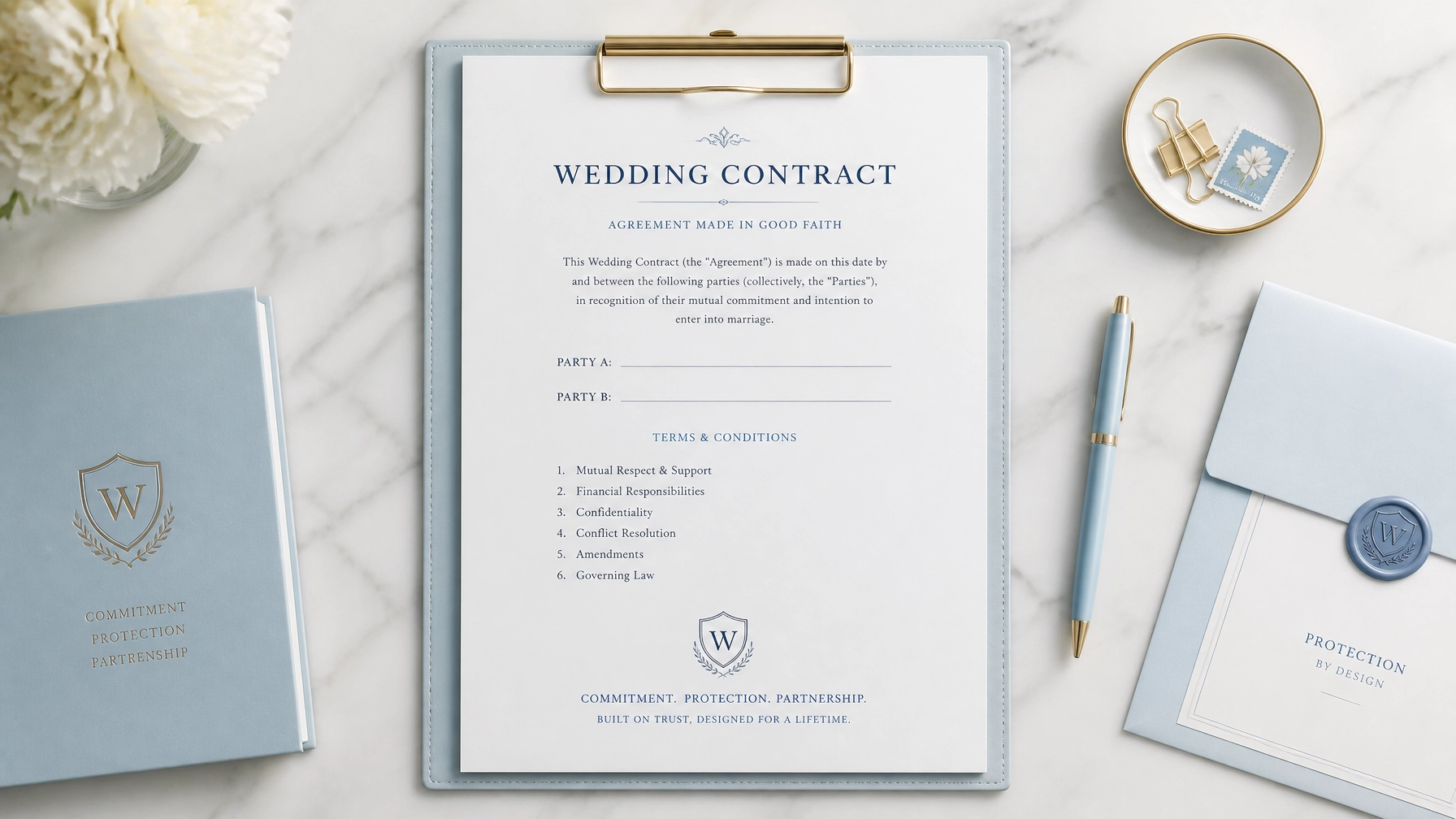
Author: gohugtheworld

  • Wedding Supplier Contracts: Crucial Elite Strategies to Eliminate Dangerous Vendor Risks

    Wedding Supplier Contracts are the only barrier between your dream celebration and a logistical nightmare. In the high-stakes world of wedding planning, many couples focus on the aesthetics of the floral arrangements or the flavor of the cake, while ignoring the fine print that actually ensures those items arrive as promised. A vague agreement isn't just a document; it is a ticking financial time bomb.

    At GHW Digital, we view every contract as a systemic protocol designed to protect your time and capital. If a vendor presents a "standard" agreement that places all the risk on you, they aren't just a supplier: they are a liability. To secure your event, you must move beyond the emotional excitement of the engagement and adopt the mindset of a Digital Architect: systemic, protective, and minimalist.

    The Anatomy of Elite Wedding Supplier Contracts

    An elite agreement does not hide behind legalese. It defines the "State of Play" with surgical precision. If your contract doesn't explicitly state what happens when things go wrong, you are essentially paying for a hope, not a service.

    Lock In Precise Deliverables

    Vague terms kill weddings. Phrases like "standard decor" or "all-day coverage" are useless in a dispute. Every wedding supplier contract must detail exactly what you are receiving. This includes quantity (e.g., 500 edited high-resolution images), quality (e.g., specific flower varieties, not just "seasonal mix"), and timing (e.g., setup completion by 10:00 AM). If it isn't listed, it doesn't exist.

    Protect Your Capital with Tiered Payments

    Never pay 100% upfront. A standard industry practice suggests a 20–50% deposit, with the remainder paid in milestones. This keeps the vendor incentivized to perform and limits your exposure if the business collapses before your date. If a vendor demands full payment months in advance without a clear justification, walk away. This is a primary red flag signaling potential cash flow issues within their business.

    Abstract digital shield icon protecting two interlocking rings, minimalist light blue and white color palette

    Red Flags in Wedding Supplier Contracts: Spotting the Leak

    Before you sign or transfer a single dollar, you must audit the agreement for systemic failures. These red flags are non-negotiable exit points.

    1. The "Handshake" Professional

    A refusal to provide a written contract is the ultimate red flag. Professionalism is measured in documentation. If a supplier suggests working on a "handshake" or a DM, they are actively avoiding accountability. You cannot enforce a vibe; you can only enforce a contract.

    2. One-Sided "Act of God" Clauses

    Force Majeure clauses are designed for truly uncontrollable events: natural disasters or government lockdowns. However, some wedding supplier contracts attempt to bundle "staffing issues" or "supply chain delays" into this category. These are business risks, not acts of God. A professional vendor takes responsibility for their staff; if they can't show up, they should be liable for a refund or a comparable substitute.

    3. Missing Backup Protocols

    What happens if the lead photographer gets sick? What if the catering truck breaks down? An elite contract includes a mandatory backup plan. If the vendor cannot name a specific substitute or doesn't have a protocol for equipment failure, they are gambling with your once-in-a-lifetime event.

    Action-Benefit: How to Secure Service Delivery

    To ensure your vendors actually perform, you need to embed "Action-Benefit" triggers into your agreements. This shifts the power balance back to the couple.

    • Audit Licensing: Require the vendor to provide proof of liability insurance and relevant permits within 7 days of signing. This confirms they are a legitimate professional asset, not a hobbyist.
    • Calculate Overtime Rates: Explicitly define the cost of an extra hour of service. Without this, you are vulnerable to "on-the-spot" price gouging at the end of the night.
    • Track Communication Logs: If a vendor takes more than 48 hours to respond to simple inquiries during the booking phase, imagine how hard they will be to reach during a crisis. Use communication speed as a metric for reliability.

    A sleek minimalist interface showing a checklist of contract clauses, soft shadows, light blue checkmarks

    Introducing Vow Shield: Your Digital Guardian

    At GHW Digital, we believe that elite professional protection shouldn't cost thousands in legal fees. This is why we developed Vow Shield (part of our Future Ideas and Assets).

    Vow Shield is an Autonomous Digital Asset: a systemic tool designed to act as your digital architect. Instead of reading through 20 pages of confusing jargon, you feed the vendor's agreement into the Vow Shield engine. It instantly detects risks, highlights one-sided clauses, and suggests specific "Shield Language" to insert.

    Our mission is to democratize access to the same level of legal protection used by high-end agencies. Vow Shield doesn't just "check" your contract; it optimizes it. It ensures that your Wedding Supplier Contracts are fair, transparent, and: most importantly: enforceable.

    Why Wedding Supplier Contracts Often Fail

    The majority of disputes arise from "Scope Creep" or "Assumption Gaps." You assume the DJ will also provide the wireless microphone for the ceremony; the DJ assumes that’s an extra $200 charge. These gaps are where margins die and stress thrives.

    According to industry data from The Knot, vendor-related issues are among the top sources of wedding day stress. By using a systemic approach to your wedding supplier contracts, you eliminate the "moving goalposts" that vendors often use to increase their profit at your expense.

    Negotiating the "Walk-Away" Clause

    A fair contract allows both parties to terminate under specific conditions. If a vendor is not meeting their milestones: such as a final menu tasting or a site walkthrough: you need the contractual leverage to fire them and recover your funds. A "Non-Refundable" clause is often a bluff; most jurisdictions require that a vendor can only keep a deposit that covers their actual, documented costs if the cancellation is reasonable.

    Two figures in silhouette shaking hands across a table with a document, minimalist art style, light blue accents

    The Digital Architect's Final Protocol

    Your wedding is an asset. It is a massive investment of time, money, and emotional energy. Treating it like a "party" leaves you vulnerable. Treating it like a high-value project makes you bulletproof.

    When reviewing Wedding Supplier Contracts, remember these three rules:

    1. Trust, but Document: If they promised it on a phone call, it doesn't exist until it's in the PDF.
    2. Specificity is Safety: Numbers, dates, and names are your best friends.
    3. Leverage is Everything: Until the final payment is made, you hold the leverage. Never give it up too early.

    Stop accepting "standard" agreements that put your big day at risk. Use the tools available to you, investigate every clause, and build a protective wall around your celebration.

    Secure your event today. Stop the scope creep. Lock in your protection.


    Powered by GHW Digital (Company No: 16834250). This document is an automated draft for business organization purposes only. It does not constitute legal advice. GHW Digital accepts no liability for disputes, financial loss, or enforceability. Users must consult a qualified professional in their jurisdiction before signing.

  • Professional Service Contracts: The Ultimate Elite Protection Strategy for Modern Independents

    Professional Service Contracts: The Ultimate Elite Protection Strategy for Modern Independents

    Professional Service Contracts are the only thing standing between a profitable business and a legal catastrophe. In the high-stakes world of the Modern Independent Professional, your expertise is your product, but your contract is your shield. For decades, the only way to secure this shield was to pay a high-cost consultant hundreds of dollars an hour to draft documents that often remained static, rigid, and ultimately disconnected from the reality of your daily workflow.

    The paradigm has shifted. The era of the "billable hour" lawyer is being eclipsed by the rise of Autonomous Digital Assets: intelligent, self-correcting systems that provide elite-level protection without the administrative friction. At GHW Digital, we don't just build software; we architect protocols that allow the Freelance Community to leverage their time and talent with systemic precision.

    The Human Bottleneck: Why High-Cost Consultants Are a Liability

    Traditional legal consulting is inherently unscalable. When you hire a consultant to draft your Professional Service Contracts, you are buying their time, not necessarily their results. This creates a conflict of interest: the more complex and time-consuming the process, the more they earn.

    For a solopreneur or agency owner, this human-centric model introduces three critical risks:

    1. Latency: Waiting days for a draft can kill a deal. Speed is a competitive advantage that traditional consultants cannot match.
    2. Inconsistency: Human error is a constant variable. A missed clause in a scope-of-work document can lead to "Scope Creep," a silent killer of profit margins.
    3. Financial Leakage: Paying $300+ per hour for a "template" that is 90% identical to every other contract is a poor use of capital.

    Elite professionals are moving away from this legacy model. They are seeking "Self-Help Tools" that act as active consultants: systems that interview the user, detect specific project risks, and generate custom-engineered solutions in real-time.

    A secure digital protocol representing a safe freelance environment

    The New Protocol: Autonomous Digital Assets

    At GHW Digital, we define an Autonomous Digital Asset as an intelligent tool that replaces a specialized human function. Instead of a lawyer, you use an engine like ScopeGuard Elite. Instead of an administrator, you use a system that tracks and calculates risk automatically.

    These tools are designed to solve high-value problems for free or low cost, democratizing access to the kind of protection previously reserved for Fortune 500 companies. By using a protocol-driven approach, you ensure that every one of your Professional Service Contracts is airtight, consistent, and generated in minutes.

    Action-Benefit: Lockdown Your Scope

    Function: Automated Risk Detection.
    Result: Stop "moving goalposts" before they start. By using a system that interviews you about project boundaries, you lock in your deliverables. When the client asks for "one small change," your contract is already positioned to handle the adjustment fairly. You can find many of these systemic ideas here to help structure your business more effectively.

    Action-Benefit: Secure Your IP

    Function: Instant IP Transfer Logic.
    Result: Protect your intellectual property until the final invoice is paid. Autonomous systems ensure that the transfer of rights is conditional, giving you maximum leverage in payment disputes. This is a core component of high-performance Professional Service Contracts.

    Why Speed is the Ultimate Protection

    In the Freelance Community, the time between a "Yes" and a signed agreement is a danger zone. The longer that window remains open, the higher the chance of buyer’s remorse or a competitor stepping in.

    Autonomous systems allow you to generate vow-tight agreements the moment the call ends. This isn't just about efficiency; it's about signaling authority. When you provide a sophisticated, custom-engineered contract in three minutes, you demonstrate that you are a high-value asset, not just a service provider.

    Research into legal contract automation shows that AI-driven review and drafting can reduce turnaround time by over 75%. For an independent professional, that 75% time saving is better spent on billable work or strategic growth.

    A conceptual shield protecting a professional figure

    Professional Service Contracts as a Leverage Point

    Every business is a collection of systems. If your system for legal protection is "hope for the best" or "wait for the lawyer," you have a systemic vulnerability.

    Modern Professional Service Contracts must be dynamic. They should reflect the specific nuances of your industry: whether you are a software developer, a creative director, or a strategic consultant. Using specialized digital assets allows you to embed industry-standard protections into every engagement without needing to be a legal expert yourself.

    Consider the benefits of AI-assisted contract review for detecting red flags. By automating the "boring" but "vital" parts of your business, you free your cognitive load to focus on the elite-level execution your clients pay for.

    The GHW-Digital Philosophy: Systemic, Minimalist, High-Value

    We believe that professional protection should be a background process, not a manual chore. Our tools are built to be minimalist and systemic. We don't want you to spend hours in our software; we want you to get a watertight result in three minutes and get back to work.

    By utilizing Professional Service Contracts generated through autonomous tools, you are choosing a protocol of precision over a practice of guesswork. You are choosing to protect your margins, your time, and your reputation with the same level of sophistication that you bring to your craft.

    Stop leaking revenue to avoidable disputes and high-cost consultants. Start using the tools that represent the future of professional autonomy. Explore our full range of autonomous digital assets and business ideas to see how we are rewriting the rules of the freelance game.

    A protected asset inside a geometric frame

    Final Protocol: Stop the Bleeding

    If you are still using static templates or, worse, no contract at all, you are operating without a shield. The Modern Independent Professional understands that Professional Service Contracts are not a formality: they are a vital defense mechanism.

    1. Audit your current onboarding process.
    2. Identify where scope creep is killing your margins.
    3. Deploy an autonomous system to handle the heavy lifting.

    The goal is alignment, fairness, and absolute clarity. Secure your competitive advantage today by moving to a protocol-driven business model.

    Powered by GHW Digital (Company No: 16834250). This document is an automated draft for business organization purposes only. It does not constitute legal advice. GHW Digital accepts no liability for disputes, financial loss, or enforceability. Users must consult a qualified professional in their jurisdiction before signing.

  • Wedding Supplier Contracts: The Elite Guide to Protecting the Couple from Massive Failure

    Wedding Supplier Contracts: The Elite Guide to Protecting the Couple from Massive Failure

    Wedding Supplier Contracts are often the only thing standing between a dream celebration and a logistical nightmare. In the high-stakes world of weddings, "good intentions" do not pay for a missing photographer or a caterer who fails to show. Most couples sign agreements under the haze of excitement, failing to realize that many standard industry documents are designed to protect the vendor’s bottom line, not the couple’s investment.

    At GHW Digital, we view a contract as a defensive asset. If your agreement doesn't lock in performance and provide a clear path for recourse, it isn't a contract: it’s a liability. You need a systemic approach to ensure that your big day is protected by more than just a handshake and a hope.

    Identifying Red Flags in Wedding Supplier Contracts

    The first step in protecting yourself is knowing how to spot a "poison pill" clause. Many Wedding Supplier Contracts contain vague language that allows vendors to under-deliver or vanish entirely without consequence. If you see a contract that fits the following descriptions, you are walking into a trap.

    • The "As-Is" Mirage: If a contract mentions "standard service" without defining hours, staff count, or specific deliverables, it is useless. A photographer should not just "show up"; they should be contracted for specific hours, a specific number of edited images, and a hard deadline for delivery.
    • One-Sided Force Majeure: Every contract has an "Act of God" clause. However, elite protection requires that this clause works both ways. If a vendor can cancel due to "business hardship" but you lose your deposit for a family emergency, the power balance is broken.
    • Hidden "Substitution" Clauses: Many agencies will book you with a "lead" professional and then swap them for a junior assistant at the last minute. Your Wedding Supplier Contracts must explicitly name the individual performing the service or grant you the right to vet any replacements.

    The Danger of the 100% Upfront Payment

    A massive red flag in any wedding agreement is the demand for 100% of the fee months in advance. Once the money is gone, your leverage vanishes. A professional, fair agreement uses a milestone-based structure: a booking deposit, a mid-term payment, and a final balance paid only when the service is imminent or delivered.

    According to industry standards at The Knot, paying entirely in cash or without a paper trail is the fastest way to lose your protection. Always ensure your Wedding Supplier Contracts reflect a clear, traceable payment protocol.

    A minimalist graphic showing a document with red warning marks signifying contract red flags.

    Why Standard Wedding Supplier Contracts Fail the Couple

    Most templates found online are "Service Provider" focused. They are built by vendors for vendors. These documents prioritize "non-refundable" status over "service quality." When you are the one hiring, you must shift the focus toward accountability.

    A common failure point is the lack of a backup plan. What happens if your DJ's equipment fails? What if the florist's supplier goes bust? If your Wedding Supplier Contracts do not mandate a contingency protocol, you are essentially self-insuring against their failure. You are paying for their expertise, which includes their ability to handle the unexpected.

    We believe in the power of "Autonomous Digital Assets" to solve these problems. Just as we develop Scope Guard Elite for freelancers, we apply the same rigorous logic to wedding protection. You can explore our roadmap of protective tools at our GHW Ideas page.

    Precision Over Politeness

    In the wedding industry, there is a tendency to keep things "friendly." This is a mistake. Professionalism is found in precision, not in pleasantries. If a vendor is offended by your request for a specific delivery timeline or a backup equipment clause, they are likely not the professional you think they are.

    A high-value professional welcomes a clear contract because it defines success for both parties. "Moving goalposts" kill margins for vendors and kill memories for couples. Locking in the scope early is the only way to ensure alignment.

    Lock in Service Delivery with Specific Protocols

    To truly protect the couple, Wedding Supplier Contracts must move beyond the "What" and into the "How." It is not enough to say a caterer will provide a "three-course meal." You need to stipulate the service ratio (e.g., one server per 10 guests), the dietary requirement protocol, and the exact time the kitchen must be cleared.

    Specific protocols act as a shield. If a vendor knows they are being held to a measurable standard, the likelihood of "service failure" drops significantly. This is about creating a "Protocol for Success."

    • Arrival and Setup Times: Specify exactly when the vendor must be on-site. Late arrival is the most common form of service failure.
    • Deliverable Timelines: For photographers and videographers, do not accept "as soon as possible." Demand a hard date (e.g., "within 60 days of the event") with penalties for delays.
    • Insurance Verification: Ensure your Wedding Supplier Contracts require proof of public liability insurance. If a guest trips over a DJ's cable, you do not want to be the one held liable.

    The Power of the "Cure Period"

    A "Cure Period" is a common clause in corporate law that is rarely seen in the wedding industry, but it is vital for protecting the couple. It allows you to notify a vendor of a breach (e.g., "You are 30 minutes late for setup") and gives them a specific window to fix it before penalties apply. This provides a clear, non-emotional framework for handling disputes in real-time.

    For more insights on how to structure these types of professional boundaries, check out the resources at Brides. They highlight that the most successful weddings are those where the legal groundwork was laid months in advance.

    A minimalist digital shield icon with a silver wedding ring inside, glowing with a soft light blue aura.

    Vow Shield: Your Elite Defense Against Wedding Chaos

    At GHW-Digital, we recognized that the "Modern Independent Professional" is often both the vendor and the client. We developed Vow Guard Elite (often referred to as Vow Shield) as a response to the chaotic and often unprotected nature of wedding agreements.

    This isn't a static template you download and forget. Vow Shield is an intelligent software tool that interviews the couple, identifies the specific risks associated with their venue and vendor list, and generates custom-engineered Wedding Supplier Contracts in real-time.

    Unlike a lawyer who charges $300 an hour to tell you what you already know, Vow Shield acts as an active consultant. It detects "leaking revenue" and "scope creep" before they happen. It ensures that your Wedding Supplier Contracts are watertight, ensuring that the vendor’s performance is tracked and guaranteed.

    Why You Can't Rely on "Standard" Terms

    The wedding industry is notorious for "handshake deals" that go south when pressure builds. Whether it's a venue change or a vendor who realizes they've overbooked, standard terms usually favor the person who wrote them. By using an autonomous digital asset like Vow Shield, you are leveraging a system built specifically to defend your interests.

    You can track the development of our latest protective tools on our GHW Ideas roadmap, where we are constantly building new ways to democratize access to elite professional protection.

    A clean UI mockup of the Vow Shield app on a sleek smartphone, featuring minimalist light blue and white colors.

    A Systemic Approach to Wedding Protection

    Protecting yourself from service failure is about more than just a piece of paper. It is about a mindset of autonomy and leverage. When you approach your Wedding Supplier Contracts as a "Digital Architect" would: with precision, systemic thinking, and a focus on assets: you eliminate the stress of the unknown.

    Stop hoping that your vendors will "do the right thing." Hope is not a strategy. Secure your wedding with Wedding Supplier Contracts that work for you. Ensure every deposit is protected, every hour of service is accounted for, and every potential failure has a pre-defined solution.

    The wedding industry is full of experts at their craft who are often administrative novices. Do not let their lack of organizational systems become your disaster. Take control of your celebration by using tools that reflect the sophistication of your life and career.

    Stop the "Scope Creep" Before It Starts

    Just as a developer faces scope creep in a project, a couple faces it during the wedding planning process. Vendors may try to add "service fees" or "travel expenses" that weren't in the initial quote. A watertight contract prevents these "moving goalposts" and keeps your budget intact. Use our Scope Sentry logic to apply the same level of rigor to your personal events as you do to your professional ones.

    Your wedding is the most expensive party you will ever throw. Treat it with the same level of legal and operational respect that you would a major business acquisition. Secure your Wedding Supplier Contracts today and focus on the celebration, not the catastrophe.

    Final Takeaway: Secure your advantage. Stop the risk. Protect your assets.


    Powered by GHW Digital (Company No: 16834250). This document is an automated draft for business organization purposes only. It does not constitute legal advice. GHW Digital accepts no liability for disputes, financial loss, or enforceability. Users must consult a qualified professional in their jurisdiction before signing.

  • Professional Service Contracts: The Ultimate Truth About Expensive Elite Protection

    Professional Service Contracts: The Ultimate Truth About Expensive Elite Protection

    Professional Service Contracts are the invisible walls that protect your business from the chaos of scope creep and unpaid invoices. In the modern freelance economy, your expertise is your currency, but your contracts are your vault. Yet, many independent professionals still believe that the only way to secure this vault is by paying an expensive consultant $300 an hour to draft a document that essentially follows a standard industry protocol.

    The truth is harsh: most traditional consulting is a legacy tax on your margins. While you are busy delivering high-value work for your clients, the time and capital you spend on manual legal drafting is a leak in your professional bucket. You do not need a middleman to tell you that you need protection; you need a system that enforces it automatically.

    The Myth of the $300/Hour Security Blanket

    For decades, the standard advice for solopreneurs and agency owners was simple: "Talk to a lawyer." This advice assumes that every project is a unique legal snowflake requiring bespoke craftsmanship. In reality, 90% of Professional Service Contracts for designers, developers, and consultants share the same core DNA. They need to define the scope, lock in the payment schedule, and protect intellectual property.

    Hiring a consultant for these routine protections is like hiring an architect to draw a new blueprint every time you want to build a standard fence. It is inefficient, expensive, and creates a bottleneck that slows down your onboarding process. When a deal is on the table, speed is a competitive advantage. Waiting three days for a consultant to "review" a standard agreement can be the difference between a signed deposit and a ghosted lead.

    Sleek translucent shield icon protecting a digital document

    Professional Service Contracts: Your Shield Against "Scope Creep"

    Scope creep is not an accident; it is a direct result of weak documentation. Without a robust Professional Service Contract, you are essentially working on a handshake that gets sweatier as the project progresses. Every "quick favor" or "minor tweak" requested by a client is a withdrawal from your profit margin.

    Standard industry practice suggests that a contract should not just be a list of "what we will do," but a definitive wall against "what we will not do." Elite digital tools, such as those we build at GHW Digital, act as an active consultant during the drafting phase. They don't just give you a template; they interview you to detect hidden risks in your project delivery model. This systemic approach ensures that your boundaries are baked into the code of your business.

    Why Software Beats Manual Consulting for Scale

    When you rely on a human consultant, you are limited by their schedule and their billable hours. When you leverage "Autonomous Digital Assets," you are operating at the speed of software. According to Juro’s research on contract management, automated systems can speed up the contracting process by up to 10x.

    This isn't just about saving time; it's about control. Automated Professional Service Contracts ensure that every agreement you send follows your approved "gold standard." There is no risk of a consultant forgetting a clause or a junior staff member using an outdated template. The system is the guardian of your standards.

    Geometric graphic representing speed and software efficiency

    Action-Benefit: Automate Drafting to Lock In Profit

    The first step to professional autonomy is removing the friction between "Hello" and "Hired."

    • Standardize Your Terms: Create a core library of clauses that represent your non-negotiables. Whether it’s 50% upfront payments or strict IP transfer only upon final settlement, these should be non-negotiable.
    • Deploy Self-Help Tools: Instead of starting from a blank page, use tools like ScopeGuard Elite to generate custom-engineered solutions in minutes. This replaces the "lawyer-as-a-bottleneck" with "software-as-a-shield."
    • Track Everything: Software allows you to see exactly when a contract was opened, reviewed, and signed. This data is leverage. Knowing that a client has spent three hours reviewing the "Liability" section allows you to address their concerns before they even bring them up.

    Action-Benefit: Risk Detection – Future-Proof Your Agreements

    Every new project carries a unique set of risks. A developer building a fintech app faces different liabilities than a graphic designer creating a logo. A generic template cannot account for these nuances, and a consultant might miss them if they aren't deep in the weeds of your specific niche.

    A well-structured Professional Service Contract generated through an intelligent system acts as a risk-detection engine. By asking the right questions: "Where is the data stored?", "Who provides the third-party assets?", "What is the specific definition of 'complete'?": the tool forces clarity where there is usually ambiguity. Clarity is the ultimate defense against future disputes.

    Minimalist workspace showing a professional digital interface

    The Digital Architect Approach

    At GHW Digital, we don’t believe in "gigs" or "side hustles." We believe in the Freelance Community as a collection of high-value business entities that deserve elite-level protection. We build software that acts as your internal Digital Architect, constructing assets that work for you while you sleep.

    Our focus is on democratizing access to professional-grade protection. You shouldn't need a $10,000 legal budget to have a watertight Professional Service Contract. You need a protocol. By exploring our Digital Asset Ideas, you can see how we are replacing traditional consultancy models with automated systems that interview, detect, and protect.

    Stop Leaking Revenue Today

    Every day you operate without a systemized approach to your contracts is a day you are leaking revenue. Whether it is through unpaid "extra" work or the literal cost of hiring experts to do what software can do better, the drain on your business is real.

    The era of the "expensive consultant" for routine professional protection is ending. The era of the Autonomous Digital Asset is here. It is time to stop playing defense and start building a systemic fortress around your time and your talent.

    Architectural light blue lines representing a digital framework

    Secure Your Future

    Don't wait for a dispute to realize your protection is paper-thin. Visit our Asset Library and see how GHW Digital is building the tools that allow independent professionals to reclaim their autonomy. Stop hiring middlemen. Start building assets.

    Powered by GHW Digital (Company No: 16834250). This document is an automated draft for business organization purposes only. It does not constitute legal advice. GHW Digital accepts no liability for disputes, financial loss, or enforceability. Users must consult a qualified professional in their jurisdiction before signing.

  • Wedding Supplier Contracts: Elite Protection Against Costly Service Failures

    Wedding Supplier Contracts: Elite Protection Against Costly Service Failures

    Wedding Supplier Contracts are the only thing standing between your dream celebration and a logistical nightmare. Most couples approach their wedding planning with stars in their eyes, but the reality of the industry is a high-stakes business environment where ambiguity is your greatest enemy. Every year, thousands of couples lose significant deposits or face service failures because they signed a document designed to protect the vendor, not them.

    At GHW Digital, we build Autonomous Digital Assets to shield you from these systemic risks. You wouldn’t enter a corporate merger without a watertight agreement; your wedding deserves the same level of professional scrutiny.

    Below are the critical mistakes currently undermining your protection and the protocols you must implement to fix them.

    The Handshake Trap: Failing to Secure Formal Wedding Supplier Contracts

    The most common failure is relying on the "good vibes" of a vendor. A verbal agreement or a casual email chain is not a defense mechanism. If a vendor claims they are "booked" but refuses to provide a formal contract, you are exposed.

    The Fix: Protocol Enforcement. Never send a deposit without a signed, comprehensive agreement. A professional Wedding Supplier Contract is a mandatory prerequisite for any financial transaction. If they won't put it in writing, they aren't a professional; they’re a liability.

    The Vague Deliverable Loophole

    Vague language kills margins and ruins timelines. Terms like "Full Day Coverage" or "Standard Floral Package" are intentionally ambiguous. They allow vendors to cut corners while technically fulfilling the "contract."

    A minimalist 3D rendering of a document with a red warning exclamation mark signifying a contract red flag

    The Fix: Itemize Everything. Your Wedding Supplier Contracts must define exactly what "full day" means (e.g., "10 consecutive hours starting at 10:00 AM"). For florals, specify stem counts and varieties. For catering, demand a fixed menu with a per-head price. Precision is your primary shield against unexpected service failure.

    The Unlimited Expense Clause

    Hidden fees are the silent killers of wedding budgets. Many contracts include clauses like "plus expenses" or "travel fees as incurred" without a cap. This effectively gives the vendor a blank check on your dime.

    The Fix: Lock In Pricing. Every expense must be pre-approved or capped. Ensure your Wedding Supplier Contracts state that all travel, parking, and administrative fees are included in the headline price or capped at a specific dollar amount. If they can't calculate their costs upfront, don't hire them.

    One-Sided Cancellation Protocols

    Standard industry practice often favors the vendor. Most contracts feature a non-refundable deposit clause that protects the vendor if you cancel but offers no recourse if they fail to show up.

    The Fix: Implement Reciprocity. Ensure there is a "Vendor Default" clause. If the supplier fails to perform, the contract must mandate a full refund of all monies paid, including the deposit, within a 14-day window. Fairness is not a request; it is a requirement. You can find more strategies for balancing professional agreements here.

    The Force Majeure Black Hole

    A "Force Majeure" or "Act of God" clause is standard, but if it's poorly drafted, it becomes a get-out-of-jail-free card for the vendor. If an unforeseen event occurs, you need to know if you get a refund or a forced reschedule.

    A minimalist vector icon of a protective shield protecting a wedding ring

    The Fix: Define the Outcome. Your Wedding Supplier Contracts should specify a sliding scale of refunds based on the timing of the event. If a legal restriction prevents the wedding, the contract should dictate a path to rescheduling without predatory "rebooking fees." Refer to Consumer Protection Guidelines for standard fair-practice language.

    Ignoring Liability Limits

    Many vendors attempt to limit their liability to the total cost of the contract. If a videographer loses your wedding footage, a simple refund doesn't cover the loss of a once-in-a-lifetime memory.

    The Fix: Demand Accountability. While you can't always recover the "emotional" value, you can ensure the vendor carries professional liability insurance. Ask to see their certificate of insurance (COI) before signing any Wedding Supplier Contracts. A professional who refuses to prove they are insured is a risk you cannot afford to take.

    Intellectual Property Lockout

    This applies specifically to photographers and videographers. You might pay $5,000 for photos, but legally, you may not "own" them. If the contract doesn't grant you usage rights, you could be charged extra just to print your own images or share them on social media.

    The Fix: Usage Rights Clause. Ensure the agreement explicitly grants you a "perpetual, irrevocable license for personal use." You don't need the copyright (the vendor can keep that), but you must have the legal right to use your assets as you see fit. For more high-value asset protection, check out our latest digital tools.

    Vow Shield: Your Digital Guardian

    Navigating the minefield of Wedding Supplier Contracts shouldn't be your full-time job. That’s why GHW Digital developed Vow Shield (part of our ScopeGuard Elite family).

    Vow Shield is an Autonomous Digital Asset designed specifically for the Modern Independent Professional and the couples they serve. It doesn't just provide a template; it acts as a digital architect. Vow Shield interviews you about your vendors, detects hidden risks in their terms, and generates a custom-engineered addendum to protect your interests.

    A clean digital interface showing a Vow Shield logo concept

    Instead of paying a lawyer $300 an hour to review a florist's contract, Vow Shield provides a watertight defense in under three minutes. It locks in deliverables, tracks expenses, and ensures your contracts are actually enforceable.

    Stop Leaking Revenue and Start Securing Peace of Mind

    Your wedding is an investment in your future. Don't let a poorly drafted agreement turn that investment into a loss. Wedding Supplier Contracts are your first and last line of defense.

    Stop accepting "standard" terms that leave you vulnerable. Use Vow Shield to take control of your agreements, eliminate scope creep from your vendors, and ensure that every dollar you spend is protected by a professional-grade protocol.

    Protect your assets. Secure your day. Build your shield.

    Explore our full suite of Autonomous Digital Assets today.

    Powered by GHW Digital (Company No: 16834250). This document is an automated draft for business organization purposes only. It does not constitute legal advice. GHW Digital accepts no liability for disputes, financial loss, or enforceability. Users must consult a qualified professional in their jurisdiction before signing.

  • Professional Service Contracts: Ultimate Protection Protocols for Elite Professionals

    Professional Service Contracts: Ultimate Protection Protocols for Elite Professionals

    Professional Service Contracts are the only line of defense between a profitable project and a business-killing dispute. For decades, the independent professional was forced to choose between two losing scenarios: paying a lawyer $300 an hour to draft a document that might be ignored, or using a "handshake deal" that eventually leads to scope creep and unpaid invoices. Both options are outdated. Both options are risky.

    The landscape has shifted. We are moving away from manual consulting and toward Autonomous Digital Assets. In this new era, elite software tools replace expensive consultants, offering faster, smarter, and more reliable protection. By adopting a "System Over Consultant" protocol, you aren't just signing a document; you are deploying a guardian for your time, your profit, and your professional peace of mind.

    The Massive Failure of the Human Consultant Model

    Traditional legal consulting is inherently flawed for the modern independent. It is slow, reactive, and expensive. When you hire a consultant to handle your Professional Service Contracts, you are paying for their time, not necessarily for your protection. If a project changes at 2 AM on a Tuesday, your lawyer isn't there to help you recalibrate the scope.

    Systems, however, never sleep. They don't charge hourly. They don't forget clauses. An automated system like ScopeGuard Elite provides a level of consistency that a human simply cannot match. It’s about building a protocol that identifies risks before they become liabilities.

    Abstract visualization of a digital system or protocol

    Professional Service Contracts: Automate the Shield

    The core of our philosophy at GHW Digital is simple: Build assets, not debt. When you rely on a manual process for your Professional Service Contracts, you are accumulating administrative debt. Every minute spent formatting a PDF is a minute stolen from your high-value work.

    By using autonomous tools, you transform your contract from a static piece of paper into an active consultant. These tools:

    • Interview the User: They ask the right questions about deliverables and deadlines.
    • Detect Risks: They flag missing clauses or ambiguous language.
    • Synthesize Solutions: They generate custom-engineered outcomes in real-time.

    This isn't just a template; it’s a systemic fortress. Organizations like the Freelancers Union have long advocated for clear agreements, but we believe the future lies in the automation of those agreements.

    Lock in Revenue with Action-Benefit Headers

    Standardize Outcomes – Stop reinventing the wheel for every client. A system-based approach to Professional Service Contracts ensures that every engagement follows the same high-standard protocol, regardless of the client’s size.

    Calculate Exposure – Automated systems can track milestones and payment schedules. When a payment is missed, the system flags it immediately, allowing you to stop work before you’ve invested too much "free" time.

    Track Boundaries – Scope creep kills margins. Use a protocol that locks in the scope and requires a digital "handshake" for any additions. This turns awkward conversations into a simple system notification.

    Minimalist professional workspace with a digital dashboard

    Why Systems Win at Professional Service Contracts

    Consistency is the ultimate professional advantage. When your Professional Service Contracts are handled by a vetted system, you eliminate the "human error" factor. A system doesn't get tired. A system doesn't overlook a late-payment penalty clause because it had a long day.

    According to industry insights on contract management automation, businesses that automate their drafting process see a significant reduction in disputes and a faster turnaround on signatures. For an independent professional, this means faster cash flow and fewer headaches.

    We aren't just providing tools; we are providing a Digital Architect persona for your business. You build the work; the system builds the protection. This is the essence of what we do at GHW-Digital.

    Detect Risk Early and Often

    The most dangerous moment in any project is the beginning. This is when the excitement of a new deal can blind you to potential pitfalls. Professional Service Contracts generated through an elite system act as a filter. They force you to define the "What Ifs" before the "What’s Next."

    • What if the client delays feedback? The system inserts a clause to pause the timeline.
    • What if the project is canceled? The system ensures you are paid for work completed.
    • What if the scope changes? The system generates a change-order protocol instantly.

    This is why we focus on Future Assets that solve high-value problems for free or low cost. We want to democratize access to the same level of protection that Fortune 500 companies enjoy.

    A clean, minimalist representation of an autonomous digital asset

    The Evolution of Professional Service Contracts

    The transition from manual to systemic is not just a trend; it is a necessity for survival in the freelance community. As the world moves toward more "Productized Services," your Professional Service Contracts must also become productized. They should be a seamless part of your onboarding flow, not a friction point that requires a legal consultation.

    Consider the time you spend on administrative chaos. Now imagine that time reinvested into your craft. That is the "Leverage" we talk about at GHW Digital. By utilizing Scope Sentry and other autonomous assets, you are securing a competitive advantage that manual operators simply cannot match.

    Securing Your Competitive Advantage

    Stop asking for permission to be protected. Start deploying systems that demand it. The "System Over Consultant" protocol isn't about removing the human element; it's about elevating the human element to do what it does best: create, innovate, and lead.

    Let the software handle the boundaries. Let the system handle the risk. Your Professional Service Contracts should be a source of strength, not a source of anxiety. It is time to replace expensive, slow-moving consultants with automated, elite systems that work at the speed of your business.

    Secure your next project with the precision of a digital architect. Explore our full library of autonomous tools and stop the revenue leaks today.

    Powered by GHW Digital (Company No: 16834250). This document is an automated draft for business organization purposes only. It does not constitute legal advice. GHW Digital accepts no liability for disputes, financial loss, or enforceability. Users must consult a qualified professional in their jurisdiction before signing.

  • Wedding Supplier Contracts: Ultimate Shield for Elite Couple Protection

    Wedding Supplier Contracts: Ultimate Shield for Elite Couple Protection

    Wedding Supplier Contracts are the only thing standing between your vision of a perfect day and a logistical nightmare. In the high-stakes environment of wedding planning, service failure isn't just an inconvenience: it’s a massive financial and emotional drain. Most couples treat contracts as a formality to be signed and forgotten. This is a critical mistake.

    At GHW Digital, we view a contract not as a piece of paper, but as a defensive protocol. We build Autonomous Digital Assets designed to protect your interests with systemic precision. If you aren't weaponizing your agreements to ensure service delivery, you are leaving yourself vulnerable to "Scope Creep," hidden fees, and vendor abandonment.

    Here is the "Couple’s Shield Protocol": a five-step system to secure your vendors and prevent service failure.

    Step One: Audit the Scope of Work for Absolute Precision

    The most common cause of service failure is ambiguity. A vendor contract that simply states "Photography Services" or "Event Catering" is a liability. It leaves the interpretation of "quality" and "quantity" entirely in the vendor's hands.

    Action: Demand a granular, itemized breakdown of every deliverable.
    Benefit: Eliminates the risk of "Scope Creep" and ensures you receive exactly what you paid for.

    When reviewing Wedding Supplier Contracts, you must look for specific numbers:

    • Exact Hours: Not "day-of," but "from 10:00 AM to 10:00 PM."
    • Personnel Counts: How many servers, second shooters, or assistants will be physically present?
    • Deliverable Specs: The exact number of edited photos, the number of floral arrangements by type, or the specific menu items.

    If it isn't documented, it doesn't exist. You can explore more about how we automate these precise definitions at our ideas incubator.

    Step Two: Identify and Neutralize One-Sided Clauses

    Standard vendor agreements are written by vendors, for vendors. They often contain "Force Majeure" or "Cancellation" clauses that act as a get-out-of-jail-free card for the supplier while keeping your deposit locked away.

    Action: Rebalance the liability.
    Benefit: Creates a fair environment where the vendor is incentivized to perform.

    A minimalist UI showing a contract audit with risk analysis highlights

    When analyzing Wedding Supplier Contracts, watch for these red flags:

    1. Non-Refundable Everything: While a booking fee is standard, a 100% non-refundable policy six months out is often legally questionable under the UK Consumer Rights Act 2015.
    2. Unilateral Substitution: A clause that allows a photographer or planner to "send a replacement of our choice" without your approval. This destroys the personal nature of the service.
    3. Vague Force Majeure: Ensure that "Acts of God" don't include simple administrative failures on the vendor's part.

    Step Three: Lockdown Service Delivery with Vow Shield

    This is where the GHW Digital philosophy comes into play. You should not have to be a legal expert to protect your wedding. We have conceptualized the Vow Shield: an autonomous digital asset designed to interview you about your event and generate a watertight addendum to any vendor agreement.

    Action: Integrate Vow Shield into your planning workflow.
    Benefit: Deploys a systemic defense mechanism that vendors must respect.

    Vow Shield doesn't just "check" a contract; it enforces a protocol. It ensures that Wedding Supplier Contracts include specific penalties for late arrival and mandates professional indemnity insurance. By using a tool like Vow Shield, you move from a position of "hope" to a position of "control." You can check out how we develop these types of tools on our app ideas page.

    Step Four: Weaponize Your Payment Schedule

    Cash flow is your greatest leverage. If you pay 100% upfront, you have zero leverage if the service fails. A professional vendor should respect a structured payment schedule that aligns with milestones.

    Action: Tie payments to verifiable progress.
    Benefit: Ensures the vendor remains engaged and accountable until the final deliverable is in your hands.

    A standard industry protection strategy involves a three-tier payment structure:

    1. Booking Fee (Deposit): To secure the date (10-25%).
    2. Mid-way Milestone: After a tasting, site visit, or engagement shoot (40-50%).
    3. The Balance: Paid 7-14 days before the event, or in some cases, upon receipt of final digital deliverables.

    A wedding ring resting on a stack of highly organized, professional documents

    Step Five: Implement Post-Signature Surveillance

    A signed contract is a living document. Service failure often starts with a breakdown in communication months before the wedding.

    Action: Schedule "Checkpoint Audits."
    Benefit: Detects vendor instability or "red flag" behavior before it becomes a day-of catastrophe.

    If a vendor becomes unresponsive or misses a scheduled planning call, refer back to your Wedding Supplier Contracts. A common protection strategy is to have a "Performance Breach" clause that allows you to terminate the agreement if communication standards aren't met. This prevents you from being ghosted two weeks before your ceremony.

    For more insights on how to build automated systems for professional protection, visit GHW Digital Ideas.

    The GHW Stance: Defense is the Best Offense

    Modern independent professionals: and the couples who hire them: need a new standard of protection. We don't believe in "hoping for the best." We believe in building assets that make failure impossible.

    Whether it's through ScopeGuard Elite or the upcoming Vow Shield protocol, our goal is to democratize elite professional protection. You are investing thousands of pounds into a single day; treat your Wedding Supplier Contracts like the high-value assets they are.

    Diagram showing the connection between Contract, Shield, and Success icons

    Don't let a vague paragraph ruin your legacy. Stop playing defense and start building your shield today.

    Explore our full range of Autonomous Digital Assets and take control of your professional and personal risks.


    Powered by GHW Digital (Company No: 16834250). This document is an automated draft for business organization purposes only. It does not constitute legal advice. GHW Digital accepts no liability for disputes, financial loss, or enforceability. Users must consult a qualified professional in their jurisdiction before signing.

  • Professional Service Contracts: The Ultimate Elite Defense Against Corporate Greed

    Professional Service Contracts are the invisible architecture of your business. For years, expensive legal consultants have guarded the "secrets" of these documents, charging independent professionals thousands of dollars to draft what essentially boils down to a dozen repeatable clauses. They want you to believe that protecting your time and profit requires a law degree and a massive retainer. They are wrong.

    The modern freelance landscape is a battlefield where "scope creep" and unpaid invoices are the primary weapons used against you. If you are operating without a watertight agreement, you aren't just a professional; you are a target. This guide exposes the strategies that elite firms use to lock in revenue and how you can leverage autonomous software to gain that same level of protection without the consultant’s price tag.

    The High-Cost Illusion of Professional Service Contracts

    Most consultants start from the same 15 "standard" clauses. Whether it is a $50,000 corporate agreement or a $5,000 project for a solopreneur, the DNA of the contract is identical. The "secret" is that they charge you for the time it takes to copy-paste these clauses into a Word document.

    At GHW-Digital, we believe in democratizing access to this level of professional protection. We build "Autonomous Digital Assets": software that acts as a digital architect to interview you and generate high-impact solutions in minutes. You don't need a consultant to tell you that you need an indemnity clause; you need a system that ensures that clause is actually in your favor.

    A minimalist silhouette of a digital architect at a clean workstation with light blue glowing lines

    Action-Benefit: Lock in Your Scope to Stop Revenue Leaks

    The single greatest threat to your profit margin is ambiguity. Expensive consultants know that the Scope of Work (SOW) is the heart of Professional Service Contracts. If the scope is vague, the client wins. If the scope is precise, you win.

    • Define Exclusions: Standard practice suggests listing what is not included is just as important as listing what is. If you are a web designer, explicitly state that SEO and copy-writing are out-of-scope.
    • The Change Order Protocol: Never perform "extra" work on a verbal agreement. Your contract must mandate a written change order for any deviation from the original plan. This locks in additional revenue before the work begins.
    • Assumption Management: State your assumptions clearly (e.g., "Client provides all assets within 5 business days"). When the client fails to meet an assumption, the timeline and price must be eligible for adjustment.

    By using tools like ScopeGuard Elite, you can automate this level of precision. Instead of guessing, the software prompts you for the exact boundaries needed to shield your time.

    Action-Benefit: Secure Your Cash Flow Through Strategic Terms

    Consultants often tell you that your "rate" is the most important part of a negotiation. This is a distraction. Your payment terms are what actually determine whether your business survives or starves. Professional Service Contracts should prioritize cash flow over vanity metrics.

    • Front-Load the Risk: Always require a non-refundable deposit. This ensures the client has "skin in the game" and covers your initial setup costs.
    • Milestone-Based Releases: Tie payments to objective deliverables, not dates. A date-based payment schedule allows a slow-responding client to delay your payday indefinitely.
    • Late Fee Enforcement: A common protection strategy is to include a daily interest rate for overdue invoices. It isn't about the extra $20; it's about signaling that your time is a finite, valuable asset.

    For more insights on how to structure these digital systems, explore our Asset Ideas Page, where we break down the logic of autonomous business tools.

    Minimalist financial icons and a shield on a clean white grid with light blue accents

    Action-Benefit: Shield Your Intellectual Property and Know-How

    In the world of professional services, your knowledge is your leverage. Many standard contracts drafted by client-side lawyers contain "Work for Hire" clauses that strip you of every right to the work you produce.

    • Derivative Ownership: Ensure that while the client owns the final deliverable, you retain ownership of your underlying tools, templates, and frameworks. This allows you to reuse your methods for future clients without legal exposure.
    • Conditional Assignment: The IP should only transfer to the client once the final invoice is paid in full. If they don't pay, they don't own the work. This is a powerful mechanism for debt collection.
    • License Limitations: If you are providing a software solution or a strategic framework, consider granting a "usage license" rather than full ownership. This creates recurring value and protects your long-term assets.

    According to industry leaders at ProjectWorks, neglecting these IP nuances is how independent professionals lose their competitive edge. Don't let a "standard" clause rob you of your future leverage.

    Action-Benefit: Deploy Autonomous Defense Systems

    The era of the $300/hour consultant is ending. Why pay for a human to recite a template when you can deploy an autonomous asset that does the job with more precision and less ego?

    At GHW Digital, we don't just provide templates; we build systems. Our tools act as active consultants, interviewing you to detect risks you haven't even considered. We focus on "Systemic Protection": the idea that your software should be a guardian that prevents problems before they reach your inbox.

    • Automated Risk Detection: Our systems analyze your project parameters to identify where "Scope Creep" is most likely to occur.
    • Real-Time Generation: No more waiting days for a legal review. Get a custom-engineered solution in under three minutes.
    • Professional Alignment: Our tools ensure that your boundaries are firm but professional, maintaining the relationship while protecting the profit.

    Check out our full range of Autonomous Digital Assets to see how we are replacing traditional consulting with high-performance software.

    A sleek digital interface showing a contract generation progress bar in minimalist light blue and white

    Stop Bleeding Revenue and Start Building Assets

    Professional Service Contracts are not just pieces of paper; they are the protocols that govern your professional life. If you treat them as an afterthought, you are inviting chaos. If you treat them as a strategic asset, you are securing your future.

    Expensive consultants want to keep these "secrets" behind a paywall. We are here to tear that paywall down. By moving from manual, vulnerable processes to autonomous, systemic protection, you take back control of your time and your margins.

    Stop acting like a "gig worker" and start acting like a Digital Architect. Secure your professional boundaries today.


    The GHW-Digital Operational Stance

    We do not store user data permanently. All inputs are processed in real-time for the sole purpose of generating your output. We are a software provider, not an advisory service. Our mission is to provide you with the leverage you need to thrive in a competitive market.

    Powered by GHW Digital (Company No: 16834250). This document is an automated draft for business organization purposes only. It does not constitute legal advice. GHW Digital accepts no liability for disputes, financial loss, or enforceability. Users must consult a qualified professional in their jurisdiction before signing.

  • Wedding Supplier Contracts: Elite Strategies for Ultimate Protection

    Wedding Supplier Contracts: Elite Strategies for Ultimate Protection

    Wedding Supplier Contracts are the only barrier standing between a seamless celebration and a financial catastrophe. In an industry fueled by emotion and high-ticket aesthetic promises, the modern independent professional knows that "handshake deals" and vague emails are a recipe for disaster. When you are investing thousands into a single day, you aren't just buying flowers or photography; you are purchasing a guarantee of performance.

    At GHW Digital, we view every agreement as a system. If the system is flawed, the asset: in this case, your wedding day: is at risk. To protect your investment, you must adopt a "Digital Architect" mindset: systemic, protective, and minimalist. This guide provides the protocol required to transform vulnerable vendor agreements into watertight protection mechanisms.

    The High Stakes of Wedding Supplier Contracts

    Your wedding is a high-value project with dozens of moving parts. Without robust Wedding Supplier Contracts, you are effectively self-insuring against every possible failure point. A vendor’s "standard" contract is almost always designed to protect the vendor, not you. It minimizes their liability while maximizing your financial commitment.

    To flip the script, you must understand that the contract is your primary leverage. It defines exactly what "success" looks like and establishes the penalties for failure. If a vendor is hesitant to put specific promises in writing, they are signaling a lack of professional alignment. In the world of elite event planning, clarity is the ultimate form of respect.

    Minimalist blue shield icon symbolizing protection for Wedding Supplier Contracts

    Identifying Red Flags in Vendor Agreements

    Before you sign any document, you must audit it for systemic vulnerabilities. Vulnerable contracts lead to "Scope Creep" and leaking revenue. Here are the critical red flags that indicate a vendor agreement is designed to leave you exposed:

    • Vague Deliverables: If a contract says "Photography services" without specifying the number of shooters, hours of coverage, or the exact delivery timeline for the final assets, it is functionally useless.
    • 100% Upfront Payment: Demanding full payment months before the event is a massive red flag. Standard industry practice suggests a deposit of 20–50%, with the balance due closer to the delivery date.
    • Unilateral Cancellation Rights: Watch for clauses that allow the vendor to cancel "for convenience" without a full refund and assistance in finding a replacement.
    • "Subject to Change" Pricing: Any language that allows a vendor to increase prices after the contract is signed: due to "market fluctuations" or "inflation": is a risk you should not accept.
    • Broad Force Majeure: A "Force Majeure" clause should only cover true "Acts of God." If it allows a vendor to keep your money because of internal staffing issues or general business hardship, it is an unfair leverage point.

    For more insights into how we architect these types of protections, explore our digital asset ideas.

    Essential Clauses for Your Wedding Supplier Contracts

    To secure your investment, you must insist on specific, action-oriented clauses. These aren't "nice-to-haves"; they are the core components of a protective business system.

    1. Detailed Scope of Service

    Precision is your greatest defense. Every Wedding Supplier Contracts deliverable should be itemized. For a caterer, this means the exact menu, number of staff, and arrival/departure times. For a venue, it includes lighting, HVAC, and load-in protocols. Use tools like the Vow Shield to audit these details automatically.

    2. The Sliding Scale Refund Policy

    Never accept an "All Sales Final" stance. A fair protocol involves a sliding scale: the earlier you cancel, the more of your deposit you recover. This aligns with the vendor's ability to re-book the date while respecting your capital.

    3. Substitution and Backup Protocols

    What happens if your lead photographer gets sick? Your Wedding Supplier Contracts must name the primary professional and define the qualifications of any substitute. You should have the right to approve or reject a replacement who does not meet the "Elite" standard you originally hired.

    4. Intellectual Property and Usage Rights

    If you are hiring a creative, you need to own the rights to the output. Ensure the contract explicitly grants you a license to print, share, and copy your media for personal use without additional "licensing fees" down the line.

    Digital interface for Vow Shield, a tool to analyze Wedding Supplier Contracts

    Implementing the Vow Shield Protocol

    At GHW Digital, we believe in democratizing access to elite protection. This is why we developed the Vow Shield (often referred to in our internal labs as the Vow Guard Elite). This "Autonomous Digital Asset" is not a static template; it is an intelligent consultant that interviews you about your vendor agreements, detects hidden risks, and suggests custom-engineered solutions.

    Instead of paying a lawyer $300/hour to review dozens of Wedding Supplier Contracts, the Vow Shield provides a watertight audit in minutes. It looks for the "leaking revenue" points and ensures your boundaries are respected. It is about leveraging software to gain a competitive advantage in a market that often preys on the uninformed.

    Check out our full range of autonomous digital assets to see how we are replacing traditional consulting with automated systems.

    Practical Steps to Lock in Your Investment

    Beyond the paper, your behavior dictates your level of protection. Follow this protocol to ensure your Wedding Supplier Contracts are enforceable:

    1. Pay via Credit Card: This provides an extra layer of consumer protection. If a vendor disappears, you can initiate a chargeback through your bank.
    2. Document Everything: Every phone call or meeting must be followed by a "Recap Email." This creates a timestamped audit trail of all verbal agreements.
    3. Get Wedding Insurance: A contract is a shield, but insurance is the armor. Use sites like The Knot to find reputable providers who cover vendor no-shows and business closures.
    4. Consult Professional Guidance: If you are dealing with a six-figure budget, standard consumer rights advice from organizations like Citizens Advice can provide a baseline for local legal standards.

    A minimalist lock securing a stack of Wedding Supplier Contracts

    Conclusion: Stop Leaving Your Future to Chance

    Scope creep kills margins, and vague agreements kill weddings. To protect your investment, you must stop treating vendor selection as a social exercise and start treating it as a procurement process. Wedding Supplier Contracts are the protocols that ensure your vision is executed with precision and your capital is guarded with intensity.

    Don't sign a document that leaves you vulnerable. Take control of your event's security. Utilize the Vow Shield to audit your agreements and ensure you are operating from a position of power.

    Secure your assets. Lock in your delivery. Protect your day.

    Explore our full library of protection tools at GHW Digital


    Powered by GHW Digital (Company No: 16834250). This document is an automated draft for business organization purposes only. It does not constitute legal advice. GHW Digital accepts no liability for disputes, financial loss, or enforceability. Users must consult a qualified professional in their jurisdiction before signing.

  • Professional Service Contracts: The Ultimate Elite Systemic Framework for Absolute Protection

    Professional Service Contracts: The Ultimate Elite Systemic Framework for Absolute Protection

    Professional Service Contracts are the single most important asset in your independent business arsenal. Without a watertight framework, you aren't just a professional; you are a target. Every vague deliverable, every "handshake" agreement, and every missing revision clause is a puncture in your hull, leaking revenue and inviting chaos.

    The modern independent professional: be it a software developer, agency owner, or consultant: operates in an environment of high stakes. You provide elite value, yet you are often exposed to systemic risks: scope creep, non-payment, and legal ambiguity. The era of the $300-per-hour lawyer is ending. In its place, the Digital Architect uses "Autonomous Digital Assets" to build a perimeter that consultants simply cannot match in speed or precision.

    At GHW Digital, we don't just provide templates. We build systems that protect your time and profit. You can explore our collection of high-leverage concepts at our Ideas Portal.

    Designing Your Professional Service Contracts for Scalability

    Digital shield icon representing professional legal and business protection

    A contract is not a static piece of paper; it is a protocol. To achieve professional autonomy, your Professional Service Contracts must be engineered as a defensive system. This begins with shifting your perspective from "agreement" to "architecture."

    Scope Precision. The primary killer of profit is the moving goalpost. An elite contract defines the "In-Scope" items with surgical accuracy, but more importantly, it explicitly lists the "Out-of-Scope" exclusions. If it is not listed as a deliverable, it does not exist until a Change Order is signed.

    Payment Protocols. Stop chasing invoices. Your contracts should mandate automated milestones or upfront deposits. A "Professional Service Contract" that relies on the client's goodwill for payment is a liability, not an asset.

    Revision Boundaries. Unlimited revisions are a death sentence for your margins. Systemic contracts define exactly what constitutes a "revision" and set a hard limit on the number of cycles included. Beyond that, the meter starts running.

    For more systemic insights into how we automate these boundaries, visit the GHW Digital Ideas page.

    Why Static Professional Service Contracts Are Obsolete

    Fixed goalposts on a digital grid representing stable scope of work

    The traditional approach to Professional Service Contracts is reactive. You find a template, you tweak a few names, and you hope for the best. This is "Hope-Based Business," and it is failing.

    Static documents cannot adapt to the complexities of modern digital work. They don't interview the user; they don't detect specific risks based on the industry; they don't evolve. This is where "Autonomous Digital Assets" come in. Tools like ScopeGuard Elite act as active consultants. They don't just give you a text box; they interview you to detect hidden vulnerabilities.

    Consider these common leaks in static agreements:

    • IP Ambiguity: Who owns the source code before final payment? Static templates often fail to define the exact moment of transfer.
    • Notice Periods: Without clear termination protocols, you can be fired on a Tuesday with zero recourse for the work-in-progress.
    • Liability Exposure: Most freelancers have zero "Liability Caps," meaning a single project failure could jeopardize their entire personal net worth.

    We are replacing these weak points with automated systems. You can see the full range of our architectural approach to business safety at ghw-digital.com/ideas.html.

    Integrating Automation into Professional Service Contracts

    Digital architect working with holograms of software tools

    The goal is to remove the human element of "negotiation fatigue." When you use automated Professional Service Contracts, you aren't the "bad guy" enforcing a rule; the system is the arbiter.

    Automated Drafting. Instead of manual edits, use tools like Vow Guard Elite to generate custom-engineered solutions in real-time. This ensures that every contract is bespoke to the specific risk profile of the client.

    Real-time Risk Detection. High-value tools now scan your inputs to identify "Scope Creep" indicators before the contract is even sent. If your deliverable list is too vague, the system flags it. This is the difference between a lawyer and an architect: one fixes problems after they occur, the other prevents them from being built.

    Fairness and Alignment. Automation creates a "fair-by-default" environment. When both parties see a systemically generated document, the friction of negotiation decreases. It signals to the client that they are working with an elite professional who values precision.

    According to research by the Freelancers Union, nearly 70% of independent workers struggle with non-payment at some point. This is a systemic failure that can only be solved with systemic tools. Harvard Business Review also emphasizes that managing scope creep is a fundamental necessity for project success: a task our Scope Sentry tool handles with ease.

    Leverage GHW Digital for Elite Contract Protection

    Digital leak of blue energy being sealed by a geometric block

    The transition from a vulnerable freelancer to a protected Digital Architect requires a change in your tech stack. You must stop relying on expensive, slow consultants and start leveraging autonomous software.

    At GHW Digital, our mission is to democratize access to elite professional protection. We build the "Autonomous Digital Assets" that allow you to lock in your profits and protect your time without the overhead of a legal team.

    Our tools are designed to:

    • Protect: Build a watertight legal perimeter around your work.
    • Track: Ensure that every minute of work is accounted for in your scope.
    • Calculate: Define clear financial outcomes for every project milestone.

    The stakes are too high to rely on luck. It is time to implement a systemic framework for your Professional Service Contracts that acts as a guardian for your business.

    Stop the revenue leaks today. Secure your competitive advantage.

    Explore our full range of automated professional tools and ideas: https://ghw-digital.com/ideas.html

    Powered by GHW Digital (Company No: 16834250). This document is an automated draft for business organization purposes only. It does not constitute legal advice. GHW Digital accepts no liability for disputes, financial loss, or enforceability. Users must consult a qualified professional in their jurisdiction before signing.