Author: gohugtheworld

  • Professional Service Contracts: The Elite Shield To Avoid Massive Lawyer Fees

    Professional Service Contracts: The Elite Shield To Avoid Massive Lawyer Fees

    Professional Service Contracts are the first and last line of defense for the modern independent professional. In a world where "getting it in writing" is often dismissed as a formality, the reality is much more clinical: without a watertight agreement, you are operating your business in a state of terminal vulnerability.

    The traditional path to protection involves a $300-an-hour consultant who bills you for the time it takes to say hello. For many solopreneurs and agency owners, this "Lawyer Tax" feels like a barrier to entry. You are told you need professional protection, but the cost of that protection consumes the very profit you are trying to shield. This is a systemic failure. At GHW Digital, we believe in a different protocol: one where elite software tools replace the friction of traditional advisory services.

    The High Cost of the Contract Void

    Operating without Professional Service Contracts is not a calculated risk; it is a strategic error. Every day, highly skilled freelancers lose thousands of pounds not because they lack talent, but because they lack a system. When a client decides to "pivot" mid-project, or an invoice remains "under review" for sixty days, the absence of a contract turns a professional partnership into a charitable donation of your time.

    The problem isn't just the lack of a document; it's the lack of precision. Generic templates found on the dark corners of the internet often do more harm than good. They provide a false sense of security while leaving massive holes in intellectual property rights, liability caps, and payment enforcement. You don't need a piece of paper; you need an Autonomous Digital Asset that understands the nuances of your specific industry.

    Minimalist illustration showing the complexity of scope creep and the need for professional service contracts

    Protect Your Margins: Kill Scope Creep

    Scope Lockdown: Every project begins with optimism and ends with "just one more quick change." Professional Service Contracts define the exact boundaries of your engagement. By clearly outlining what is not included, you stop revenue leaks before they start.

    Alignment Protocol: When expectations are misaligned, friction is inevitable. A systemic contract acts as a neutral third party, reminding both you and your client of the original mission. It transforms emotional arguments into objective references.

    Revenue Guard: If you aren't charging for additional work, you are paying for it out of your own pocket. High-value contracts include built-in mechanisms for change requests, ensuring that every hour of your expertise is accounted for and compensated.

    Professional Service Contracts as a Revenue Multiplier

    It is a common misconception that contracts scare away clients. In reality, the opposite is true. Using Professional Service Contracts signals to a client that they are dealing with an elite professional, not a hobbyist. It builds immediate trust by demonstrating that you have a system for handling risk, communication, and delivery.

    Consider the "Freelance Community" standards. The most successful operators are those who treat their business like an asset. They use protocols like ScopeGuard Elite to automate the administrative burden. This allows them to focus on high-leverage work while their digital systems handle the defense.

    According to the Law Society, clear written agreements are the primary tool for avoiding litigation in service-based industries. By automating this process, you bypass the need for reactive legal spending. You aren't just saving on lawyer fees; you are securing your future cash flow.

    Comparison of traditional legal tools and modern digital professional service contracts

    Neutralize Risk: The Defensive Strategy

    Liability Insulation: You are an expert in your field, but you are not an insurance policy for your client's business. Professional Service Contracts must include specific language that caps your liability. Without this, a single project error could theoretically jeopardize your entire personal estate.

    Intellectual Property Control: Who owns the code? Who owns the design? If your contract doesn't explicitly state the moment IP transfers (usually upon final payment), you are leaving your most valuable assets on the table.

    Termination Logic: Not every professional relationship is meant to last. A systemized contract provides a "clean break" clause that protects your reputation and your final paycheck, regardless of how the relationship ends.

    The Digital Architect vs. The Traditional Consultant

    The era of the "General Counsel" is being disrupted by the "Digital Architect." Why hire a human to draft a document that an intelligent system can generate in three minutes? At GHW Digital, we don't provide "advice." We build tools that allow you to help yourself.

    Our Autonomous Digital Assets are designed to interview you, detect the specific risks of your project, and output a custom-engineered solution. This isn't a "gig" economy template; it’s a high-performance engine for business protection. We are democratizing access to the same level of legal rigor used by multinational corporations, but at a fraction of the cost.

    For those who want to see the future of these tools or suggest new ways we can protect the independent professional, we invite you to visit our Ideas Area. We read every submission because our roadmap is built on the real-world problems you face.

    Secure Your Competitive Advantage

    In the modern marketplace, speed is a weapon. If you have to wait three days for a lawyer to review a contract, you’ve already lost the momentum. Professional Service Contracts should be generated, signed, and filed before the coffee from your kickoff meeting is cold.

    By leveraging automated systems, you remove the administrative friction that kills deals. You become easier to work with, harder to exploit, and significantly more profitable. Stop treating your business protection as an afterthought. Treat it as a core component of your professional stack.

    The truth is simple: You don't need a lawyer for every contract; you need a system that works while you sleep. You need to stop the "moving goalposts" and start locking in your value.

    A minimalist workspace of a professional who uses digital systems for professional service contracts

    Final Protocol: Stop the Bleeding

    If you are currently working on a project without a signed agreement, you are in a state of risk. If you are using a generic template that doesn't account for your specific deliverables, you are in a state of risk.

    1. Audit your current agreements. Do they explicitly define the scope?
    2. Implement a system. Use tools that generate Professional Service Contracts automatically.
    3. Focus on leverage. Get back to the work that actually moves the needle for your business.

    The Modern Independent Professional deserves better than expensive, slow, and outdated legal models. It’s time to switch to the digital shield.

    Powered by GHW Digital (Company No: 16834250). This document is an automated draft for business organization purposes only. It does not constitute legal advice. GHW Digital accepts no liability for disputes, financial loss, or enforceability. Users must consult a qualified professional in their jurisdiction before signing.

  • Wedding Supplier Contract Pitfalls: Ultimate Elite Strategies to Protect Your Ceremony

    Wedding Supplier Contract Pitfalls: Ultimate Elite Strategies to Protect Your Ceremony

    Wedding Supplier Contract security is the only barrier between your dream event and a logistical nightmare. In the industry of high-stakes celebrations, trust is a sentiment, but a contract is a protocol. Most couples enter these agreements with a "best-case scenario" mindset, leaving themselves exposed to scope creep, hidden fees, and vendor abandonment.

    At GHW Digital, we build "Autonomous Digital Assets" designed to protect the Modern Independent Professional and the individuals they serve. We believe in systemizing protection. If you are preparing for your ceremony, you are currently an administrator of a high-value project. You need a shield, not just a handshake.

    Below are the systemic failures commonly found in these agreements and the protocols required to neutralize them.

    Eliminating Vague Deliverables in Your Wedding Supplier Contract

    The most frequent point of failure in any Wedding Supplier Contract is ambiguity. Vendors often use "placeholder" language: phrases like "Full day coverage" or "Standard floral package." To a Digital Architect, this is a corrupted file.

    The Fix: You must demand an itemized protocol. If it is a photographer, define "Full day" in precise hours (e.g., 09:00 to 22:00). If it is a caterer, define the exact ratio of staff to guests. Precision eliminates the "moving goalposts" that lead to subpar service delivery. For those looking for more innovative ways to automate these protections, our GHW Ideas Area is where we brainstorm the next generation of professional safeguards.

    The Trap of Non-Refundable Retainers in a Wedding Supplier Contract

    Vendors love the term "non-refundable." It provides them with absolute financial security while shifting 100% of the risk to the couple. However, in a fair Wedding Supplier Contract, a retainer should be proportional to the work performed at that stage.

    The Fix: Audit the payment schedule. Ensure that the "non-refundable" portion is reasonable and tied to specific administrative costs incurred by the vendor. If a vendor demands 50% upfront with zero refund path, they are not a partner; they are a liability. We often discuss these types of fair-value exchanges in our community ideas portal, where we prioritize user autonomy over predatory billing.

    Protective shield icon for wedding protection

    Addressing the Force Majeure Blind Spot in Your Wedding Supplier Contract

    Post-2020, the "Act of God" clause is no longer a formality; it is a vital defense mechanism. Many couples sign a Wedding Supplier Contract that only protects the vendor in a crisis. If the vendor cannot show up due to a "force majeure" event, they are often cleared of all liability, leaving you without a service and sometimes without your money.

    The Fix: Implement a "Bilateral Protection" clause. If a force majeure event occurs, the contract should specify a clear path for rescheduling or a partial refund. You are not a bank for your suppliers; the risk must be shared. Reference external standards like the UK Consumer Rights Act to ensure your terms are legally grounded.

    Solving the Missing Substitution Clause in a Wedding Supplier Contract

    What happens if your specific photographer falls ill? Without a robust Wedding Supplier Contract, you are at the mercy of their "best efforts." Many vendors will simply refund your deposit and leave you with no professional on the day.

    The Fix: The "Vow Shield" approach. At GHW Digital, we are developing the Vow Shield framework to ensure that your agreement includes a mandatory substitution clause. This requires the vendor to provide a replacement of equal or greater skill at no additional cost. We are always looking for feedback on how to refine these tools at ghw-digital.com/ideas.html.

    Managing Hidden Fee Escalation within a Wedding Supplier Contract

    Scope creep isn't just for software developers. In a Wedding Supplier Contract, it manifests as travel fees, "service charges," and overtime rates that were never clearly disclosed. These "leaking revenues" can easily add 20% to your total wedding budget.

    The Fix: Lock in the total price. Ensure the contract explicitly states: "No additional fees shall be incurred without prior written consent." This puts you in control of the budget and prevents the vendor from unilaterally increasing the price.

    Checklist for wedding contract verification

    The Oversight of Liability Shifts in Your Wedding Supplier Contract

    Many vendor-penned agreements include "Indemnification" clauses. These often state that if a guest is injured by the vendor’s equipment, you are responsible for the legal costs. This is an unacceptable shift of risk.

    The Fix: Reciprocal Indemnity. Each party should be responsible for their own negligence. Ensure your Wedding Supplier Contract requires the vendor to hold their own professional liability insurance. For a deeper look into how we approach liability and protection, visit our ideas page.

    Standardizing Dispute Resolution Protocols in Your Wedding Supplier Contract

    When a disagreement occurs, the last thing you want is a long, expensive court battle. Most couples ignore the "Dispute Resolution" section of their Wedding Supplier Contract, assuming it won't be needed.

    The Fix: Require a structured escalation path. Start with "Good Faith Negotiation," followed by "Mediation." Only after these steps are exhausted should legal action be considered. This minimalist approach to conflict saves time, money, and stress. You can find more resources on fair dispute handling through professional organizations like Brides.

    Conceptual representation of contract protection and barriers

    Protect Your Assets with Vow Shield

    The wedding industry is built on emotion, but your business with it must be built on logic. The Vow Shield philosophy by GHW Digital is about moving away from "template-filling" and moving toward "Custom-Engineered Solutions." We build tools that act as your digital architect, ensuring that your Wedding Supplier Contract is a watertight asset.

    Stop hoping for the best and start engineering it. If you have an idea for a tool that could make the wedding planning process more secure and autonomous, share it with us at our ideas area. We read every entry, even if we don't build them all.

    Final Protocol: Secure the Perimeter

    1. Verify every person named in the contract.
    2. Audit the cancellation timeline.
    3. Lock the pricing against surcharges.
    4. Deploy Vow Shield principles to every vendor.

    Powered by GHW Digital (Company No: 16834250). This document is an automated draft for business organization purposes only. It does not constitute legal advice. GHW Digital accepts no liability for disputes, financial loss, or enforceability. Users must consult a qualified professional in their jurisdiction before signing.

  • Elite Protection: Why Systems Beat Expensive Consultants for Your Freelance Contract Template

    Elite Protection: Why Systems Beat Expensive Consultants for Your Freelance Contract Template

    Professional Service Contracts are the structural foundation of every successful independent business, yet they are often the most neglected. For the modern freelancer, the old-world choice was binary: spend $300 an hour on a legal consultant who doesn't understand your digital workflow, or use a "free" template that offers the legal protection of a wet paper towel. Both options are failing the elite independent professional.

    Scope creep kills margins. Unclear payment terms leak revenue. Ambiguous intellectual property clauses create long-term liability. These aren't just administrative annoyances; they are systemic risks that threaten your autonomy. At GHW Digital, we believe the solution isn't more billable hours: it's better architecture. By replacing subjective human consultation with objective, autonomous digital assets, we provide a level of protection that consultants simply cannot match.

    The Consultant Fallacy vs. Systemic Precision

    Hiring a consultant to draft your Professional Service Contracts feels safe, but it’s often an exercise in inefficiency. Consultants are humans; they have "off" days, they miss details, and their incentives are rarely aligned with your speed of execution. They profit from complexity and duration, whereas you profit from clarity and momentum.

    Systems, on the other hand, are relentless. An autonomous tool like ScopeGuard Elite doesn't get tired. It follows a rigorous protocol to ensure that every potential leak is plugged before you ever hit "send." When you use a system, you aren't just filling out a form; you are deploying a digital architect to guard your boundaries.

    Systems vs. Chaos in Professional Service Contracts

    Lockdown Boundaries: Neutralize Scope Creep Before It Starts

    One of the most pervasive threats to the modern professional is the "moving goalpost." It starts with a "quick favor" and ends with three weeks of unpaid labor. A human consultant might give you a lecture on "setting boundaries," but a system enforces them.

    Our approach to Professional Service Contracts focuses on Action-Benefit headers and clear-cut definitions. By utilizing autonomous assets found in our Ideas Roadmap, you can generate contracts that act as active consultants. They interview you, detect risk patterns, and hard-code protections into the document.

    • Logic-Driven Scoping: Systems calculate the distance between your "standard" and your "custom" work, ensuring you never give away your time for free.
    • Trigger-Based Clauses: Instead of vague language, our tools implement "If/Then" logic. If the client asks for a third revision, then a predefined fee is automatically applied.

    Speed as a Competitive Advantage

    In the freelance world, time is the only non-renewable resource. Waiting three days for a lawyer to return a "customized" template is a competitive disadvantage. While you are waiting for a consultant to clear their calendar, your competitor has already closed the deal using a streamlined, digital-first system.

    Digital assets democratize access to elite protection. You no longer need a massive legal budget to access a watertight Professional Service Contracts framework. By leveraging the tools on our Apps page, you can move from a handshake to a signed, legally-binding agreement in less than three minutes.

    According to research from Harvard Business Review, automated negotiation and contracting systems often lead to more objective and fair outcomes because they remove the emotional friction and "ego" inherent in manual negotiation. This isn't just about speed; it's about precision.

    Confidence in using Professional Service Contracts tools

    Calculate Risk, Don't Guess It

    Most freelancers "guess" their way through their legal protection. They hope the client is honest and hope the project stays on track. Hope is not a business strategy. Systems allow you to calculate risk.

    When you use our Scope Sentry or other autonomous tools, you are using a protocol that has been engineered to withstand the pressures of high-stakes professional service. These tools are built on the principle of "Digital Leverage": using software to do the heavy lifting that previously required a human expert.

    The Benefits of Systematic Protection:

    • Standardized Excellence: Ensure every client gets the same elite treatment and your business maintains the same level of protection, every single time.
    • Eliminate Human Error: Consultants can forget to update a date or miss a jurisdictional clause. Systems are hard-coded to require specific data points before completion.
    • Audit-Ready Archives: Automated systems don't just generate the document; they track the version history and e-signatures, creating a watertight audit trail.

    Digital Shield for Professional Service Contracts

    The Evolution of Professional Autonomy

    The shift from consultants to systems is part of a larger trend toward professional autonomy. Independent workers are realizing that they don't need "gatekeepers" to protect their business; they need better tools.

    We are constantly developing new ways to solve high-value problems. If you want to see the future of how we are disrupting the traditional consulting model, explore our GHW Digital Ideas. We are building a library of autonomous assets that replace expensive intermediaries with intelligent software.

    Whether you are a developer, a designer, or a consultant yourself, your Professional Service Contracts should be an asset, not a liability. They should signal to your client that you are a high-value professional who operates with systemic precision.

    Visualizing Scope Creep in Professional Service Contracts

    Stop the Leak: Secure Your Future Today

    The era of the $300/hour consultant for routine legal drafting is over. It’s time to move toward a future where your business is protected by code, not by chance. Every project you start without a systemic contract is a project where you are leaking potential profit.

    Stop playing defense and start building a fortress around your time. Visit the GHW Digital Roadmap to see how we are building the next generation of tools to help you reclaim your autonomy.

    Powered by GHW Digital (Company No: 16834250). This document is an automated draft for business organization purposes only. It does not constitute legal advice. GHW Digital accepts no liability for disputes, financial loss, or enforceability. Users must consult a qualified professional in their jurisdiction before signing.

  • Wedding Supplier Contracts: Crucial Red Flags for Elite Protection

    Wedding Supplier Contracts: Crucial Red Flags for Elite Protection

    Wedding Supplier Contracts are the only line of defense between your vision and a logistical nightmare. In the high-stakes world of wedding planning, many couples treat agreements as mere formalities: static documents to be signed and filed. This is a systemic error. A contract is not a formality; it is a professional protocol designed to lock in performance and mitigate risk.

    At GHW Digital, we view a wedding not just as a celebration, but as a complex project requiring elite-level asset protection. If your vendor agreement is vague, one-sided, or missing critical contingencies, you aren't just "unlucky" when things go wrong: you are unprotected.

    The High Cost of Bad Wedding Supplier Contracts

    Scope creep isn't just for software developers; it kills wedding budgets too. When you sign an agreement that lacks precision, you leave your capital and your time exposed to "moving goalposts." Whether it’s a photographer who fails to deliver the high-resolution files you expected or a caterer who adds "service fees" that weren't in the initial quote, the result is the same: leaking revenue and unnecessary stress.

    To maintain control over your big day, you must learn to identify the structural weaknesses in your Wedding Supplier Contracts. Here are the ten crucial red flags that signal a dangerous lack of professional alignment.

    1. Vague Scope of Work

    Red Flag: The contract uses broad language like "standard photography services" or "floral arrangements as discussed."

    The Risk: Without a granular breakdown of hours, staff counts, and specific deliverables, you have no leverage when the service falls short.
    The Fix: Every one of your Wedding Supplier Contracts must itemize exactly what is being provided. For a photographer, this means the number of shooters, the minimum number of edited images, and the specific delivery timeline.

    2. Unilateral Price Change Clauses

    Red Flag: A clause that allows the vendor to "adjust pricing based on market conditions" without your written consent.

    The Risk: This is a blank check for the vendor. You could find yourself facing a 20% price hike a month before the wedding with no recourse.
    The Fix: Ensure all Wedding Supplier Contracts state that prices are locked in upon signing, with any adjustments requiring a formal, bilateral amendment.

    A minimalist digital shield protecting wedding assets and Wedding Supplier Contracts

    3. Absence of Post-Event Deliverable Timelines

    Red Flag: The contract ends the moment the "event date" passes, with no mention of when you actually receive your photos, videos, or edited assets.

    The Risk: Vendors can hold your memories hostage for months while they prioritize new clients.
    The Fix: Treat your wedding media as a high-value asset. Your Wedding Supplier Contracts should include a strict delivery schedule with penalties for late arrival.

    4. Non-Refundable Deposits Without Justification

    Red Flag: The vendor demands a 50% "non-refundable retainer" without explaining what specific costs that payment covers.

    The Risk: If the vendor cancels on you, they may attempt to keep the deposit as "liquidated damages," even if they haven't performed any work.
    The Fix: Align the payment schedule with the work performed. A small booking fee is standard; a massive, unconditional non-refundable payment is a red flag in any Wedding Supplier Contracts.

    5. Missing Backup and Contingency Protocols

    Red Flag: No mention of what happens if the lead professional (the DJ, the planner, the photographer) is incapacitated.

    The Risk: A single point of failure can ruin the entire event.
    The Fix: Demand a "Substitute Protocol." Elite Wedding Supplier Contracts name a specific backup professional or guarantee a replacement of equal skill level.

    6. One-Sided Force Majeure Clauses

    Red Flag: A clause that releases the vendor from all obligations during an "Act of God" but doesn't mention your right to a refund or rescheduling.

    The Risk: You could lose your entire investment due to circumstances outside of your control, while the vendor retains your funds.
    The Fix: Force majeure must be a mutual shield. Ensure your Wedding Supplier Contracts provide a clear path for rescheduling or partial refunds if performance becomes impossible. For more information on how professional assets are protected, check our Digital Asset Roadmap.

    Minimalist workspace showing the Vow Shield interface for Wedding Supplier Contracts

    7. Lack of Liability Insurance Proof

    Red Flag: The vendor refuses to provide a Certificate of Insurance (COI) or the contract makes no mention of liability.

    The Risk: If a vendor’s equipment causes property damage or injury at your venue, you: the couple: could be held liable.
    The Fix: It is standard industry practice for professional vendors to carry liability insurance. If it's not in the Wedding Supplier Contracts, do not sign. You can cross-reference standard protection protocols at the American Bar Association's guide to consumer contracts or similar international legal resources like the UK Government's consumer rights page.

    8. "Entire Agreement" Clauses with Oral Promises

    Red Flag: You have a dozen emails promising "extra hours" and "free upgrades," but the contract says it "supersedes all prior discussions."

    The Risk: Those emails are legally worthless the moment you sign a contract with an "Entire Agreement" clause.
    The Fix: Every promise made during the sales process must be migrated into the final Wedding Supplier Contracts. If it isn't in writing, it doesn't exist.

    9. No Dispute Resolution Framework

    Red Flag: The contract doesn't specify where or how disputes will be handled (e.g., mediation vs. litigation).

    The Risk: If things go wrong, you might have to sue a vendor in a jurisdiction 500 miles away.
    The Free Fix: Ensure the contract specifies your local jurisdiction for any legal proceedings and includes a requirement for mediation before litigation.

    10. High-Pressure "Sign Now" Tactics

    Red Flag: The vendor tells you the "special rate" expires in 24 hours if you don't sign immediately.

    The Risk: Pressure tactics are designed to stop you from reading the fine print.
    The Fix: Professional protection requires time. Any vendor who denies you the chance to vet their Wedding Supplier Contracts is hiding something.

    Minimalist checklist for Wedding Supplier Contracts and protection

    Secure Your Big Day with Vow Shield

    The administrative chaos of managing multiple Wedding Supplier Contracts is a vulnerability. That is why we are developing Vow Shield: an autonomous digital asset designed to act as your personal contract architect.

    Vow Shield doesn't just give you a template; it interviews you about your specific wedding needs, detects risks in your vendor proposals, and generates custom-engineered clauses to lock in protection. It transforms the way couples interact with vendors, moving from a position of "hope" to a position of "protocol."

    By leveraging intelligent software tools, you can ensure that every agreement you sign is watertight. Don't leave your most important day to chance. Stop the leakage of revenue and protect your peace of mind by demanding elite professional standards in your Wedding Supplier Contracts.

    Take Control of Your Legal Shield

    If you are tired of "moving goalposts" and want to leverage automated systems to protect your interests, explore our upcoming releases on the GHW Digital Ideas page. We are committed to democratizing access to professional-grade protection for the modern independent professional; and that includes you on your wedding day.

    Powered by GHW Digital (Company No: 16834250). This document is an automated draft for business organization purposes only. It does not constitute legal advice. GHW Digital accepts no liability for disputes, financial loss, or enforceability. Users must consult a qualified professional in their jurisdiction before signing.
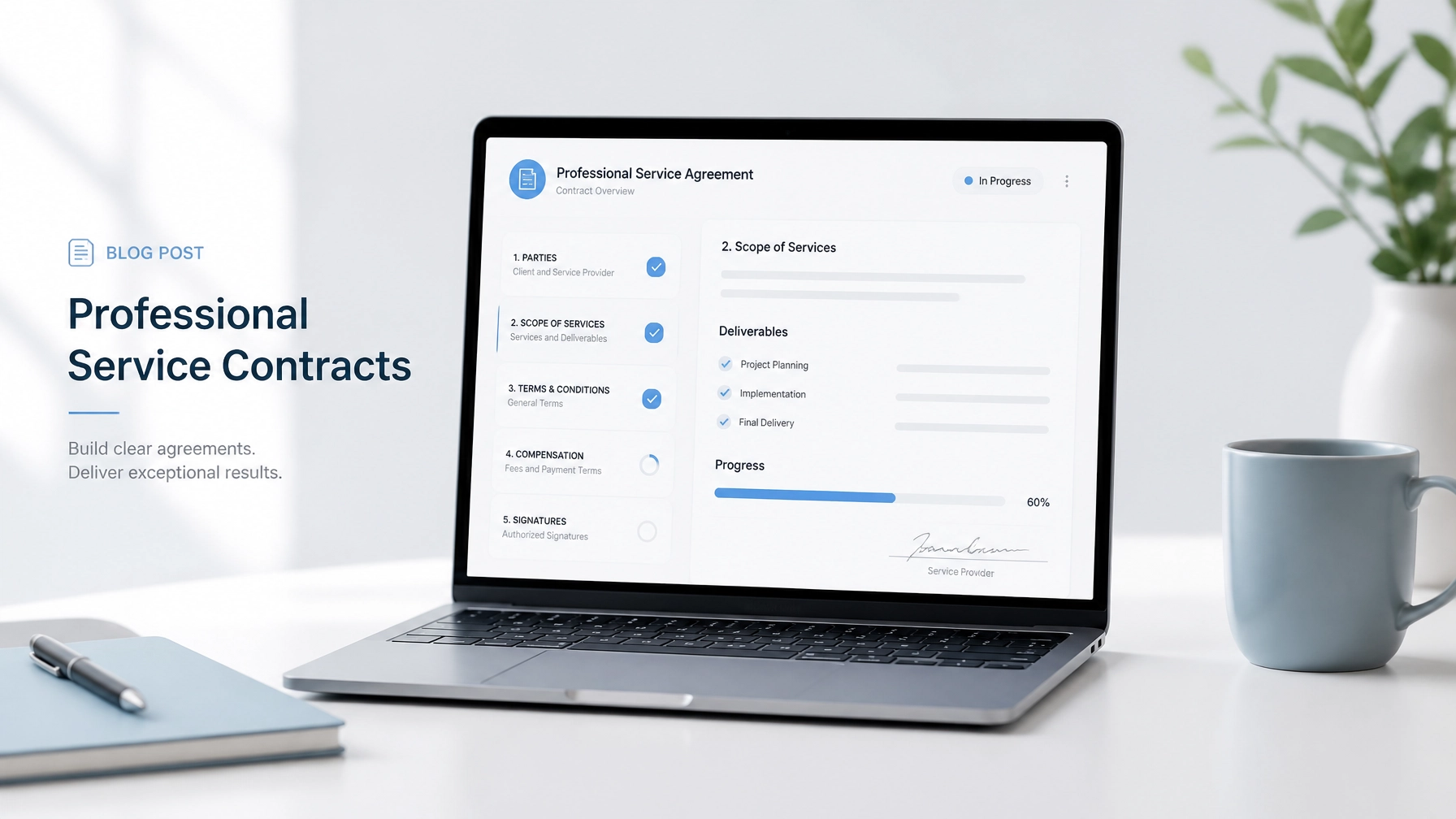
  • Consultants vs. Autonomous Assets: Which Is Better For Your Independent Contractor Agreement?

    Professional Service Contracts are the single most important line of defense for the modern independent professional. Whether you are a software developer in London or a consultant in New York, the document you sign today dictates your stress levels six months from now. For decades, the gold standard was to hire a consultant or a high-priced lawyer to draft these agreements. But the game has changed. The rise of Autonomous Digital Assets: intelligent, self-generating software tools: is making the traditional consulting model look like a relic of the industrial age.

    At GHW Digital, we don’t just build apps; we construct protocols. We believe that professional protection should be a system, not a conversation. When you're choosing between a human consultant and an autonomous asset for your independent contractor agreement, you aren't just choosing a service: you're choosing between a slow, manual process and a hardened, digital shield.

    The High Cost of Manual "Professional Service Contracts"

    The traditional method of securing Professional Service Contracts involves back-and-forth emails, expensive hourly rates, and the inevitable "human factor." You hire a consultant to ensure you're protected, but humans are prone to fatigue, oversight, and bias.

    1. Speed Kills (Margins): A consultant takes days to return a draft. In that time, the project momentum stalls, or worse, you start work without a signed agreement: a cardinal sin in the freelance community.
    2. Inconsistency: Unless you pay for the most elite firms, the quality of a manual contract often depends on how much coffee your consultant had that morning.
    3. Revenue Leakage: Consultants often charge for the "discovery" phase: the time spent interviewing you. This is an administrative tax on your expertise.

    Autonomous assets, like those we explore in our Ideas Area, eliminate these friction points. They don't have bad days. They don't charge for discovery. They interview you via an intelligent interface, detect risks in real-time, and generate custom-engineered solutions in minutes.

    Abstract representation of digital speed and professional efficiency with blue light trails

    Hardened Protection: Why Software Wins the Logic War

    When you use an autonomous asset to generate Professional Service Contracts, you are leveraging a "Digital Architect." This isn't a static template; it's a logic-driven engine. Tools like ScopeGuard Elite are designed to act as active guardians of your time and profit.

    Lock in Boundaries

    Human consultants often use "best effort" language that leaves room for interpretation. Autonomous assets use "hardened clauses." By forcing the user to define the exact parameters of the engagement during the digital interview, the software ensures that there is no "drift." If it isn’t in the code of the contract, it doesn’t exist in the project.

    Detect Risks Instantly

    A consultant might miss a conflicting clause buried in a 40-page Master Service Agreement (MSA). An autonomous asset is built to scan for these contradictions. It doesn't "read": it analyzes. It identifies where your liability is exposed and suggests a protocol to fix it before you hit "export."

    Stop the "Scope Creep" Disease

    Scope creep is the silent killer of margins for independent professionals. It starts with "just one small change" and ends with you working for free. Traditional Professional Service Contracts drafted by consultants often fail to provide a mechanism for managing this creep in real-time.

    Our approach at GHW Digital is to build tools that function as a shield. For example, our Scope Sentry concept is designed to evaluate new customer requests against your existing contract automatically. Instead of an emotional, awkward conversation with a client, the asset provides a neutral, logic-based response.

    Action-Benefit: Neutralize Emotion. Using an autonomous asset removes the "nice guy" tax. The software provides the boundary; you simply enforce the protocol.

    A sleek minimalist software interface showing contract boundaries and risk detection

    The Consultant Trap: When to Still Use a Human

    We aren't saying consultants are useless. If you are merging two multi-national corporations with complex tax implications across five jurisdictions, you need a room full of expensive lawyers. However, for 95% of independent professionals, hiring a consultant for Professional Service Contracts is like hiring an architect to help you put up a shelf. It’s overkill, it’s overpriced, and it’s unnecessary.

    Elite software tools now handle the "bespoke" elements that used to be the domain of humans. By answering a series of targeted questions, the asset can tailor the contract to your specific niche: whether you’re a developer, a wedding photographer, or a marketing agency owner.

    Leverage the Protocol, Not the Person

    The shift toward autonomous assets is about leverage. When you hire a person, you are buying their time. When you use a GHW Digital asset, you are leveraging our systemic expertise. We build "Autonomous Digital Assets" to democratize access to elite professional protection. We believe that a freelancer shouldn't have to choose between a $300/hour lawyer and a flimsy, free template found on a random blog.

    Professional Service Contracts should be:

    • Systemic: Part of your onboarding workflow.
    • Minimalist: Stripped of "legalese" that serves no purpose other than to confuse.
    • High-Value: Designed to protect your most precious asset: your time.

    You can see how we are building these future tools by visiting our Product Roadmap. We are constantly iterating on how to make these assets faster, sharper, and more protective.

    A minimalist digital shield symbol in light blue on a white background

    Stop Negotiating with Your Own Profit

    Every minute you spend debating terms with a consultant is a minute you aren't billing for your actual craft. Every dollar you spend on "custom" drafting is a dollar taken directly from your profit margin.

    The era of manual, slow-moving Professional Service Contracts is ending. The "Digital Architect" era is here. By moving your agreements to an autonomous asset, you aren't just saving money: you're installing a permanent guardian for your business. You are moving from a position of vulnerability to a position of systemic strength.

    If you have a specific pain point in your business: a "leaking revenue" hole that needs a digital plug: tell us about it in our Ideas Area. We read every submission. We might not build every tool, but if your problem represents a systemic risk for the freelance community, we’ll build the protocol to fix it.

    Stop acting like a victim of administrative chaos. Lock in your boundaries. Protect your assets. Move to the protocol.

    Powered by GHW Digital (Company No: 16834250). This document is an automated draft for business organization purposes only. It does not constitute legal advice. GHW Digital accepts no liability for disputes, financial loss, or enforceability. Users must consult a qualified professional in their jurisdiction before signing.

  • Wedding Supplier Contracts: Elite Protection Against Massive Red Flags

    Wedding Supplier Contracts: Elite Protection Against Massive Red Flags

    Wedding Supplier Contracts are the only barrier between your dream day and a financial disaster. For the modern couple, planning a wedding is less about romance and more about managing a high-stakes logistics project involving dozens of external vendors. Each vendor brings their own agreement, and most are designed with one goal: protecting the vendor, not you.

    When you are signing off on five-figure sums for venues, catering, and photography, "trust" is not a strategy. You need leverage. You need a protocol that identifies vulnerabilities before they become liabilities. At GHW Digital, we build tools like Vow Shield to ensure that your big day isn't compromised by sloppy paperwork or predatory clauses.

    Here are the five urgent red flags you must identify to protect your interests and ensure service delivery.

    Red Flag 1: Vague Deliverables in Wedding Supplier Contracts

    The most common way couples lose leverage is through ambiguity. If a contract says "Photography services for 8 hours," you have no guarantee of quality, quantity, or specific outcomes. This is a massive opening for "moving goalposts" where the vendor does the bare minimum because the contract allows it.

    The Action-Benefit: Demand a granular Scope of Work (SOW). A watertight contract should specify the exact number of staff, the specific equipment to be used, and the precise timeline for delivery. When Wedding Supplier Contracts are vague, the risk is entirely on you.

    What to look for:

    • Undefined Quantities: "Photos" instead of "Minimum 500 high-resolution edited images."
    • Generic Roles: "A photographer" instead of naming the specific lead professional you hired.
    • Missing Timelines: No mention of when the final product will be delivered.

    Identifying red flags in a digital contract interface

    Red Flag 2: One-Sided Force Majeure Clauses

    A Force Majeure clause is supposed to protect both parties from "Acts of God." However, many Wedding Supplier Contracts use this clause as a trap. If the vendor can cancel due to "business hardship" or "staffing issues" and keep your deposit, you aren't just unlucky: you're being exploited.

    The Action-Benefit: Align the risk. Ensure that if the vendor cannot perform: regardless of the reason: your payments are either refunded or transferred to a new date without penalty. According to Bridebook's industry standards, a fair contract must provide a clear path for the client in the event of vendor non-performance.

    The Protocol:

    • Narrow the Scope: Limit "Force Majeure" to true emergencies like natural disasters or government mandates.
    • Reciprocity: If they can cancel, you must have an equivalent right to a refund.

    Red Flag 3: Unlimited Substitution of Staff

    You spent weeks vetting a specific florist or cinematographer because of their unique style. If your Wedding Supplier Contracts allow them to "substitute personnel at their discretion," you might end up with a junior assistant on the most important day of your life while paying premium rates.

    The Action-Benefit: Lock in the talent. Your contract should state that the lead professional is the one you interviewed. If a substitution is necessary due to an actual emergency, you should have the right to approve the replacement or terminate the agreement for a full refund.

    Critical indicators:

    • The "Agency" Clause: Language that suggests they are a booking agent rather than the service provider.
    • Missing Names: The contract lists the company but not the specific person performing the work.

    Vow Shield app interface showing secured contract status

    Red Flag 4: Hidden Fees and Ambiguous Pricing

    Budget "creep" kills margins and ruins the planning experience. Some Wedding Supplier Contracts include open-ended clauses allowing vendors to increase prices due to "inflation" or "supply chain shifts" after the deposit is paid. Others hide "service charges" and "travel fees" in the fine print.

    The Action-Benefit: Calculate the total cost of ownership. Never sign a contract that doesn't have a final, all-in price. If there are variable costs (like overtime), they must be capped and clearly defined.

    Watch out for:

    • Variable Tax: Price quotes that don't include VAT or local taxes.
    • The "Overtime" Trap: Outrageous hourly rates that kick in the second the clock strikes 10 PM.
    • Admin Fees: Arbitrary charges for "processing" or "coordination" that weren't in the initial quote.

    Red Flag 5: No Clear Refund or Dispute Resolution Path

    When things go wrong: and in complex events, they often do: you need a pre-defined protocol for resolution. If your Wedding Supplier Contracts state that "all payments are non-refundable under any circumstances," the vendor has zero incentive to fix a mistake.

    The Action-Benefit: Secure your investment. A professional contract should include a tiered refund policy based on how far out the cancellation occurs and a specific process for handling disputes (such as mediation). You are paying for a result, not just a promise.

    Vow Shield Strategy:
    We recommend using an "Autonomous Digital Asset" like Vow Shield to audit your agreements. By running your contracts through a systemic check, you can detect these red flags in seconds rather than hours. We are constantly looking for ways to improve these tools; if you have a specific problem you've faced, tell us at our Ideas Area and we might just build a solution for it.

    Minimalist protective shield representing digital legal security

    Conclusion: Take Control of Your Professional Protection

    Your wedding is a series of business transactions. Treating it with the same rigor as a corporate merger isn't "un-romantic": it's responsible. Wedding Supplier Contracts are the foundation of your event's security. If a vendor is defensive or rude when you ask for clarity, that is the ultimate red flag. Professionalism is marked by transparency, not evasion.

    Don't let "standard industry practice" be an excuse for poor protection. Use the tools available to you, verify every clause, and never sign until you are the one being shielded. For more insights on how we are automating professional protection, explore our latest development ideas.

    Stop being a victim of the fine print. Secure your assets. Lock in your protection.

    Powered by GHW Digital (Company No: 16834250). This document is an automated draft for business organization purposes only. It does not constitute legal advice. GHW Digital accepts no liability for disputes, financial loss, or enforceability. Users must consult a qualified professional in their jurisdiction before signing.

  • Professional Service Contracts: The Ultimate Elite Protection Strategy

    Professional Service Contracts: The Ultimate Elite Protection Strategy

    Professional Service Contracts are the foundation of any resilient freelance business. For too long, independent professionals have been forced to choose between two losing scenarios: paying thousands in legal fees or operating with zero protection. The traditional legal model is broken. It is slow, reactive, and prohibitively expensive. In the modern economy, "Elite Protection" no longer means having a lawyer on retainer; it means deploying autonomous digital systems that act as your 24/7 guardian.

    At GHW Digital, we don’t believe in "side hustles" or "gigs." We believe in independent professionals building high-value assets. To protect those assets, you need a protocol, not a person. You need a system that defines boundaries, secures payments, and locks in scope before a single pixel is moved or a line of code is written.

    Why Professional Service Contracts Beat Traditional Lawyers

    Traditional legal advice is a leak in your revenue. Every hour spent debating terms with a consultant who bills by the minute is an hour you aren’t creating value for your clients. Professional Service Contracts generated by automated systems provide a level of speed and precision that human lawyers simply cannot match.

    Action-Benefit: Automate to Accelerate

    • Instant Deployment: Generate watertight agreements in minutes, not weeks.
    • Standardized Security: Use industry-proven clauses that eliminate "moving goalposts."
    • Cost Elimination: Replace $300/hour legal bills with efficient, scalable software.

    When you use automated systems, you aren't just saving money; you are professionalizing your entire workflow. You signal to your clients that you are a "Digital Architect": someone who operates with systemic precision. This isn't about being "cheap"; it's about being elite. You can see how we are evolving these concepts in our Ideas Area.

    Minimalist illustration of a professional service contract as a protective barrier

    Automating Your Professional Service Contracts for Speed

    Speed is a competitive advantage. If a client is ready to sign, every hour of delay is a risk to the deal. By utilizing Professional Service Contracts through tools like ScopeGuard Elite, you remove the friction of the onboarding process.

    The "Self-Help Tool" model is the future. Instead of a lawyer interviewing you, our tools interview you. They detect risks you haven't considered, suggest standard industry practices, and generate a custom-engineered solution in real-time. This is about leverage. According to reports in Forbes, the shift toward automated professional tools is saving small businesses billions in administrative overhead.

    Action-Benefit: Lockdown Your Revenue

    • Scope Sentry: Automatically track and evaluate new customer requests against your original agreement.
    • Risk Detection: Identify one-sided clauses that could lead to financial loss.
    • Audit Trails: Maintain a single source of truth for every signature and amendment.

    By shifting to Professional Service Contracts that are managed by software, you gain a level of visibility that paper contracts can't offer. You know who signed, when they signed, and exactly what they agreed to, all from a centralized dashboard.

    Sleek digital interface showing automated contract drafting

    The Future of Professional Service Contracts and Elite Automation

    The old world relied on "trust" and "handshakes." The new world relies on protocols and code. Professional Service Contracts are no longer static documents; they are active components of your business machine. When your contract is part of an automated system, it can trigger invoices, set milestones, and even handle initial disputes through predefined logic.

    We are building a suite of "Autonomous Digital Assets" designed to solve high-value professional problems. Whether it's protecting a service agreement or securing a wedding supplier contract, the philosophy remains the same: democratize access to elite protection. We believe that professional protection shouldn't be a luxury for the few; it should be a standard for the many.

    If you have a specific pain point in your business that needs an automated solution, we want to hear about it. Visit our Ideas Area to submit your thoughts. We read every single idea, and while we can't build them all, they directly influence our development roadmap.

    Protecting Your Time with Professional Service Contracts

    Your time is your most valuable asset. Every minute you spend manually drafting an agreement or chasing a signature is time you are losing. Professional Service Contracts are designed to give you that time back.

    Strategic research from the Harvard Business Review suggests that automation in professional services is not just about efficiency: it's about "cognitive offloading." By offloading the legal and administrative "defense" to a system, you free up your brain to focus on the "offense": your craft and your growth.

    Action-Benefit: Secure Your Peace of Mind

    • Minimalist Workflow: Get in, get protected, and get back to work.
    • Global Scalability: Use templates designed to meet professional standards across jurisdictions.
    • Fairness First: Create agreements that respect both your boundaries and your client's needs.

    Stop operating in the dark. Stop hoping for the best. Stop paying for lawyers when you can deploy a system. Professional Service Contracts are the only way to ensure your freelance community stays protected in a rapidly shifting economy.

    A minimalist document icon with a checkmark representing peace of mind

    Conclusion: Stop the Leaks

    Revenue leaks happen when boundaries are blurry. Scope creep kills margins. Unpaid invoices destroy cash flow. The common denominator is a lack of professional service contracts. By moving to an automated system, you aren't just buying software; you are installing a shield.

    Don't wait for a dispute to realize you need protection. Secure your business today with the elite systems built by GHW Digital. Visit our Ideas Area to see what we're working on next or to help us shape the future of independent professional protection.

    Stop reacting. Start building.

    Powered by GHW Digital (Company No: 16834250). This document is an automated draft for business organization purposes only. It does not constitute legal advice. GHW Digital accepts no liability for disputes, financial loss, or enforceability. Users must consult a qualified professional in their jurisdiction before signing.

  • Wedding Supplier Contracts: The Elite Protocol for Crucial Couple Protection

    Wedding Supplier Contracts: The Elite Protocol for Crucial Couple Protection

    Wedding Supplier Contracts are often the most overlooked part of wedding planning, yet they are the only thing standing between a dream event and a financial catastrophe. Most couples walk into a vendor meeting with a vision of flowers and photography, but they leave with a signature on a document designed entirely to protect the business, not the customer.

    The industry standard is lopsided. Vendors use templates honed over years to limit their liability, lock in your deposit, and leave you with minimal recourse if things go sideways. At GHW Digital, we view these agreements not as "formalities," but as critical system protocols that require precise calibration. If the protocol is weak, the entire event is at risk.

    The Moving Goalposts of Vendor Agreements

    When you sign a standard agreement, you are often agreeing to "moving goalposts." A photographer might promise "full day coverage," but the contract defines that as 8 hours, with a massive hourly rate for every minute over. A caterer might quote a price today, but a hidden clause allows them to hike fees based on "market fluctuations" thirty days before the wedding.

    Abstract geometric lines shifting, representing moving goalposts and unexpected changes

    Identify Red Flags in Wedding Supplier Contracts

    To protect your investment, you must learn to spot the systemic weaknesses in a vendor's proposal. Standard industry practice suggests that a contract should be a mutual shield, but often it acts as a trap.

    • The "Non-Refundable" Blanket: If a contract states that every penny paid is non-refundable regardless of who cancels, you are in a high-risk position. A fair protocol ensures that if the vendor fails to perform, your capital is returned.
    • Vague Service Scopes: Phrases like "standard setup" or "typical decor" are invitations for disappointment. Without specific quantities, hours, and staff counts, you have no leverage when the reality doesn't match the Pinterest board.
    • One-Sided Force Majeure: Many vendors updated their contracts post-2020 to ensure they keep your money even if a "government act" prevents the wedding. You need a clause that mandates a reschedule or a partial refund in these scenarios.

    Protecting the Couple: The Vow Shield Advantage

    We built Vow Shield because the modern independent professional: and the couples they serve: deserve better than predatory templates. Vow Shield is an Autonomous Digital Asset designed to act as your digital architect. It doesn't just "check" a contract; it reconstructs the power dynamic.

    A digital core representing an autonomous asset with precise data connections

    Deploy Protection Through Automation

    Unlike a static PDF, our tools interview you to understand the specific risks of your venue, your budget, and your timeline. It then generates a customized addendum to your Wedding Supplier Contracts that levels the playing field.

    • Lock In Pricing: Ensure that the quote you sign today is the price you pay tomorrow. No "inflation adjustments" or "surprise service fees."
    • Track Deliverables: We help you define "Service Level Agreements" for your DJ, florist, and planner so everyone knows exactly what constitutes a successful delivery.
    • Calculate Risk: Vow Shield identifies the financial exposure in your cancellation clauses and suggests alternative wording to cap your losses.

    Ensuring Service Delivery and Accountability

    A contract is only as good as its enforceability. If your videographer doesn't show up, a "sorry" doesn't bring back the memories. Your Wedding Supplier Contracts must include a failure-to-perform protocol.

    According to industry leaders at The Knot, having a backup plan in writing is non-negotiable. This means the contract should specify who the "replacement" is and guarantee they have the same equipment and experience level as the lead professional.

    Action-Benefit Strategies for Couple Security

    1. Mandate Insurance Proof: Never hire a vendor who cannot produce a certificate of liability insurance. This protects you from being sued if a guest trips over a tripod.
    2. Verify Substitution Rights: If a photographer is allowed to send a "substitute," ensure you have the right to veto that choice if their portfolio doesn't meet your standards.
    3. Define Dispute Resolution: Don't get dragged into an expensive court battle. Insist on a mediation clause that keeps costs low and resolutions fast.

    Professional resources like Brides highlight that clear communication is the foundation of any wedding partnership. However, at GHW Digital, we believe that clear communication must be backed by a watertight legal system.

    Secure Your Competitive Advantage

    The wedding industry is a marketplace where the prepared win and the uninformed pay the price. By using tools like Vow Shield, you stop being a "client" and start being a "partner" with leverage.

    We are constantly evolving our software to meet the needs of the modern independent professional. If you have a specific problem that needs an automated solution, we want to hear it. Visit our GHW Ideas Area to submit your concepts. We read every entry, and your idea might just become the next shield we build.

    A clean, professional workspace symbolizing the protection of the independent professional

    Stop leaving your wedding day to chance. Stop signing documents you don't fully control. It is time to treat your Wedding Supplier Contracts with the same precision you apply to your career. Deploy Vow Shield and protect what matters.

    Powered by GHW Digital (Company No: 16834250). This document is an automated draft for business organization purposes only. It does not constitute legal advice. GHW Digital accepts no liability for disputes, financial loss, or enforceability. Users must consult a qualified professional in their jurisdiction before signing.

  • Professional Service Contracts: The Ultimate Elite System for Modern Professionals

    Professional Service Contracts: The Ultimate Elite System for Modern Professionals

    Professional Service Contracts are the invisible architecture of every successful independent business. If you are a freelancer, solopreneur, or agency owner, your contract is either a watertight shield or a sieve through which your time and profit leak. For too long, the only options were hiring a $300-an-hour lawyer to draft a bespoke document or crossing your fingers with a generic "side hustle" template. Neither works for the modern independent professional who values speed, autonomy, and absolute protection.

    At GHW Digital, we believe in a better way: Autonomous Digital Assets. Systems win because they don't sleep, they don't bill by the hour, and they don't forget to protect you against the "moving goalposts" of a difficult client. This is the new protocol for professional security.

    The Lawyer Paradox: Why Traditional Legal Advice Fails Modern Speed

    Lawyers are trained to look backward at precedents. While their expertise is valuable for complex, multi-million dollar mergers, they are often a bottleneck for the agile independent professional. When you need to close a deal today, waiting three days for a legal review is a liability.

    Traditional lawyers create friction. They communicate in "legalese" that alienates your clients and adds layers of administrative chaos to your workflow. Professional Service Contracts should be tools that facilitate business, not hurdles that slow it down. By switching from manual legal drafting to automated systems, you replace human error with systemic precision.

    Lock in Boundaries: Automating Your Defense

    The primary role of Professional Service Contracts is to define exactly where your work starts and: more importantly: where it ends. Without a clear system, you fall victim to the silent killer of margins: Scope Creep.

    Our tool, ScopeGuard Elite, is designed to be your digital architect. It doesn't just provide a draft; it interviews you, detects hidden risks in your project scope, and generates custom-engineered solutions in real-time. It acts as an active consultant that locks in your boundaries and ensures you get paid for every ounce of value you deliver.

    Abstract shield icon protecting a digital document with minimalist blue accents

    Professional Service Contracts: Systems vs. Human Consultants

    When you compare a software system to a human consultant, the "systemic" advantage becomes undeniable. Here is why the "Digital Architect" approach is superior for the modern professional:

    • Precision Over Guesswork: Systems use logic-based protocols to ensure every clause is aligned. Humans can get tired and miss a crucial non-solicitation or late-payment fee.
    • Instant Iteration: Need to update a clause? A system does it in seconds across all your assets. A consultant requires a new meeting and a new invoice.
    • Cost-Effective Leverage: High-value protection shouldn't be reserved for the elite. Systems democratize access to top-tier professional protection for free or low cost.
    • Consistency: Every client receives the same high-standard experience, signaling that you are an elite operator who values systemic organization.

    For those looking for more strategic insights on how to build these types of systems, we recommend exploring our Innovation Ideas page, where we detail the evolution of digital autonomy.

    Action-Benefit: Protect Your Time with ScopeGuard Elite

    ScopeGuard Elite isn't a template; it's a protocol. It's designed for the "Modern Independent Professional" who needs a watertight result in three minutes, not three weeks.

    Detect Risks Automatically: The system identifies common pitfalls like "vague deliverables" or "unlimited revisions" and prompts you to fix them before the contract is sent. This proactive approach is what separates a professional from an amateur.

    Generate Custom Solutions: Every project is unique. A static PDF can't adapt to a software developer's needs versus a graphic designer's. Our systems generate Professional Service Contracts that are engineered for your specific industry requirements.

    Secure Your Revenue: By integrating payment milestones and late-fee triggers directly into the logic of the contract, you ensure that your financial interests are protected by design, not by chance.

    A sleek minimalist dashboard representing contract automation and progress tracking

    The Protocol of Fairness: Aligning with Clients

    A stern, professional stance regarding boundaries actually builds trust. Clients respect professionals who have clear systems. It signals that you are organized, reliable, and serious about your craft. Using Professional Service Contracts created by an autonomous system shows that you prioritize "alignment" and "respect" for both parties' time.

    We are moving away from emotional pleading for payments and toward a systemic reality where the contract handles the heavy lifting. This is how you stop being a "freelancer" and start being a business owner with assets.

    Why "Free" Software Often Beats "Paid" Consultants

    It sounds counterintuitive, but the software we build at GHW Digital provides a level of consistency that a busy consultant simply cannot match. We leverage technology to solve high-value professional problems without the overhead of a traditional firm. This allows us to provide elite tools that protect you from legal exposure and administrative chaos at a fraction of the cost.

    According to industry leaders at Forbes, the move toward automated professional services is accelerating. The professionals who adopt these systems early will have a significant competitive advantage over those still stuck in the "billable hour" trap.

    Stop the Revenue Leaks Today

    Every project you start without a watertight system is a risk. You are essentially leaving your front door unlocked and hoping for the best. Professional Service Contracts are the locks on your business’s doors.

    Whether you are using ScopeGuard Elite or exploring our other Digital Assets, the goal is the same: absolute autonomy. You shouldn't have to be a lawyer to be protected. You just need to use the right systems.

    Minimalist contract document with a sharp blue checkmark symbolizing a completed secure agreement

    Final Protocol: Systems Over Serendipity

    The era of "winging it" is over. The "Freelance Community" is evolving, and the survivors will be those who treat their business like an architect treats a skyscraper: with precise blueprints and systemic integrity. Professional Service Contracts are your blueprints.

    Don't let scope creep kill your margins or unpaid invoices drain your energy. Transition to a system that works for you 24/7. Stop the negative behavior of manual drafting and start securing your competitive advantage today.

    Visit our Project Ideas to see how we are redefining the digital professional landscape, or get started with ScopeGuard Elite right now.

    Powered by GHW Digital (Company No: 16834250). This document is an automated draft for business organization purposes only. It does not constitute legal advice. GHW Digital accepts no liability for disputes, financial loss, or enforceability. Users must consult a qualified professional in their jurisdiction before signing.

  • Wedding Supplier Contracts: The Elite Guide to Crucial Protection for Couples

    Wedding Supplier Contracts: The Elite Guide to Crucial Protection for Couples

    Wedding Supplier Contracts are the only mechanism standing between your vision of a perfect day and a logistical nightmare. In the high-pressure environment of wedding planning, many couples focus on the aesthetics: the florals, the venue lighting, the catering menu: while overlooking the legal protocols that govern these transactions. This is a strategic error. When you hire a professional for your wedding, you are not just buying a service; you are entering into a high-stakes business arrangement. Without a watertight agreement, you are vulnerable to service failures, hidden costs, and the moving goalposts of "scope creep" in the event industry.

    At GHW Digital, we build Autonomous Digital Assets designed to provide elite professional protection. We believe that couples deserve the same level of systemic security that a major corporation enjoys. This guide is your protocol for navigating the complexities of vendor agreements, identifying red flags, and ensuring that every person you hire is legally bound to deliver exactly what they promised.

    Identifying Red Flags in Wedding Supplier Contracts

    The first step in protecting your investment is learning to read between the lines. Most vendors use standard templates designed to protect their business, not your interests. A "fair" contract should be a balanced shield for both parties, yet many are weighted heavily in favor of the supplier.

    Vague Deliverables. If a contract for "Wedding Photography" doesn't specify the number of hours, the number of photographers, and a clear deadline for the digital gallery, it is functionally useless. "Wedding Supplier Contracts" must be granular. "Flowers" is a concept; "15 centerpieces featuring white peonies and eucalyptus delivered by 10:00 AM" is a deliverable.

    One-Sided Cancellation. Look closely at the "Force Majeure" and cancellation clauses. If a vendor can cancel for "business hardship" or "staffing challenges" while retaining your non-refundable deposit, you are effectively financing their business risks. According to the Competition and Markets Authority (CMA), consumer protection law requires terms to be fair and balanced. Any clause that allows a vendor to walk away with your money without performing the service is a significant red flag.

    A minimalist blue and white illustration of a shield protecting intertwined wedding rings, symbolizing the protection offered by Wedding Supplier Contracts.

    Locking in Service Delivery with Vow Shield

    We recognized that most couples do not have the time or budget to hire a $300-an-hour lawyer to review every single vendor agreement. This is why we are developing Vow Shield. Unlike static templates, Vow Shield is an intelligent, autonomous tool that interviews you about your specific needs and evaluates your vendor’s terms in real-time.

    • Protect Your Timeline: Vow Shield identifies gaps in arrival and setup times that could lead to day-of chaos.
    • Lock in Pricing: It flags ambiguous language that allows vendors to add "travel fees" or "service charges" after the deposit is paid.
    • Track Deliverables: The tool ensures that every promise made during your consultation is codified into the final document.

    This isn't about being "difficult" with vendors; it is about alignment. A professional supplier who intends to deliver high-quality service will have no issue with a clear, specific contract. Resistance to clarity is, in itself, a red flag. If you have ideas for how we can make these tools even more effective for independent professionals and couples alike, we invite you to share them at our Ideas Area. We read every submission, as your feedback drives our development of these essential digital assets.

    The Danger of "Standard" Industry Practice

    Many vendors will attempt to brush off concerns by claiming their terms are "standard industry practice." In the world of Wedding Supplier Contracts, "standard" often translates to "unprotected for the client."

    Liability Caps. Many contracts attempt to limit the vendor’s liability to the amount paid. If a venue’s negligence causes a total cancellation of your $50,000 wedding, a refund of their $5,000 fee is insufficient. While liability insurance is a separate necessity, the contract should not waive your right to pursue fair compensation for gross negligence.

    Substitution Clauses. It is common for "Wedding Supplier Contracts" to include a clause allowing the vendor to substitute themselves for another professional. While contingencies are necessary for illness or emergencies, these clauses should be restricted. You are hiring a specific artist or lead planner for their expertise. A fair contract requires the substitute to have equivalent experience and grants you the right to approve that substitution.

    An abstract minimalist representation of a digital software interface on a tablet screen, showing how Vow Shield manages Wedding Supplier Contracts.

    Action-Benefit: How to Audit Your Agreements

    To ensure you are fully protected, follow this minimalist protocol for every agreement you sign.

    • Calculate the Total Exposure: Don't just look at the deposit. Add up the final balance, potential overtime fees, and travel costs. If the contract doesn't cap these, your budget is at risk.
    • Define the "No-Show" Protocol: Explicitly state what happens if the vendor fails to appear. A refund is the bare minimum; the contract should outline the vendor's responsibility to provide a vetted replacement.
    • Verify Insurance: Never assume a vendor is insured. Request a certificate of insurance (COI) and ensure it is referenced in the contract. This is a cornerstone of responsible event planning.
    • Audit for Ambiguity: Replace words like "reasonable," "approximate," and "standard" with hard numbers and specific dates.

    Why Generic Templates Fail Independent Professionals and Couples

    The internet is flooded with "free" wedding contract templates. These are often dangerous. They are usually drafted for a general jurisdiction and lack the systemic protections required for specific high-value services like photography, catering, or venue rental. They offer a false sense of security without providing the actual leverage needed when a dispute arises.

    Our approach at GHW Digital is different. We don't believe in templates; we believe in protocols. Our tools act as active consultants that adapt to your specific situation. By using an autonomous system like Vow Shield, you are moving away from "hope-based planning" and toward "asset-based protection."

    A minimalist close-up of a magnifying glass over a document, representing the scrutiny required for Wedding Supplier Contracts to detect red flags.

    Securing Your Competitive Advantage

    In the wedding industry, your "competitive advantage" as a couple is your ability to remain in control of your budget and your time. Wedding Supplier Contracts are the tools that allow you to exercise that control. By insisting on precision, fairness, and transparency, you signal to your vendors that you are a serious professional who values their work but will not tolerate mediocrity or ambiguity.

    If you find a recurring problem in your planning process that could be solved by a digital tool: perhaps an automated budget tracker or a vendor communication log: submit your concept to our Ideas Area. We are constantly looking for the next high-value professional problem to solve.

    Protect your day. Lock in your profit. Use a shield, not a template.

    Powered by GHW Digital (Company No: 16834250). This document is an automated draft for business organization purposes only. It does not constitute legal advice. GHW Digital accepts no liability for disputes, financial loss, or enforceability. Users must consult a qualified professional in their jurisdiction before signing.