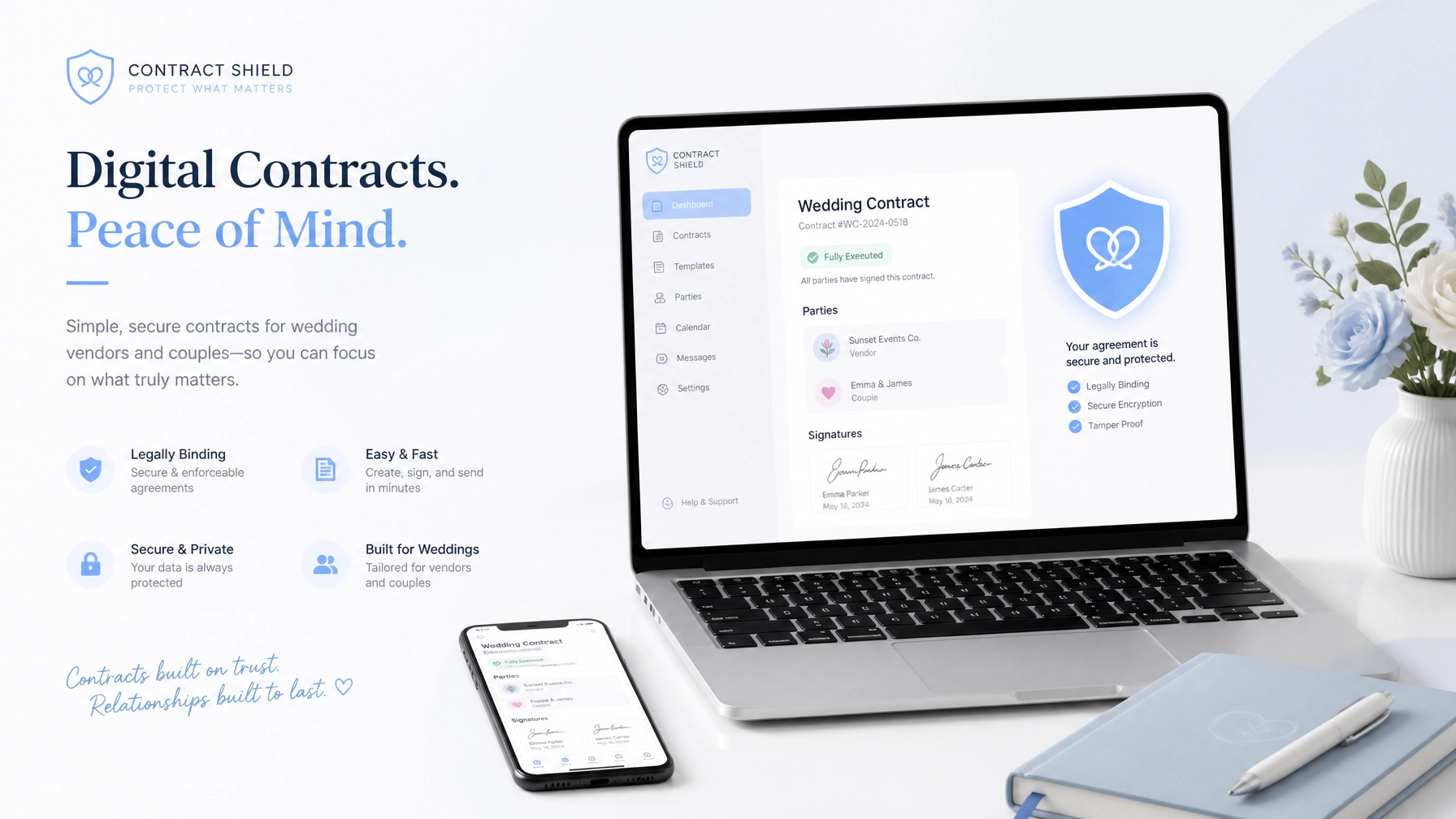
Wedding vendor contracts are the ultimate defense mechanism standing between your hard-earned capital and total financial exposure. When planning a wedding, couples often focus entirely on aesthetic details: floral arrangements, lighting design, and venue ambience: while treating legal paperwork as a mere formality. This oversight creates massive vulnerability. Standard vendor agreements are overwhelmingly drafted by supplier legal teams to protect the vendor, leaving couples exposed to moving goalposts, unrecoverable retainers, and zero accountability when things go wrong.
In the independent professional space, failing to secure your position is catastrophic. Just as freelancers rely on specialized protection protocols like those found on our GHW Digital Ideas hub, modern couples require high-grade digital architecture to neutralize risk. You cannot rely on blind trust or a handshake when tens of thousands of dollars are on the line.
Why Wedding Vendor Contracts Fail Couples
Most couples assume that signing any written agreement guarantees protection. In reality, standard industry contracts frequently strip away consumer rights and cement one-sided power dynamics. When a photographer cancels due to an emergency or a caterer fails to deliver agreed-upon minimums, a weak contract leaves you with no leverage and no recourse.
Industry data compiled by consumer watchdogs and resources like the Better Business Bureau reveals that thousands of wedding disputes arise annually strictly from ambiguous contract phrasing. Traditional agreements rely on vague language like "as-is delivery" or "reasonable efforts," which allows vendors to underperform without facing contractual penalties.
To explore more advanced systemic risk-management strategies, review our insights on GHW Digital Apps designed to automate elite professional defense.

Decoding Dangerous Clauses in Wedding Vendor Contracts
Protecting your wedding budget requires meticulous scrutiny of every line item. Hidden deep inside standard wedding vendor contracts, specific red flags consistently threaten your financial security:
- 100% Non-Refundable Retainers: Contracts that lock in all payments unconditionally: even if the vendor cancels or the event cannot proceed: are heavily weighted against you. Standard protection dictates balanced, tiered refund schedules.
- Vague Deliverables: Vague descriptions like "professional photography coverage" or "décor setup" without specific hours, quantities, and delivery timelines give vendors legal cover to deliver substandard work.
- Unilateral Cancellation Rights: Terms that permit the vendor to substitute junior staff or cancel with minimal notice while penalizing you for schedule modifications represent severe imbalances.
- Zero Liability Waivers: Clauses that completely absolve the vendor of negligence or equipment failure shift 100% of the operational risk onto the couple.
For broader consumer rights guidance and dispute mitigation frameworks, consult official oversight bodies such as USA.gov Consumer Protection.
Leveraging Vow Shield for Elite Wedding Vendor Contracts
Bridging the gap between vulnerable clients and sophisticated suppliers requires automated intelligence. This is where autonomous digital assets transform the landscape. Instead of spending hundreds of dollars an hour on legal counsel, modern couples can utilize intelligent drafting engines to lock in security.
Vow Shield acts as your active consultant. It interviews you, detects risk vectors in supplier paperwork, and generates custom-engineered protocols in real-time. By deploying advanced algorithmic analysis, wedding vendor contracts generated or audited through Vow Shield ensure absolute alignment, fairness, and uncompromising protection.
Discover more about how autonomous tooling democratizes professional defense by visiting our GHW Digital Ideas portal.

Auditing Your Wedding Vendor Contracts Before Signing
Taking control of your wedding preparations demands a systematic audit protocol. Before affixing your signature to any binding agreement, execute these four critical steps:
- Lock Down Scope and Timelines: Demand explicit parameters for every deliverable. Specify exact arrival times, operational hours, team sizes, and high-resolution output formats.
- Establish Balanced Payment Milestones: Reject front-loaded payment structures demanding 100% upfront. Insist on a standardized 25–50% retainer with remaining balances tied strictly to verified milestone delivery.
- Incorporate Robust Force Majeure Protocols: Ensure your agreement outlines equitable remedies: such as rescheduling options or partial refunds: in the event of extreme disruptions.
- Require Certificate of Insurance (COI): Verify that every professional vendor carries active liability insurance and lists your venue or names you as an additional insured party.
Securing your wedding vendor contracts safeguards your financial interests and eliminates administrative chaos, leaving you free to focus on the celebration itself.

Conclusion: Stop Leaking Revenue, Start Enforcing Protection
Moving goalposts, hidden administrative fees, and unbacked vendor promises do not belong in your wedding planning process. By recognizing high-stakes vulnerabilities and deploying automated legal shields, you replace uncertainty with absolute control.
Stop leaving your wedding budget exposed to outdated, one-sided paperwork. Explore our complete suite of intelligent assets and secure airtight wedding vendor contracts today via the GHW Digital Ideas collection.
Powered by GHW Digital (Company No: 16834250). This document is an automated draft for business organization purposes only. It does not constitute legal advice. GHW Digital accepts no liability for disputes, financial loss, or enforceability. Users must consult a qualified professional in their jurisdiction before signing.
Leave a Reply