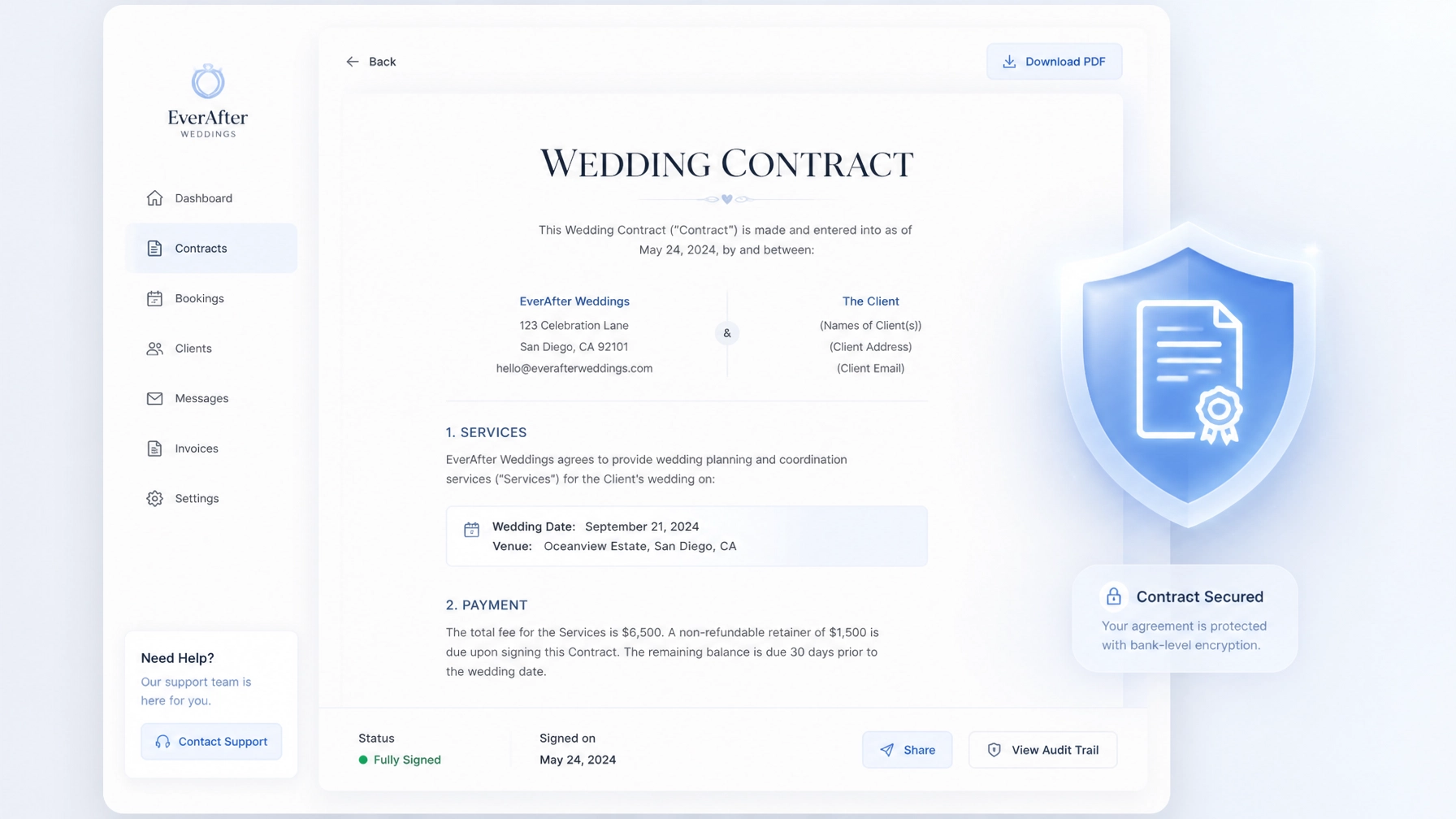
Wedding Supplier Contracts are the only thing standing between a perfect celebration and a financial catastrophe. In the high-stakes world of wedding planning, service providers often use "moving goalposts" to inflate costs or diminish service quality after the deposit is paid. For the modern couple, these agreements are not just pieces of paper; they are a vital defense mechanism designed to protect your time, your budget, and your sanity.
When you engage with a vendor, you aren't just buying a service; you are entering a systemic protocol. If that protocol is flawed, you are the one who pays the price. Most couples treat these documents as a formality, but professional independent operators know that an unvetted agreement is a liability. You need an elite strategy to identify red flags before they become expensive regrets.
Lock in Specifics to Stop Scope Creep
The most common way wedding margins are killed is through vague deliverables. A contract that simply states "Wedding Photography" or "Floral Arrangements" is a leaking bucket. Without specific metrics: hours of coverage, number of edited images, or exact floral stems: you are essentially giving a blank check to the vendor.
Action-Benefit: Define exact deliverables to prevent service degradation.
By demanding a granular breakdown in your Wedding Supplier Contracts, you lock in the value you are paying for. If a photographer promises "all-day coverage," ensure the contract specifies exactly what that means (e.g., 8:00 AM to 11:00 PM). If it isn't quantified, it doesn't exist. You can explore more ways to systemize your professional and personal life at GHW-Digital Ideas.

Insulate Your Investment Against Force Majeure
"Acts of God" shouldn't be an act of theft. Many standard industry agreements include a Force Majeure clause that heavily favors the vendor. These clauses often state that if an event is cancelled due to external circumstances, the vendor keeps the entire deposit and is released from all obligations.
Action-Benefit: Negotiate reciprocal protection to secure your capital.
You must ensure that your Wedding Supplier Contracts include a fair redistribution of risk. If a vendor cannot perform due to a strike, weather event, or pandemic, the protocol should dictate a partial refund or a credit toward a future date. Do not accept a one-sided shield; demand a mutual one. Professional resources like Zola’s Contract Guide highlight that these clauses are often the first place couples get exploited during unforeseen disruptions.
Vow Guard Elite: Deploying the Digital Architect
At GHW Digital, we believe that elite professional protection should be automated. This is why we developed Vow Guard Elite (often referred to by our community as the Vow Shield). This autonomous digital asset acts as your personal consultant, interviewing you about your vendor needs and generating custom-engineered solutions to secure your agreements in real-time.
Action-Benefit: Use automated systems to replace expensive legal consultation.
Instead of spending $300 an hour for a lawyer to review a catering agreement, Vow Guard Elite detects risks and suggests industry-standard protection strategies instantly. It is a systemic way to ensure your Wedding Supplier Contracts are watertight. This tool follows our core philosophy: democratizing access to high-value professional safeguards. Check out our full list of assets at GHW-Digital.

Enforce Quality Standards to Prevent Substitution
The wedding industry is notorious for the "bait and switch." A caterer might promise premium sea bass but serve a cheaper alternative, citing "market availability." Without a quality enforcement clause, you have no leverage to recover the difference in value.
Action-Benefit: Mandate price adjustments for substitutions to maintain project integrity.
Your Wedding Supplier Contracts must state that while substitutions are sometimes necessary, they must be of equal or greater value. If a vendor uses a cheaper component, the contract should trigger an automatic price reduction. This isn't about being difficult; it's about maintaining a fair exchange of value. For a deep dive into common vendor mistakes to watch for, refer to Baywood Weddings' analysis.
Secure Your Deposit with Termination Rights
A contract without a clear exit strategy is a trap. If a vendor stops communicating or fails to meet early milestones, you need the right to terminate the agreement without losing your entire investment.
Action-Benefit: Establish performance milestones to ensure accountability.
We suggest including a "termination for cause" clause in all your Wedding Supplier Contracts. This clause should define what constitutes a breach of service: such as a failure to respond within 72 hours or missing a tasting session: and outline the refund protocol. When you hold the lever of termination, the vendor is incentivized to maintain a high standard of service delivery.

Systemic Oversight of Payment Schedules
Massive financial losses occur when payment schedules are front-loaded. If you pay 90% of the fee six months before the wedding, the vendor has zero incentive to prioritize your event. A professional payment protocol follows a "Value-for-Value" structure.
Action-Benefit: Structure payments around milestones to maintain leverage.
A typical protective schedule might look like this:
- Retainer: 25% to lock in the date.
- Milestone 1: 25% after the final design or menu is approved.
- Final Payment: 50% delivered 48 hours before the event.
This ensures that the largest portion of your capital is only released once the vendor has demonstrated consistent performance. You can find more templates for professional organization at GHW-Digital Ideas.
The Digital Signature: Locking in the Protocol
In the modern freelance community, a handshake is a liability. Every single communication, amendment, and agreement must be captured in your Wedding Supplier Contracts. If it isn't in the digital record, it didn't happen.
Action-Benefit: Use digital signatures to create an immutable audit trail.
Digital signatures are not just convenient; they provide a timestamped, legally recognized record of exactly what was agreed upon and when. This prevents vendors from claiming they "didn't see" an email or "don't remember" a verbal promise. It is the final step in securing your autonomous digital asset: your wedding plan.

Stop the Leak: Your Competitive Advantage
The wedding industry is designed to overwhelm you with emotion so you ignore the logistics. By adopting the mindset of a Digital Architect, you treat your wedding as a high-value asset that requires systemic protection. Do not settle for "standard" agreements that leave you vulnerable.
Wedding Supplier Contracts are the shield you need to protect your future. Don't wait for a crisis to realize your contract is full of holes. Take control now, deploy tools like Vow Guard Elite, and ensure your big day is built on a foundation of precision and professional leverage.
Stop reacting to vendor problems. Start preventing them. Visit GHW-Digital to see how we can help you systemize your success.
Powered by GHW Digital (Company No: 16834250). This document is an automated draft for business organization purposes only. It does not constitute legal advice. GHW Digital accepts no liability for disputes, financial loss, or enforceability. Users must consult a qualified professional in their jurisdiction before signing.
Leave a Reply