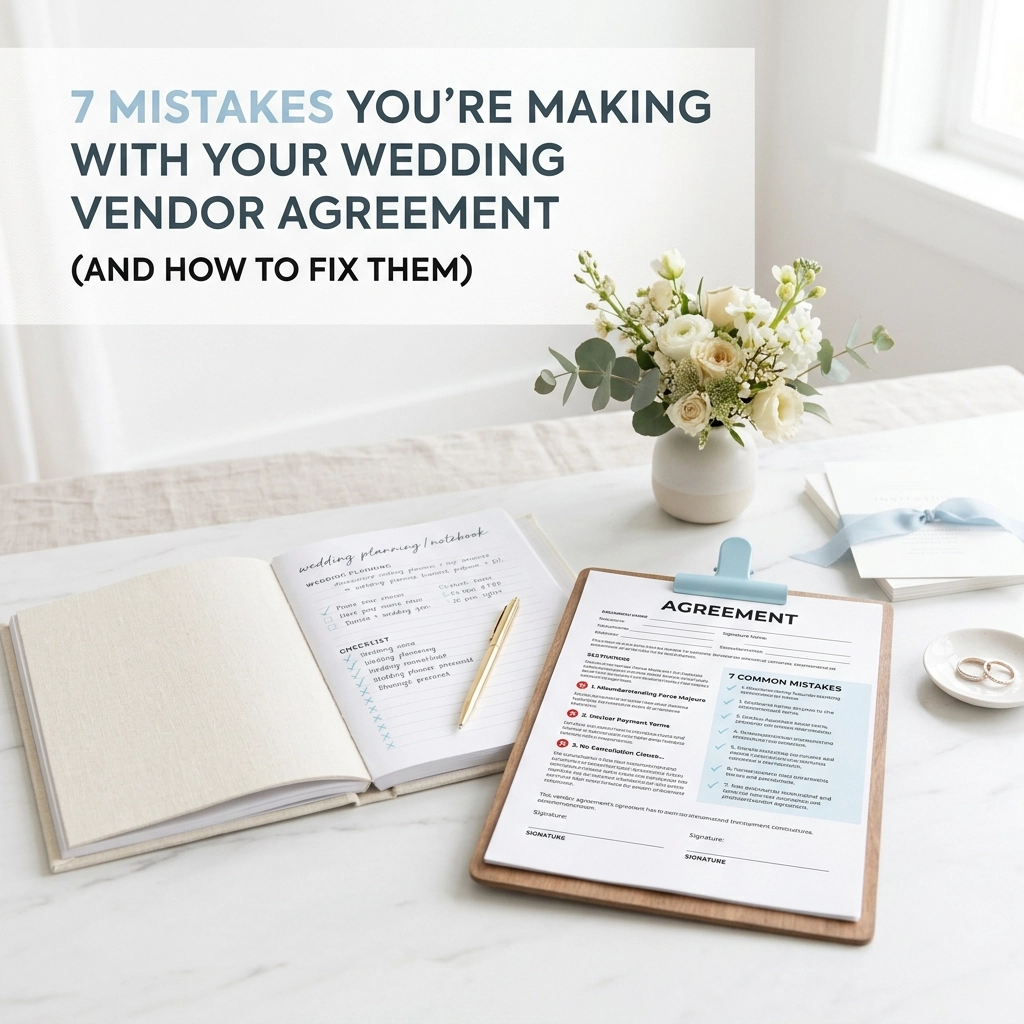
Wedding Supplier Contracts are not just pieces of paper; they are the ironclad barriers between your dream wedding and a financial nightmare. In the high-stakes world of event planning, your excitement is a vulnerability. Vendors know this. They often present agreements designed to protect their bottom line, not your big day. If you aren't scrutinizing every clause, you are essentially handing over your bank account and your peace of mind to a stranger.
At GHW-Digital, we understand that "moving goalposts" and "leaking revenue" aren't just issues in software development: they are the exact risks you face when booking a photographer, a caterer, or a venue. You need a guardian for your investment. You need to identify the red flags before they become expensive regrets.
Front-Loaded Payments – Protect Your Liquid Capital
One of the most dangerous mistakes couples make is agreeing to an aggressive, front-loaded payment schedule. If a vendor demands 75% or 100% of the total cost upfront, they have zero incentive to provide elite service. Once the money is in their pocket, your leverage disappears.
The fix is simple: negotiate a balanced payment structure. A standard, safe approach involves a 25-50% deposit to secure the date, with the remainder paid only as milestones are met or shortly before the event. Never pay the final balance until you are certain the service will be delivered. This keeps the vendor accountable and protects your cash flow. If a vendor refuses to budge on a 100% upfront policy, consider it a massive red flag and walk away.

Alt: A magnifying glass over a Wedding Supplier Contracts document highlighting payment terms.
Enforce Reciprocity – Neutralize Unfair Cancellation
Many Wedding Supplier Contracts are heavily skewed in favor of the vendor when it comes to cancellations. You might see a clause stating that if you cancel, you lose 100% of your money, but if the vendor cancels, they simply return your deposit. This is not a partnership; it is a lopsided risk.
To fix this, you must demand reciprocal terms. If the vendor expects a high penalty from you for a late cancellation, they should face an equal penalty if they bail on you. Ensure your contract states that if the vendor fails to perform, they are responsible for finding a replacement of equal quality or covering the cost difference of an emergency booking. You can find more strategies on managing complex agreements at GHW-Digital Ideas.
Close the Force Majeure Gap – Defend Against the Unforeseeable
The pandemic taught the world a hard lesson about "Acts of God." Many couples found themselves legally bound to pay for weddings that couldn't legally happen because their Wedding Supplier Contracts lacked a robust Force Majeure clause.
A vague clause is as useless as no clause at all. You need specific language that covers pandemics, government restrictions, and natural disasters. The goal is to ensure that if the event cannot move forward due to circumstances beyond anyone's control, you are entitled to a refund or a penalty-free postponement. Don't leave your future to chance; lock in protections that actually mean something.
Define Deliverables – Lock In Quality and Scope
"Photography services" is a phrase that means nothing. Does it mean one photographer or two? Does it include eight hours of coverage or four? Does it include a digital gallery or just raw files? Vague service descriptions are the primary cause of "scope creep" in the wedding industry. Vendors may try to charge you extra on the day for things you assumed were included.
You must specify every single deliverable in writing. List the number of edited images, the exact hours of service, the specific equipment to be used, and the deadline for delivery. This precision creates alignment and prevents the vendor from under-delivering. For those looking to apply this level of precision to their own business ventures, our Scope Guard Elite provides a template for similar professional protection.

Alt: A detailed checklist for Wedding Supplier Contracts to ensure service delivery.
Eliminate Blanket Liability – Stop Assuming Vendor Risks
It is common to find "indemnification" or "liability waiver" clauses that essentially say the vendor is not responsible for anything, even if they are negligent. If a DJ’s speaker falls and injures a guest, or a caterer’s equipment starts a fire, you do not want to be the one holding the bill for their mistakes.
Never sign a blanket waiver. A fair contract states that each party is responsible for their own negligence. The vendor should carry their own liability insurance: ask for the certificate. By ensuring the vendor retains their own risk, you protect yourself from catastrophic legal bills. If you're overwhelmed by the technicalities of these protections, reviewing our Privacy Policy can give you an idea of how we handle professional data and responsibility.
Secure Your Contingency – Eliminate the No-Show Risk
What happens if your photographer gets sick? Or if the florist has a family emergency? Most couples assume the vendor has a "Plan B," but if it isn't in the Wedding Supplier Contracts, it doesn't exist. You are paying for a result, not an excuse.
Your contract must outline a specific backup plan. It should name the associate or partner who will step in if the primary vendor is unavailable. It should also specify that the replacement must have a similar style and level of experience. Without this, you could be left scrambling 24 hours before your ceremony, paying triple the price for an emergency replacement. This is where a tool like Vow Guard Elite becomes your most valuable asset, providing a shield for these exact scenarios.

Alt: A visual representation of a shield protecting a wedding cake, symbolizing Wedding Supplier Contracts.
Audit for Hidden Charges – Stop Revenue Leaks
The "too good to be true" price is often a trap. Some vendors offer a low base rate but bury "service fees," "corkage fees," "setup charges," or "travel expenses" in the fine print. These hidden costs can easily add 20-30% to your final bill, blowing your budget and creating unnecessary friction.
Ask for an "all-in" price. Require that any additional costs not explicitly listed in the contract must be approved by you in writing before they are incurred. This level of transparency is essential for maintaining control over your finances. For more insights on maintaining budget integrity and project scope, visit GHW-Digital Ideas for daily updates.
Deploying the Vow Shield
Navigating Wedding Supplier Contracts shouldn't be a solo mission. The stakes are too high to rely on gut feelings or verbal promises. This is why we advocate for the use of Vow Shield: a methodology designed to protect the couple, not the vendor. By applying a systematic review to every agreement, you ensure that your wedding day is defined by celebration, not litigation.
Vow Shield focuses on:
- Verification: Confirming all verbal promises are in writing.
- Outcome-Based Milestones: Aligning payments with tangible results.
- Warning Indicators: Identifying "red flag" language that signals a high-risk vendor.
If you are serious about protecting your wedding, you need to treat these contracts with the same rigor we apply to App Development. Precision leads to peace of mind.

Alt: A professional woman reviewing Wedding Supplier Contracts with a focused expression.
Finalizing Your Defense
Your wedding is likely the largest financial investment you will make this year. Treat it as such. Wedding Supplier Contracts are the only way to ensure that the vision you’ve paid for is the one that actually happens on the day. Do not be afraid to ask for changes. Do not be afraid to walk away from a vendor who refuses to offer fair, reciprocal terms.
Stop letting vendors dictate the rules of your engagement. Use the tools available to you, stay informed through GHW-Digital Ideas, and ensure every signature you provide is a step toward a secured and successful event.
If you're looking for more ways to protect your professional or personal projects from scope creep and unexpected costs, check out Scope Sentry to see how we maintain alignment and excellence in every project we touch at GHW-Digital.
Marblism Legal Shield
This content is provided for informational purposes only and does not constitute legal advice. GHW-Digital and Marblism are not law firms. Always consult with a qualified legal professional before signing binding agreements. Our focus is on providing the digital tools and frameworks to help you manage your projects and agreements with precision and clarity.
Leave a Reply