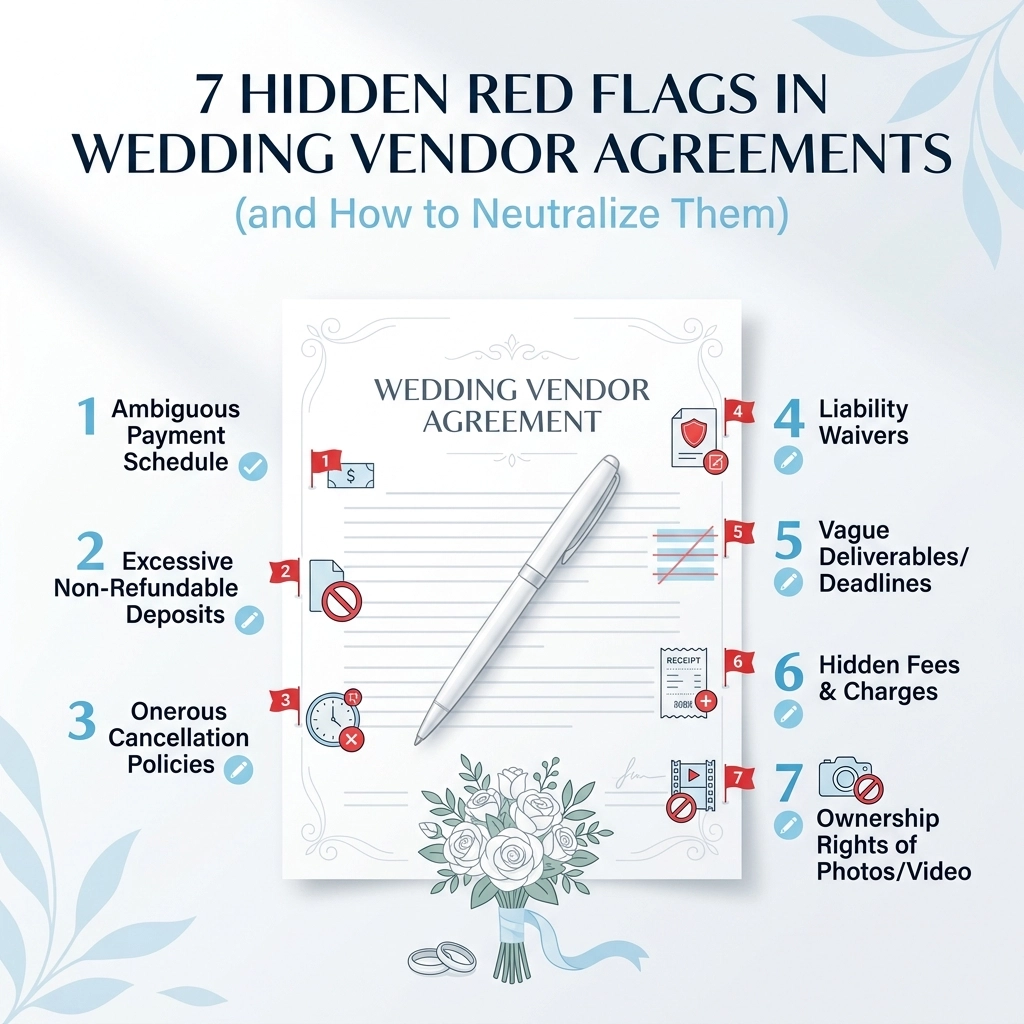
Wedding Vendor Agreements are the only thing standing between your dream day and a legal nightmare. When you are planning the biggest event of your life, the excitement often overshadows the fine print. But as the owner of GHW-Digital, I’ve seen how "moving goalposts" and "leaking revenue" aren't just problems for tech companies: they are the exact same issues couples face when navigating Wedding Supplier Contracts. If you don't lock in your protection early, you are essentially handing over a blank check to someone who might not have your best interests at heart.
In the wedding industry, contracts are often drafted by vendors to protect vendors. Our goal at GHW-Digital is to flip the script. You need a shield. You need to ensure service delivery is guaranteed, not just promised. Whether you are browsing our latest ideas or vetting a florist, you need to know how to spot the traps.
Here are the seven hidden red flags in Wedding Vendor Agreements and the exact steps you need to take to neutralize them.
1. The Front-Loaded Payment Trap
Many vendors will ask for 75% or even 100% of the total fee months before the wedding. This is a massive red flag. High upfront payments shift all the risk onto the couple. If the vendor goes out of business or simply fails to show up, your leverage is zero.
How to Neutralize It:
Demand a balanced payment schedule. A professional standard is a 25-50% deposit to secure the date, with the remaining balance paid in installments or a final lump sum no earlier than two weeks before the event. If they refuse to budge, they are likely using your deposit to fund their current operations: a sign of a shaky business. Protect your cash flow just like we protect scope in development.

2. One-Sided Cancellation Clauses
Read the "Termination" section carefully. Many Wedding Vendor Agreements state that the vendor can cancel for "any reason" with 30 days' notice, while the couple loses their entire deposit if they cancel 180 days out. This lack of reciprocity is predatory.
How to Neutralize It:
Ensure the contract includes reciprocal cancellation terms. If the vendor cancels on you, they shouldn't just return your deposit; they should be responsible for any price difference you incur by hiring a last-minute replacement. This is about fairness and alignment. You can find more strategies on managing complex agreements at GHW-Digital Ideas.
3. The "Vague Deliverables" Loophole
A contract that says "Photography services for 8 hours" is a recipe for disappointment. Does that include an assistant? High-resolution files? Retouching? Without specific deliverables, a vendor can provide the bare minimum and still claim they fulfilled the contract.
How to Neutralize It:
Itemize everything. In the world of Wedding Supplier Contracts, if it isn't written down, it doesn't exist. List the exact number of edited photos, the specific equipment to be used, and the delivery timeline. We use similar precision in our Scope Sentry protocols to prevent "expectation gaps."
4. Missing or Weak "Force Majeure" Language
Post-2020, every couple knows about "Acts of God." However, many vendors still use outdated Force Majeure clauses that protect them from performing but don't protect you from losing your money. If a hurricane hits, the vendor is "excused" from working, but are you "excused" from paying?
How to Neutralize It:
Ensure the Force Majeure clause explicitly covers pandemics, natural disasters, and government restrictions. Most importantly, it must state that if the event cannot occur due to these reasons, all payments (minus a small, documented administrative fee) must be refunded or applied to a new date.

5. Extreme Liability Waivers
Some vendors try to sneak in "Hold Harmless" clauses that are so broad they cover their own gross negligence. For example, if a lighting rig falls because it wasn't secured properly, some contracts try to claim the couple is responsible for the damages.
How to Neutralize It:
Strike out any language that waives the vendor’s liability for their own negligence. Every professional should carry their own liability insurance. If they don't have it, don't hire them. It’s that simple. For more on protecting your digital and physical assets, check out our apps page.
6. The "No Backup Plan" Clause
What happens if your lead photographer gets sick or your DJ’s equipment fails? If your Wedding Vendor Agreements don't mention a "Contingency" or "Backup" plan, you are gambling with your wedding day.
How to Neutralize It:
Require the name of a specific backup professional in the contract. Ensure the contract states that the replacement must have a similar style and level of experience. This is where a tool like Vow Shield or our Vow Guard Elite comes into play, ensuring that service delivery is ironclad regardless of individual circumstances.

7. Hidden "Performance" Fees
Watch out for clauses that allow vendors to charge extra for "travel," "meals," or "administrative processing" after the contract is signed. These "micro-leaks" can add thousands to your final bill.
How to Neutralize It:
Insist on an "All-In" price. State clearly in the agreement that "No additional fees shall be charged unless agreed upon in writing by both parties." This stops the goalposts from moving once the planning process begins. You can read more about avoiding hidden costs in any project on our ideas blog.
Why You Need Vow Shield
At GHW-Digital, we believe in the power of the "Guardian." Just as we build software to protect business margins, we advocate for couples to use Vow Shield mentalities when signing Wedding Supplier Contracts. You aren't being "difficult" by asking for these changes; you are being professional. You are protecting your time, your money, and your peace of mind.
Managing multiple vendors is essentially like managing a high-stakes supply chain. If one link breaks, the whole thing can collapse. By identifying these red flags early, you position yourself as a client who demands respect and alignment.

The Ultimate Contract Checklist
Before you sign any Wedding Vendor Agreements, run through this quick checklist:
- Reciprocity: Does the contract protect me as much as it protects them?
- Specificity: Are the deliverables listed with "Action-Benefit" clarity?
- Contingency: Is there a documented backup plan for staff and equipment?
- Transparency: Are all costs, including taxes and "fees," disclosed upfront?
- Protection: Does this contract include a link to Vow Guard Elite standards?
Don't let the "wedding tax" or industry jargon intimidate you. You are the project manager of your wedding. Treat your contracts with the same level of scrutiny you would a business merger. For more deep dives into contract safety and project management, explore our resources at https://ghw-digital.com/ideas.html.
Stop the "moving goalposts" before they start. Secure your day, lock in your vendors, and ensure your only worry on the wedding morning is whether the champagne is cold enough.

Marblism Legal Shield Footer
GHW-Digital and its products, including Vow Shield and Vow Guard Elite, provide tools for organization and scope management. We are not a law firm and do not provide legal advice. All Wedding Vendor Agreements should be reviewed by a qualified legal professional in your jurisdiction to ensure compliance with local laws. We prioritize your privacy and data security; learn more at https://ghw-digital.com/privacy.html.
Secure your competitive advantage today. Don't sign until you are protected.
Leave a Reply