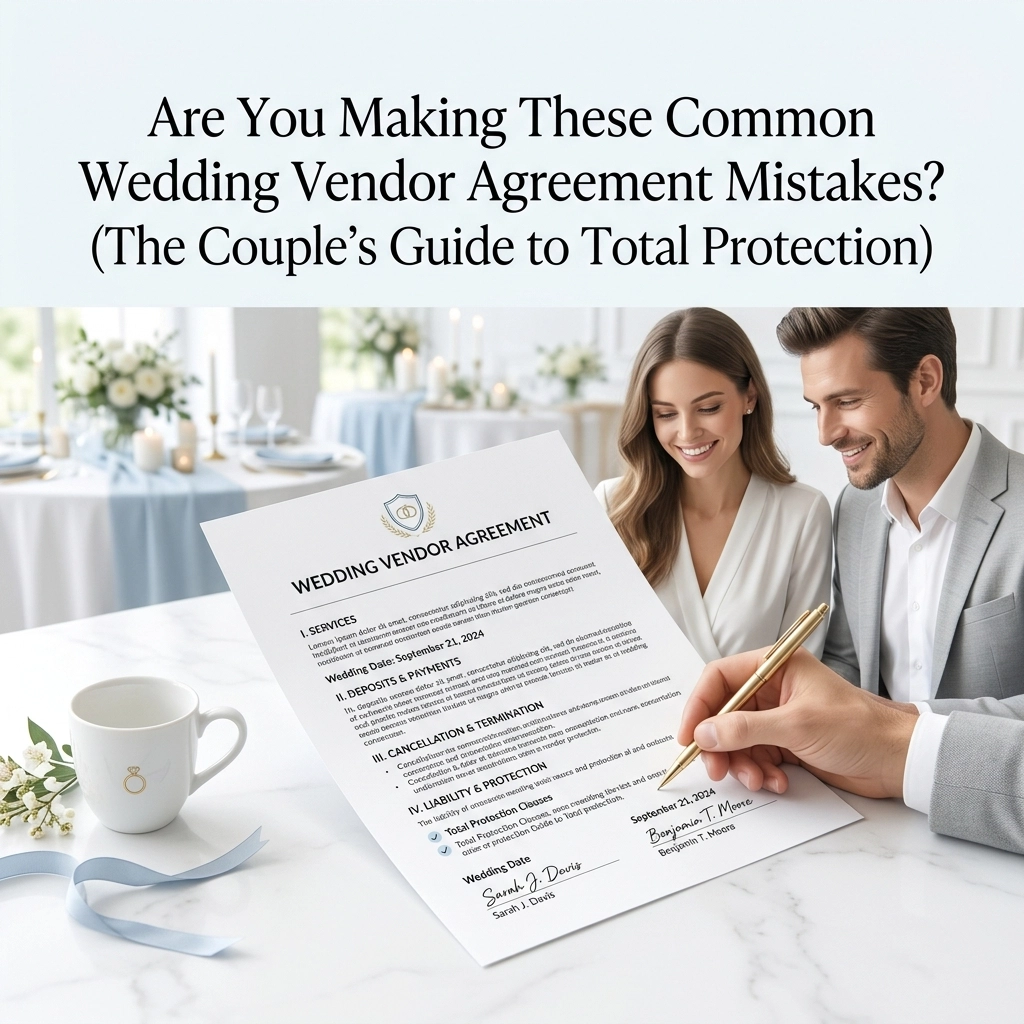
Wedding Supplier Contracts are often the only thing standing between your dream wedding and a financial nightmare. When you are planning the most important day of your life, you aren't just buying flowers or booking a DJ; you are entering into a series of binding legal agreements. Most couples approach these documents with rose-tinted glasses, assuming the vendor is a partner who has their best interests at heart.
The reality is different. Vendors write contracts to protect themselves, their time, and their profit margins. If you don't know how to navigate these agreements, you are leaving yourself exposed to lost deposits, vague service delivery, and "hidden" fees that can skyrocket your budget. At GHW-Digital, we believe in radical transparency and total protection for the couple. Whether you are looking for innovative planning ideas or solid legal footing, you need to understand the stakes.
Stop Front-Loaded Payments: Protect Your Cash Flow
One of the most dangerous mistakes couples make in Wedding Supplier Contracts is agreeing to front-loaded payment schedules. Many vendors demand 75% or even 90% of the total fee months before the event. From the vendor's perspective, this secures their revenue. From your perspective, it is a massive liability.
If a vendor goes out of business or fails to show up, chasing a refund for a front-loaded contract is an uphill battle. We’ve seen couples lose thousands because they didn't have the leverage to demand a tiered payment structure.
The Action-Benefit Strategy:
- Negotiate a 50/40/10 split: Pay a deposit to secure the date, a middle payment closer to the event, and the final 10% after the service is delivered.
- Avoid "100% Non-Refundable" clauses: Legitimate businesses should offer a sliding scale for refunds based on how far in advance a cancellation occurs.
- Link payments to milestones: For vendors like photographers, ensure the final payment is tied to the delivery of the gallery, not just the end of the wedding day.

Alt: A couple reviewing Wedding Supplier Contracts to ensure financial safety.
Lock In Deliverables: Avoid Vague "Professional" Services
Vague language is a vendor’s best friend and a couple's worst enemy. If your contract says "Professional DJ services for 5 hours," you are at risk. What does "professional" mean? Does it include lighting? Does it include a backup sound system? Does it include a specific DJ, or just whoever is available that day?
Without specific details, the vendor can do the bare minimum and still claim they fulfilled the contract. You are paying for a specific result, and your Wedding Supplier Contracts must reflect that.
Action-Benefit: Specificity Over Sentiment
- Quantify everything: Don't accept "floral arrangements." Demand "10 centerpieces using white peonies and eucalyptus, as seen in the March 12th proposal."
- Define timeframes: Arrival time, setup completion time, and exact departure time should be non-negotiable.
- Identify the "Who": If you are booking a specific artist or lead photographer, ensure their name is in the contract. Don't get stuck with a junior assistant on your big day.
For more ways to streamline your planning and ensure every detail is captured, check out our latest app development ideas.
Secure Your Backup: Mandate Contingency Plans
Life happens. Equipment fails, people get sick, and cars break down. A professional vendor should have a contingency plan, but if it isn't in the contract, it doesn't exist. You shouldn't be left scrambling for a new caterer 24 hours before your wedding because your original supplier "had an emergency" and didn't have a backup.
In your Wedding Supplier Contracts, you must demand a clear "substitution clause." This clause should outline exactly what happens if the primary vendor cannot perform their duties.
Key Contingency Requirements:
- Pre-vetted backups: The vendor should name a specific backup person or agency of equal skill level.
- Liability for costs: If the vendor fails to provide a backup and you have to book a last-minute replacement at a higher cost, the original vendor should be liable for the price difference.
- Equipment redundancy: For DJs and videographers, the contract should explicitly state they carry backup gear on-site.

Alt: Detailed Wedding Supplier Contracts showing contingency plans for couples.
Neutralize the Force Majeure Clause
The pandemic taught the wedding industry a hard lesson about "Acts of God." Many couples found themselves stuck in Wedding Supplier Contracts that allowed the vendor to keep the entire deposit even if the event was legally impossible to hold.
A fair Force Majeure clause should protect both parties. It should define what constitutes an "unavoidable event" and outline a fair path forward, such as a credit toward a future date or a partial refund of non-expended costs.
Action-Benefit: Balanced Protection
- Mutual termination rights: If the event cannot go forward due to circumstances beyond anyone's control, both parties should be able to terminate without extreme penalties.
- Refund of unspent funds: While a vendor can keep a small portion for work already performed (like admin or tastings), they should not profit from an event that didn't happen.
- Rescheduling terms: Ensure the contract allows for at least one reschedule within a 12-month period without a total loss of the initial deposit.
Identify Red Flags in Communication
Communication is the pulse of your wedding planning. If a vendor is slow to respond before you sign the contract, they will be non-existent after they have your money. Professionalism starts at the first point of contact.
We recommend looking for vendors who use organized systems to manage their workflows. This level of organization usually translates to the quality of their Wedding Supplier Contracts. If they are sending you a messy Word document with typos, expect the same level of care on your wedding day.
Red Flags to Watch For:
- Taking 48+ hours to reply to simple inquiries.
- Reluctance to put verbal promises in writing.
- Vague answers about their insurance or business license.
- Pressure tactics to sign "before the price goes up tomorrow."
Explore our resource gallery to see how we help businesses and couples stay organized through better tech.

Alt: Spotting red flags in Wedding Supplier Contracts for total couple protection.
The Ultimate Shield: Vow Shield by GHW-Digital
At GHW-Digital, we’ve seen how traditional agreements often fail the very people they are supposed to serve. That’s why we’ve focused our expertise in app development and scope management on the wedding industry.
Our Vow Shield framework, integrated into our Vow Guard Elite platform, is designed to be the couple's guardian. It doesn’t just store contracts; it analyzes them for risks, tracks service delivery in real-time, and ensures that you only pay when milestones are met. It’s about moving the goalposts back to a fair position where the couple is protected from vendor negligence or scope creep.
Vow Shield Benefits:
- Automatic Risk Detection: Flags vague language and front-loaded payment structures in your Wedding Supplier Contracts.
- Milestone-Based Payments: Holds funds in a secure environment until the vendor confirms delivery, protecting your investment.
- Centralized Communication: Records all changes and promises, turning verbal "he-said-she-said" into legally binding documentation.

Alt: Vow Shield interface protecting couples through better Wedding Supplier Contracts.
Conclusion: Take Command of Your Contracts
Your wedding day should be about celebration, not litigation. By identifying red flags, demanding specific language, and using tools like Vow Shield, you take the power back. Don't let a vendor's standard template dictate your financial security. You are the client; you have the right to demand a contract that protects you.
For more insights on how to leverage technology to protect your interests and bring your vision to life, visit our ideas page frequently. We provide the tools you need to lock in success and keep your margins, and your sanity, intact.
Secure your day. Protect your vision. Demand a better contract.
Marblism Legal Shield
This post is protected by Marblism Legal Shield. Unauthorized reproduction is strictly prohibited. GHW-Digital provides these insights to help couples navigate complex agreements; however, this is not a substitute for professional legal counsel. For specific legal advice regarding Wedding Supplier Contracts, please consult with a qualified attorney. For more information on our data practices, visit our privacy policy.
Leave a Reply